All naturally occurring climate events now take place in the context of human-induced climate change, which is increasing global temperatures, exacerbating extreme weather and climate, and impacting seasonal rainfall and temperature patterns.
An update from the World Meteorological Organization late August says it is likely that the protracted La Niña event will last until at least the end of the year, becoming this century’s first “triple-dip“ La Niña, spanning three consecutive northern hemisphere winters (southern hemisphere summers).
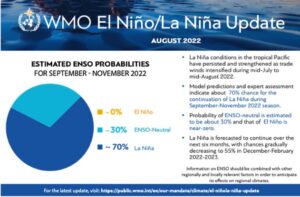
The WMO El Niño/La Niña Update predicts the continuation of the current La Niña over the next six months, with a 70 per cent chance in September-November 2022 but gradually decreasing to 55 per cent in December-February 2022/2023. It started in September 2020.
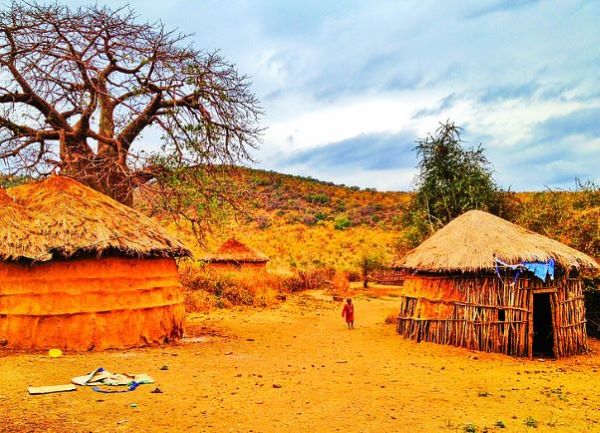
La Niña conditions in the tropical Pacific have strengthened as trade winds intensified during mid-July to mid-August 2022, affecting temperature and precipitation patterns and exacerbating drought and flooding in different parts of the world.
La Niña refers to the large-scale cooling of the ocean surface temperatures in the central and eastern equatorial Pacific Ocean, coupled with changes in the tropical atmospheric circulation, namely winds, pressure and rainfall. It usually has the opposite impacts on weather and climate as El Niño, which is the warm phase of the so-called El Niño Southern Oscillation (ENSO).
Drought; above average rain
However, all naturally occurring climate events now take place in the context of human-induced climate change, which is increasing global temperatures, exacerbating extreme weather and climate, and impacting seasonal rainfall and temperature patterns.
“It is exceptional to have three consecutive years with a la Niña event. Its cooling influence is temporarily slowing the rise in global temperatures – but it will not halt or reverse the long-term warming trend,” said WMO Secretary-General Prof. Petteri Taalas.
“The worsening drought in the Horn of Africa and southern South America bear the hallmarks of La Niña, as does the above average rainfall in South-East Asia and Australasia. The new La Niña Update unfortunately confirms regional climate projections that the devastating drought in the Horn of Africa will worsen and affect millions of people.”
“WMO will continue to provide tailored information to the humanitarian sector and to support sensitive sectors like agriculture, food security, health and disaster risk reduction. WMO is also striving towards the goal that everyone should have access to early warning systems in the next five years to protect them against hazards related to our weather, climate and water,” said Prof. Taalas.
Global Seasonal Climate outlook
El Niño and La Niña are major – but not the only – drivers of the Earth’s climate system.
In addition to the long-established ENSO Update, WMO now also issues regular Global Seasonal Climate Updates (GSCU), which incorporate influences of all other major climate drivers such as the North Atlantic Oscillation, the Arctic Oscillation and the Indian Ocean Dipole.
The ENSO and Global Seasonal Climate Updates are based on forecasts from WMO Global Producing Centres of Long-Range Forecasts and are available to support governments, the United Nations, decision-makers and stakeholders in climate sensitive sectors to mobilize preparations and protect lives and livelihoods.
Despite the stubborn La Niña in the equatorial central and eastern Pacific, widespread warmer than-average sea-surface temperatures elsewhere are predicted to dominate the forecast of air temperatures for September to November. This will contribute to above normal temperatures over land areas, including much of the Northern Hemisphere.
Precipitation predictions are similar to typical rainfall effects of La Niña, WMO says.
The Global Soil Partnership is leading the mission for better soil management and raised awareness of soil-related issues. Soils are now high on the global agenda, and it is imperative to pursue sustainable soil management practices.
Did you know that the equivalent of one football field of soil erodes every five seconds? Yet it takes 1,000 years to produce just a few centimetres of topsoil.
Soil is the life support of our food and agriculture. We rely on soils for 95 per cent of the food we consume. Yet on this course, by 2050, 90 per cent of all soils are set to be degraded. Without change, degrading soils will put our ecosystems, our climate and food security in jeopardy.
FAO’s Global Soil Partnership (GSP) has been working for the past decade with countries and over 500 partners to address soil-related issues, positioning soil on the Global Agenda. The GSP continues to create an ever-growing network of partners to promote sustainable soil management and soil governance globally.
Recarbonising soils
The GSP partners with countries to reach farmers and improve soil management on the ground.
One programme, Recarbonization of Global Agricultural Soils (RECSOIL), addresses challenges related to climate change and sustainability by boosting soil health and making them more productive and shock resilient. The mechanism focuses on the recarbonization of soils, or improving the amount of organic matter in soil, by adopting practices such as using cover crops, crop rotation and agroforestry, among others. This boosts the health of soils and in turn, increases food security and farmers’ incomes. The RECSOIL programme addresses both carbon sequestration and mitigation of greenhouse gases (GHG).
Costa Rica and Mexico are currently piloting RECSOIL by incentivizing farmers to adopt sustainable soil management. Farmers are trained on good practices while their fields are monitored to assess soil health and the provision of ecosystem services.
Mapping global soils
The GSP has produced cutting-edge products and services, such as digital soil mapping, that illustrate soil conditions so that countries and national institutions can boost their own capacities and make informed decisions to manage soil degradation.
With its global capacity development programmes, the GSP delivers on-the-job trainings and provides countries with guidelines and technical support. To date, the GSP has reached over 7 000 national experts from more than 170 countries. Training sessions bridge the digital gap and improve national capacities on soil data management, mapping, modelling and soil analysis, among other topics.
One of the seven technical networks that GSP facilitates is the Global Soil Laboratory Network (GLOSOLAN) which was established in 2017. It builds the capacities of laboratories to produce reliable data on soils by harmonizing methods, units and information on soil analysis. GLOSOLAN integrates rapid and cost-effective systems to measure soil properties through its initiative on soil spectroscopy. Today, more than 850 laboratories from 152 countries are active members of this Network.
Raising awareness
Through campaigns such as the International Year of Soils and World Soil Day on 5 December, the GSP has raised awareness of soils and increased global participation and support. In addition, the Partnership has engaged billions of citizens in conversation through social media as well as provided informative tools such as factsheets and infographics.
Raising awareness from an early age is also of utmost importance. In 2020, the GSP launched a Children’s Book Contest on Soil Biodiversity to engage a young audience on the importance of soil organisms and the urgency to protect soil biodiversity. The contest received a total of 80 books from over 60 countries. The top 10 story entries were published in a collection called The Magical World of Soil Biodiversity.
Shaping government policies
The GSP works with governments to shape inclusive policies and improve soil governance. It also enhances the capacity of policy makers to implement sustainable soil management for future generations.
Soils are now high on the global agenda, and it is imperative to pursue sustainable soil management practices. The Global Soil Partnership is leading the mission for better soil management and raised awareness of soil-related issues, but we all have a role to play! Make it your objective to discover more about the birthplace of our food: soils!
A new helmet protects motorcycle riders from outdoor pollutants, besides providing protection from head injuries. The air drawn through a filter in the new innovation is delivered to the breathing area behind the visor. The helmet features rechargeable batteries and replaceable filters.
By Ranjit Devraj
A motorcycle helmet that filters out harmful emissions from the air is protecting riders in New Delhi and other Indian cities that rank among the most polluted in the world.
Shellios Technolabs, the New Delhi-based startup that developed the helmet, says filters used in it can remove PM 2.5 and other toxic, vehicular emissions which millions of two-wheeler riders are directly exposed to on Indian roads.
“Since the whole purifying system — including rechargeable batteries, blower and electronic circuit board — is located at the back of the fiberglass helmet it does not interfere with the bike rider’s movements or vision but creates a clean, purified air space immediately behind the clear visor,” Amit Pathak, one of the company founders, tells SciDev.Net.
Motorcycles, scooters and other two-wheelers are an important means of personal transport in India and in 2019 there were more than 221 million registered units in the country. During the 2021 – 2022 financial year, over 13 million units were sold.
It says the 1.5 kg head gear conforms to government safety and ergonomic standards and has shown, in controlled test environments, to reduce PM 2.5 particles and other outdoor pollutants by 80 per cent.
“The anti-pollution helmet was one of the more promising products taken up for support by STEP considering that it had real benefits for the public that struggles to cope with extremely high levels of pollution in India’s major cities,“ says Deepthi Shanmugam, the Bangalore-based chief executive of the Academy of Technical Education that works with STEP.
PM 2.5
New Delhi and Kolkata were ranked as the world’s two most polluted cities by the Institute for Health Metrics and Evaluation, Massachusetts, US, in their Air Quality and Health in Cities in a report released on 17 August.
The report which ranked cities on the basis of two major air pollutants — fine particulate matter (PM2.5) and nitrogen dioxide (NO2) — found the highest population-weighted annual average PM2.5 exposure in 2019 to be in Delhi at 110 micrograms per cubic metre, followed by Kolkata at 84 micrograms per cubic metre.
The WHO — which considers PM 2.5 to be the single biggest environmental threat to human health — recommends that annual average concentrations of PM2.5 should not exceed five micrograms per cubic metre.
“Our helmet has patented air purifying accessories including a silent blower fan that draws air through disposable, high-efficiency particulate air (HEPA) filter membrane and is powered by rechargeable batteries,” Pathak said.
HEPA filters are already widely used in air purifiers found in homes, offices and restaurants in New Delhi. The India air purifier market, worth US$74.8 million in 2020, is projected to reach US$565.7 million by 2027, according to Blue Wave Consulting, which attributes the market growth to rapid urbanisation and industrialisation, resulting in poor air quality and widespread respiratory ailments.
Pathak says that future versions of the helmet would incorporate air-conditioning and hands-free operation of mobile phones through a wireless link. The helmet already connects via Bluetooth to a mobile phone to warn the wearer when it is time to change the filter. “The focus, for now, is on ensuring breathable air for motorcycle riders in Indian and other heavily polluted South Asian cities like Kathmandu and Dhaka,” Pathak adds.
HEPA filter
Bhupendra Das, air quality specialist and chair at Nepal Energy and Environment Development Services, says that of the 3.2 million vehicles registered in Nepal over the last two decades 80 per cent were two-wheelers. “Given the sharp rise in PM 2.5 air pollution caused by congested traffic conditions in Kathmandu, an air-purifying helmet would be a boon to two-wheeler riders,” he said.
Das says the HEPA filter in the helmet could reduce exposure to pollutants associated with respiratory, cardio-vascular, allergic hypersensitivity ailments which are on the rise in Nepal. “Governments in South Asia should consider the introduction of such innovative devices as part of policy instruments being implemented to deal with high pollution levels, along with other measures,” he said.
In July, India’s national capital region, which includes New Delhi, introduced a series of measures to “prevent, control and abate air pollution” through restrictions on industries, vehicular transportation, construction, municipal solid waste burning, and crop-residue burning.
Smog towers with filters have been installed in known pollution hotspots and anti-smog guns capable of blasting and settling dust have been placed near construction sites. However, these have not shown tangible effects on the ever-rising levels of aerial pollution.
World food prices have fallen for a fifth consecutive month but are still nearly eight per cent higher than a year ago.
The UN’s food and agriculture organisation on Friday said that the prices of five commodities – cereals, vegetable oil, dairy, meat and sugar – were lower in August than in July. The Food Price Index released by the FAO is an analytical tool that tracks the monthly international prices of these breadbasket staples.
According to the FAO, the index averaged 138.0 points last month, down nearly two per cent from July, though 7.9 per cent above the value a year before. This fall in food prices is happening for the fifth month in a row, though the prices of essential foodstuff is almost eight per cent higher than it was last year.
Outlook for cereals and wheat
FAO has also issued its global cereal production forecast for this year, which projects a decline of nearly 40 million tonnes, or 1.4 per cent from the previous year.
The bulk of this decline mainly concerns coarse grains, with maize yields in Europe expected to drop 16 per cent below their five-year average level due to the exceptional hot and dry weather conditions affecting the continent.
By contrast, FAO expects there will be a “negligible drop” in worldwide wheat production resulting from expected record harvests in Russia and conducive weather conditions in North America.
Global rice production is also expected to decline by 2.1 percent from the all-time high reached in 2021.
FAOsaid the decline in cereal prices reflected improved production prospects in North America and Russia, and the resumption of exports from Black Sea ports in Ukraine.
A landmark agreement to unblock Ukraine grain exports amid the ongoing war was signed in July by the country, Russia, Türkiye and the UN.
Rice prices on average held steady during August, while quotations for coarse grains, such as maize, increased marginally.
Vegetable oil prices decreased by 3.3 per cent, which is slightly below the August 2021 level. FAO attributed this to increased availability of palm oil from Indonesia, due to lower export taxes, and the resumption of sunflower oil shipments from Ukraine.
Vegetable oil prices fell 3.3 per cent, which is slightly below the August 2021 level. The FAO attributed this to the increased availability of palm oil from Indonesia, due to lower export taxes, and the resumption of sunflower oil shipments from Ukraine.
High price for animal produce
Although dairy prices saw 2.0 per cent drop, they remained 23.5 per cent higher than in August 2021. The price of cheese increased for the tenth consecutive month, though milk prices “eased” following expectations of increased supplies from New Zealand, even amid projections of lower production in Western Europe and the US.
The price of meat dropped by 1.5 per cent but remained just over 8.0 per cent higher than the value last August.
The price of meat declined by 1.5 per cent but remained just over eight per cent higher than the value last August.
International quotations for poultry fell amid elevated export availabilities, and bovine meat prices declined due to weak domestic demand in some top exporting countries, while pig meat quotations rose.
Sugar prices also hit their lowest level since July 2021, largely due to high export caps in India and lower ethanol prices in Brazil.
Image: Hippopx, licensed to use under Creative Commons Zero – CC0.
Most sub-Saharan African French colonies got formal independence in the 1960s. But their economies have progressed little, leaving most people in poverty, and generally worse off than in other post-colonial African economies.
By Anis Chowdhury and Jomo Kwame Sundaram
Decolonization?
Pre-Second World War colonial monetary arrangements were consolidated into the Colonies Françaises d’Afrique (CFA) franc zone set up on 26 December 1945. Decolonization became inevitable after France’s defeat at Dien Bien Phu in 1954 and withdrawal from Algeria less than a decade later.
CFA countries are now in two currency unions. Benin, Burkina Faso, Côte d’Ivoire, Guinea-Bissau, Mali, Niger, Senegal and Togo belong to UEMOA, the French acronym for the West African Economic and Monetary Union.
Its counterpart CEMAC is the Economic and Monetary Community of Central Africa, comprising Cameroon, the Central African Republic, the Republic of the Congo, Gabon, Equatorial Guinea and Chad.
Both UEMOA and CEMAC use the CFA franc (FCFA). Ex-Spanish colony, Equatorial Guinea, joined in 1985, one of two non-French colonies. In 1997, former Portuguese colony, Guinea-Bissau was the last to join.
Such requirements have ensured France’s continued exploitation. Eleven of the 14 former French West and Central African colonies remain least developed countries (LDCs), at the bottom of UNDP’s Human Development Index (HDI).
Guinea soon faced French destabilization efforts. Counterfeit banknotes were printed and circulated for use in Guinea – with predictable consequences. This massive fraud brought down the Guinean economy.
France withdrew more than 4,000 civil servants, judges, teachers, doctors and technicians, telling them to sabotage everything left behind: “un divorce sans pension alimentaire” – a divorce without alimony.
Togo independence leader, President Sylvanus Olympio was assassinated in front of the US embassy on 13 January 1963. This happened a month after he established a central bank, issuing the Togolese franc as legal tender. Of course, Togo remained in the CFA.
Mali left the CFA in 1962, replacing the FCFA with the Malian franc. But a 1968 coup removed its first president, radical independence leader Modibo Keita. Unsurprisingly, Mali later re-joined the CFA in 1984.
Resource-rich
The eight UEMOA economies are all oil importers, exporting agricultural commodities, such as cotton and cocoa, besides gold. By contrast, the six CEMAC economies, except the Central African Republic, rely heavily on oil exports.
CFA apologists claim pegging the FCFA to the French franc, and later, the euro, has kept inflation low. But lower inflation has also meant “slower per capita growth and diminished poverty reduction” than in other African countries.
The CFA has “traded decreased inflation for fiscal restraint and limited macroeconomic options”. Unsurprisingly, CFA members’ growth rates have been lower, on average, than in non-CFA countries.
Its oil boom ensured growth averaging 23.4 per cent annually during 2000–08. But growth has fallen sharply since, contracting by -5 per cent yearly during 2013–21! Its 2019 HDI of 0.592 ranked 145 of 189 countries, below the 0.631 mean for middle-ranking countries.
Four of ten 6–12 year old children in Equatorial Guinea were not in school in 2012, many more than in much poorer African countries. Half the children starting primary school did not finish, while less than a quarter went on to middle school.
CFA member Gabon, the fifth largest African oil producer, is an upper middle-income country. With petroleum making up 80 per cent of exports, 45 per cent of GDP, and 60 per cent of fiscal revenue, Gabon is very vulnerable to oil price volatility.
One in three Gabonese lived in poverty, while one in ten were in extreme poverty in 2017. More than half its rural residents were poor, with poverty three times more there than in urban areas.
Credit-GDP ratios in CFA countries have been low at 10–25 per cent – against over 60 per cent in other Sub-Saharan African countries! Low credit-GDP ratios also suggest poor finance and banking facilities, not effectively funding investments.
By surrendering exchange rate and monetary policy, CFA members have less policy flexibility and space for development initiatives. They also cannot cope well with commodity price and other challenges.
The CFA’s institutional requirements – especially keeping 70 per cent of their foreign exchange with the French Treasury – limit members’ ability to use their forex earnings for development.
More recent fiscal rules limiting government deficits and debt – for UEMOA from 2000 and CEMAC in 2002 – have also constrained policy space, particularly for public investment.
Unrestricted transfers to France have enabled capital flight. The FCFA’s unlimited euro convertibility is supposed to reduce foreign investment risk in the CFA. However, foreign investment is lower than in other developing countries.
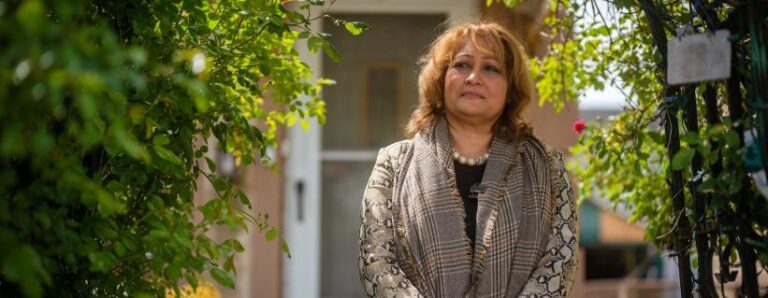
As extreme weather events grow in intensity and frequency, nowhere is guaranteed to be safe from danger, as New Yorkers discovered on 1 September 2021, when Hurricane Ida struck, causing floods that led to some 29 deaths, and shutting down much of the subway system. Amrita Bhagwandin was at her home in the New York Borough of Queens on that traumatic day.
“I emigrated from Guyana in 1998 and have lived in Queens ever since. I live with my husband and my daughter. We are a small family but have many relations in New York and New Jersey.
The community here is very diverse, from Guyanese, Trinidadians and Bengalis, to Indians, Chinese, and Filipinos. We are a very happy bunch of hard-working people. We plant gardens, we send our kids to colleges, and do all kinds of things to give back to the community.
It’s time to leave
On 1 September, when Ida hit, I was working from home. I switched on the television to get the alerts; it was clear a storm was brewing. I focused on the radar and followed the storm on the map. It looked like it was going to come through the northeast. When I saw how much red there was, I knew it was definitely going to affect us.
Some improvements had been made on the storm sewers on our block in the previous year, so I was hopeful that we would not feel the impacts too hard. But as the afternoon approached, I saw how many hours of rain they were forecasting. I became very worried, and I started to warn the neighbours to be very careful that night.
Usually, if there is a sign of flooding, I leave the house because I get panic attacks from the situation. So, I packed a bag and I said to them, let’s leave. My husband and daughter initially wanted to stay and so my husband just dropped me off at my in-laws who live on higher ground just down the block.
I kept calling both of them and around 10:00 pm I told them they needed to leave the house. Right after I called them, the sewer hole right in front of my house popped. They barely made it out and drove up the block to my sister in-laws.
‘They lost their lives in a matter of seconds’
We live on the corner of an intersection, and the water filled each side and went four directions. I was calling to make sure everyone was safe when I was told that someone was missing.
Eventually, I found out that the mother and her son living next door to me had both drowned and died in the basement.
I don’t have the words to tell you the pain that this neighbourhood has gone through since. I see that kid every single day. He was so young and vibrant, and so was the mother.
They lost their lives in a matter of seconds. There were even scuba divers trying to get them out, but it was to no avail.
‘We are frightened and scared’
These houses should not have been here, in this low-lying area. We have been sounding the alarm for a very, very long time.
I hope that in New York City, everyone is now consciously paying attention to what the weather is doing, so no more lives are senselessly lost. With the amount of rainfall we are seeing and the number of storms that are expected for this upcoming summer, we are frightened and scared.
I don’t know what I’ll do because the foundation of my house has still not been repaired, because it is so expensive.
It seems that the area is just too low for residential housing. The engineers of the Climate Resiliency Agency of New York City worked with us, and proposed a trial of lifting the houses. There are many different options, but the option is not to stay here as it is.
Everyone on our block lives in constant fear. When I see rain on the radar, I want to escape. I have luggage packed so I can leave.
Ida is an experience we should learn from and not let happen again. Climate change is going to be there. Changes are going to happen all the time, and we have to equip ourselves for them.
I want to know what the future of this community is going to be. What is to happen? Will I sit and worry for the next people who come and live here? I want a safer community for everyone, for all of America, for every community.”
On the red and dusty surface of Mars, nearly 100 million miles from Earth, an instrument the size of a lunchbox is proving it can reliably do the work of a small tree.
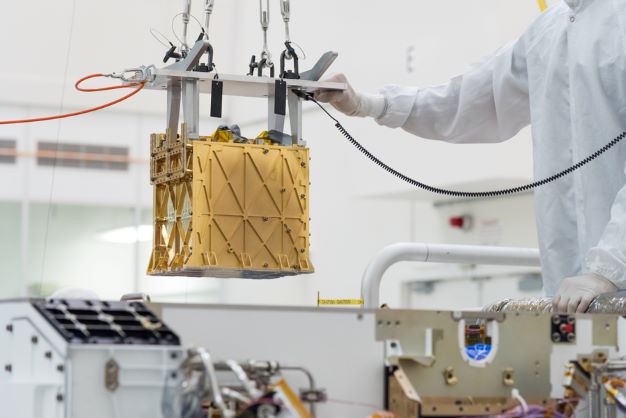
The MIT-led Mars Oxygen In-Situ Resource Utilization Experiment, or MOXIE, has been successfully making oxygen from the Red Planet’s carbon-dioxide-rich atmosphere since April 2021, about two months after it touched down on the Martian surface as part of NASA’s Perseverance rover and Mars 2020 mission.
In a study published today in the journal Science Advances, researchers report that, by the end of 2021, MOXIE was able to produce oxygen on seven experimental runs, in a variety of atmospheric conditions, including during the day and night, and through different Martian seasons. In each run, the instrument reached its target of producing six grams of oxygen per hour — about the rate of a modest tree on Earth.
Researchers envision that a scaled-up version of MOXIE could be sent to Mars ahead of a human mission, to continuously produce oxygen at the rate of several hundred trees. At that capacity, the system should generate enough oxygen to both sustain humans once they arrive, and fuel a rocket for returning astronauts back to Earth.
So far, MOXIE’s steady output is a promising first step toward that goal.
“We have learned a tremendous amount that will inform future systems at a larger scale,” says Michael Hecht, principal investigator of the MOXIE mission at MIT’s Haystack Observatory.
MOXIE’s oxygen production on Mars also represents the first demonstration of “in-situ resource utilization,” which is the idea of harvesting and using a planet’s materials (in this case, carbon dioxide on Mars) to make resources (such as oxygen) that would otherwise have to be transported from Earth.
“This is the first demonstration of actually using resources on the surface of another planetary body, and transforming them chemically into something that would be useful for a human mission,” says MOXIE deputy principal investigator Jeffrey Hoffman, a professor of the practice in MIT’s Department of Aeronautics and Astronautics. “It’s historic in that sense.”
Hoffman and Hecht’s MIT co-authors include MOXIE team members Jason SooHoo, Andrew Liu, Eric Hinterman, Maya Nasr, Shravan Hariharan, Kyle Horn, and Parker Steen, along with collaborators from multiple institutions including NASA’s Jet Propulsion Laboratory, which managed MOXIE’s development, flight software, packaging, and testing prior to launch.
Seasonal air
The current version of MOXIE is small by design, in order to fit aboard the Perseverance rover, and is built to run for short periods, starting up and shutting down with each run, depending on the rover’s exploration schedule and mission responsibilities. In contrast, a full-scale oxygen factory would include larger units that would ideally run continuously.
Despite the necessary compromises in MOXIE’s current design, the instrument has shown it can reliably and efficiently convert Mars’ atmosphere into pure oxygen. It does so by first drawing the Martian air in through a filter that cleans it of contaminants. The air is then pressurized, and sent through the Solid OXide Electrolyzer (SOXE), an instrument developed and built by OxEon Energy, that electrochemically splits the carbon dioxide-rich air into oxygen ions and carbon monoxide.
The oxygen ions are then isolated and recombined to form breathable, molecular oxygen, or O2, which MOXIE then measures for quantity and purity before releasing it harmlessly back into the air, along with carbon monoxide and other atmospheric gases.
Since the rover’s landing in February 2021, MOXIE engineers have started up the instrument seven times throughout the Martian year, each time taking a few hours to warm up, then another hour to make oxygen before powering back down. Each run was scheduled for a different time of day or night, and in different seasons, to see whether MOXIE could accommodate shifts in the planet’s atmospheric conditions.
“The atmosphere of Mars is far more variable than Earth,” Hoffman notes. “The density of the air can vary by a factor of two through the year, and the temperature can vary by 100 degrees. One objective is to show we can run in all seasons.”
So far, MOXIE has shown that it can make oxygen at almost any time of the Martian day and year.
“The only thing we have not demonstrated is running at dawn or dusk, when the temperature is changing substantially,” Hecht says. “We do have an ace up our sleeve that will let us do that, and once we test that in the lab, we can reach that last milestone to show we can really run any time.”
Ahead of the game
As MOXIE continues to churn out oxygen on Mars, engineers plan to push its capacity, and increase its production, particularly in the Martian spring, when atmospheric density and carbon dioxide levels are high.
“The next run coming up will be during the highest density of the year, and we just want to make as much oxygen as we can,” Hecht says. “So we’ll set everything as high as we dare, and let it run as long as we can.”
They will also monitor the system for signs of wear and tear. As MOXIE is just one experiment among several aboard the Perseverance rover, it cannot run continuously as a full-scale system would. Instead, the instrument must start up and shut down with each run — a thermal stress that can degrade the system over time.
If MOXIE can operate successfully despite repeatedly turning on and off, this would suggest that a full-scale system, designed to run continuously, could do so for thousands of hours.
“To support a human mission to Mars, we have to bring a lot of stuff from Earth, like computers, spacesuits, and habitats,” Hoffman says. “But dumb old oxygen? If you can make it there, go for it — you’re way ahead of the game.”
India’s minister for environment, forests and climate change said that the climate change phenomenon is deeply unfair as those who contributed least to it from developing countries will be most severely hit by the impact of global warming.
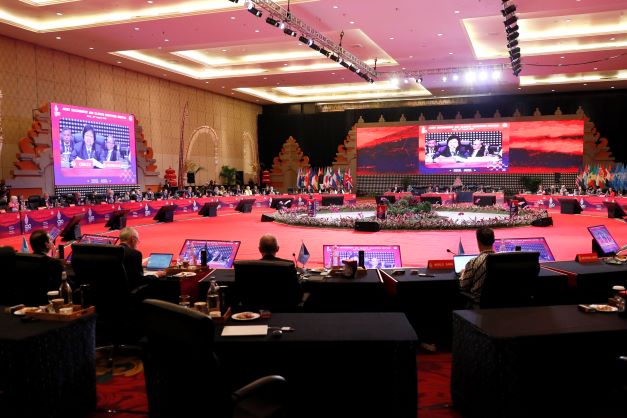
Speaking at the concluding session of the G20 Joint Environment and Climate Ministers Meeting (JECMM), India’s minister for environment, forest and climate change Bhupender Yadav underlined the need to work for stronger recovery and resilience across globe, leaving no one behind especially most vulnerable sections of the society. He reminded that this is at the heart of the 2030 agenda of sustainable development.
JECMM had concluded on Wednesday with officials of the 20 major world economies struggling to agree to a joint communique text with objections over language of the text and climate targets.
Yadav said that sustainable recovery should also lead towards sustainable development goals. In his address he stressed that while climate change is a global phenomenon, its negative impacts are more severely felt by the poor and vulnerable especially in the developing countries. There is high dependence on natural resources but the capacity to cope with climate variability and extreme is limited. Climate change phenomenon is deeply unfair. Those who contributed least to it from developing countries will be most severely hit by the impact of global warming.
Any initiative to address the contemporary environmental challenge should therefore be on the basis of Equity and principle of Common but Differentiated Responsibilities & Respective Capabilities in the light of the national circumstances and priorities.
India will assume the G20 Presidency from 1st December 2022 culminating in the G20 summit in 2023. The Minister informed that as under the Indonesian Presidency, there will be meetings side events, workshops, seminars, and site visits across different cities in of the country during India’s G20 Presidency.
Yadav spoke of Prime Minister Modi’s LIFE mantra for sustainable development as revealed during his November 2021 address at the World Leaders Summit at COP 26. LiFE, an acronym for Lifestyle For Environment, Modi had said, will help move away from mindless and destructive consumption to mindful and deliberate utilisation.
The environment minister opined that India’s effort towards the clean energy and energy security low carbon and efficient industrial growth, sustainable agriculture and low carbon living affirm India’s commitment to a transformative shift towards sustainable lifestyle for all.
“We need to redefine prosperity to ensure affordable, servable and sustainable lifestyle for all,” he said, emphasising that sustainability requires coordinated action for the global commons. “India stands for a ‘whole of the world’ approach that recognizes the interdependence of countries, economies and communities,” he said.
The line between providing government services like Google predicts your next possible search comes at a huge trade-off. Clearly, the line between a techno-utopia and a surveillance dystopia can be really thin. India needs a proper data protection law drafted carefully drafted with due consultations with stakeholders.
By Osama Manzar
Let’s start by running down some numbers. It is a fact that India is both, one of the most connected countries and one of the most unconnected countries. For example, internet users do not number more than 700 million of India’s population of 1.35 billion. Of these, only 300 million people use the internet regularly; the rest are either token users or, as is called, not ‘habitual users’. Another perspective on internet uses in India is that about 800 million people live in rural areas, and smartphone penetration in rural India is not more than 300 million. It is not contested that a smartphone is one of the more apt device to use the internet for any purpose. Therefore, in terms of sheer numbers and scale of availability of digital Infrastructure, at least 700 million Indians do not have any digital infrastructure or digital means to conduct any work online.
Yet, every Indian citizen, connected or unconnected, private or public, poor or rich, employed or unemployed, man, woman or any gender, has a digital identity, a digital footprint, or a digital stamp of sorts. In other words, the government in India has a right/willingness/aspiration/authority to ‘digitalise’ you, the citizen. But it also does not want to give the citizen a right over their data or privacy or a simple digital right.
Let’s break this down in the light of two developments – the country’s Unique Identification (UID) system called the Aadhaar, and the personal data protection laws. Claiming to be a welfare-guaranteeing project that planned to identify citizens to weed out loopholes and welfare ‘leaks,’ the Aadhaar and the authority issuing it, the UIDAI, claimed to fight corruption and increase inclusion. On that pretext, huge amounts of data on a billion-plus citizens were collected and stored – including detailed biometric data. Unlike the US’ welfare programme like the Social Security Number, the Aadhaar works to uniquely identify anyone with this collected data.
EU exemplifies regulation
The first issue has to do with what we started with – that India is grossly under-connected (at least half the country does not have internet access). This means that there are still thousands of people who either have no way to make an Aadhaar, or are not aware of the welfare schemes that they ought to be entitled to, or can apply for these schemes.
Another issue is that this collected data is stored centrally by the agency, and until very recently, other than activists’ flagging issues, there was little awareness on what exactly could go wrong. In the last couple of years, there have been several reports of data breaches and leaks exposing information pertaining to crores of people to malicious attackers. This is reportedly also one of the largest such breaches in the history of the internet.
This is where the importance of a data protection law comes in. The Europen Union, for example, has a fairly tight regulation on how data is being collected, stored and used. It is called the GDPR, and by invoking the privacy law and of human rights law from Article 8 of the Charter of Fundamental Rights of the European Union, it is a model on how to frame such legislation.
How? Both, India’s government and the private sector seemingly have the right to digitalise the citizen and his/her data. However, the citizen does not have the right or privilege to ask a question pertaining to this data. Like, “how is the data that is being collected/taken/recorded from me being used? Is the data collected about me private? Is it in ‘safe’ hands? Will my privacy be secure? Does the data stay sovereign?”
Techno-utopia or surveillance dystopia?
To briefly explain the people’s lost digital rights or right to privacy and data in the light of “Right to Information”, “Right to Food”, “Right to Education”, “Right to Health”, and “Right to Shelter”. All these are fundamental rights and pretty much human rights. Now, Aadhaar has been at the forefront of a lot of exclusions from these very rights. There have, of course, been reports of such exclusions. Digital and human rights activists have documented many of them.
Linking Aadhaar to all this data intends to create a system of ‘real-time governance,’ which along with the 360-degree profiling would track people in real-time across databases of birth, death, healthcare, vehicle registration, ownership of land or properties, and even policing. The line between providing government services like Google predicts your next possible search comes at a huge trade-off. Clearly, the line between a techno-utopia and a surveillance dystopia can be really thin.
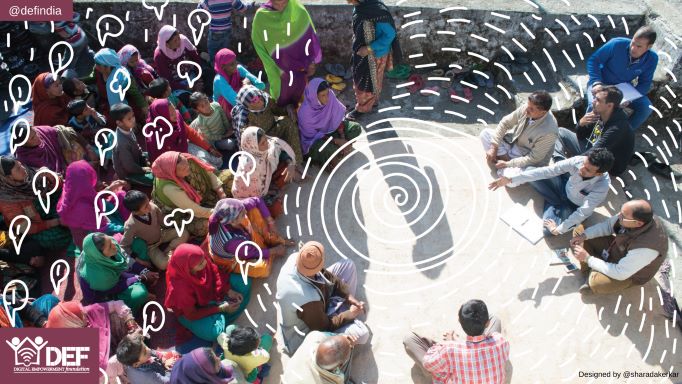
At DEF, our work has been primarily to empower marginalised communities by enabling them with digital access and literacy. This opens up several avenues for their upliftment. Simultaneously, they are also able to avail several of the welfare schemes the government has been promising them. DEF has helped set up several Community Information Resource Centres (CIRCs), which are digital data houses, or ICT hubs, where members of the rural community gather to meet their digital needs in education, health, livelihood, public service delivery. Our CIRCs also double up as points of internet delivery through community networks.
Aadhaar. Data. Hunger
However, the point is this: On one side, there is the fact that Aadhaar has been leading to exclusions, and centrally stored data is vulnerable to breaches. However, at the same time, there is a need to work to empower communities by enabling them to get access to both digital tools and the documentations required for them to get the minimum entitlements the government provides. Aadhaar is presently demanded for almost everything. For housing welfare-related schemes, the government requires both Aadhar, and also geo-tagged locations to track building progress and follow up for fund disbursement.
Likewise, Aadhaar has been linked to most other welfare schemes, to connect bank accounts to get basic pensions or cooking gas subsidies. There have been most infamously, reports of starvation deaths following Aadhaar authentication failures leading to inability in obtaining rations. The same applied to admissions, and even mid-day meals that were given in schools. When schools were closed due to the COVID-19 pandemic, there were long queues of students in front of kiosks to withdraw the mid-day meal equivalent of cash subsidy given to students of rural schools.
Let us look at this from another lens. The 2021 Global Hunger Index ranks India at 101 among 116 countries. As a reminder, in conservative estimates, a staggering 900 million of the country’s population depends on the Public Distribution System for foodgrains, and 120 million children in over 1.27 million schools depend on the mid-day meal schemes. If it were not for these entitlements, India’s position on the Global Hunger Index would be further alarming.
Commoditising personal data
Added with the problems of exclusion are the mentioned issues of data privacy and protection. By forcing people to link their identities with Aadhaars, and openly calling to monetize data, the government is opening up personal data as a commodity without doing the primary safeguards needed. People are coerced into giving data, and have no idea why their data is being collected or how they will be used. While the idea of an OpenData platform to let the public access of shareable data is a boon to research, the notion of commercially opening up private data before proper mechanisms are in place cannot be viewed similarly.
What we need is a proper data protection law, one drafted not on the government’s whims to bring in ways to monetize public data and exclude people, but one carefully drafted with due consultations with stakeholders. Data laws need to be rethought – more on the line of how we drew up the RTI laws (before amendments diluted it!). Just like we have a movement that is demanding the continuity to the RTI (like the Jawabdehi Campaign for Social Accountability), we need a grounds-up call to design data rights such that it benefits communities and not commodities.
The internet, and ensuring digital access to more marginal communities is an important part of the puzzle to effectively address issues of education, sanitation, gender, health, and rights and more. But in doing this, we must ensure that there are neither any exclusions due to lack of infrastructure and access, nor are there shortcomings in safeguarding people’s data.
Citizen coerced to part with data
The biggest challenge of Indian society is that digital tools, digital media, and diverse digital platforms are being adopted rapidly, and assuming rapid pervasiveness of digital adaptability, both government and major digital platforms are pushing a no-alternative type system of offering all solutions via digital means. Insisting access to natural services and daily needs of lives via digital media and also making all policies assuming digital is the only means is leading to large scale digital exclusion, increasing the cost of seeking services, and constantly giving data that is asked or made mandatory without collateral accountability.
The situation of Indian citizens being pushed to the wall, and made to part with their data as a mandatory practice is nothing but treating, even coercing the population as if they are consumers without rights. Therefore, it is only natural that the masses need their digital rights, data rights, and digital human rights before they are asked for their data. Time is passing by – we needed the data and privacy law yesterday, we should keep fighting for it today.
Osama Manzar is the founder and director of Digital Empowerment Foundation, a Senior Ashoka Fellow and also a member of the advisory committee for Digital Services at the National eGovernance Division (NeGD). He can be reached @osamamanzar
The OHCHR report released on Wednesday points to “allegations of patterns of torture, or ill-treatment, including forced medical treatment and adverse conditions of detention” and “allegations of individual incidents of sexual and gender-based violence” that, it says are “credible”.
In a strong rebuttal, China called the OHCHR a “thug and accomplice of US”.
The Office of the UN High Commissioner for Human Rights (OHCHR) has pointed to “serious human rights violations” of China’s Uyghur people and other Muslims by authorities in the country.
The report, following on the visit of the UN High Commissioner of Human Rights, Michelle Bachelet to China in May points to “allegations of patterns of torture, or ill-treatment, including forced medical treatment and adverse conditions of detention” and “allegations of individual incidents of sexual and gender-based violence” that, it says are “credible”.
Bachelet demitted office on Wednesday, coinciding with the release of the report.
A strongly-worded assessment at the end of the report says that the extent of arbitrary detentions against Uyghur and others, in context of “restrictions and deprivation more generally of fundamental rights, enjoyed individually and collectively, may constitute international crimes, in particular crimes against humanity.”
The report points to violations of international law by Chinese authorities, saying that Chinese Government policies in the region have “transcended borders”, separating families, “severing” contacts, producing “patterns of intimidations and threats” against the wider Uyghur diaspora who have spoken out about conditions at home.
“This has included far-reaching, arbitrary and discriminatory restrictions on human rights and fundamental freedoms, in violation of international laws and standards”, including restrictions on religious freedom and the rights to privacy and movement.
OHCHR said that the Chinese Government “holds the primary duty to ensure that all laws and policies are brought into compliance with international human rights law and to promptly investigate any allegations of human rights violations, to ensure accountability for perpetrators, and to provide redress to victims.”
China reaction
Rebutting the report, a spokesperson of the Chinese government described the Office of the United Nations High Commissioner for Human Rights as “the thug and accomplice of the US and the West”.
In a long and detailed response published along with the hard-hitting report, the Chinese Government said in conclusion, that authorities in the Xinjiang region operate on the principle that everyone is equal before the law, “and the accusation that its policy is ‘based on discrimination’ is groundless.”
China said that its counter-terrorism and “de-radicalization efforts” in the region, had been conducted according to “the rule of law” and by no means add up to “suppression of ethnic minorities.”
On the issue of the camps, Beijing responded that the VETCs are “learning facilities established in accordance with law intended for de-radicalization” and not “concentration camps”.
‘Rigorous review’
The UN rights office said that Wednesday’s report was “based on a rigorous review of documentary material currently available to the Office, with its credibility assessed in accordance with standard human rights methodology.
“Particular attention was given to the Government’s own laws, policies, data and statements. The Office also requested information and engaged in dialogue and technical exchanges with China throughout the process.”
Published on Bachelet’s final day of her four-year term in office, the report says that the violations have taken place in the context of the Chinese Government’s assertion that it is targeting terrorists among the Uyghur minority with a counter-extremism strategy that involves the use of so-called Vocational Educational and Training Centres (VETCs), or re-education camps.
‘Interlocking patterns’
OHCHR said that the Government policy in recent years in Xinjiang has “led to interlocking patterns of severe and undue restrictions on a wide range of human rights.”
Even if the VETC system has as China says, “been reduced in scope or wound up”, said OHCHR, “the laws and policies that underpin it remain in place”, leading to an increased use of imprisonment.
The systems of arbitrary detention and related patterns of abuse since 2017, said OHCHR, “come against the backdrop of broader discrimination” against Uyghur and other minorities.
Report recommendations
Among the recommendations that the UN rights office makes in the report, is for the Government to take “prompt steps” to release all individuals arbitrarily imprisoned in XUAR, whether in camps or any other detention centre.
China should let families know the whereabouts of any individuals who have been detained, providing exact locations, and help to establish “safe channels of communication” and allow families to reunite, said the report.
The report calls on China to undertake a full legal review of its national security and counter-terrorism policies in XUAR, “to ensure their full compliance with binding international human rights law” and repeal any laws that fall short of international standards.
It also calls for a prompt Government investigation into allegations of human rights violations in camps and other detention facilities, “including allegations of torture, sexual violence, ill-treatment, forced medical treatment, as well as forced labour and reports of deaths in custody.”
No ‘massive violation of rights’
“The lawful rights and interests of workers of all ethnic groups in Xinjiang are protected and there is no such thing as ‘forced labour’”, China’s statement said, adding that there had been no “massive violation of rights”.
The statement calls on the international community to be “clear-eyed about the truth” of its counter-terrorism campaign in the region, and “see through the clumsy performances and malicious motives of anti-China forces in the US and the West, who attempt to use Xinjiang to contain China.”
It calls instead, for the UN and other international organizations, to investigate “the human rights disasters caused, and numerous crimes committed, by the US and some other Western countries, both at home and abroad.”
Bachelet’s May mission
The human rights chief undertook her mission in May, at the invitation of the Chinese Government and visited XUAR to review the situation there.
During her mission, Bachelet spoke with a range of government officials, several civil society organisations, academics, and community and religious leaders. In addition, she met several organizations online ahead of the visit, on issues relating to Xinjiang province, Tibet, Hong Kong, and other parts of China.
High Commissioner Michelle Bachelet during her visit to China, in Ürümqi, Xinjiang Uyghur Autonomous Region, China.
At the end of her visit, while expressing concern over issues relating to Xinjiang, Tibet, Hong Kong, human rights defenders and labour rights, she praised China’s “tremendous achievements” in alleviating poverty, and eradicating extreme poverty, 10 years ahead of its target date.
A number of other developments in the country were welcomed by Bachelet, including legislation that improves protection for women’s rights, and work being done by NGOs to advance the rights of LGBTQ people, people with disabilities, and older people.
The UN rights chief underscored the important role that China has to play, at a regional and multilateral level, and noted that everyone she met on her visit, from Government officials, civil society, academics, diplomats and others, demonstrated a sincere willingness to make progress on the promotion and protection of human rights for all.