More

    Dams Have to Prepare Emergency Action Plans, Minister Tells Rajya Sabha

    The minister pointed out that the union government has constituted the national committee on dam safety to discharge functions to prevent dam failure related disasters and maintain standards of dam safety and evolve dam safety policies and recommend necessary regulations.

    India has 5334 completed and operational large dams while 411 large dams are under construction, Bishweswar Tudu, minister of state of the ministry of jal shakti said in a written reply in Rajya Sabha on Monday.

    With 2117 dams, Maharashtra has the most dams in the country, with 2117 operational dams. Madhya Pradesh follows with 899 dams. With 277 dams under construction, Maharashtra accounts for over half of all dams under construction throughout the country.

    The minister said that the dam safety act 2021 enacted by the union government provides a comprehensive framework for proper surveillance, inspection, operation and maintenance of all the large dams of the country for ensuring their safe functioning and to avoid dam failure related disasters.

    The minister also said that the act provides for empowered institutional framework for dam safety both at the level of centre and states and will also help in standardizing and improving uniform dam safety practices across the country. A national register of large dams has been compiled by the central water commission based on the information provided by the project authorities (as of 2019).

    Responsibility for safety of dams, including its operation and maintenance rests primarily with dam owners, mostly state governments and public sector units of both, state governments and the union government, the minister said.

    Bishweswar Tudu also pointed out that the dam safety act 2021 also emphasizes the necessity of operation and maintenance manual for every specified dam. As per the dam safety act 2021, every owner of the specified dam is required to ensure that a well-documented operation and maintenance manual is kept at each of the specified dam and are followed at all times.

    “During extreme weather events, especially during the monsoon season, dams are to be operated as per the rule curve and the operation and maintenance manual,” he said in his reply to a question. “All the dam owners are required to have [an] O&M manual containing standard operating procedures for their dams/reservoirs in place before commissioning of the dam.”

    Every dam owner also has to prepare an emergency action plan for each of their specified dam to deal with any emergency conditions arising at the dams.

    The dam safety act 2021 has provisions for setting up empowered institutional framework for dam safety both at the union and the state level, the minister told in his reply in Parliament and pointed out that the union government has constituted the national committee on dam safety to discharge functions to prevent dam failure related disasters and maintain standards of dam safety and evolve dam safety policies and recommend necessary regulations.

    Further as per the provisions of the 2021 dam safety act, state governments are mandated to constitute the state committee on dam safety to ensure proper surveillance, inspection, operation and maintenance of all specified dams in the state and ensure their safe functioning, the minister said.

    Bangladesh Plans to Launch Toll-free SMS Flood Warning

    Authorities in Bangladesh are devising an SMS service after devastating floods killed many people and destroyed harvests. They believe that people in far-to-reach rural areas of the country would welcome an early warning system that does not rely on smartphones.

    By Rafiqul Islam

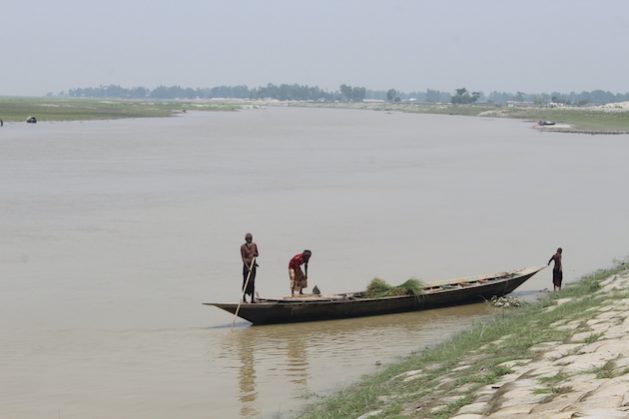
    Ziaur Rahman, a farmer of Pakuar Char under Sariakandi Upazila in Bogura, cultivated jute on a newly emerged river island (char) in the Brahmaputra River, but this year’s flood washed away his crop.

    “Flood is very common in the char areas during the monsoon. Despite that, I sowed jute seeds on the char. This year, the flood hit our locality too early, damaging my jute field,” he said.

    Ziaur said his jute field was almost mature and could have been harvested within a couple of weeks, but the sudden deluge damaged it.

    “I did not get flood forecast in time, and that was why I failed to harvest jutes, incurring a heavy loss this year,” he said.

    Like Zillur, many farmers lost their crops to the devastating flood that swept Bangladesh’s northeast and northwestern regions in June this year.

    According to Bangladesh Agriculture Minister Dr Abdur Razzaque, floods damaged Aus (a type of rice) paddies of around 56,000 hectares across the country this year.

    The Flood Forecasting and Warning Centre (FFWC) under Bangladesh Water Development Board (BWDB) issues daily flood bulletins and warnings, but the people living in remote and vulnerable areas hardly benefit because they do not have the proper technology.

    Access to smartphones

    Under the digital flood forecasting and warning system introduced in 2021, the FFWC issues flood warnings to the people living in flood-prone areas through ‘Google push notifications’ three days to three hours before a flood hits.

    To receive flood warnings, people need an android mobile phone. The notifications are sent to these devices through a Google alert between three days and three hours before the onset of a flood, depending on the system’s predictive capacity.

    BWDB, in collaboration with tech-giant Google and Bangladesh Red Crescent Society, developed the system, which is now functional in the 55 districts of the country.

    Sarder Udoy Raihan, an FFWC sub-divisional engineer, said the BWBD has available data on floods and sends those to Google.

    Google improved flood mapping using its topographical data and sends ‘push flood notifications’ to those living in flood-prone areas.

    While this system has been helpful, many people living in remote chars and flood-prone areas do not have access to smartphones and the internet, so they don’t receive digital flood warnings.

    BWDB has decided to launch a toll-free SMS service containing flood-related messages and information, said officials at BWDB.

    The BWDB, a2i, Google, International Red Cross and Red Crescent Societies have already started a collaboration to reach the flood warnings and information at the doorsteps of the people living in the country’s flood-prone areas through toll-free mobile SMS service. This will enable them to take measures to protect their properties before a flood hits.

    Minimise loss and damage

    FFWC executive engineer Arifuzzaman Bhuyan said talks continue with the stakeholders concerned, including Bangladesh Telecommunication Regulatory Commission (BTRC), to introduce the SMS service.

    “Introduction of the SMS flood alert service depends on the BTRC as there is an issue of cost involvement,” he said, hoping that the BWDB would be able to launch the SMS service in the next season.

    Once the toll-free SMS service is introduced, mobile phone users living in flood zones will be identified using their cellphone tower ping, and SMS will be sent to them containing information on the rise or fall of river water level, severity of flood and details of the nearest shelter.

    Raihan said it would be possible to send around 36 million SMS per year through mobile phone operators if flood warnings could be sent to people through SMS.

    Sardar Mohammad Shah-Newaz, a former director of Flood Division at Dhaka-based think tank, Institute of Water Modelling (IWM), said if the flood forecast were not appropriately disseminated to those living in flood-prone areas, it wouldn’t help.

    “Almost all people of the country use mobile phones. If the flood warnings could reach the people living in flood-prone zones through toll-free mobile SMS, they would be able to take precautionary measures to save their properties and minimise their loss and damage to this end,” he said.

    Deluge a common phenomenon

    Suggesting automation of the flood forecasting system in Bangladesh, Shah-Newaz said the BWDB could introduce the SMS service, and it should launch the service as soon as possible.

    Deluge is a common phenomenon in Bangladesh. During every monsoon, flood hits different parts of the country, causing a huge loss of lives and assets.

    Due to heavy precipitation upstream in India’s northeast states, Bangladesh experienced devastating floods in its northwestern districts and Sylhet division, leaving millions of people stranded and triggering a humanitarian crisis.

    According to the Directorate General of Health Services (DGHS), the death toll from this year’s floods has reached 123 in the country. The total deaths were recorded from May 17 to July 17 in 2022.

    Of the total deceased, 69 people died in Sylhet, while 41 in Mymensingh, 12 in Rangpur and one in Dhaka.


    This piece has been sourced from Inter Press Service

    Afghan Women Face Death in Slow Motion, Says Amnesty Study

    The report follows a nine-month investigation conducted from September 2021 to June 2022 and included a visit to Afghanistan by the group’s researchers back in March. They interviewed 90 women and 11 girls between 14 and 74 years old across the country.

    A “suffocating” Taliban crackdown on human rights is destroying the lives of Afghan women and girls,’ according to a report released by Amnesty International.

    The radical group has systematically violated women’s and girls’ rights to education, work, and free movement, the organisation says in its report on the status of women and girls under Taliban rule.

    Titled, Death in Slow Motion, the report says that in less than a year since it took over, the Taliban’s all-male government has decimated the rights of women and girls in Afghanistan. It says that the Taliban have violated women’s and girls’ rights to education, work and free movement; demolished the system of protection and support for women and girls fleeing domestic violence; arbitrarily detained women and girls for infractions of the Taliban’s discriminatory rules; and contributed to a surge in the rates of child, early and forced marriage in Afghanistan. The Amnesty study says that women who peacefully protested against these restrictions and policies have been harassed, threatened, arrested, forcibly disappeared, detained and tortured.

    The report has documented how women who peacefully protested the increasingly oppressive rules have been threatened, arrested, detained, tortured, and forcibly disappeared.

    “Less than one year after the Taliban’s takeover of Afghanistan, their draconian policies are depriving millions of women and girls of their right to lead safe, free, and fulfilling lives,” said Amnesty’s Agnes Callamard.

    Domestic violence

    The report says, “The scope, magnitude and severity of the Taliban’s violations against women and girls are increasing month by month.”

    The report comprises the results of a nine-month investigation conducted from September 2021 to June 2022 and included a visit to Afghanistan by the group’s researchers back in March. They interviewed 90 women and 11 girls between 14 and 74 years old across the country.

    Amnesty said the Taliban has also decimated protections for those facing domestic violence, detained women and girls for minor violations, and triggered a surge in child marriages.

    Among the instances documented, there is the grim case of women detained for protesting describing torture at the hands of Taliban guards, including beatings and threats of death.

    In one case, a woman told Amnesty’s researchers that guards beat her and other women on the breasts and between the legs “so that we couldn’t show the world.” She said one told her, “I can kill you right now, and no one would say anything.”

    “Taken together, these policies form a system of repression that discriminates against women and girls in almost every aspect of their lives,” the report said. “This suffocating crackdown against Afghanistan’s female population is increasing day by day.”

    It says, “Women and girls arbitrarily detained due to alleged “moral corruption” or for fleeing abuse have been denied access to legal counsel and subjected to torture and other ill-treatment as well as inhuman conditions in detention.

    Child marriages

    To quote from the report, “One university student was detained in 2022 on charges related to the Taliban’s mahram restrictions. She said that soon after her arrest, Taliban members “started giving me electric shocks [with a taser]… on my shoulder, face, neck, everywhere they could… They were calling me a prostitute [and] a bitch… The one holding the gun said, ‘I will kill you, and no one will be able to find your body.’” She said that like all women and girls detained by the Taliban, her detention would stigmatize her for life. “For an Afghan girl, going to prison is no less than death… Once you enter the door, you are labelled, and you cannot erase it.””

    In another case, Khorsheed, a 35-year-old woman from a central province of Afghanistan, told Amnesty that she was forced her to marry her 13-year-old daughter to a 30-year-old neighbour in exchange for a “bride price” of 60,000 Afghanis (around US$670). She said that after her daughter’s marriage, she felt relieved, saying that “She won’t be hungry anymore.”

    Khorsheed said she was considering marrying off her 10-year-old daughter as well, though reluctantly, as she hoped this daughter might provide for the family in the future. She explained, “She went all the way to fifth grade. I wanted her to study more. She would be able to read and write, and speak English, and earn… I have a hope that this daughter will become something, and she will support the family. Of course, if they don’t open the school, I will have to marry her off.”

    Amnesty’s report comes merely days after German Foreign Minister Annalena Baerbock told Radio Free Europe that Afghan women are experiencing “the biggest violation of women’s rights on Earth” since the Taliban took over.


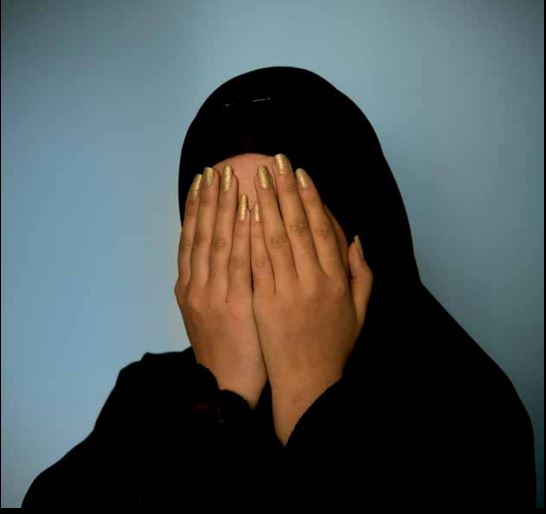
    Image: Kiana Hayeri / Amnesty International

    Abortion in Canada — Legal for Decades But Hindered by Stigma

    Abortion access differs by province partly because healthcare in Canada is a provincial responsibility. According to 2019 figures, Quebec has the highest number of access points with 49 province-wide, while Newfoundland and Labrador have four and Saskatchewan has three.

    By Juliet Morrison

    Toronto resident Miranda Knight describes her abortion experience as relatively simple. After finding out she was pregnant on a Wednesday in 2017, she booked an appointment at an available clinic and got one for the following Monday. She had the procedure that day and left the clinic by noon.

    But Knight’s experience is not the reality for all. As Canada’s most populous city, Toronto has several access points to abortion. Despite abortion being legal nationwide since 1988 and officially treated like any other medical procedure, many other parts of the country do not have access points.

    The United Nations has highlighted this disparity. A 2016 report from the Committee on the Elimination of Discrimination Against Women encouraged the Canadian government to improve the accessibility of abortion services nationwide.

    According to the Abortion Rights Coalition of Canada (ARCC), fewer than one in five hospitals offer the procedure.

    ARCC Executive Director Joyce Arthur said access could be a real struggle for those living outside cities or far from the US border. Most access points are found within less than 150 kilometers of a town, where most Canadians live.

    “As soon as you’re away from the city, or up north, you often might have to travel for services, sometimes hundreds of kilometres, and even sometimes for medication. Access is pretty good in British Columbia, Ontario, and Quebec […], but the rest of the provinces only have one or two or three or four access points. It’s just not enough,” she said.

    Abortion access differs by province partly because healthcare in Canada is a provincial responsibility. According to 2019 figures, Quebec has the highest number of access points with 49 province-wide, while Newfoundland and Labrador have four and Saskatchewan has three.
    Stigma seeking abortion care

    Disparities in access have led community organizers to step up and help those in need get care.

    Shannon Hardy, a birth doula, founded Abortion Support Services Atlantic (ASSA) in 2012 after encountering issues related to abortion access across the Atlantic provinces.

    “Some things came across my desk about lack of access in Prince Edward Island. And I didn’t actually know that PEI didn’t offer abortion services, like the entire island for 32 years just didn’t offer it. […] It kind of blew my mind,” she said.

    People wanting to terminate their pregnancy can contact ASSA for information, peer support, transport to abortion clinics, or even financial help for travel. In these cases, Hardy told IPS that ASSA would often fundraise to pay for gas, hotels, or flights.

    Support services are beneficial for those encountering stigma, Hardy said.

    “When a person is facing an ill-timed or unwanted pregnancy, they can immediately feel a stigma around seeking abortion care. Who is safe to reach out to? Will people judge me? Will my doctor/medical center offer me care? My goal for creating ASSA was to have a place […] where anyone seeking abortion care could reach out and help would just be there.”

    Hardy’s work has spearheaded a movement. Many other doula organizations have popped up across the country with a similar model. They also often collaborate with national abortion advocacy organizations to help people access the procedure in circumstances that require on-the-ground coordination and support.

    Yet, Hardy believes that the need for organizations like ASSA point to critical access issues across the country and inaction at government levels.

    “It’s been frustrating that there’s not more access. We, as a grassroots organization, are the ones responsible for getting people from one small town to access abortion instead of the healthcare system stepping in and saying, ‘you know what, we actually have the resources to offer that medical service. So, we’re just going to do that to make life easier’,” she said.

    Stigma preventing thousands

    Working in Alberta, one of Canada’s most socially conservative provinces, Autumn Reinhardt-Simpson is familiar with how attitudes on abortion can impact care. She founded Alberta Abortion Access Network to help those across the province in 2015.

    Reinhardt-Simpson told IPS that those in rural areas face increased access issues because their care is more dependent on the “private moral concerns” of the health care professionals in their area.

    This can make trying to get an abortion more complicated, she explained. Many physicians and pharmacists are either unwilling to offer reproductive health services or unaware of their legality.

    In one case, Reinhardt-Simpson had to visit ten different pharmacies to find one that stocked Mifegymiso—the abortion pill that became legal in 2017.

    “They were saying things like, ‘Oh well, we can’t dispense this, or this isn’t legal yet. Or well, we can’t get the medication.’ And it’s like no, no, that’s not how this works,” she said.

    Alberta has only four access points for surgical abortions, all in its cities. Along with another helper, Reinhardt-Simpson services the whole of Alberta’s 661,848 km² (411, 253 mi²) and helps people access abortion services.

    In her view, the stigma around abortion care is detrimental. It can even be physically harmful—particularly for those in later trimesters desperate for solutions.

    “The stigma is preventing thousands of Albertans from receiving critical and routine health care. Because there are so many hoops to jump through, some people will get tired of those hoops, and they will try to do something themselves. It doesn’t usually end well. […] the stigma is physically dangerous, it’s emotionally harmful, and culturally it does us no good,” she said.

    Being familiar with reproductive justice issues as a community organizer, Knight feels compelled to share her abortion story to combat stigma and normalize the procedure.

    She’s currently developing a storytelling project that will feature diverse abortion experiences. Knight told IPS the project’s proceeds would go to improving access across Canada. She hopes to help to improve access for others, considering how essential the procedure was for her.

    “My prevailing feeling about the whole thing was just relief. I don’t want to live in an alternate universe where I didn’t have access to abortion. My life would be very different now,” she said.


    This piece has been sourced from Inter Press Service

    Image: Gayatri Malhotra / Unsplash

    First Person: I Go to Sleep and Wake Up to the Sound of Gunfire

    A young man whose community has been at the epicentre of the violence that has been raging between rival gangs in the troubled neighbourhood of Cité Soleil in the Haitian capital, Port-au-Prince, says that he goes to sleep and wakes in the morning to the sound of gunfire. Edwin*, is a youth leader in his community, part of a group which is supported by the UN Peacebuilding Fund.

    “Since July 8th, there has been an intensification of violence in Cité Solei and especially in the area which I live in, which is called Brooklyn. There is heavy fighting in the streets and everyone is very stressed. We cannot leave our homes most of the time and there is no traffic coming in and out of the neighbourhood.

    This causes a lot of problems especially the lack of food and water. I am sometimes able to share food with neighbours, but many people are going hungry. The small amount of drinking water that is available has tripled in price.

    We have a greeting in our language, Creole, when someone leaves home, we tell them to be “pridan” or careful, but this expression has lost its meaning now because our life is so dangerous. You think you are safe at home but bullets know every pathway and back alley in our neighbourhood.

    Cycle of fear, stress and despair

    If a friend or family member manages to leave the Cité Soleil, we begin to worry that they have been killed if we don’t hear from them during the day. This adds even more worry to our already traumatic life.

    I go to bed and wake up to the sound of gunfire which is very stressful, but, even if the shooting terrifies me, I try and use the rhythmic sound of bullets being fired to lull me to sleep; this is the only way I can survive through this difficult period. Sometimes, you can use music to escape the constant shooting noise, but not when shots are being fired so close to your house; it’s just too loud.

    My life now is a cycle of fear, stress and despair. I’m always experiencing at least one of these feelings and I just want them to stop, so I can get back to normality.

    Battling for a simple but normal life

    Despite this, I do have some hope and remain positive most of the time. The work I’m doing with my youth group Comite Consultatif des Jeunes is helping me to get through this difficult period.

    The group organizes activities bringing young people from Cité Soleil, and two other neighbourhoods, Saint-Martin and Bel-Air, which are controlled by rival gangs. We bring hundreds of children together to enjoy sports, music or to play board games like chess.

    We are working with young women and men to build friendships and support-networks across the broader community. In a way, as the fighting continues around us, we are battling for a simple but normal life, where you can walk the streets with friends, find a job or start a small business. Of course, it has not been possible to carry out any of these activities over the last two weeks.

    Hear our voices

    I am committed to working with young people to improve their lives and I see myself as a leader. Being part of the committee gives me confidence and helps to empower me and the other nine members.

    We want our voices to be heard outside Cité Soleil, because if no-one hears us nothing will change. If people living in the rest of Port-au-Prince or indeed anywhere in the world hear us, then we can’t be forgotten, and we can work together to change our lives for the better.


    *The name has been changed to protect the identity of the individual.

    Evolving Cholera Poses Outbreak Threat – Scientists Urge Close Monitoring of Cholera Variants

    New cholera variants capable of causing large outbreaks could emerge, say scientists, recommending Constant monitoring of the evolving cholera bug to prevent outbreaks. The world has seen seven pandemics of the infectious disease.

    By Sanjeet Bagcchi

    A particularly infectious strain of cholera, predicted to lead to an eighth pandemic of the disease, fizzled out after it suddenly became susceptible to antibiotics, but researchers are calling for close monitoring of the bug to prevent future outbreaks.

    Cholera, an acute diarrhoea disease which spreads through contaminated food and water, first emerged in the Ganges delta in 1817. Seven subsequent cholera pandemics killed millions of people across all continents.

    Linked to poor access to clean water and sanitation, the disease typically affects  vulnerable communities such as refugees. There are an estimated 1.3 to 4 million infections each year, according to the WHO, and estimates for the number of deaths vary between 21,000 and 143,000, but the true burden is unknown as many cases go unreported.

    Two serogroups of V. cholerae, known as O1 and O139, are responsible for cholera outbreaks. Serogroups of bacteria have a common antigen —  a substance that is foreign to the human body that can induce an immune response and produce antibodies.

    Researchers show in a study published this month in Nature Communications, how O139 V. cholerae, instead of causing the eighth pandemic as predicted, disappeared. But it caused several outbreaks in India and Bangladesh in the early 1990s and temporarily displaced O1 V. cholerae as the dominant, disease-causing variant. By 2015, O139 V. cholerae had substantially declined while the O1 variant returned to being the dominant variant and is currently responsible for the large outbreaks in Yemen and Somalia. The O1 variant, which emerged in the 1960s, replaced all pre-existing variants.

    Eighth cholera pandemic?

    In the study, the researchers examined 330 samples of O139 V. cholerae taken between 1992 and 2015 and observed that over time there were significant changes in its genome and these changes caused the variant’s “unexpected decline”.

    “The O139 variant, when it first appeared, was heavily loaded with antibiotic-resistant ‘cassettes’ that likely made it more successful than the O1 variant,” said Ankur Mutreja, corresponding author of the study and a global health scientist affiliated with the UK-based Cambridge Institute of Therapeutic Immunology and Infectious Disease. Antibiotic-resistant cassettes carry specific genes responsible for resistance.

    “On the other hand, the O1 variant, which was previously largely sensitive to antimicrobials, gained resistance and re-established itself as the main etiological agent of cholera,” Mutreja told SciDev.Net.

    “There’s a real possibility that another cholera variant may emerge with the potential to cause large outbreaks, which could lead to the eighth cholera pandemic,” said Mutreja. “Continuous surveillance of the variants in circulation is our best chance of preventing mass outbreaks.”

    According to the researchers, the cholera bug is not currently monitored on a regular basis to keep ahead of it as it evolves and to plan changes to vaccines and public health responses.

    Neelam Taneja, professor of medical microbiology at the Postgraduate Institute of Medical Education and Research, India, told SciDev.Net that “continued monitoring of this potentially pathogenic organism is required at each level, including its genetic diversity and presentation of disease in the human population”.

    “By continually checking the genetic footprints of different strains all over the world, we can avoid another pandemic as observed in the history of cholera that claimed the lives of millions of people,” she said. “Even with research advancements and availability of cholera vaccines, the disease remains a big threat to mankind, especially in developing countries.”


    This piece has been sourced from SciDev.Net.

    Image:  CDC Global (CC BY 2.0). (This image has been cropped.)

    MIT Engineers Develop Stickers that can See Inside the Body

    MIT engineers designed an adhesive patch that produces clear ultrasound images of the heart, lungs, and other internal organs. The stamp-sized device sticks to skin and can provide continuous ultrasound imaging of internal organs for 48 hours.

    By Jennifer Chu  |  MIT News Office

    Ultrasound imaging is a safe and noninvasive window into the body’s workings, providing clinicians with live images of a patient’s internal organs. To capture these images, trained technicians manipulate ultrasound wands and probes to direct sound waves into the body. These waves reflect back out to produce high-resolution images of a patient’s heart, lungs, and other deep organs.

    Currently, ultrasound imaging requires bulky and specialized equipment available only in hospitals and doctor’s offices. But a new design by MIT engineers might make the technology as wearable and accessible as buying Band-Aids at the pharmacy.

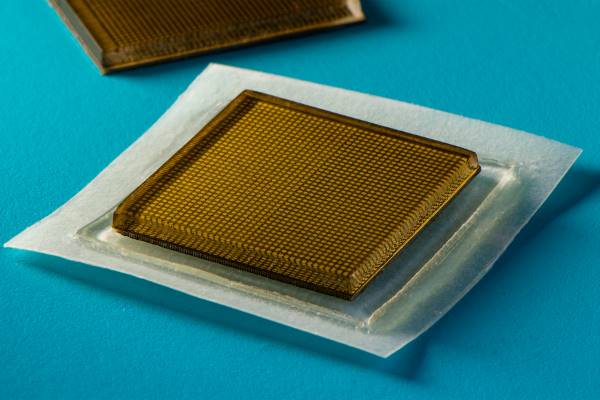
    In a paper appearing today in Science, the engineers present the design for a new ultrasound sticker — a stamp-sized device that sticks to skin and can provide continuous ultrasound imaging of internal organs for 48 hours.

    The researchers applied the stickers to volunteers and showed the devices produced live, high-resolution images of major blood vessels and deeper organs such as the heart, lungs, and stomach. The stickers maintained a strong adhesion and captured changes in underlying organs as volunteers performed various activities, including sitting, standing, jogging, and biking.

    The current design requires connecting the stickers to instruments that translate the reflected sound waves into images. The researchers point out that even in their current form, the stickers could have immediate applications: For instance, the devices could be applied to patients in the hospital, similar to heart-monitoring EKG stickers, and could continuously image internal organs without requiring a technician to hold a probe in place for long periods of time.

    If the devices can be made to operate wirelessly — a goal the team is currently working toward — the ultrasound stickers could be made into wearable imaging products that patients could take home from a doctor’s office or even buy at a pharmacy.

    “We envision a few patches adhered to different locations on the body, and the patches would communicate with your cellphone, where AI algorithms would analyze the images on demand,” says the study’s senior author, Xuanhe Zhao, professor of mechanical engineering and civil and environmental engineering at MIT. “We believe we’ve opened a new era of wearable imaging: With a few patches on your body, you could see your internal organs.”

    The study also includes lead authors Chonghe Wang and Xiaoyu Chen, and co-authors Liu Wang, Mitsutoshi Makihata, and Tao Zhao at MIT, along with Hsiao-Chuan Liu of the Mayo Clinic in Rochester, Minnesota.

    A sticky issue

    To image with ultrasound, a technician first applies a liquid gel to a patient’s skin, which acts to transmit ultrasound waves. A probe, or transducer, is then pressed against the gel, sending sound waves into the body that echo off internal structures and back to the probe, where the echoed signals are translated into visual images.

    For patients who require long periods of imaging, some hospitals offer probes affixed to robotic arms that can hold a transducer in place without tiring, but the liquid ultrasound gel flows away and dries out over time, interrupting long-term imaging.

    In recent years, researchers have explored designs for stretchable ultrasound probes that would provide portable, low-profile imaging of internal organs. These designs gave a flexible array of tiny ultrasound transducers, the idea being that such a device would stretch and conform with a patient’s body.

    But these experimental designs have produced low-resolution images, in part due to their stretch: In moving with the body, transducers shift location relative to each other, distorting the resulting image.

    “Wearable ultrasound imaging tool would have huge potential in the future of clinical diagnosis. However, the resolution and imaging duration of existing ultrasound patches is relatively low, and they cannot image deep organs,” says Chonghe Wang, who is an MIT graduate student.

    An inside look

    The MIT team’s new ultrasound sticker produces higher resolution images over a longer duration by pairing a stretchy adhesive layer with a rigid array of transducers. “This combination enables the device to conform to the skin while maintaining the relative location of transducers to generate clearer and more precise images.” Wang says.

    The device’s adhesive layer is made from two thin layers of elastomer that encapsulate a middle layer of solid hydrogel, a mostly water-based material that easily transmits sound waves. Unlike traditional ultrasound gels, the MIT team’s hydrogel is elastic and stretchy.

    “The elastomer prevents dehydration of hydrogel,” says Chen, an MIT postdoc. “Only when hydrogel is highly hydrated can acoustic waves penetrate effectively and give high-resolution imaging of internal organs.”

    The bottom elastomer layer is designed to stick to skin, while the top layer adheres to a rigid array of transducers that the team also designed and fabricated. The entire ultrasound sticker measures about 2 square centimeters across, and 3 millimeters thick — about the area of a postage stamp.

    The researchers ran the ultrasound sticker through a battery of tests with healthy volunteers, who wore the stickers on various parts of their bodies, including the neck, chest, abdomen, and arms. The stickers stayed attached to their skin, and produced clear images of underlying structures for up to 48 hours. During this time, volunteers performed a variety of activities in the lab, from sitting and standing, to jogging, biking, and lifting weights.

    From the stickers’ images, the team was able to observe the changing diameter of major blood vessels when seated versus standing. The stickers also captured details of deeper organs, such as how the heart changes shape as it exerts during exercise. The researchers were also able to watch the stomach distend, then shrink back as volunteers drank then later passed juice out of their system. And as some volunteers lifted weights, the team could detect bright patterns in underlying muscles, signaling temporary microdamage.

    “With imaging, we might be able to capture the moment in a workout before overuse, and stop before muscles become sore,” says Chen. “We do not know when that moment might be yet, but now we can provide imaging data that experts can interpret.”

    The team is working to make the stickers function wirelessly. They are also developing software algorithms based on artificial intelligence that can better interpret and diagnose the stickers’ images. Then, Zhao envisions ultrasound stickers could be packaged and purchased by patients and consumers, and used not only to monitor various internal organs, but also the progression of tumors, as well as the development of fetuses in the womb.

    “We imagine we could have a box of stickers, each designed to image a different location of the body,” Zhao says. “We believe this represents a breakthrough in wearable devices and medical imaging.”

    This research was funded, in part, by MIT, the Defense Advanced Research Projects Agency, the National Science Foundation, the National Institutes of Health, and the U.S. Army Research Office through the Institute for Soldier Nanotechnologies at MIT.


    Reprinted with permission of MIT News 

    Image: Courtesy MIT

    Weather Factors Key to ‘Predicting’ Dengue Outbreaks

    Dengue transmission is expected to intensify due to climate change because weather plays key a role in the spread of mosquito-borne diseases as the conditions are optimal for mosquito breeding. The amount of rainfall can predict mosquito prevalence within the month.

    By Sanjeet Bagcchi

    Weather factors, including rainfall, temperature and ocean warming, play an important role in determining the activity of the Aedes mosquito which spreads dengue and other viral diseases like yellow fever, chikungunya and Zika, according to a new study conducted in Sri Lanka.

    Dengue is widespread throughout the tropics, with local variations in risk influenced by climate parameters as well as social and environmental factors, according to the WHO. It is spread to humans through the bite of infected female mosquitoes of the Aedes aegypti and A. albopictus species.

    The incidence of dengue across the world has increased substantially with nearly 50 per cent of the global population currently at risk of the disease and an estimated 100 to 400 million infections each year, says the WHO.

    While ocean warming and temperature can predict the activity of Aedes mosquitoes with a lead time of one to six months, the amount of rainfall can project Aedes mosquito prevalence in the same month, says the study published July in The Lancet Planetary Health. Dengue fever generally occurs after rainy weather when conditions are optimal for the breeding of mosquitoes. Hotter temperatures were associated with increases in mosquitoes one to two months later. The warmer ocean temperatures predicted increases in mosquitoes with a five- to six-month delay, the study found.

    Climate factors

    “Knowing the behaviour and natural habitat of mosquitoes and their association with climate factors is important for prediction [of Aedes mosquito-borne diseases such as dengue], and also for planning effective mosquito control interventions,” Prasad Liyanage, lead author of the study, tells SciDev.Net.

    “Climate factors have the potential to serve as predictors of mosquito activity at different times and may enable us to quantify the risk and implement effective mosquito control interventions before a dengue epidemic emerges,” said Liyanage, an affiliate of the Sri Lanka Ministry of Health and the Umea University, Sweden.

    Since there is no effective dengue vaccine available, controlling mosquito populations is considered the most effective strategy to prevent the virus spreading, the researchers say.

    The study evaluated three weather variables between 2010 and 2018: temperature, rainfall and ocean warming. Ocean warming was assessed through a technical measure called Oceanic Niño Index which determines whether Pacific Ocean waters are warmer or cooler than average.

    During the eight-year period, the researchers noted three events where unusually warm ocean temperatures occurred. They also compared climate variables with surveillance data relating to Aedes mosquitoes.

    Can intensify with climate change

    Yesim Tozan, a co-author of the study and assistant professor of global health at the US-based NYU School of Global Public Health, says health authorities should promote and invest in Aedes mosquito surveillance to control Aedes-borne diseases.

    “Climate services and public health should work together to mitigate the potential increase in the risk of mosquito-borne diseases, which is predicted to occur under various climate change scenarios,” she tells SciDev.Net.

    According to Tozan, dengue transmission is expected to intensify due to climate change. “If we can use climate and weather data to predict seasonal patterns of mosquitoes, this timely information would allow public health authorities to proactively manage mosquito control operations,” she adds.

    Thekkekara Jacob John, former professor of clinical virology at the Christian Medical College in Vellore, India, says: “This study adds specific details to our common knowledge that Aedes breeding is modulated by climate — rainfall and temperature. The benefits of collection and analysis of already available data for understanding the correlation between specific climatic factors and increasing breeding are well illustrated.”


    This piece has been sourced from SciDev.Net.

    Image: Patrick de Noirmont / Sanofi Pasteur – CC BY-NC-ND 2.0). (This image has been cropped.)

    Colombo’s Controversial New President

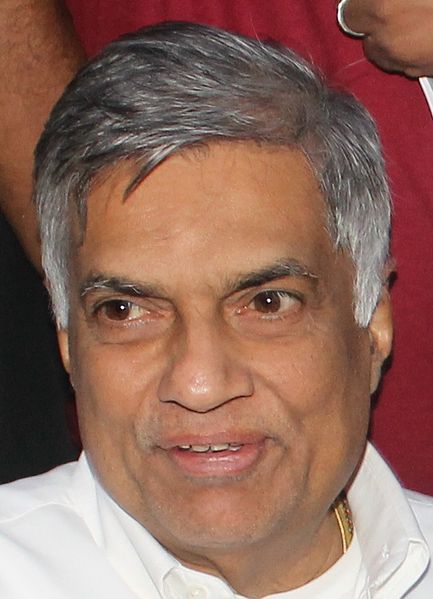
    Ranil Wickremasinghe’s appointment is controversial. He was once considered a highly credible presidential candidate. Yet most Sri Lankans believe he now lacks legitimacy to be president, which is why they opposed his candidacy.

    By Neil DeVotta  /  Wake Forest University

    On 20 July 2022, Sri Lanka’s parliament voted to make Ranil Wickremasinghe the country’s eighth Executive President until November 2024. That is when Gotabaya Rajapaksa, who fled the island on 13 July, would have completed his term. Gotabaya’s humiliating exit stemmed from ferocious island-wide protests precipitated by Sri Lanka’s worst ever post-independence economic crisis.

    Wickremasinghe’s appointment is controversial. He was once considered a highly credible presidential candidate. Yet most Sri Lankans believe he now lacks legitimacy to be president, which is why they opposed his candidacy.

    Wickremasinghe’s election is procedurally legitimate. But it is politically less so. He won less than 31,000 votes during the August 2020 parliament elections and his United National Party (UNP) failed to win a single seat. The UNP is a storied party that negotiated Sri Lanka’s independence and Wickremasinghe is related to nearly all its important leaders.

    The UNP has withered under Wickremasinghe’s leadership. In the 2020 parliamentary elections it qualified for one of 29 national list seats. This is how Wickremasinghe managed to become a party of one in parliament.

    The constitutional prerogative that allows the prime minister to succeed a deposed president assumes that the prime minister will have been elected to parliament. But Wickremasinghe was not elected and is considered to have entered parliament through the back door.

    His close ties to the Rajapaksa family is the second reason Wickremasinghe is considered ill-suited to be president. Wickremasinghe shielded the Rajapaksas from prosecution when he was prime minister between 2015 and 2019. The Rajapaksas picked him to be prime minister because they believed that he would continue to protect their interests. He is now branded ‘Ranil Rajapaksa’.

    Rajapaksas preferred Ranil

    Wickremasinghe’s reputation was further tarnished during the 2015 bond scandal involving the UNP when he was prime minister. Having prevented Mahinda Rajapaksa from winning a third term and campaigning on a platform that promised good governance, the national unity government Wickremasinghe was part of turned out to be as corrupt as its predecessor. In typical Sri Lankan fashion, no one has been held responsible for the scandal.

    Wickremasinghe has always sought to be politically relevant. After insisting he would not enter parliament via the national list following the 2020 elections debacle, he went months without nominating anyone from UNP and then appointed himself. His determination to latch on to UNP’s leadership despite successive election losses is why the party split. The breakaway group formed the Samagi Jana Balawegaya (SJB).

    After Gotabaya fled to the Maldives, Wickremasinghe agreed to step down as prime minister. But the gazette Gotabaya released conveniently appointed Wickremasinghe acting president. Once Gotabaya resigned, Wickremasinghe became interim president and now he has been elected president.

    Sajith Premadasa, leader of the SJB opposition, was supposed to compete against Wickremasinghe. He ended up backing Dulles Alahapperuma, a former journalist with strong ties to the Rajapaksa-led Sri Lanka Podujana Peramuna (SLPP). In exchange for the support, Premadasa was to become prime minister in an Alahapperuma presidency.

    Leading up to the secret ballot vote in parliament, it appeared Alahapperuma’s candidacy was building momentum. But the Rajapaksas preferred Wickremasinghe and most SLPP members did too.

    A Rajapaksa stooge?

    Wickremasinghe won handily with 134 votes, while Alahapperuma captured 82 votes. Mahinda Rajapaksa pretends he is sorry to see the SLPP’s candidate losing to Wickremasinghe, but this is what the Rajapaksas preferred. Bribing parliamentarians to secure their votes to pass constitutional amendments or switch parties is now a common practice in Sri Lanka. It appears the Rajapaksas may have resorted to bribery in helping Wickremasinghe get as many votes as possible.

    Wickremasinghe’s election does not represent the will of the people. The public already view him as a Rajapaksa stooge. Under his leadership, the Rajapaksas will avoid being prosecuted for their sundry crimes. Gotabaya Rajapaksa is bound to return to Sri Lanka and enjoy a high security retirement. This does not mean that the Rajapaksas would have been held accountable for their economic malpractice and plunder under president Allahapperuma. He too has long operated within the Rajapaksa camp. The family can continue using the SLPP parliament majority to dictate the government’s agenda until the next parliamentary elections.

    The struggle to get rid of the Rajapaksas has only partly succeeded. Mahinda Rajapaksa may have been ousted as prime minister but the family continue to be represented in parliament. The protestors wanted Wickremasinghe out, but he is now president — an outcome no one envisioned. And with Wickremasinghe picking former schoolmate Dinesh Gunawardena to be the new prime minister, the Rajapaksa family will also have a strong ally overseeing parliamentary affairs.

    Champion of neoliberal economics

    Wickremasinghe’s election is bound to rattle China, given its close ties to the Rajapaksa family. On the one hand, China is a major creditor and Wickremasinghe will need the country’s help restructuring Sri Lanka’s debts. On the other hand, the new president has long championed neoliberal economics and is more sensitive to Indian and western interests in the Indo-Pacific. His election, therefore, has geopolitical ramifications as well.

    Once Wickremasinghe was elected president, a magistrate’s court barred people from congregating within 50 metres around the statue of SWRD Bandaranaike, Sri Lanka’s fourth prime minister. The statue lies next to the main protest site outside the Presidential Secretariat. The ruling was in response to police claiming that protestors could damage the statue — despite the protestors having gathered at the site for 103 days. Wickremasinghe will not tolerate disorderly conduct, which may herald a more muted struggle going forward.

    The protestors’ demands are laudable but come across as utopian. Their struggle also disregards how the country’s majoritarian politics has fanned nepotism and corruption. The now fatigued protest movement may fizzle and this is especially likely if Wickremasinghe can form a cross-party government and minimise the current scarcities. Sri Lanka represents an economy of deficits. It must cough up US$500 million a month just for fuel. Food inflation exceeded 80 per cent in June 2022. Nearly 90 per cent of Sri Lankans are skipping meals.

    The island needs to restructure its debts and restructure its economy. How long the pain lasts and how future protests pan out will determine Wickremasinghe’s presidency.


    Neil DeVotta is Professor of Politics and International Affairs at Wake Forest University.


    This piece has been sourced from the East Asia Forum of the Australian National University.

    Bangladesh Gender Ratio Tilts Towards Women for the First Time Ever

    Bangladesh’s total population increased from 14.4 crore in 2011 to 16.51 crore in 2022. The country recorded an average annual population growth rate of 1.22 per cent, down from the average annual population growth rate of 1.37 per cent recorded in 2011. 

    The preliminary results of Bangladesh’s census released on Wednesday, show that efforts to correct the male-tilted gender ratio have yielded results.

    The results show that women outnumber men in Bangladesh’s total population for the first time in the country’s history. The preliminary result of the sixth population census recorded 8.33 crore women against 8.17 crore men. Transgender and queer people were recorded as hijras and they numbered 12,629.

    With this, Bangladesh joins Sri Lanka to become the second country in SouthAsia where women outnumber men.

    According to the Bangladesh Bureau of Statistics (BBS) that carried out the Population and Housing Census 2022, the total population of the country increased from 14.4 crore in 2011 to 16.51 crore in 2022. Bangladesh recorded an average annual population growth rate of 1.22 per cent, down from the average annual population growth rate of 1.37 per cent recorded in 2011.

    The population of Hindus, Christians and Buddhists in the country shows a falling trend. The percentage of Hindus declined from 8.54 per cent in 2011 to 7.95 per cent in 2022. The percentage of Buddhists in the total population fell from 0.62 per cent in 2011 to 0.61 per cent of the total in 2022. Likewise, the Christian population too fell from 0.31 per cent to 0.30 per cent of the total population over the decade. On the other hand, the population of Muslims increased from 90.39 per cent in 2011 to 91.4 per cent in the latest survey.

    There has been no explanation for the declining population of the minority groups from the Bureau of Statistics so far.

    In percentage terms, literacy in Bangladesh showed a sharp rise during the 10 years between 2011 and 2022. Literacy that stood at 51.77 per cent in 2011 has risen by 22.89 per cent over the decade and stands at 74.66 per cent in 2022.

    Close to 56 per cent of the Bangladeshis use mobile phones in 2022 while 30.68 per cent of the population is using the internet.

    The region showing the highest population growth rate in the Dhaka division where 4.4 crore of the country’s citizens live – a population growth rate of 1.94 per cent per year.