More

    Hydropower Collaboration Offers High Prospects of Energy Security and Trade in the SouthAsian Subcontinent

    The South Asia Regional Initiative for Energy Integration programme prompted by USAID is geared towards regional energy integration and cross border energy trade in SouthAsia in general and BBIN countries in particular, thus encouraging the setting up of a common regional power market to benefit the region.

    By Geeta Dash

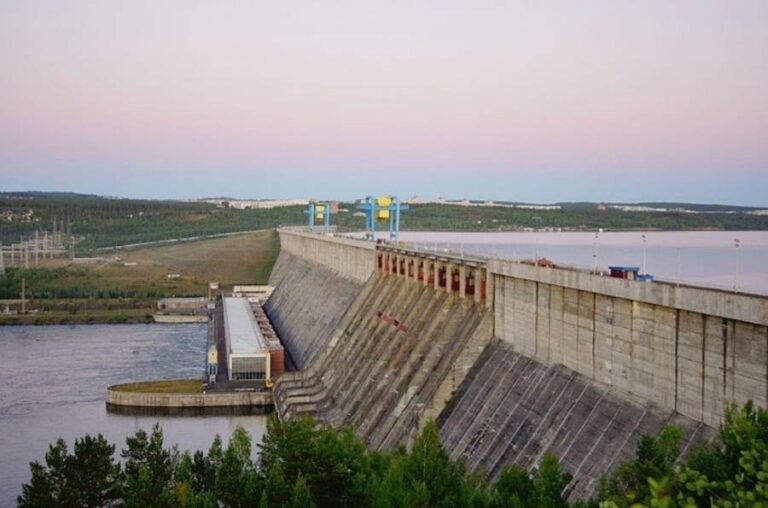
    The International Energy Agency (IEA) says that hydropower constitutes 17 per cent of the total energy produced in the world. India generates 11.6 per cent (as per a report of Ministry of Power, Government of India for 2022) from hydroelectric sources, despite the social-environmental problems associated with the river dam hydel projects. Lesser fossil fuel use will give way to a greater degree of use of hydropower in future. Hydropower is a blessing for mankind, especially in an era of eco-disasters and climate change due to excessive use of fossil fuels in energy production.

    Multi-purpose river valley dams and reservoirs are most suitable for hydropower generation, apart from irrigation, flood control, navigation, fishing and tourism, to mention a few. The disadvantages however are the long gestation period, high construction costs, social and ecological problems like displacement of the local populace and the submersion of flora and fauna in vast areas.

    There are benefits too: lower maintenance cost, lower production cost in comparison to fossil fuel based power and low electricity tariff. Hydroelectricity is consistent, stable and secured unlike wind and solar energy. The power generation is also easily controllable, to increase or decrease instantly as per demand.

    BBIN grid

    Though SouthAsian countries have a very high potential, the region has not yet fully realised its hydropower potential. Bhutan and Nepal have huge hydro power potential and their electricity demand is catered entirely by hydroelectricity. The average per capita energy consumption in the region is low and the electricity distributed is unstable and of low quality in rural areas. As a result, most rural households depend on wood and biomass for cooking – in turn leading to deforestation and carbon emission.

    Afghanistan and Pakistan have political reasons for their dissociation in energy integration efforts, Sri Lanka and Maldives are away in the sea, having difficulty in grid connectivity. However, the riparian BBIN countries (Bangladesh, Bhutan, India and Nepal) constitute a compact sub-region and have cross border grid connectivity, offering the BBIN countries an opportunity to collaborate in hydropower generation, distribution and form a dependable power market.

    Water rich Himalayan countries like Nepal and Bhutan have been exporting surplus hydro-electricity to India during the peak demand season. Nepal imports electricity from India during dry and peak demand season. Since off the grid areas of all the BBIN countries need power for improving the lives of their people as well as their overall economic development, the power integration and collaboration between the BBIN countries offers a win-win to all four countries.

    Enormous potential

    India has constructed four hydro-electric projects producing more than 2,000 MWs of power in Bhutan. The 600 MW Indo-Bhutan joint venture Kholongchhu hydroelectricity project is already under construction, due to be completed in 2025. A MoU has recently been signed between governments of India, Bangladesh and Bhutan for constructing a 1,125 MW hydel plant in Bhutan for exporting electricity to India and Bangladesh.

    Bangladesh has 43 hydropower plants with a capacity to produce 5,376 MW of power production capacity. But none of these is a joint venture. However, a good grid connectivity exists to facilitate cross-border energy trade. Nepal, with the world’s second highest fresh water availability, can feasibly produce 43,000 MW of hydropower. But its 220 hydroelectric projects produce only 787 MW of electricity. A few of these hydroelectric projects have been constructed in collaboration with India. Nepal lacks financial and technical capability for installing mega power plants. Just recently, following the Indo-Nepal “Vision Statement of Power” announced during the visit of Indian Prime Minister Narendra Modi to Nepal in May 2022, the prime ministers of the two countries agreed to build a 695 MW hydropower plant on Nepal’s Arun river as a joint venture.

    CBET in PPP mode

    The pace of progress in energy integration, however, depends on the increase in the cross border energy trade (CBET) in a public private partnership (PPP) mode, involving big investors. The World Bank’s climate change action plan (2021-25) suggests regional cooperation to decarbonise energy production. The Indian initiative, “One Sun One World One Grid” is sure to help achieve this objective.

    The Indian energy think tank, Integrated Research and Action for Development (IRADe) has assessed that the CBET would be upto 40 billion units (BU) by 2022 and 70 BU by 2027. USAID’s South Asia Regional Initiative for Energy Integration (SARI / EI) programme is working towards regional energy integration and CBET in South Asia in general and BBIN countries in particular. It is also holding discussions with the governments of South Asian countries and bringing the government as well as non-government stakeholders together, thus encouraging the setting up of a common regional power market that would benefit all the countries, to meet their power requirements.

    All of these hold promise – and are reason enough for planners to bear in mind the region’s hydroelectric potential while planning their next steps.


    Geeta Dash is a recipient of ‘Media Fellowship’ from NTPC School of Business, under the ‘Think-Tank Project’ funded by USAID for the SARI/EI project, currently being implemented by IRADe.


    Image: Wikimedia
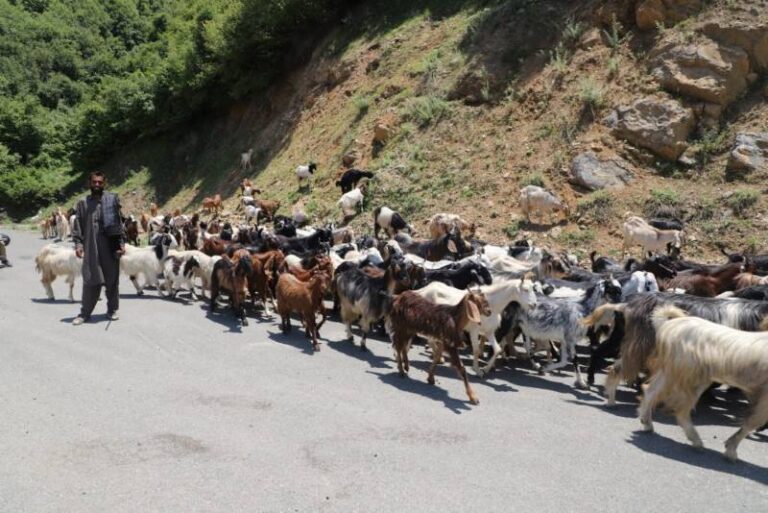
    Heatwave in Kashmir Spells Difficult Future for Pastoralists

    This year’s heatwave has left the pastoralist community of Jammu and Kashmir with inadequate fodder and water, and many fear an uncertain future in a warming world.

    By Kaleem Geelani

    This year, the annual migration of Gujjars and Bakarwals to green pastures in Kashmir has not been routine. Usually, the two pastoralist communities spend November to April in Jammu, and May to October in Kashmir, but soaring heat forced them to leave Jammu early this year.

    Arriving at the Banihal Pass in Kashmir late in March, Fula Begum – a member of the Bakarwal community – and her family have been struggling to find decent grazing for their sheep. “Natural resources are our sole source of income, but it seems they’re shrinking now. Our flock has to settle for less each day; there is no ample grass available and this is alarming for all of us,” she said.

    Who are the Gujjars and Bakarwals?

    Every summer, pastoralists migrate from Jammu’s forest plains to the alpine meadows of Kashmir. The migration is driven by the need for pasture for their livestock, as Jammu becomes drier in the summer. The nomads traverse mountainous slopes and roads for as long as a month, only stopping briefly along the way.

    The worst heatwave in memory

    This year, the Gujjars and Bakarwals were affected by the unusual heatwave which set new records in March and April. According to Faizan Arif Keng, an independent weather forecaster, these temperatures were over 10 degrees Celsius above normal for several days in March across Jammu and Kashmir.

    According to the India Meteorological Department, the city of Srinagar, in the high mountains, experienced the warmest March in 131 years this year, with Jammu, just off the plains, recording the second-warmest March temperatures since 1982. Keng told The Third Pole that this trend of rising temperatures inching close to, or breaking, records was true of weather stations across the region.

    In April, Pahalgam and Banihal recorded their highest temperatures in a decade, with Batote recording the highest in over two decades. “There is a clear indication of a larger climatological shift, as weather conditions moved towards extreme points over the past few years,” Keng added.

    The heatwave destroyed grazing and reduced the availability of water, forcing the pastoralists to migrate early. But, arriving in Kashmir, they found that the heat had affected grazing and water there as well.

    “There was a time when we would enjoy grazing our cattle and sheep in vast lands, but those fantasies are gone. Now the same lands depict the look of a desert, making our livestock suffer for want of food,” Altaf Koshi, a pastoralist in his early 50s, told The Third Pole.

    Little feed, limited water

    Pastoralists are uniquely vulnerable to changes in climate. Because of their nomadic way of life, they mostly don’t own land and remain dependent on forest resources for their livelihood. For 62-year-old Mohd Shafi Bokda, the heatwave has affected his family’s traditional way of life adversely, forcing them to find new ways to ensure the survival of their livestock.

    “To feed my flock of 100 sheep, at times we’re left with no other option but to buy straw from local paddy farmers. In the past, I kept over 200 sheep, but I have never come across this much food shortage,” Bokda told The Third Pole.

    Unable to meet growing expenses, Bokda is now considering selling half of his livestock. “It is better to stay with less than to see all of them dying of starvation tomorrow. Till now, I’ve shelled out about 10 thousand Indian rupees [about USD 130] on grass procurement, and I don’t think I can do it any more.”

    Many others face similar problems caused by soaring temperatures. Choudhary Haroon Khatana, a Gujjar and Bakarwal leader, told The Third Pole that sparse grazing has far-reaching consequences for the pastoral community. “Not only are families selling most of their livestock this season, but countless numbers of sheep and cattle are falling prey to deadly diseases, which, for us, is the direct consequence of malnourishment fuelled by the limited availability of food.”

    Rains offer limited respite

    Although occasional rain over the past few weeks has brought some respite, experts believe the heatwave depleted snow reserves at higher elevations, triggering unusually high river flows early in the season and diminishing water resources for this summer.

    “Currently, most of the landscapes below 4,300 metres [above sea level] are devoid of snow. We speculate [that] depleted flows during summer might affect irrigated agriculture, if atmospheric circulation patterns prevalent over the Kashmir region do not bring in moisture,” Irfan Rashid, a leading geoinformatics researcher at the University of Kashmir, told The Third Pole.

    Over the past two years, annual rainfall has declined in Kashmir. In 2020 and 2021, according to data from the India Meteorological Department, there was a rainfall deficit of 22 per cent and 29 per cent, respectively. This year, between March and May, there has been a 70 per cent rainfall deficit.

    Pastoralists get their water from the streams that flow down from glaciers, so a possible water shortage is very concerning. “This is our sole source of water. If it continues to decline further, we’ll be left without any water,” 19-year-old Shahnaza told The Third Pole.

    Experts, however, say one heatwave is not the problem. Rather, steadily rising temperatures in the mountains are affecting pasture productivity and the water balance in alpine landscapes. “It will not have an impact on a short-term basis, but the [trend is worrying], given that climate projections for the region point towards relatively warmer temperatures in the future,” the University of Kashmir’s Rashid added.


    Kaleem Geelani is a freelance journalist based in Kashmir, who mostly covers culture, society and health. He is on Twitter @kaleem_geelani and Facebook @syedkaleemgeelani


    This piece has been sourced from The Third Pole

    Unprecedented Threats Against “Right to Protest” on the Rise World-wide

    Protesters across the globe are facing a potent mix of pushbacks, with a growing number of laws and other measures to restrict the right to protest; the misuse of force, the expansion of unlawful mass and targeted surveillance; internet shutdowns and online censorship; and abuse and stigmatization

    By Thalif Deen

    The French writer and philosopher Voltaire (1694-1778), once famously remarked: “I disagree with what you have to say, but I will defend unto death, your right to utter them.”

    But that political axiom hardly applies to multiple governments in Asia, Africa, Europe and Latin America — including Greece, UK, Thailand, Hong Kong, India, Myanmar, Chile, France, Democratic Republic of Congo and Cyprus — where the right to protest, along with freedom of speech, are increasingly in jeopardy.

    The government clamp down – on free speech and right to protest – has also taken place in Sudan, Belarus, Turkey and Colombia.

    The London-based human rights organization, Amnesty International (AI), says protesters across the globe are facing a potent mix of pushbacks, with a growing number of laws and other measures to restrict the right to protest; the misuse of force, the expansion of unlawful mass and targeted surveillance; internet shutdowns and online censorship; and abuse and stigmatization.

    AI says the right to protest is “under unprecedented and growing threat across all regions of the world”, as the organization launched a new global campaign to confront states’ widening and intensifying efforts to erode this fundamental human right.

    According to AI, “from Russia to Sri Lanka, France to Senegal, and Iran to Nicaragua, state authorities are implementing an expanding array of measures to suppress organized dissent.”

    Legal, extra-legal restrictions

    Agnès Callamard, Amnesty International’s Secretary General, said that in recent years “we have seen some of the biggest protest mobilizations for decades”.

    She pointed out that Black Lives Matter, MeToo, and the climate change movements have inspired millions the world over to take to the streets and online to demand racial and climate justice, equity and livelihoods, and an end to gender violence and discrimination.

    Elsewhere, she said, people have stood up in their thousands against police violence and killings, state repression and oppression.

    Asked for a response, Mandeep S. Tiwana, Chief Programmes Officer at CIVICUS, the global civil society alliance, told IPS major political transformations in history have been catalysed through protest.

    “Sustained mass mobilisations have resulted in significant rights victories including expansion of women’s right to vote, decolonization in the Global South, passing of essential civil rights laws, dismantling of military dictatorships, victory over apartheid, legalisation of same-sex marriage, recognition of the climate emergency and much more,” he said.

    “Exercise of the right to peaceful protest is powerful check on high level corruption, abuse by the powerful and authoritarianism. Yet, because of this it remains a much abused and much reviled by right by anti-democratic forces,” declared Tiwana.

    Over the past year, according to the latest CIVICUS Monitor, civil society across the world has faced a variety of legal and extra-legal restrictions as captured in the Monitor.

    Protect the protest

    The CIVICUS Monitor currently rates 39 countries and territories as Open, 41 rated as Narrowed, 42 rated as Obstructed, 50 rated as Repressed and 25 rated as Closed.

    Andreas Bummel, Executive Director, Democracy Without Borders, told IPS the ability to express dissent and discontent through peaceful protest is a fundamental human right and a key component of democracy.

    “Restricting and denying this democratic right is plain wrong. This new campaign is important and comes at the right time,” he said.

    Spelling out the outcomes of the recently-concluded 50th Session of the UN Human Rights Council in Geneva, the US State Department said the United States co-sponsored a resolution on “the promotion and protection of human rights in the context of peaceful protests”.

    This resolution urged member states “to facilitate peaceful protests by providing protesters with access to public space within sight and sound of their intended target audience and to promote a safe and enabling environment for individuals to exercise their rights to freedoms of peaceful assembly, expression, and association– both online and offline.”

    AI says its “Protect the Protest” campaign is aimed at challenging attacks on peaceful protest, stand with those targeted and support the causes of social movements pushing for human rights change.

    “Almost without exception, this wave of mass protest has been met with obstructive, repressive and often violent responses by state authorities. Instead of facilitating the right to protest, governments are going to ever greater lengths to quash it”.

    “This is why, as the world’s biggest human rights organisation, we have chosen this moment to launch this campaign. It’s time to stand up and loudly remind those in power of our inalienable right to protest, to express grievances, and to demand change freely, collectively and publicly,” said AI in a statement released July 19
    National security

    A range of issues including the environmental crisis, growing inequality and threats to livelihoods, systemic racism and gender-based violence have made collective action ever more necessary. Governments have responded by introducing legislation imposing illegitimate restrictions on the right to protest.

    For example, says AI, “we have seen blanket bans on protests, as seen in Greece and Cyprus during the COVID-19 pandemic. In the UK, a new law contains provisions providing police officers with wide-ranging powers, including the ability to ban ‘noisy protests’, while in Senegal, political demonstrations in the centre of Dakar have been banned since 2011, precluding protests near government buildings”.

    Governments of all kinds are also increasingly using emergency powers as a pretext to clamp down on dissent. This was seen at the height of the Covid-19 pandemic in countries including Thailand, while in the Democratic Republic of Congo, a government-imposed ‘state of siege’ has provided military and police officers with extensive powers to restrict protest in the provinces of Ituri and North Kivu since May 2021.

    “Governments across the world are justifying restrictions by arguing that protest constitutes a threat to public order and by stigmatizing protesters, branding them “troublemakers”, “rioters”, or even “terrorists”. By casting protesters in this light, authorities have justified zero-tolerance approaches: introducing and misusing vague and draconian security laws, deploying heavy handed policing, and taking pre-emptive deterrent measures.”

    This approach was witnessed in Hong Kong, where the National Security Law and its expansive definition of “national security” have been used arbitrarily, among other things, to restrict protest.

    And, in India, the anti-terror Unlawful Prevention (Activities) Act (UAPA) and the crime of “sedition”, have been used repeatedly against peaceful protesters, journalists, and human rights defenders.

    State violence

    While governments have long relied on aggressive tactics to police protests, security forces have increased the amount of force they use in recent years.

    AI said so-called less lethal weapons, including batons, pepper spray, tear gas, stun grenades, water cannons, and rubber bullets are routinely misused by security forces.

    And, since the early 2000s, AI has documented a trend towards the militarisation of state responses to protests, including the use of armed forces and military equipment.

    In countries including Chile and France security forces in full riot gear are often backed by armoured vehicles, military-grade aircraft, surveillance drones, guns and assault weapons, stun grenades and sound cannons.

    During the mass uprising that followed the 2021 coup in Myanmar, the military used unlawful lethal force against peaceful protesters. More than 2,000 people have been killed, according to monitors, and more than 13,000 arrested since the military seized power.

    “People who face inequality and discrimination, whether based on race, gender, sexual orientation, gender identity, religion, age, disability, occupation, social, economic or migratory status are also more affected by restrictions on their right to protest and face harsher repression”, according to AI.

    For example, women, LGBTI and gender-non-conforming people are facing different types of gender-based violence, marginalization, social norms and legislation.

    In countries including Sudan, Colombia and Belarus, women have been sexually assaulted for participating in protests, while in Turkey, for example, Pride marches have been banned for years.

    “Our campaign comes at a critical juncture. The precious right to protest is being eroded at a terrifying pace, and we must do all we can to push back,” said Callamard.

    “Countless protesters have been killed in recent years, and it is partly on their behalf that we must now raise our own voices and defend our right to speak truth to power through protests in the streets and online.”


    This piece has been sourced from the Inter Press Service

    Image: AlliJarrar / Amnsety International: Scene from the racial justice — Black Lives Matter — protests in Washington, DC following the death of George Floyd during a violent police encounter in Minnesota, USA. 

    Nepal Staring at Imminent Double-Digit Inflation

    Inflation has taken over Nepali life and is hitting a major segment of lower-income families for whom basic necessities are becoming unaffordable. It is feared that a third of the population could slip into extreme poverty.

    Nepal’s currency is losing its purchasing power and everything has become expensive.

    Everything – from food to fuel to education, transportation, and services.

    The price of sunflower oil doubled from Rs. 175 a year ago to Rs. 350 per litre at the end of June 2022. The retail price of soybean in a Kathmandu provision store has risen to Rs. 320 – a 100 per cent hike in a matter of a year. Likewise, the price of pulses went up by 30.76 per cent to touch Rs. 170 in the year ending June 2022.

    Petrol price jumped 23 per cent to Rs. 179 per litre, diesel by 27 per cent to Rs. 163 per litre and LPG gas by 15.75 per cent to Rs. 1,800 per cylinder in a matter of just four months.

    Yet, to help bring money to the government’s fast depleting coffers, the Nepal Oil Corporation stubbornly retained high fuel prices up, even though the Indian Oil Corporation had reduced the price a week ago.

    In addition to the prices of food and fuel, the country’s central bank, the Nepal Rastra Bank (NRB) reported that transport fares rose by 25.79 per cent, and education became 11.64 per cent more expensive while housing and domestic equipment saw a price rise of 8.21 per cent.

    On Wednesday, the NRB issued a circular announcing that Nepali citizen travelling abroad can carry no more than US$ 200.

    By late evening, the corridors of power were rife with talk of Nepal going the Sri Lankan way.

    Pandemic and war

    In mid-June 2022, the NRB revealed an alarming, sharp rise of inflation to 8.56 per cent on a year-on-year basis, possibly set to overtake 2015-16’s record of 9.9 per cent.

    “If this skyrocketing inflation is not tamed quickly, it will lead to double-digit inflation soon. That can, according to reports, leave millions of people with no alternative but to trade off the existing living standard soon,” local media quoted an unnamed official of the central bank saying.

    Min Bahadur Shrestha, NRB’s former executive director and vice-Chairman of the country’s National Planning Commission is of the view that the government must take immediate measures to tame inflation, else, he warns, a large section of the population that has been pulled out of poverty will slip back into a situation of severe poverty.

    NRB’s spokesperson, Dr. Gunakar Bhatta, blames the crisis in Ukraine for the rise in fuel prices, which together with the disruption of the supply chain due to the COVID-19 pandemic has caused the inflation.

    The inflation is also due to the depleting foreign exchange reserves and the fall of the Nepali rupee. It is yet to be seen how the central bank balances inflation and growth. If inflation gets further intensified, economists fear, two third of the population could slip into a situation of severe austerity.

    The multidimensional Poverty Index (MPI) report revealed that Nepal successfully reduced multidimensional poverty from 30.1 per cent in 2014 to 17.4 per cent in 2019. But all the hard work done to make this possible could be undone if inflation touches, and possibly crosses, the double-digit figure. In effect, it could push back into absolute poverty those clubbed as the 30 per cent poor in 2014.

    Inequality

    World Bank’s report ‘Nepal Development Update Post Pandemic Nepal Charting a Resilient Recovery and Future Growth Directions’ on the post-pandemic scenario had warned of the possibility of 31.2 per cent of the population living close to the poverty line (earning between USD 1.90 to USD 3.20 a day) slipping into extreme poverty.

    Consider this: The informal business accounts for over half of all business and it is the source of employment for the large bulk of labourers. Within this group, urban informal sector workers and self-employed households in urban areas are more vulnerable, the World Bank report said.

    More people will succumb to Inflation and fall into poverty as economic life has been turned back by at least a decade because of the COVID-19 pandemic. Economists are now pulling out and wiping the dust off Oxfam’s 2019 report Fighting Inequality in Nepal – a report they were not wanting to be seen as endorsing publically in 2019.

    Alongside acute inequality, the national ‘Economic Survey’ report pointed to 708,000 enlisted for an opportunity to obtain employment under the Prime Minister Employment Program by the end of mid-March 2022 – that has hardly happened and the figure is no more than 10 per cent, officials say. Last year, around 24 per cent of some 752,000 enlisted young people had got employment under this scheme.

    Nepal is hugely dependent on imports. The country even imports onion, potato, and food grains from India which itself is presently reeling under inflation – the wholesale prices in India have hovered above the 10 per cent mark for 14 months in a row.

    Falling Labour Share Highlights High Income Inequality in India

    A large majority of the population suffers from low income, aggregate demand remains depressed, leading to a glut or over-production leading to a decline in investment. Subsequently exports and consumption, both tend to fall.

    Kingshuk Sarkar

    Between 1993 and 2012, Indian GDP grew at an annual average rate of 7 per cent, but the top 1 per cent earners walked away with about 30 per cent of national income, leading to higher income inequality.

    A persistent decline in labour share has been visible in many developed and developing economies since the 1980s. Declining labour share leads to widening income inequality, demand constriction and slowdown of economic growth. National income is the sum of all income generated in a country in a year. The division of national income between labour and capital is called the functional distribution of income. The labour income share is the part of national income allocated to labour compensation, while the capital share is the part of national income going to capital.

    A falling labour share often reflects the more rapid growth in labour productivity and an increase in returns to capital relative to labour. There are serious negative consequences of declining labour share. The most important repercussion is an increase in income inequality in a context where GDP growth will not ensure better equitable distribution of wealth. Data shows that over time and across many countries, a higher capital share is associated with higher inequality in the personal distribution of income (Piketty 2013).

    A large majority of the population suffers from low income, aggregate demand remains depressed, leading to a glut or over-production leading to a decline in investment. Subsequently exports and consumption both tend to fall.

    Labour share falling globally

    In recent years, a growing body of evidence suggests that labour shares have experienced a secular downward trend. The labour share of income – the share of national income paid in wages, including benefits, to workers – has declined globally since the early 1990s. Data aggregated by various institutions like Organisation for Economic Cooperation and Development, the International Monetary Fund, the International Labour Organisation and the European Commission suggest that the share of labour compensation in national income in 25 most advanced economies fell from 66 per cent in the early 1990s to roughly 62 per cent to the present day.

    It is observed in the OECD countries that over the period from 1990 to 2009 the share of labour share in national income declined in 26 out of 30 countries. The median (adjusted) labour share of national income across these countries fell from 66.1 per cent to 61.7 per cent. A more recent OECD calculation finds that the average adjusted labour share in G20 countries went down by about 0.3 percentage points per year between 1980 and the late 2000s.

    In the case of emerging and developing economies, the evidence appears to be more mixed and somewhat ambiguous. Nonetheless, the ILO finds that in many emerging and developing countries the decline in the labour income share is even more pronounced than in advanced economies, with considerable declines in Asia and North Africa and more stable but still declining wage shares in Latin America (ILO-IILS, 2011).

    The downward trend since the 1990s is also observed by ILO, whose estimates of the adjusted and unadjusted labour shares are based on main national accounts from UN Data. The adjusted labour shares decline from an average of about 58 per cent to about 55 per cent, and the unadjusted labour share falls from 51 per cent to 49 per cent.

    Income inequality in India

    In India, too, a declining wage share has been witnessed since the 1980s. The proportion of labour share in national income in India has declined from 38.5 per cent in 1981 to 35.4 per cent in 2013, according to the Wage Report by the International Labour Organisation in 2018.

    As a result, India has seen a high concentration of income and wealth (profits, rent and other income from capital) at the top decile and centile (the top 10 per cent and 1 per cent of the population). In the 1980-2015 period, the top 0.1 per cent of earners captured a 12 per cent share of total growth while the bottom 50 per cent got 11 per cent. In the same period, the top 1 per cent received 29 per cent total growth while the middle 40 per cent received 23 per cent of the national income, wrote Lucas Chancel and Thomas Piketty.

    Between 1993 and 2012, Indian GDP grew at an annual average rate of 7 per cent, which has no doubt reduced poverty to some extent. But what is often overlooked is the fact that since the reforms began, the top 1 per cent have walked away with about 30 per cent of national income, leading to higher income inequality.

    As the statistics above show, the creation of wealth in India has not been distributed equally at all. Between 1947 and 1985 (when the Indian economy was centralised and highly regulated), the wealth of the bottom 50 per cent of the population grew at a faster rate than the national average. On the other hand, since 1985, the top 0.1 per cent of Indians have captured more wealth than all of the bottom 50 per cent. The middle 40 per cent has also seen very little growth in this period. Since 2014, there has been a significant reduction in average per capita expenditure and a sharp rise in unemployment (it was 7.8 per cent before COVID-19) and deceleration in wage rate growth.

    India vis-a-vis other countries

    India recorded an average real wage growth (nominal wages discounted by inflation) of 5.5 per cent in the period 2008-2017 (which is often picked up by the government and the mainstream Indian media as a major government achievement). But what is not highlighted is that in the same period Germany has seen an 11 per cent increase, South Korea a 15 per cent increase and China almost 100 per cent increase in the average real wages.

    Australia, the United States, France and Canada are the other advanced G20 countries have experienced positive wage growth in the range of 5 per cent to 7 per cent. But as the base wages in advanced G20 countries were several times greater than that in India, the 5 per cent to 7 per cent increase in their wages means their workers earn substantially earn more and also have greater purchasing power than Indian workers.

    In China, France, Germany, UK and US, there has been a raging debate on income inequality and the need for making income distribution fairer and more equitable, expanding the size of the middle-income group, increasing income for people at the bottom 50 per cent and adjusting national income redistribution.

    An official inequality report

    India’s income profile is outlined by a growing disparity between those who lie on the top end of the earning pyramid and those on the bottom, as revealed in a report by the government titled ‘The State of Inequality in India’. It was commissioned by the Economic Advisory Council of the Prime Minister (EAC-PM) and was prepared by the Institute for Competitiveness. It tried to give a comprehensive overview of the state of inequality in the country by looking at various indicators like income profile, labour market dynamics, health, education and household amenities.

    The report moves beyond the wealth estimates that depict only a partial picture to highlight estimates of income inequality during the periods of 2017-18, 2018-19 and 2019-20. With a first-time focus on income distribution to understand the capital flow, the report emphasises that wealth concentration as a measure of inequality does not reveal the changes in the purchasing capacity of households.

    Extrapolation of the income data from PLFS 2019-20 has shown that a monthly salary of Rs 25,000 is already amongst the top 10 per cent of total incomes earned, pointing towards acute income disparity. The share of the top 1 per cent accounts for 6-7 per cent of the total incomes earned, while the top 10 per cent accounts for one-third of all incomes earned.

    In 2019-20, among different employment categories, the highest percentage was of self-employed workers (45.78 per cent), followed by regular salaried workers (33.5 per cent) and casual workers (20.71 per cent). The share of self-employed workers also happens to be the highest in the lowest income categories. The country’s unemployment rate is 4.8 per cent (2019-20), and the worker population ratio is 46.8 per cent.

    The Economic Advisory Council to the Prime Minister (EAC-PM) suggested that the government should come out with a guaranteed employment scheme for the urban unemployed as well as introduce a universal basic income and allocate higher funds towards the social sector to reduce inequality in India. Without a somewhat equitable distribution of income, it is not possible to improve aggregate demand and subsequently investment and growth.

    A decent GDP growth path over a sustained period is not possible without income being fairly equitably distributed among the population. A very skewed distribution, where the top 1 per cent or 10 per cent corner a significant part of the national income, will lead to a situation where growth remains confined in a very narrow realm of things and the majority of the population remains impoverished.


    Dr Kingshuk Sarkar is an associate professor at the Goa Institute of Management. He has worked as a labour administrator with the government of West Bengal. He earlier served as a faculty member at VV Giri National Labour Institute, Noida and NIRD, Hyderabad. Views expressed are personal.


    This piece has been sourced from Policy Circle – www.policycircle.org 


    Image: Hippopx. Licensed to use under Creative Commons Zero – CC0

    Pakistan’s Coal Miners Restless

    Poor regulatory conditions, especially the absence of government department inspection of mines, as provided under the law has meant owners don’t care to put safety measure in place and also get away with token compensations.

    A shortage of foreign exchange, coupled with the brakes on coal imports from Russia and the ban imposed on coal exports by Indonesia has forced Pakistan to turn attention to its own coal mines – with fatal consequences as workers face increased risk as supervisors put pressure to work long hours and mine more coal.

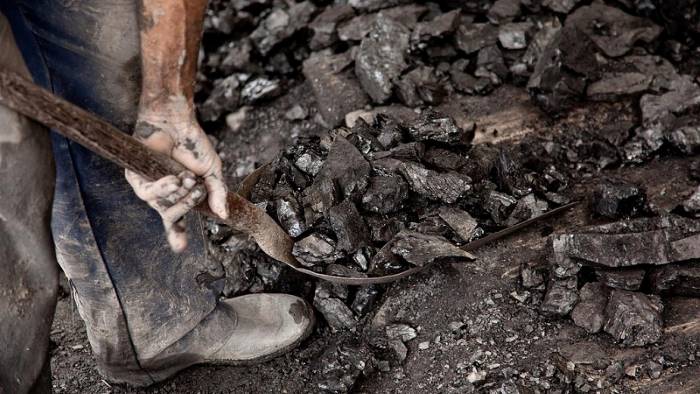
    According to trade unionists in Pakistan, there had been around 60 accidents in the country’s mines so far in the month of July. Over 90 men have died and about 40 have received severe injuries due to underground explosions, methane gas poisoning, suffocation or because of collapsing mine walls due to lax safety procedures and the unavailability of the first line of treatment at mining sites.

    Nine coal miners, including a twelve-year-old boy, were killed on 6 July after rains inundated Pakistan’s Sindh province’s coal mine. The rainwater had accumulated 50 to 60 feet inside the mine when about 40 miners were at work.

    Since several mines in the country are unlicensed and illegally run. Miners are not covered by national laws governing the health, safety, and welfare of mining and quarrying employees, making it difficult for injured workers or deceased workers’ families to claim compensation in the event of an accident.

    The mines tend to be operated by small and medium-sized mining groups, or individuals whose only aim is to make profits. Pakistan’s miners are mostly subcontracted, doing manual or semi-mechanised work in privately owned mines which receive little technological investment.

    Working hours stretch to as much as 14 hours a day and children employed in mines is a common.

    Exploitative system

    Accidents due to mine walls caving in are commonplace in the mines of Pakistan. The hazardous conditions and the neglect of workers’ safety by mining companies and state authorities alike has fuelled an exploitative system.

    Despite heavy rainfall causing havoc throughout the country, coal mining has continued in Pakistan, worsening already bad working conditions. Surging food and fuel prices force miners to continue working in such hazardous conditions. There is also an increased pressure on miners in Pakistan to increase output as the country is facing an energy crisis due to a shortage of foreign reserves to purchase natural gas or oil from the international market to run its power plants. Instead, Pakistan has to rely on domestic coal production and coal imports.

    Poverty and a lack of job opportunities force people to work in the mines where workers often have to work for over 10 hours a day without adequate safety equipment, in violation of Pakistan’s own labour laws. When an accident occurs, the first respondents are usually other workers in the mine, as there is no access to well-equipped emergency response teams.

    PCMLF estimates that Pakistan’s coal mining sector employs more than 100,000 workers in 400 coal mines. Miners usually start working at the age of 13. By the time they reach 30, they are forced into unemployment due to chronic respiratory illnesses, tuberculosis, loss of eyesight, and injuries.

    The Pakistan Coal Mines Labour Federation estimates that the country’s coal mining sector employs over 100,000 workers in over 400 coal mines. Miners usually begin work when they are as young as 13 years old and continue till they are about 30 years old or until their tired bodies give up and the workers ‘retire’, often without pension or unemployment benefits.

    In the absence of trained and equipped emergency response teams, workers often take it upon themselves to be the first responders in the event of an emergency.

    Do also read: Pakistan’s Coal Miners Mourn For The Dead; Fight For The Living

    Medieval working conditions

    Poor regulatory conditions, especially the absence of government department inspection of mines, as provided under the law has meant owners don’t care to put safety measure in place and also get away with token compensations.

    Sultan Khan, general secretary of the Pakistan Central Mines Labour Federation says, “The unregulated mining industry and the lack of implementation of existing laws kill miners every day.”

    The working conditions are medieval – there is no social security either and unions are not allowed to function freely and managements do not employ workers on paper as agreements by word of mouth are considered sacrosanct.

    “The government must commit to strictly enforcing the existing policies related to mining, and register all miners under social security schemes,” Khan says. “We also demand that mine owners should maintain an attendance register of workers going underground.”

    Unions have urged a reluctant government to ratify the ILO’s Convention 176, a 1995 convention on safety and health in mines.

    Apoorva Kaiwar, IndustriALL South Asia regional secretary says, “The working conditions in mining sites in Pakistan are appalling. Employers must ensure that safety protocols are implemented in mines.”

    Sri Lanka Economic Crisis Requires ‘Immediate Global Attention’, Warn Rights Experts

    Sri Lankans are struggling to meet their food and nutrition needs in the face shortages and higher prices for food and fuel. The country has come to a standstill and inflation is rising and people are losing jobs.

    Expressing alarm about record high inflation, rising commodity prices, power shortages, crippling fuel crisis and the economic collapse in Sri Lanka, a group of UN human rights experts appealed to the international community on Wednesday for greater support the country as it grapples with economic crisis and political turmoil.

    The nine experts expressed alarm over record high inflation, rising commodity prices, power shortages, a crippling fuel crisis and economic collapse, as the country grapples with unprecedented political turmoil.

    This crisis has had a serious impact on the enjoyment of human rights for the entire population, the experts say.

    “Sri Lanka’s economic collapse needs immediate global attention, not just from humanitarian agencies, but from international financial institutions, private lenders and other countries who must come to the country’s aid,” they said in statement.

    Prolonged crisis

    On Wednesday, lawmakers elected six-time Prime Minister Ranil Wickremesinghe as Sri Lanka’s new President.

    Former leader Gotabaya Rajapaksa stepped down last week after fleeing the country as protestors stormed key government buildings in the capital, Colombo.

    Again, a new leadership with Ranil Wickremesinghe at the helm has been elected by the Parliament today.

    Sri Lanka has been rocked by mass protests which erupted in March in response to shortages of food, fuel, medicines, and other essential items.

    The situation was compounded by economic reforms such as deep tax cuts and servicing debt payments, which ate into the country’s foreign exchange reserves.

    Mass protests broke out in March following heavy shortages of food, fuel, medicines, and other essential items compounded by a series of ill-conceived economic reforms like tax cuts and servicing debt payments that ate into the country’s forex reserves. Prolonged disrupted access to food and healthcare has severely affected people with illnesses, pregnant women and lactating mothers who are in serious need of life-assistance.

    Structural gaps exposed

    The crisis has had a serious impact on human rights, the experts said.  Prolonged disrupted access to food and healthcare, has severely affected people with illnesses, pregnant women and lactating mothers who are in serious need of life-assistance.

    “Time and again, we have seen the grave systemic repercussions a debt crisis has had on countries, exposing deep structural gaps of the global financial system, and affecting the implementation of human rights,” said Attiya Waris, UN independent expert on foreign debt and human rights.

    As foreign reserves dried up, unable to make interest payments on the loans, the country defaulted on the debt of USD 51 billion in May 2022. After suspending all debt payments, the government took steps to restructure the country’s debt with the International Monetary Fund (IMF). In June, IMF staff noted that significant progress had been made on the staff level arrangement on the Extended Fund Facility.

    “Any response towards mitigating the economic crisis should have human rights at its core, including in the context of negotiation with the IMF”, Waris said.

    In April, UN experts urged the government to guarantee the fundamental rights of peaceful assembly and expression during peaceful protests, as thousands gathered in front of the President’s office demanding his resignation over corruption and mishandling of the economic crisis.

    UN human rights chief Michelle Bachelet condemned the violence that broke out across the country, resulting in at least seven deaths.

    Human rights approach

    As foreign reserves dried up, Sri Lanka defaulted on its $51 billion foreign debt in May.  The government took steps to restructure the debt with the International Monetary Fund (IMF), which in June noted that significant progress had been made.

    “Any response towards mitigating the economic crisis should have human rights at its core, including in the context of negotiation with the IMF,” said Ms. Waris.

    The issue of Sri Lanka’s rising institutional debt had been flagged in a report issued following an expert visit in 2019.

    The report found that debt repayments were the country’s largest expenditure, and highlighted the need for complementary alternatives and pursuit of less harmful policies.

    Inflation hit a record high of 54.6 per cent this month, while food inflation rose to 81 per cent.

    The experts said the “snowballing economic and debt crisis” was deepened by the government’s hasty and botched agricultural transition, adding that the World Food Programme (WFP) has launched an emergency response as nearly 62,000 citizens are in need of urgent assistance.

    The experts who issued the statement receive their mandates from the UN Human Rights Council (OHCHR), which is based in Geneva. They operate in their individual capacity and are neither UN staff, nor are they paid for their work, the UN rights body said.


    Image: Josh Estey / WFP

    Human Rights Violations and Abuses Have Multiplied Under the Taliban, Says UN Report

    The report points to the erosion of women’s rights and the emergence of extrajudicial killings in the one year since the Taliban took over the governance of the country. It says that the situation of human rights in Afghanistan has worsened considerably, despite an overall significant reduction in armed violence.

    The Human Rights In Afghanistan report released by the United Nations Assistance Mission in Afghanistan (UNAMA) on Wednesday, highlighted the difficult life of Afghanistan’s women. It says their rights have been drastically curtailed since Taliban militants returned to power.

    It points to far-reaching decisions by the Taliban that impact the lives of women and children and highlights the instance of girls being banned from school beyond the sixth grade as the Taliban ordered girls’ high schools to close doors in March 2022, hours before the schools were scheduled to open after a break.

    “Since 15 August, women and girls have progressively had their rights to fully participate in education, the workplace, and other aspects of public and daily life restricted and in many cases completely taken away,” the report said.

    “The decision not to allow girls to return to secondary school means that a generation of girls will not complete their full 12 years of basic education. At the same time, access to justice for victims of gender-based violence has been limited by the dissolution of dedicated reporting pathways, justice mechanisms and shelters,” it said.

    “The education and participation of women and girls in public life is fundamental to any modern society,” said Markus Potzel, the UN acting Special Representative for Afghanistan.

    “The relegation of women and girls to the home denies Afghanistan the benefit of the significant contributions they have to offer. Education is not only a basic human right, but the key to the development of a nation.”

    Crackdown

    The report confirms the erosion of basic human rights across the country since the Taliban takeover in August 2021, pointing out that they bear responsibility for extrajudicial killings, torture, arbitrary arrests and detentions, and violations of fundamental freedoms.

    The de facto authorities have limited dissent by cracking down on protests and curbing media freedoms according to the report.

    The report condemns arbitrary arrests of journalists, protestors, and civil society activists.

    “The rights to freedom of peaceful assembly, freedom of expression and freedom of opinion, are not only fundamental freedoms, they are necessary for the development and progression of a nation”, said Fiona Frazer, UNAMA Chief of Human Rights.

    They allow meaningful debate to flourish, also benefiting those who govern by allowing them to better understand the issues and problems facing the population.”

    The report urged the Taliban authorities to do more to identify, probe, and lawfully punish human rights abuses, saying that “Human rights violations must be investigated by the de facto authorities, perpetrators held accountable, and ultimately, incidents should be prevented from reoccurring in the future.”

    ‘Beyond time’

    “It is beyond time for all Afghans to be able to live in peace and rebuild their lives after 20 years of armed conflict”, he added. “Our monitoring reveals that despite the improved security situation since 15 August, the people of Afghanistan, in particular women and girls, are deprived of the full enjoyment of their human rights”.

    While the report acknowledges steps taken by Taliban authorities to reduce violence, UNAMA still recorded 2,106 civilian casualties, with 700 killed, and 1,406 wounded. Those causalities are mainly attributed to targeted attacks by the terrorist group which identifies itself as the Islamic State in Iraq and the Levant – Khorasan Province, against ethnic and religious minority communities.

    Impunity

    UNAMA is concerned about the impunity with which members of the de facto authorities appear to have carried out human rights violations.

    According to the report, those worst affected, were those linked to the former government and its security forces, with 160 extrajudicial killings confirmed, as well as 178 arbitrary arrests and detentions, and 56 instances of torture.

    The human rights situation has been exacerbated by a nationwide economic, financial and humanitarian crisis of unprecedented scale. At least 59 per cent of the population is now in need of humanitarian assistance – an increase of six million people compared with the beginning of 2021.


    Image: Shamsuddin Hamedi / UNAMA

    India Mulls Aid in Sri Lanka’s Hour Of Need

    Back-of-the-envelope calculations suggest that Sri Lanka will require between US$20–25 billion over the next three years to provide essential imports of food, medicine and fuel for Sri Lankan people and to help stabilise the economy.

    By Ganeshan Wignaraja / National University of Singapore

    Sri Lanka’s pre-emptive default on its foreign debt obligations in mid-April 2022 and recently resigned president Gotabaya Rajapaksa’s flight from Sri Lanka on 12 July provides India with an opportunity to match China in the foreign aid game. The Indian government plans to hold an all-party meeting on the Sri Lankan crisis on 19 July and Sri Lanka’s parliament is expected to elect a new President from among MPs on 20 July.

    The debt default and a shortage of US dollars in Sri Lanka has caused stagflation — high unemployment and little growth — in its economy. Inflation has spiralled to over 50 per cent, leading to higher food and fuel prices. There is significant food insecurity in Sri Lanka and some 750,000 people have fallen into poverty. The economy could contract by more than 6 per cent in 2022.

    This economic crisis —Sri Lanka’s worst since gaining independence in 1948 — is due to a tepid recovery from the COVID-19 pandemic, the Russia–Ukraine conflict shock and economic mismanagement under Rajapaksa’s administration.

    Sri Lanka faces challenges in getting foreign aid. 60 per cent of the world’s poorest countries are also experiencing debt distress, and the prospect of a second global recession in the next three years could dampen the rest of the world’s enthusiasm to support Sri Lanka. Some perceive Sri Lanka’s economic crisis to be largely of its own making through mismanagement and corruption, and question why another country should have to bail out its economy.

    Neighbourhood first

    India was the first to respond to Sri Lanka’s desperate calls for foreign aid to tackle its crippling debt and economic crisis. India has been motivated by both the unfolding humanitarian crisis affecting the Sri Lankan people and political pressure from South India. In the first six months of 2022, Indian aid worth US$3.5–4 billion has flowed to Sri Lanka through credit lines, loans and grants. This is India’s largest bilateral aid program in recent times.

    Supporting Sri Lanka could be in India’s best interest. Stabilising Sri Lanka’s economy could be a major win for Indian Prime Minister Narendra Modi’s neighbourhood-first policy. Once the Sri Lankan economy stabilises, India could deepen its trade and investment linkages with Sri Lanka, transcending the current humanitarian aid relationship. This could spur regional integration and prosperity. It could also help advance India’s long-held ambition of securing a seat on the United Nations Security Council. Meanwhile, an unstable Sri Lankan economy could pose security risks to India and lead to a flood of refugees across the Palk Strait.

    India cemented its first mover advantage over China by leading an aid consortium for Sri Lanka, working closely with others like the United States, Japan, the European Union, and the International Monetary Fund (IMF).

    Chinese dilemma

    Back-of-the-envelope calculations suggest that Sri Lanka will require between US$20–25 billion over the next three years to provide essential imports of food, medicine and fuel for Sri Lankan people and to help stabilise the economy.

    Despite benefitting from commercial loans for Belt and Road projects in Sri Lanka, which have fuelled a ‘debt trap’ narrative, China faces a dilemma in bailing out Sri Lanka. China worries that unilaterally restructuring Sri Lanka’s debt or giving it moratoria would set a new precedent in its lending practices and cause a queue of similarly distressed countries seeking debt relief from China. China, wanting to challenge the United States, does not want its reputation to be tarnished by bailing out a floundering economy.

    A new president is expected to take office and appoint a cabinet on 20 July 2022. There are many important issues facing the new administration. It must show it is serious about stabilising the economy by concluding talks on an IMF program that will increase taxes and utility prices to raise revenue. It must also increase interest rates to control inflation while preserving social welfare expenditures to protect the poor.

    Reset foreign policy

    The new government will have to implement structural reforms to make the economy more open to trade and investment, and allow market forces to determine resource allocation. This means reducing barriers to trade and investment and cutting large amounts of red tape. It will also have to build a national consensus on implementing the IMF program and reforms by explaining that this is the only solution to the crisis.

    The rule of law needs to be restored and strong anti-corruption policies, including asset declarations for all parliamentarians and a strong anti-corruption office supported by the United Nations, need to be enforced. The executive presidency should also be abolished to prevent more corrupt leaders from gaining too much power.

    The new government will also need to reset foreign policy toward a more neutral direction and away from the overly pro-China stance of Mahinda and Gotabaya Rajapaksa.

    With political will and the right set of policies, Sri Lanka stands a sporting chance of achieving some economic normalcy in the next 2–3 years. India stands to gain by supporting Sri Lanka in its hour of need.


    Ganeshan Wignaraja is a Non-Resident Senior Fellow at the Institute of South Asian Studies of the National University of Singapore.

    This piece has been sourced from the East Asia Forum of the Australian National University.

    Image: Hippopx –Licensed to use under Creative Commons Zero – CC0

    India Has 834.29 Million Internet Subscribers

    Under the PM-WANI framework, entities are neither required to take any license nor pay any fee to the government. PM-WANI will enable the provision of broadband through a distributed architecture and unbundling of functions.

    The Indian Telecom Services Performance Indicators reports released by Telecom Regulatory Authority of India puts the number of internet subscribers in rural and urban areas of the country at 336.60 million and 497.69 million respectively as of September 2021 – a total of 834.29 million internet subscribers.

    Devusinh Chauhan, minister of state for communications said in a written reply to a question in the Lok Sabha that the government has worked to provide mobile/broadband/internet services in a phased manner through government and telecom services providers in the uncovered villages of the country in order to enhance digital outreach in the country.

    The government, with funding from universal service obligation fund (USOF) is extending mobile connectivity through setting up of towers in the uncovered villages of the country through schemes like the comprehensive telecom development plan for North Eastern Region, left wing extremism (LWE) affected area schemes, aspirational districts schemes and the comprehensive telecom development plan for islands, to name a few, the minister said in a written reply to a question in the Lok Sabha.

    Chauhan said that the BharatNet project is being implemented in a phased manner to provide broadband connectivity to all gram panchayats in the country. The infrastructure created under BharatNet project can further be utilized by service providers for provisioning of broadband and internet services.

    PM-WANI framework

    The minister said that the scope of BharatNet has been recently extended up to all inhabited villages beyond gram panchayats.

    To this end, a national broadband mission (NBM) was launched on 17 December 2019. NBM has a vision to fast-track growth of digital communications infrastructure, bridge the digital divide, facilitate digital empowerment and inclusion, and provide affordable and universal access of broadband for all.

    The minister said that the Prime Minister Wireless Access Network Interface (PM-WANI) framework has been introduced to enhance proliferation of broadband services through public Wifi, the minister added. The PM-WANI framework enables provision of broadband through a distributed architecture and unbundling of functions. Under this framework, entities are neither required to take any license nor pay any fee to the government, he said, adding that the details for this have been announced by the government.

    Licensed service providers provide broadband services in urban and rural areas of the country as per their business plans. However, the minister said, there are various schemes for the expansion of broadband services in rural and remote areas of the country. These schemes will be supported with funds from USOF under which total fund earmarked / disbursed funds for past five years (till February, 2022) is about Rs 31,529 crores.

    According to the minister’s reply, in addition to BharatNet project in Rajasthan, the government has a number of other schemes under USOF for enhancing internet/broadband in the state. These schemes will provide mobile connectivity in 354 uncovered villages, border areas and other priority areas of various states including Rajasthan.

    The schemes will also provide 4G mobile connectivity in 502 uncovered villages of aspirational districts in four states, including Rajasthan.


    Image: Wikimedia / Biswarup Ganguli


    Do also read PM’s Digital Village Education Programme Bridging Digital Gap, Says Minister Rajeev Chandrasekhar