More

    Odisha Tops, as First ‘State Ranking Index for NFSA’ is Announced; UP and Andhra Pradesh Follow

    The “State ranking Index for NFSA” attempts to document the status and progress of implementation of NFSA and various reform initiatives across the country, post consultation with states. The NFSA Index in no way reflects the extent of hunger, or malnutrition.

    Odisha, Uttar Pradesh and Andhra Pradesh emerged as top three states among general category states in the first ‘State Ranking Index for NFSA’. The hills states of Tripura, Himachal Pradesh and Sikkim take top three positions in the special category states.

    Further, Dadra and Nagar Haveli & Daman and Diu ranks first among the union territories where Direct Benefit Transfer (DBT) is operational.

    The NFSA Index denotes the efficiency of Targeted Public Distribution System (TPDS) and focuses on NFSA and TPDS reforms.

    As per the ranking, Odisha has a score of 0.836, followed by Uttar Pradesh (0.797) and Andhra Pradesh (0.794). Gujarat is at the fourth place.

    The Index focuses on NFSA and TPDS reforms, which can be standardised across the states and union territories. It rests upon three pillars that consider various facets of food security and nutrition. Each pillar has parameters and sub-parameters that support this evaluation.

    The first pillar measures coverage of NFSA, rightful targeting, and implementation of all provisions under NFSA. The second pillar analyses the delivery platform, while considering the allocation of foodgrains, their movement, and last-mile delivery to Fair Price Shops (FPS). The final pillar focuses on nutrition initiatives of the department.

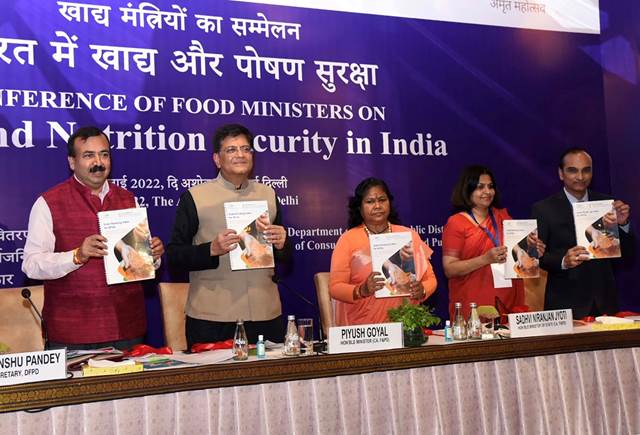
    The first edition of the ‘State Ranking Index for NFSA’ was released by Piyush Goyal, the Union Minister for Consumer Affairs, Food and Public Distribution during the conference of food ministers of states union territories on ‘Food Nutrition and Security in India’ organized in Delhi today.

    Not an index of hunger

    The National Food Security Act (NFSA) was enacted on July 5, 2013 and in order to celebrate the day, the conference was organized to deliberate and discuss nutritional security, food security, best practices followed in Public Distribution System, crop diversification, reforms in PDS and storage sector.

    The “State ranking Index for NFSA” attempts to document the status and progress of implementation of NFSA and various reform initiatives across the country, post consultation with states. It highlights the reforms undertaken by states and union territories and creates a cross-learning environment and scale-up reform measures by all states and union territories.

    The NFSA Index in no way reflects the extent of hunger, or malnutrition (or both).

    The present Index is largely focused on NFSA Distribution and will include procurement, PMGKAY Distribution in future.

    State government dues

    Piyush Goyal said that India is now 100 per cent connected under One Nation One Ration Card (ONORC). He said that 45 crore transitions have taken so far providing the beneficiaries the freedom to collect ration from any State or union territory in the country. He said that ONORC supported migrants during the COVID-19 pandemic.

    Goyal said that going forward, the system of digitized, Aadhaar linked Public Distribution to be used to issue Ayushman Bharat Card. He gave the example of Uttar Pradesh that is using the system to issue Ayushman Bharat card and urged other states to consider this system to provide nutritional security as well as health security. He said that immunization of migrant kids can also be linked with the system to ensure medical facility to them.

    Talking about the food subsidy to states, Goyal announced that the deadline to submit claims of pending dues till the year 2019-20 is August 15, 2022 and stressed that no dues will be entertained after the deadline. He also said that the pending bills of the States and union territories will be cleared within 60 days, that is, by 15 October 2022.

    The payments will be cleared by 31 January 2023 in the case of states or union territories providing details in following three months, he said.

    He further said that the subsidy claims are pending not because the funds are not available with the centre, but because the states or union territories have not provided relevant data.

    The ministers of many states raised concern over delay in CAG audit. The union minister directed officials to expedite the matter of the audits with the CAG.
    Diversity, Inclusion and the Young

    The youth policies the governments in Pakistan and other countries of SouthAsia develop are normally full of cliches that regurgitate the same banal statements. Education policies are also an example of this verbiage that makes tall claims and fails on most fronts.

    By Naazir Mahmood

    The Pakistan Institute of Peace Studies (PIPS) gathered some of Islamabad’s finest minds for its recent consultation titled ‘Promoting narratives of diversity, inclusion, and peace among youth’. Among the speakers were A H Nayyar, Ishtiaque Ahmed, Khalid Masud, Khursheed Nadeem, Pervez Hoodbhoy, Qibla Ayaz, Romana Bashir and others.

    PIPS has been working for the promotion of diversity and inclusion in Pakistani society and the event provided an opportunity for the participants to express their views. Amir Rana, encouraged the audience to speak their minds without reservation. Dr A H Nayyar focused more on the educational aspect of the official Pakistani narrative which has been inherently anti-diversity. He cited the example of the Single National Curriculum (SNC) the PTI government tried to foist on the country (and succeeded to an extent). Dr Nayyar has been a strong critic of the SNC and has been writing about it.

    Dr Khalid Masud, a judge of the Shariah Appellate Bench in the Supreme Court of Pakistan talked about the disconnect between qualitative and quantitative research in Pakistan. Most universities in the country, he said, have been conducting quantitative research at the cost of quality – they survey, compile data and produce reports that do not necessarily reflect the qualitative changes taking place in society. Dr Masud suggested that a discussion on democracy and the Constitution requires a qualitative understanding of these concepts. He said that the same applies to citizenship education that Pakistan’s educational institutions need to prioritise.

    Ban on students’ unions

    Khursheed Nadeem pointed out that in Pakistan people, somehow, lack an understanding on how to distinguish between various aspects of religion. Now, Khursheed Nadeem is a renowned scholar of Islam, though he very modestly introduces himself as a student of Islamic history and ideology. He is a prolific writer with a wide readership in Urdu.

    Dr Pervez Hoodbhoy lamented the continuous ban on student unions in Pakistan’s colleges and universities. In his view, students’ involvement in associations and unions trains them as constructive interlocutors in the political dialogue. Successive governments in Pakistan – especially military dictatorships – have stemmed the flow of ideas in nearly all institutions, resulting in a stagnant intellectual atmosphere in which no creativity survives. A majority of faculty members lack fundamental understanding of the basic concepts even in their own fields of specialisations. That is one reason university graduates have degrees but no skills in applied and social sciences.

    Dr Muhammad Ali from Quaid-i-Azam University talked of the education system’s failure to follow a student-centric approach to learning and teaching. Most faculty members possess degrees in their own fields but do not have any training in teaching methods. He suggested nobody should be entrusted with teaching without first acquiring some practical skills and a theoretical knowledge of classroom interaction and the ethics of pedagogy. The system of promotion that requires 10 years’ experience and 15 published papers is faulty and needs reconsideration as it has goaded teachers to indulge in a rat race to publish substandard papers.

    Harmony

    Dr Qibla Ayaz, chairman of the Council of Islamic Ideology is a clear-headed thinker who stressed on the need for de-radicalization on campuses. He suggested that a stagnant approach to education in terms of religion should give way to a more dynamic understanding of beliefs, rather than targeting other faiths. Without this dynamism, he said, society itself becomes intolerant. A wider understanding of religion where constructive discussions take place is a better option than rote learning and memorisation. Religious radicalism is a clear and present danger that needs serious considerations.

    Romana Bashir, a human rights and minority rights activist who has devoted at least 25 years to promoting harmony and peace in Pakistan shared experiences that students from various religious groups go through in Pakistan. She highlighted the importance of mutual respect in education so that students grow up as tolerant and friendly citizens rather than as an intolerant lot that targets students of other faiths. She suggested that teachers need special training in fostering harmonious relations among students practising different belief systems. She also held political parties responsible for not doing enough for promoting harmony in society.

    Impunity

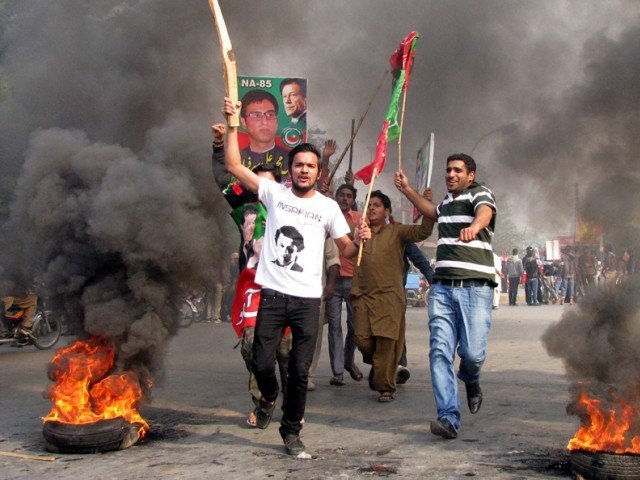
    Participants at the event also received a research report titled ‘Making sense of Pakistani youth’. PIPS does analysis of independent and innovative studies, since it is essentially a research and advocacy institution. Recognising that the radicalization of young people is threatening social stability in Pakistan, the study sought to understand incidents of religiously motivated violence at educational campuses. Growing radicalization among educated young people is resulting in youth-led vigilante crimes that are becoming increasingly common in countries such as India and Pakistan – both victims of their own radicalism. The study by PIPS (available online) aimed to unpack this ugly phenomenon.

    Of course, there is a perilous combination of factors with an unmanaged youth bulge being one of the foremost. Coupled with it is the declining rule of law that reflects itself in law enforcement being unable or unwilling to intervene – or coming too late after the crimes have claimed lives and properties. The Gujarat massacre in India and recent violence is a case in point. In Pakistan there have been numerous attacks on non-Muslim settlements and places of worship. Even Muslims with a slightly different bend of mind are not spared by other young people who take it upon themselves to ‘punish the culprits’ even if they have done nothing wrong.

    Doctrinal, exclusivist education

    Youth policies that governments in Pakistan and other SouthAsian countries develop are normally full of cliches that regurgitate the same banal statements. Education policies are also an example of this verbiage that makes tall claims and fails on most fronts. These policies create more ambiguity than providing clarity of thought and state functionaries thrive on these ambiguities. The more opaque a policy is, the harder is it to hold anyone accountable for its failure. In India and Pakistan, the States themselves have become promoters of extremism, while masquerading as tolerant.

    The state of Pakistan has nearly always had a doctrinal and exclusivist education, whereas India is catching up fast under BJP rule. In some ways, the BJP-RSS nexus has managed to outdo Pakistan in this destructive race. In Pakistan, state-approved education allows only peculiar interpretations of history. Education in India was more inclusive under Congress rule. But now, the BJP appears to be following in Pakistan’s footsteps to teach only a BJP-approved versions of history. This approach has stunted cognitive growth in Pakistani youth. The same is now happening in India.

    Promoting democratic norms

    An educational discourse that instills suspicion for multiculturalism is bound to add to religious radicalization, and that is exactly what happened in Pakistan and the same is now taking place in India. So, what is the solution? At the PIPS discussion, there was near consensus about promoting democratic norms in society and promoting respect for basic human freedoms through education and the media. Sadly, both education and the media are controlled and regulated by the State and even seemingly private educational institutions are unable to hold free debate, as such discussions are strictly monitored under the lens of national security.

    There has to be a swift move away from an illiberal education and propaganda to a more liberal interpretation of history and society – at least in its social dimensions.


    The writer holds a PhD from the University of Birmingham, UK. He tweets @NaazirMahmood and can be reached at  [email protected] 

    Oxfam Kit A Sole Acknowledgement of An ASHA’s Work During COVID-19 Pandemic

    The nature of Vinita’s job took a drastic turn as she went door-to-door while people stayed indoors — some fearing a police crackdown; others fearing the virus.

    “They came in buses, two-wheelers, bicycles. Some came walking. It was an ocean of people,” she recalled, speaking of the virus’ gradual spread.

    By Danish Raza

    Vinita Devi was in the middle of the second wave of COVID-19. She had no time to think for herself. It was challenging and it called for selflessness. Fear stalked the village lanes as news poured in of people dying.

    All she could do for herself and her family was to take all precautions – wear a mask, sanitise her hands, keep a physical distance. She knew it was an infectious virus and she could only continue to serve the people of her neighbourhood if she herself was safe.

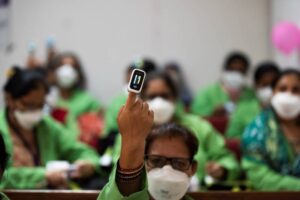
    Vinita Devi belongs to the seven lakh strong force of ASHA (Accredited Social Health Activists) workers in the country. While the Coronavirus was raging wild, she was out surveying her neighbourhood.

    Any migrants in here?

    ASHA workers belong to the community they serve, providing the vital last-mile connectivity to the government’s healthcare schemes and are instrumental particularly in far-flung areas because of their strong bonds with the community.

    Before the pandemic, Vinita’s focus was childhood immunisation coverage, encouraging pregnant women to opt for safer in-hospital births, and other campaigns targeting women and children. When the pandemic struck, she was supposed to work with everyone in her district in Patna.

    Initially, Vinita said, everything seemed normal because the first wave had subsided. But she witnessed herds of people returning to their towns and villages around Patna as soon as urban centres such as Delhi and Mumbai announced a lockdown.

    “They came in buses, two-wheelers, bicycles. Some came walking. It was an ocean of people,” she recalled. With this, the virus gradually started spreading across the state, including its rural pockets. Five Bihar districts with a large rural population recorded more than 4,000 active cases in April 2021.

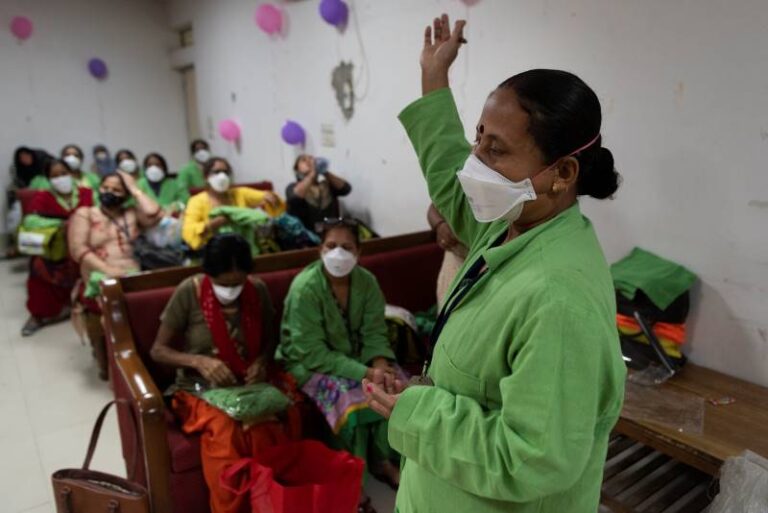
    For Vinita, it would mean the nature of her job was to take a drastic turn. She went door-to-door sporting the ASHA worker’s dress-code: a pink saree, ID card and face mask. While people stayed indoors — some fearing a police crackdown; others fearing the virus.

    “I knew it was risky but someone had to do it. Who will work to combat the pandemic if all of us decide to stay home?”

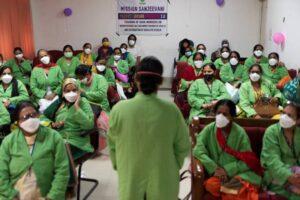
    Oxfam India supports ASHA workers in Bihar Odisha Chhattisgarh with kits during COVID-19 pandemic

    Support from Oxfam

    To help them with this new task, Oxfam India distributed more than 10, 000 kits to frontline workers in Odisha, Chhattisgarh and Bihar and also trained them to use the kits. This was the first time Oxfam was working with ASHA workers. It was necessary because government capacities were stretched and humanitarians like Oxfam had to step in to serve vulnerable people in some of the farthest corners of the country.

    “It was a mammoth task in terms of scale,” said Chandan, program officer, Oxfam India. “We identified districts with maximum number of cases and the ones where we had an in-depth network. There is one ASHA facilitator over every 20 ASHA workers. We worked with them,” he added.

    While it sounds a simple exercise, Oxfam India teams had to overcome various challenges. Some of these were systemic. “At the beginning we were told that the government planned to do something similar so we could not duplicate their efforts. When we got the permission and hit the ground, the block community mobilisers (state government) were pressed for time. They were busy with meetings, surveys and campaigns and found it difficult to meet our staff,” said Chandan.

    On multiple occasion, Chandan said, ASHA workers were not available for scheduled sessions because they were overburdened.

    Vinita said that receiving the kit was the only acknowledgment that she has got so far for her job. “It is a good feeling when someone is able to see your hard work,” she said. She is yet to receive any compensation from the government for the hours she put during the pandemic.

    In August 2020, ASHAs staged a two-day strike demanding better pay, better PPE, and minimum wages.

    Oxfam supports ASHA workers in Odisha Bihar and Chhattisgarh with kits during COVID-19 pandemic

    “We are ASHA workers”

    At least 44 ASHA workers had died due to the coronavirus by January 2022.

    She was not deterred when people in the community were suddenly unwelcoming. “They answered my questions shouting from their terraces and spoke to me through their windows. But that’s okay as long as they gave me correct information,” she said.

    The information pertained to returning migrants, including daily wage labourers and students who reported COVID-19 symptoms.

    At the same time, she had to field queries related to symptoms, vaccinations and bust myths around the virus. “I used to tell them more or less everything we heard on radio and TV – such as drinking lots of water and the need to stay quarantined if people showed symptoms,” she said.

    Despite the challenges and lack of encouragement, Vinita says, she would repeat the exercise full-throttle if the virus strikes again. “This is not optional for us. We are ASHA workers,” she said.


    Danish Raza is an independent journalist based in New Delhi. He writes on inequality, current affairs and digital culture. He tweets @razadanish.

    Emergency Declared in Italy to Manage Drought

    Smarting under the effects of an unusually early heatwave and deficient rainfall, both ascribed to climate change, the government of Italy has declared a climate emergency for five of the country’s northern regions reeling under a severe drought.

    A state of emergency has been imposed in five of Italy’s northern regions as the worst drought in seven decades has led to acute water shortages due to an unusually early heatwave and deficient rainfall.

    Reservoirs have run dry and farmers don’t have water to irrigate their crops. City and local governments are rationing water as they cannot provide piped water for drinking and household purposes.

    Officially, the Italian government has conceded that this is due to climate change. Winter snowfall has been short by 70 per cent and the region has not seen rainfall for over four months.

    Prime Minister Mario Draghi’s office announced an allocation of special relief fund of a 36.5 million euro (or $39.5m) for the affected region.

    A glacier collapse led to the death of seven people on Monday.

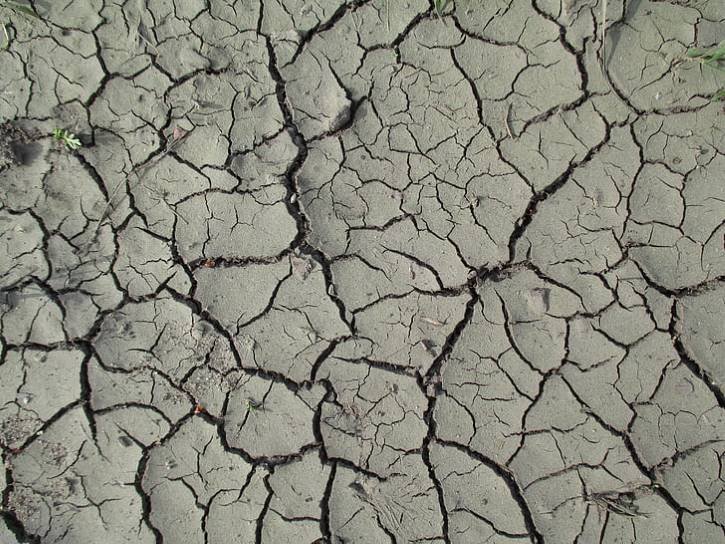
    Besides, summer months with record high temperatures and melting of the reserves of snowfields and glaciers in the surrounding Alps has left the Po basin without its summer water reservoirs, leading to the drying up of the river Po and depleting aquifers of stored groundwater.

    A dry river Po

    The drying river has led to the resurfacing of an old warship from the second world war and also the discovery of ancient villages covered under the exposed riverbed. And, the city of Venice, where the river Po ends its 650 kilometre stretch journey, has even imposed an entry tax for visitors. Milan has turned off its attractive fountains to save water.

    The five northern regions are densely populated, highly industrialised and intensively farmed – the country’s food valley is known for the king of cheese or Parmesan cheese, durum wheat, prized tomatoes, Italian rice and vineyards – that give to the world the famous Lambrusco wine and Balsamico di Modena. In short, an economic hub. Fishing in the region has come to a standstill.

    It is estimated that cultivated and uncultivated food and cash-crop production will together fall to half of what it was last year.

    Besides, a dry Po river will also lead to starving numerous hydroelectric power plants for water and halting electricity production – a dire scenario for much of Europe that is already tangled in an energy mess following the Ukraine war.

    Resilience plans

    The Po river authority is working on a resilience plan that involves draining water from high altitude Alpine lakes.

    The Italian government is also working with the government of Israel to import water-generating technologies. A delegation 22 Italian water utility companies and engineering firms visited Israel in June to explore ways to tackle the drought.

    There is a history of droughts in the region – but it has never been so bad.

    According to the climate change research news site, climatechangepost.com, northern Italy has witnessed heavy drought events in the years prior to 1971. The droughts lasted between six and eight weeks with up to five extreme drought between 1971 and 2000, often impacting almost half the region’s area.

    But things have changed over the decades.

    Climatechangepost says that Northern Italy currently experiences some of the highest rates of annual water availability in Europe. “Approximately two-thirds of this, mainly surface water, is used for irrigation with stress from groundwater abstraction a problem in only a few areas.”


    Image: Hippopx – licensed to use under Creative Commons Zero  –  CC0

    Maldives New ‘Evidence’ Law Undermines Media Freedom

    The Maldives Media Council (MMC), Maldives Journalist Association (MJA), and Transparency Maldives all condemned the law, saying it contravened constitutional protections for the media. Human Rights Watch has called for rescinding the abusive law.

    By Patricia Gossman

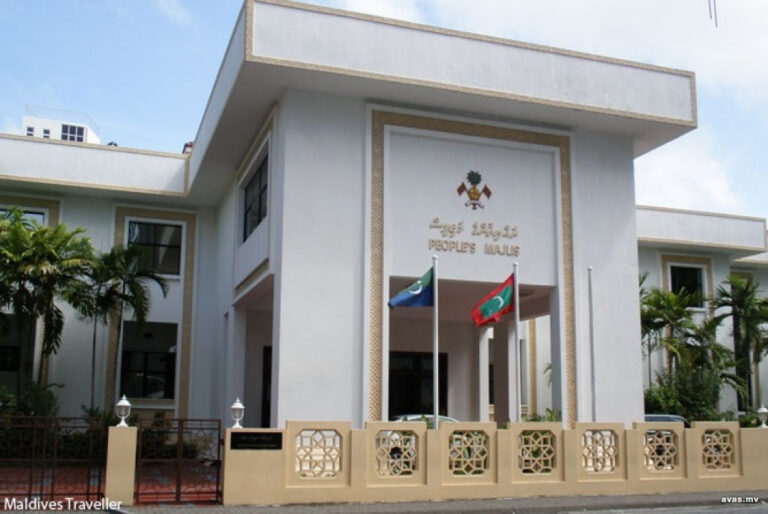
    In a serious setback for media freedom, the Maldives parliament on 1 July, enacted legislation allowing courts to force journalists and media outlets to reveal their sources.

    While reiterating constitutional provisions guaranteeing freedom of the press, the new Evidence Act includes an exception that undermines those protections: judges can compel the disclosure of a source’s identity “if the court decides that there is no negative impact or not a significantly negative impact on the source if it were to be revealed,” or “if the impact of revealing a source does not significantly impact the ability of journalists to find sources.”

    Human rights groups in the Maldives criticized the bill, saying, “The vagueness of the criteria set out in the exceptions … will lead to a significant reversal of press freedom,” and “will have a dramatic impact on the work of journalists, including losing access to important sources, who might refuse to talk to journalists due to fear of being exposed in a court of law.”

    The Maldives Media Council (MMC), Maldives Journalist Association (MJA), and Transparency Maldives all condemned the law, saying it contravened constitutional protections for the media.

    Need to consult

    In May, the Maldives dropped 15 places in the World Press Freedom Index, with the proposed Evidence Act one of the main reasons for the decline. Only a year ago, government officials had boasted about their progress in rising to 72nd place from 120th place in 2018.

    While the Maldives had made some progress reversing restrictions on the media imposed by the former government of President Abdulla Yameen, journalists also face increasing threats from extremist Islamist groups who advocate violence against those deemed “anti-Islam,” and from politicians who seek to quash any reporting on corruption.

    In a February 2022 email, Attorney General Ibrahim Riffath told Human Rights Watch that the government was committed to resolving public and media concerns before submitting the bill to parliament. If the administration meant that, current President Ibrahim Mohamed Solih should not sign this bill into law.

    The administration and Parliament need to go back to square one and consult with journalists, media organizations, human rights lawyers, and other interested parties to amend the law regarding the revealing of sources and urgently restore the Maldives’ hard-won press freedoms.


    This piece has been sourced from Human Rights Watch.

    Patricia Gossman is Associate Asia Director with Human Rights Watch

    Image: People’s Majlis – Maldives’ Parliament 

    UN’s “No-Fly List” on Sexual Harassment Falls Short, Complains Rights Group

    Present and past employees are continuing to raise the alarm about the wide-scale under-reporting of sexual harassment and abuse across UN institutions. There is an urgent need for strong leadership to ensure clear, effective policies are enforced, complaints are dealt with in a timely manner, and both victims and whistle-blowers receive protection and support.

    By Thalif Deen

    The United Nations has continued to crackdown on sexual harassment system-wide since 2017 while its “whistle blower protection policy” has provided “protective status” for nearly 68 UN staffers who reported wrong doing.

    But Equality Now, an international human rights organization, is accusing the UN of faltering on its longstanding “zero-tolerance” policy.

    Antonia Kirkland, Global Lead on Legal Equality and Access to Justice at Equality Now told IPS her organization was “shocked and concerned to discover that Kingston Rhodes, a former UN Under-Secretary-General, has been allowed to return to the corridors of the United Nations despite previously resigning from a senior position following multiple accusations of sexual harassment against him that were found to be “credible” in an internal investigation conducted by the Office of Internal Oversight Services (OIOS)”.

    Although the Secretary-General acknowledged that the allegations of sexual harassment and mistreatment were “credible”, she pointed out, Mr. Rhodes, the former Chair of the International Civil Service Commission (ICSC), was able to resign quietly without being held to account for his behaviour and, alarmingly, has now been allowed to become affiliated with the UN in an influential voluntary position.

    Unsatisfactory response

    The protest has been triggered by his new position in a pension committee of a UN retiree representative organization.

    “The new appointment of Mr. Rhodes in light of his past unacceptable behaviour is an affront to the women he victimized. It also discourages others who have experienced sexual harassment from reporting cases because it sends a toxic message that, yet again, powerful men at the UN can harass female colleagues with impunity,” she argued.

    Equality Now sent a letter to Secretary General Antonio Guterres voicing its concern about Mr. Rhodes being allowed to take this position, and saying he should be “disqualified from serving on the AFICS/NY Pension Committee and asked to resign this position immediately.”

    On June 10, Equality Now received what it calls “an unsatisfactory response” from Catherine Pollard, Under-Secretary-General for Management Strategy, Policy and Compliance.

    The response from Pollard read: “Having taken note of your concerns, I must bring to your attention that, as Mr. Rhodes is a retired former staff member, the Secretary-General has no jurisdiction regarding his membership of an AFICS Committee.”

    Under-reporting of abuse

    Kirkland told IPS the UN claims to have “no-fly list” of 564 names of those who have left the UN following allegations of sexual abuse or harassment.

    “Mr. Rhodes’ name should be included on that list. He should in no way be allowed to “represent the interests” of sexual harassment victims or any other former UN staff members”.

    “Nor should they be subjected to further interaction with him or be in a position to have to ensure personal financial data and other information are not shared with him through the auspices of the UN,” said Kirkland.

    She said the UN is the foremost international defender of human rights and must enforce its zero-tolerance approach to sexual harassment of its staff members, and apply it to all, without exception and irrespective of what position the offender holds.

    “Anyone who has been found to have perpetrated sexual harassment should be held fully to account and victims and whistleblowers protected from future interaction with them.”

    “Present and past employees are continuing to raise the alarm about the widescale under-reporting of sexual harassment and abuse across UN institutions. There is an urgent need for strong leadership to ensure clear, effective policies are enforced, complaints are dealt with in a timely manner, and both victims and whistle-blowers receive protection and support,” declared Kirkland.

    Disturbing, unacceptable

    Shihana Mohamed, who worked under Rhodes in the office of the International Civil Service Commission as Human Resources Policies Officer, told IPS “the recent news about naming Rhodes, the former ICSC Chair who had been confirmed as being a sexual harasser, to the Association of Former International Civil Servants (AFICS)/NY Pension Committee to represent the interests of former staff is shocking, deeply disturbing and unacceptable.”

    “It is all the more shocking because this is happening after a series of initiatives taken by Secretary-General Antonio Guterres and his Taskforce on Sexual Harassment, as well as the numerous efforts by UN organizations, NGOs and Civil Society.”

    Zero tolerance for sexual harassment and not allowing sexual perpetrators to creep back into the UN system, formally or informally, should be fundamental to safeguarding the dignity of all staff members and ensuring the integrity of the UN policies and mechanisms towards creating an enabling environment in the UN system, said Mohamed, who has more than 20 years of experience in the UN system, having previously worked at UNESCAP, UNDESA, UNOHRM and UNDPKO.

    Whistle blowers’ protection

    All UN affiliated formal and informal organizations, including AFICS should Stop Enabling Sexual Harassment and Rewarding Sexual Harassers. Instead, they should make every effort to uphold the values of the UN Charter,” declared Mohamed who is also a founding member and one of the coordinators of United Nations Asia Network for Diversity and Inclusion (UN-ANDI).

    Meanwhile, asked about the recent BBC documentary on sexual abuse and corruption in the UN system – and complaints by whistle blowers – UN spokesperson Stephane Dujarric told reporters ““When it comes to people who feel they have suffered sexual harassment or abuse within the UN system, our heart goes out to them.”

    He also said that Guterres remains “focused on strengthening whistleblowers’ protection” and since 2017 “about 68 people have been given some sort of protective status because they reported wrongdoing.”


    This piece has been sourced from Inter Press Service.


    Image: Manuel Elías / UN 

    First Person: “Engage with us to find a durable solution”

    “We do not know how we can ever return to our homes. We are neither safe in the refugee camps nor in Arakan [in Myanmar]. Our people are losing their lives to gang violence in the refugee camps, in environmental calamity, or by taking dangerous attempts to migrate to other countries.”

    By San thai Shin

    Since 2021 big fire incidents have been rife in the Rohingya refugee camps in Bangladesh. Many of us lost livelihood opportunities such as shops, as well as belongings which we brought from Myanmar. On top of that, Bangladesh’s government put further restrictions on our livelihood options, access to education and the right to freedom of movement and association.

    Any form of financial transaction is forbidden in the camps. As a result, security officials often accuse Rohingya refugees of operating criminal gangs for having mobile phones with internet access and mobile financial systems installed on their phones. Some Rohingya refugees avoid detention by paying money to the officials.

    We refugees are living in limbo in Bangladesh with neither the opportunity to return to our homes in Myanmar nor have a way to live life peacefully in Bangladesh.

    At this current state, we have lost the expectation that the international community will do anything to truly help. We face enormous hardship in the refugee camps. Nearly half a million Rohingya children hang in the balance with limited primary level access to education. We have no security for our lives, no means for livelihood. To move anywhere outside the refugee camps, we need written order from the camp authority. We are just a monsoon’s landslide away from perishing under the muds.

    Deserve a better life

    On the top of it, we do not know how we can ever return to our homes. We are neither safe in the refugee camps nor in Arakan [in Myanmar]. Our people are losing their lives to gang violence in the refugee camps, in environmental calamity, or by taking dangerous attempts to migrate to other countries through the deadly seas and other means.

    Sadly, our options are so limited. Yet, there would be some hope if we had access to education. At least we can strive to improve the fate of our children by doing something better for them. Here, too, in the refugee camps there is so much restriction. We are detained by the police for operating community schools.

    Our people deserve to have a better life. Bangladesh has given us a second chance to survive, but what happens after this? Are we supposed to live in a standstill in the camps with nowhere to go and nothing to do? Being stuck in one place with no qualitative change in our lives for five years is no less cruel than the discrimination we faced in Myanmar.

    We are a people who have been denied and deprived of our rights at home for decades. The way out of this situation is not by looking away from us or pushing us away to a remote island but by engaging with us to find a durable solution.

    San thai Shin is a researcher and a volunteer teacher and prefers to write under his Burmese name in order to speak freely. The views expressed in this blog are entirely his own.

    This piece first appeared on Amnesty International.

    Government Begins Public Consultation for Formulation of National Curriculum Framework

    A national steering Committee and national focus groups have been engaged to deliberate on various issues and concerns, including the interaction with various ministries, autonomous bodies, civil society groups and even corporates and for collecting and collating inputs.

    The government on Sunday announced the initiation of a public consultation for the development of a national curriculum framework (NCF). The NCF is an offshoot of the national education policy announced in 2020.

    National Education Policy (NEP), 2020 on 29th July 2020, which recommends quality improvement of the system of education through the development of a National Curriculum Framework (NCF).

    The process of the national curriculum framework has been started through the constitution of district consultation committees, state focus groups, and state steering committees that will, in turn, inform the national focus groups and the national steering committee.

    A tech platform on the world wide web and a mobile app have also been developed. The mobile app is envisaged to be employed for a survey that will inform the other platforms for consultations – a “bottom-up approach” to reach out to stakeholders, including parents, Anganwadi workers, teachers, teacher educators and students.

    The government says that the app will help collect “views and opinion about the future of school education, early childhood care and education, teacher education and adult education.”

    At the national level too, the national steering committee and national focus groups have been engaged to deliberate on various issues and concerns, including the interaction with various ministries, autonomous bodies, civil society groups, corporates and also philanthropic groups for collecting and collating inputs for formulation of NCF.  A mandate document for the formulation of NCF has been developed for guiding the stakeholders in the process.

    Online consultation

    The government says that the effort is to provide an opportunity to every stakeholder – irrespective of them being parents, teachers or students willing to participate in the transformation of the country’s education system through sharing views on common concerns related to education.

    The effort also recognises the diversity in the country, providing an opportunity to every stakeholder, who may or may not be a parent or a teacher or a student and willing to participate in the transformation of the education system in India, through sharing views on common concerns related to education. “Such multiple and diverse views are likely to provide a practical road map for the smooth implementation of the vision of NEP 2020,” according to a statement of the ministry of education.

    An online public consultation survey will be instrumental in collating very useful and crucial inputs for the formulation of national curriculum framework and also subsequently designing syllabus, textbooks and other instructional materials.

    The government has invited teachers, headmasters and principals, school leaders, educationists, parents, students, community members, civil society groups, experts, public representatives, artists, artisans, farmers and anyone else interested in school and teacher education to participate in the online survey being conducted in 23 languages – all languages placed in the Constitution’s VIII Schedule as well as English.

    Bulky Agenda Drawn Up for One-Day Conference on Food and Nutrition Security

    The conference will cover an array of issues. It will discuss food fortification, diversification of food basket, crop diversification and reforms in PDS and storage sector. Best practices from states will also be presented.

    The Department of Food and Public Distribution is organizing a one-day National Conference on Food and Nutrition Security in India on Tuesday 5 July 2022 in New Delhi. The conference is aimed at facilitating cross learning, disseminating best practices for schemes under Public Distribution System (PDS) and strengthening the focus on nutritional security.

    The one-day-long conference will cover an array of issues. It will discuss food fortification, diversification of food basket, crop diversification and reforms in PDS and storage sector. Besides this, it will also unveil government plans to launch an integrated version of the Annavitran portal, referred to as Annavitran 2.0. The conference will also provide for presentation of replicable best practices being followed in some of the states.

    Many experts from the food policy sector with whom OWSA spoke said they were not sure how much would be achieved by discussing so many issues in the course of just one day. Besides, the doors of the conference are closed to many experts and groups holding views contrary to the government position on food fortification.

    However, one source in the ministry of consumer affairs defended the decision to close the doors on food rights groups and said that the conference was inter-ministerial in nature.

    Do also read: Is Fortified Rice the Only Way to Provide Nutritious Food?

    The Union Minister of Consumer Affairs, Piyush Goyal, will address the conference, besides the two Ministers of State for Consumer Affairs, Food and Public Distribution, Sadhvi Niranjan Jyoti and Ashwini Kumar Choubey.

    “The conference will serve as a platform to reflect upon the challenges and opportunities in the true spirit of cooperative federalism for achieving the transformation of the food and nutrition security ecosystem in the country,” says the Press Information Bureau.

    India’s Targeted Public Distribution System, under the National Food Security Act, 2013 (NFSA) is the largest public food-security program in the world. This system manages the food security requirements of around 80 crore beneficiaries across India, through a country-wide network of over 5.33 lakh fair price shops.

    “The food security response of the Government through Pradhan Mantri Garib Kalyan Anna Yojana (PMGKAY) combined with One Nation One Ration Card (ONORC) during COVID-19 pandemic served as a lifeline for the people and is being hailed globally as a shining example for its efficiency and sensitivity towards poor and vulnerable sections of the society,” the PIB said in its curtain-raiser release for the conference.

    Do also read: Government may withdraw PM Garib Kalyan Anna Yojana

    Over Half the Fortified Rice Required Already Produced, Says Government

    Halt Fortified Rice Distribution, Campaigners Tell Jharkhand Government


    Image: Department of Consumer Affairs

    Solving India’s Sanitation Scourge

    Three years since the alleged success of the sanitation intervention, the ruling BJP repeatedly labels the campaign a ‘success’. The party now mentions open defecation in the past tense and has moved on to other priorities in the water, sanitation and health sector.

    By Younus Mushtaq Ahmed / University of British Columbia

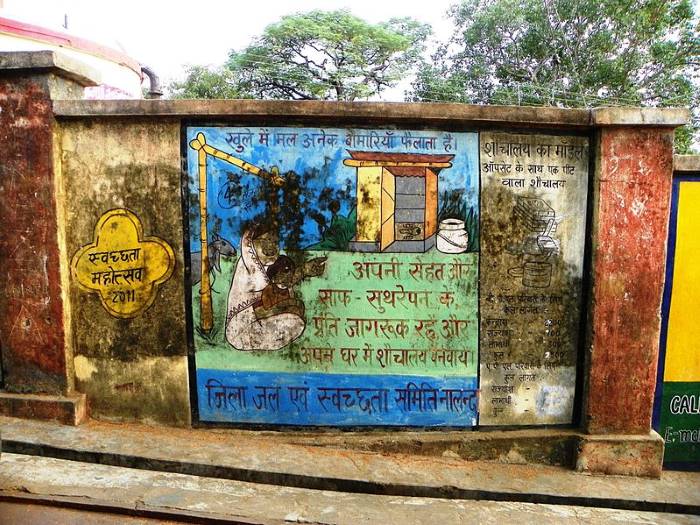
    In 2019, Indian Prime Minister Narendra Modi announced that India had achieved Open Defecation Free (ODF) status after his government built over 110 million toilets. The federal government’s flagship program, the Swachh Bharat Abhiyan (Clean India Mission), was the largest sanitation intervention of its kind globally.

    Its aim was to construct toilets to end open defecation and meet Sustainable Development Goal 6.2. The program’s technical approach to solving a social problem — couched in the language of vikas (development) — camouflages social justice concerns about equitable toilet access.

    Three years since the alleged success of the sanitation intervention, the ruling Bharatiya Janata Party (BJP) repeatedly labels the campaign a ‘success’. The party now mentions open defecation in the past tense and has moved on to other priorities in the water, sanitation and health sector.

    Nowhere close to ODF status

    But the BJP conveniently ignores hard data when making its claims. In May 2022, the Institute for Population and Health Research released the fifth version of its National Family and Health Survey (NFHS-5). The NFHS data provides demographic information on population, health and nutrition that estimate the results of the federal government’s welfare programs and guides policymaking.

    The survey suggests that open defecation is still practised by one in five households. According to the NFHS-5, 19.4 per cent of the country does not have access to a toilet — of which 25.9 per cent is in the rural areas and 6.1 per cent in the urban areas. In comparison to the NFHS-4, these numbers have declined from 54.1 per cent and 10.5 per cent, respectively.

    While this is a healthy indicator for a country in which more than 600 million people practised open defecation over the previous decade, the nation is nowhere close to obtaining ODF status. The real number for open defecation is likely higher than the NFHS data, as the survey assumes that the response of one household member represents the sanitation practices of the entire household. A gender-wise break-up of sanitary habits and data on homeless people is also missing.

    Coercive tactics

    For a country where defecating in the open is an accepted norm in rural areas, the government deserves credit for shaping public imagination in favour of Swachh Bharat. But the exclusion of caste — the rigid social stratification of Indian society — and other socio-economic determinants in the policy design explains the divergence between the NFHS data and the government’s ODF claim.

    There are two points that highlight how the mission’s singular focus on toilets construction could perpetuate class and caste inequities in villages.

    First, the haste in getting ODF status diverts resources from other areas and disproportionately impacts marginalised communities. The Modi administration galvanised the bureaucracy to supervise the construction of toilets — even directing non-health officials to join the taskforce. Government officials were often rushed to make unverified ODF declarations about their districts.

    But villagers have an equally important role here because the onus was on them to construct the latrines. The federal government asked villagers to construct the toilets out of their own pockets, after which they would receive government subsidies.

    Research found that officials and upper-caste Hindus used coercive tactics on the lower caste (Dalits) — including withholding government benefits and threats of fines — to get the ODF tag for their village. Since the messaging of the intervention was rooted in ‘the development narrative’, those who failed to build latrines in their homes were berated for not contributing to their village’s development.

    Manual scavenging

    The rural poor often used their savings for latrine construction and were only eligible for reimbursement if the whole ward in the village had constructed latrines. Dalits face the added burden of withheld benefits and fines, a form of caste-based discrimination that explains why 28.8 per cent of Dalits in rural areas still don’t have a toilet in NFHS-5 data.

    Another challenge is access to waste treatment facilities. In the absence of water and centralised sewage, pit latrines and septic tanks require manual scavenging to remove excreta. According to NFHS-5 data, of the 74.1 per cent with toilet access, only 2.9 per cent have a piped sewer connection in rural areas. Similarly, in urban area only 10.4 per cent have a sewer system.

    The burden of Swachh Bharat falls on the lower castes, who are coerced into constructing the latrines using their savings and shamed by officials and upper castes for not participating in the country’s ‘progress’. But without proper waste treatment infrastructure, they are forced again to engage in manual scavenging — putting their dignity and health at risk.

    Unless caste and other socio-economic determinants of toilet access are included in India’s policy design and implementation, open defecation will continue, further marginalising the lower castes.


    Younus Mushtaq Ahmed is a PhD student in Medical Anthropology at the University of British Columbia and is a Fellow at the Institute of Asian Research, School of Public Policy and Global Affairs.


    This piece has been sourced from the East Asia Forum of the Australian National University.


    Image: Wikimedia / juggadery