More

    US Study Tells How Summer Holidays Impact Children’s Growth

    Children grow faster during the school year than during the summer period, show scientists. In contrast to the strong seasonality of vertical growth, there is little seasonality in increase in body weight over time. Slower vertical growth affects the BMI and contributes to the “obesogenicity” of the summer period.

    By Mischa Dijkstra

    It has been long recognized that in Western countries, children are more likely to become overweight or obese over the summer. Causes of this include changes in kids’ physical activity and diet over the summer period, including the summer holidays. But in a new study in Frontiers in Physiology, scientists from the US show that this ‘obesogenicity’ of summers has another unexpected cause: children grow faster over the school year than over the summer. And because Body Mass Index (BMI) is the ratio of body weight in kg and height in meters squared, faster vertical growth during the school leads to increased BMI during summers.

    “Here we show seasonality in standardized body mass index (BMIz), with children gaining height at a greater rate during the school year compared to the summer,” said Dr Jennette P Moreno, an assistant professor at the USDA/ARS Children’s Nutrition Research Center, Baylor College of Medicine in Houston, Texas, and the study’s first author.

    BMIz is individual BMI scaled to the population-specific average BMI, so that a BMIz of one is equal to a BMI one standard deviation above average. Typically, a BMIz of 1.04 is considered overweight, and a BMIz of 1.64 obese.

    Weight gain less seasonal

    “The children’s rate of weight gain was more consistent than their rate of gain in height across the year, except among children who started to transition to an unhealthy weight status in the summer after completion of the second grade,” said Moreno.

    Moreno et al. statistically reanalyzed the results from their 2013 study, where they followed 3588 children who entered kindergarten in September 2005, at any of 41 schools in the Fort Bend Independent School District around the city of Sugar Land in Texas. They followed these children, who were five to six years old at the start, until the fall after completion of the fourth grade of primary school, five years later. Nurses measured each child’s height and weight twice a year, in mid-September and mid-April. The present reanalysis is more powerful than in 2013.

    The authors divided the children into five ‘BMI trajectory groups’, based on their pattern of change in BMIz over the study. Here, 22.6 per cent of children scored as ‘chronically overweight or obese’, 8.2% ‘becoming healthy weight’, 8.5 per cent as ‘late-onset overweight or obese’, 8.2 per cent as ‘early-onset overweight or obese’, and 52.5 per cent as ‘persistently healthy weight’. Early-onset was defined as transitioning toward an above-average BMIz beginning the summer after kindergarten, and late-onset as beginning this transition the summer after 2nd grade.

    Besides BMI trajectory group and season (fall or spring), the authors used the school, the child’s age in months, gender, race or ethnicity, and relative body weight or height compared to peers as explanatory variables to model seasonal changes in height, weight, and BMIz, as well as their modifying statistical interactions.

    Vertical growth was seasonal

    Children’s height increased faster over the school year than over the summer by an average rate difference of .055 cm/month. As a result, graphs for vertical growth across time – corrected for other variables – show a jagged pattern, with peaks in spring and valleys in the fall. This deficit in vertical growth over summer was greatest for ‘chronically overweight or obese’ children, with a total of approximately  -0.1 cm/month less growth over summer than over the school year.

    The rate of weight gain did not differ between seasons. But the latter combined patterns of height and weight meant that BMIz was highest in summer, while the probability of becoming overweight or obese increased sharply over every summer.

    “Despite the pattern of height gain showing greater increase in height during the school year, children’s height gain influenced BMIz more strongly during the summer holiday year than during the school year, with weight gain showing a constant increase during the school year,” said co-author Dr Debbe Thompson, a USDA/ARS research nutritionist and professor at the USDA/ARS Children’s Nutrition Research Center at Baylor College of Medicine.

    “This differential seasonal impact of height and weight on BMIz lead to a healthier BMIz status during the school year.”

    Changes in light-dark cycle

    What causes the strong seasonality of vertical growth is not yet clear. “It’s possible that the demands of the school year alter children’s exposure to the daily light-dark cycle, which may cause the seasonal pattern in height. Additional studies on children who receive year-round schooling might help to answer this question,” said final author Dr Craig A Johnston, an associate professor at the Department of Health and Human Performance of the University of Houston.

    “What is clear is that children at the greatest risk of becoming overweight and obese have a less pronounced seasonal impact of height gain on BMIz, indicating they would benefit from obesity prevention efforts throughout the year,” concluded Johnston.


    From Frontier Science News


    Image:  Unsplash/CC0 Public Domain
    Delhi’s Heatwave: A Warning For Worse Summers To Come?

    India could experience further unprecedented and prolonged heatwaves, extreme weathers, increased hospitalizations even leading up to fatalities and irreparable damage to agriculture and wildlife risking our food and nutritional security.

    Delhi’s maximum temperature could be 4oC higher than average between 2080 and 2099 in the scenario of CO2 emissions doubling by 2050, according to an assessment by Greenpeace India.

    In the same period, Delhi’s average temperature will be 5 degrees warmer than now with the maximum temperature reaching 48.19o C, the environmental group has said.

    The national capital’s recent heatwave recorded 43oC on 29th April, 2022 – well above its average maximum temperature for the month of April. Analysis of the historical daily temperature for April from 1970-2020 suggests that only four years have recorded a value higher than 43oC.

    Greenpeace says that such drastic and rapid increases in temperature will mean India will experience more unprecedented and prolonged heatwaves, extreme weathers, increased hospitalizations even leading up to fatalities and irreparable damage to agriculture and wildlife risking our food and nutritional security.

    “The heatwaves are fatal for public health and the economy. It also puts ecosystems at risk. We have enough science to link such extreme weather events to climate change. Unfortunately, if we do not act now, the threat is only going to increase in frequency, duration and magnitude.” says Avinash Chanchal, Campaign Manager, Greenpeace India.

    Greenpeace says that the hottest days for India have increased from 40 days in a year in the 1950s to 100 days in a year in the 2020s. This sharp increase and a heat index of over 35°C has significant health impacts that the population is already experiencing. But a matter of greater concern is the fact that multiple climate models have projected that the scenario will worsen significantly.

    “There will be more heatwaves, more wildfires and it will be too late,” the organisation says.

    Vulnerable communities

    In such a situation the temperature will increase by 4°C on average by the end of the century; which means unprecedented and prolonged heatwaves, more frequent extreme weather events, increased hospitalizations even leading up to fatalities and irreparable impacts on agriculture and wildlife risking our food and nutritional security.

    Inland cities are at a significantly higher risk of heatwaves in the absence of regulation by the oceans and a higher temperature range than coastal areas. The impaling temperature rise is expected to severely impact citizens particularly in cities like Delhi, Lucknow, Patna, Jaipur and Kolkata that share similar temperature patterns. According to the assessments in the same scenario, in the 2080 to 2099 period, Mumbai and Pune will be 5oC warmer than now on average with the maximum temperature 4.2oC hotter and Chennai will be 4oC warmer than now on average with the maximum temperature 3.7oC higher.

    Unfortunately, as always, it will be the vulnerable communities that will face the crisis at its worst form, the organisation says. “The most vulnerable populations, including the urban poor, outdoor workers, women, children, senior citizens and sexual minorities are at a significantly greater risk, as they lack adequate access to protective measures,” the organisation says.

    It has called on governments to fortify the resilience of such vulnerable populations by immediately providing aid in a just and equitable manner. Besides, Greenpeace says, state and city authorities must strengthen the public health system, and coordinate with meteorological agencies to relay timely warnings and advisories to citizens.

    “As long term measures, urban planning must provide for and maintain adequate green cover which includes rooftop gardening, community nutritional gardens, parks, mini forests, road-side tree cover and water bodies. Reducing the CO2 emissions, such as shifting to renewables and phasing out internal combustion engines, contribute to reducing the rate of warming in the long run. Phasing out fossil fuels, particularly for energy and transportation systems, is the most practical and immediate solution to tackling climate change and protecting public health.” Chanchal added.


    Image: Hippopx, licenses to use under Creative Commons Zero – CC0

    Green Hydrogen: Need To Plan Ahead For An Energy Secure SouthAsia

    Financing institutions and governments must step up efforts to finance, subsidize and remove bottle necks to the conversion of fossil fuel energy into clean, green energy. It will also help secure clean-energy and make it affordable for industry as well as individual consumers.

    By Geeta Dash

    Life is not possible without hydrogen. But this vital element was discovered not long ago, in the year 1766, by Henry Cavendish who named it as ‘Inflammable Air’ – a colourless, odourless, tasteless, non-toxic and highly combustible element. Although about 90 per cent of the universe is believed to be made up of Hydrogen, it’s availability is only about 10 per cent of all the elements in the earth.

    Unlike nitrogen or oxygen that are found in the earth’s atmosphere, hydrogen is not available freely. It exists as a part of water or hydrocarbons among its other forms. The physical and chemical characteristics of hydrogen have made it a very good energy source in powering the internal combustion engines since past 200 years and has been extensively used mostly in oil refineries and fertilizer industries. It meets the present day demand for clean, pollution-free fuel for use in the transportation, construction and power generation sectors.

    Green hydrogen is however not produced from fossil fuels; but by electrolysis of water using electricity from renewable sources like nuclear power, solar power, wind power, hydropower, tidal and geothermal powers. Water is split into hydrogen and oxygen, where oxygen is released to the atmosphere whereas green hydrogen is trapped to produce energy. When hydrogen is burnt, it produces water, which is not as harmless as the carbon-laden smoke that petrol or diesel consuming engines produce – which is why this is called green.

    There has been extensive use of fossil fuels for power generation world-wide after the pre-industrial period (year 1850-1900) that pollutes the atmosphere with greenhouse gasses, leading to global warming and the consequential climate change; threatening the very existence of life on earth. Since power generation, storage, transportation and distribution from various renewable sources is very costly and needs high-investment, industries in today’s highly competitive market are dependent on fossil fuels. Governments across the world are subsidising over 85 per cent of the global power generated from fossil fuels.

    SouthAsia’s potential

    Confining global warming to 1.5 degrees Celsius above the pre-industrial period demands changing the ongoing power generation from greenhouse gas emitting fossil fuels to the clean power generation technologies from renewable energy sources. The UN, the International Energy Agency (IEA) and the International Renewable Energy Agency (IRENA) have recommended implementable action plans for ensuring a ‘Green Hydrogen Ecosystem’ by achieving ‘Net-Zero’ gas power generation between the years 2030 to 2050. Green Hydrogen, in particular, has a big role in helping the world attain net-zero by 2050.

    SouthAsian countries have tremendous potential for producing renewable, clean, green energy by utilizing hydro resources, solar power, wind mills, tidal and geothermal power; which can substitute and gradually phase out the conventional fossil fuel based power generation. Because of the huge gap between the energy produced and the energy demands in the region, the IEA, IRENA, governments of the regional countries and financing institutions are working to discourage further installation of fossil-fuel based electricity production units, thus encouraging the production of green hydrogen which can be stored, transported and distributed to the industrial and individual consumers at large, even in remote and inaccessible areas.

    The advantages in favour of Cross Border Energy Trade (CBET) in SouthAsia is that, except Maldives and Sri Lanka, all other countries have land-transportation facilities and cross border connections. Maldives and Sri Lanka are also not far away, in the sea. They can easily import and export electricity or green hydrogen at reasonable costs. India, which has already been generating about 20 per cent of world’s clean renewable energy can contribute to regional energy trade.

    India’s National Thermal Power Corporation (NTPC), National Hydro Electric Power Corporation (NHPC), North Eastern Electric Power Corporation (NEEPCO), Power Grid Corporation of India Ltd (PGCIL) and many other power grid companies can take care of the present and future transmission. The SouthAsian Association for Regional Cooperation (SAARC), USAID’s South Asia Regional Initiatives for Energy Integration (SARI / EI), The World Bank, Asian Development Bank, etc are financing and facilitating net-zero gas power generation.

    Also read: India’s Green Hydrogen Drive Faces Heavy Odds

    Space for CSOs

    The Indian government has already established big power grids and is working towards production of renewable clean energy by 2035, with substantial surplus energy for exporting across the border to other SouthAsian Countries and through pipeline or shipment to Sri Lanka and Maldives. There have already been bilateral agreements and further negotiations will continue with Nepal, Bhutan and Bangladesh for cross-border export and import of renewable energy and green hydrogen.

    But as renewable energy production projects are yet to come up in a big way and the cost of production of green hydrogen and its storage and distribution is almost four times more than that of the fossil based power, financing institutions and governments must step up efforts to finance, subsidize and remove the bottle necks to the conversion of fossil fuel energy into clean green energy. It will also help in securing clean-energy and also make it affordable for industry as well as individual consumers, requiring electricity for agriculture, cottage industry, transport, housing, etc.

    Research and development structures across SouthAsia and NGOs working in the energy sector should help in identifying the specific energy starving areas as well as the areas having renewable energy potential. Green hydrogen production, storage, transportation and distribution facilities can be set up in such areas.

    Civil society organisations working for carbon-free ecosystem and clean-energy sector have also a role to play to popularize the use of the alternative renewable energy, discarding the conventional fossil based energy and also to facilitate hassle free cross-border energy trade. This would help all the stake holders to enjoy economic benefit as well as a pollution free atmosphere for getting clean air to breathe.


    Geeta Dash is a recipient of ‘Media Fellowship’ from NTPC School of Business, under the ‘Think-Tank Project’ funded by USAID for the SARI/EI project, currently being implemented by IRADe.


    Image: Wikimedia commons

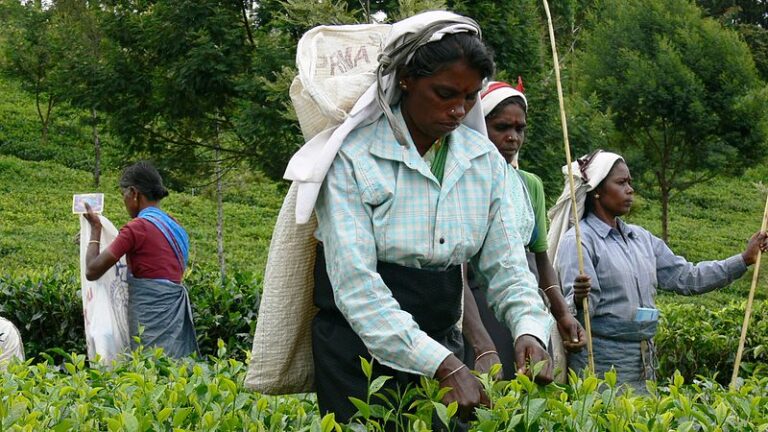
    Spare A Thought For Sri Lanka’s Forever Marginalised Communities

    Let us remind ourselves of the promise we have made to our future generations – all so clearly embodied in the Sustainable Development Goals. In the same breath, let us resolve not to leave anyone behind.

    By N Paul Divakar

    From a country of plenty to one desperately in need of aid – Sri Lanka’s people have borne much. Today, they are facing the worst economic crisis in its post-independence history. The worst hit are the working people – farmers, plantation workers, fishers, people from traditionally discriminated communities who have been facing discrimination based on work and descent, young people, women, queer people, students, or workers. It is these people who have been worst impacted as they queue-up for hours for fuel; and await scarce, yet overpriced food supplies and as shortage of cooking fuel cripple the family hearth.

    While the impact of the economic crisis is felt across all corners of the island, it is the women, children, person with disabilities, daily-wage earners, those dependent on micro, small and medium enterprises, the urban working poor, plantation workers and members of communities discriminated on work and descent (CDWD) who are the worst affected by this deepening crisis.

    Even before the present economic crisis, the rising prices of essential items have depleted money in the hands of those living on subsistence wages. Communities affected by repeated tragedies – the long-drawn-out war, the tsunami, Easter bombings and the COVID-19 pandemic – are yet again facing a blow to their efforts to rebuild their lives.

    Elitism

    Every action of the present dispensation, being passed off as poor governance, actually stinks of elitism. Historically discriminated communities have had to bear the consequences. Their vulnerabilities have only grown further in the recent past.

    An example to remind us that their vulnerabilities are not new is the case of workers in the Katunayke Free Trade Zone. These vulnerabilities have just been further enhanced, but the people doing the hard work, mostly work based on descent, have always borne the brunt of the power of an elite State.

    To refresh memory, on 15 October 2020, while the COVID-19 pandemic was at its peak, Sri Lankan authorities imposed a curfew in parts of the Katunayake Free Trade Zone (KFTZ) and called in the military to round-up workers, late at night and early in the morning, to forcibly take them to makeshift quarantine centers. Many KFTZ workers were migrants from the countryside and lived in overcrowded boarding houses with minimum facilities. Among these workers were also pregnant women and children. In an attempt to control the spread of COVID-19, the military was called in on 11 October to round-up workers, late at night and early in the morning, to forcibly take them to makeshift quarantine centers.

    Media and civil society sources spoke of how soldiers raided the KFTZ workers’ living areas and packed workers into waiting busses to be driven to yet-to-be-established quarantine centers. Children were separated from their mothers.

    Is there place for such elitism in the twenty-first century?

    It is appropriate to ask this question in the context of Sri Lanka, considering especially that till a few decades ago, the country had the best human development indicators. But the developed SouthAsian country had an underbelly to hide. These were its less fortunate citizens who had to do the menial work they inherited over generations, as if it were duty to do so.

    Sadly, even the international community has not paid heed to these sections.

    Women

    The problem of a failing economy customarily falls on women as economic hazards are hard-pressed into the home sphere. Women face the double burden of earning an income while doing unpaid care work at home. Moreover, CDWD women face triple of that burden due to their location of caste, class and gender. Frustrations and fears of uncertainty, hunger and the lack of basic comforts often translate into violence directed at women and children at home. The limited existing services to address such violence are further arrested due to the pandemic and now the economic crisis.

    Unfortunately, aid is driven by what the government of the day wants. The aid provided so far has been to respond to needs as displayed by the media. It has little to do with what the most affected need.

    For example, the funds provided to the country is mostly for petrol and credit facilities. But there is little attention to rebuilding the country’s economy, particularly for people from marginalised and communities all along discriminated for the work they have done, and more particularly, the women from these communities.

    Donor agencies should raise the needs of people of CDWD backgrounds in their discussions with Sri Lankan authorities to ensure that their rights are protected. The needs of women and children from CDWD communities must be prioritised, especially as CSOs step up their relief efforts.

    Let us remind ourselves of the promise we have made to our future generations – all so clearly embodied in the Sustainable Development Goals. In the same breath, let us resolve not to leave anyone behind, as every SouthAsian works to help our Sri Lankan brethren bounce back stronger.


    N Paul Divakar is Convenor of the Global Forum of Communities Discriminated on Work and Descent.

    Image: Wikimedia / Dennis Keller

    Halt Fortified Rice Distribution, Campaigners Tell Jharkhand Government

    The campaigners point out to initiatives by civil society groups in Jharkhand demonstrating effective ways of dealing with nutrition holistically. They say that local, diverse foods, including uncultivated forest foods and traditional crops and varieties play a key role to secure nutrition.

    A report by a fact-finding team has raised serious concerns with regard to indiscriminate distribution of fortified rice to poor households, Anganwadis and schools in Jharkhand.

    The ground-level report follows a three-day study undertaken by the Right To Food Campaign (RTFC) and the Alliance for Sustainable and Holistic Agriculture (ASHA-Kisan Swaraj) in villages in the state.

    Their report stresses that high levels of anaemia coexist with various blood disorders like thalassemia and sickle cell anaemia among a significant proportion of Adivasi population in Jharkhand and fortified iron is no solution to the anaemia among this population. The report points out that even the FSSAI regulations on fortified foods recommends people with thalassemia to consume iron-fortified food under medical supervision. It further warns sickle cell anaemia patients not to consume iron-fortified food.

    “On the one hand, the government understands the health risks of consumption of iron fortified food for many people with particular health conditions in our society, and brings in regulations like this. On the other hand, the government itself is distributing such rice in all its food schemes where the poor have no option but to depend on this entitlement for their food security. What is more, in Jharkhand due to lack of population-based screening, people with these health conditions may not know that they have these blood disorders; further, the government is also distributing such rice without any proper information to, or dialogue with the communities”, the fact finding team pointed out in its report.

    Fortified rice in PDS without evaluation

    Not a proven approach

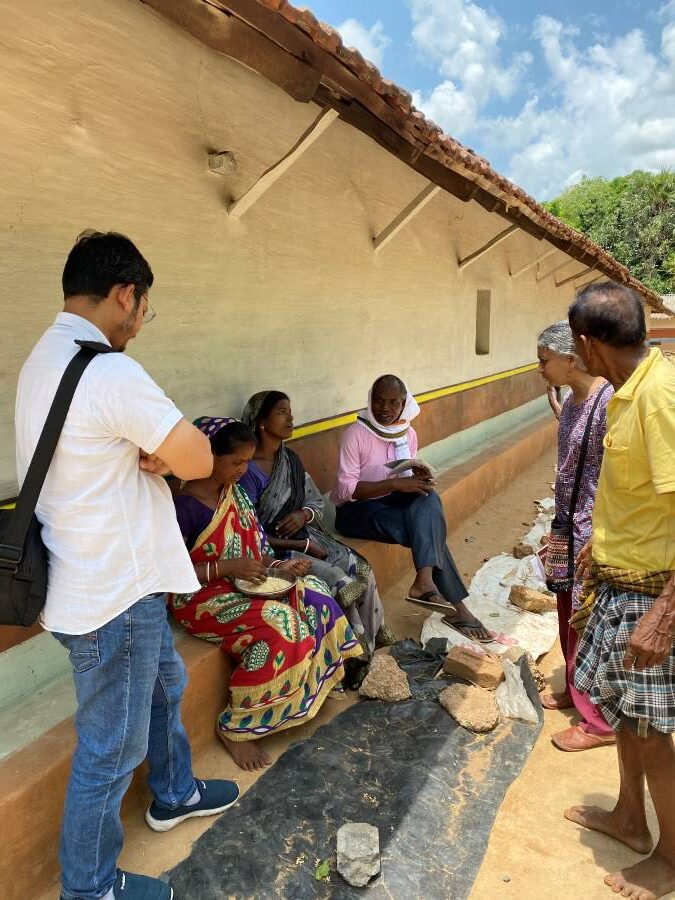
    Field visits also showed that many people do not prefer consuming this rice and are even separating and removing the fortified rice kernels before cooking and consuming the rice.

    The fact-finding team visited five Panchayats in Khunti and East Singhbhum districts where they met an array of people and officials as well as with the Jamshedpur East MLA, Saryu Roy and Chakuliya MLA, Samir Mohanty. Team members also interacted with concerned district and state level officials, and also met with Cabinet Minister Dr Rameshwar Oraon.

    “Fortified rice is not a proven approach to tackle anaemia effectively, as per published papers and reviews. It is surprising that the Government of India, in a hasty blanket approach, has already scaled up distribution of fortified rice to 257 districts across India, even though the so-called ‘pilots’ have not completed three years from the time initiated, nor evaluated, nor findings put out in the public domain,” they say in their report.

    They point out that official data on the government portal shows fortified rice being distributed in two blocks of East Singhbhum (the designated Pilot district in the state) only from October 2021. However, they say, fortified rice has already been taken to several other districts without any data being shared on the portal. “What is the meaning or purpose of the pilot then,” they question.

    Jharkhand tribal people PDS fortified rice

    Diversify food options

    The report calls for implementation of proven, holistic, safe and community-controlled approaches to tackle anaemia and other malnourishment conditions. “Dietary diversity is an important approach and cannot be given the short shrift due to hasty adoption and attention to risky unproven approaches like food fortification,” their report says.

    The campaigners point out to initiatives by civil society groups in Jharkhand demonstrating effective ways of dealing with nutrition holistically and say that local, diverse foods (including uncultivated forest foods and traditional crops and varieties) play a key role, along with participatory learning in these community-led approaches.

    “The government has to expand its food security basket to include millets, pulses, eggs, cooking oil and milk in the food schemes. Nutrition Gardens should be scaled up along with support to extensive livestock systems that provide nutrition as well as support livelihoods,” they say, adding that this needs to be complemented with a well-managed micronutrient supplementation programme.”

    Despite Ideals, Most Americans Don’t Really Like Reducing Inequality, Study Finds

    Researchers say that study participants from advantaged groups, across all ideologies, rejected policies to reduce inequality on the false belief that they would end up with less access to resources.

    By Laura Counts

    Most Americans say they want a more equal society, yet policies aimed at increasing equality for disadvantaged groups in higher education, corporations, government, and elsewhere continue to generate backlash.

    This backlash has been blamed on a range of causes—including majority white Americans’ fears of losing their status, political partisanship, and overt prejudice.

    A study by Berkeley Haas researchers, published in the journal Science Advances, offers a new take, identifying an underlying cause of this opposition that cuts across ideologies: People in advantaged positions view equality itself as harmful, and tend to think that inequality benefits them.

    “We found that people think of the world in zero-sum terms, so that a gain for one group must necessarily be a loss for another,” says study co-author Derek Brown, a Berkeley Haas doctoral student. “This seems to be a cognitive mistake that everyone is susceptible to, not just a vociferous minority that has antipathy toward any certain group.”

    Egalitarian beliefs notwithstanding

    The paper, co-authored by Berkeley Haas assistant management professor Drew Jacoby-Senghor along with Columbia University PhD student Isaac Raymundo, helps explain why even people with strong egalitarian beliefs may still block policies that reduce disparities. Beyond the threat of losing status, people in advantaged groups are prone to the perception that greater equality means less for them — to the point where they’ll vote for policies that cause them economic harm and increase inequality over policies that benefit them and reduce inequality, the study found.

    “In our experiment, it was more important to people how well off they were relative to other groups than how they were doing in absolute terms,” Jacoby-Senghor says. “They view a loss in relative advantage as an absolute loss, even when it’s a clear material gain.”

    Beyond race and ethnicity

    In prior research, Brown found non-Latino white and Asian people—who make up the majority in higher education—see policies that increase minority representation in a graduate program as reducing their chances of admission, even explicitly win-win policies that also increase the number of admission spots for the majority.

    In the new paper, Brown and colleagues go beyond race and ethnicity to other types of real-world inequalities, such as the gender wage gap and the hiring gap for those with disability status or a criminal record. They also studied voters’ perceptions of a 2020 California ballot initiative to overturn the state’s ban on affirmative action, and even concocted scenarios involving disparities between fictional teams with random names. Time and again, across all ideologies, study participants in advantaged groups rejected policies to reduce inequality on the false belief that they would end up with less access to resources.

    Zero-sum game

    Past research has often focused on policies that are zero-sum, such as hiring fewer white people in order to hire more members of minority groups, making it hard to parse perceptions from actual impact. Brown and Jacoby-Senghor asked people to only assess non-zero-sum policies that help disadvantaged groups without taking anything away from—and even improving things for—advantaged groups. Across all experiments, they controlled for five well-studied forms of ideological opposition to equality: political conservatism, preference for hierarchical social structures, belief that society is zero-sum, system-justifying beliefs, and explicit prejudice. While they found some of them correlated with perceptions of policies, variations in ideology did not explain people’s negative view of greater equality.

    In one scenario, for example, non-Latino white study participants were told, “In 2018, white homebuyers received roughly $386.4 billion in mortgage loans from banks, while Latino homebuyers only received around $12.6 billion in mortgage loans overall.” The participants were then presented with proposals for banks to either increase the amount of loans for Latinos, decrease the amount, or leave it unchanged, while maintaining the loans for white homebuyers. Even so, participants misperceived the proposal to increase the amount for Latino buyers as lowering their own chances of getting a loan, and thought decreasing the amount available to Latinos would improve their chances.

    Ditto for win-win policies

    This misperception also held true when the researchers tested win-win policies that benefit both majority and minority groups. A mention of societal benefits also did not cause a shift: White participants in one study thought a policy that would reduce inequality by offering more loans for Latinos and benefit society by stimulating mortgage investment for all groups would reduce their ability to get a loan, while they perceived a policy that would decrease loans to Latinos—worsening inequality—and decrease overall mortgage investment as not harming them.

    Even when white participants were directly told that anyone who wanted access to a loan could get one and there was no limit on the amount available, they continued to believe that also boosting loans to Latinos would slightly reduce their chances of getting a loan.

    “The causes and solutions to inequality are complex, but even when we simplified it and bent over backwards to make sure everyone is better off in these scenarios, people still found a way to believe they’ll be harmed,” Jacoby-Senghor says.

    In fact, the only thing that erased majority participants’ misperceptions were proposals that enhanced equality between members of their own group—such as when a group of male participants considered reducing pay disparity between men, rather than between men and women.

    Predicting voting

    The researchers examined this dynamic in a real-world field study, surveying California voters on Proposition 16, which would have overturned the state’s ban on considering race, sex, colour, ethnicity or national origin in public employment, education, and contracting.

    “We wanted to see if this misperception about equality predicted how people would vote,” Brown said.

    It did. They found that the majority of whites and Asians believed the measure would reduce their access to education and job opportunities. The more strongly they held that belief, the less they supported Prop.16. In fact, a belief that the measure would harm their chances was a stronger predictor of how people would vote than their political party or any other ideological variable. In a follow-up survey two weeks after the first, researchers found that people who switched to a no vote reported a growing perception that the measure would hurt them.

    Rattlers vs Eagles

    In their final experiments, the researchers tested whether majority members of completely fictional groups would reject more equitable outcomes based on a misperception of harm. In contrast with prior experiments that only involved majority group members, the researchers recruited a racially and ethnically diverse subject pool. They told them they were assigned based on a personality test to a team called the Rattlers, which would compete against the Eagles in a problem-solving challenge (in reality, this personality test did not determine group assignment and the Eagles didn’t exist). Participants were told that the Rattlers had received more bonuses than the Eagles in the past couple of weeks, and so they were asked to consider more equal ways to dispute bonuses.

    Even with made-up groups, the same dynamic held: Members of the Rattlers rejected a win-win proposal that would give monetary bonuses to 5 more Rattlers and 50 more Eagles — still leaving the Rattlers ahead — and instead chose a lose-lose plan, forfeiting 5 bonuses and taking 50 from the Eagles. “This policy harmed everyone and made the bonus distribution more unequal,” the researchers point out.

    In a final twist, the researchers presented study participants with side-by-side scenarios that would either reduce or increase inequality without affecting their bonuses, so they could easily compare. They still perceived the equity-enhancing policy as harming their chances.

    Implications

    The findings shed new light on one of the foundational theories of social psychology, social identity theory, which posits that people tend to prefer relatively greater amounts of resources be allocated to their in-group than to an out-group. This preference is predicted by the misperception that reductions of relative advantage necessarily harm advantaged groups in absolute terms, according to the researchers.

    Beyond theory, the findings are troubling given the massive social and economic costs of inequality, Brown says. Lost GDP from racial inequality has been estimated at US$16 trillion, and the gender pay gap is estimated to reduce the global economy by about US$ 160 trillion. People may fundamentally misunderstand how much disparities weigh down society as a whole, the researchers suggest.

    This zero-sum view of equality is a roadblock that policy makers seeking to reduce disparities will need to grapple with, Brown says.

    “Our research suggests that you can’t expect everyone to be on board and you should always expect there’s going to be a backlash,” he says. “The change itself has to be the justification.”


    Representational image from Hippopx, licensed to use under Creative Commons Zero – CC0

    Study Shows The Poor Simply Lack Opportunities To Gain Wealth, But A One-Time Boost Can Make A Major Difference

    The current study estimates that the economic misallocation resulting from the poverty trap in this setting is 15 times the one-time cost of taking households across the poverty threshold.

    By Peter Dizikes  /  MIT

    Chronic poverty in the developing world can seem like an insoluble problem. But a long-term study from Bangladesh presents a very different picture: When rural poor people get a one-time capital boost, it helps them accumulate assets, find better occupations, and climb out of poverty.

    In particular, the study strongly suggests that poverty is not principally the product of people’s capabilities or attitudes. Rather, the very poor are usually mired in a poverty trap, in which an initial lack of resources prevents them from improving their circumstances. But the sudden acquisition of a productive asset — even, say, one cow — via a randomized asset transfer programme can help spring the poor from that trap if it brings them above a basic wealth threshold. Instead of being farm labourers or domestic servants, rural people take up livestock rearing and more land cultivation, and sustain better incomes.

    “The poor in these contexts are not unable to take on more productive employment, they simply lack the productive assets to do so,” says Clare Balboni, an assistant professor of economics at MIT and co-author of a published paper detailing the study’s findings.

    The study adds evidence explaining what lies behind the success of “big push” antipoverty programmes, which often centre on significant one-time interventions. As the paper states, “big push policies which transform job opportunities represent a powerful means of addressing the global mass poverty problem.” Such programmes have gained traction over the last 15 years or so.

    The paper, “Why Do People Stay Poor?” appears in the May issue of The Quarterly Journal of Economics. The co-authors are Balboni, who is the 3M Development Assistant Professor of Environmental Economics in MIT’s Department of Economics; Oriana Bandiera, a professor of economics at the London School of Economics (LSE); Robin Burgess, a professor of economics at LSE; Maitreesh Ghatak, a professor of economics at LSE; and Anton Heil, a research manager at LSE.

    Mind the gap

    To conduct the study, the scholars examined data from a long-term survey project involving 23,000 households in 1,309 villages, administered by BRAC, a major NGO in Bangladesh. That project included a specific antipoverty programme covering 6,000 poor rural households: Women in half of those households were offered a one-time asset transfer of about $500 and complementary training and support in 2007, while the rest served as a control group after 2011, with surveys of the households conducted in 2007, 2009, 2011, 2014, and 2018.

    An earlier published paper, by some of this paper’s LSE-based co-authors, quantifies the experiment’s material gains. After four years, for women given a cow in 2007, earnings increased by 37 per cent, consumption rose 10 per cent, ownership of household durables increased 110 per cent, and extreme poverty (those living on under $1.25 per day) declined 15 per cent, compared to the control group.

    In short, this intervention works. But why? The current paper closely scrutinizes the BRAC data to arrive at an explanation. The villages in the BRAC experiment have a “bimodal” wealth distribution: Some people have very few assets, while others have significantly more, with a gap in between the two levels. As it happens, when people in the poorest group receive a US$ 500 asset, it leaves them in the gap between those levels.

    The poor do not stay in that gap, however, after receiving that US$ 500 asset. Tracking households over time, the researchers identified a striking pattern. The gap in between wealth levels is actually a threshold. People whose acquisition of the US$ 500 allowed them to surpass that threshold gained income and wealth over time, while those below it remained poor.

    Essentially, acquiring even one cow allowed members of very poor households to move from being under-employed labourers to working more with livestock and in land cultivation. It’s not that the poor did not want to work; hours worked actually rose when people had more work options. The study estimates that 98 per cent of poor households consisted of wage labourers before the intervention, whereas about 98 per cent would choose to devote some hours to livestock rearing, given enough assets.

    “The poor are trapped in these occupations as a result of the fact that they are born poor,” Balboni says.

    Growing interest in big pushes

    The findings about the BRAC programme in Bangladesh fit a burgeoning literature that has examined “big push” programmes and their implications. And while Balboni focuses much of her research on environmental economics, other MIT scholars have also analyzed this subject.

    In a paper published in late 2021, MIT economists Abhijit Banerjee and Esther Duflo, with doctoral student Garima Sharma, found that a similar BRAC programme in rural India generated income increases of 30 per cent while producing economic benefits at least four times the cost of the programme (and possibly much more). Banerjee and Duflo have also examined evidence across the field on poverty trap dynamics.

    In the case of the BRAC programme in Bangladesh, the current study estimates that the economic misallocation resulting from the poverty trap in this setting is 15 times the one-time cost of taking households across the poverty threshold.

    “We really need these big-push policies that tap into talent,” says Balboni, who also recently presented the paper in person to students in MIT’s MicroMasters Programme in Data, Economics, and Development Policy.


    Reprinted with permission of MIT News

    Image: Unsplash  /  CC0 Public Domain


    At 7.79 Per Cent, India’s Retail Inflation Goes Through The Roof

    This is the highest inflation in eight yeats, but it isn’t really a surprise – the RBI Governor had earlier said retail inflation was likely to be elevated. But, worryingly for the government, this figure exceeds the Reserve Bank of India’s upper tolerance limit of six per cent for the fourth month in a row.

    Surpassing all previous estimates, India’s retail inflation soared 7.79 per cent in the month of April, the National Statistical Office (NSO) of the Ministry of Statistics and Programme Implementation informed through a press release today.

    The NSO collects price data from 2,295 selected sample markets spread across the country (1,114 urban markets and 1181 villages) through personal visits by field staff of its Field Operations Division on a weekly roster.

    According to the figures provided by the NSO, rural areas reported a higher consumer price index of 8.83 per cent, compared to urban areas that reported a 7.09 per cent consumer price index.

    The inflation has been linked to the rising prices of fuel and food, according to NSO data.

    According to the data released by the NSO, the prices of foodstuffs accounted for the bulk of the inflated prices. Food prices form almost half of the consumer price index basket.

    This is the highest reported figure for inflation in eight years.

    Yet, this is not a surprise. RBI Governor, Shaktikanta Das had said on 4 May that retail inflation was likely to be elevated.

    But, worryingly for the government, this figure exceeds the Reserve Bank of India’s upper tolerance limit for the fourth month in a row. The government wants the RBI to hold inflation in a two and six per cent range. This news is particularly bad in the face of rising unemployment.

    The RBI had, earlier this month, hiked its repo rate by 40 basis points to 4.40 — in turn, allowing for commercial banks to hike their interest rates. This decision followed an off-cycle meeting and came after a gap of four years.

    All developments point towards further tightening of monetary policies in an economy impacted by COVID-19 and the ongoing war between Ukraine and Russia. But the inflation also builds on earlier shocks following the demonetisation of currency bills five years ago and a hurriedly implemented goods and services tax regime.

    The RBI is scheduled to meet on 6 June as inflationary pressures seem to get out of hand.


    Image: Hippops, licenses to use Creative Commons Zero – CC0

    Common Steroids After ‘Long Covid’ Recovery May Cut Risk Of Death By Up To 51 Per Cent

    Researchers say that severe inflammation during hospitalization for COVID-19 increases risk of death within one year from seeming recovery by 61 per cent. This risk is reduced again by 51 per cent if anti-inflammatory steroids are prescribed upon discharge.

    By Mischa Dijkstra

    Evidence continues to gather that ‘long Covid’, that is, continued negative health impacts months after apparent recovery from severe COVID-19, is an important risk for some patients. For example, researchers from the University of Florida Gainesville showed last December that hospitalized patients who seemingly recovered from severe COVID-19 run more than double the risk of dying within the next year, compared to people who experienced only mild or moderate symptoms and who had not been hospitalized, or who never caught the illness.

    Now, a team including some of the same authors shows for the first time that among patients hospitalized for COVID-19 who seemingly recovered, severe systemic inflammation during their hospitalization is a risk factor for death within one year. This may seem paradoxical, as inflammation is a natural part of the body’s immune response, which has evolved to fight infection. But in some illnesses, including COVID-19, this response may overshoot, causing further health damage.

    “COVID-19 is known to create inflammation, particularly during the first, acute episode. Our study is the first to examine the relationship between inflammation during hospitalization for COVID-19 and mortality after the patient has ‘recovered’,” said first author Prof Arch G Mainous III, vice chair for research in the Department of Community Health and Family Medicine at the University of Florida Gainesville.

    “Here we show that the stronger the inflammation during the initial hospitalization, the greater the probability that the patient will die within 12 months after seemingly ‘recovering’ from COVID-19.”

    Inflammation

    Mainous and colleagues studied the de-identified electronic health records of 1207 adults hospitalized in 2020 or 2021 after testing positive for COVID-19 within the University of Florida health system, and who had been followed up for at least one year after discharge. As a proxy for the severity of systemic inflammation during hospitalization, they used a common and validated measure, the concentration in blood of the molecule C-reactive protein (CRP), secreted by the liver in response to a signal by active immune cells.

    As expected, the blood concentration of CRP during hospitalization was strongly correlated with the severity of COVID-19: 59.4 mg/L for hospitalized patients who didn’t require supplemental oxygen, 126.9 mg/L for those who needed extra oxygen through non-invasive, non-mechanical ventilation, and 201.2 mg/L for the most severe cases, who required ventilation through a ventilator or through extracorporeal membrane oxygenation.

    COVID-19 patients with the highest CRP concentration measured their during their hospital stay had a 61% greater hazard – corrected for other risk factors – of dying of any cause within one year of discharge from the hospital than patients with the lowest CRP concentration. These results are published in Frontiers in Medicine.

    Mainous said: “Many infectious diseases are accompanied by an increase in inflammation. Most times the inflammation is focused or specific to where the infection is. COVID-19 is different because it creates inflammation in many places besides the airways, for example in the heart, brain, and kidneys. High degrees of inflammation can lead to tissue damage.”

    Importantly, the authors showed that the elevated hazard of death from any cause associated with severe inflammation was lowered again by 51 per cent if the patient was prescribed anti-inflammatory steroids after their hospitalization.

    Chronic disease

    These results mean that the severity of inflammation during hospitalization for COVID-19 can predict the risk of subsequent serious health problems, including death, from ‘long Covid’. They also imply that current recommendations for best practise may need to be changed, to include more widespread prescription of orally taken steroids to COVID-19 patients upon their discharge.

    COVID-19 should be seen as a potentially chronic disease, propose the authors.

    “When someone has a cold or even pneumonia, we usually think of the illness being over once the patient recovers. This is different from a chronic disease, like congestive heart failure or diabetes, which continue to affect patients after an acute episode. We may similarly need to start thinking of COVID-19 as having ongoing effects in many parts of the body after patients have recovered from the initial episode,” said Mainous.

    “Once we recognize the importance of ‘long Covid’ after seeming ‘recovery’, we need to focus on treatments to prevent later problems, such as strokes, brain dysfunction, and especially premature death.”

    India’s Green Hydrogen Drive Faces Heavy Odds

    India has the potential to become a global leader in green hydrogen, but it needs to plug gaps in technology and funding.

    Sajna Nair

    India is looking to emerge as a world leader in green hydrogen and it has all the reasons to look for alternatives to fossil fuels. The economy is heavily dependent on imported crude oil for its energy needs. With the Ukraine crisis leading to a more than 50 per cent increase in global crude prices, India is looking at renewable energy sources to power its growth.

    Like many other economies looking for alternatives to fossil fuels, India is also focusing on green hydrogen as a potential energy source that can replace crude oil and coal. The fossil fuels are responsible for most of the global greenhouse gas emissions, blamed for global warming and climate change. India’s global commitments to reduce greenhouse gas emissions necessitates an energy transition away from fossil fuels.

    Energy experts consider green hydrogen as the end of their search for a fuel that emits no exhaust. It is produced by splitting water using renewable energy. It can be stored and transported using the existing infrastructure for oil and natural gas and is capable of powering energy hungry industries such as steel, cement and fertilizers.

    Ambitious targets

    India has set an annual green hydrogen production target of 5 million tonne by 2030 under its national green hydrogen policy. The government has announced a slew of benefits to the industry including tax breaks to boost investment. It also has allotted land to bring down the investment requirement. India has huge potential for renewable energy, a prerequisite for producing green hydrogen at competitive prices. It also has a large number of rivers and a long coastline that provide the second ingredient, water, in large quantities.

    Prospects look bright for India with some of the largest corporates have taken the plunge into the green hydrogen dream. India’s largest conglomerates the Reliance Group and the Adani Group have committed billions of dollars for green hydrogen production. The industry needs heavy investments and the viability and profitability are uncertain. So, the it needs powerful investors like Ambani and Adani who could absorb the risk involved. Reliance and Adani look to produce green hydrogen at $1 per kilogram, compared with the current cost of around $6.

    Reliance Industries has committed $75 billion to green energy, a major part of which is expected to go into green hydrogen production. Adani Group plans to invest $70 billion in renewable energy infrastructure by 2030. Greenko Group, based in Hyderabad, has plans to set up the largest electrolyser plant outside China in collaboration with John Cockerill of Belgium. State-run Indian Oil Corporation has also formed a joint venture to develop green hydrogen.

    While India has taken definitive steps to become a global leader in green hydrogen, the journey towards the goal wouldn’t be easy. India is not a technology leader in solar energy or in electrolyser production.

    Finance and technology

    At COP26 in Glasgow last year, India had announced a renewable energy generation capacity of 500 GW by 2030. It has revised its 2022 solar power target to 100GW after achieving the earlier target of 20 GW way ahead of the schedule. However, expanding the solar infrastructure would be a challenge for India that is dependent on imports for critical components. The country imports more than 80% of its solar cells and modules from China. It needs to reduce import dependence if it were to emerge as a major force in renewable energy.

    Availability of cheap credit is another key concern with most of the financing deals happen at around 12-14 per cent interest. The country needs to ensure diversified supply of components and cheap finance if it were to achieve its ambitious targets for solar energy and green hydrogen. The government has brought solar module manufacturing under the PLI scheme, which can go a long way in reducing import dependence. There is a need to protect the fledgling manufacturing sector using both tariff and non-tariff measures.

    Another problem for India is in the field of technology. China is the market leader in electrolysers, but Europe has developed a number of innovative technologies for green hydrogen production. The European Union has launched a plan to catch up with China in mass production of electrolysers. The EU executive has plans to have an installed electrolyser capacity of 40 gigawatts by 2030 that can produce 10 million tonnes of green hydrogen.

    Possible collaborations

    The EU is keen to fortify its leadership in electrolyser manufacturing. India can provide the ideal foil to its ambitions as a market for technologies as well as a mass producer of green hydrogen. It can lean on Europe for green hydrogen technologies and to reduce dependence on China for electroliers and other green technologies.

    The government seems to be taking the right steps in this regard. During Prime Minister Narendra Modi’s European visit, Union power minister RK Singh and Germany’s minister for economic affairs and climate change Robert Habeck signed a joint declaration of intent on Indo–German Green Hydrogen Task Force. Singh extended an invitation to the German industry to build a green hydrogen ecosystem in India.

    Under the agreement, an Indo-German Green Hydrogen Task Force will be set up to strengthen cooperation in production, utilization, storage and distribution of green hydrogen through collaboration in research and development. Trade of green hydrogen and its derivatives would be the focus of the agreement. India needs a powerful partner to help achieve its green hydrogen ambitions and it seems it has found one in Germany.


    Sajna Nair is a former banker. Her areas of interest are environment, art and culture.

    This piece has been sourced from Policy Circle — www.policycircle.org 

    Image: IRENA