More

    Does Sinovac help fend off Omicron?

    Relying solely on the Chinese-manufactured Sinovac inactive vaccine is not enough to reduce transmission rates of COVID-19. Millions of people in 48 countries around the globe have been vaccinated by the mRNA vaccine.

    Results from a new study by researchers at Yale and the Dominican Republic published in the journal Nature Medicine say that vaccinations with the Chinese-manufactured Sinovac inactive vaccine alone are of no help against the widely circulating Omicron variant.

    The research is based on an analysis of blood serum from 101 individuals from the Dominican Republic. The analysis showed that Omicron infection produced no neutralizing antibodies among those who received the standard two-shot regimen of the Sinovac vaccine.

    However, antibody levels against Omicron rose among individuals who had also received a booster shot of the mRNA vaccine made by Pfizer-BioNTech.

    Yet, when scientists compared these samples with blood serum samples stored at Yale, they discovered that even samples from individuals who had received two shots of Sinovac and a booster had antibody levels that were only about the same as those who had received just the two shots of the mRNA vaccines, sans any booster shot.

    Also, the researchers found that individuals who had been infected by earlier strains of the SARS-Cov-2 virus saw little immune protection against Omicron.

    Complicating global efforts

    These findings can complicate global efforts to combat the Omicron strain, which, though less dangerous than the Delta strain, is highly transmissible and is the dominant COVID-19 strain circulating in much of the world.

    An additional booster shot — and possibly two — will be needed in areas where the Sinovac shot has been the chief source of vaccination, said the paper’s senior author, Akiko Iwasaki.

    “Booster shots are clearly needed in this population because we know that even two doses of mRNA vaccines do not offer sufficient protection against infection with Omicron,” she said.

    Omicron has proven particularly problematic to combat because it possesses 36 mutations on the spike proteins on its surface. The virus uses these surface spike proteins to enter cells. The mRNA vaccines available today have been designed to trigger antibody response when the body recognises the spike proteins.

    Iwasaki stressed, however, that the human immune system still has other weapons it can use against COVID-19, such as T cells that can attack and kill infected cells and prevent severe disease.

    “But we need antibodies to prevent infection and slow transmission of the virus,” she said.

    The Chinese-manufactured Sinovac inactive vaccine is used in 48 countries to help reduce transmission rates of COVID-19.


    Image Credit: Pixabay/Creative Commons CC0 Public Domain

    A wee bit of seed money ushers in big time change

    From tending to a kitchen garden or rearing a cow, to making handicraft items or running a small village shop, some 800-plus women, all homemakers, made it big with a fistful of aid and loads of motivation.

    By Sajid Hasan

    The past year has been a roller coaster ride of discovery for Rashida Begum.

    It was a special year; Rashida, 60, set up a plant nursery in her village in Nilphamari, in northern Bangladesh, bordering India. In this past year, Rashida is proud to be earning an income to meet the needs of her family.

    “My family and I faced a lot of poverty in the past years. We could not manage enough food for ourselves and my children also struggled a lot to continue their education. Now we are well off,” says she with a smile.

    More than 840 women like Rashida have turned their lives around in the rural areas of Bangladesh.

    For the first time in their lives, the women have been in a position to start their own business and earn a reliable income, with support from Bangladesh Red Crescent and the International Federation of Red Cross.

    A longer-term programme, economic empowerment of rural women, is offering women access to cash assistance and skills training so that they can develop sustainable livelihoods and independence.

    The women say it’s reducing inequality in their villages and helping to prevent sexual and gender-based violence.

    The village’s only woman shopkeeper

    A few years ago, Monnuja Begum, faced big financial difficulties for her family after her husband passed away. Monnuja started a small grocery shop, but it was not enough to support her son and daughter.

    Monnuja, 40, agreed to her daughter marrying, typical in rural Bangladesh, to reduce the daily cost of an impoverished family. Yet she still needed to find ways to boost her income to provide enough for her family, including her son’s education.

    Mannuja received 10,000 Bangladeshi Taka (120 US dollars) from Bangladesh Red Crescent and the IFRC to start a bigger grocery shop.

    “I now earn around 5,000 Bangladeshi Taka (60 US dollars) per month from the shop which helps me lead my life smoothly and support my son’s education,” says Monnuja.

    In rural parts of Bangladesh, 60 US dollars a month is just enough to run her small family.

    For a widow like Monnuja, this income is a lifesaver, she explains, as women are not typically able to find a job or another way to support their family. Women are asked to stay inside the house and men do jobs outside.

    “I am, as a matter of fact, the only female shopkeeper in this village,” Mannuja adds, indicating a positive change in her community.

    Vegetable garden pays for schooling

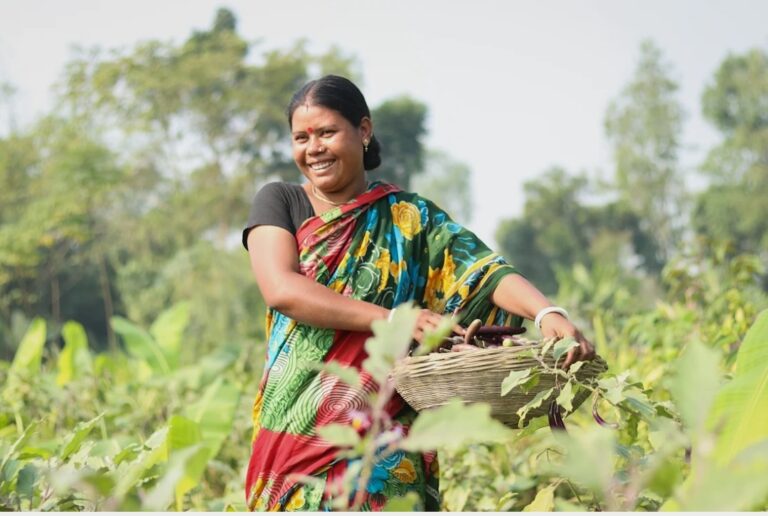
    It seem like months ago when this land was full of weeds. Sudha Rani Roy, smiles with joy as she explains that now, she has transformed this patch of paradise into a big vegetable garden near her house.

    Sudha says this has been one of the best years of her life. She loves growing organic vegetables, as she shows off her bountiful brinjal, gourd and spinach.

    The garden is laden with colourful fruits, papaya bursting from beneath big green leaves, surrounded by spices, ginger and turmeric and leafy greens.

    During recent months, Sudha has earnt 6,000 Bangladeshi Taka (70 US dollars) a month, by selling her winter vegetables, which are in high demand.

    “I hope to earn more during the rest of the winter as there is a huge demand for vegetables in this area,” says Sudha Rani. This has all been made possible with special financial support and training in recent months.

    She has two daughters, one of them goes to school; and she is extremely happy to be able to spend her earning to support her family and her daughter’s education with her vegetable garden.

    A training on handicrafts and cash assistance enabled Momota Banu, 35, to earn more than 9,000 Bangladeshi Taka (105 US dollars) per month that helped her become financially independent and support her family.

    “Now I have the capacity to make customized dresses by pasting batik and I sell those in my own community and in the local market.

    “I invest the earnings in household matters such as for repairing my home, latrine and tube-well and for my daughter’s education,” says Momota.

    Her daughter Jui, 12, is a school student and happily helps her mother in her work.

    Milking a cow and other opportunities

    Parmina Begum, 45, has a large family that used to depend entirely on the income of her husband coming from agricultural work and crop production.

    If the production is hampered any year due to adverse weather, the family used to go through a lot of hardship as they could barely save money for such times.

    Parmina received 17,000 Bangladeshi Taka (200 US dollars) which she spent to buy a cow.

    She also received training on cow rearing and now she can think of supporting her family.

    “As my cow has given birth to a calf, I will have some extra money now by selling milk. I am cheerful and have no worries for the coming days,” she says.

    Women and climate change mitigation

    The impact of climate change is severe in northern Bangladesh resulting in the destruction of rivers, changing the agricultural patterns and affecting typical livelihoods.

    Women are particularly vulnerable in these areas due to the compounding effects of climate change and other socio-economic causes such as early marriage, dowry system, and gender-based violence.

    The women targetted under this programme, including widows and female-headed households, have been supported to strengthen economic capabilities which have ultimately increased their adaptation capacity in facing the impacts of disasters caused by climate change as well as reduced gender inequality in the community.


    Modi’s PMCARES and Gotabaya’s COVID–19 fund: Two similar kitties?

    Beginning with a lack of accountability, there are a number of interesting similarities between the Sri Lankan president’s COVID–19 Healthcare and Social Security Fund and the PM-CARES fund of India.

    The COVID–19 Healthcare and Social Security Fund established by Sri Lanka’s President, Gotabaya Rajapaksa, to strengthen the mitigation activities aimed at controlling the spread of COVID-19 virus in the country and related social welfare programme, have been vested with a set of wide responsibilities.

    The fund has many similarities with the PMCARES fund mooted by Indian Prime Minister Narendra Modi, with a prominent sole departure. While the PMCARES fund will be audited by a certified auditor, the Sri Lankan president’s Healthcare and Social Security Fund will be audited by the country’s auditor general. “Fund activities and accounts are subjected to audit by the Auditor General,” a summary statement on the functioning of the stated.

    Only financial contributions

    Like in India’s PM-CARES, the Healthcare and Social Security Fund too welcomes  contributions from local as well as foreign donors. The only provision in both case is to make the donation a “financial contributions” to the COVID–19 Healthcare and Social Security Fund. There is no scope to make donations in kind or services.

    In yet another similarity, the donations will be exempted from tax and foreign exchange regulations. Deposits could be made through cheques or telegraphic transfers.

    Furthermore, the Sri Lankan President’s fund will be managed by a 17-member committee headed by the central bank Governor. The Secretary to the Committee is the Chief Financial Officer at Presidential Secretariat. Among the office bearers are also Secretary to the Treasury, Defense Secretary, Director General Health Services, Acting IGP, Director General Sri Lanka Customs and Lanka Sathosa Chairman.

    The Fund has been set up to provide immediate funding requirement of director general of the island nation’s health services to meet all expenditure connected with COVID-19 related healthcare facilities including drugs, testing equipment and capacity expenses.

    The notification says the the fund will help meet expenses connected to healthcare and safety of health sector employees and all logistic providers working to provide essential public delivery services and to provide basic essentials to children, women, low income, elderly, differently abled and vulnerable people.

    Not accountable to Parliament

    The fund will be managed by a committee tasked to “invest this fund in and securing the necessary purchasing in medicines and testing kits as well as increasing the healthcare capacities; ensuring the health and safety of those in the health sector and in the essential services; financial needs of children, women, low income earners, elders, physically challenged and other vulnerable sectors; integrating public health systems, rural and remote dispensaries, testing and treatment centers and health care systems to reduce the risk of infectious diseases.”

    The government will mobilize the required funding to strengthen public healthcare systems, including village and remote area dispensaries, testing and treatment centers, family healthcare system, to further consolidate Sri Lanka’s public healthcare system to reduce country risks to communicable diseases.

    It will also assist indigenous medicine, sanitary product manufacturing and distribution, promote research to use resources, knowledge and skills to innovate new health and sanitation products based on local raw materials.

    More similarities

    Like in PMCARES, the Sri Lankan fund too is aimed at promoting research and innovation using Sri Lanka’s medical and scientific knowledge and experience to develop protective dresses and sanitation products to global market.

    In keeping with the present Sri Lankan dispensation’s prioritising organic farming, this fund will also be used “to promote healthy living with organic food consumption, valuing traditional, yet rich living styles, through media and educational programmes.”

    It will also coordinate fund raising with WHO, UNICEF, UNDP, World Bank, ADB and Sri Lanka’s major development partner community and agencies based on best guidelines for resource allocations, harmonized national procurement system and governance practices.

    Fund expenditures remain low

    So far, the fund has collected Sri Lankan Rupees 1,827,314,924.65. Of this amount, LKR 100 crore each have been allocated to the PCR testing and advocacy programming. So far, only a sum of 42,605,812 has been spent by the ministry of helath and the university grants commission. On the other had, the advocacy programme has used a mere 24,364,800 from the LKR 100 crore allocated to the ministry of health for this.

    The ministry of health and the ministry of defence together could only spend LKR 38,031,065 on quarantine facilities.

    There has been no confirmation of the expenditures as yet against a fund of LKR 112,140,000. The chart says, “Confirmation is anticipated”. Similarly, “Confirmation is anticipated” also for the meagre amount of 3,522,000 set aside end-October for procuring rapid test kits.

    Afghanistan’s prime minister calls for international recognition for his government

    A massive job crisis that threatens to grow further, lack of food and medicines and frozen overseas assets prompted today’s press conference.

    Afghanistan’s acting prime minister, Mullah Mohammad Hassan Akhund, today pleaded the international community to recognize his administration. He was speaking at a press conference called to convey his message to governments across the world for recognizing the Taliban government.

    A financial crisis, together with soaring inflation, unemployment, and cash shortages is impacting access to food, water, shelter, and health care.

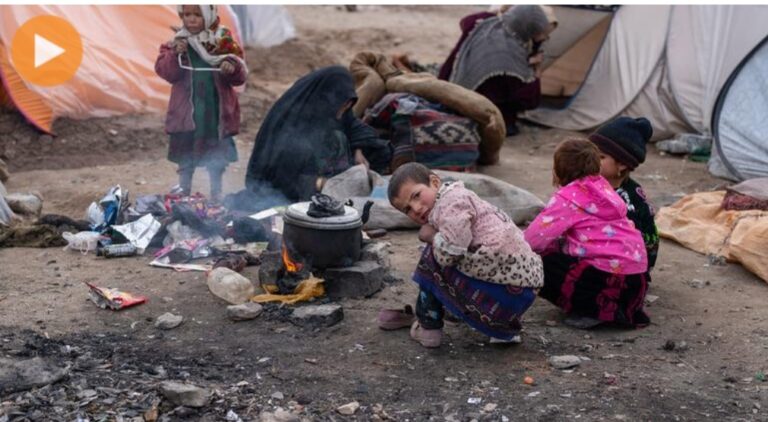
    The acting prime minister said that the country is presently passing through a humanitarian crisis. Millions of people have been pushed into poverty and there is a shortage of food while people have no means to keep themselves warm in the middle of the freezing Afghan winter.

    “I ask all governments, especially Islamic countries, that they should start recognition,” Radio Azadi, a radio run by Afghan journalists in exile quoted him as saying. He assured that the Taliban government he heads has restored peace and security.

    Poverty has been aggravated by joblessness. The International Labour Organisation (ILO) predicts that 900,000 people might lose their livelihoods by mid-2022.

    “Economic recovery and a return to stability in the labor market is largely contingent upon the continued support of the international community, which at this point remains unclear, as well as policy decisions of the new administration,” the ILO report said.

    Already, over half a million people in the country are jobless. International humanitarian organisations have spoken of how 22 million people are resorting to negative coping mechanisms this winter by burning their clothes and furniture in order to keep themselves warm.

    Mullah Mohammad Hassan Akhund also called for the unfreezing of Afghanistan’s assets held overseas. He was referring to the United States and other western nations freezing billions of dollars worth of Afghan banking assets, besides cutting off development funding to the war-torn nation.

    The prime minister’s pleas for official recognition are significant, since the present Taliban rulers have been accused of serious violations of human rights, particularly of women and the country’s ethnic minorities.

    So far, no country has recognized the country’s new rulers, though Russia, China, Iran and Pakistan are sizing up the situation after they seized power in 2021.

    Even during their earlier stint in power between 1996 and 2001, only three widely recognized countries – Pakistan, Saudi Arabia, and the United Arab Emirates (UAE) declared the Islamic Emirate to be Afghanistan’s rightful government.

    According to Mansoor Ahmed, Pakistan’s ambassador to Afghanistan, the banking system in Afghanistan is not operating and this is adding to the problems of the new Afghan government.

    Earlier this month, Pakistan had called a meeting of foreign ministers of the Organisation of Islamic Countries to discuss Afghan issues and to engage the world community to support the Afghan government.


    Image: Children use the heat from a firewood stove to keep themselves warm in the hard Afghan winter.
    Credit: Sayed Bidel / UNICEF

    Sophisticated cyber-attack targets Red Cross data on 500,000 people

    A cyber-attack targetted an external company in Switzerland that the ICRC contracts to store data. It has compromised personal data and confidential information on more than 515,000 highly vulnerable people.

    A sophisticated cyber security attack against computer servers hosting information held by the International Committee of the Red Cross (ICRC) was detected this week.

    The attack compromised personal data and confidential information on more than 515,000 highly vulnerable people, including those separated from their families due to conflict, migration and disaster, missing persons and their families, and people in detention. The data originated from at least 60 countries around the world.

    The ICRC’s most pressing concern following this attack, the organisation said, is the potential risks that come with this breach – including confidential information being shared publicly – for people that the Red Cross and Red Crescent network seeks to protect and assist, as well as their families. “When people go missing, the anguish and uncertainty for their families and friends is intense.”

    “An attack on the data of people who are missing makes the anguish and suffering for families even more difficult to endure. We are all appalled and perplexed that this humanitarian information would be targeted and compromised,” said Robert Mardini, ICRC’s director-general. “This cyber-attack puts vulnerable people, those already in need of humanitarian services, at further risk.”

    The ICRC has no immediate indications as to who carried out this cyber-attack, which targeted an external company in Switzerland the ICRC contracts to store data. There is not yet any indication that the compromised information has been leaked or shared publicly.

    “While we don’t know who is responsible for this attack, or why they carried it out, we do have this appeal to make to them,” said Mr Mardini.

    “Your actions could potentially cause yet more harm and pain to those who have already endured untold suffering. The real people, the real families behind the information you now have are among the world’s least powerful. Please do the right thing. Do not share, sell, leak or otherwise use this data.”

    The ICRC along with the wider Red Cross and Red Crescent network jointly runs a program called Restoring Family Links that seeks to reunite family members separated by conflict, disaster or migration.

    “Because of the attack, we have been obliged to shut down the systems underpinning our Restoring Family Links work, affecting the Red Cross and Red Crescent Movement’s ability to reunite separated family members,” the ICRC said in a press release. “We are working as quickly as possible to identify workarounds to continue this vital work.”

    “Every day, the Red Cross Red Crescent Movement helps reunite on average 12 missing people with their families. That’s a dozen joyful family re-unifications every day. Cyber-attacks like this jeopardise that essential work,” Mr Mardini said. “We are taking this breach extremely seriously.

    We are working closely with our humanitarian partners worldwide to understand the scope of the attack and take the appropriate measures to safeguard our data in the future.”


    Image: Wikipedia

    Students, faculties from centres of excellence raises voice; attempt breaking silence of the past

    Protests against the communal hatred and misogyny in both, online and offline spaces are now coming from unexpected quarters.

    The Haridwar dharam sansad (religious parliament) and the floating of apps purporting to auction Indian Muslim women have elicited demands for action against those voicing hate from some of India’s premier institutions of higher education.

    Earlier this month, students and faculty from the Indian Institute of Management (IIM) Ahmedabad and Bangalore wrote to the Prime Minister, saying that his silence was emboldening voices of hate.

    Next came a letter from a number of alumni of the Indian Institutes of Technology (IITs), demanding action against the “deep communal hatred and misogyny” expressed by people with “close ties” to the ruling BJP.

    Worried by the Prime Minister’s silence, the IIT alumni wrote, “As the country valiantly battles the challenges from the never ending COVID-19, the sharply rising unemployment and masses of people being pushed into poverty, we are now faced with the grave danger from rising calls for genocide of one community.”

    The letter from the IIT alumni also makes mention of reports of the Tek Fog app saying, “Reports suggest that this is a Psychological Ops military grade weapon and in the hands of mal-intentioned actors, it can have serious security implications. Your condemnation of this alleged weapon is still awaited.”

    This is worrying for the government and the ruling BJP. Both, the IIMs and the IITs are respected for the education they provide and the value they have added to business and industry, especially for the aspirational sections of the country.

    Not the fringe any more

    One IIM faculty member said the group took the initiative after realising that silence was not an option any more. “For far too long, the mainstream discourse has dismissed the voices of hate as the fringe. That’s how we are here,” the Indian Express newspaper quoted him as saying.

    Now, the two leading institutions of learning have been joined by alumni from the Institute of Rural Management Anand, and other institutions of learning, including New Delhi’s Lady Shri Ram College and Miranda House, the National Institute of Design and the Xavier’s School of Management (XLRI).

    The letter emphasises on the unsafe environment for women in the country with the threat of physical harm, sexual violence and outright violation of dignity and rights becoming commonplace.

    “They are manifestations of the culture that target women, for daring to have a voice of their own,” the alumni of these institutions have said in their open letter addressed to the President, the Prime Minister and Members of Parliament.

    Urging leaders to break their silence, the letter says, “In this atmosphere of silence not only do the perpetrators of such crimes often go scot-free, they are getting emboldened by the increasing atmosphere of hate and divisiveness in the country and barely show any remorse for hate filled misogynistic crimes.”

    For China, charity begins in SouthAsia

    China has undertaken more projects in SouthAsian countries than anywhere else in the world. Even India figures prominently in terms of the number of projects China has aided between 2000-2017.

    Rahul Karan

    China’s development aid and assistance in SouthAsia between 2000-2017 has been a multifaceted story. It is distributed across multiple sectors of the domestic economies across SouthAsian countries.

    SouthAsia is an important region for China’s diplomatic activity, given especially the gradual expansion of Beijing’s footprint in the region since 2000.

    These engagements are the substance of Beijing’s relationship with countries in SouthAsia, allowing China to cultivate goodwill and enhance its image as a viable development partner. The scale of Chinese development finance in SouthAsia highlights the economic potential of the region and its strategic importance to China. Beijing’s ‘development-diplomacy’ reveals a pattern of close engagement between institutions and elites in China and the recipient countries.

    As study of data from the Aid Data project reveals, SouthAsia occupies a significant place in China’s development engagements between 2000 and 2017. During this period, China’s diplomacy in SouthAsia took the form of loans, aid and development projects extended to recipient governments.

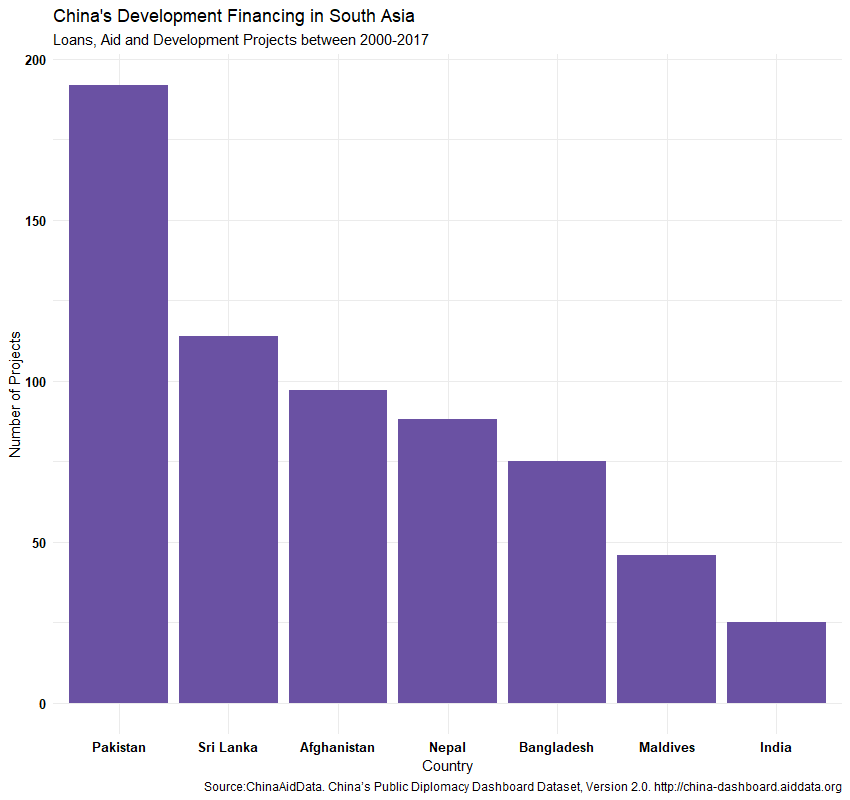
    The dataset reveals that China initiated over 600 development finance projects in Bangladesh, Nepal, Sri Lanka, Pakistan, Afghanistan, Maldives and India. These came in the form of loans, grants, export/supplier credits, technical assistance programs.

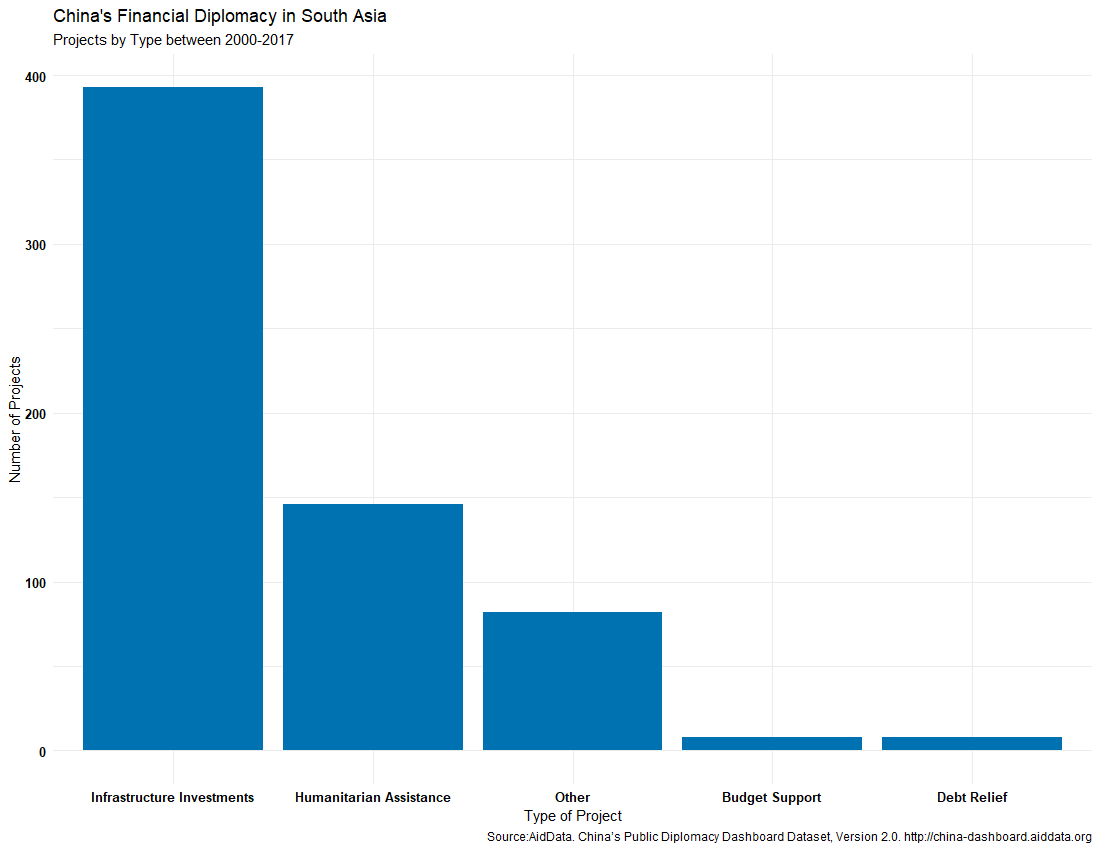
    Interestingly, while China’s outreach to South Asia mainly involved infrastructure investments, humanitarian assistance and budgetary support, debt forgiveness initiatives were an important feature of the Chinese projects.

    The datasets show that Chinese projects in five key areas of China’s engagement with SouthAsia. The tale accompanying the following graphs is an evidence that the Beijing’s interest in the region predates its belt and road initiative.

    South Asia is the preferred destination for China’s development finance

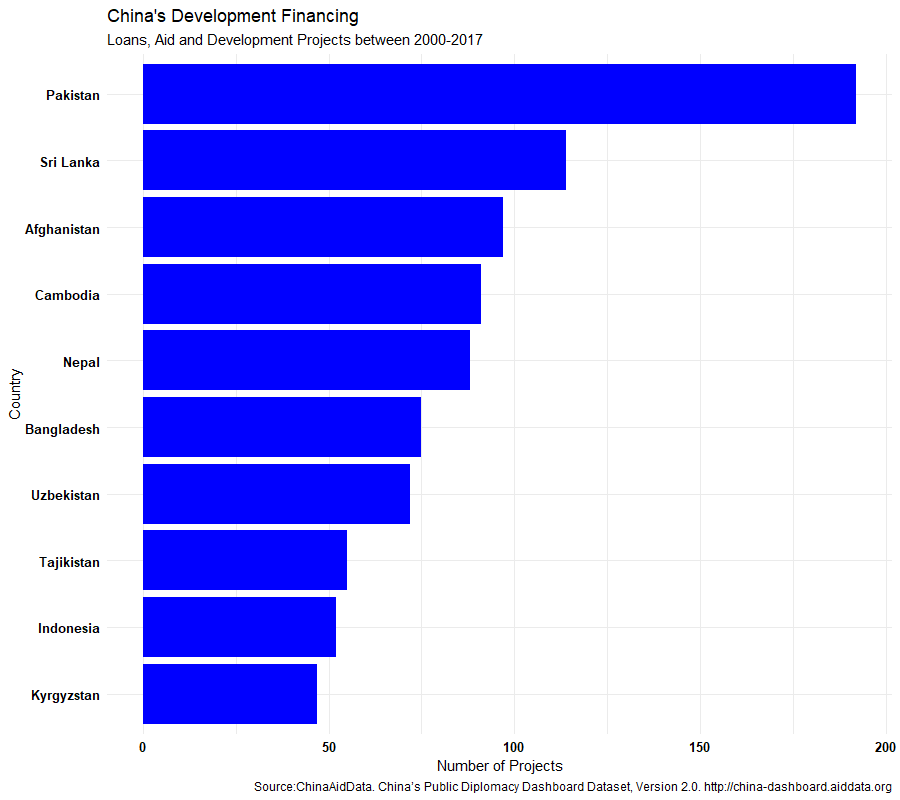
    Five out of the six largest recipients of loans and aid from China between 2000 to 2017 were SouthAsian countries – Pakistan, Sri Lanka, Afghanistan, Nepal and Bangladesh. As is evident from the chart above, China has undertaken more projects in SouthAsian countries than anywhere else in the world, indicating the importance of the region for Beijing’s diplomatic priorities. Even India and Maldives figure prominently in terms of the number of projects between 2000-2017. 

    Pakistan is the largest recipient of Chinese development finance. India the smallest

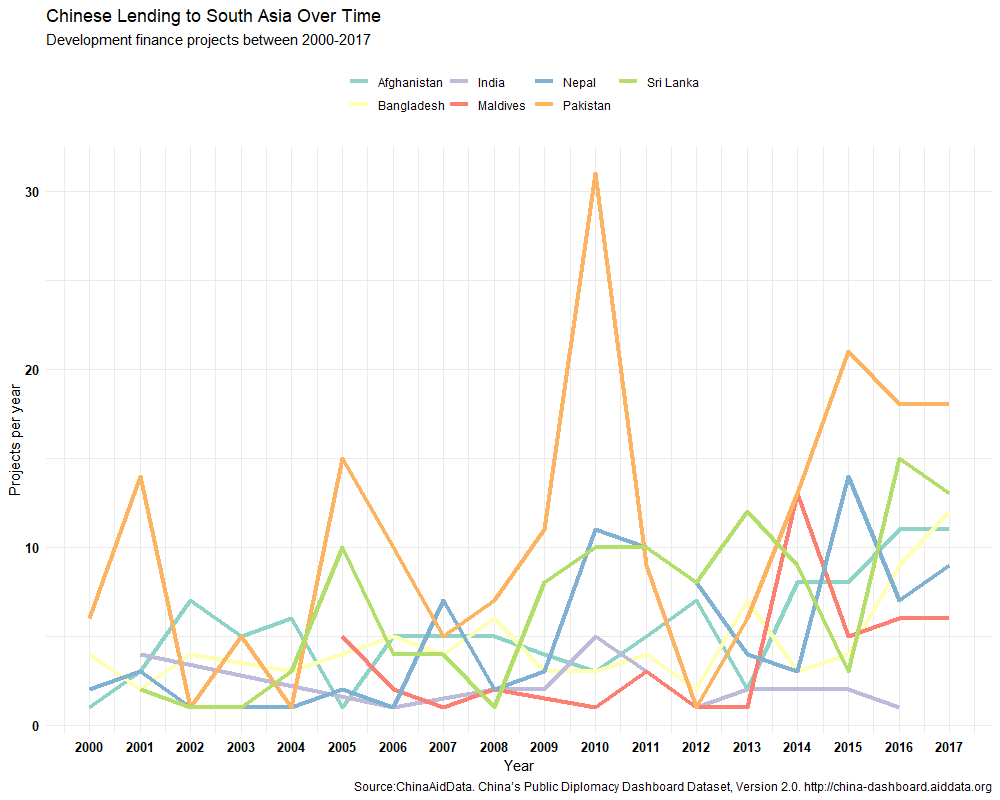
    China’s outreach to SouthAsia between 2000-2017 mainly targeted Pakistan, followed by Sri Lanka, Afghanistan, Nepal and Bangladesh. Given China’s close relationship with Pakistan and its economic interests like the China-Pakistan Economic Corridor (CPEC) corridor, Pakistan leads all SouthAsian countries receiving China’s development financing. India on the other hand, receives the least amount of loans and aid from China. 


    China’s outreach to South Asia is on the rise

    Besides being the largest recipients of Chinese development finance and assistance, SouthAsian countries have also witnessed an increase in Chinese financial aid and investments since 2000. The number of projects undertaken per year in 2017 is slightly higher than the number of projects in 2000 for most countries in South Asia with the exception of India. 

    Chinese development financing focused on infrastructure investments and humanitarian assistance

    China financial diplomacy between 2000 to 2017 was mainly channeled into infrastructure investments and humanitarian assistance. Infrastructure investments include a broad range of donations, loans and grants: from donating supplies worth 10 million RMB for Nepal’s general elections in 2013 to an 80 million RMB grant to Afghanistan for post-war reconstruction in 2006.

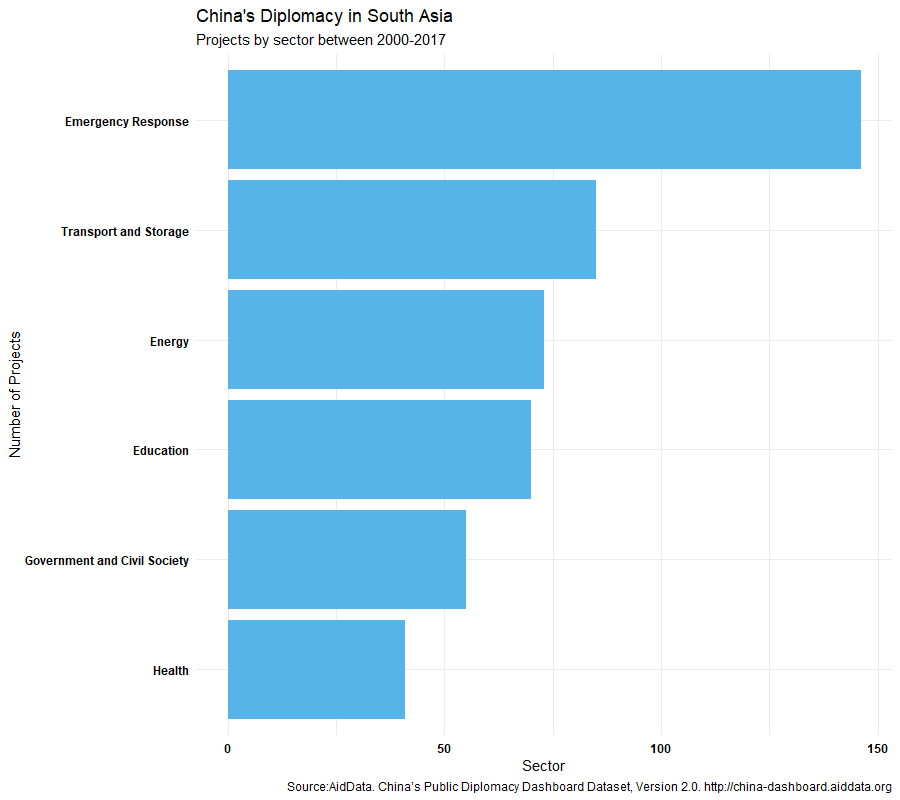
    China has also provided humanitarian assistance to countries in SouthAsia on numerous occasions between 2000 and 2017. As the graph below shows, Chinese contribution towards emergency response in the region was one single largest chunk of money, as compared to other areas like transport and storage, energy, education and health. Indeed, Chinese contributions also went to civil society, possibly meaning civil society organisations. Here, China also provided financial aid and loans for the social sector including those engaged in education, health and social infrastructure.  

    China financed capacity building projects and provided emergency relief


    China’s financial assistance was focused mainly on emergency and disaster assistance programs, supplying material goods and supplies to recipient governments during a crisis. China also invested in building capacity: transport and storage facilities like ports and energy projects like coal plants.

    To reiterate, the importance of SouthAsia is not new to the thinking of Chinese policymakers engaged in crafting Beijing’s ‘development-diplomacy’. The multifaceted story of Chinese assistance to the region has allowed China to cultivate goodwill while enhancing its image in the region.


    Image: Wikimedia

    Hunger strike by New York prison inmates

    Inmates complain of human rights abuse and indifference by prison officials regarding the risk of COVID-19, inadequate heating during winter, lack of proper hygiene and rising violence in the prison.

    As many as 200 prisoners held at the Rikers Island correctional institution (jail) went on a hunger strike on 8 January 2022, decrying their inhuman living conditions. They said they were hungry and cited cold temperatures, vermin infestations, filthy living spaces, rising violence inside the prison and lack of medical attention during the COVID-19 outbreak as the reasons for their protest. The virus sickened more than 370 inmates and has taken 15 lives thus far.

    Detainees have refused food to protest the deteriorating living conditions inside the prison complex.

    The inmates say they have been subject to deplorable living conditions and are demanding fulfilment of basic human rights – including access to medical care, clean living spaces, mental health support and working toilets.

    An overwhelming majority of the detainees are being held in pre-trial detention, which is also common for most of the city’s prison systems. Data published by the Vera Institute for Justice from the New York City Open Data Website, 81.8 per cent of jailed people in the city happened to be pre-trial detained (as of October 8, 2021).

    The island houses some of the key prison complexes of New York City, with a combined capacity of holding anywhere between 10,000 to 15,000 detainees a day. But as the crises spiralled since the outbreak of the pandemic, the numbers have come down to about 5,400 prisoners.

    An array of abolitionists, legal activists and human rights organisations, including T’ruah, a Rabbinic Human Rights organisation and The Fortune Society have joined the cause of the prisoners. While some of the organisations are demanding improved living conditions, others believe the correctional facility should be shut down.

    Not the first protest

    According to creative commons platform, Peoples Dispatch, the prison complex has for long been ridden with issues such as staffing shortages, high levels of violence, and harsh living conditions. The pandemic only exacerbated the situation. “Despite early release of hundreds of inmates in 2020 and 2021 under consideration of the pandemic, thousands of unvaccinated and at-risk people continue to be admitted and detained in the island,” Peoples Dispatch said.

    NYC’s recently elected mayor Eric Adams is silent on the matter. The city administration’s department of corrections released a statement last week arguing that there was no hunger strike. It said that the detainees were only refusing food from services run by the department.

    This is not the first battle against inhumane living conditions in the Rikers Islands prison. Back in the 1980s, a dozen inmates voiced solidarity against the abominable treatment of people living with HIV/AIDS at the facility. While the country was focused on providing life-extending healthcare outside, the subhuman treatment inside Rikers Island was taking one life every two weeks. Akin to today, the correctional facility had failed to provide appropriate diet, prescribed medicines or even clean beds for the sick.


    Edited by Khushi Malhotra

    Image: Rikers Islands of Queens New York from Wikimedia
    Author Sfoskett

    Study says Taliban deprive women of livelihoods, identity

    A study by Human Rights Watch and and San Jose State University reveals that Afghan women and girls are severely restricted, harassed and frightened and have become “virtual prisoners” in their own homes since the Taliban came to power.

    A new research finds that Taliban rule has had a devastating impact on Afghan women and girls. The study conducted jointly by Human Rights Watch and the San Jose State University (SJSU) says that since taking control of the city of Ghazni on 12 August 2021, days before entering Kabul, the Taliban imposed rights-violating policies that have created huge barriers to women’s and girls’ health and education.

    The researchers shared their findings Tuesday, detailing how the current rulers have curtailed freedom of movement, expression, and association, and deprived many of earned income. The interviews for the study of the interviews using secure communications with women.

    Ghazni province, in southeastern Afghanistan, has a population of about 1.3 million people, predominantly ethnic Pashtun and Hazara. The provincial capital, Ghazni, is on the road from Kabul to Kandahar, and was often attacked during the fighting of the past 20 years.

    Afghanistan’s rapidly escalating humanitarian crisis exacerbates these abuses, the researchers say. Following the Taliban takeover, millions of dollars in lost income, spiking prices, aid cut-offs, a liquidity crisis, and cash shortages triggered by former donor countries, especially the United States, have deprived much of the population of access to food, water, shelter, and health care.

    “Afghan women and girls are facing both the collapse of their rights and dreams and risks to their basic survival,” said SJSU’s scholar on Afghanistan, Halima Kazem-Stojanovic. “They are caught between Taliban abuses and actions by the international community that are pushing Afghans further into desperation every day.”

    Dark future

    The women interviewed included those who had worked in education, health care, social services, and business, and former students.

    They described spiraling prices for food staples, transportation, and schoolbooks, coupled with an abrupt and often total income loss. Many had been the sole or primary wage earner for their family, but most lost their employment due to Taliban policies restricting women’s access to work.

    “The future looks dark,” said one woman who had worked in the government. “I had many dreams, wanted to continue studying and working. I was thinking of doing my master’s. At the moment, they (the Taliban) don’t even allow girls to finish high school.”

    The women said they had acute feelings of insecurity because the Taliban have dismantled the formal police force and the Women’s Affairs Ministry, are extorting money and food from communities, and are targeting for intimidation women they see as enemies, such as those who worked for foreign organizations and the previous Afghan government.

    “The crisis for women and girls in Afghanistan is escalating with no end in sight,” said Heather Barr, associate women’s rights director at Human Rights Watch. “Taliban policies have rapidly turned many women and girls into virtual prisoners in their homes, depriving the country of one of its most precious resources, the skills and talents of the female half of the population.”


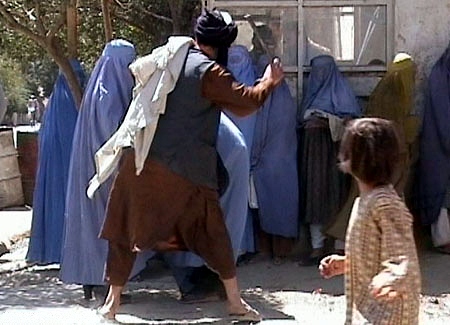
    Image: From Wikipedia.

    Caption: A member of the Taliban’s religious police beating an Afghan woman in Kabul in  2001.

    COVID-19, food shortage and inflation could bankrupt Sri Lanka

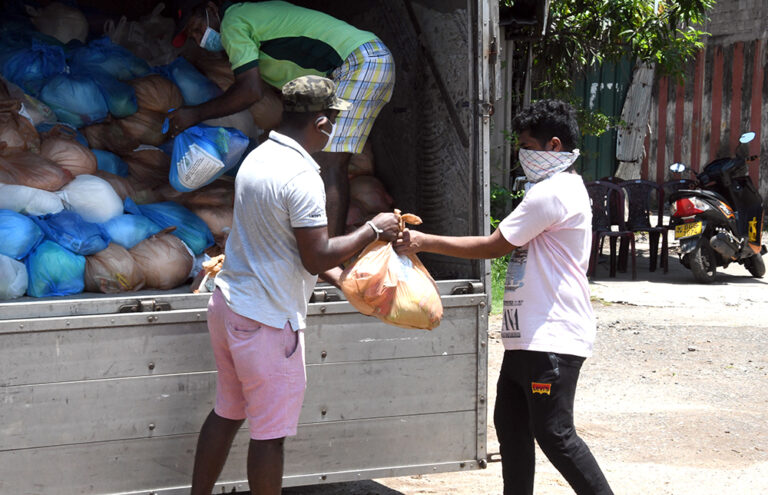
    Food shortage and inflation are causing distress and the government has barely any foreign exchange reserves to import food – especially as agricultural productivity has fallen.

    Sri Lankan writer Basil Fernando today shared two poignant tales. The first from Anuradhapura is about a man asking the owner of a small shop for two raw papayas from the shop owner’s garden to feed his starving children.

    In another instance, a family used up their last savings to purchase 200 grams of flour. The family’s breadwinner is bedridden they have no money to buy medicines.

    The Sri Lankan media is not telling any of these stories.

    On Monday, thousands, led by the country’s main opposition political party, the United People’s Force demonstrated in Colombo, blaming President Gotabaya Rajapaksa’s government for the economic crisis.

    “Reports of how people, particularly those from the lowest income groups, are coping with the present situation are not brought to the surface,” Fernando says.

    Sri Lanka is staring at bankruptcy and a widespread food crisis is engulfing the country together with a steady rise in inflation. Consumer prices reached 12.1 per cent year-on-year in December of 2021. This has been the highest inflation rate the country has witnessed since 2008 due to a record 22.1 per cent rise in price of food products in the space of one month.

    Food price inflation in December touched 22.1 per cent, up from 17.5 per cent in November.

    Foreign exchange reserves too have been dwindling. With just $1.5 billion in foreign reserves, the country will only be able to pay for a month’s imports. Sri Lanka is negotiating with China, its largest international lender for help. Simultaneously, a US$ 787 million of special drawing rights (SDR) from the IMF and a currency swap arrangement to the tune of US$ 150 million from Bangladesh’s Central Bank has not helped ease the price of food essentials, either.

    Sri Lanka finance minister Basil Rajapaksa has also held discussion with S Jaishankar, India’s foreign minister over a virtual meeting on Saturday.

    Crisis precipitated by COVID-19

    According to the US-based Trading Economics, “The cash-strapped economy is struggling to finance urgent imports to tackle an acute shortage of essentials in the country leading to rationing of food by supermarkets for quite a few months now.”

    End-August 2021, Sri Lanka had declared a food emergency as banks reported that their foreign funds had depleted.

    The crisis is the result of a cocktail of mishaps, primarily COVID-19 that hit its tourism economy. The economy diminished, shrinking by 3.6 per cent in 2020. This was the worst in 73 years.

    As agricultural input prices went through the roof, the government mandated an overnight shift to organic agriculture without consulting farmer groups. This has led to a bad harvest, resulting in run-away inflation. The country’s agricultural sector too has been experiencing the effects of changing climate and natural disasters.

    Besides, the garment manufactures too have been hit hard by COVID-19 and there are hardly any export orders.

    In 2020, IMF predicted a negative growth of 0.5 per cent for Sri Lanka and the government faced the challenges of reducing the fiscal deficit even as there were domestic and foreign debts to be serviced.

    In the meanwhile, 30-something Fathima Aroos tells her two young children that this is the month of Ramadan and that they are supposed to fast.

    She can’t feed the children three meals a day due to galloping food price.

    “This way, we can manage with a plain porridge after we break our fast and rice soaked in water and onion for suhoor (the early morning meal),” she says. “It keeps the children quiet.”