More

    Farms stretched, water sources stressed and polluted, and forests shrinking, says FAO report

    As climate stresses the world and water sources get depleted and polluted, scientists around feel the need to shift to sustainable agricultural practices to feed an additional two billion mouths by 2050.

    Today, the world is home to eight billion people. This number will have swelled to 10 billion in less than 30 years from now – or simply, a child born today will very likely become a parent in 2050.

    How will all of tomorrow’s parents feed their children?

    A possible answer to this question is that today’s governments, policy makers and farmers work to reverse water degradation, smartly plan for sustainable farming practices and harness new innovative technologies.

    Because, existing agricultural practices will not be able to feed 10 billion people populating planet earth by 2050, warns a new report from the Food and Agriculture Organisation (FAO). Today, one in every 10 persons on planet earth is undernourished. Three of eight people lack healthy diets.

    The State of the World’s Land and Water Resources for Food and Agriculture report 2021 builds upon the concepts and conclusions given in the 2011 report.

    But it also recognises that much has happened since then. It alludes to the recent assessments, projections and scenarios to paint an alarming picture of the planet’s natural resources – highlighting depletion of land and water resources, loss of biodiversity, associated degradation and pollution and scarcity of primary natural resources.

    Climate change

    But the FAO report’s warning is too dire for solutions to hinge on just that prescription. Far reaching changes will be necessary to avoid widespread hunger and other catastrophes, it says.

    It says that climate change “may bring opportunities for multiple rainfed cropping, particularly in the tropics and subtropics.”

    For instance, farmers might need to grow crops they never did before. For example, farmers in Canada and northern Eurasia might need to farm more cereals in the coming couple of decades than they do today.

    For areas “where the climate becomes marginal for current staple and niche crops, there are alternative annual and perennial tree crops, livestock, and soil and water management options available.”

    It says there will be a need to shift to sustainable agricultural practices to feed an additional two billion mouths by 2050 as climate stresses the world and water sources get depleted and polluted.

    Scientists might be able to work on new varieties of crops with seed and germplasm exchanged globally and among regions to create breeds that can withstand changes in temperature, salinity, wind, and evaporation. This of course, will require investments from governments.

    Need sustainable agriculture practices as never before

    So, why have things come to such a pass?

    Complicated as the question might be, part of the answer is the limited land on earth to grow food. Forests cannot be thrashed any further and food has been hugely linked to fuel, fertilisers and pesticides.

    None of these are sustainable. As the report points out, “Human-induced degradation affects 34 per cent of agricultural land.”

    “The treatment of soils with inorganic fertilizers to increase or sustain yields has had significant adverse effects on soil health, and has contributed to freshwater pollution induced by run-off and drainage,” it says.

    Extensive degradation due to irrigation of farmlands has harsh consequences as irrigation causes a runoff of fertilizers and pesticides that eventually contaminate soil and groundwater.

    The FAO report notes that agricultural irrigation needs are depleting groundwater aquifers in many regions.

    Similarly, it notes that the quality of 13 per cent of global soil, including 34 per cent of agricultural land, is now degraded by the use of fertilisers, overgrazing by cattle and livestock, erosion, deforestation and decreasing water availability.

    The report emphaises that climate change is further stressing agricultural systems and amplifying global food production challenges as it discusses the changing climate: erratic rainfall patterns, the unsuitability of land for certain crops, increasing spread of insects and pests and shorter growing seasons in parts of the globe due to intense droughts.

    Drought-like conditions

    As it exacerbates agricultural challenges, climate change is also exaggerating water demands and resulting in drought-like conditions. Extreme heat conditions stress crops. While agricultural productivity might increase in relatively colder regions, productivity will decrease in places that are already heating and drying up.

    Climate adaptation can be painful and costly, it says, offering the example of farmers in California tearing up their lucrative almond orchards.

    However, there is one spot in the report that holds hope. It says that deforestation trends have been partly arrested. The rate of decline of global forested areas over the past decade has halved from where it was in the 1990’s.


    Image: Hippox – under CC0 license

    Cops might not like this gaming app

    Rights Arcade, an Amnesty International gaming app will make human rights learning accessible, and possibly, interesting.

    Amnesty International has launched Rights Arcade, a free human rights game app which aims to educate the next generation of human rights defenders about rights such as freedom of expression and freedom of peaceful assembly. The launch coincides with the international day of education.

    Amnesty International has developed the app to make human rights learning accessible.  The Amnesty gaming app is designed to strengthen the human rights movement through action-oriented education. The games will boost players’ knowledge about human rights and encourage people to take action on human rights issues.

    One of Rights Arcade’s key features is a self-paced approach that allows players to learn, reflect and take action at their own pace while navigating through the game’s stories.

    “This game has been designed to empower and encourage people everywhere, but especially younger audiences, to learn about human rights in an engaging manner,” said Agnès Callamard, Amnesty International’s secretary general.

    Real life characters

    “Young people are pivotal in setting the human rights agenda, today and for the future. Reaching them in the spaces they inhabit, or with which they engage regularly, is key to enabling new generations of activists and empowering them to fight for, and protect, human rights – now and in the future.”

    Players can take a human rights journey through the experiences of three real-life people: Ahmed Kabir Kishor, a cartoonist unjustly charged under the Digital Security Act in Bangladesh; Zhang Zhan, a citizen journalist sentenced to four years in prison for reporting about COVID-19 in China; and Panusaya Sithijirawattanakul, a student activist facing more than 25 charges for protesting in Thailand.

    The game’s stories, which are fictionalized experiences inspired by real world events, are driven by a player’s choices.

    The player gets to play the role and navigate the experiences of the three central characters, making decisions based on their own understanding of human rights and unpacking how human rights concepts apply in daily life.

    People around the world will be able to access a collection of three games currently available in four languages: English, Simplified Chinese, Thai and Korean. Rights Arcade can be downloaded on iOS and Android devices, ensuring its accessibility in regions with poor internet connectivity.

    Rights Arcade will be regularly updated to accommodate learning in more languages, and with new game offerings in the months and years to come.

    Education and gaming in the times of COVID-19

    Gaming and education have become unique partners. This abstract partnership has blossomed through the past two years of the COVID-19 pandemic.

    Statistical evidence suggests a significant increase in the use of video-games during the first wave of the COVID-19 pandemic. Researchers are gathering evidences on the pedagogical effectiveness of edu-games as mediators to enhance cognitive skills of students.

    Omicron has a growth advantage over Delta: WHO

    Omicron has a substantial growth advantage over the Delta strain of COVID-19 and is rapidly replacing Delta globally, particularly because it is able to evade the human immune system, says WHO’s technical briefing paper for member states.

    COVID-19, and particularly its Omicron strain, continues to spread, says a technical brief produced by the World Health Organisation. It says that available evidence suggest that the overall risk related to Omicron remains very high.

    As of 20 January 2022, the Omicron variant had been identified in 171 countries across all six WHO regions. The briefing paper says that there has been a four per cent increase in the number of new deaths globally in the week between 10 and 16 January 2022 compared to the previous week. The highest increases of 12 per cent has been reported from WHO’s South-East Asia Region that includes India. The Americas region has reported a seven per cent increase.

    “The large increase in the South-East Asia Region is mainly driven by the increase in the number of cases in India which reported 1,594,160 million new cases compared to 638 872 cases the previous week (a 150% increase),” the paper says.

    The paper says that Omicron has a substantial growth advantage over Delta, and it is rapidly replacing Delta globally, particularly because it is able to evade the human immune system. “There is now significant evidence that immune evasion contributes to the rapid spread of Omicron,” the WHO paper says.

    Higher levels of incidence

    Experts point out the Omicron has a significant growth advantage over Delta and is leading to rapid spread in the community with higher levels of incidence than previously seen in this pandemic.

    “Despite a lower risk of severe disease and death following infection than previous SARS-CoV-2 variants, the very high levels of transmission nevertheless have resulted in significant increases in hospitalization, continue to pose overwhelming demands on health care systems in most countries, and may lead to significant morbidity, particularly in vulnerable populations” says the WHO.

    On the question of the effectiveness of vaccines, the paper reiterates that “there is a growing body of evidence on vaccine effectiveness for Omicron, with data available from 15 observational studies from five countries.”

    In addition, increased risk of reinfection has been reported by South Africa, the United Kingdom, Denmark, and Israel.

    Priority actions suggested by the group for member states (governments) include surveillance and testing, vaccination (with particular focus among populations designated as high priority and prioritising those yet to be vaccinated or incompletely vaccinated), infection prevention and control, public health and social measures, contact tracing and quarantine and risk communication and community engagement.

    The WHO group of experts has also recommended travel-related measures that will adjust international travel measures in a timely manner. Simultaneously, it has cautioned against blanket travel bans, saying that this “can adversely impact global health efforts during a pandemic by disincentivizing countries to report and share epidemiological and sequencing data.”

    How COVID-19 has shattered a family’s dreams

    A Bangladeshi family’s dreams of a good future life for their two young children is proving to be elusive as incomes come to a halt due to the COVID-19 pandemic and they find it difficult to pay for their schooling.

    Struck by the COVID-19 pandemic, Bangladesh families are struggling to pay for their children’s education.

    Rafiq Islam (name changed), a handloom trader living in Tangail would earn about 45,000 Bangladeshi Takas a month. His family would somehow see the month through. That is not the case any longer. Rafiq says that the economic crisis means that he and his wife Shabnam (name changed) have to stop dreaming.

    “The looms are silent and there are no buyers these days,” he says. “My income has dropped to a trickle and I realise how lucky I am to have my own ancestral house. But even buying rations is difficult these days.”

    Earlier, the family managed to save some money. That is no longer the case.

    The young couple had dreams for their two young sons aged eight and ten years. They wanted to give them good education. For this, they sent them to the best school they could pay for.

    The best school in Bangladesh, as elsewhere in SouthAsia, is often a private school – and not necessarily the best. Teachers are untrained and children return home with loads of homework. Students in these best schools are under pressure to cope with the best in the class. This gap in education is served by private tutors.

    Parents insist that the quality of education in government schools is poor. This is not without reason. A USAID report, for instance, says that 44 per cent of students completing their first grade education in a government-funded school struggle to read a word and the rate of dropouts is high.

    Expensive private schools are an option for the aspiring parent. But this needs to be complemented with private tutions that cost parents like Rafiq and Shabnam a fortune. 67 per cent of the urban households, most often like theirs, pay for their children’s private tutions, up from 48 per cent in 2000, according to UNESCO’s global education monitoring report.

    Bangladesh’s low investment on public education

    There is little influence that the government has in this regard. “Government schools are no good,” Shabnam says. “The teachers don’t come to school and they don’t teach if they come.”

    But the family can no longer pay for the private tution fees for their two young children.

    The UNESCO report that was released in December 2021 has been the subject of an intense discussion in the Bangladeshi media and parents like Rafiq and Shabnam are aware of its import.

    They say how they identify with what the report has to say – that seven per cent of Bangladeshi families have to borrow to pay for their children’s schooling. They say, in hushed, hesitation-filled tones, that they too have to borrow money for educating their children. “It is tough to pay the school fees and the tution fees,” says Rafiq. “But both must be paid.”

    The share of urban households in Bangladesh paying a private tution fee increased from 48 per cent in 2000 to 67 per cent in 2010.

    Overall, the average expenditure increased by 80 per cent in real terms, according to the report.

    Private schools have also been charging during the pandemic and thousands of families like Rafiq and Shabnam’s feel the strain. Rafiq complains that there is no income and what he is paying is not justified. But the schools have their own reasons and so do the private tutors.

    The government introduced classrooms over televisions, mobile phones, the good old radio and over internet – but the reach has been limited because internet penetration in communities like Tangail is poor and has taken a further hit during the pandemic.

    According to a World Bank study, pre-pandemic estimates showed 58 per cent of Bangladeshi children did not achieve minimum reading proficiency by grade 5. It is estimated this figure will increase to 76 per cent during school closures.

    The COVID-19 pandemic is likely to translate into a substantial long-term economic cost, the World Bank study says. Researchers have estimated that the average Bangladeshi student will face a reduction around US$ 335 in yearly earnings, or almost 6.8 per cent of their annual income by the time they grow up.

    Such is the story of Rafiq and Shabnam’s shattered dreams.


    Image: UNICEF

    Human rights violations and culture of impunity in SouthAsia

    South Asian countries are grappling with the erosion of democratic norms, growing authoritarianism, the crackdown on freedom of press, speech and dissent, a report by Human Rights Watch says.

    By Sania Farooqui / Inter Press Service

    As countries across South Asia continue to battle the deadly COVID-19 pandemic, causing serious public health and economic crisis, this region, which is home to almost two billion people, is also grappling with the erosion of democratic norms, growing authoritarianism, the crackdown on freedom of press, speech and dissent.

    Despite the committed efforts of human rights defenders across South Asia, achieving human rights objectives remains a challenging task. Almost all countries in the region – Afghanistan, Bangladesh, India, Nepal, Pakistan and Sri Lanka – face a common trend of human rights violations and a culture of impunity.

    Afghanistan

    In Afghanistan, the Taliban rule has had a devastating impact on the lives of Afghan women, girls, journalists and human rights defenders. “The crisis for women and girls in Afghanistan is escalating with no end in sight. Taliban policies have rapidly turned many women and girls into virtual prisoners in their homes, depriving the country of one of its most precious resources, the skills and talents of the female half of the populations,” said Heather Barr, associate women’s rights director at Human Rights Watch in this report.

    This report states, “the Taliban’s return to power has made members of some ethnic and religious minorities feel more vulnerable to threats even from those not affiliated with the Taliban. Taliban authorities have also used intimidation to extract money, food, and services. Fighting has mostly ended in the country, but people expressed fear of violence and arbitrary arrests by the Taliban and lack of the rule of law and reported increased crime in some areas.”

    A group of three dozen Human Rights Council appointed experts in this report said, “waves of measures such as barring women from returning to their jobs, requiring a male relative to accompany them in public spaces, prohibiting women from using public transport on their own, as well as imposing a strict dress code on women and girls. Taken together, these policies constitute a collective punishment of women and girls, grounded in gender-based bias and harmful practices.”

    The UN high commissioner for human rights, Michelle Bachelet, has urged the UN security council to hold all perpetrators of human rights violations accountable, “I ask the security council to ensure that the perpetrators of these violations are accountable, I ask all states to use their influence with the Taliban to encourage respect for fundamental human rights.”

    Bangladesh

    While Bangladesh, despite making economic progress and getting upgraded by the United Nations from the category of least developed country to developing country last November, the country continues to be in the news for enforced disappearances, abductions, torture and extrajudicial killings by its security forces with impunity.

    In this letter written by 12 organizations to Under-Secretary-General Jean-Pierre Lacroix, urging the United Nations Department of Peace Operations to ban Bangladesh’s notoriously abusive paramilitary Rapid Action Battalion (RAB) from UN deployment.

    As many as 600 people, including opposition leaders, activists, journalists, business people, and others, have been subjected to enforced disappearance since 2009. In this report, Dhaka–based rights organization Odhikar said that “some of the disappeared persons resurfaced in government’s custody after being arrested under the draconian Digital Security Act 2018.”

    “Human rights defenders, journalists, and others critical of the government continue to be targeted with surveillance, politically motivated charges and arbitrary detention,” says this report. Earlier in November 2021, the United States slapped sanctions on elite Bangladeshi paramilitary force, Rapid Action Battalion (RAB), stating it threatens US national security interests by undermining the rule of law and respect for human rights and fundamental freedoms, and the economic prosperity of the people of Bangladesh. Bangladesh is the only South Asian country other than Afghanistan to receive US sanctions since 1998.

    India

    In 2021, Prime Minister Narendra Modi’s government in India was downgraded from a free democracy to a “partially free democracy” by global political rights and liberties US-based nonprofit Freedom House. Following this, a Sweden based V-Dem institute said, India had become an “electoral autocracy”. The country has slid from No. 35 in 2006 to No. 53 today on The Economist’s list.

    The United States Commission on International Religious Freedom (USCIRF) recommended India be designated as a “country of particular concern, or CPC, for engaging in and tolerating systematic, ongoing and egregious religious freedom violations, as defined by the International Religious Freedom Act in its report.

    In its World Report 2022, Human Rights Watch said, “Indian authorities intensified their crackdown on activists, journalists, and other critics of the government using politically motivated prosecutions in 2021. “Attacks against religious minorities were carried out with impunity under the Bharatiya Janata Party (BJP)-led Hindu nationalist government.”

    Indian authorities have continued to press charges against students, activities, journalists, including counter-terrorism and sedition laws.

    The ongoing harassment of journalists, including particularly those reporting from and in Kashmir, including the recent crackdown on Kashmir’s independent press club being shut down, arbitrary detention of journalists, alleged custodial killings, and a broader pattern of systematic infringement of fundamental rights used against the local population,” the report said.

    According to this report, calls for genocide have become more common than ever, “where Hindu extremists organized 12 events over 24 months in four states, calling for genocide of Muslims, attacks on Christian minority and insurrection against the government.

    Nepal

    In Nepal, lack of effective government leadership, inadequate and unequal access to health care, and a ‘pervasive culture of impunity’ continue to undermine the country’s fundamental human rights. “A lack of effective government leadership in Nepal means that little is done to uphold citizens’ rights, leaving millions to fend for themselves without adequate services such as for health or education, said Meenakshi Ganguly, South Asia director, Human Rights Watch.

    “Systemic impunity for human rights abuses extends to ongoing violations, undermining the principles of accountability and the rule of law in post-conflict Nepal. The report states that the authorities routinely fail to investigate or prosecute killings or torture allegedly carried by security forces,” the report states.

    In October 2020, the National Human Rights Commission (NHRC) published 20 years of data, naming 286 people, mostly police officials, military personnel, and former Maoist insurgents, “as suspects in serious crimes, including torture, enforced disappearance and extrajudicial killings”.

    Along with this, the situation of women’s and girls’ human rights continues to be alarming in the country. According to this report, Nepal has the highest rate of child marriages in Asia, with 33 percent of girls marrying before 18 years and 8 percent by 15. Reports also indicate there has been an increase in cases of rape in 2021, with widespread impunity for sexual violence.

    Pakistan

    The Pakistan government, on the other hand, “harassed and at times persecuted human rights defenders, lawyers, and journalists for criticizing government officials and policies,” said this report by Human Rights Watch. Significant human rights issues include freedom of expression, attacks on civil society groups, freedom of religion and belief, forced disappearances by governments and their agents, unlawful or arbitrary killings, extrajudicial killings, torture, arbitrary detentions, terrorism, counter-terrorism and law enforcement abuses.

    “Pakistan failed to enact a law criminalizing torture despite Pakistan’s obligation to do so under the Convention against Torture,” the report said. The country’s regressive blasphemy law provides a pretext for violence against religious minorities, leaving them vulnerable to arbitrary arrests and prosecution.

    According to this report by Human Rights Without Frontiers, 1,865 people have been charged with blasphemy laws, with a significant spike in 2020, when 200 cases were registered.

    This piece highlights the plight of thousands of Pakistan’s Baloch who security forces have abducted. A bill about enforced disappearances, which the National Assembly passed, mysteriously went missing after it was sent to the Senate.

    The continued attack on journalists and activists for violations of the Electronic Crimes Act, the use of the National Accountability Bureau (NAB), an anti-corruption agency to target critics, attacks and well-coordinated campaigns and attacks on women journalists on social media, and reported intimidation of nongovernmental organizations, including harassment and surveillance are all crackdowns which are only getting worse.

    Sri Lanka

    In Sri Lanka, the government continued to ‘suppress minority communities and harassed activists, and undermined democratic institutions.’ According to Human Rights Watch’s World Report 2022, “President Gotabaya Rajapaksha seems determined to reverse past rights improvements and protect those implicated in serious abuses. While promising reforms and justice to deflate international criticism, his administration has stepped up suppression of minority communities,” Meenakshi Ganguly, South Asia director at Human Rights Watch, said.

    The report highlights the harassment of security forces towards human rights defenders, journalists, lawyers and the families of victims of past abuses and suppression of peaceful protests. As COVID-19 cases surged in the country, military-controlled response to the pandemic “led to serious right violations”.

    A major concern from the minority Muslim and Christian communities in Sri Lanka was the government’s order not to allow the bodies of COVID-19 victims to be buried. According to this report, “several bodies were forcibly cremated, despite experts saying that bodies could be buried with proper safety measures.” This order, which rights activists said was intended to target minorities and did not respect religions, after much criticism was reversed.

    A leading British religious freedom advocacy group, CSW, in its report titled, “A Nation Divided: The state of freedom of religious or belief in Sri Lanka,” said the Muslim community experiences “severe” religious freedom violations. A key factor in the violations is the perception by Sinhalese-Buddhist nationalists that Muslims are a threat to both Buddhism and the Sinhalese. The report also noted attempts to “reduce the visibility of Islam through the destruction of mosques and restrictive stances on religious clothing.


    This piece has been sourced from Inter Press Service

    Image: Paula Bronstein for Human Rights Watch 2017

    Inequality doesn’t kill. Destitution kills.

    From the perspectives of developmental economics, economic equality is not the greatest of virtues; neither is economic inequality the worst of vices.

    By Anuj Kumar Vaksha

    On 17 January 2022, Oxfam International published a briefing paper titled Inequality Kills, and called for unparalleled action to combat unprecedented inequality in the wake of COVID-19. It also published, on the same day, an India-specific report on the same subject titled, Inequality kills: India Supplement 2022. The report, particularly, the India supplement received wide coverage in print and social media. Most of the media coverage were captioned with alarmist headlines relating to the rise of economic inequality in India.

    There is no denying the fact that economic inequality is bad – greater the economic inequality, the worse it is for the poor. This undeniable fact, however, is not the complete truth. From the perspectives of developmental economics, economic equality is not the greatest of virtues; neither is economic inequality the worst of vices. The general economic impoverishment and destitution arising out of the failing economic processes are far greater vices than the economic inequality of some degree persisting with sound economic processes.

    It is now almost a settled proposition that an open, free and competitive economy brings general prosperity in society, though with inequality which follows the former as a byproduct.  Most modern economies thus, on the one hand seek to build an open, free and competitive economy, while on the other hand, the seek to control inequality. India has embraced economic reforms since 1991 as a resolute decision to shake off socialist biases from the Indian economy and structure it to evolve as a free, open and competitive economy.

    Complex nuances

    By 2022, India has moved far ahead on the path of economic reforms with almost irreversible political gusto. In the new India, economic inequality is not an unpardonable sin. It is an undesirable feature of a rapidly developing economy that needs to be appropriately managed. In a socialist or a communist polity, the most stringent and even repressive measures are used to remove inequality. In a democratic polity like India, the control of economic inequality involves complex economic, policy and political nuances.

    Irrespective of the fact that India has moved far ahead, almost irreversibly, on the path of economic reforms, the socialist and communist brigades have repeatedly attempted to mud-sling the economic reform processes through rhetorical, propagandist and emotive reports on one or other aspect of the Indian economy. The recent Inequality Kills report from Oxfam on India is one such attempt to put in grisly state the issue of economic inequality, particularly in the context of untold human sufferings of the poor during the COVID-19 pandemic.

    Billionaires bitterly targeted

    The report particularly targets the government of the day and the billionaires who are the key participants in the economic growth of the country. The billionaires have been targeted so bitterly that, one with soft heart would possibly get sick, if he or she hears the sins attributed to them.

    The report ignores the fact the wealth of the richest people in an open, competitive and free economy are not kept in their safe vaults in hard currencies. The substantive part of their wealth is invested in running enterprises. Thus, except for the numerical value of the notional wealth, the wealth that makes them billionaire does not live with them.

    The Oxfam report completely ignores the herculean measures undertaken by government to address the economic depravity of the poor from time to time and particularly during the COVID-19 pandemic. In this sense, the Oxfam report is biased, misleading and motivated by left philosophical distortions.

    The report does make some good, practical solutions to address the sufferings of the poor during COVID-19 pandemic. To this limited extent, it is appreciated. But it also advocates for radical changes based on the left ideological constructs, against which the people need to be guarded.


    Anuj Kumar Vaksha is a Professor with the Guru Gobind Singh Indraprastha University, Delhi.

    As a platform, OneWorld SouthAsia is obliged to carry all shades of opinions. We respect diversity of views and encourage contributions from readers.

    Image: Wikimedia Commons / Indrajit Das


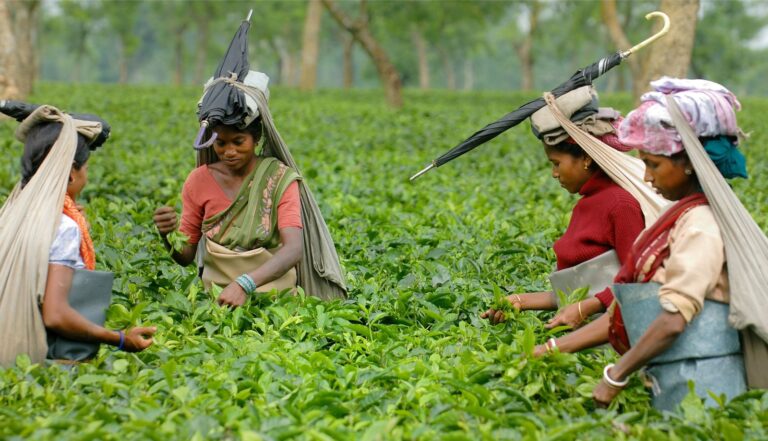
    New tea law brews dissent

    Trade unions are up in arms against the draft Tea (Development and Promotion) Bill, 2022 mooted by the ministry of commerce and industry to replace the 1953 Tea Act. The unions say that this will impact the livelihoods of over a million tea workers and small tea growers.

    Manan Kumar

    A government move to replace the Tea Act of 1953 is stirring a hornet’s nest in India’s tea growing regions. Lakhs of tea workers and others associated with the tea business fear that their future is threatened by the new law.

    The government is in a hurry to throw open its tea party. The ministry of commerce and industry that handles all matters related to the morning brew came up with a brief 11-day window to record public response to the draft Tea (Development and Promotion) Bill, 2022 that is intended to replace the 1953 Tea Act.

    Oddly, the government did not invite representatives of tea workers and the trade unions to give their suggestions in the draft bill. The last date for recording public response to the draft was 21 January.

    Ten trade unions – AITUC, INTUC, HMS, CITU, AIUTUC, TUCC, SEWA, AICCTU, LPF and UTUC – managed to rush a missive to the ministry on the last day citing grave concerns on certain provisions of the draft bill that can have huge ramifications on the tea industry, its workers, tea estates and gardens and the tea board that currently controls the industry. The BMS (linked to the ruling BJP government) is not part of the body of trade unions representing to the ministry.

    These trade unions have asked the ministry “not to take any unilateral move without appropriately addressing the concerns” of key stakeholders. For this, they have demanded that the government extend the date to record public response and, also to discuss provisions of the bill across the table with stakeholders.

    The new law is replete with disturbing elements, much like the farm laws withdrawn by the government recently, a trade union leader told OWSA. The farm laws had provoked a farmers’ agitation.

    The trade unions see a red herring in the provision of the draft bill that put an end to the regulatory role of the tea board, ostensibly due to the emergence of competitive and open international market and growth of the small tea grower.

    The unions denounce the move as totally unjust and unacceptable. They argue that “India being a major producer of tea in global market, the Tea Board has got a definite and regulatory role to play in national interests and, also in the interests of this highly labour-intensive as well as land-intensive industry, fetching huge foreign exchange earnings for the country.”

    Tea workers’ rights

    The trade union also point out the exclusion of Chapter 3 (Control over the extension of tea cultivation) and Chapter 4 (Control over the export of tea and tea seed) of the Tea Act, 1953 in the draft Bill. This, the unions say, is a ploy to make over 4.2 lakh hectares of land available for unrestricted commercial use. Such a move will adversely impact the livelihood of 1.2 million tea workers and their families besides damaging the fragile ecology comprising of forest cover and water bodies.

    Specifically mentioning the complete exclusion of Chapter 3A, the trade unions point out that this is “tantamount to complete abdication of responsibility by the Government for protecting the interest of the industry, the huge land resources deployed in it and its huge workforce, much to the detriment of national interests.”

    In their letter to the ministry, the trade unions have said that “while the exclusion of Chapter 3A opens, potentially, 4.2 lakh hectares of land under tea plantation for competitive commercial avenues, the Tea Bill, 2022 is completely silent on the rights of workers and worker communities dependent exclusively on these plantations. We find this unacceptable and apprehend that it creates a situation for gross labour rights and human rights violations.”

    The fall guys of Afghanistan’s Sharia legal system

    Former prosecutors are unemployed have to hide to save their families and themselves from the very criminals against whom they fought in the courts since the Taliban took over.

    Within days of the Taliban takeover, people running the cogs and wheels of the country’s judicial system lost their jobs. There is no place for them in the Sharia legal system.

    Many of them, now unemployed, are struggling to provide for their families.

    “We have been living in misery for several months,” Moshtari Danesh told Radio Azadi, a radio being run by Afghan journalists in exile. Moshtari has been unable to pay the rent for her home.

    Moshtari Danesh is disabled and a woman. She grew up in deeply conservative Afghanistan and overcame great odds to become a prosecutor.

    Afghanistan’s former prosecutors like Danesh who worked with the judicial system are reeling from a devastating economic crisis triggered by the Taliban takeover.

    Not just that, they have to hide to save their families and themselves from the very criminals against whom they fought in the courts. The murderers and drug dealers were freed from prisons by the Taliban as soon as they unseated the elected government and took office.

    Another such person was Humayun (who only goes by his first name). For years before the collapse of the Afghan government, Humayun was tasked with investigating serious crimes in the southern province of Helmand. Working in a region where most of the world’s opium is grown and processed into heroin, his job often focused on those in Afghanistan’s illegal narcotics trade.

    But now, Humayun says he is receiving threats from the criminals he helped to convict. He says they are demanding that he reimburse them for fines they’d paid and property that was confiscated from them as part of their sentencing.

    Humayun recently received a call from a former convict from Helmand’s Nad-e Ali district who held him responsible for the dismantling of his drug business. “He told me (that) I am responsible for the confiscation of his car and that I should return it now,” Humayun told Radio Azadi.

    Humayun is not the lone one facing such demands

    Humanyun is not the only one facing such demands from criminals set free by the Taliban.

    “Many former inmates are now threatening me and my colleagues to demand that we return their money,” he said. “A responsible court imposed penalties or ordered their properties confiscated. Yet they are insisting that we are personally responsible for what happened to them.”

    Several prosecutors, judges, and lawyers have been killed in recent months. Others have been attacked or threatened.

    Western nations have evacuated and granted asylum to hundreds of judicial workers from Afghanistan. But for the thousands who remain trapped in Afghanistan, particularly women, the future is bleak.

    “He shot at me”

    Fatana Mohammadi, a lawyer, was attacked by an unidentified man in broad daylight in her home in Kabul last month.

    “He shot at me once, but I was able to dodge the bullet by throwing a blanket over him,” Mohammadi told Radio Azadi. “After that, his gun jammed,” she said, adding that the attacker then beat her.

    “My cries for help attracted the attention of my neighbors,” who took hold of the attacker and handed him over to the Taliban, she said.

    “I still do not know who he was or why he wanted to kill me,” added Mohammadi.

    Inamullah Samagani, a Taliban spokesman, told journalists in November that the militant group was not targeting former prosecutors. “There is no arbitrary or prejudiced treatment of (former) prosecutors,” he said.

    Taliban tightens grip on justice system

    Afghanistan’s judiciary has undergone a swift and complete overhaul since the Taliban seized power. There is no place for lawyers trained through the pedagogical tools of modern law education under the Sharia legal system that the Taliban have brought with them. The modern way of dispensing justice does not appeal to the Taliban, who feel it is too slow and ineffective.

    In November, the Taliban’s justice minister, Mullah Abdul Hakim, declared that only Taliban-approved lawyers can work in their Islamic courts, effectively revoking the licenses of some 2,500 lawyers and banning women from working in law.

    Dozens of Taliban gunmen also stormed the offices of Afghanistan’s Independent Bar Association (AIBA) in Kabul that month and ordered its employees to stop their work. The Taliban has put the AIBA under the control of its Justice Ministry, stripping the organization of its independence.

    The moves have raised deep concerns about the impartiality and fairness of criminal trials under the Taliban that will be dominated by insurgents and clerics.

    During its earlier rule over Afghanistan between 1996 and 2001, the Taliban courts used their tribal interpretations of Shari’a law to prescribe extreme public punishments, including executions, floggings, and amputations.

    Since returning to power, the Taliban has signalled a return to some of its past methods.

    “There’s no indication that the Taliban are thinking about incorporating the institutional setup of the previous government’s judicial and legal system,” Haroun Rahimi, a self-exiled assistant law professor for the Kabul-based American University of Afghanistan told Radio Azadi.

    “They view that system with disdain,” he added. “They’d like to continue what they perceive as a more Islamic – authentically Islamic – simple version of the adjudication that they were doing with their shadow courts.”


    Image: Jan Chipchase, Oxfam


    Rohingya rights group urge Biden, Macron to announce sanctions on Myanmar gas revenue

    The Burmese Rohingya Organisation UK has said that the policy to protect the profits of American and French companies needs to change urgently.

    An umbrella group of Rohingya rights organizations today urged on the United States and France to impose sanctions on gas revenue in Myanmar. They said that the money earned from the trade of Myanmar’s natural resources helped pay for the Myanmar military’s crimes.

    “We… urge President Biden of the United States of America and President Macron of France to urgently introduce sanctions on gas revenue in Burma (Myanmar),” the group said in a statement released by the London-based Burmese Rohingya Organisation UK (BROUK). The statement further said, “Gas extraction projects which involve American Chevron and French Total provide hundreds of millions of dollars in revenue to the Burmese military annually.”

    BROUK is an umbrella organisation of 21 rights groups worldwide.

    It said gas extraction projects, involving American firm Chevron and French Total, provide hundreds of millions of dollars in revenue to the Myanmar military annually.

    February 1 will mark a year since the military coup in Myanmar. The US, EU, UK and Canada have imposed a number of sanctions on sources of income for the Burmese military, include on timber and gems. “But gas production, which is one of the military’s biggest revenue sources, has so far gone untouched,” the statement read.

    Funding Myanmar army

    Both, President Joe Biden and President Emmanuel Macron have blocked sanctions on the gas industry, the BROUK affiliates said in their statement. In doing so, they are “protecting the profits of American and French companies ahead of the lives of Burmese people,” they said. “This urgently needs to change.”

    Arguing that the two leaders were tacitly funding the war the Myanmar army was waging against its own people, the statement released by the Rohingya organisations said that “sanctions on gas revenue would stop the military getting their hands on hundreds of millions of dollars which currently help fund their crimes against the Burmese people.”

    According to a report by the Ontario International Development Agency, more than 24,000 Rohingya Muslims have been killed since 25 August 2017 and over 34,000 have been thrown into fires, says the Ontario International Development Agency. Over 114,000 Rohingya Muslims have been beaten and up to 18,000 Rohingya women and girls have been raped, the organisation says.

    Nearly a million Rohingya Muslims are currently living as refugees in Bangladesh’s southern district of Cox’s Bazar after fleeing the August 2017 military crackdown in Myanmar’s Rakhine state.

    The statement added that the Myanmar military are now “attacking people all over Burma, killing children, burning villages and torturing with impunity.”

    Researchers stumble upon a beautiful, large and rare coral reef

    An UNESCO supported research mission has discovered one of the largest coral reefs in the world off the coast of Tahiti. The pristine condition of the corals, together with the extensive area these cover makes these rose-shaped corals a highly valuable discovery.

    A team of oceanography researchers have stumbled upon one of the largest coral reefs in the world on the seabed off the coast of Tahiti, the South Pacific archipelago in French Polynesia.

    The rose-shaped coral reefs are in pristine condition, as if untouched by the ravages of time. Each one of the giant rose-shaped corals are up to 2 metres in diameter.

    The highly unusual discovery is invaluable. And it is not news for the mainstream media.

    The reef is located at depths of between 30 and 65 metres. It is approximately 3 kilometres in length and between 30 metres and 60 to 65 metres wide. The dimensions the scientists have provided makes this yet-to-be-named coral reefs one of the most extensive, healthy coral reefs on record.

    “It was magical to witness giant, beautiful rose corals which stretch for as far as the eye can see. It was like a work of art,” says French photographer Alexis Rosenfeld who leads the campaign for the decade of ocean science for sustainable development.

    Ocean mapping is coordinated by UNESCO’s 150-country membership intergovernmental oceanographic commission that claims to be the guardian of unique ocean places, including 232 marine biosphere reserves and 50 marine world heritage sites of outstanding universal value.

    A step forward for science

    This is highly unusual because, up to now, the vast majority of the world’s known coral reefs sit at depths of up to 25 metres. This discovery suggests that there are many more large reefs out there, at depths of more than 30 metres, in what is known as the ocean’s ‘twilight zone’. The world is only now begining to learn about these.

    “To date, we know the surface of the moon better than the deep ocean. Only 20 per cent of the entire seabed has been mapped. This remarkable discovery in Tahiti demonstrates the incredible work of scientists who further the extent of our knowledge about what lies beneath,” says Audrey Azoulay, UNESCO Director-General.

    This expedition is part of UNESCO’s global approach to mapping the ocean. Coral reefs are an important food source for other organisms so locating them can aid research around biodiversity. The organisms that live on reefs can be important for medicinal research and reefs can also provide protection from coastal erosion and even tsunamis.

    “French Polynesia suffered a significant bleaching event back in 2019 — however this reef does not appear to have been significantly affected,” says Dr. Laetitia Hedouin, France’s National Centre of Scientific Research (CNRS).

    “The discovery of this reef in such a pristine condition is good news and can inspire future conservation,” she says. “We think that deeper reefs may be better protected from global warming.”

    Very few scientists have so far been able to locate, investigate and study coral reefs at depths of more than 30 metres. However, technology now means longer dives at these depths are possible. In total the team carried out dives totalling around 200 hours to study the reef and were able to witness the coral spawning. Further dives are planned in the coming months to continue investigations around the reef.