More

    Bangladesh government mulls introducing green tax to meet its environment goals

    The carrot and stick policy to impose of green taxes on the one hand and incentivise green service providers on the other hand is meant to increase investments in the environment-friendly technology sector.

    The government of Bangladesh is considering investment tax exemption for environment-friendly equipment and resources, and income tax exemption for green service providers with a view to checking environmental pollution. This was stated by the country’s Minister for Environment, Forests and Climate Change, Md Shahab Uddin on Tuesday at an award ceremony for green inclusive business champions.

    “At the same time, the imposition of green tax to discourage pollution is also under consideration,” the minister said.

    The carrot and stick policy to impose of green taxes on the one hand and incentivise green service providers on the other hand is meant to increase investments in the environment-friendly technology sector by encouraging business and industry to mobilise green technology resources. The government hopes this will help discourage polluting activities,” the minister said.

    The minister said that the government’s is adopting specific policies for environmental protection and pollution control to achieve the sustainable development goals by 2030.

    Earlier, the Bangladesh government had set up a fund of Taka 200 crore through the country’s central bank for the use of clean technologies.

    The government’s drive to fine polluting industrial establishments or projects for environmental and environmental damage as so far yielded about Taka 190 crores since 2010.

    Refinancing has helped investments in over 50 green products and a special fund has been set up by the government for the development and dissemination of environment-friendly green technologies and conducting research.

    The minister claimed that the department of environment has brought polluting industrial establishments under compliance through strict enforcement of the environmental laws.

    Environmental stress

    The global environment performance index brought out by the Yale University’s center for environmental law and policy ranks Bangladesh at 162 among 180 countries. The environmental performance index is a data-driven summary of the state of sustainability around the world. It uses 32 performance indicators across 11 issue categories.

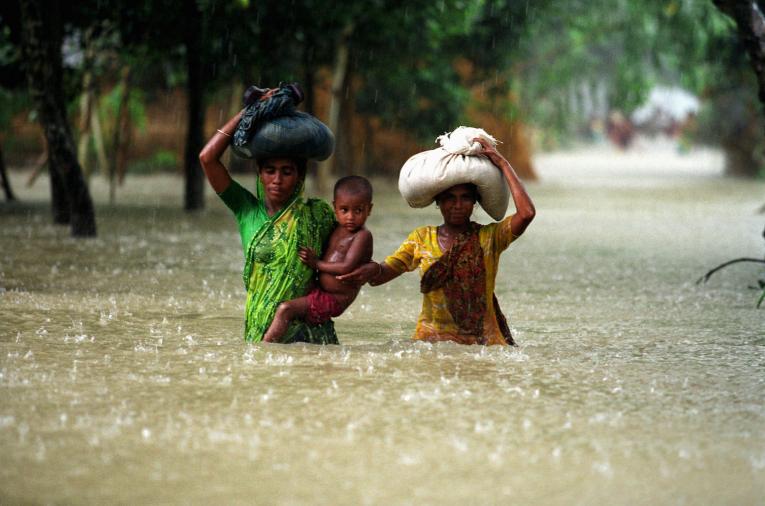
    The environment is under stress in one of the most densely populated countries in the world. Writing a lament in the country’s leading newspaper, The Daily Star on the state of Bangladesh’s environment, businessman Abu Afsarul Haider spoke of the country’s urban centres growing in an unsustainable manner, with open spaces and water bodies gradually disappearing.

    “Pollution and encroachment are the major culprits,” he wrote, stressing that Dhaka has consistently been ranked among the world’s most polluted cities.

    Bangladesh Water Development Board (BWDB) says that 175 of the country’s 310 rivers are in a miserable state. 65 are almost dead. 80 per cent of Bangladesh’s rivers lack proper depth.


    Image: UNICEF

    WHO says it will consider a change in vaccine composition

    The team of experts say that there is a need to develop COVID-19 vaccines that have high impact on prevention of infection and transmission.

    The technical advisory group on COVID-19 vaccine composition (TAG-CO-VAC) of the World Health Organisation (WHO) has said that the composition of current COVID-19 vaccines may need to be updated.

    The group said this in an interim statement on COVID-19 vaccines in the context of the circulation of the Omicron SARS-CoV-2 variant.

    The WHO team of experts says that this is needed “to ensure that COVID-19 vaccines continue to provide WHO-recommended levels of protection against infection and disease by variants of concern, including Omicron and future variants.”

    The technical advisory group also considers that there is a need to develop COVID-19 vaccines that have high impact on prevention of infection and transmission, in addition to the prevention of severe disease and death.

    The TAG-CO-VAC said that it will consider a change in vaccine composition to ensure that vaccines continue to meet the criteria established in WHO’s Target Product Profile for COVID-19 vaccines, including protection against severe disease and, to improve vaccine-induced protection.

    WHO has established TAG-CO-VAC to review and assess the public health implications of emerging SARS-CoV-2 variants of concern on the performance of COVID-19 vaccines and to provide recommendations to WHO on COVID-19 vaccine composition.
    Repeated booster doses of the original vaccine unlikely to be appropriate

    In the context of the circulation of the Omicron variant, currently sweeping across the world, the TAG-CO-VAC has urged for a broader access of the existing COVID-19 vaccines for primary and booster doses across the globe. This, it hopes, will help mitigate the emergence and impact of new variants of concern.

    TAG-CO-VAC was established by the WHO in September 2021 as a multidisciplinary group of 18 experts to review and assess the public health implications of emerging variants of concern on the performance of COVID-19 vaccines and provide recommendations on COVID-19 vaccine composition.

    Since its emergence, the SARS-CoV-2 virus has continued to evolve and WHO has designated five variants as SARS-CoV-2 variants of concern to date – namely Alpha, Beta, Gamma, Delta and Omicron – due to their impact on transmission, disease severity, or capacity for immune escape.

    “While the Omicron variant is spreading rapidly across the world, the evolution of SARS-CoV-2 is expected to continue and Omicron is unlikely to be the last variant of concern,” says the interim statement of the WHO group of experts.

    On the oft-iterated issues of vaccine equity, the experts have argued that “a vaccination strategy based on repeated booster doses of the original vaccine composition is unlikely to be appropriate or sustainable.”

    It argues that equity in vaccine distribution is necessary to achieve global public health goals. It says that steps towards distributing the vaccine to developing nations is also necessary bearing in mind the evolution of the virus.

    In the interim, the TAG-CO-VAC encourages COVID-19 vaccine manufacturers to generate and provide data on performance of current and Omicron-specific COVID-19 vaccines.

    “These data will be considered in the context of the framework mentioned above to inform the TAG-CO-VAC decisions when changes to vaccine composition may be required,” the technical advisory group says in its statement.


    Image: WHO – who.int 

    Canada becomes fifth country to ban conversion therapy

    Canada outlaws attempts to use any form of therapy to convert lesbians, gays, bisexuals and transgenders.

    Canada last week became the fifth country after Brazil, Ecuador, Germany and Malta to ban the practice of conversion therapy — supposed treatment that claims to be able to change an individual’s sexual orientation.

    The new law provides for punishing anyone engaged in conversion therapy with up to five years in prison. Additionally, anyone found to be promoting, advertising, or profiting from providing such conversion therapy can face up to two years in prison.

    The ban became official on Friday, weeks after Canadian lawmakers passed a law in the country’s parliament to this effect.

    Canada’s Prime Minister, Justin Trudeau announced the law on Twitter Saturday, saying that the Canadian bill makes the provision, promotion and the advertisement of conversion therapy a criminal offence.

    “As of today, it’s official: Conversion therapy is banned in Canada. Our government’s legislation has come into force — which means it is now illegal to promote, advertise, benefit from, or subject someone to this hateful and harmful practice. LGBTQ2 rights are human rights,” Trudeau’s tweet read.

    The US, Australia and Spain have provencial or state laws that make conversion therapy an offence. Argentina, Uruguay, Samoa, Fiji and Naura have indirect bans.

    What is conversion therapy?

    Conversion therapy is a set of supposed treatments claiming to influence or change the sexual orientation of an individual. It has been documented to include cruel practices, including torture.

    International LGBTQ organisation ILGA World describes it as a pseudo-scientific practice that has a “destructive effect on people’s lives from a very early age”.

    The practice is also discredited by the World Health Organization (WHO) and dozens of health professional associations from over 20 countries.

    Religion and conversion therapy

    The conversion therapies are often performed by religious leaders and even by licensed clinicians.

    People who have endured conversion therapy recount that besides torture, the conversion therapy also includes being talked to, being embarrassed and also being subjected to medical or drug-induced treatments. Many practitioners also prescribe aversion therapy.

    Religion plays a big part in the prevalence of conversion therapy, says Lucas Ramón Mendos of ILGA World.

    “Our research shows that today, the main driving forces behind these harmful practices are religious leaders and prejudice. Many have ended up seeking ‘conversion therapy’ for themselves as they perceived their sexual orientation and gender identity in conflict with their religion,” Mendos says.


    Wikimedia Image: Dublin LGBTQ Pride Parade 2019 [Photograaphed at City Quay] by William Murphy from Dublin, Ireland
    Licensing:Creative Commons Attribution-Share Alike2.0 Generic


    Time for Public Conversation, Justice after ‘Blasphemy’ killing in Pakistan, say Rights Activists

    People from all walks of life have been shocked and condemned the lynching of Priyantha Kumara Diyawadana, a Sri Lankan factor manager working in Sialkot, Pakistan.

    By Zofeen Ebrahim / IPS

    Mukhtiar’s heart sank when he saw the grisly incident of lynching of a man in the industrial city of Sialkot, in Punjab province.

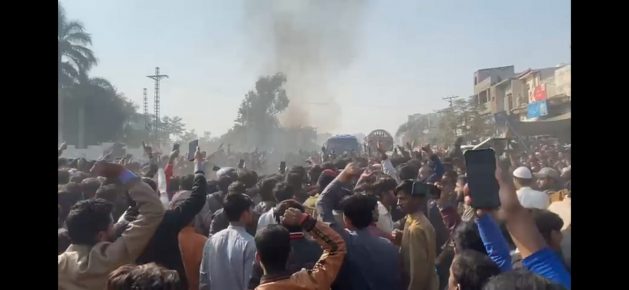
    The videos, taken on cell phones and put online, showed 49-year-old Priyantha Kumara Diyawadanage, a Sri Lankan national and manager of a garment factory, showing him being punched, kicked, hit with stones and iron rods, and killed. Not content, they then dragged his dead body out of the factory and set it on fire.

    It was the same city which 11 years ago, had witnessed mob lynching two brothers, 22-year-old Hafiz Muhammad Mughees Sajjad and Mohammad Muneeb Sajjad, 16, in 2010, with support of the local police, on charges of theft. Later their bodies were hung upside down in the city square.

    “There must have been no less than 2,000, men, mostly young, charged and in a frenzy, chanting ‘Labbaik Ya Rasool Allah’ (Here I am at your service, O Messenger of Allah), a slogan used by a far-right Islamic extremist political party, Tehreek-e-Labbaik Pakistan (TLP),” said Sakhawat Mughal, a reporter working for Hum News, a private television channel, recalling what he saw.

    “Many men had batons in hand. The police looked on and waited for backup,” he said, adding: “Had the handful of the law enforcers reacted, many more lives would have been lost.”

    Middle class disenchanted with mainstream political parties

    People from all walks of life have been shocked and condemned the incident.

    “The Sialkot incident is a horrible example of the growth of extremism and violent mob lawlessness,” said the National Commission for Human Rights chairperson, Rabiya Javeri Agha. “The government should ensure speedy and equitable justice, and perpetrators must face the full force of law.”

    According to rights activist Usama Khilji, director of Bolo Bhi, a civil society organisation geared towards advocacy, policy, and research in civic responsibility and digital rights, the TLP has managed to infiltrate the middle class disenchanted with mainstream political parties. The party stirred up ordinary people’s sentiments using tools of “religious passion and hatred towards any perceived act of anti-Islam” to drum support for itself and respond with violence when called upon to cause mischief.

    What was even more disturbing was that not only did the people join in throngs to watch the horrendous incident, but they also filmed it and even took selfies showing Diyawadanage body burning in the background.

    “Today, sections of the middle-class youth feel proud of lynching on a genocidal level, believing killing alleged blasphemers is an act of valour,” lamented Khilji.

    Criminal act

    Sitting 130 kilometres away in Lahore, the capital city of the Punjab province, and belonging to the Christian community, the breaking news from Punjab, for Mukhtiar, who goes by one name, was even more disturbing.

    Along with the footage of the mob and burning of Diyawadanage body, the various television channels also showed archival photos of his late daughter Shama, and her husband, Shahzad. They were lynched by a mob in 2014 and pushed into a burning brick kiln where the husband worked, in Kot Radha Krishan’s village of Chak 59, near the city of Kasur, also in Punjab. They were punished for allegedly burning pages of the Holy Quran.

    “Her three kids who are living with me were disturbed and cried a lot on seeing their parents’ faces plastered on the screen, as the older two remember the incident quite clearly,” said the grandfather.

    “The incident was a criminal act, as was my daughter’s and son-in-law’s lynching,” he said, adding: “Do you think any civilised person would want to carry out a sacrilegious act against any faith?”

    “Nothing that happened on the part of Diyawadanage constitutes the offence of blasphemy as is the case in nearly all cases prosecuted under these laws,” pointed out Peter Jacob, executive director of Centre for Social Justice. Initial investigations by police suggest the manager had removed posters of a religious moot, as the factory would be whitewashed.

    Mukhtiar further pointed out the consequences of committing blasphemy against Islam in Pakistan were “far too grave” for anyone to dare.

    Numbers tell another story

    Statistics also point that one does not have to belong to a religious minority to be accused of blasphemy and face vigilante violence. The majority of the accused are Muslims.

    At least 1,890 persons have been accused of committing blasphemy, under various clauses of the blasphemy law, from 1987 to 2021, said Jacob, who has been collecting data for the last 30 years, adding: “The year 2020 saw the highest number of accused.”

    Of the 75 per cent Muslims accused this year, 70 per cent belonged to the Shia sect, he said, and 20 per cent belonged to the Ahmadi community, 5 per cent were Sunni, 3.5 per cent were Christians and 1 per cent Hindus. Religions of 0.5 per cent could not be ascertained, Jacob told IPS over the phone from Lahore.

    From 1992 till December 4, 2021, there have been 81 extrajudicial killings on suspicion of blasphemy and apostasy, 45 were Muslims, 23 Christians, nine Ahmadis, two Hindus and two persons whose religious identity could not be ascertained, Jacob noted.

    In 2017, Mashal Khan, a Muslim student studying at Abdul Wali Khan University, in Mardan, in Khyber Pakhtunkhwa, was killed by his peers for allegedly posting blasphemous content online. The accusation was later proved to be fabricated.

    Even in Shama and Shahzad’s murder, rights activists later found the attack was instigated by the brick kiln owner who had an altercation with Shahzad over a money dispute.

    Horrific vigilante attack

    The Prime Minister terming the incident a “horrific vigilante attack” promised that all those responsible would be punished with “full severity of the law”. News reports say police have arrested over a hundred, including 19 who played a “central role” in the brutal killing.

    For Mukhtiar, these promises ring hollow.

    “There will be a lot of promises for a few weeks, and then when the public’s attention is diverted, the perpetrators will be released, you wait and see,” he said.

    “Of the five men charged with murder and sentenced to death, two have been released,” he said. After seven years, he was tired of doing the court rounds or seeking justice. “I’m old and a heart patient, and I have the responsibility of these three kids too!”

    Government must provide an enabling environment for a conversation

    Khilji also remained sceptical whether justice will be “dispensed to the mob” given Pakistan’s “dismal track record” in such cases.

    “Entire police stations have been burnt down for perceived inaction towards blasphemy-accused people by the TLP,” he said, giving the example of the state caving into this group that exudes “massive street power”.

    And this “capitulation” to those demanding, inciting, encouraging, and perpetuating violence, pointed out Saroop Ijaz, senior counsel with Human Rights Watch’s Asia division, has reinforced the “legitimacy of violence” in the public consciousness.

    A December 5 editorial in Dawn said: “… on the last day of his life, Mr Diyawadanage came face-to-face with the consequences of the Pakistani state’s decades-long policy of appeasing religious extremists.”

    “The Sialkot incidence is yet another reminder that violence and impunity are now embedded in society on the issue of blasphemy,” Ijaz told IPS, emphasising the urgent need for holding a “national conversation on violence” and, in particular, on how religion is often used to incite violence.

    But, he was not sure if the government was “ready and willing to provide an enabling environment for such a conversation” to be had.


    This story has been sourced from Inter Press Service.

    Greenland’s ice sheet lost some 166 billion tonnes in 12-months

    It is now raining in a place that saw only snowfall. Though this is happening in another far corner of the earth, the shrinking of the ice sheets is an evidence of global warming and climate change and is a matter of concern.

    The latest report on the Polar Portal portrays a grim situation. The cyber observatory run by Danish research institutions engaged in monitoring Greenland’s ice sheet and the sea ice in the Arctic say that the past quarter century has been particularly dreary.

    “2021 is the twenty-fifth year in a row in which Greenland’s ice sheet lost more mass during the course of the melting season than it gained during the winter,” the latest report from the portal says.

    The report explains that while the early part of the summer was cold and wet with unusually heavy and late snowfall in June, delaying the onset of the melting season, the month of July saw a heatwave that “led to a considerable loss of ice.”

    In a 12-month period ending August 2021, the Greenland Ice Sheet lost about 166 billion tonnes of ice, says the report compiled by the scientists. That has been close to the annual average since the mid-1980s. Overall, in the 25 years between September 1986 and August 2021, Greenland has lost about 5,500 billion tonnes of its ice sheet. This has in turn, contributed to 1.5 cm to the average global rise in sea levels of about 12 cm.

    The report explains unusual weather during the 2021 Arctic summer, extreme melting periods despite average temperatures, and sea ice dropping to its second-lowest level last July.

    Notably, the report says, “precipitation at Summit Station, which is located at the ‘top’ of the ice sheet at an altitude of 3,200 meters above sea level, was registered in the form of rain.”

    When the rain was recorded in August, the US National Snow and Ice Data Center noted that “there is no previous report of rainfall at this location (72.58°N 38.46°W), which reaches 3,216 meters (10,551 feet) in elevation.”

    Reiterating previous research

    This paper comes on the heels after another research from the Potsdam Institute for Climate Impact Research that “found evidence that the central-western part of the Greenland ice sheet has been destabilizing and is now close to a critical transition.”

    “We’re at the brink, and every year with CO2 emissions continuing as usual exponentially increases the probability of crossing the tipping point,” the researchers warned. “Our results suggest there will be substantially enhanced melting in the near future, which is worrying,” the scientists concluded.

    Another previous observation on Arctic rainfall reported in November by scientists says, “The fact that we’re getting rainfall on the summit of Greenland right now, and that we’re maybe going to get more rainfall into the future—it kind of staggers me,” she said.

    Researchers say that “the transition from a snow- to rain-dominated Arctic in the summer and autumn is projected to occur decades earlier and at a lower level of global warming, potentially under 1.5°C, with profound climatic, ecosystem, and socioeconomic impacts.”

    This report follows on an earlier piece on OWSA on the World Meteorological Organisation recognising the record increase of temperature in the Arctic.


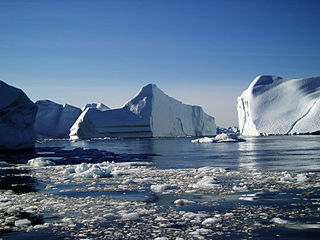
    Image obtained from the Nordic Co-operation website (norden.org); http://www.norden.org/en/news-and-events/images/places/greenland/groenland-1/view
    Licensed under Creative Commons Attribution 2.5 Denmark.

    Banners in Kabul order women to cover themselves

    Posters have come up all over Kabul city conveying the Taliban’s message to women instructing them to wear the all-encompassing burqa and the black chador.

    Taliban’s religious police have erected banners and pasted posters on walls in Kabul mandating that women must wear the Islamic hijab. This follows orders from ministry for the promotion of virtue and prevention of vice.

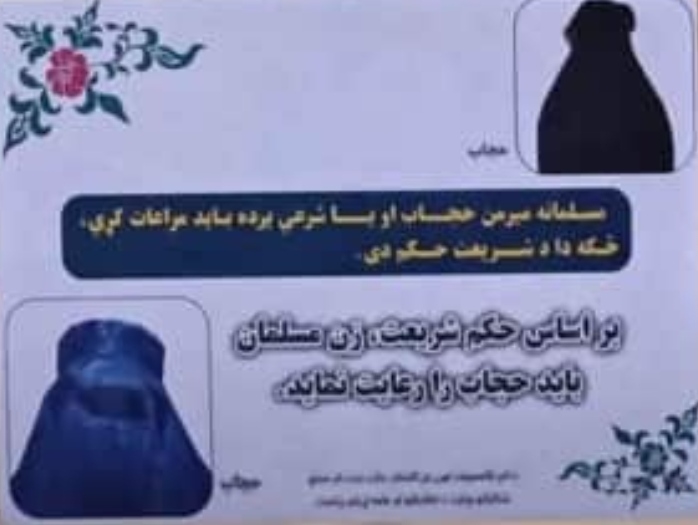
    The posters, that came up overnight, bear images of covered women. One image shows a woman clad in an all-encompassing burqa and a second one on the same poster shows a woman wearing the black chador. The text on the poster proclaims: “according to Shari’a law, a Muslim woman must observe the hijab.”

    The Taliban-led government’s ministry for the promotion of virtue and prevention of vice says the posters were installed in Kabul to advise and encourage women to cover themselves in public.

    Akef Mohajer, a spokesman for the ministry, attempted to clarify that this was not being thrust upon people unwilling to cover themselves. He said that the warnings on the posters notwithstanding, the rule will not be enforced.

    He explained the banners as “just an incentive for our sisters to be encouraged to wear the hijab.”

    Mohajer added that the posters depict the burqa and the black veil because they are commonly seen in Afghanistan.

    Afghan women react

    The posters have provoked an angry reaction from women. They say the black veil is not the culture of Afghanistan and the black chador is commonly worn by in Iran.

    Radio Azadi, a radio station run by a Afghan journalists in exile quoted a woman from the Nangarhar Province as saying that Afghan women only cover their faces. “We do not wear chadors and hijabs. This is not our custom.”

    Amina Mayar of Wardak Province, another woman quoted on the radio, also argued that the hijab and chador are not part of the culture of Afghan women and girls.

    Lina, a resident of Kabul who spoke to Radio Azadi, said she was horrified when she saw the new posters from Taliban ministry.

    “The Taliban want to instill fear in the hearts of the people,” Lina said. “They can rule by force and impose a foreign culture on the people. I am scared to thing of the day when the Taliban will whip women.”

    Old story repeating itself

    During its earlier rule over Afghanistan from September 1996 to October 2001, The Taliban regime had made it mandatory for women to wear an Islamic headscarf. Those who violated the rule were often whipped in public.

    Turpiki, an activist and deputy head of the Afghanistan Women’s Peace and Freedom Organization, says that the new Taliban regime in Afghanistan “should not think that their previous actions can be repeated now.”

    “Chador and hijab are not the custom of our women,” Turpiki told boradcasters. “The Taliban should not think that they can once again impose what they want on Afghan women. They will stand up against such actions.”

    Earlier, the Taliban-led government had ordered bus drivers and taxi drivers not to seat women unless they are wearing an Islamic veil. Drivers were also not allowed to transport unmarried women in their vehicles for a distance exceeding 70 km.

    Ageing dams are ‘ticking time bombs’

    China, the US and India top the list of countries with a significant number of large dams. China alone hosts 40 per cent of the of the world’s large dams (numbering 23,841), their average age being 45 years. According to official records, India has 209 dams that are over 100 years old.

    By Ranjit Devraj / SciDev.Net

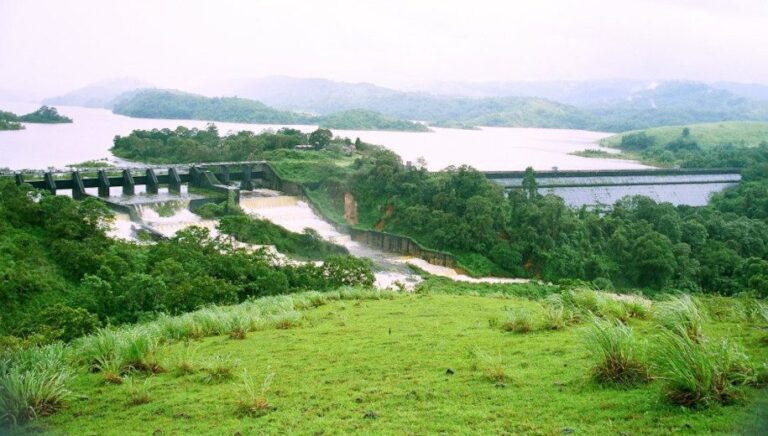
    Perched high up in the Western Ghats, adjacent to Kerala’s famed Periyar wildlife sanctuary, is a 126-year-old dam that has dangerously outlived the 50 years of life intended for it by colonial British engineers.

    N.K. Premachandran, a member of parliament from Kerala, describes the 53.6 metre-high Mullaperiyar dam on the Periyar river as “a ticking timebomb waiting to explode, not only because of its antiquity but also because it is located on an acknowledged seismic zone”.

    “As Kerala’s water resources minister (from 2006 to 2011), I commissioned studies on the safety of the dam by the Indian Institute of Technology (IIT) at Roorkee, which specialises in dams and irrigation, and IIT-Delhi. Both institutes had deemed Mullaperiyar fit to be decommissioned but the issue got bogged down in political wrangling and litigation in the Supreme Court,” Premachandran tells SciDev.Net.

    Premachandran is happy to see Mullaperiyar listed among the world’s big dams that need to be decommissioned in a report released 22 January by the UN University – Institute for Water, Environment and Health (UNU-INWEH). “Let’s hope the UN study will encourage authorities, including the Supreme Court, to decide early to decommission this dam that threatens the lives of millions,” he adds.

    Duminda Perera, an author of the study and an expert on water resources and water-related disasters, says: “We selected Mullaperiyar dam as a good example of an aged but still functioning dam in a seismically active area amidst structural flaws, political stresses, and environmental issues —as recorded in published literature.”

    Opposition to decommissioning

    Decommissioning Mullaperiyar is strongly opposed by Tamil Nadu state, which inherited a lease agreement between the former princely state of Travancore (now Kerala) and the British government. The lease allows Tamil Nadu to operate the dam and divert 640 million cubic metres of water annually for irrigation and power generation through a tunnel bored into the Western Ghat mountains that form a wall between the two states.

    But Mullaperiyar ticks all the boxes that the UNU-INWEH study identifies for decommissioning — public safety, growing maintenance costs, reservoir sedimentation and environmental restoration. Large dams, even if structurally sound, are regarded as ‘high hazard’ infrastructure because of the potential for massive loss of human lives, livelihoods and destruction in the event of failure, the study said.

    “Our study discusses the dam ageing issue globally, bringing the topic to the surface and hoping to get the national level policymakers’ attention,” Perera tells SciDev.Net. “The decommissioning decision should be taken after a careful and in-depth analysis of a dam and its links with the economy and society.”

    “There are many strong advocates for increasing safety-related investment in dams. For example, the World Bank, in just the last few years, has invested over US$1 billion in a dam rehabilitation improvement programme in India,” says Perera.

    Ageing dams globally

    China, the US and India top the list of countries with a significant number of large dams. China alone hosts 40 per cent of the of the world’s large dams (numbering 23,841), their average age being 45 years. According to official records, India has 209 dams that are over 100 years old, built when design practices and safety were far below current norms.

    Africa has far fewer large dams than other continents, though there are notable structures like the Akosombo Dam in Ghana, Kariba Dam in Zambia and Zimbabwe, and Egypt’s Aswan Dam. While Africa increasingly relies on hydropower, the average age of Africa’s dams is less than 50 years, the study said.

    Latin America’s large dams are also yet to face the widespread ageing seen in other regions, although the average age in some functional categories is close to 50 years. More than half of all large dams in South America are found in Brazil, with a handful over 50 years.

    The study lists well-documented cases of failure of dams aged between 50 and 100 years. These include the Panjshir Valley Dam (Afghanistan, 2018), Ivanovo Dam (Bulgaria, 2012), Situ Gintung Dam (Indonesia, 2009) and Kantale Dam (Sri Lanka, 1986).

    Whether from excessive seepage, cracking, overtopping, or structural flaws, dam failures are frequently the result of poor design or construction, lack of maintenance, or operational mismanagement, the study said.

    Experts in India cite the catastrophic 1979 failure of the Machchu II Dam in Gujarat state, 20 years after it was commissioned, as an example of mismanagement. Following heavy rains, the dam, which had filled up four times its capacity, collapsed, resulting in the deaths of more than 15,000 people and destruction of the low-lying industrial town of Morbi, five kilometres downstream.

    The Machchu II Dam collapse figures among the world’s worst dam disasters and is second only to China’s 1975 Banqiao dam failure which is estimated to have taken the lives of 240,000 residents of Henan province. China never released official figures of casualties or damage.

    Unrealised risks

    C.P. Rajendran, a top geologist at India’s National Institute of Advanced Studies and member of an expert committee appointed by the Kerala government to study the stability of the Mullaperiyar dam, says that the “lower bound of life-expectancy being 50 years combined with siltation problems means that most of India’s dams are reaching the end of functional life”.

    Additionally, says Rajendran, India and China have fast-forwarded their dam-building activities, ignoring the ecological and seismological vulnerability of the Himalayan regions, especially in the backdrop of climate change that accentuates glacier melting and the flood situations. “Dams as a means of water security are passé, as pointed out by the UN-sponsored study.”

    The dangers of building dams in ecologically sensitive areas were highlighted on Sunday (7 February) when a Himalayan glacier fell into the Dhauli Ganga river in the Uttarakhand region. It triggered huge floods, swept away a small dam and damaged a bigger one downstream leaving a trail of destruction. More than 100 people are missing and feared dead after being caught in the torrent, including more than 50 workers of the smaller dam.

    For the Mullaperiyar, IIT- Roorkee estimated in its report to Premachandran that it would fail if an earthquake of 6.5 magnitude occurs in a radius of 16 kilometres when the water level in the dam is at 41 meters. According to the UN study, such an event would endanger the lives of 3.5 million people in Kerala.

    “By 2050, most people on Earth will live downstream of tens of thousands of large dams built in the 20th century, many of them already operating at or beyond their design life,” the study said.

    This piece has been sourced from SciDev.Net

    Rohingya refugee camps in Bangladesh’s Cox’s Bazaar hit by second fire in 10 days

    2022’s second big fire incident in a Rohingya refugee camp has destroyed almost 600 temporary shelters.

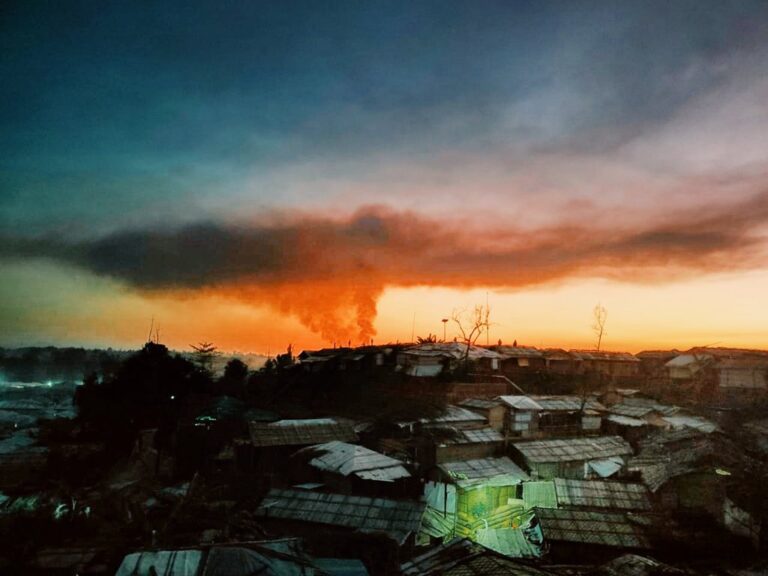
    A massive fire broke out in housing camp 16, home to about 800 Rohingya refugee families in Bangladesh’s Cox’s Bazar at about 5 PM local time on Sunday. The fire swept through the refugee camp. No casualties have been reported. Though the flames were contained, the damage was extensive.

    Local authorities say that over 3,600 Rohingya refugees have lost their homes. Almost 600 shelters have been burnt to the ground. Among the homes destroyed are 30 homes of the host Bangladeshi community. All 34 camps put together hold nearly 1 million people.

    Initial reports point to the accident starting off from a wood-fired household kitchen. Some of the aid workers at the camp dispute this because all families have been provided a cooking gas connection. “This was a conscious decision of the government of Bangladesh,” an aid worker said. “Refugees, the world over, tend to cut down wood from nearby areas to cook their food. This is why the government decided to provide the refugees with a cooking gas connection.”

    Second fire in 10 days

    “This is the second fire in the camps in 2022 and we are only in the second week of January. Our fear is not only about what happened this time, but that future fires will cause even greater destruction and cost lives,” says Roberto Vila-Sexto, the Norwegian Refugee Council’s (NRC) Country Director in Bangladesh.

    The Bangladesh government and the camp managements only allow temporary shelters in the camps. These are often made of highly inflammable material, predominantly bamboo and tarpaulin.

    In overcrowded settlements fenced in by barbed wire, the risk of the next disaster is always high, said a NRC representative. Refugees told aid workers that they had to cut through the wire fencing to escape from the fire.

    NRC has been lobbying and advocating for the removal of the barbed wire fences, saying that these were both, dangerous and undignified for the refugees.

    “We need to provide safe, dignified shelter for refugees using fire-retardant material, and the dangerous barbed wire fencing should be removed that divides the camps and slows the escape of people fleeing the flames,” said NRC’s Roberto Vila-Sexto.

    An earlier blaze occurred last Sunday at the site of a COVID-19 treatment centre managed by the International Organisation for Migration (IOM) in the Cox’s Bazar refugees camp area.

    In urgent need of aid

    Asma, a single refugee mother of three living in the camps, barely escaped with her children, and had to spend the night under the open winter sky. “Everything is gone, we barely escaped with only the clothes on our back,” she said.

    As camp lead, an assessment of the damage and the response to the fire is being led by the IOM.

    BRAC Bangladesh’s leading NGO, together with Bangladesh Red Crescent are leading the work on fixing tented camps for people to spend their nights in. Volunteers had pitched 40 tents till the evening.

    The World Food Programme has distributed fortified biscuits to affected families in the immediate aftermath. WFP will also be providing the affected families with hot meals until they are a position to receive regular food supplies, said WFP spokesperson Antoine Vallas.


    Image courtesy : Norwegian Refugee Council

    India gets a step closer to allow GM foods

    Anti GM food campaigners say that FSSAI is trying to allow genetically modified foods through the backdoor by putting out a set of weak draft regulations. Activists object to FSSAI soliciting industry views even before asking citizens to provide their feedback on the draft rules.

    India’s country’s apex food safety regulator, Food Safety and Standards Authority of India (FSSAI), has introduced a set of draft regulations called the Food Safety and Standards (Genetically Modified or Engineered Foods) Regulations 2021 for objections and suggestions.

    The regulations proposed by FSSAI will be applicable to genetically modified organisms (GMOs) or genetically engineered organisms (GEOs) or living modified organisms (LMOs) intended for direct use as food or for processing. FSSAI also proposes to set standards for food or processed foods containing other genetically modified ingredients.

    Food safety campaigners opposing genetic food say that FSSAI is trying to allow genetically modified foods through the backdoor by putting out a set of weak draft regulations.

    For example, they say, FSSAI has not specified any testing regime that will allow the regulator to know whether some food is safe or not. Neither, they say, has FSSAI specified how it will keep out industry interests and other conflict of interest elements from creeping into decision-making.

    Are GM foods safe?

    “There is still no conclusive study establishing the safety of GM foods,” say Ananthoo, Rajesh Krishnan and Usha Soolapani, a trio describing themselves as sustainable agriculture and safe food enthusiasts. On the other hand, there are a number of studies on the adverse impacts on health and food safety.

    Some studies have found GM foods caused health problems like allergies, immune system impairment, stunted growth and development, organ damage, reproductive health impacts and even pre-cancerous growths etc.

    Once introduced, the standards will make India among a small handful of countries to have accepted GM food.
    Have GM organisms entered the food chain in India?

    So far, the only genetically modified crop allowed in India is Bt cotton, a GM pest resistant plant cotton variety that seed marketing companies claim combats the bollworm pest. Interestingly, cotton-seed oil obtained after ginning GM cotton is available in the market for human consumption, even though this is not allowed by law. Similarly, oilcake obtained as a by-product from the process of cottonseed oil production, is fed to milk-producing dairy cattle.

    There has been resistance to cultivation of GM food crops in the country even though transnational seed marketing companies (and their Indian partners) have been knocking on the government’s doors for introducing Bt Brinjal and GM mustard for over a decade.

    “This is about our health and the health of our children,” say Ananthoo, Rajesh and Usha who have also put up a petition on the subject on change.org.

    In a separate letter to the FSSAI, the activists have objected to industry being asked to give its views even before citizens were asked to provide their feedback on the draft rules. All GM foods are unauthorised as of now, they say, citing FSSAI’s position in the Supreme Court.


    Image for representative purposes only from Wikimedia.
    By Feeuwai Nalmchonri Lami

    Climate Change Leaves Residents of Pakistan’s Parachinar Valley Thirsty

    Pakistan’s scenic Parachinar valley is running out of water because the surrounding hills have not received enough snowfall due to the changing climate. The Khyber Pakhtunkhwa Water Act 2020, a law meant to regulate and manage water resources in the province has made no difference to the lives of the people.

    By Muhammad Daud Khan

    Taps have run dry and for over 10 years in the Parachinar valley, the headquarters of Pakistan’s Kurram District bordering Afghanistan. Dozens of villages surrounding Parachinar too facing severe water shortage.

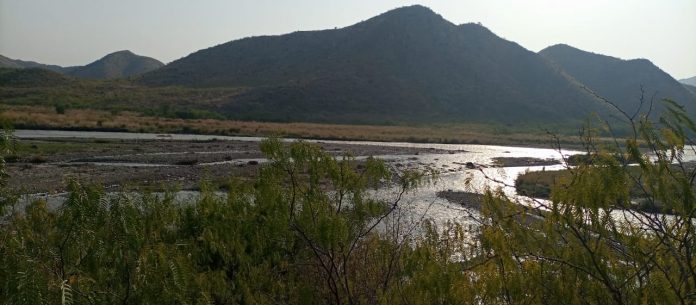
    People struggle to get water for everyday life. The dozens of natural streams no longer make a difference to the lives of the valley town’s 250,000 people. The town is known for its scenic snow-covered mountains next door and Kurram river winding its way into Parachinar from Afghanistan.

    And yet, residents spend hours queuing up to fill jerrycans with water from a tube-well installed by municipal authorities. The people’s misery and the changing climate go hand-in-hand.

    High water bills

    The pipelines are old, installed when by the British before Pakistan became an independent country. The Parachinar Tehsil Municipal Administration (TMA) says that it has installed 1,500 water connections. These water connections bring water to the town from three natural streams, Gulbo, Foladi and Jabo. Over the years gone by, TMA installed three tube-wells. But this is not adequate. People are forced to buy water at exorbitant prices.

    65-years-old Syed Hussain is unable to pay for water any longer and there isn’t any respite in sight. “Parachinar did not receive much snowfall in the winter,” he says. “Snowfall during the last winter was sporadic and we have lived through the worst year since I remember. A heavy winter snowfall on surrounding mountains provides water to the valley town through the remainder of the year. People have no choice but to buy water containers,” Hussain says. “The price of the single container has reached Rs. 2,000.”

    TMA’s three tube-wells are not sufficient to meet the needs of its huge population. But the crisis has also thrown up opportunities for an enterprising few who have installed private tube-wells. But these tube-wells too might run dry if the snowfall is as scant as in the past few years.

    Illegal tube-wells

    The privately installed tube-wells are also illegal. But authorities say that there is little they can do to implement the law because people need water to survive. TMA officials insist these tube-wells are depleting the underground water table and the consequent water shortage. The Khyber Pakhtunkhwa Water Act 2020, a law meant to regulate and manage water resources in the province has made no difference to the lives of the people.

    The decreasing groundwater levels are also due to low rainfall, besides unplanned tube-wells installed for irrigation in the surrounding villages.

    Syed Hussain says that the snowfall last winter was the lowest he had seen in the 65 winters he has lived through. “We haven’t seen such a scorching summer in Parachinar. Many people bought fans to keep themselves cool. We don’t know the reason, but nature is very unkind to us.”

    Sayed Hussain’s only hope is a biting winter with snow from the heavens above.

    There was a scanty snowfall on January 5. A weather bulletin put out by the government on Saturday said that the weather system producing rain and snowfall is now weakening.


    Muhammad Daud Khan is a journalist. He writes on the lives of people and communities in North West Pakistan.

    Edited by Aditi Angilena Patro