More

    A fast-spreading pandemic has reduced an additional 100 million people into poverty

    Achieving the Sustainable Development Goals will be a challenge as the COVID-19 pandemic has been singled out as the primary reason for a rise in global poverty.  

    By Thalif Deen / Inter Press Service

    The UN’s highly-ambitious goal of eradicating extreme poverty by 2030 has been severely undermined by a rash of problems worldwide, including an escalating coronavirus pandemic, continued widespread military conflicts and the devastating impact of climate change.

    According to published estimates, more than 700 million people have been living in poverty around the world, surviving on less than $1.90 a day.

    But the fast-spreading pandemic, whose origins go back to December 2019, has been singled out as the primary reason for a rise in global poverty – for the first time in 20 years.

    A World Bank report, which was updated last October, says about 100 million additional people are now living in poverty as a direct result of the pandemic.

    For almost 25 years, extreme poverty — the first of the UN’s 17 Sustainable Development Goals (SDGs) — was steadily declining. Now, for the first time in a generation, the quest to end poverty has suffered a setback, says the report.

    Sir Richard Jolly, Institute of Development Studies, Sussex, UK, told IPS the World Bank is emphasizing that world poverty has been rising — after many years where in countries with positive economic per capita growth, it suggested that poverty had fallen, or soon would.

    Admitting he was “a fan” of the UNDP’s annual Human Development Report (HDR), he said: “So, for me, multi- dimensional poverty is a more realistic and relevant indicator”.

    “I want to know what’s been happening to life expectancy, access to education and incomes of the poorer sections of society, those below a poverty measure or median income”

    For instance, the numbers and percentages of the population below $10,000 in many countries, lower for some, especially in Africa. Even if by income measures poverty is rising, a multi-dimensional measure is much better, he said.

    “What are those in UNDP’s HDR office saying about recent poverty trends?” asked Sir Richard, who was a former Trustee of Oxfam and chairman of the UN Association of the UK.

    Deepening poverty and worsening inequality

    UN Secretary-General Antonio Guterres says the pandemic has “laid bare” challenges –such as structural inequalities, inadequate healthcare, and the lack of universal social protection – and the heavy price societies are paying as a result.

    Ending poverty sits at the heart of the UN’s 2030 Agenda for Sustainable Development, and is the first of the Sustainable Development Goals (SDGs). Despite this, poverty and hunger, Guterres said, are on the rise, following decades of progress.

    In his New Year message last week, he said the world welcomes 2022 “with our hopes for the future being tested”: by deepening poverty and worsening inequality, by an unequal distribution of COVID vaccines, by climate commitments that fall short of their goals and by ongoing conflicts, divisions, and misinformation.

    “These are not just policy tests. These are moral and real-life tests. And they are tests humanity can pass — if we commit to making 2022 a year of recovery for everyone,” he declared.

    Need major policy changes to reduce poverty by 2030

    In an interview with IPS, Roberto Bissio, Coordinator of Social Watch, an international network of citizen organizations that monitor how governments meet internationally-agreed commitments, pointed out that the World Bank once again underestimates poverty by measuring it with the extremely low benchmark of $1.90 a day.

    Further, by assuming that the tide lifts all boats equally it claims that the COVID-induced poverty “tsunami” of 2020 is being turned around by economic growth in 2021.

    “This ignores the conclusion of the World Inequality Report 2022, showing that inequalities have been exacerbated, particularly in the South, where states don’t have deep pockets to fund emergency social protection”.

    The Bank is right that SDG1 on reducing poverty won’t be achieved by 2030 without major policy changes, but neither will SDG10 on reducing inequalities, said Bissio, who was also a former member of the Civil Society Advisory Committee to the Administrator of the UN Development Programme, and has covered development issues as a journalist since 1973.

    “And it shamefully ignores that World Bank promoted policies of privatization and deregulation make the inequalities worse,” he argued.

    “Instead, the policies recommended by the infamous and now discontinued “Doing Business” report of the World Bank, are still part of the conditions imposed on countries to receive emergency from the Bank”.

    The institution that claims to have poverty reduction as its main mandate is part of the problem, not of the solution, said Bissio, who is also international representative of the Uruguay-based Third World Institute.
    The past is part of our present that shapes our future

    Vicente Paolo Yu, Senior Legal Adviser at the Third World Network, told IPS the setback in 2020 to the fight against global poverty due to the Covid pandemic exacerbates the impact of other crises such as climate change, biodiversity loss, and the development gap on the global poor, particularly those in developing countries.

    “Global poverty and inequality among and in all countries, climate change, biodiversity loss, and unequal pandemic responses are among the present-day results of historical injustices on the Global South committed in the name of Western civilization and globalization,” he said.

    “The past is part of our present that shapes our future. These crises are linked and cannot be fought effectively through piecemeal efforts or in silos.”

    Global poverty and inequality exist not because people are not hard working in their own homes and communities but because the way that the global economic, financial, and trade system is set up makes it difficult for poor peoples and countries to get out of poverty, he argued.

    Developing countries that have recently managed to succeed in cutting poverty have been those that have implemented diverse development policies, said Yu, who is a former Deputy Executive Director of the South Centre in Geneva.

    Hence, poverty and inequality are not natural phenomena but are borne out of the actions and decisions taken by human societies. They can also be reversed by human decisions, he noted.

    “Failing to act together as a common human community on all fronts on poverty and inequality and their various manifestations in the root causes and impacts of climate change, biodiversity loss, and pandemic responses leads to the denial of human choices and opportunities, violations of human rights, and increased human insecurity, powerlessness, and exclusion for peoples, their communities, and their countries,” declared Yu.

    Fighting these must be through a broad and systemic effort across the world founded on a deep sense of urgency and understanding of equity and justice as public goods in undertaking interlinked actions in the economic, social, and environmental fields. It is about choosing to create the conditions for human dignity and a decent life for all rather hoping for charity from the wealthy, he added.

    “The continued existence of deep poverty and inequality for many peoples across the globe, compounded by the climate, biodiversity and pandemic crises, is injustice writ large — particularly when seen against the technological and industrial advances and capital accumulation of a relative few”.

    “It is against the tenets of all faiths and human goodwill to refuse to act against the injustice of poverty. We should not simply look away and call for charity. We need to act with courage and conviction to correct injustice, redress wrongs, and achieve liberation from poverty and inequality.”

    The year 2022, he predicted, should be the year when all peoples come together to set each other free from the shackles of global poverty and inequality.


    This piece has been sourced from Inter Press Service

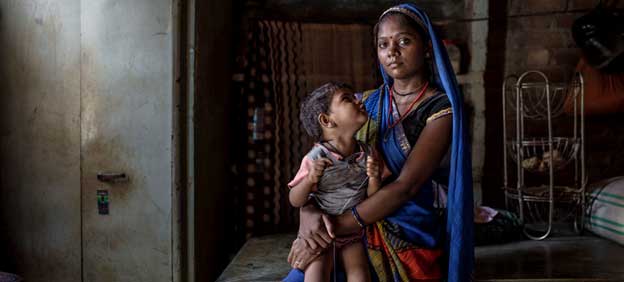
    Image: In India, five out of six people in multidimensional poverty were from lower castes.
    Credit: UNDP India/Dhiraj Singh
    Taliban feel a bath in a hammam is not a good idea. Ban women from using public bathhouses

    Afghanistan’s Taliban, known for their strict observance of Islamic codes, have banned women and men from using hammams, or public bathhouses, in the Balkh province.

    Authorities in the Balkh province, north of Afghanistan, have banned women from using public bathhouses.

    “Women can only bathe in their private settings with a hijab on,” said Sardar Mohammad Haidari, the provincial head of the ministry of propagation of virtue and prevention of vice in Balkh.

    Attempting not to be perceived as being discriminatory towards women, the Taliban leader added that men baths too would be controlled.

    What are the public bathhouses?

    The public bathhouses or hammams as they are called by local people, are used by the poor for cleaning. Each hammam accommodates up to 100 people. The people use the public bathhouses because the parts of the city they come from lacks running water – and because they need to have a bath.

    Municipalities in the war-torn country have been unable to provide water. Bathers do not necessarily like the hammams, but they use these private infrastructures to bathe in the absence of any alternative.

    Even big cities like Kabul were not spared of the broken down water system for lack of funds. While much of that is restored over the years, areas in the fringe of the cities still are not supplied with water.

    Much of the pipeline was restored over the years. But there are still parts of Afghanistan where the water pipe network is deficient.

    Three in every five people in the cities do not have access to running water, a humanitarian worker working with a global relief organisation told OWSA. “While most of it was damaged in the decades of fighting, much has also been lost to the lack of maintenance over time,” he said. “And we mustn’t forget that the recurring droughts are also contributing to the water pipes drying up.”

    The public bathhouses are also a necessity in Afghanistan’s winter because people living on the cities’ outer rims often do not have the resources to spend on fuel to heat water for a bath. On a large scale, a hammam is affordable. It costs up to 25 Afghani to have a bath. Some bathers follow up the bath with a vigorous massage for another 25 Afghani.

    Taliban’s discomfort with hammams

    A bath in a hammam is not a very private thing. Men and women – in separate sections – wash themselves in the hammams’ large marble-floored steam rooms.

    The Taliban has its own strict interpretation of Islam and Talibs consider the custom decadent. Even earlier in 1996, the vice and virtue police had clamped down on the hammams. Women were banned from exposing their bodies, even in the exclusive company of women, as it is in the case of the hammams.

    The commune bathhouses were also banned by the Taliban during their earlier stint in power. At that time, hammams had become essential also because the municipal water supply system had broken down.

    But one aid worker with years of experience in Afghanistan says that there is more to the closure of the hammams. “The hammams in Balkh will open up once they negotiate a deal,” he told OWSA. The deal would, in all likelihood, be in the shape of a monetary benefit for local Taliban leaders, he said.

    Taliban officials appeared to disagree over the closures of the bathhouses. Mohammad Sadiq Akif, a spokesman for the ministry of propagation of virtue and prevention of vice, denied that any order had been issued to the effect from Kabul.

    Public outcry

    Radio Azadi, run by Afghans in exile, quoted a woman who called herself as Rabia as saying that the Taliban was directing its resources into controlling the lives of citizens rather than addressing the myriad of problems facing the country. The Taliban “needs to pay attention to many more important issues we are grappling with,” she said.

    Criticising the Taliban’s closure of public bathhouses, Tamana Siddiqi, a women’s rights activist from Mazar-e Sharif told Radio Azadi, “People are dealing with growing economic pains, which means that not everyone can afford a hot bath inside their house.”


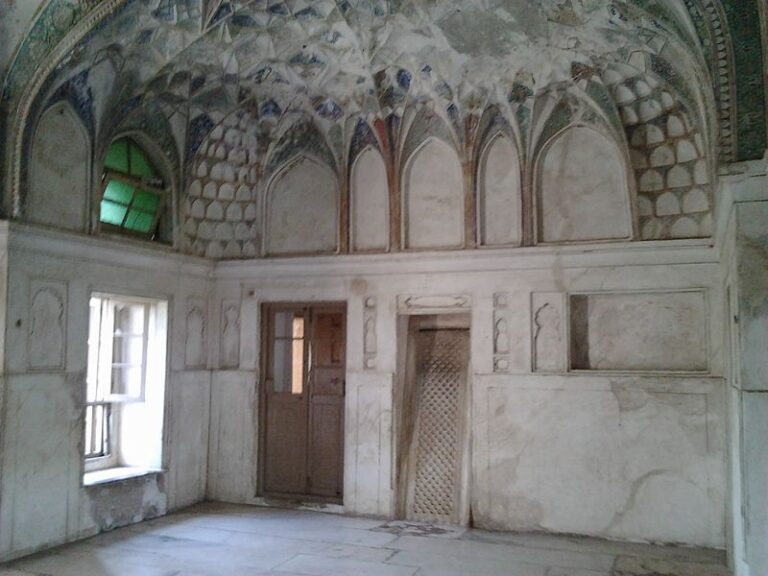
    Representative image (Royal bath or hammam shahi qila Burhanpur);
    Source: Wikimedia; Author Md iet

    Activism will be key to overcoming the COVID-19 crisis

    As the Omicron surge overwhelms the world, it is clear to people everywhere that the actions which leaders so far have taken in response to the COVID-19 crisis have not been sufficient to overcome it.

    By Ben Phillips

    We are not beating COVID-19. It looks rather like COVID-19 is beating us. What is to be done?

    Crucially, they are two key dimensions to what is needed now which, though related, are distinct. The first dimension is what policies are required to get us out of the crisis. The second dimension is how to get those policies put into place.

    In other words, the first key question is “what do leaders need to do?”, and the second key question is “how do we make them do it?”

    On the first question, the world is fortunate that we are not short of excellent public health expertise. Whilst there are no quick fixes, the contours of the policies required are not a mystery, and have been set out, to leaders and to media, repeatedly, by the World Health Organisation, by leading academics, and by health practitioners.

    They come down essentially to this: in a pandemic emergency, leaders need to deploy the whole range of tools that have been shown to help. The key here is the whole range.

    Importantly, in terms of how these approaches can be realized, this requires that they are realized for the whole world. Until they do, none of us will get out of the crisis. When Desmond Tutu said that “I am because you are, I am because we are”, that was not only true ethically, but, it turns out, true epidemiologically too.

    The approaches required include vaccines, treatments, and also, as the WHO’s Peter Singer has noted, “public health measures that encourage spending time outdoors, physical distancing, wearing masks, rapid testing, limiting gatherings and staying home when sick”.

    None of these alone is enough. Any approach that only does one of these, however well, would fail – all of them are needed, together.

    It requires the application of the whole range of policy tools. For example, rich countries, and Foundations based in rich countries, have emphasized the importance of sharing doses as a solution (even whilst they have comprehensively failed to deliver on their promises to do so).

    India and South Africa proposal for TRIPS waiver at the WTO

    In contrast, developing countries, the World Health Organisation and civil society have all highlighted that sharing doses alone cannot ensure enough for everyone, and that it is essential also to share the technology so that multiple producers across the world can simultaneously manufacture enough to vaccinate the world.

    This requires rapid agreement and implementation of the TRIPS Waiver proposed by South Africa and India at the WTO, and it also requires that rich country governments use their huge leverage (as procurers, investors and regulators) over the companies they host to make them share knowledge, know-how and material. Furthermore, this requirement to share COVID-19 technologies needs to apply to vaccines, medicines and diagnostics.

    As public health professors Madhukar Pai of McGill and Manu Prakash of Stanford have noted, “Science has delivered many tools that work against COVID-19. But equitable distribution of these tools is where we are failing.

    If we can find a way to share effective tools equitably and increase their production across the world, then we have a real shot at ending this pandemic.

    If we hoard these tools, block TRIPS waiver, and think we can boost our way out of this pandemic in the global North, we will begin 2023 by playing whack-a-mole with the rho, sigma, tau or Omega variants.”

    Not a new lesson

    The challenge then, is not that we don’t know what leaders need to do. The challenge is that they are not doing it. We like to believe that our leaders are led by the evidence. But evidence alone is not enough.

    The brilliant and essential reports of scientists will not be enough to shift the much harsher world of political interests. Getting leaders to do what is needed to overcome the COVID-19 crisis – in particular getting leaders to force the big pharmaceutical companies to share the rights and recipes for the vaccines, therapeutics and diagnostics so the world can produce the billions needed – will depend on pressure from ordinary people.

    This is not a new lesson. We saw it in the late 1990s and early 2000s with antiretrovirals for HIV. Then, as now, a monopoly hold on production was preventing people in developing countries from accessing life-saving help.

    Then, as now, the big pharmaceutical companies worked aggressively to block other producers from manufacturing what would save millions of lives. Then, as now, rich country governments sided with the big pharmaceutical companies. Twelve million people died. Finally, massive global public pressure, together with assertive action by developing countries, ensured that production was opened up and lives could be saved.

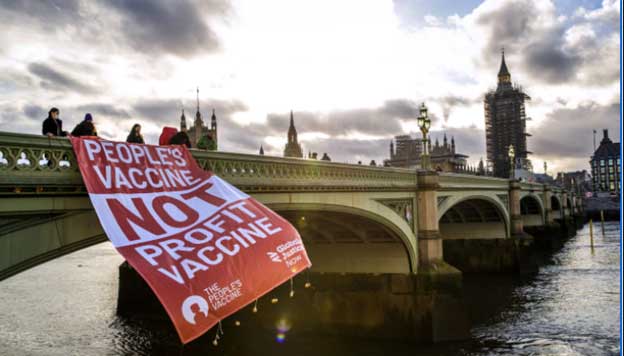
    It was not a coincidence that when the Covid-19 crisis erupted the first groups to call for the sharing of medical technologies, and to start to organise for it, were groups of people living with HIV. They are the heart of the movement for a People’s Vaccine because, from painful experience, they know what it takes. Health, like justice, is never given; it is only ever won.

    Some people are inspired by activism. Others, understandably, just want to get on with their lives. Activism feels like another burden. They’re ready to do their part by wearing a mask when available and getting vaccinated when offered. But they want to leave the leadership to our leaders.

    The thing is, that’s not enough. Our leaders are not leading. They are not doing all they can to end the crisis. They are not forcing the big pharmaceutical companies to share technologies so that enough can be produced. They are not ensuring access to health care as right. They are not protecting the vulnerable from the shock of the crisis.

    The past two years can best be summed up like this: the science is working, but the politics is failing.

    It is only through bold action by political leaders that the Covid-19 crisis will be ended. It is only through people’s organising that we’ll make leaders take that bold action. As the great novelist Alice Walker once put it so powerfully, “activism is the rent we pay for living on the planet”.


    Ben Phillips is the author of ‘How to Fight Inequality’ and an advisor to the United Nations, governments and civil society organisations.

    This piece has been sourced from Inter Press Service

    Image: People’s Vaccine Alliance

    Syrians turn war missiles into heaters as winter grips

    Blacksmiths in Syria are converting missiles into heaters that the people of Syria can afford. The low-cost heaters can use any fuel, but the often toxic fumes and combustion by-products lead to serious health problems.

    By Sonia el-Ali / SciDev.Net

    Amid a shortage of humanitarian aid and increased fuel prices, Syrians have discovered a cheap way to get warm in the harsh winter — by recycling missiles.

    Humanitarian aid covers only 45 per cent of the population’s needs and poverty rates have reached an unprecedented 90 per cent in northwest Syria, according to the Syrian Response Coordination Group, leaving many people to resort to makeshift heaters, run on toxic fuels.

    As’ad al-Obaid, sitting around one of the repurposed weapons with his children in their home city of Jisr al-Shughur, in Idlib province, tells SciDev.Net: “I couldn’t afford a heater, so got a missile I found nearby, gave it to the blacksmith and got this heater”.

    During the country’s decade-long conflict, getting warm has become a luxury that al-Obaid’s family and others like them in the northwest Syrian city cannot afford. The alternative here is to rely on whatever is available, including cheap fuel — regardless of the health risks.

    This fledgling recycling industry sees blacksmiths hurry out to gather missiles with a radius of between 28 and 32 cm, and take them to their workshops. Or sometimes they even buy the missiles at a low price.

    Ahmed Hussein al-Othman is a blacksmith in Idlib who has ventured into this line of business. He says: “The big increase in iron prices made it difficult for many residents to purchase expensive heaters, so people turned to this new option.”

    Describing the manufacturing process, he says: “The first stage is using the fragments of missiles found, or taking the un-exploded ones and breaking them down into pieces. (You need to) get experts to take out (any remaining) explosives and eventually sell these to quarries to be used in blowing out rocks.”

    Then, the missile is carried to the workshop where the upper part is removed and a side crack is made to release fumes, al-Othman explains.

    He says that the strong metal used in manufacturing the missiles makes them more resilient to sustained high temperatures. They are also cost-effective, he says, at only US$ 15, compared to around US$ 100 for a new heater.

    Heaters flexible with fuel

    The missile-turned-heater can work with coal, wood, pyrene or nylon, al-Othman adds.

    Al-Obaid obtains pyrene from olive oil press machines in northern Syria, as a by-product that is then compressed, dried and sold in the form of cylinders.

    He believes that, despite its bad smell and health risks, pyrene is still a good option as it includes oils that make it combust more easily than wood. Being cheap, coal is also seen as a perfect fit.

    Jalal al-Shardoub, a resident of Kelli refugee camp, north of Idlib and a father-of-five, says he uses coal to fuel his heater, despite its bad smell and negative effect on his children. The coal used is a by-product of primitive oil refining procedures, with a kilo of coal costing about US$ 1.5.

    Toxic fumes can cause respiratory problems

    Other residents cannot even afford these rudimentary and dangerous heat sources. Instead, they head to landfill sites to sift through piles of waste until they find something to burn to generate heat.

    Fatima Al-Terzi lives with her six children in an unfinished house with no doors or windows on the outskirts of Idlib, after losing her husband in a shelling by forces loyal to President Bashar al-Assad. She tells SciDev.Net, about her daily ritual of going with her children to landfill sites and collecting plastic bags and cardboard to burn. Despite their bad smell, she says this is her only choice.

    Abdelkhaliq al-Sheikh, a petrochemical engineer and director of water quality and standards for Idlib, explains the damage caused by these alternative heat sources: “When using diesel oil or domestic gas to generate heat, combustion is complete and carbon dioxide is generated, which is less damaging due to the release of water vapour.”

    However, if combustion is incomplete — as with burning wood, coal and pyrene — a mixture of gases are emitted, he says. The main one of these is carbon monoxide, which is highly toxic, causes respiratory diseases, and can even lead to asphyxia.

    If nylon is burned, sulphur dioxide or hydrogen sulphide is released, says Al-Sheikh, which are both highly toxic gases that can get into the lungs and absorb water from them.

    Mohammed al-Khaled, director of primary health care in the town of Selqin, in northern Idlib, says: “Garbage and shabby clothes and shoes became a normal way of generating warmth for many residents and displaced people in Idlib, as they are handy and low-cost when compared to traditional ones like wood or fuel.”

    He stresses that these methods are very dangerous and might even lead to death when used in enclosed spaces.

    Al-Khaled tells SciDev.Net that 50 per cent of the children who visit his health care centre have respiratory diseases, due to these unhealthy ways of generating heat. Diseases such as bronchial asthma, chronic bronchitis, respiratory failure and hypoxia, which affect children’s growth and development, could accompany them for the rest of their lives.

    This piece has been sourced from SciDev.Net

    Image: A father and his children sitting around a repurposed missile in their home city of Jisr al-Shughur, in Idlib province of Syria. Copyright: Sonia el-Ali / SciDev.Net.

    As millions remain affected, experts warn a health crisis awaits cyclone-hit Philippine

    The cyclone that hit Philippines has affected millions and could give rise to a medical emergency. Now, people are having to depend on a local river to do their daily chores since the cyclone has disrupted essential services. 

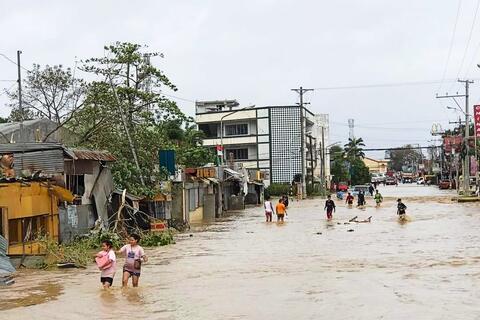
    After counting the dead and the injured and the loss of housing, Philippines is now realising the long-term impact of Super Typhoon Rai.

    7.3 million people have been affected by the cyclone and of these, the international aid organisation Oxfam says that over 3 million people had been affected directly affected by the cyclone. 208 people died in the disaster, according to the Philippine National Police.

    Locally named Odette, the cyclone hit the Philippines on 16 December 2021, ravaging islands and coastal communities in the east and flooding towns and cities across the country.

    “It is our first time to experience such strong winds brought by the typhoon and it devastated almost all of the households,” said Maas in City Mayor Nacional Mercado.

    Pictures of the community posted by Oxfam showed residents have resorted to bathing and doing laundry in the river because electricity and water supply have been severely disrupted.

    Mayor Mercado said their city only had one casualty since most residents evacuated before the typhoon made landfall but 1,677 houses were totally destroyed and 2,182 were partially damaged.

    Oxfam and its partner humanitarian groups distributed Philippine Peso 4 million to 2,650 families in the province of Eastern Samar as a pre-disaster financial aid before the cylone struck. This was meant to help families prepare food, water, medicine and transportation to evacuation centres.

    International donors have rushed in, but the resources available is just a fraction of what is actually required.

    A health crisis in the making 

    Another organisation, the Red Cross, is ramping up urgently required emergency healthcare and also working to provide clean water to prevent severe illness and death from diseases like gastroenteritis and diarrhoea.

    The International Federation of Red Cross and Red Crescent Societies (IFRC) has warned of a mounting health crisis in the eastern Philippines after Super Typhoon Rai destroyed hospitals.

    Oxfam and the Red Cross and various other organisations warn that waterborne diseases like gastroenteritis and acute watery diarrhoea can follow the cyclone if water and sanitation facilities are not restored immediately.

    There have been more than 400 cases of diarrhoea and gastroenteritis in typhoon-affected areas, with 141 health facilities damaged by the storm, according to Philippine Government agencies.

    But the needs are huge, given the scale of the disaster. Richard Gordon, chairman of the Philippine Red Cross told OWSA, “We are urgently sending more health teams, hygiene kits and resources, including safe water supplies and water filtration systems to Siargao island, Cebu, Palawan and Bohol, to prevent the further spread of disease.”

    Is a food crisis unfolding

    Leah Payud, Oxfam Pilipinas’ Resilience Portfolio Manager, likened the impact of Super Typhoon Rai to that of Super Typhoon Haiyan (also called  Yolanda locally) in 2013. That cyclone had caused especially widespread damage agriculture, in turn affected the lives, livelihood and the food security of the people.

    Payud spoke of her memory racing back to 2013 when many areas were unable to receive adequate resources.

    “Many areas here in Leyte and Southern Leyte are badly hit by the typhoon and need immediate attention. People are struggling to find food, water, and other necessities. People who had cash had to line up for more than three hours to withdraw,” Payud said.

    COVID-19: The world can end vaccine inequity firstly by effectively sharing the doses, says WHO chief

    The week gone past saw the highest number of COVID-19 cases reported from across the globe, the head of the World Health Organization told journalists over an online press briefing on Thursday. The numbers are expected to increase in the coming week.

    World Health Organization Director General Tedros Ghebreyesus reiterated his longstanding call for vaccine equity and solidarity to defeat the COVID-19 crisis, now reaching into its third year.

    “The dawn of a new year offers an opportunity to renew our collective response to a shared threat,” he said.

    “I hope global leaders who have shown such resolve in protecting their own populations will extend that resolve, to make sure that the whole world is safe and protected.”

    WHO’s latest weekly epidemiological report shows that COVID-19 case numbers increased at a global level by 71 per cent over the past seven days as some 9.5 million cases were reported.

    “We know that that is an underestimate,” Dr. Maria Van Kerkhove, the agency’s technical lead on COVID-19 said, adding that “next week will be higher, because in the last 24 hours, more than 2.2 million cases were reported.”

    Inequity kills

    Tedros described vaccine inequity as “a killer of people and jobs”, which is also undermining global economic recovery. Low vaccination rates have also created the perfect conditions for virus variants to emerge.

    He said the “tsunami” of cases has been overwhelming health systems across the world.

    “While Omicron does appear to be less severe compared to Delta, especially in those vaccinated, it does not mean it should be categorized as ‘mild’,” he cautioned.

    Although first-generation vaccines may not stop all COVID-19 infections and transmission, Tedros stressed that they remain highly effective in reducing hospitalizations and deaths.

    Falling short

    WHO has been advocating for countries to vaccinate 70 per cent of their populations by the middle of 2022. Tedros warned that at the current pace, some 109 countries could miss this target.

    “The essence of the disparity is that some countries are moving toward vaccinating citizens a fourth time, while others haven’t even had enough regular supply to vaccinate their health workers and those at most risk,” he said.

    “Booster after booster in a small number of countries will not end a pandemic while billions remain completely unprotected.”

    Share and invest

    The world can end vaccine inequity firstly by effectively sharing the doses that are being produced, he said.

    “Second, let’s take a ‘never again’ approach to pandemic preparedness and vaccine manufacturing so that as soon as the next generation of COVID-19 vaccines become available, they are produced equitably and countries don’t have to beg for scarce resources,” he advised.

    For its part, he assured that WHO will continue to invest in vaccine manufacturing hubs and work with any and all manufacturers willing to share know-how, technology and licenses.


    Image: COVID vaccines are being administered at a village clinic in Kohima, India.
    Photo by Tiatemjen Jamir, UNICEF

    Tribal People Resist A Remote Pakistan-Afghanistan Border

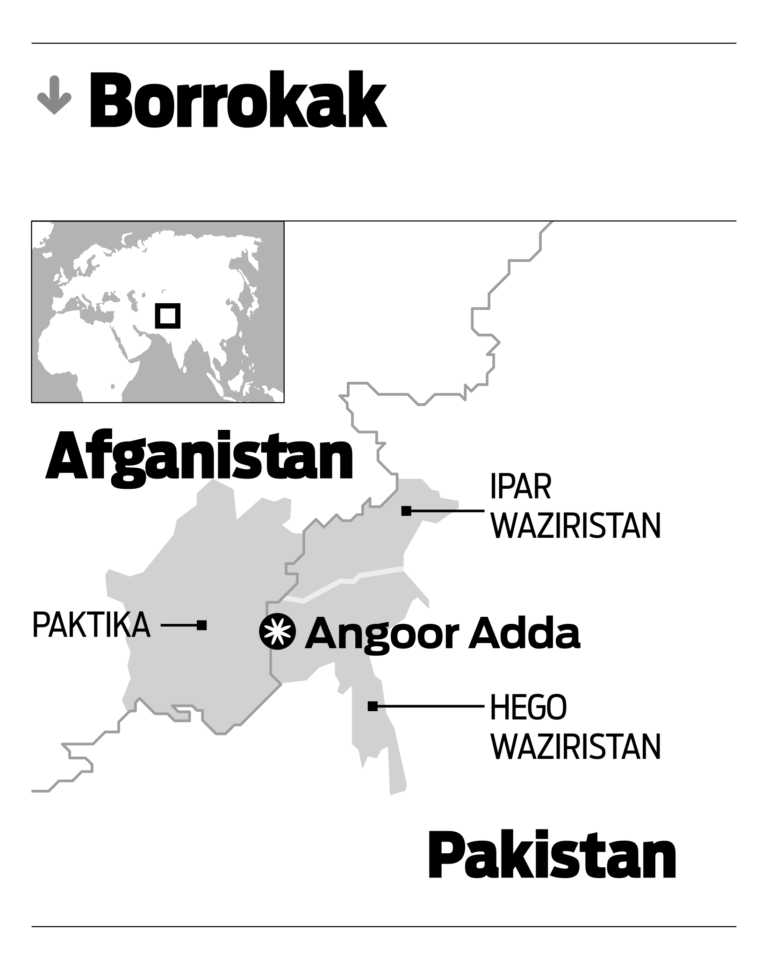
    People of Angoor Adda are restive because their movements are being regulated this winter. This defies the history of this South-eastern Afghan settlement bordering Pakistan. Regardless of who is in power in Afghanistan, borders with Pakistan remain difficult to manage.

    People living along the Durand Line separating Pakistan and Afghanistan are getting restive as Pakistan regulates movement along the Durand Line. They point to the unnecessary controls on the remote transiting points at Chaman, Torkham, Kharlachi, Spin Boldak and Angoor Adda.

    Of all these, Angoor Adda in the Afghan province of Paktika is of particular interest. The crossing here has traditionally allowed people from the nomadic Kuchi Afghan tribe passage across the border. The Kuchis nomads have roamed the region for centuries. As a thick blanket of snow enveloped Angoor Adda.

    Angoor Adda touches the country’s South-eastern border with Pakistan and is one of the many hinterlands of Afghanistan. Regardless of who is in power in Afghanistan, borders with Pakistan remain difficult to manage.

    Taliban takeover, increasing regulation and a bitter winter

    But movement across the border point on a high, arid plateau is getting increasingly regulated since the Taliban took over in Afghanistan in August. The tribal people have traditionally migrated across the borders below the plateau with their livestock in the winter months. The Kuchis inhabit areas on both sides of the border. This year’s winter is particularly bitter for both, man and animal.

    Fodder is getting scarce and their cattle face starvation. The pastoral Kuchi nomads need to take their livestock down the plateau. The tribal people depend on the cattle for their own living and they are anxious.

    The increasing regulation of their movements does not suit them. They feel it is a restriction because they don’t recognise the Durand Line, the international border demarcating Afghanistan and Pakistan. Generations have crossed the border without documents. Today’s Kuchis possess official documents from both, Afghanistan and Pakistan which makes it easy for them to cross borders, especially to migrate as the winter gets harsh on the Afghan side.

    Border conundrum or grapes of wrath?

    Angoor Adda, literally the grapes’ spot, is today the favourite transiting point for pomegranate merchants from Kandahar. The Pakistan government is regulating the international border because it does not want an influx of refugees inside the country. The regulation, of course, is causing resentment among traders. For instance, truckloads of pomegranates rot in Spin Boldak.

    Officials have spent the past week planning the transport of wheat into Afghanistan from Angoor Adda. But all the discussions seem frozen with the latest sowfall.

    To make life easier, the Pakistan government has embarked upon constructing a panagah (inn) in the Angoor Adda border point to facilitate the outgoing and incoming passengers. Pakistani newspaper, The News, quoted Hafeezullah Sial, Wazirastan’s Director of Social Welfare, saying that the proposed project would be provided free accommodation and food to facilitate them in their journey.


    Edited By Aditi Angelina Patro


    Picture: Pakistan, Waziristan, Angoor Adda

    Source: Wikimedia Commons.
    https://www.berria.eus/paperekoa/2011/020/001/2008-09 16/pakistanen_airez_sartu_nahi_izana_ukatu_dute_aebek.htm 

    No infrastructure planning can match civil society led collective action

    Policy makers and planners must acknowledge people’s action and take these into account in their planning efforts. People’s action can do wonders. The case of rivers being rejuvenated is an example.

    By Manoj Rai

    Acknowledgement is sweet. It is sweeter when it comes from none less than the Prime Minister of India.

    Recently Prime Minister Narendra Modi praised the collective efforts of people in rejuvenating the Noon river in Uttar Pradesh’s Jalaun district.

    “Noon river was on the verge of extinction. The river had virtually turned into a drain causing an irrigation crisis in the area. It was then that people made the resolution to restore it,” said the Prime Minister said.

    Alluding to his oft-repeated theme of sabka-prayas (collective effort), he added, “Noon river has been rejuvenated in very little time and at little cost with people’s effort. It is a brilliant example of how people’s will can do wonders. When we protect nature, it also protects us.”

    Like most man-made problems, water scarcities trouble the poor the most. As a result, many civil-society organisations began working towards revival of rivers and wells. In doing this, they reached help to the poor and marginalized by giving them access to water, so essential for a dignified life, and also to aid in their livelihoods (mostly agriculture).

    Communities are central to action

    Almost fifty years ago, Rajendra Singh established the Tarun Bharat Sangh to work to bring water to people in arid Rajasthan. People called him the waterman of India for the example he set. River rejuvenation became a popular subject of discourse in civil society and government circles. Planners had to look at it as the default way of avoiding massive irrigation canal infrastructure.

    What started as simple and small experiment by a handful of NGOs has become an important development sector in the country. Now, the government even has a separate ministry to facilitate the management of water issues in the country.

    Rivers are nature’s own infrastructure projects. A river benefits people as a lifeline. Life on planet earth would not be possible without water and rivers bring us water in many seen and unseen ways.

    Many individuals, groups and organizations are working tirelessly in different parts of the country for revivals of local rivers. Two factors are common to all such efforts for river revival. First, it is important to engage people and communities with the variety of actions required for river revival. People must contribute their bits in reviving their rivers. They must ‘own’ the process. Revival of river is also revival of relationship of mutual care that people have and can give to the river – and vice versa.

    A second important factor is the existence of ‘somebody’. One who can act as a catalyst cum facilitator for promoting, channelising, and sustaining people’s engagement. The person could be an individual, a leader, or a group of individuals or an organization.

    Government can replicate and scale up what civil society innovates

    This example also shows that government agencies need to further strengthen their capacities to facilitate people’s engagements. Most often. local NGOs play the role of the facilitator. NGOs know how to encourage and engage people. They also know how to maximize the results of minimum resources available at their disposal. That means, NGOs work with people to create a model of resource engagements, including engagements of the people. These models are ready to be replicated by government and other agencies.

    The government can play a very important role in scaling up such initiatives. It can provide appropriate resources and institutional supports. Governmental supports provide bigger platforms and institutional legitimacy to the projects.

    Rivers are lifeline of the people and people are protectors of the rivers. Engagement of people and communities are crucial for strengthening and sustenance of initiatives for river rejuvenation. Civil society sensitizes and makes people aware about means and methods for revival of the river. Thus, civil society collaboration with people with active support from the government are an effective way to revive the rivers to make available safe and needed water to every water.

    Several national and international organisations have been working in the area of water conservation and water management since the early 80’s, highlighting the importance of river revival or river rejuvenation. What started as a simple, small experiment and innovations by a few NGOs has today become an important development sector in the country. The government even has separate ministry to facilitate the management of water issues in the country.

    River revival, once a fancy topic is a reality today. Beyond civil society organisations, these terms are popular even among government and market organizations.


    Manoj Rai is a specialist in participatory research and has extensively worked with Union and State Governments and Civil Society Organizations for strengthening of the local government led local development initiatives in India. He has helped Central Asian governments address their sustainable development goals.


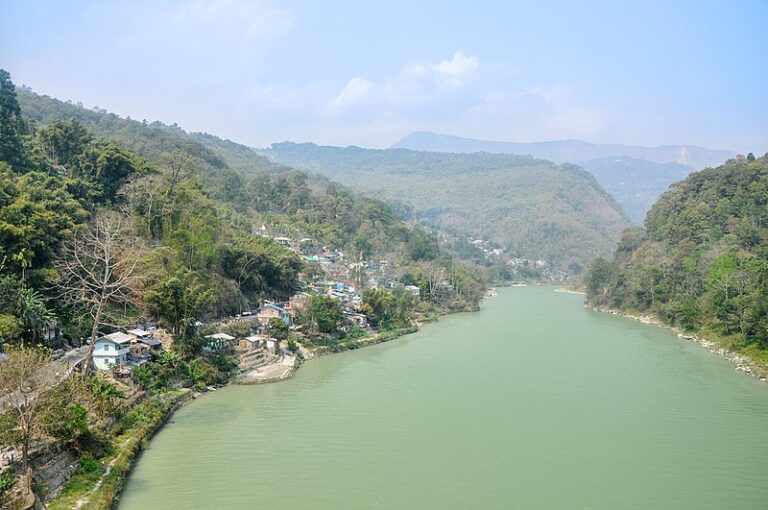
    Image: Picture of River Teesta taken from Teesta Bridge used for representative purposes. Photographed at Siliguri, West Bengal, India on 9 March 2019 by Joydeep
    Joydeep / Wikimedia Commons / CC BY-SA 4.0

    Lebanon crises increases suffering of migrant domestic workers

    Around 250,000 women migrant domestic workers in Lebanon from Bangladesh, Sri Lanka, Ethiopia and the Philippines earn as low as US$ 150 a month and work under slave-like conditions.

    The civil war in Syria and other political tensions in the Middle East hurt Lebanon’s economy. A World Bank report released in June 2021 warned that the country was facing an economic crisis, calling for reform of its “bankrupt economic system”.

    The Lebanon crises has increased the suffering of around 250,000 migrant domestic workers from Bangladesh, Sri Lanka, Philippines and Ethiopia. They carry work permits and earn as low as US$ 150 a month. The salary largely depends on the workers’ nationality, their experience and their language proficiency.

    These women migrant domestic workers (or WMDW) have been among the worst impacted by the recent economic crisis in Lebanon. Many have been left without a job. But those who remain in work are subject to Lebanon’s infamous “kafala” or sponsorship system. The system has been likened to modern slavery because it puts the women at the mercy of their employers.

    “The recruitment agencies and employers treat us as if we are human commodities!”, one worker in Beirut says. “Sometimes I am beaten and denied food. But I cannot choose to work somewhere else, or go back home because of my contract. My employer said ‘I bought you. Pay me US$ 2,000 and then you can leave wherever you want.’”

    Kafala system

    The kafala (or sponsorship) system emerged in the 1950’s to regulate the relationship between employers and migrant workers in many countries in West Asia. But it has turned into institutionalised exploitation.

    Migrant workers brought to the country to work under the kafla system cannot terminate their work contract without the consent of their employer. The system gives employers almost complete control over workers’ lives, and makes them vulnerable to all forms of exploitation and abuse. Their stay in the country becomes illegal if and when they escape.

    Once they enter the system, the workers’ most basic human rights – such as the right to work specific hours; the right to keep personal documents such as a passport or residence card; and the right to rest, move freely, communicate with friends and family, and enjoy other personal freedoms – are thrown to winds, not respected, according to human rights sources.

    The kafala system makes workers increasingly vulnerable to abuse. Workers sign a standard employment contract available only in Arabic language. Their owner, or kafeel is entitled, by a customary system, to cancel WMDW’s residency and deport them without prior notice. The kafeel is also entitled to change employment conditions, leaving the worker with no choice but to surrender to unfair terms of employment. This entitlement of the kafeel is also used to justify lowering of their wages and deficient living conditions.

    The kafeel covers travel costs, medical insurance and residence permits, and is the legal guardian of the worker. The country’s labour law do not contain adequate provisions to guarantee the basic human rights of WMDWs. On the contrary, the government practically generates, facilitates and foments the abuse of kafala workers.

    Where do WMDW come from?

    Lebanon is a middle-income country and one of the top nations relying on WMDW with over 250,000 WMDW working in private households. The largest proportion of WMDW comes from Bangladesh, the Philippines, Ethiopia and Sri Lanka, with the great majority being recruited through recruitment agencies.

    The recruitment of Bangladeshi workers has the lowest cost, as the travel costs are often deducted from their salaries. The recruitment of Filipino workers has the highest cost, as they are smuggled through Gulf countries after the ban that the Philippines had established against domestic work in Lebanon, a 2017 research study notes.

    Researchers have documented instances of injuries and psychological trauma among Sri Lankan WMDW returning home and documented widespread complaints concerning confiscation of travel documents and restriction of movement.

    Edited by Khushi Malhotra

    Image: IOM/Muse Mohammed.

    The irony of subsisting in the middle of an ocean of resources

    Islanders in a distant Maldivian atoll now benefit from a fish filleting platform installed to add value to the catch the fishermen bring.

    200 kilometres north of the country’s capital island, Male, the N Maalhendhoo island is one of the 14 inhabited islands of the larger Noono Atoll that consists of 71 islands in all.

    Unlike the other parts of Maldives, N. Maalhendhoo has more than just tuna fish. There are fusiliers and snappers too and island fishermen sell these fish to traders for very little money. The islanders always knew the trader’s excuses for not paying them enough were hollow, but there was very little they could do about it.

    Subsistence in the middle of the vast Indian Ocean and the resource it had put to their disposal was ironical. All it needed was a little investment. This is where the bank of Maldives stepped in.

    Bank of Maldives community fund

    The community fund programme of the Bank of Maldives on Monday commissioned a fish filleting platform in N. Maalhendhoo implemented in the island by Maldivian NGO, Society for Leaders Initiate Development (SLID).

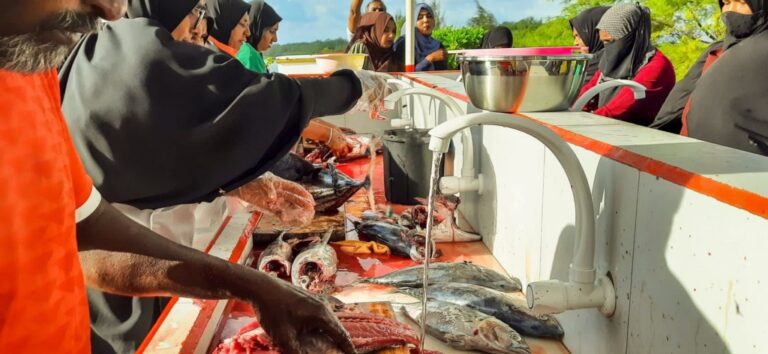
    The space is designed to be used during the day and night with appropriate lighting to sort out and fillet the catch of fish that the fishermen bring. The workstations can accommodate eight people. It has storage unit and a supply of clean water and drainage to remove waste water. Dustbins have been placed in the area.

    “The aim of the project was to find a solution for the difficulties that our fishermen faced. For the past years, we used the jetty at the harbour to carry out the filleting even in bad weather conditions,” a representative of the NGO said. “Through this project, we hope it benefits the islanders and the local fishermen to cut and sell fish in a more convenient manner.”

    The commissioning of the platform was preceded by a fish cutting contest.

    Resorts empty during COVID-19

    Now, the approximately 700 fisher-folks living in the island of N. Maalhendhoo have a first sign of commercial activity in their community. The excitement is palpable.

    All these years, young men and women from the island have had to look for work in the six resorts in the Atoll. There was very little work following the COVID-19 pandemic. The threat of the islands drowning with climate change has hindered any other infrastructure development in the atoll.

    The community fund of the Bank of Maldives has so far supported 60 projects across the various atolls of the island nation.