More

    Bangladesh: State Allowance for Clergy Triggers Mixed Reactions

    Prime Minister Tarique Rahman’s new government has launched monthly state allowances for clergy of all major faiths in Bangladesh, fulfilling a pre-election pledge – but the move has triggered sharply divided reactions.

    Barely a month after sweeping to power in a landslide victory on 12 February, Bangladesh Prime Minister Tarique Rahman’s Bangladesh Nationalist Party (BNP) government rolled out a landmark scheme that puts religious leaders on the state payroll. Speaking at the launch event in Dhaka, the Prime Minister declared: “This program seeks to recognise the sacrifices and services of religious leaders and ensure their financial well-being.”

    The initiative marks the first systematic attempt by any Bangladeshi administration to provide direct monthly financial support to clergy across the country’s major faiths. In a nation of more than 170 million people where roughly 90 per cent are Muslim, eight per cent Hindu and the remainder Buddhist, Christian and other minorities, the move is being watched closely for its potential to reshape the delicate balance between state and religion.

    Under the scheme, every mosque will receive 10,000 taka (US$81) per month. The sum is divided as 5,000 taka for the imam, 3,000 taka for the muezzin (prayer caller) and 2,000 taka each for khadems (caretakers). Head priests at Hindu, Buddhist and Christian places of worship will each receive 5,000 taka, while their assistants are entitled to 3,000 taka. Until now, religious leaders in Bangladesh have relied almost entirely on voluntary donations and community contributions for their livelihood.

    Financial Relief Welcomed by Religious Leaders

    The announcement has been greeted with enthusiasm by leaders of the country’s three largest faith communities. Mohiuddin Kasem, imam at Dhaka’s iconic Baitul Mukarram National Mosque, described the decision as “a positive step” and told UCA News he was “very pleased with this initiative and appreciate the government.” He expressed hope that the benefits would soon reach imams across the country.

    Hindu priest Subhash Chakraborty, who serves at Chanakutia Kalibari Temple on the outskirts of Dhaka, was equally positive. “Our priests live on a limited income, so it is sometimes difficult for us to manage our livelihood,” he said. “Receiving a monthly grant from the government will be helpful.”

    Sunanda Priyo, general secretary of the Bangladesh Buddhist Federation, echoed the sentiment. “Our religious leaders have not received much financial support from anywhere. Therefore, the state’s patronage is certainly a positive step,” he said.

    For many clergy, the allowance represents a tangible improvement in living standards. Traditionally, mosque committees support imams, Hindu priests depend on temple offerings, Buddhist monks receive donations from devotees, and Christian clergy are sustained by contributions from local believers. The new stipend is seen by supporters as long-overdue recognition of the vital spiritual and social roles these leaders play in their communities.

    Christian Clergy Politely Decline the Offer

    Not every faith group has embraced the scheme. Christian leaders, particularly from the Catholic Church, have respectfully declined to participate. Oblate Archbishop Bejoy N D’Cruze of Dhaka, president of the Catholic Bishops’ Conference of Bangladesh (CBCB), addressed the launch event and made the Church’s position clear. While appreciating the government’s gesture, he stated that the Church would not accept the allowance.

    Archbishop D’Cruze explained that Catholic priests have long relied on voluntary donations from the faithful. This tradition, he said, fosters a close spiritual relationship between priests and their communities and encourages a simple lifestyle free from state dependence. Father Joy Joseph Quiah, a parish priest in Rangamati district under the Chattogram Archdiocese, reinforced the view: donations and contributions from Catholics remain sufficient to meet priests’ needs.

    The Christian stance is not a rejection of government goodwill but a deliberate choice to preserve its independence, the community’s leaders say. At the same time, the Archbishop signalled openness to other forms of state assistance. The Church would welcome support for social and community development projects, including the construction and repair of infrastructure as well as stipends for poor students.

    Broader Significance and Future Possibilities

    The launch of the clergy allowance scheme comes at a politically significant moment. The BNP’s decisive election victory in February transformed the political landscape, and the rapid implementation of a pre-election promise underscores the new government’s commitment to its manifesto. By extending the benefit to clergy of all major faiths, the administration has signalled an inclusive approach to religious affairs in a country where faith plays a central role in daily life.

    Yet the mixed reactions highlight deeper questions about the relationship between the state and religious institutions, observers say. For the Muslim majority and the Hindu and Buddhist minorities, the allowance is viewed as practical recognition of service. For the Christian community, which forms a small but vibrant minority, the decision reflects a principled stand on self-reliance and autonomy.

    Observers note that the scheme could set a precedent for future state engagement with religious bodies. While the immediate focus remains on monthly stipends, the door has been left open for broader collaboration. The government has not ruled out additional support for religious institutions in areas such as education, healthcare and community welfare – areas where the Christian institutions, particularly Bangladesh’s Catholic Church has explicitly expressed interest.

    As the programme rolls out, its success will likely be measured not only by how many clergy benefit financially but also by how well it navigates the complex terrain of religious pluralism in Bangladesh.

    Image: Grok

    UN News: Fears Grow Over Global Food Supply as Strait of Hormuz Disruptions Threaten Trade Routes

    Rising geopolitical tensions around a vital maritime chokepoint are triggering global concern over food security, as disruptions in the Strait of Hormuz threaten supply chains already strained by conflict and climate pressures.

    Concerns are mounting over the stability of global food supplies as disruptions in the Strait of Hormuz – one of the world’s most critical shipping lanes – begin to ripple across international markets, according to reports cited on the United Nations news website, UN News.

    The narrow passage, through which roughly a fifth of the world’s oil supply flows, has increasingly become a flashpoint amid escalating geopolitical tensions. While its importance to energy markets is well established, experts now warn that prolonged instability could severely impact global food systems, particularly in import-dependent regions.

    A Chokepoint Under Pressure

    Recent developments in the Gulf have heightened fears of shipping disruptions, delays, and rising insurance costs for vessels navigating the Strait. Even temporary interruptions have the potential to send shockwaves across supply chains, affecting not just fuel prices but also the transportation of essential commodities, including grains and food products.

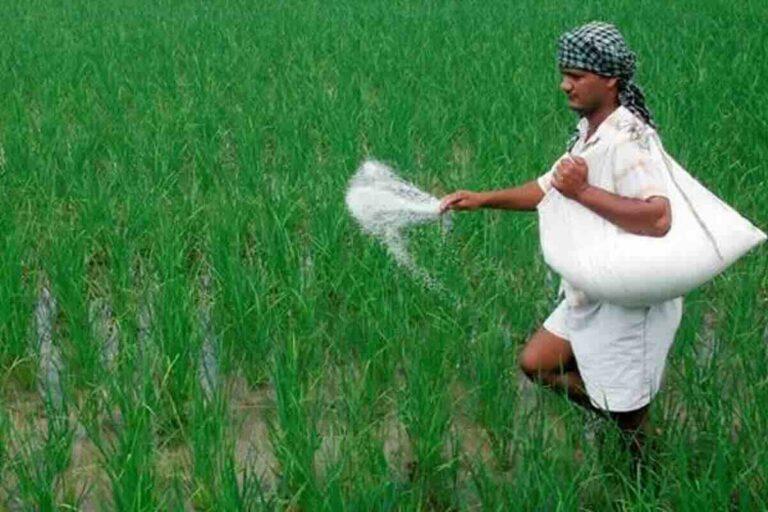
    The interconnected nature of global trade means that disruptions in energy flows often translate into increased costs for agricultural production and food distribution. Fertiliser production, heavily reliant on natural gas, is particularly vulnerable. Any spike in energy prices can push up the cost of fertilisers, thereby increasing food prices worldwide.

    According to UN analysts, the current situation is especially precarious given that global food systems are already under strain from multiple crises, including climate-induced crop failures, conflicts in key agricultural regions, and economic instability in developing countries, UN News says.

    Food-Importing Nations at Risk

    Countries in the Middle East, North Africa, and parts of Asia are among the most vulnerable to disruptions in the Strait of Hormuz. Many of these nations rely heavily on food imports and have limited domestic agricultural production due to water scarcity and arid climates.

    A disruption in shipping routes could delay deliveries of staple foods such as wheat, rice, and cooking oil, potentially triggering shortages and price hikes. For low-income populations, even small increases in food prices can have devastating consequences, pushing millions closer to hunger.

    The UN has warned that such disruptions could exacerbate existing food insecurity, particularly in regions already grappling with humanitarian crises. In fragile states, where governance systems are weak, rising food prices can also fuel social unrest and instability.

    Energy-Food Nexus Deepens Crisis

    The link between energy and food security is becoming increasingly evident. Rising oil prices lead to higher transportation costs, which in turn increase the price of food commodities. Additionally, energy-intensive agricultural processes – from irrigation to mechanised farming – become more expensive, further driving up production costs.

    The situation is compounded by the fact that many developing countries are still recovering from the economic fallout of the COVID-19 pandemic and ongoing conflicts. Currency depreciation in these countries makes imports more expensive, amplifying the impact of global price shocks.

    UN officials have stressed that the current tensions highlight the fragility of global supply chains and the urgent need for diversification and resilience-building in food systems.

    Calls for Diplomatic De-escalation

    Amid growing concerns, the United Nations has called for restraint and diplomatic efforts to de-escalate tensions in the region. Ensuring the reliability of key maritime routes, including the Strait of Hormuz, is seen as essential to maintaining global economic stability, the UN says.

    UN agencies are also urging countries to avoid export restrictions on food commodities, which could worsen the situation. During previous crises, such measures have led to panic buying and further price spikes in international markets.

    “There is a clear need for coordinated global action to prevent a food security crisis,” a UN spokesperson noted, emphasising the importance of keeping trade channels open and supporting vulnerable populations.

    Building Resilience for the Future

    The unfolding situation underscores the importance of strengthening local food production and reducing dependence on volatile international markets. Investments in sustainable agriculture, improved storage infrastructure, and regional trade cooperation are among the measures being advocated by experts.

    Climate change remains an underlying factor exacerbating global food insecurity. Extreme weather events, such as droughts and floods, continue to disrupt agricultural output, making the global food system more susceptible to external shocks like geopolitical conflicts.

    In this context, the disruptions in the Strait of Hormuz serve as a stark reminder of how interconnected and fragile the world’s food systems have become, the UN says.

    A Fragile Balance

    As tensions persist, the world watches closely, aware that even minor escalations could have far-reaching consequences. The Strait of Hormuz, long recognised for its strategic importance in energy markets, is now emerging as a critical node in the global food supply chain.

    With millions already facing hunger and food insecurity, the stakes could not be higher. The coming weeks will be crucial in determining whether diplomatic efforts can stabilise the situation or whether the world must brace for another shock to its already strained food systems.

    CRISIL: West Asia Conflict Exposes India’s Fertiliser Vulnerability, Raising Risks to Food Security and Farm Output

    CRISIL report warns that escalating tensions in West Asia have spotlighted India’s deep reliance on imported fertilisers and raw materials, putting farm productivity, input costs and national food security at serious risk.

    India’s fertiliser sector, the backbone of the country’s agricultural economy, is facing heightened uncertainty as the ongoing conflict in West Asia disrupts global supply chains. A detailed assessment by rating agency CRISIL has underscored how the geopolitical turmoil is exposing structural weaknesses that could threaten crop yields, inflate input costs and ultimately endanger food security for India’s vast population.

    With agriculture still employing nearly half of the country’s workforce and contributing significantly to GDP, any disruption in fertiliser availability or affordability carries far-reaching consequences. The CRISIL report paints a concerning picture: India depends on West Asia for 40-42 per cent of its total fertiliser imports, a reliance that becomes even more pronounced for key nutrients.

    Heavy Reliance on West Asian Supplies

    The dependence is particularly acute for urea, the most widely used fertiliser in India. Nearly 64.8 per cent of urea imports originate from West Asia, while the region also supplies over one-third of diammonium phosphate (DAP) imports. Beyond finished products, the conflict is affecting the flow of critical raw materials such as liquefied natural gas (LNG), ammonia, sulphuric acid and rock phosphate – all essential for domestic manufacturing.

    India’s fertiliser value chain remains heavily import-dependent, with around 69 per cent of its total value derived from foreign sources. Imported feedstock alone accounts for 44.5 per cent of the value used in production. For urea, which dominates the market, natural gas constitutes nearly 80 per cent of raw material costs, making the sector extremely sensitive to energy price shocks and supply disruptions.

    Pressure on Domestic Production and Input Costs

    Fertilisers consume 31 per cent of India’s total LNG usage, positioning the sector as one of the largest gas consumers in the economy. As global LNG prices surge amid the West Asia conflict, production costs are climbing rapidly. Even though the government has stepped in by prioritising gas allocation to fertiliser plants – raising it to 95 per cent of previous consumption levels – the report cautions that prolonged disruptions could still lead to output shortfalls.

    Current fertiliser stocks stand at levels sufficient for only about 2.5 months of consumption. While supplies are being directed towards the ongoing kharif season, any extended conflict could hinder fresh procurement and create shortages ahead of the rabi planting cycle. The dual impact of higher prices and potential scarcity is likely to force farmers to either pay more or cut back on application, both scenarios detrimental to productivity.

    Rising fertiliser costs are also expected to swell India’s import bill, widen the current account deficit and place additional strain on government finances through higher subsidy outlays. These pressures could feed into broader inflationary trends, affecting not just rural households but the entire economy.

    Impact on Farm Productivity and Food Security

    The agriculture sector now confronts a double challenge: escalating input costs on one hand and the risk of actual supply shortages on the other. Lower fertiliser availability directly undermines crop yields, while elevated prices may discourage optimal usage, leading to nutrient deficiencies in the soil. Urea alone accounts for about 45 per cent of total fertiliser consumption in India, a pattern that has already contributed to nutrient imbalance and over-dependence on a single product.

    Experts warn that sustained disruptions could have cascading effects on rural incomes, food price stability and overall agricultural growth. Given India’s large population and its heavy reliance on domestic food production, fertiliser security has become virtually synonymous with food security. Any shortfall in output risks higher food inflation and reduced availability of staples, particularly during critical cropping seasons.

    The CRISIL analysis highlights that the current crisis is not merely a short-term supply glitch but a symptom of deeper vulnerabilities built into the system over years of import dependence and limited domestic diversification.

    Long-Term Reforms Needed for Self-Reliance

    To mitigate these risks, the report calls for urgent structural reforms. Key recommendations include diversifying import sources away from West Asia, securing long-term supply agreements for raw materials and accelerating the expansion of domestic production capacity.

    There is also a strong emphasis on exploring alternative technologies. Several fertiliser companies have already signed long-term contracts for green ammonia, aligning with the National Green Hydrogen Mission. Shifting towards such environmentally friendly options could gradually reduce dependence on imported natural gas and fossil fuel-based feedstocks.

    Additionally, tapping into domestic reserves of phosphate and potash, along with promoting balanced fertiliser use that moves beyond urea dominance, are seen as essential steps. These measures would not only bolster resilience against future geopolitical shocks but also support sustainable agricultural practices in the long run.

    As the West Asia situation continues to evolve, the fertiliser crisis serves as a stark reminder of the interconnected nature of global geopolitics and India’s domestic food systems. Without swift action on diversification and capacity building, the country’s agricultural growth and the livelihoods of millions of farmers could face prolonged uncertainty.

    Policymakers, industry stakeholders and farmers alike are now watching closely to see how the government balances immediate supply management with the larger goal of achieving genuine self-reliance in fertilisers. The coming months will be critical in determining whether India can turn this vulnerability into an opportunity for building a more robust and secure agricultural foundation.

    Race Against Heat: Maldives Urged to Pause Dredging as Coral Bleaching Threat Returns

    As sea temperatures climb and the US National Oceanic and Atmospheric Administration issues a bleaching watch, a Maldivian NGO warns that unchecked coastal development could push the nation’s iconic reefs past recovery.

    Maldives Resilient Reefs (MRR), a local non-governmental organisation dedicated to protecting the archipelago’s coral ecosystems, has issued an urgent appeal to the Maldives government. As of 11 April 2026, the US National Oceanic and Atmospheric Administration (NOAA) Coral Reef Watch has placed the Maldives under a Coral Bleaching Alert Level: Watch. While immediate risk remains low, forecasts predict a sharp escalation within one to 12 weeks, potentially reaching Alert Level 1, when significant bleaching becomes likely.

    MRR is calling for an immediate temporary halt to all dredging and land-reclamation projects until reef conditions normalise, followed by a two-week buffer period – or four weeks if stress is detected. The group has also urged tourism operators to suspend sand pumping and beach replenishment, insisted on full treatment of sewage before ocean discharge, and asked the public to avoid anchoring damage or unnecessary physical contact with reefs while reporting any signs of bleaching to the Marine Research Institute.

    Understanding the Science – and the Stakes

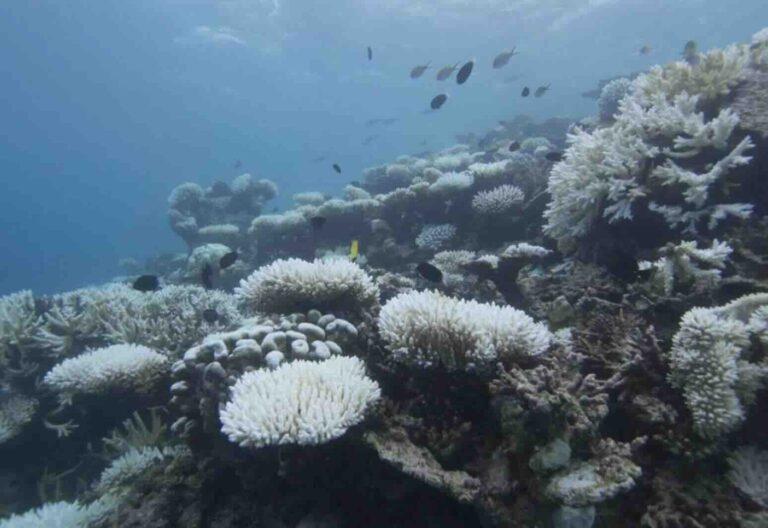
    Coral bleaching occurs when prolonged elevated sea-surface temperatures force corals to expel the symbiotic algae (zooxanthellae) that provide up to 90 per cent of their energy and give them colour. The corals turn ghostly white and, if stress persists, starve and die. In the Maldives, a nation whose 1,200 islands sit atop one of the world’s largest atoll systems, healthy reefs are not merely scenic backdrops; they are the foundation of tourism, coastal protection, fisheries and biodiversity.

    The current watch comes barely two years after the fourth global mass bleaching event of 2023–2024, which delivered record heat stress to Maldivian waters. Sea-surface temperatures peaked at 31.5 °C, with degree-heating weeks exceeding the mortality threshold for many species. In central atolls, live hard-coral cover plunged more than 40 per cent on average; one lagoon reef in Ari Atoll lost 57 per cent, with branching and tabular Acropora species hit hardest. Southern atolls such as Huvadhoo showed greater resilience, with some sites actually gaining 12–23 per cent coral cover, dominated by hardy Acropora and Pocillopora. Yet scientists warn that repeated events are eroding the system’s overall recovery capacity.

    Echoes of Devastating Past Events

    The Maldives has endured three previous mass-bleaching crises in living memory: 1998, 2016 and 2023. The 1998 El Niño event was catastrophic, slashing shallow-water coral cover from around 40 per cent to less than 2 per cent in places; full recovery took nearly a decade. The 2016 event again wiped out roughly 70 per cent of corals in some areas, particularly fast-growing branching species. Even after partial rebound, many reefs shifted toward more heat-tolerant but slower-growing massive corals such as Porites and Pavona.

    Recovery has never been uniform. Oceanic reefs and uninhabited islands with lower human pressure have shown faster rebound, while reefs near resorts and inhabited islands – subject to dredging, nutrient runoff and physical damage – have lagged. The 2024 event confirmed this pattern: central atolls suffered far more than southern ones, underscoring how local stressors amplify global warming.

    Local Actions Can Buy Time

    MRR’s call is grounded in evidence that additional local pressures can tip already-stressed corals into mortality. Dredging and reclamation stir up sediment, increasing turbidity and smothering polyps. Untreated sewage adds nutrients that fuel algal overgrowth, further weakening reefs. Sand pumping for beach nourishment does the same. By pausing these activities during the critical heat window, the government can reduce cumulative stress and give corals a fighting chance.

    Tourism, which contributes nearly 30 per cent of GDP and depends almost entirely on healthy reefs for diver and snorkeller appeal, stands to lose the most if reefs degrade further. Yet the same industry can become part of the solution by voluntarily halting beach works and supporting monitoring. Public participation – reporting bleached colonies and practising reef-friendly behaviour – adds another layer of protection.

    A Narrow Window for Resilience

    The Maldives is on the front line of the global climate crisis. With 80 per cent of its land less than one metre above sea level, the country already faces existential threats from rising seas and coastal erosion. Coral reefs act as natural breakwaters; their loss would accelerate island instability and undermine the very tourism economy that funds adaptation.

    MRR’s appeal arrives at a pivotal moment. While the 2024 bleaching left scars, pockets of resilience prove that Maldivian reefs are not doomed – provided they are given breathing space between heatwaves. Halting non-essential coastal works now is a low-cost, high-impact measure that buys time until global emissions are curbed, MRR argues.

    For an archipelago whose identity, economy and survival are woven into its coral gardens, the choice is stark: act swiftly today, or watch the colour – and the life – drain from the reefs that define the Maldives.

    Image: The University of Queensland via Google Images

    Spain Grants Legal Status to 500,000 Undocumented Migrants in Sweeping Amnesty Programme

    In a landmark decision bucking Europe’s hardening stance on migration, Spain’s government has approved a mass regularization programme to grant legal status to nearly 500,000 undocumented migrants, framing it as both an economic necessity and a moral imperative.

    Spain’s socialist-led government has finalised plans to legalise the status of approximately 500,000 undocumented migrants, offering them renewable residence and work permits in one of Europe’s most ambitious regularization drives in recent years. The move, approved by Spain’s Council of Ministers on Tuesday via a royal decree, aims to integrate long-term residents into the formal economy while addressing acute labour shortages in an ageing society.

    Extraordinary Regularisation Process

    The programme will provide eligible migrants with a one-year renewable residence permit that includes full work rights, a Social Security number and access to regional public healthcare. Applications open on April 16 and run until June 30, coinciding with a planned visit by Pope Leo, during which the pontiff is expected to address migrant issues.

    To qualify, applicants must prove they have lived continuously in Spain for at least five months prior to January 1, 2026 and be of legal age and possess a clean criminal record. Those with pending international protection applications before the end of 2025 are also included. Family members living in the same household – spouses, partners or first-degree relatives – can apply jointly. The government has tightened criminal-record checks, giving applicants one month to obtain certificates from their countries of origin or allowing Spanish authorities to request them diplomatically.

    Officials estimate up to 750,000 applications could be filed, with roughly 500,000 expected to succeed. The Funcas think-tank puts the total undocumented population at around 840,000, the vast majority from Latin America, though communities from Bangladesh, Morocco and sub-Saharan Africa are also prominent. Many work informally in agriculture, construction, delivery services and elder care.

    Sánchez’s Call for Justice and Economic Reality

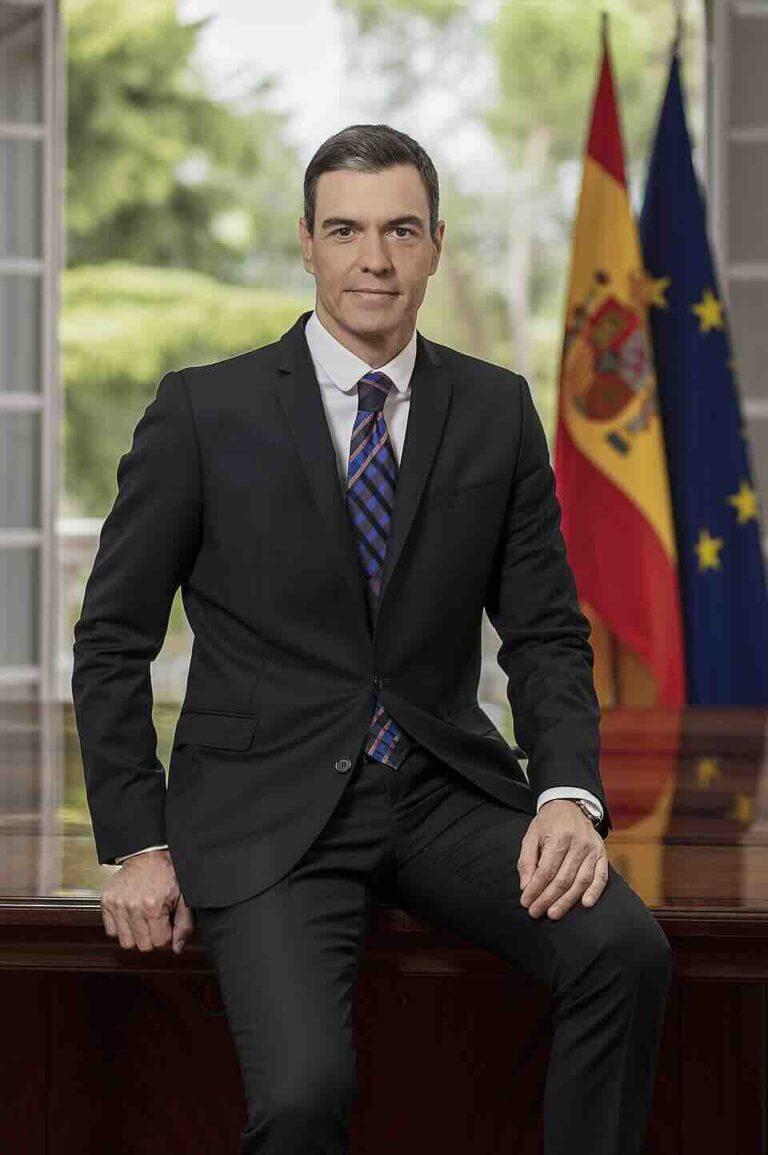
    Prime Minister Pedro Sánchez described the measure as “an act of justice” and a practical necessity. In an open letter posted on social media, the socialist leader wrote that the programme “seeks to acknowledge the reality of nearly half a million people who already form part of our everyday lives”. He emphasised that these migrants “help build the rich, open and diverse Spain that we are and to which we aspire” and are essential to sustaining the economy and public services in a country with a rapidly ageing population.

    Inclusion, Social Security and Migration Minister Elma Saiz hailed the decree as “a major milestone” with “threefold legitimacy: social, political and economic”. She noted that the beneficiaries “live among us, whose children go to school with our children, who bring life to our towns and our streets, and who, starting today, will be able to enjoy full rights with guarantees and fulfil their obligations”.

    The initiative originated as a Popular Legislative Initiative backed by more than 600,000 citizens and hundreds of NGOs, trade unions, business associations and, importantly, the Catholic Church. Sánchez credited these grassroots efforts for bringing the proposal to parliament before it was enacted by decree after the bill stalled.

    Support from the Left, Fierce Opposition from the Right

    The announcement has exposed deep divisions in Spanish politics. The centre-right People’s Party (PP), which initially supported the idea in a 2024 parliamentary vote, now vows to challenge the decree in court. PP officials argue it rewards illegality, creates a “pull factor” for future irregular migration and strains public services. Deputy Secretary Alma Ezcurra called it “reckless” and “bad for those who have followed the law”.

    Far-right Vox leader Santiago Abascal went further, accusing Sánchez of “hating” Spaniards and “accelerating an invasion”. Vox has promised legal action and political retaliation.

    In contrast, the Catholic Church has warmly endorsed the plan, viewing it as aligned with humanitarian values. Migrant communities have reacted with celebration; in Barcelona’s Bangladeshi neighbourhood, residents gathered to mark what many see as a life-changing opportunity. One Bolivian graphic designer, Ricardo, told reporters the programme would provide stable employment, better living standards and increased tax contributions to the state.

    Economic Boost and Contrast with European Trends

    Spain’s seventh regularization in the past 40 years comes at a time when much of Europe and the United States are tightening borders. The previous major amnesty, in 2005 under a Socialist government, granted papers to 577,000 people. Successive governments – both Socialist and conservative – have used similar tools to manage irregular migration.

    Analysts say the programme will channel informal workers into the formal economy, boosting tax revenues and social security contributions. With labour shortages in key sectors, the government argues that legalising these residents will support growth, innovation and the sustainability of pensions and healthcare. Migrants already fill vital roles caring for the elderly, harvesting crops and staffing delivery platforms.

    Yet challenges remain. Opposition parties warn of unforeseen fiscal costs and integration pressures. Questions linger over enforcement and the risk that the measure could encourage further irregular arrivals despite the strict eligibility cut-off.

    For the migrants themselves, the change promises access to banking, contracts, education and healthcare – rights long denied. Many have built lives in Spain over years, raising families and contributing quietly to local economies.

    A Beacon or a Risk?

    As Europe grapples with populist anti-migration sentiment, Spain has positioned itself as a counterpoint. Minister Saiz declared the country would remain “a beacon” against far-right policies. Whether the programme delivers on its promises of economic vitality and social cohesion will be closely watched both at home and abroad.

    The regularization process is expected to conclude by mid-year, with successful applicants transitioning to standard residency pathways after the initial 12 months. For Spain, the decision reflects a pragmatic acknowledgment that undocumented migrants are not a temporary phenomenon but an integral part of the nation’s present and future.

    IMF Warns Continued War on Iran Could Trigger Global Recession

    IMF flags severe downside risks from escalating Middle East conflict as commodity prices surge and growth forecasts are slashed during Spring Meetings in Washington.

    The International Monetary Fund has delivered a blunt warning to the world economy: if the war on Iran continues, the risk of a full-blown global recession will rise sharply. Speaking at the IMF’s 2026 Spring Meetings in Washington, DC, officials painted a picture of deepening uncertainty caused by persistent conflict, higher energy costs and supply-chain disruptions that are already reshaping growth and inflation projections worldwide.

    Global growth is now forecast to slow to just 3.1 per cent in 2026, while inflation is expected to climb to 4.4 per cent this year before easing only modestly to 3.7 per cent in 2027. The inflation figure represents a 0.6 percentage-point upward revision from the IMF’s January forecast, driven almost entirely by higher commodity prices linked to the ongoing hostilities.

    Global Growth Downgraded Amid Conflict

    The downgrade in the global outlook comes as the IMF explicitly ties the economic damage to the continuation of military action against Iran. Higher commodity prices – particularly energy – are feeding directly into broader cost pressures, while uncertainty is weighing on investment and trade. The Fund highlighted that prolonged conflict in the Middle East is amplifying downside risks that were already present in an environment of high debt, geopolitical tensions and uneven post-pandemic recovery.

    IMF Chief Economist Pierre-Olivier Gourinchas emphasised that the baseline scenario still assumes some containment of the conflict, but warned that escalation or prolongation would significantly worsen the picture. “The risks are clearly tilted to the downside,” he noted during the Spring Meetings.

    Inflation Surge Driven by Commodity Prices

    The upward revision to inflation forecasts is one of the most immediate consequences. With oil and other energy prices elevated by the conflict, central banks face a more complicated balancing act between supporting growth and keeping price pressures in check. The IMF’s projections show inflation peaking at 4.4 per cent globally in 2026 before declining only gradually.

    Gourinchas made clear, however, that immediate interest-rate hikes are not required. “Central banks do not need to raise interest rates immediately,” he stated, signalling that policymakers still have some room to respond flexibly depending on how the conflict evolves. This stance reflects a delicate policy tightrope: supporting demand while guarding against imported inflation from energy markets.

    Hardest Hit Regions Face Sharp Slowdowns

    The Middle East itself is bearing the brunt of the economic fallout. Growth in West Asia and North Africa has been cut to a meagre 1.1 per cent for 2026, reflecting direct disruption to energy infrastructure, trade routes and investor confidence. Spillover effects are already visible further afield.

    China’s growth forecast has been reduced to 4.4 per cent, as the world’s second-largest economy contends with weaker global demand and higher input costs. The slowdown in China, in turn, affects commodity exporters and global supply chains, creating a feedback loop that the IMF says could intensify if the conflict drags on.

    Major Economies Brace for Spillover Effects

    Developed economies are not immune. The United Kingdom’s growth forecast stands at just 0.8 per cent, while the eurozone is expected to slow to 1.1 per cent. Both regions are vulnerable to higher energy import bills and weaker export demand from affected trading partners.

    The ripple effects extend to emerging markets as well. A separate assessment by the Asian Development Bank, released around the same time, underscored the regional pressure.

    For instance, India’s GDP growth is now projected to moderate to 6.9 per cent in fiscal year 2026 – down from an earlier 7.6 per cent estimate – largely due to heightened global uncertainty, elevated energy prices and volatile trade and financial conditions stemming from the Middle East conflict. Inflation in India is expected to rise to 4.5 per cent before easing, while the current account deficit widens on higher crude oil imports.

    The IMF noted that its forecast was based on an “early stabilisation scenario” for the Middle East that now looks increasingly optimistic. Recent developments point to more persistent disruptions, which could further dampen exports, capital flows and rural demand across Asia.

    Policy Response: No Immediate Rate Hikes Needed

    Despite the gloomier forecasts, the IMF is urging a measured policy response. Gourinchas’s comment on interest rates suggests that monetary authorities should avoid knee-jerk tightening that could tip fragile economies into recession. Instead, the focus is likely to remain on targeted fiscal support, supply-side measures and efforts to stabilise energy markets.

    The Fund also flagged two broader human costs that often accompany economic slowdowns: rising job losses and an increase in global hunger. These social risks are particularly acute in import-dependent developing countries where food and fuel prices are already climbing.

    Looking ahead, the IMF’s message is clear. While the baseline projections are not yet catastrophic, the continuation of the war on Iran represents a major threat to global stability. A swift de-escalation would allow commodity prices to normalise, restore confidence and prevent the current slowdown from tipping into outright recession.

    Yet, IMF says, with tensions still high and no immediate resolution in sight, policymakers, businesses and households must prepare for a more challenging economic environment. The Spring Meetings have served as a stark reminder that geopolitical conflict is no longer a distant risk – it is actively reshaping the global economic outlook in real time.

    Image: Wikimedia

    Bangladesh: Banks’ CSR Spending Jumps 34% to Tk1.98 Billion

    Private lenders drive a sharp rise in social spending as Bangladesh’s banks channel higher profits into education, healthcare and community development.

    Bangladesh’s scheduled banks significantly stepped up their corporate social responsibility (CSR) activities in the second half of 2025, with total expenditure reaching Tk1.98 billion – a 34.42 per cent increase from the Tk1.47 billion spent in the first half of the year.

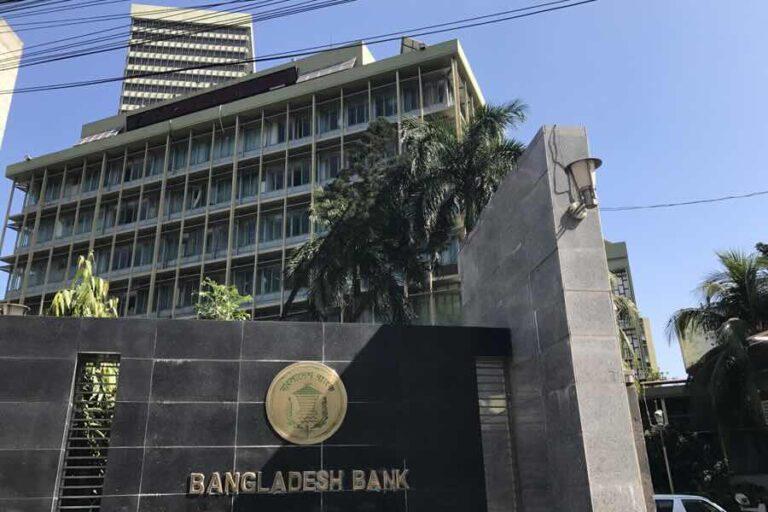
    The absolute rise of Tk506.6 million reflects stronger earnings across the sector and a growing recognition among financial institutions that visible social investments can strengthen public trust and corporate reputation. According to the latest data released by Bangladesh Bank, private commercial banks once again led the charge, while state-owned institutions lagged far behind.

    Surge Driven by Improved Profitability, Strategic Focus

    The July-December 2025 period marked a clear acceleration in CSR commitments. Bankers attribute the jump to healthier bottom lines after several quarters of recovery and a deliberate shift toward programmes that deliver quick, tangible results for communities. Private banks, in particular, have intensified efforts to position themselves as responsible corporate citizens amid rising competition and heightened public scrutiny of the financial sector.

    Of the 43 private commercial banks (PCBs), 36 actively participated in CSR initiatives, contributing Tk1.57 billion – accounting for a dominant 79.16 per cent of the national total. Seven out of nine foreign commercial banks spent Tk330.2 million (16.69 per cent), while only three of the six state-owned commercial banks engaged, disbursing a modest Tk80.9 million (4.09 per cent). Specialised banks recorded negligible contributions.

    Islamic Shariah-based banks also showed meaningful engagement, with seven out of ten institutions allocating Tk296.5 million – equivalent to 14.99 per cent of the overall sectoral CSR outlay – drawn primarily from net profits after tax and other permissible sources.

    Education, Healthcare Remain Top Priorities

    The sectoral allocation of funds underscores a clear preference for areas that produce immediate and visible social impact. Education received the largest share at Tk642.4 million, or 32.47 per cent of total CSR spending. Banks supported scholarships, distributed educational materials and invested in academic infrastructure, helping thousands of students from underprivileged backgrounds.

    Healthcare followed closely with Tk575.2 million (29.07 per cent), funding medical camps, hospital equipment, free treatment programmes and health awareness campaigns. Together, these two sectors absorbed more than 61 per cent of all CSR resources, highlighting the banking industry’s strategic focus on human capital development.

    In contrast, spending on environment and climate change mitigation and adaptation stood at Tk292.9 million – just 14.81 per cent of the total – the lowest among major categories. The remaining Tk468 million (23.65 per cent) went to other areas, such as disaster relief, sports, culture and infrastructure support.

    Private Banks Lead; State-Owned Lenders Lag

    The dominance of private and foreign banks in CSR reflects both their financial capacity and market positioning. With stronger profitability and greater operational flexibility, private commercial banks have been able to scale up programmes that directly enhance brand equity and customer loyalty. Foreign banks, though fewer in number, have brought international best practices and focused funding on high-impact projects.

    State-owned commercial banks, however, continue to trail despite their vast branch networks and public mandate. Their limited participation – only half the institutions engaged – suggests internal constraints, including tighter budgetary controls and competing priorities. This gap has drawn quiet concern from regulators who view CSR as an essential tool for inclusive growth and financial stability.

    Environmental Spending Lags as Climate Risks Rise

    While banks have made notable strides in social sectors, their relatively modest investment in environmental and climate initiatives stands out as an area requiring urgent attention. Bangladesh remains one of the most climate-vulnerable nations in the world, with frequent floods, cyclones and rising sea levels threatening both lives and livelihoods. Experts note that future CSR strategies must evolve toward more structured, impact-driven programmes that address climate resilience, sustainable agriculture, renewable energy and green financing.

    Bangladesh Bank has consistently encouraged banks to integrate CSR into their core business strategies rather than treating it as an optional add-on. The central bank’s latest report signals that institutions are responding to this guidance, yet the data also reveals scope for more balanced and forward-looking allocations.

    Looking ahead, analysts expect CSR spending to continue its upward trajectory as the banking sector consolidates post-pandemic recovery and prepares for stricter environmental, social and governance (ESG) reporting requirements. Banks that adopt measurable, long-term CSR frameworks – particularly in climate adaptation and sustainable development – are likely to gain a competitive edge in both domestic and international markets.

    Banking leaders say that the latest figures from Bangladesh Bank therefore represent more than a statistical uptick; they signal a maturing understanding within the financial sector that responsible citizenship is not just good ethics but sound business strategy. They say that as Bangladesh navigates the dual challenges of economic growth and climate vulnerability, the banking industry’s CSR performance will remain a key barometer of its commitment to inclusive and sustainable development.

    Pakistan Rated ‘Repressed’ for Civic Space as Authorities Intensify Crackdown on Dissent

    Global rights group Civicus Monitor has rated Pakistan’s civic space “repressed,” citing relentless crackdowns on activists, journalists and protesters more than two years after the coalition government took power.

    Pakistan’s civic freedoms have come under sharp international scrutiny following a fresh assessment by the global alliance Civicus. The organisation’s Civicus Monitor has maintained Pakistan’s civic space rating as “repressed” since 2018, but a new research brief warns that the situation has regressed further, particularly since the controversial February 2025 general elections. Authorities stand accused of using counter-terrorism laws, sedition charges and digital restrictions to silence critics, while failing to address longstanding issues such as enforced disappearances.

    The rating places Pakistan among nations where freedoms of association, peaceful assembly and expression are systematically curtailed, despite constitutional guarantees and the country’s ratification of the International Covenant on Civil and Political Rights (ICCPR) in 2010.

    Crackdown on Political Opposition

    Civicus Monitor highlights a systematic effort to crush the political opposition following the February 2025 polls. Former prime minister Imran Khan remains imprisoned on a 2023 graft conviction and was barred from contesting. His Pakistan Tehreek-e-Insaf (PTI) party was stripped of its election symbol, forcing candidates to run as independents. The party faced a near-total media blackout, bans on public rallies and widespread arrests of workers and supporters during the campaign period.

    Josef Benedict, Asia researcher for Civicus, said the government under Prime Minister Shehbaz Sharif has “escalated its repression of activists, harassing those who defend human rights and silencing critical voices.” The brief notes that arbitrary detentions, harassment and intimidation of PTI members continued even after polling day, contributing to a climate of fear that has stifled legitimate political activity.

    Relentless Targeting of Baloch and Ethnic Minority Activists

    A particularly alarming aspect of the regression is the systematic crackdown on activists from Pakistan’s ethnic minorities, especially the Baloch. The Baloch Yakjehti Committee (BYC), a peaceful grassroots movement led by figures such as Dr Mahrang Baloch, has mobilised thousands demanding an end to enforced disappearances and greater accountability in Balochistan.

    Civicus has documented repeated bans on BYC gatherings, prolonged detentions of protesters and the use of vague laws to criminalise their peaceful demands. Similar patterns of intimidation have been reported against Pashtun activists. The UN Human Rights Committee has raised serious concerns over frequent cases of enforced disappearances, harassment, threats, torture and killings of rights defenders perceived as critical of the government or security forces.

    Human rights defenders including Asad Iqbal Butt and Imaan Zainab Mazari have also faced persecution under criminal defamation, counter-terrorism and sedition laws, creating a broad chilling effect across civil society.

    Media Under Siege and Digital Restrictions Tighten

    Journalists continue to bear the brunt of the crackdown. Prominent figures such as Imran Riaz Khan, Matiullah Jan and Hamid Mir have been subjected to arrests, harassment and physical attacks. Pakistan slipped to 158th out of 180 countries in the 2025 World Press Freedom Index, reflecting growing coercion and censorship of media outlets critical of the government, intelligence agencies or the military.

    The Pakistan Electronic Media Regulatory Authority has suspended television licences and forced channels off air for airing dissenting views. At the same time, the Prevention of Electronic Crimes Act (PECA) is routinely used to target online activists. Authorities frequently block social media platforms and impose internet shutdowns to quell dissent, further limiting citizens’ access to information.

    In Islamabad, a new law has expanded the grounds on which public gatherings can be banned – including any event deemed likely to “disrupt daily activities.” Penalties for participating in an “unlawful assembly” have jumped from six months to three years in prison, giving officials sweeping powers to suppress protest.

    Government Urged to Reverse Course

    Civicus Monitor has called on Prime Minister Shehbaz Sharif’s government to immediately halt the harassment of activists and journalists and to end the crackdown on peaceful protests. “This crackdown on freedoms must stop,” Benedict stressed. “The government must reverse course to protect the rights of activists and allow them to work without fear, interference or retaliation.”

    The alliance has also demanded that restrictive laws be revised or repealed to bring them in line with Pakistan’s ICCPR obligations and constitutional protections. It insists that when excessive force is used against protesters, those responsible must be held accountable.

    The research brief further notes the government’s failure to respect freedom of association and its continued inaction on the issue of enforced disappearances, both of which have deepened public distrust and undermined the enabling environment civil society requires to function.

    Warning for Democratic Backsliding

    Two years into the current coalition government’s tenure, the Civicus assessment paints a picture of a country moving in the opposite direction of its international human rights commitments. While the authorities maintain that measures are necessary for national security and public order, the documented pattern of repression – spanning political parties, ethnic movements, media outlets and digital platforms – suggests a broader strategy to stifle independent voices.

    Rights groups warn that without urgent reforms, Pakistan risks further isolating itself internationally and deepening domestic instability. The Civicus Monitor brief serves as both a record of regression and a clear roadmap for the government to restore civic space before the situation deteriorates further.

    Iran War Could Plunge 32 Million into Poverty, Warns United Nations

    UNDP analysis reveals a ‘triple shock’ of surging energy costs, food price spikes and stalled growth that risks erasing years of development progress across 162 countries.

    The United Nations Development Programme (UNDP) has issued a stark warning that the ongoing war in Iran could push an additional 32 million people worldwide into poverty, with the heaviest burden falling on developing nations already struggling with limited fiscal resources.

    In its policy brief released on Monday, the UNDP described the conflict as “development in reverse”, cautioning that even a fragile ceasefire may not prevent long-lasting economic damage. The report sets out three scenarios based on the duration and intensity of disruptions to global energy markets. In the worst-case projection – six weeks of major disruption to oil and gas production followed by eight months of persistently higher costs – as many as 32.5 million people globally could fall below the upper-middle-income poverty line of $8.30 per person per day, as defined by the World Bank.

    Triple Shock Hits Global South Hardest

    The UNDP identifies a “triple shock” confronting the world economy: soaring energy prices, rising food costs and weaker overall growth. Energy prices have surged since the first US-Israeli airstrikes on Tehran in late February, exacerbated by Iran’s closure of the Strait of Hormuz, a critical chokepoint for roughly one-fifth of global oil supplies. The ripple effects have extended to fertiliser production and international shipping, creating what experts term a “food security timebomb” for poorer countries.

    UNDP Administrator and UN Under-Secretary-General Alexander De Croo, the former prime minister of Belgium, said the human cost is particularly heartbreaking. “A conflict like this is development in reverse. Even if the war stops, and a ceasefire is obviously very, very welcome… You will see an enduring impact, especially in the poorer countries, where you push people back into poverty,” he stated. “The people being pushed into poverty are very often the people who used to be in poverty, got out of it, and are now being pushed back.”

    The analysis, which employs Global Trade Analysis Project (GTAP) modelling, shows the shock is not confined to the Middle East. It reaches 162 countries, with half the projected global increase in poverty concentrated in 37 net energy-importing nations spanning the Gulf region, sub-Saharan Africa, Asia and small island developing states. These countries have the least fiscal space to absorb higher import bills or cushion their populations through subsidies or social safety nets.

    Regional Fallout Compounds Global Crisis

    While the global figure of 32 million dominates the headline warning, a companion UNDP assessment focused on Arab states paints an equally grim picture closer to the conflict zone. One month of escalation has already wiped out more than a year of regional economic growth, with GDP losses estimated between $120 billion and $194 billion – equivalent to 3.7 to 6 per cent of collective output. Unemployment could rise by up to four percentage points, costing 3.6 million jobs, while an additional four million people in the region alone could slip into poverty.

    The timing could not be worse. Many advanced economies, including the United States, Germany, France and the United Kingdom, have slashed development aid by $174.3 billion in 2025 – nearly a quarter less than the previous year – as they grapple with high debt, elevated borrowing costs and competing demands for defence spending. The International Monetary Fund has warned of permanent “scarring effects” on the global economy, even if fighting subsides.

    Urgent Policy Responses Needed

    The UNDP urges immediate, targeted interventions to protect the most vulnerable. Its primary recommendation is temporary and precisely directed cash transfers to households at risk of falling into poverty. Depending on the scenario, roughly $6 billion in such support could neutralise the immediate shock for those most affected. Secondary options include time-limited vouchers or subsidies for essential blocks of electricity and cooking gas. The agency explicitly cautions against broad-based energy subsidies, which tend to benefit wealthier households disproportionately and strain public finances over the longer term.

    De Croo emphasised the economic logic of acting quickly. “There is a positive economic payout for giving short-term cash transfers to avoid people getting back into poverty,” he said. He also framed development investment in strategic terms: “Investments in poverty reduction, in strong institutions, in mitigating and adapting to climate change… these are elements that will help you to stabilise the world.”

    Long-Term Risks and the Path Ahead

    As world leaders convene for the IMF’s spring meetings in Washington, the UNDP is calling for a coordinated global response. Without swift action, the report warns, hard-won gains in health, education and living standards could be erased in weeks — undoing progress that took years to achieve. The agency stresses that the crisis forces impossible trade-offs in vulnerable economies between stabilising prices today and funding essential services tomorrow.

    The conflict, now in its sixth week with doubts lingering over the durability of any ceasefire, has already moved from an acute phase to an enduring one. The longer the economic dislocations persist, the greater the risk that millions more will be trapped in poverty.

    The UNDP’s message is clear: while the war may be geographically distant for many, its economic consequences are global. Protecting the poorest from its fallout is not only a moral imperative but a practical necessity to prevent wider instability. International financial institutions, development banks and donor governments have been urged to step up support before the window for effective intervention narrows further.

    Image: Wikimedia

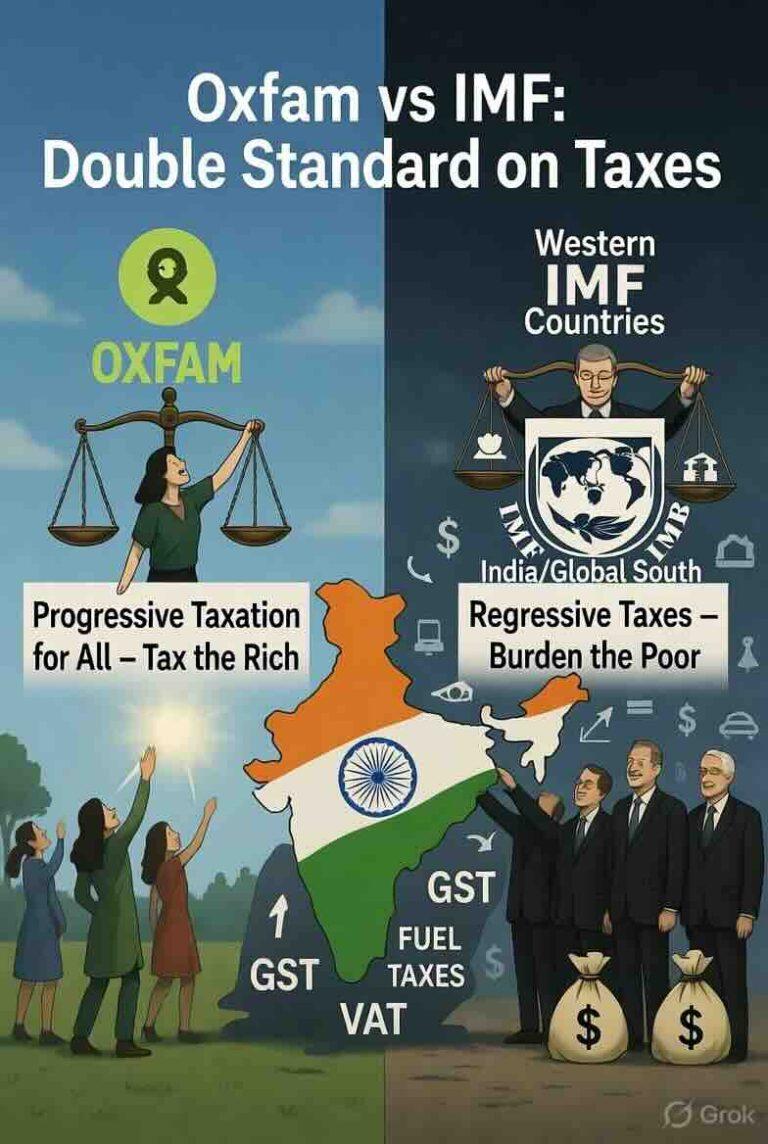
    Oxfam Report: India Receives Highest Number of Regressive Tax Recommendations from IMF, Sparking Inequality Alarm

    Oxfam accuses the IMF of a “troubling double standard” in tax advice, handing progressive policies to rich nations while pushing regressive measures on India and the Global South that risk deepening inequality.

    A fresh Oxfam-backed study has revealed that India received the highest number of regressive tax recommendations from the International Monetary Fund (IMF) between 2022 and 2024. The analysis, published in the journal Global Policy and titled “Progressive Rhetoric, Regressive Reality: The IMF’s Tax Advice to 125 Countries, 2022–2024,” examined 1,049 tax reform proposals issued in the IMF’s Article IV surveillance reports. Researchers Alexandros Kentikelenis and Thomas Stubbs found that while wealthy countries were steered toward progressive taxation, poorer nations – including India – were overwhelmingly advised to adopt measures likely to burden low- and middle-income households more heavily.

    The report, released just ahead of the IMF and World Bank spring meetings in Washington, classifies taxes as progressive if they increase the burden on higher-income groups or ease it for lower-income ones. Regressive taxes do the opposite – placing a proportionally heavier load on the poor. According to the findings, 59 per cent of the IMF’s tax advice to low- and lower-middle-income countries was regressive, compared with only 52 per cent of recommendations to high-income countries being progressive. Only 30 recommendations – roughly three per cent – focused on net wealth taxes or capital gains taxation, despite billionaire wealth surging 81 per cent since 2020.

    India Bears the Brunt of Regressive Advice

    India and Belize topped the list for the sheer volume of regressive recommendations. Specific IMF suggestions to New Delhi included reversing fuel excise tax cuts, introducing carbon pricing, extending personal income tax coverage to informal workers, and removing preferential treatment for certain items under the Goods and Services Tax (GST) regime. These proposals, drawn from India’s 2023 Article IV consultation, form part of a broader pattern: South Asia received by far the most regressive tax guidance from the IMF, followed by Latin America and the Caribbean and sub-Saharan Africa.

    Oxfam’s analysis underscores how such policies could exacerbate existing inequalities. India already relies heavily on indirect taxes such as GST, which critics have long described as regressive because they are levied uniformly regardless of income. Critics argue that the bottom 50 per cent of Indians, who spend a larger share of their earnings on essentials, end up contributing disproportionately to indirect tax revenues. By urging further broadening of the tax base and removal of exemptions, the IMF’s advice risks intensifying this burden without commensurate measures to tax wealth or high incomes more effectively.

    Global South Faces Unequal Treatment

    The disparity in IMF advice is stark. High-income nations such as the United States and Brazil received the most progressive recommendations, along with Canada, Australia, France, the United Kingdom, the Netherlands, Switzerland, Sweden, Norway, China, Kazakhstan, Angola and Botswana. In contrast, low- and lower-middle-income countries were frequently told to raise value-added taxes, increase consumption levies or eliminate exemptions – measures that the report says “place the bulk of the tax burden on middle- and low-income people while leaving the wealthiest unscathed.”

    Examples abound. In Chile – one of the most unequal countries in Latin America – the IMF advised raising tax rates for low- and middle-income groups while sparing top earners. In Nigeria, where nearly one-third of the population lives in extreme poverty, the Fund suggested increasing VAT. In Hungary, it opposed a windfall profit tax on energy companies. Kate Donald, Head of Oxfam International’s Washington office, did not mince words: “The IMF is operating with a troubling double standard that calls into question the evenhandedness it holds as a core principle. It offers mostly progressive tax advice to rich countries, yet its guidance for the rest of the world remains largely regressive.”

    The study also notes that the IMF links tax policy to inequality far more often when advising wealthy nations (34 per cent of cases) than when dealing with poorer ones (just 8 per cent), even though nearly 90 per cent of low- and lower-middle-income countries suffer from medium or high inequality.

    Oxfam Urges Systemic Reform at IMF

    Oxfam is calling on the IMF to place inequality at the heart of all fiscal advice, default to revenue-raising policies that enhance tax progressivity, and move away from over-reliance on consumption taxes. The organisation wants the Fund to conduct and publish rigorous distributional impact assessments for every recommendation in its Article IV reports. It also urges the IMF to broaden support for taxing high-net-worth individuals and corporations while curbing tax avoidance and harmful tax competition. Finally, Oxfam has asked the Fund to create a centralised, user-friendly database to track and publicise its tax advice.

    The authors of the academic paper echo these demands. They argue that the IMF must recalibrate its policy frameworks to align with global momentum for wealth taxes – now a G20 priority under South Africa’s presidency – and use its influence to promote equitable growth rather than entrench inequality. “Current advice entrenches rather than redresses the very inequalities it claims to address,” they warn.

    Implications for India’s Tax Policy Debate

    For India, the timing of the report is significant. The country has been grappling with balancing fiscal consolidation, infrastructure spending and welfare schemes amid slowing private investment and persistent rural distress. While the government has defended its GST regime as a major reform that simplified taxation and boosted compliance, critics – including previous Oxfam reports – have highlighted how indirect taxes continue to form a larger share of revenue compared with direct taxes on income and wealth.

    Economists note that carbon pricing, while environmentally necessary, can be regressive unless paired with rebates or targeted support for low-income households. Extending income tax to informal workers – estimated to make up over 80 per cent of India’s workforce – could broaden the tax net but risks pushing vulnerable earners further into poverty without adequate social protection. Reversing fuel excise cuts might help revenue but would raise transport and cooking costs for millions.

    The Oxfam study does not claim the IMF forces countries to adopt its advice; Article IV consultations are non-binding surveillance exercises. Yet the Fund’s recommendations carry significant weight, shaping investor perceptions, credit ratings and policy discourse in developing economies.

    As global inequality reaches new extremes, the report serves as a timely reminder that tax policy is not merely a technical fiscal tool but a powerful lever for – or against – social justice.

    Illustration: Grok