More

    Torkham Border Shutdown Enters 38th Day, Deepening Economic Strain Across Afghanistan–Pakistan Trade Route

    The Torkham border between Afghanistan and Pakistan has been sealed for 38 days, crippling trade. Thousands of trucks have been stranded; the spoilage costs Afghans $1–1.5 million daily. It costs the Pakistanis $3–4 million weekly.

    The Torkham border crossing between Afghanistan and Pakistan remains sealed for the 38th consecutive day, sending shockwaves through trade networks on both sides of the Durand Line. The prolonged closure, triggered by rising political tensions and security concerns, has strangled commerce, stranded thousands of trucks, and intensified calls for diplomatic intervention.

    According to a report by Amu TV, key border crossings – including Torkham – have been shut for more than five weeks, paralyzing trade and creating a humanitarian bottleneck. Traders and transporters say freight volumes have collapsed: what once brought in scores of containers now comes in trickles, with only 10 to 15 containers arriving weekly at some points.

    On the Afghan side, dozens of cargo trucks loaded with fresh fruit and vegetables have been stuck for over a month, according to TOLOnews. Officials from the Afghanistan Chamber of Agriculture and Livestock estimate spoilage is costing traders between US$1 million and $1.5 million per day, with Pakistani losses reportedly ranging from $3 million to $4 million daily.

    Afghan Produce Rotting, Pakistani Exporters Squeezed

    The impact is being felt most acutely in eastern Afghanistan. Mirwais Hajizada, deputy head of the agricultural chamber, warned that the roadblocks could irreparably damage Afghanistan’s harvest season. “Our fruit harvest had ripened and was ruined,” he said.

    Traders from Nangarhar say they were forced to auction off perishable goods locally at steep losses, citing ruined produce and mounting transportation costs. TOLOnews quoted Ayazullah, one such trader, saying that onions bought for 55–60 afghanis per 7 kg in Mazar-e-Sharif are now selling for only 20 afghanis in Jalalabad after backhaul.

    Meanwhile, some Pakistani customs clearing agents have alerted that the almost month-long disruption has caused significant fiscal stress, threatening export markets once considered reliable.

    Protests in Landi Kotal Demand Border Reopening

    On the Pakistani side, frustration is boiling over in Landi Kotal, where political leaders, transporters, and traders staged a sit-in at Bacha Khan Chowk. Demonstrators carried placards calling on both Afghan and Pakistani authorities to reopen Torkham immediately to restore commerce and allow stranded drivers, including Pakistani nationals, to return home safely.

    Leaders from multiple sides, together with local clearing agents warned they will continue their peaceful protest indefinitely if the crossing remains closed.

    Humanitarian Toll Mounts

    It’s not just trade that’s suffering. Even medical patients and their families are trapped on both sides, unable to access medical care. Drivers have complained of subsisting on limited food and water, with many stuck in their vehicles for days.

    One frustrated transport worker told media: “Our lives are being used as a political bargaining chip. We are not militants; we are just trying to make a living.”

    Stakes High for Both Sides

    The border shutdown comes amid wider trading and financial challenges for Afghanistan. Despite the blockade, the National Statistics and Information Authority (NSIA) reported a surprising US$40 million increase in monthly exports in the face of severe logistical disruption. But business leaders caution that without a reliable transit route, this growth is razor-thin and fragile.

    Analysts say the disruption could be more than a temporary shock: the prolonged border closure is damaging trust, undermining trade flows, and prompting a rethinking of economic dependence. Afghan authorities have already issued public warnings that they will lean less on Pakistan for their trade.

    In an address carried by local television channels, Taliban leaders argued that Afghanistan must “reduce reliance on Pakistan” and diversify its trading partners – a clear signal the current impasse is reshaping long-term economic strategy.

    For Afghanistan, Torkham is not just a trade route: it is a lifeline for perishable exports, transit commerce, and humanitarian access. For Pakistan, the crossing is a major revenue source and a geopolitical lever.

    The shutdown threatens to exacerbate poverty, raise food insecurity, and fuel political backlash. Tribal elders, business associations, and border communities are all calling for an urgent negotiated solution – one that separates political tension from commerce.

    As the 38-day shutdown continues, both sides face mounting pressure. Unless the Torkham crossing reopens soon, the economic and human costs risk becoming permanent scars on bilateral trade.
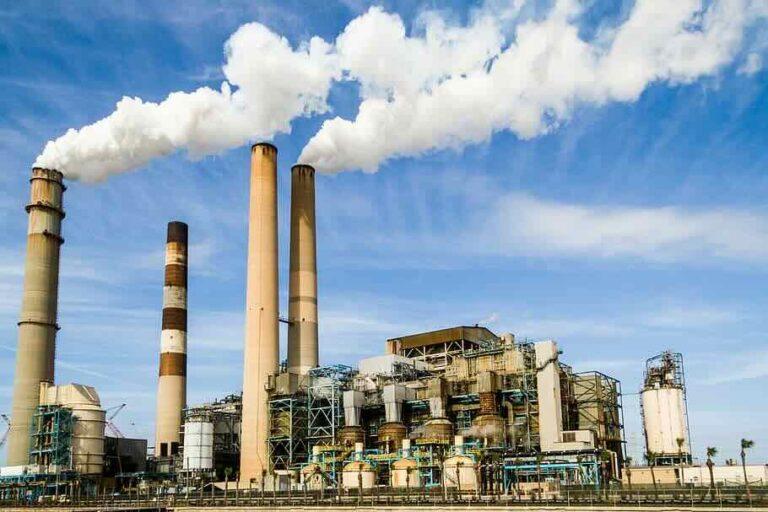
    Global Fossil‐Fuel CO₂ Emissions Hit Record 38 Billion Tonnes in 2025 as Climate Pledges Fall Short

    2025 fossil CO₂ emissions hit record 38.1 Gt, up 1.1 per cent from 2024. Renewables advance, but rising energy demand outpaces decarbonisation, widening climate ambition-reality gap.

    In 2025, global emissions of carbon dioxide from fossil fuels are projected to reach an unprecedented level, underscoring the widening gap between climate ambition and reality. According to the latest Global Carbon Project co-published by University of California, Davis, the 2025 Global Carbon Budget report estimates fossil‐fuel CO₂ emissions at 38.1 billion tonnes – a 1.1 per cent increase over 2024.

    Despite progress in renewable energy and gradual declines in some national emission intensities, overall energy demand and fossil‐fuel consumption continue to outpace mitigation efforts. The report notes that the decarbonisation of energy systems is not sufficient to offset rises in demand.

    Surge in Fossil Fuel Use Pushes CO₂ to Record Height

    The latest data show that all major fossil‐fuel categories are contributing to the rise: coal emissions are projected to grow by 0.8 per cent, oil by 1 per cent, and natural gas by 1.3 per cent in 2025. International aviation emissions are set to increase by 6.8 per cent – surpassing pre-COVID levels – while international shipping remains flat.

    Regionally, emissions growth is patchy but telling:

    • India is expected to see a 1.4 per cent rise in emissions, slower than recent years thanks to a strong uptick in renewables and an early monsoon that reduced cooling demand.
    • China is projected to grow by 0.4 per cent.
    • United States sees a 1.9 per cent increase, while the European Union is up 0.4 per cent.

    Even land‐use change emissions – such as deforestation and other changes to vegetation – remain significant, projected at around 4.1 billion tonnes in 2025.

    Crucially, the study points out that the “sinks” – forests and oceans that absorb CO₂ – are weakening under the stress of climate change. About 8 per cent of the historic rise in atmospheric CO₂ since 1960 is attributed to weakened land and ocean sinks.

    World Still on Track for 2.6 °C Warming

    While emissions climb, climate commitments lag visibly behind. According to an analysis by Climate Action Tracker, despite new targets being set, actual measurable progress remains minimal.

    The world is now on a trajectory toward approximately 2.6 °C of warming, significantly above the Paris Agreement goal of “well below 2 °C” and ideally 1.5 °C.

    Clearly, even a decade after global leaders unanimously agreed to cut down greenhouse gas emissions the world is unable to control the volume of emissions.

    One especially stark finding: the remaining carbon budget for staying within 1.5 °C of warming is “virtually exhausted.” At current emission rates, that budget may be depleted before 2030.

    Remaining Carbon Budget for 1.5 °C Goal Virtually Exhausted

    The 2025 report presents a sobering message: the remaining global carbon budget to keep warming to 1.5 °C is estimated at about 170 billion tonnes of CO₂ – roughly equivalent to four years at the 2025 emission rate.

    According to Pierre Friedlingstein of the University of Exeter, “keeping global warming below 1.5 °C is no longer plausible” given current emissions and sink declines.

    Researchers emphasise that while some countries show progress (for instance, 35 countries managed to reduce emissions while growing their economies), the global aggregated trend of rising emissions signals that efforts must be drastically scaled up.

    Deforestation rates in places such as the Amazon have dropped to their lowest since 2014, but “sweeping fires in 2024 revealed how sensitive the ecosystem remains if we don’t also limit global warming.”

    The record 38.1 billion tonnes mark is not just a statistic – it means more CO₂ in the atmosphere, weakening of natural absorption systems and a higher likelihood of severe climate impacts: heatwaves, extreme weather, sea-level rise, ecosystem disruption and more.

    The fact that emissions are rising even as renewable energy expands is a red flag. It means that demand growth (particularly in emerging economies), fossil-fuel‐heavy infrastructure and delayed retirement of high-carbon assets are undermining progress.

    Policy implications are stark:

    • Nationally Determined Contributions (NDCs) under the Paris Agreement must be strengthened and delivery accelerated.
    • Economic systems must shift faster from fossil‐fuel dependence to clean, efficient systems with strong support for developing countries.
    • Protecting and restoring natural sinks (forests, oceans) is as important as decarbonising energy systems – but climate change is already impairing their function.

    For the global community gathering at COP30 in Brazil, the message is clear: incremental action will no longer suffice. The remaining budget for 1.5 °C is closing fast, and any further delay makes the target unreachable.

    Outlook for India and the Region

    For India, the slower emissions growth (1.4 per cent) is notable – it indicates that renewables expansion and favourable weather conditions (such as an early monsoon) are having positive effects. However, a 1.4 per cent rise still means absolute growth in emissions, and as a major future emitter, the country will face increasing pressure to decouple growth from carbon.

    In the broader South Asian region, the implications include higher vulnerability to climate impacts (heat, flooding, monsoon disruption) and stronger need for climate finance, adaptation funding and technology transfer – themes likely to surface strongly in global negotiations.

    The 2025 milestone – of fossil-fuel CO₂ emissions at record levels and the 1.5 °C budget nearly spent – marks a pivotal moment for the global climate agenda. The numbers are unambiguous: for all the rhetoric and pledges made over the past decade, the trajectory remains headed toward significantly higher warming and mounting risks for natural systems, economies and human welfare.

    Unless countries rapidly upscale ambition, significantly accelerate fossil‐fuel phase-out and shore up natural carbon sinks, the landmark 1.5 °C target will slip from reach – fundamentally altering the climate future for all.

    Sheikh Hasina Sentenced to Death by Bangladesh Tribunal for “Crimes Against Humanity”

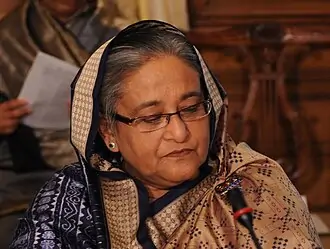
    Bangladesh’s International Crimes Tribunal has sentenced exiled the country’s ex-Prime Minister Sheikh Hasina, 78, to death in absentia for crimes against humanity during the 2024 student uprising, alongside two aides.

    In a dramatic and highly controversial ruling on Monday, Bangladesh’s International Crimes Tribunal-1 (ICT-1) sentenced ousted prime minister Sheikh Hasina to death in absentia, ostensibly, for “crimes against humanity” committed during last year’s student-led uprising.

    The three-judge tribunal, led by Justice Md Golam Mortuza Mozumder, found Hasina, along with two of her top former aides, guilty on multiple counts – including ordering lethal force, failing to prevent mass killings, and directing the use of helicopters and drones against civilian protesters.

    Hasina, 78, who has been living in exile in India since her ouster in August 2024, did not appear in court. Prosecutors had demanded the maximum penalty, citing superior-command responsibility, and called for the confiscation of her assets to compensate victims’ families.

    A Look at the Charges

    The court based its verdict on five major counts filed by the prosecution, accusing Hasina and her co-accused of:

    • Authorising or failing to stop the killing, torture, and inhumane treatment of protesters.
    • Ordering the use of helicopters, drones, and live ammunition against student demonstrators.
    • Being complicit in the murder of individual students, including the killing of Abu Sayed near Begum Rokeya University.
    • Overseeing mass killings in Chankharpul, where six unarmed protesters were shot, and in Ashulia, where dead bodies were allegedly burnt to destroy evidence.

    One of her co-accused, former police chief Chowdhury Abdullah Al-Mamun, pleaded guilty and testified against Hasina, becoming a state witness. Another, ex–home minister Asaduzzaman Khan Kamal, remains declared a fugitive.

    Criticism, Denial, and Political Fallout

    Hasina’s defence has vigorously rejected the tribunal’s legitimacy. She has repeatedly called the trial a “kangaroo court” and denied ever issuing orders to fire on unarmed civilians, calling the process politically motivated.

    Her supporters within the Awami League decried the verdict even before it was delivered, warning that it would deepen political polarisation. Meanwhile, security in Dhaka was heavily tightened for the ruling, with deployment of army, Border Guard, Rapid Action Battalion, and police around the tribunal.

    The case has drawn intense international attention. Last year’s crackdown, which sparked the trial, was itself preceded by a UN human rights report suggesting that up to 1,400 people may have been killed.

    Tool Against Political Adversaries

    Critics argue that the tribunal, revived by Hasina’s own government in 2009 to try wartime crimes, has now transformed into a tool against political adversaries. Observers are watching closely for how this verdict will affect Bangladesh’s stability, its diplomatic ties with India (where Hasina resides), and the upcoming elections reportedly scheduled for February 2026 under the interim government.

    With Hasina tried in absentia, questions now turn to enforcement: How will Dhaka secure her return or apply the sentence? And what legal recourse remains? Under Bangladeshi law, fugitives convicted in their absence may not be eligible to appeal unless they surrender.

    For her supporters, the verdict risks turning Hasina into a political martyr – a narrative that could reshape her legacy and Bangladesh’s future political landscape.

    Image: Wikimedia Commons

    Farming Failures and Factory Floors: How Climate Crisis Forces Nepal’s Children into Labour

    Nepal’s children humanize climate crisis amid warming world. Kathmandu’s rising bricks and looms whisper of ruined fields, migrating youth, and a nation suffering for emissions it barely caused.

    In the foothills of Nepal’s climate-vulnerable districts, the earth cracks and the rain refuses to come on time. For generations, families have tilled the red soil and planted rice, lentils, maize. In recent years each failed monsoon and each heat-wave has compounded their struggle. Now a new pattern has emerged: unrelenting weather shocks are driving children out of the fields and into the factories and kilns of Kathmandu Valley.

    Seventeen-year-old Sita (name changed) recalls a year when the rains never came on time. “We planted seeds and watered them each morning,” she says quietly, “but the plants just shrivelled.” Her father took a loan to buy fertiliser; when the harvest failed he sought work in a brick kiln. Sita dropped out of school. “I went with him,” she says. “They needed hands. I thought maybe I could help the debt go away.”

    That story is no longer unique. A recent study by GoodWeave International and New ERA reveals that in eight climate-affected districts of Nepal at least one in three adults and parents of child labourers attribute their decision to work – or to send their children to work – to climate-driven hardship. Among those working in brick kilns that figure jumps sharply: 73 per cent identified climate stress as a contributing factor and nearly half called it extreme.

    From Drought to Debt

    Across Nepal’s rural belts, traditional agriculture is under siege. The report, titled From Risk to Resilience, states 91 per cent of households experienced reduced agricultural production, 80 per cent lost income and 46 per cent lost farmland as climate impacts multiplied. This is a bitter irony for a country that contributes barely 0.06 per cent of global greenhouse-gas emissions yet ranks among the most climate-vulnerable.

    Many farming families endure droughts, landslides, pest infestations and heat-waves. Once self-sufficient, they now buy food – hoping the harvest will come next season. The pressure mounts when loans come due and children still face hungry months ahead. In such conditions the only way out seems to be migration, often with children in tow.

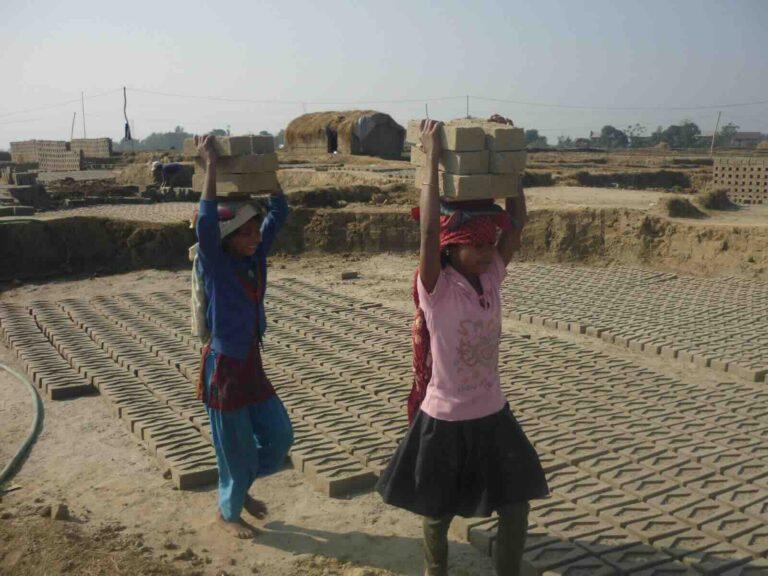
    Villages that once buzzed with planting and harvest now empty as parents head for brick kilns or carpet factories in search of any income. Children who should be in classrooms start mixing mortar, carrying heavy loads, missing meals and childhood.

    Kilns, Carpets and Childhoods on Hold

    Inside brick yards in the valley where red clay bricks rise, the fingerprints of climate change are visible in the lives of young labourers. The study links climate-induced migration and labour exploitation: those arriving from rural districts devastated by agriculture often find themselves working in hazardous conditions with few rights.

    One kiln worker described his journey from home to the kiln: “We had no land left,” he said. “My older brother went ahead, I followed.” The work is gruelling; the children among them skip school, earn less, face risks. The research defines child labour in Nepal as work that harms children’s health, safety or morals or prevents schooling.

    These sectors – brick making, carpet weaving – are already flagged as high risk for child and forced labour. The study now shows climate change is one of the triggers pushing children into those sectors. The families behind this migration are trapped between failed harvests at home and unregulated work in urban fringes.

    Contributing Little, Yet Paying the Price

    Nepal’s contribution to global warming is virtually negligible. Yet its children are suffering some of the worst human consequences of the climate crisis. This disconnect is a moral crisis in itself. Researchers highlight how the synergy of climate stress, debt and lack of land drives children and adults into unsafe work. Households that ran out of food were nearly six times more likely to link their decision to climate factors.

    The result is a tragic paradox: the world’s poorest bear the heaviest burden. As climate extremes rise, the risk of exploitation rises too. Without basic protections, families decide between letting their children go hungry or sending them into labour. The study calls for urgent action: for example strengthening agriculture, giving families alternative livelihoods, safeguarding children and enforcing labour protections.

    Building Resilience: From Risk to Rights

    In the face of this crisis, resilience must start from the ground, the report says. Villagers in the eight study districts – Sindhupalchok, Kavrepalanchok, Makwanpur, Ramechhap, Sindhuli, Sarlahi, Rautahat and Bara – tell stories of lost crops, broken dreams and shifting lives. The report emphasises how targeted supports – drought-resistant crops, vocational training, child-safeguarding mechanisms – can turn risk into opportunity.

    For Sita and her family the hope lies in the next season. A local NGO is helping train her in tailoring work. She says: “If I finish training I might go back home and work there instead of the kiln.” Her father nods. They dream of a life where a child’s day is in school, not in the heat of a kiln.

    The challenge now is to scale these responses so that every child in Nepal sees a future beyond labour. The report calls for the government and industry joining hands to strengthen social protection, enforce labour laws, and support climate adaptation. As the study concludes: “Strengthen agricultural resilience and land access; enhance income-generating opportunities and livelihood diversification; strengthen children’s education and safeguarding; increase collaboration and coordination.”

    Image: Wikimedia Commons

    WHO and Brazil Sound the Alarm at COP30: Belém Health Action Plan Faces Massive Funding Shortfall

    At COP30 in Belém, Brazil, the World Health Organisation and governments have warned that climate change is causing a global health emergency. The Belém Health Action Plan needs urgent funding.

    At the 30th United Nations Climate Change Conference (COP30) in Belém, Brazil, the World Health Organization (WHO) and the Brazilian government issued a stark warning: climate change is already triggering a global health emergency, and the newly launched Belém Health Action Plan (BHAP) needs urgent, well-funded implementation.

    In a special report released on November 14, 2025, WHO, together with Brazil’s Ministry of Health, underscored that more than 540,000 people die each year from extreme heat, while one in twelve hospitals worldwide is at risk of climate-driven disruptions.

    “The climate crisis is a health crisis – not in the distant future but here and now,” said WHO Director-General Dr Tedros Adhanom Ghebreyesus. He said the report lays out concrete, evidence-based interventions already in use around the world and calls for rapid scaling.

    A Health-Crisis Agenda Emerges at COP30

    The Belém Health Action Plan was formally launched on November 13, the Health Day of COP30, by Brazil in partnership with WHO and the Pan American Health Organization (PAHO). PAHO Director Dr Jarbas Barbosa urged countries to adopt the plan, calling it a “roadmap to protect lives and promote equity in a changing climate.”

    The timing of the launch – in the heart of the Amazon – underscored Brazil’s intention to place health at the core of climate negotiations, not as an afterthought.

    Belém Plan’s Bold Vision and Three Pillars

    The Belém Plan is framed around two cross-cutting principles: health equity and climate justice, and participatory governance with social participation.

    Under that framework, it identifies three key lines of action:

    • Surveillance and monitoring, strengthening climate-informed health surveillance systems.
    • Evidence-based policies and capacity building, enabling countries to build resilient, equity-driven health strategies.
    • Innovation, production and digital health, promoting research, sustainable technologies, and inclusive access.

    Brazil’s Health Minister Alexandre Padilha called it “a way forward,” stressing that adaptation must be treated with the same seriousness as mitigation.

    Two complementary reports accompany the plan: one focuses on scientific evidence and implementation, while the other emphasizes social participation and leadership, especially from marginalized and vulnerable communities.

    $11 Billion Gap Threatens Climate-Health Ambitions

    Despite its ambition, the Belém Health Action Plan faces a daunting financial hurdle. Experts at COP30 have flagged a funding gap of around US$ 11 billion annually for global health adaptation.

    While philanthropic institutions have pledged an initial US$ 300 million to support early implementation, many warn this is only a small fraction of what is needed.

    According to the United Nations Environment Programme (UNEP), health has received only a sliver of its fair share of adaptation funding – with just 0.5 per cent of multilateral climate finance going to the sector.

    Carlos Lopes, Special Envoy for Africa under the COP30 Presidency, called the shortfall “quite colossal,” noting that without sustained investment, BHAP risks remaining a symbolic initiative rather than a transformative one.

    WHO’s report backs the urgency: only 54 per cent of national health adaptation plans currently assess risks to health facilities, and even fewer address gender (20 per cent) or disability (less than 1 per cent) in their studies.

    Experts argue that allocating just 7 per cent of adaptation finance to health could make a dramatic difference, potentially safeguarding billions of people and keeping essential services operating during climate shocks.

    Looking Ahead: From Plan to Action

    Among its calls to action, WHO and Brazil urge governments to:

    • Integrate health into national climate plans such as Nationally Determined Contributions (NDCs) and National Adaptation Plans (NAPs).
    • Channel savings from decarbonization towards health adaptation and workforce strengthening.
    • Invest in resilient health infrastructure, especially for hospitals and essential services.
    • Elevate community voices, leveraging local knowledge in climate-health governance.

    Dr Nick Watts, Chair of WHO’s Expert Advisory Group, noted that many of the proposed interventions are “cost-effective, high-impact, and no-regret,” pointing to examples such as early-warning systems, green hospital designs, and climate-informed health planning.

    Still, the success of BHAP will depend on bridging the funding gap and galvanizing political buy-in.

    “Protecting health systems is one of the smartest investments any country can make,” Watts said – but only if global financing catches up with the scale of the crisis.

    Image: Equals Bulletin

    Bangladeshi Queer Manifesto Ignites Hope and Fury in Conservative Nation

    The manifesto accuses even liberal voices of upholding a feudal system that keeps transgender individuals economically dependent and socially invisible.

    On a rain soaked October morning in Dhaka, 23 year old transgender activist Sahara Chowdhury Rebil planted herself at the Shahid Minar national monument and began a hunger strike unto death. Her single demand was legal marriage rights for LGBTQ citizens in Bangladesh, a Muslim majority country where same sex relations remain criminalised under colonial era law.

    Rebil ended the fast after 30 hours when queer community members feared she would be attacked. Before disappearing to an undisclosed location, she released the country’s first ever Bangladeshi Queer Manifesto, a 178 page Google document that spread virally through a QR code held in her protest photograph.

    First Ever LGBTQ Roadmap for Bangladesh

    Written over the past year amid student protests that toppled Sheikh Hasina’s government, the manifesto details systemic exclusion of LGBTQ people and proposes sweeping social and economic reforms. Rebil, speaking from hiding in Dhaka, told UCA News that marriage is the vital link to society and economy that transgender people are denied.

    “Our exclusion is systemic, designed to confine us to prostitution, begging, and early death,” she said. Originally from Sylhet, Rebil was expelled from her university English literature programme in August after posting caricatures of transphobic classmates.

    The manifesto accuses even liberal voices of upholding a feudal system that keeps transgender individuals economically dependent and socially invisible. “Charity is not helpful because it allows the system to operate,” Rebil wrote. “I want my right to marriage not for moral reasons, but to improve my economic and medical conditions.”

    Trans man and activist Mikail Rahman, speaking from New York, called Rebels action the push the stalled movement needed. “The movement had reached an impasse – Sahara gave us the push to move forward,” he said. Rahman highlighted the dire lack of healthcare access, noting that official figures count only 12,629 transgender people while unofficial estimates reach 150,000.

    Bangladesh’s LGBTQ movement was forced underground after the 2016 machete murder of Roopbaan magazine founder Xulhaz Mannan and his friend Mahbub Rabbi Tonoy. Five men were sentenced to death in 2021, yet fear still silences public advocacy. Recent sparks of visibility, including a textbook chapter about a transgender girl and a queer politician joining a reformist party, triggered fierce backlash and institutional silence.

    A Movement Reborn

    Veteran activists see Rebels manifesto as a watershed. Bangladesh’s first transgender newscaster Tasnuva Anan Shishir said: “There is fear, yes, but there is also an energy we have not seen in years.” Fellow activist Ho Chi Minh Islam, who was removed from a 2023 women’s career event after conservative protests, believes the movement is entering a new phase.

    The document paints a grim picture of trans children ostracised, denied education, abandoned by families, and pushed into slums where they grow up as beggars, bootleggers, or sex workers. It calls on the incoming government, set to be elected in early 2026, to introduce legal and social changes that end this cycle.

    Some community members endorsed the manifesto wholeheartedly, while others raised concerns over passages that appeared to justify violent resistance. A revised version is being prepared for formal publication.

    “Rebil has done what few dared. She wrote our pain into history,” one anonymous community member said. “Whatever happens next, Bangladesh can no longer say it doesn’t know about the aspirations of the community.”

    As the nation prepares for its election, the manifesto has thrust LGBTQ demands into a political spotlight long dominated by religious conservatism and social taboo. For a generation, Rebels bold words signal that another revolution may have just begun.

    Image: Wikipedia

    Taliban Limits Women’s Hospital Access with Burqa Rule

    The policy applies to public hospitals in Herat and appears to require women – patients, visitors and doctors – to cover their entire body in a burqa before being admitted.

    In the western Afghan city of Herat, female patients, visitors and medical staff are being barred from public hospitals unless they wear the all-encompassing burqa, according to local reports and charity warnings.

    The directive – announced on November 5 – marks a sharp escalation in the Taliban’s gender-based restrictions, which activists say are turning the essential healthcare system into a mechanism of control. “Female patients and caretakers are now barred from entering the hospital unless they wear a burqa, meaning that access to care is determined by clothing rather than medical need,” said Doctors Without Borders (MSF) program manager Sarah Chateau.

    Burqa Precondition for Medical Services

    The policy applies to public hospitals in Herat and appears to require women – patients, visitors and doctors – to cover their entire body in a burqa before being admitted. One woman, speaking anonymously, told reporters she was forced to spend the equivalent of about US $20 to buy a burqa simply to visit a hospital.

    The regional Directorate for the Promotion of Virtue and the Prevention of Vice in Herat claims no formal directive exists. But hospital staff and eyewitnesses say the enforcement is already under way.

    New Crackdown Amid Rights Concerns

    The incident of a female surgeon being detained – and later released – has catalysed indignation among local health-professionals and women’s rights advocates. The doctor, identified as Dr Shabnam Fazli, was taken into custody by Taliban officials near the Herat Regional Hospital. Her husband later publicly confirmed the detention.

    In another case, a pregnant woman who had undergone two previous caesarean sections was denied entry to a maternity hospital because she was not wearing a burqa. She reportedly experienced complications and was transferred via rickshaw to another facility – by then her unborn child had died from lack of oxygen and internal bleeding. The woman remains in intensive care.

    Healthcare professionals say the enforcement of such dress codes is undermining the most basic medical ethics: “When access to healthcare becomes conditional on what a woman wears, lives are lost,” one doctor told Amu TV on condition of anonymity.

    Alarms as Critical Access Plummets

    MSF reports that admissions of female patients at Herat Regional Hospital have dropped by 28 per cent since the policy took effect. A serious concern for women and children already facing high barriers to care. The charity warned that every new restriction on women in healthcare carries “severe consequences” for mothers and children in Afghanistan.

    Since re-taking power in 2021, the Taliban has gradually imposed a sweeping set of gender restrictions – including bans on most female employment, higher education and public mobility without a male guardian. This latest move – in effect making the burqa mandatory for accessing hospitals – raises concerns among international observers that the regime is weaponising healthcare access to reinforce social control.

    Dangerous Consequences of Enforcement

    Women in Herat say they experience harassment and intimidation if they appear outside without the burqa, and in some cases they report threats of arrest or worse if they don’t comply. The regime’s morality police have been seen enforcing the burqa requirement at major public hospitals and clinics in the city of approximately 600,000.

    The cultural shift is stark: many Afghan women, especially in urban areas, previously wore loose headscarves that only covered hair. The burqa and full-body coverings were not widely seen before the Taliban’s return.

    Human-rights groups say the dress code policy transforms healthcare into a privilege contingent on compliance with the regime’s interpretation of religious dress. It effectively prioritises ideology over life-saving medical services.

    Authorities have not yet made clear whether this policy will be extended nationwide or remain confined to Herat. But given the speed of enforcement in Herat, health-rights observers fear it may spread to other provinces, increasing the already substantial barriers female Afghans face in accessing care.

    The combination of dress-code enforcement, detention of female medical professionals and the tangible drop in hospital admissions underscores a broader message from the Taliban: women’s presence in public – and their access to critical services – depends on strict adherence to gender-based rules, even if these rules mean the difference between life and death.

    Pakistan’s Tribal Justice System Under Fire for Discrimination

    Provincial lawyers warn ADR committees weaken courts by diverting cases, bypassing rights with “swift justice.” Gifts to elders bias poor litigants; unresolved disputes double costs and delays in formal courts.

    Concerns are mounting over a parallel justice system in Pakistan’s northern frontier region. Lawyers and civil society activists in Khyber Pakhtunkhwa say the system, now a law, perpetuates discrimination, undermines legal rights and marginalises women and religious minorities. The Khyber Pakhtunkhwa Alternate Dispute Resolution Act 2020 (ADR Act) – designed to streamline dispute settlement in the formerly tribal districts of Khyber Pakhtunkhwa – is drawing sharp criticism from human rights observers.

    The ADR Act, passed in 2020, authorised the establishment of local committees across eight tribal districts and six subdivisions in Khyber Pakhtunkhwa. Sometimes viewed as modernised versions of traditional tribal councils, these committees were meant to offer faster, lower-cost resolution of civil and minor criminal disputes, bypassing formal courts.

    However, a report released on October 29 by the Human Rights Commission of Pakistan (HRCP) flags serious deficiencies in how the system functions. Among the major issues: all 418 registered ADR committees in the region are exclusively male and disproportionately exclude non-Muslims.

    Women and Minorities Left Out

    One of the key concerns raised in the HRCP report is that women, despite being frequent victims of domestic abuse, inheritance denial and dowry disputes, often cannot bring their grievances to male-only committees with confidence. As one committee member from Kurram district told the HRCP, “Without women on the committees, we have no choice but to send them back.”

    The system also marginalises religious minorities. In Khyber Pakhtunkhwa religion minorities account for only 0.38 per cent of the population according to the 2023 national census. The HRCP report says non-Muslims are “structurally excluded” from decision-making despite being subject to the same mechanisms.

    Parallel System Undermines Formal Courts

    Legal practitioners in the province warn that the ADR committees risk weakening the formal judiciary by diverting disputes away from established courts. One senior lawyer in Peshawar argued that the promised “swift justice” is sometimes a guise for sidestepping constitutional protections.

    Concerns include the practice of offering hospitality or gifts to committee elders – not authorised under the Act – which critics say can compromise impartiality, particularly when litigants are poor. Moreover, unresolved cases often find their way back into formal courts, thereby doubling expense and delay rather than reducing it.

    For women and minorities, inclusion in any system of dispute resolution is essential if justice is to be meaningful. The absence of female panel members in Khyber Pakhtunkhwa’s ADR committees and the exclusion of non-Muslim members make clear that what may appear as decentralised and accessible justice may in practice perpetuate discrimination.

    Stepping back to assess the broader context of the law, civil society leaders ask: who is making the decisions, under what process and with what oversight? Without these critical questions being addressed, even well-intentioned dispute frameworks risk reproducing old inequalities under a new name.

    In Pakistan’s north west the ADR system remains formally in place. But with the HRCP report’s findings gaining attention, reformers are calling for a reset: ensuring female representation, opening membership to all faiths and reinforcing the link between these committees and the formal courts.


    India Ranks Ninth Globally in Extreme Weather Risk, Says Germanwatch Report

    The ranking may not predict the future, but the message is clear: the era of extreme weather has arrived, and India’s ability to adapt will determine how much it loses in the decades to come.

    India has been ranked ninth worldwide among the countries most affected by extreme weather events in the past three decades, according to the latest Climate Risk Index (CRI) 2026 released by the environmental think tank Germanwatch. The ranking, based on data from 1995 to 2024, highlights how intensifying heat waves, floods, droughts, and cyclones are imposing rising human and economic costs across India.

    The index, released on Wednesday, evaluates nations based on fatalities, financial losses, and the number of extreme weather events recorded over the period. The findings paint a stark picture: India remains one of the world’s most climate-vulnerable countries, despite ongoing efforts to strengthen disaster response and promote renewable energy.

    The report underscores that climate change is no longer a distant threat – it is already destabilising lives, livelihoods, and ecosystems. According to Germanwatch, extreme weather events are striking with increasing frequency and intensity, and developing nations are bearing the brunt of their fallout.

    Among World’s Most Climate-Vulnerable Nations

    India’s ninth-place ranking reflects a steady increase in both the frequency and impact of extreme weather events over the last three decades. The country has faced around 430 major weather disasters between 1995 and 2024, resulting in more than 80,000 deaths and an estimated US$170 billion in losses when adjusted for inflation.

    Floods have affected the largest number of people, displacing millions every year, while cyclones along the eastern coast and prolonged heat waves across northern and central India have worsened public health and food security. In recent years, events like Cyclone Amphan, Cyclone Tauktae, and the 2024 North India heatwave have pushed already vulnerable communities to the brink.

    The CRI 2026 notes that India’s rank has fluctuated over the years – partly because the index measures immediate impacts rather than long-term vulnerability – but the broader trend is unmistakable. Extreme events have become more frequent, more intense, and more economically destructive.

    Germanwatch emphasises that the ranking serves as a “warning signal” rather than a prediction of future impacts. The report’s authors argue that while mitigation of greenhouse gas emissions remains vital, countries like India must now prioritise adaptation and resilience to limit further harm.

    Rising Toll of Disasters Underscores Adaptation Challenge

    The global report recorded over 9,700 extreme weather events worldwide from 1995 to 2024, causing 832,000 deaths and economic losses of nearly US$4.5 trillion. India alone accounted for a significant share of both the fatalities and the economic damage.

    Heat waves, once rare and short-lived, have now become a recurring health emergency in India. Cities such as Delhi, Ahmedabad, and Lucknow have witnessed record-breaking temperatures above 47°C, leading to spikes in mortality and hospital admissions. In 2024, over 700 heat-related deaths were reported nationwide, according to government estimates.

    At the same time, unseasonal rains and floods have repeatedly destroyed crops, threatening food security and rural livelihoods. In states like Assam, Bihar, and Kerala, annual floods have become a grim routine. The economic losses extend far beyond infrastructure damage – affecting education, employment, and healthcare access.

    “India’s experience shows how climate risks cut across sectors,” the report said. “The poorest are often the most exposed, yet they have the fewest resources to recover.” Germanwatch urged India to strengthen its climate adaptation frameworks, integrate local knowledge in disaster management, and improve early warning systems.

    Global Findings Show Uneven Burden of Climate Impacts

    The CRI 2026 highlights deep inequality in how climate impacts are distributed. Many of the top ten most-affected nations are from the Global South, including Pakistan, the Philippines, Mozambique, Myanmar, and Haiti. Collectively, they represent regions with limited adaptive capacity, fragile economies, and high population densities in disaster-prone areas.

    The report warns that climate change is amplifying inequalities within and between countries. Wealthier nations, though responsible for the majority of historical emissions, often have stronger infrastructure and social protection systems that cushion the blow of extreme events.

    Conversely, poorer countries face compounded risks – rapid urbanisation, informal settlements in flood zones, and reliance on climate-sensitive livelihoods such as agriculture. “Without robust support for adaptation, the gap between those who can withstand climate shocks and those who cannot will continue to widen,” Germanwatch noted.

    The report also draws attention to the slow pace of international climate finance. Developed nations have yet to fulfil their pledge of providing US$100 billion annually to support adaptation and mitigation in developing countries. The Loss and Damage Fund, established at COP28, remains underfunded and lacks a clear framework for disbursing aid to countries facing irreversible climate impacts.

    Urgent Need for Resilience and International Climate Finance

    For India, the findings carry both a warning and an opportunity. The country’s rapid economic growth and massive population make it uniquely exposed to extreme weather disruptions, but they also provide the capacity to innovate and adapt.

    Experts say India must invest more in climate-resilient infrastructure, expand green cover, and improve data-driven disaster forecasting. The government’s initiatives – such as the National Action Plan on Climate Change and State Climate Action Plans – are steps in the right direction, but implementation remains uneven.

    Germanwatch’s report urges India and other developing nations to press for stronger global mechanisms at the COP30 climate summit. “The Climate Risk Index shows that the world is not on track to protect people from climate extremes,” it stated. “We need fair, predictable, and accessible finance for adaptation, and we need it now.”

    The ranking may not predict the future, but the message is clear: the era of extreme weather has arrived, and India’s ability to adapt will determine how much it loses in the decades to come.

    Co-operative Mobility Unfolds: “Bharat Taxi” Embarks on Soft Launch in Delhi

    Bharat Taxi shifts drivers to member-owners with profit-sharing and governance. Passengers gain transparent fares, safety, and ethics. It advances cooperatives in digital mobility, aligning with Sahakar se Samriddhi. Delhi soft launch tests ethos into scale.

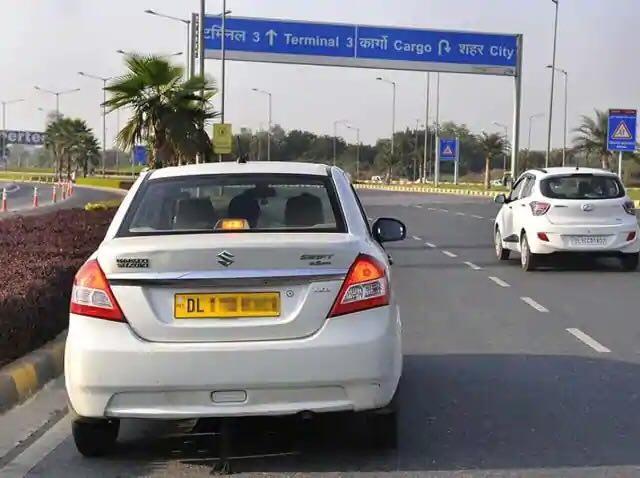
    In what organisers say is a “transformative moment” for India’s mobility sector, the co-operative ride-hailing platform Bharat Taxi has commenced its soft launch in Delhi in partnership with the Delhi Traffic Police.

    From November 10, the service began operating at key transit locations including the airport, major railway stations and inter-state bus terminals (ISBTs).

    In this pilot phase (with boots on ground), Bharat Taxi has set up dedicated booking booths at the transit hubs to assist passengers with ride bookings and customer-service needs. The company will gather commuter feedback during this run in order to refine its digital operations before scaling up.

    Co-operative Model; Tech-Enabled

    Unlike conventional ride-hailing aggregators, the Bharat Taxi platform is being structured as a co-operative entity under Sahakar Taxi Cooperative Limited (STCL). It is backed by a set of major cooperative and financial institutions including National Cooperative Development Corporation (NCDC), Indian Farmers Fertiliser Co‑operative Limited (IFFCO), Krishak Bharati Cooperative Limited (KRIBHCO), National Agricultural Co‑operative Marketing Federation of India (NAFED), National Bank for Agriculture and Rural Development (NABARD), National Dairy Development Board (NDDB) and others.

    Officials say the model emphasises three main pillars: collective ownership, fair income for drivers (called “Saarthis”), and technology-enabled operations without surge pricing.

    Safety; Transparency

    A key feature of the launch is the collaboration with the Delhi Traffic Police. All Saarthis are verified by the police and are integrated into the digital platform via safe ride-booking and payment systems.

    Moreover, a joint Command and Control Centre manned by the co-operative and the police will monitor rides in real time, offering 24/7 oversight and rapid response to incident reports.

    Traditional black-and-yellow taxis are also included in the scheme under dedicated return-fare booking features, aiming to tackle the problem of empty return trips and improve utilisation.

    Larger Vision

    The pilot in Delhi is being treated as a launch-pad for a broader rollout across India. Earlier reports indicate that the co-operative plans to scale to more than 100,000 driver members across district headquarters and rural areas by 2030.

    At the outset, around 650 vehicles are reported to have been onboarded in the Delhi phase. While the initial focus is on the capital region, the vision includes expanding to tier-II and tier-III cities, tapping into local employment opportunities and cooperative governance models.

    Despite the promise, analysts note that the co-operative model must deliver consistent service quality, pricing certainty and customer adoption to match the incumbents. India’s taxi ecosystem remains fragmented across regional fare rules, licensing regimes and varying commuter expectations.

    The pilot in Delhi will test whether this new model can compete with established players in ride-hailing, while remaining sustainable and driver-friendly. The success or failure of this phase may determine how far the concept goes.

    What’s in it for Drivers

    For drivers, the model offers a departure from traditional aggregator commissions towards a system where they become member-owners with profit-sharing and governance rights. For passengers, the promise is of transparent fares, improved safety and a socially responsible alternative.

    For the cooperative movement, it signals a major push into digital mobility, aligning with the government’s “Sahakar se Samriddhi” vision and the broader Digital India framework.

    As the soft launch unfolds at the transit hubs of Delhi, all eyes will be on whether Bharat Taxi can translate its cooperative ethos into operational excellence and scale.

    Moreover, drivers will be conscious that they are teaming up with cooperation minister Amit Shah’s pet project.

    Image: Suri Tours