More

    Bangladesh: Dismissed Armed Forces Members Protest; Cause Ugly Chaos

    The protest caused widespread disruption on Sunday morning, with severe traffic jams reported through the better part of the day. Tejgaon Traffic Additional Deputy Commissioner Tania Sultana noted the challenges faced by law enforcement.

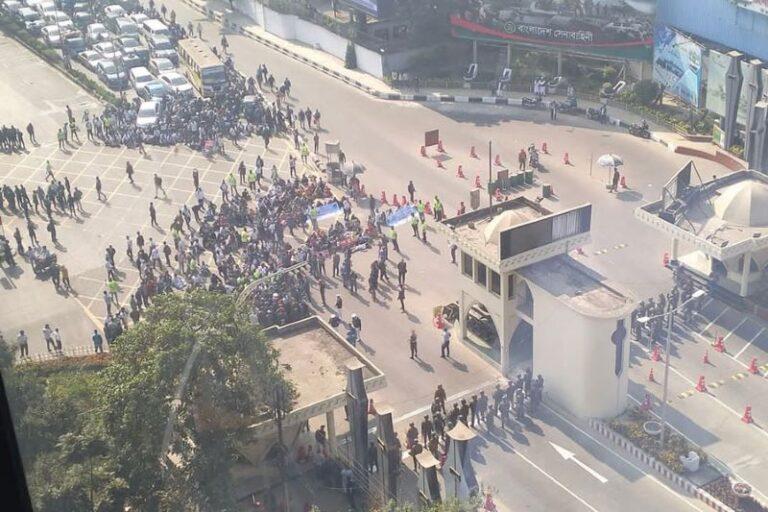
    Vehicular movement in the Dhaka Cantonment area came to a standstill for nearly three hours on Sunday as dismissed members of the Armed Forces and their families staged a sit-in at Jahangir Gate. Organised under the banner “Shohojoddha,” the protesters demanded the reinstatement of their jobs and other benefits, causing significant disruption in the area.

    The protest, which began around 9 AM., saw a group of former Bangladeshi Army, Navy, and Air Force personnel block the road near the cantonment’s Jahangir Gate, halting traffic between Chief Advisor, Muhammad Yunus’ office and Banani, the upscale residential area, housing many of the defence top brass. This blockade also obstructed entry and exit points to the Cantonment, leading to heavy congestion on Airport Road and surrounding areas.

    According to Tejgaon Police Station Chief Mobarak Hossain, efforts were immediately made to engage with the protesters and negotiate a resolution. Traffic officials and members of the Crime Division worked tirelessly to manage the situation. “We’re trying to talk to them and make them clear the area,” said Hossain during the protest.

    Demands and Allegations

    The protesters, representing a group of Armed Forces personnel dismissed or sent into compulsory retirement during the Awami League regime, articulated a three-point list of demands:

    1. Immediate reinstatement of their jobs, along with all pending salaries and benefits.
    2. Inclusion in the government pension scheme with full benefits for those unable to return to service.
    3. Reformation of the legal and judicial processes used to dismiss Armed Forces members, which they described as biased and archaic.

    Many protesters alleged that their dismissals were politically motivated and unjust. One former army member highlighted how certain officers allegedly colluded with the Awami League government to conduct unfair trials. Others spoke of being falsely accused, tortured, and imprisoned in the “Ayna Ghor” detention cells.

    “We were deprived of justice and basic rights,” said one protester, emphasising that outdated British-era laws still govern disciplinary actions in the Armed Forces. “We demand reforms to ensure fairness and accountability.”

    Disruption and Negotiation

    The protest caused widespread disruption on Sunday morning, with severe traffic jams reported through the better part of the day. Tejgaon Traffic Additional Deputy Commissioner Tania Sultana noted the challenges faced by law enforcement. “The Crime Division of police and the Army are present at the scene. We’re trying to keep the traffic flow regular on the other roads,” she said.

    Around 1 PM, senior Armed Forces officers arrived at the scene to mediate. Captain SM Enamul Hasan of the Bangladesh Navy addressed the protesters, assuring them that their demands had been communicated to the high command. “Our discussion was fruitful,” said Captain Hasan. “The chiefs of the Armed Forces have given us a timeline and promised to address your demands. We’ll do our best to fulfil them.”

    Following these assurances, Shohojoddha Chief Coordinator Naimul Islam announced the withdrawal of the protest. “Our Sirs spoke to the three chiefs of the Armed Forces and assured us that our demands will be met within five working days. We have faith in them and hence are ending the blockade,” he stated.

    The protesters relocated to the Shadhinata Bhaban, marking the conclusion of the sit-in. Traffic movement resumed shortly afterward, restoring normalcy to the area.

    Previous Protests

    This protest is not the first instance of discontent among dismissed members of the armed forces. On September 8, over 50 suspended personnel staged a human chain demonstration at the Jatiya Press Club, demanding job reinstatement and arrears payment. A week later, they submitted a memorandum to Chief Advisor Muhammad Yunus, accusing the Awami League government of dismissing them on false accusations and for political reasons.

    The memorandum described how some personnel were coerced into resigning or dismissed without proper evidence. Many alleged that their careers were ruined for opposing illegal actions or expressing dissent. “This has been our plight for the past 15 years,” read one section of the memorandum.

    Protestors’ Warning

    While the immediate protest has ended, the dismissed Armed Forces members have made it clear that they expect tangible results within the promised timeline. “If our demands are not met within five working days, we will resort to further protests,” warned one participant.

    As traffic returned to normal on Airport Road, questions remain about whether the authorities will address the grievances of the dismissed personnel or face renewed demonstrations in the coming days. For now, the episode underscores the growing unrest among a group of individuals who once served Bangladesh’s armed forces and the process they have adopted to seek justice for what they perceive as unwarranted and unjust dismissals.
    NHRC Takes Cognizance of Rising Tribal Suicides in Kerala’s Thiruvananthapuram

    The NHRC’s move is expected to bring accountability and urgency to the issue. The state government now faces the task of presenting actionable plans to address the systemic challenges afflicting the tribal communities, ensuring that such tragedies do not recur.

    The National Human Rights Commission (NHRC) has taken suo motu cognizance of a disturbing rise in suicides among tribal communities residing on the outskirts of Thiruvananthapuram district in Kerala. According to reports, 23 suicides have been recorded in the tribal settlements in 2024 alone, reviving concerns that plagued the region in previous years.

    Between 2011 and 2022, an estimated 138 suicides were reported, primarily in the Peringammala Panchayat. While the past two years had seen a decline in such incidents, the return of these tragedies highlights unresolved systemic issues affecting the tribal population.

    The NHRC noted that these incidents raise serious concerns about the right to life and the social, economic, and cultural rights of Scheduled Tribes in the area. The Commission emphasized that the suicides, particularly among young individuals aged 20-30, indicate deeper human rights violations that demand immediate attention from state authorities.

    The Commission has issued notices to the Chief Secretary and the Director General of Police (DGP) of Kerala, seeking a comprehensive report within two weeks. The report is expected to detail the status of First Information Reports (FIRs) filed in these cases, the arrest of any culprits, and whether compensation has been provided to the families of the deceased. Additionally, the NHRC has called for an outline of measures taken or proposed by the state to prevent such tragedies in the future.

    Accountability and Urgency

    Media reports from December 25, 2024, suggest that the suicides stem from a mix of social and economic challenges faced by the tribal population. Families and activists have pointed to extreme societal pressures, including harassment over inter-community relationships and marriages, as significant stressors. The growing influence of liquor and alleged involvement of sex rackets in these areas further compounds the problem, creating an environment of distress for many young individuals.

    The NHRC’s intervention comes amidst calls for a holistic approach to addressing the root causes of these suicides. Activists have urged the state government to focus on creating social support systems, improving access to mental health care, and addressing substance abuse issues in these vulnerable communities.

    Kerala, often lauded for its social development indices, faces unique challenges in ensuring the welfare of its tribal populations. The tribal settlements in the outskirts of Thiruvananthapuram, including Peringammala Panchayat, are home to communities grappling with economic instability, cultural marginalization, and limited access to essential services.

    The NHRC’s move is expected to bring accountability and urgency to the issue. The state government now faces the task of presenting actionable plans to address the systemic challenges afflicting the tribal communities, ensuring that such tragedies do not recur.

    As the two-week deadline approaches, the NHRC’s intervention underscores the need for a coordinated response from both state authorities and civil society to safeguard the rights and well-being of Kerala’s tribal population.

    Amit Shah Sets Ambitious Targets for Bhartiya Beej Sahkari Samiti Limited

    0

    Shah directed BBSSL, along with organizations like IFFCO and KRIBHCO, to evaluate and promote the nutritional value of both indigenous and hybrid seeds. Increasing the production of pulses and oilseeds, without compromising their nutritional quality, remains a priority for BBSSL.

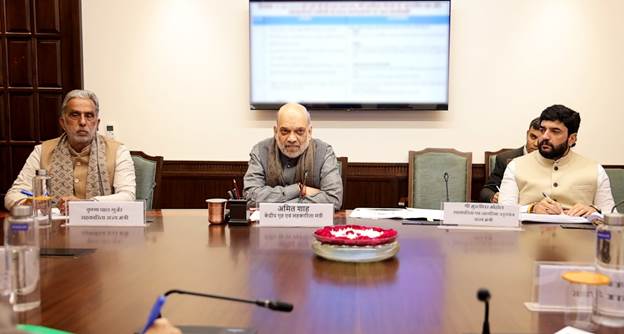
    Union Home Minister and Minister of Cooperation Amit Shah chaired a pivotal review meeting of the Bhartiya Beej Sahkari Samiti Limited (BBSSL) in the national capital. The meeting, attended by Union Ministers of State for Cooperation Krishna Pal and Murlidhar Mohol, along with senior officials, focused on aligning BBSSL’s objectives with the government’s vision of empowering farmers and enhancing agricultural productivity.

    Highlighting the significance of BBSSL, Amit Shah emphasised its role in realizing Prime Minister Narendra Modi’s vision of “Sehkar Se Samriddhi” (Prosperity through Cooperation). He urged BBSSL to accelerate its efforts in promoting and preserving India’s traditional seeds while also addressing the modern challenges of sustainable agriculture.

    In a key directive, Shah set an ambitious target for BBSSL to connect with an additional 20,000 cooperatives by the financial year 2025-26. This expansion is expected to bolster the reach of certified seeds, ensuring that more farmers, especially smallholders, benefit from quality inputs that enhance yields and extend crop maturity periods.

    The Minister also called for the creation of a comprehensive 10-year roadmap to achieve these objectives. Regular reviews will be conducted to monitor progress, with a focus on increasing seed production, fostering innovation, and promoting sustainable agricultural practices.

    Focus on Sustainability and Small Farmers

    Addressing the pressing challenges of water scarcity and excessive pesticide use, Shah urged BBSSL to prioritize the production of seeds that require less water and chemicals. This initiative aims to reduce the ecological footprint of farming while ensuring higher yields for small farmers.

    He also highlighted the need for cooperative institutions to advocate for the use of certified seeds, which are crucial for improving productivity and ensuring the nutritional value of crops. Shah pointed out that over 20,000 cooperative societies from 34 states and union territories are already shareholders of BBSSL, underscoring the organization’s wide-reaching impact.

    Shah reaffirmed the importance of preserving India’s traditional and nutritious seed varieties. He directed BBSSL, along with organizations like IFFCO and KRIBHCO, to evaluate and promote the nutritional value of both indigenous and hybrid seeds. Increasing the production of pulses and oilseeds, without compromising their nutritional quality, remains a priority for BBSSL.

    To support this initiative, Shah called for leveraging the expertise of scientists and laboratories in government universities. He urged IFFCO and KRIBHCO to establish exemplary laboratories dedicated to seed production and research, positioning India as a global leader in agricultural innovation.

    Collaborative Efforts for Agricultural Prosperity

    BBSSL is making significant strides in seed production. During the Rabi 2024 season, the organization is cultivating foundation and certified seeds across 5,596 hectares in six states. This effort is projected to yield 1,64,804 quintals of seeds from 49 varieties of eight crops. Since its inception, BBSSL has sold over 41,773 quintals of seeds, generating approximately ₹41.50 crore in market value.

    Looking ahead, BBSSL has set an ambitious target to achieve a turnover of ₹18,000 crore by 2032-33. This growth is expected to be driven by strategic partnerships, increased production capacity, and a steadfast commitment to empowering India’s farming community.

    The review meeting underscored the importance of collaboration among cooperative institutions, researchers, and policymakers. By integrating traditional knowledge with modern science, BBSSL aims to pave the way for a more sustainable and prosperous agricultural sector.

    As Amit Shah concluded the meeting, he reiterated the government’s dedication to the welfare of farmers and the vital role of BBSSL in achieving this goal. The outlined initiatives are set to transform Indian agriculture, ensuring that it remains resilient, productive, and sustainable for generations to come.

    What are the Concern’s Around the India State of Forest Report 2023

    Several experts have criticised the report for presenting a misleading picture. Critics argue that the definition of “forest cover”, which includes “all lands with a tree canopy of more than 10 per cent, irrespective of legal status or ownership,” is overly broad and incorporates commercial plantations such as orchards, bamboo groves, and palms.

    Union Minister for Environment, Forest, and Climate Change, Bhupender Yadav, unveiled the 18th biennial India State of Forest Report (ISFR) 2023 at the Forest Research Institute in Dehradun earlier this week. Prepared by the Forest Survey of India (FSI), the report offers a detailed assessment of the country’s forest and tree resources, based on satellite imagery and field data. Since its inception in 1987, the ISFR has been a critical resource for understanding India’s forest health and resources.

    The 2023 report estimates India’s total forest and tree cover at 8,27,357 sq km, representing 25.17 per cent of the country’s geographical area. While forest cover accounts for 21.76 per cent (7,15,343 sq km), tree cover contributes 3.41 per cent (1,12,014 sq km). An increase of 1,445 sq km in forest and tree cover was noted since the 2021 assessment, including 156 sq km in forest cover and 1,289 sq km in tree cover.

    Regional Highlights

    Top States by Forest and Tree Cover:

    • Madhya Pradesh leads with 85,724 sq km, followed by Arunachal Pradesh (67,083 sq km) and Maharashtra (65,383 sq km).
    • Percentage-wise Forest Cover:
      • Lakshadweep tops with 91.33 per cent, followed by Mizoram (85.34 per cent) and the Andaman & Nicobar Islands (81.62 per cent).
    • Mangrove Cover:
      • India’s total mangrove cover stands at 4,992 sq km.
    • Growing Stock and Bamboo:
      • The report highlights an increase of 262 million cubic meters in growing stock and 5,227 sq km in bamboo-bearing area since 2021.
    • Carbon Stock:
      • India’s forest carbon stock is estimated at 7,285.5 million tonnes, marking an increase of 81.5 million tonnes compared to the previous report.

    Minister’s Remarks

    Minister Bhupender Yadav commended the incremental rise in forest and tree cover, emphasising the importance of advanced technologies like near-real-time fire alerts to monitor forest fires. He reiterated India’s commitment to its Nationally Determined Contributions (NDCs), stating that the country has achieved a carbon sink increase of 2.29 billion tonnes of CO2 equivalent since 2005, bringing it closer to the 2030 target of 2.5 to 3.0 billion tonnes.

    Areas of Concern

    Despite the optimistic figures, several experts have criticised the report for presenting a misleading picture. Critics argue that the definition of “forest cover”, which includes “all lands with a tree canopy of more than 10 per cent, irrespective of legal status or ownership,” is overly broad and incorporates commercial plantations such as orchards, bamboo groves, and palms. This approach, they claim, inflates forest cover data and masks the reality of biodiversity loss.

    Key Concerns

    • Prakriti Srivastava, former Principal Chief Conservator of Forests, and others have pointed out inconsistencies, including the inclusion of commercial plantations as forest cover.
    • Conservationist Krithika Sampath highlighted the lack of transparency, noting the absence of granular data and geo-referenced maps to validate the reported increases.
    • Debadityo Sinha, from the Vidhi Centre for Legal Policy, criticised the omission of details about diverted forest lands and the lack of compliance with Supreme Court directives to digitise forest records.

    Key Findings Under Scrutiny

    1. Forest Cover Increase:
    2. The reported increase of 156 sq km in forest cover is modest, with over 95 per cent of the gain occurring outside officially recorded forest areas.
    3. Tree Cover Revisions:
    4. For the first time, the report included bamboo clumps and trees with diameters as small as 5-10 cm, further inflating tree cover statistics.
    5. Carbon Stock Data:
    6. While carbon sequestration potential from degraded lands was mentioned, the report remained silent on the loss of 30,808 sq km of open and scrub forests since 2021.

    Policy Implications and Future Steps

    The Western Ghats, a UNESCO World Heritage Site and biodiversity hotspot, recorded a loss of 58.22 sq km of forest cover over the past decade. This trend raises alarms about the region’s ecological health and underscores the broader issue of inadequate forest conservation in hill districts, which currently have only 40 per cent forest cover, far below the 66.6 per cent policy target.

    India’s forest policy aims to achieve 33 per cent forest cover nationwide, aligning with global benchmarks. However, the ISFR 2023’s findings reveal significant gaps. Experts recommend the following actions:

    1. Revisiting Definitions:
      Refine the definition of forest cover to distinguish between natural forests and commercial plantations.
    2. Enhanced Transparency:
      Publish detailed, geo-referenced maps and granular data to validate claims.
    3. Addressing Biodiversity Loss:
      Prioritise the restoration of degraded natural forests to support biodiversity and ecosystem services.
    4. Strengthening Monitoring Mechanisms:
      Implement robust monitoring frameworks to track forest diversion for developmental projects and ensure compliance with conservation goals.

    The India State of Forest Report 2023 provides valuable insights into the nation’s green cover and its role in climate change mitigation. However, addressing the concerns raised by ecologists and conservationists will be crucial for achieving sustainable and equitable forest management. As India approaches its 2030 NDC targets, balancing developmental aspirations with ecological preservation will remain a formidable challenge.

    SLINEX-24: Strengthening Maritime Security and Cooperation in the Indian Ocean

    0

    As the 2024 edition of SLINEX concluded, it became evident that the exercise not only enhanced the operational capabilities of the Indian and Sri Lankan navies but also served as a testament to their shared commitment to regional peace and stability.

    In a significant move to bolster maritime security and cooperation, India and Sri Lanka concluded the 2024 edition of their bilateral naval exercise, SLINEX-24, from December 17 to 20. Conducted under the Eastern Naval Command in Visakhapatnam, this joint exercise marks a vital step in enhancing the operational capabilities of both navies and fostering regional stability in the Indian Ocean.

    A Tradition of Maritime Collaboration

    SLINEX (Sri Lanka-India Naval Exercise), which began in 2005, has become a cornerstone of maritime collaboration between the two countries. This year’s edition was held in two phases: the Harbour Phase from December 17 to 18 and the Sea Phase from December 19 to 20. These exercises aim to strengthen mutual trust, improve interoperability, and address common maritime challenges.

    India was represented by the Indian Naval Ship (INS) Sumitra, a sophisticated offshore patrol vessel from the Eastern Fleet, accompanied by a contingent of Special Forces commandos. Sri Lanka participated with the SLNS Sayura, an offshore patrol vessel, and its own Special Forces team.

    The inaugural ceremony on December 17 set the tone for the Harbour Phase, where both navies engaged in professional exchanges and social interactions. This phase focused on fostering camaraderie and understanding through joint discussions, cross-training sessions, and informal sporting events. These activities provided an opportunity for the participants to share expertise and deepen their professional bonds.

    The Sea Phase, held from December 19 to 20, featured complex naval drills and manoeuvres, emphasising operational synergy and tactical excellence. Key activities included:

    • Gun Firings: Live firing exercises demonstrated the precision and combat readiness of both navies.
    • Special Forces Operations: Joint drills highlighted coordinated responses to security threats.
    • Communication Procedures: Exercises improved interoperability through seamless communication protocols.
    • Seamanship and Navigation Evolutions: Teams conducted advanced navigation and ship-handling drills.
    • Helicopter Operations: Coordinated aerial exercises showcased the integration of air and naval assets.

    These activities underscored the commitment of both nations to maintaining maritime security and ensuring the free movement of goods and vessels in the region.

    Expanding Regional Maritime Cooperation

    The timing of SLINEX-24 coincided with the visit of Sri Lankan President Anura Kumara Dissanayake to India. During his meetings with Indian leaders, including President Draupadi Murmu and Prime Minister Narendra Modi, Dissanayake emphasised Sri Lanka’s commitment to not allowing its territory to be used for activities against India. His statement is particularly significant amid growing concerns over the increasing presence of Chinese naval assets, including warships and submarines, in the Indian Ocean.

    The shared vision of peace and stability in the region was a central theme of discussions, reinforcing the strategic importance of joint initiatives like SLINEX.

    In parallel with SLINEX, India’s commitment to maritime security extended to its cooperation with the Maldives. On December 15, Indian Coast Guard ships ICGS Vaibhav and ICGS Abhiraj arrived at Male Port for a four-day port call. The visit included professional interactions with the Maldives National Defence Force Coast Guard (MNDF CG), focusing on key issues such as marine pollution response, search and rescue operations, and maritime law enforcement.

    Joint activities such as cross-deck training and friendly sports competitions highlighted the growing camaraderie between the Indian Coast Guard and MNDF CG. These engagements are part of a broader strategy to enhance regional stability and secure critical sea lanes in the Indian Ocean.

    Strengthening Bonds Amidst Challenges

    The success of SLINEX-24 aligns with India’s maritime vision of Security and Growth for All in the Region (SAGAR). This initiative emphasizes a collaborative approach to regional security and economic prosperity, underscoring the importance of a rules-based maritime order.

    The defence ministry highlighted that SLINEX has played a pivotal role in fostering mutual trust and understanding between India and Sri Lanka. This year’s exercise further consolidated their maritime partnership, promoting a secure and rule-based maritime domain.

    As the 2024 edition of SLINEX concluded, it became evident that the exercise not only enhanced the operational capabilities of the Indian and Sri Lankan navies but also served as a testament to their shared commitment to regional peace and stability. Amid the evolving geopolitical landscape of the Indian Ocean, such collaborations are vital for addressing emerging challenges and ensuring a secure maritime environment.

    Through initiatives like SLINEX and broader engagements with its maritime neighbours, India continues to reaffirm its role as a key security partner in the region. The successful completion of SLINEX-24 stands as a beacon of the enduring maritime partnership between India and Sri Lanka, paving the way for greater cooperation and shared prosperity in the years to come.

    Ken-Betwa River Link Project: PM Modi to Lay Foundation Stone on Wednesday

    The Ken-Betwa river interlinking project involves the diversion of nearly 6,000 hectares of the Panna Tiger Reserve in Madhya Pradesh. The Reserve is spread over 54,266 hectares.

    Prime Minister Narendra Modi will kick off this year’s ‘Good Governance Day’ by laying the foundation stone for the Ken-Betwa River Linking Project on Wednesday, December 25. The government calls it a landmark step toward addressing India’s water scarcity and boosting regional development.

    According to the government, the Ken-Betwa River Linking project, the first under India’s national river interlinking policy, is set to transform the drought-prone Bundelkhand region, spanning Madhya Pradesh and Uttar Pradesh.

    A large section of environmentalists do not agree with this massive engineering project being undertaken by the government.

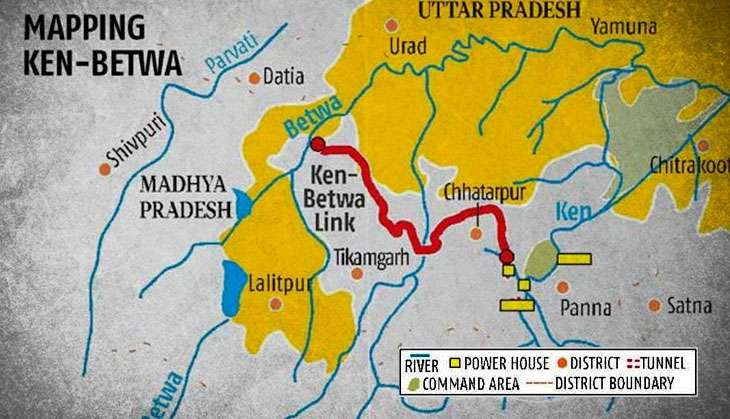
    The Ken-Betwa Link Project is a pioneering endeavour under the Peninsular Rivers Development plan, part of the National Perspective Plan for water resource management formulated in 1980. It aims to transfer surplus water from the Ken River in Madhya Pradesh to the Betwa River in Uttar Pradesh, ensuring equitable water distribution across drought-prone areas.

    Former Madhya Pradesh Chief Minister Shivraj Singh Chouhan (and present Union Minister for Agriculture and Farmers’ Welfare) had expressed optimism about the project’s impact, calling it a “game-changer” for Bundelkhand’s image and future.

    “It will bring socio-economic development, improve groundwater levels, and create new employment opportunities,” Chouhan had said.

    Madhya Pradesh Chief Minister Dr. Mohan Yadav says that the Ken-Betwa Link National Project is a unique example of cooperation and coordination between the Government of India, Madhya Pradesh, and Uttar Pradesh. Saying that the project is the realisation of the River-Linking Campaign dream of former Prime Minister Atal Bihari Vajpayee, he said that the project will change the image and destiny of the entire Bundelkhand region in both Madhya Pradesh and Uttar Pradesh.

    Economic Benefits

    Estimated to cost ₹44,605 crore, the Ken-Betwa project involves constructing the Daudhan dam – a 77-meter-high and 2.13-kilometer-long structure – on the Ken River within the Panna Tiger Reserve. The dam will store approximately 2,853 million cubic meters of water. Water will be transferred to the Betwa River via a 221-kilometer-long link canal, supported by two tunnels of 1.9 km and 1.1 km in length. The dam will store 2,853 million cubic metres of water, the chief minister said.

    Chief Minister Mohan Yadav described the Ken-Betwa as the largest irrigation project in the country, adopting an underground pressurised pipe irrigation system.

    This extensive infrastructure will provide irrigation facilities to nearly 65 lakh people (44 lakh people in 10 districts of Madhya Pradesh and 21 lakh in Uttar Pradesh) will be reached with drinking water through the project, which is estimated to cost Rs 44,605 crore.

    The 10 districts of Madhya Pradesh, including Panna, Damoh, Chhatarpur, Tikamgarh, and Vidisha will benefit from the project. In these districts, nearly 7.18 lakh farmer families of 2,000 villages will be benefitted from the project.

    Additionally, 59,000 hectares in Uttar Pradesh will receive irrigation support, stabilising water availability in areas like Mahoba, Jhansi, Lalitpur, and Banda.

    The project is designed to produce 103 MW of hydropower and 27 MW of solar energy, contributing to renewable energy generation. Furthermore, the project includes efforts to restore historical Chandela-era ponds in districts like Chhatarpur and Tikamgarh. These ponds will serve as rainwater reservoirs, enhancing local water conservation.

    Atal Bihari Vajpayee’s Vision

    Prime Minister Modi’s efforts to advance the Ken-Betwa project fulfill the vision of former Prime Minister Atal Bihari Vajpayee, who championed river interlinking as a means to address India’s water distribution challenges. The tripartite memorandum of understanding for the project’s implementation was signed on March 22, 2021, in the presence of PM Modi, marking a significant milestone in collaborative governance that also envisages the revival of Bundelkhand.

    Bundelkhand has long struggled with recurring droughts, leading to water scarcity, agricultural challenges, and outmigration for employment. The Ken-Betwa project promises a much-needed respite. Beyond irrigation and drinking water supply, it is expected to boost tourism and enhance the forest ecosystem of the Panna Tiger Reserve.

    Technical Feasibility

    Studies by the National Water Development Agency (NWDA) have affirmed the project’s technical and economic viability. The surplus water from the Ken basin, determined through extensive feasibility assessments since 1995, will alleviate water shortages in the Betwa basin. The underground pressurized pipe irrigation system, the largest of its kind in India, underscores the project’s innovative engineering.

    Efforts to finalise the project’s blueprint date back to 1995. A consensus among stakeholders was reached in 2005, and the detailed project report was subsequently prepared. The project’s implementation highlights the importance of inter-state cooperation in addressing shared challenges.

    Though the government is set to announce that the project represents innovative infrastructure driving regional transformation and a beacon of hope for the people of Bundelkhand, many environmentalists strongly oppose the project due to its environmental impact.

    The promise to address water scarcity, support agriculture, generate clean energy, and promote economic growth will come at an environmental cost, they say.

    For instance, the river interlinking project has been appraised for forest clearance as it involves the diversion of nearly 6,000 hectares of the Panna Tiger Reserve in Madhya Pradesh. The Reserve is spread over 54,266 hectares and is home to tigers but with the coming of the project, nearly 10 per cent will be taken away. As per a former standing committee member of the National Board for Wildlife, the Ken-Betwa project will not only be disastrous for tigers in the region but will also have a severe impact on the critically endangered gharial found in the Ken river.

    When the final sanctions for the Ken-Betwa River Linking Project (KBRLP) came through in October last year, it was welcomed with cheers by then BJP Chief Minister Shivraj Singh Chouhan who had called it a “fortunate day for the people of Bundelkhand who had lagged behind.”

    Yet, according to the South Asia Network on Dams, Rivers and People (SANDRP), Chouhan made no mention of the thousands of farmers, herders, forest dwellers and their families in his state that it would deprive. Nor did he see that the forest clearance was awarded on the basis that power generation would be outside the Panna tiger reserve, but now it is inside.

    Image: South Asia Network on Dams, Rivers and People (SANDRP)

    Sri Lanka to Enshrine Right to Healthcare in New Constitution

    Sri Lanka’s healthcare system faces several challenges. An aging population and a rising prevalence of non-communicable diseases, which account for nearly 75 per cent of deaths, place increasing strain on resources.

    Sri Lanka is set to recognise the right to healthcare as a fundamental right in its new Constitution, according to Minister Nalinda Jayathissa. This historic move aims to empower citizens to seek legal remedies if their right to access healthcare is violated.

    Jayathissa made the announcement at the annual social welfare event of the All-Island Kidney Patients’ Association, held at the Mahaweli Centre. The event was attended by prominent health officials of the island nation.

    A Model for Regional Healthcare

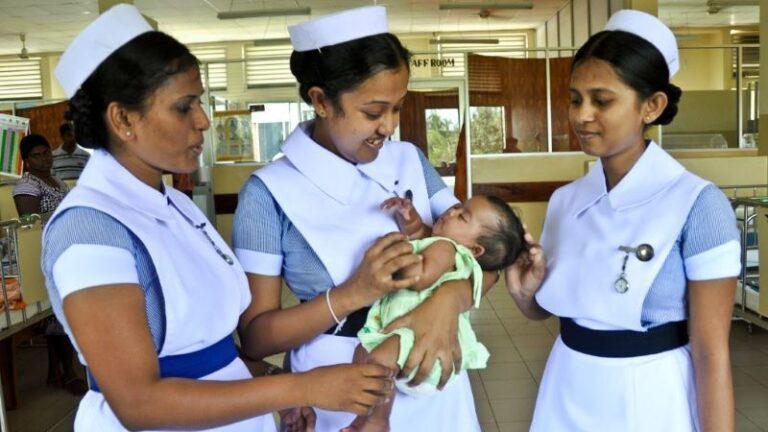
    Sri Lanka’s free and universal healthcare system has long been lauded as one of the best in the region. With an extensive network of public health facilities, the majority of citizens have access to healthcare within an average distance of 1.4 kilometers for basic clinics and 4.8 kilometers for government-sponsored facilities.

    The country boasts high life expectancy and low maternal and infant mortality rates compared to its neighbours. Over the years, Sri Lanka has successfully eliminated major diseases like malaria, filariasis, polio, and neonatal tetanus, further solidifying its position as a regional healthcare leader.

    The government plays a central role in delivering healthcare services, employing more than 90 per cent of the nation’s doctors and nurses and operating over 90 per cent of hospital beds. Public hospitals provide 95 per cent of inpatient care and half of all outpatient services, ensuring widespread access to medical care.

    Challenges on the Horizon

    Despite these achievements, Sri Lanka’s healthcare system faces several challenges. An aging population and a rising prevalence of non-communicable diseases, which account for nearly 75 per cent of deaths, place increasing strain on resources. Additionally, long waiting times for specialised care and advanced medical procedures in public hospitals have led to a growing reliance on private healthcare, which remains financially inaccessible for many.

    Government spending on healthcare currently stands at 4 per cent of the national budget. While the public sector remains the backbone of the healthcare system, the private sector’s role is expanding, albeit limited to those who can afford higher costs.

    A Legacy of Universal Healthcare

    Sri Lanka’s commitment to universal healthcare dates back to 1950, when the nation adopted its policy of free healthcare. This initiative was part of a broader effort to expand health services in the two decades leading to independence, driven by politicians seeking to garner public support. Today, the country is home to one of the world’s earliest known healthcare systems, which includes a rich tradition of indigenous medicine alongside modern medical practices.

    Teaching hospitals in major cities such as Colombo, Kandy, Galle, Anuradhapura, and Jaffna serve as hubs for advanced treatment, staffed by experienced doctors and nurses. For emergencies, the accident services at general hospitals are highly recommended due to their specialised capabilities.

    Access to Medical Services

    The decision to recognise healthcare as a fundamental right marks a significant step in safeguarding universal access to medical services for all citizens. By embedding this right in the Constitution, Sri Lanka underscores its commitment to maintaining a healthcare system that not only delivers quality care but also ensures accountability.

    As Sri Lanka prepares for this transformative policy change, stakeholders and policymakers will need to address existing challenges to strengthen the healthcare system further. With its long-standing tradition of universal healthcare and robust public sector services, the country is well-positioned to set a benchmark for inclusive and equitable healthcare in the region.

    Simultaneously, the Sri Lanka cabinet has approved a proposal to sign an agreement pegged at 780 million Sri Lankan Rupees with India for healthcare in the island nation.

    The announcement serves as a reminder of the importance of healthcare as a pillar of social welfare and human dignity. By enshrining this right, Sri Lanka is poised to reaffirm its legacy as a nation committed to the well-being of its people.

    Image: ADB

    Bangladesh Plans Maiden Climate Bank Amid Banking Sector Challenges

    As the country grapples with its existing banking challenges, the question remains: Can Green Bank rise as a beacon of sustainability, or will it become another casualty of systemic shortcomings?

    Bangladesh is poised to take a ground-breaking step toward addressing its climate vulnerabilities with the proposal for its first-ever climate bank, likely to be named Green Bank Ltd. The initiative, conceived by the privately run organisation Water and Essential (WE), aims to align banking operations with global environmental and sustainability standards.

    Experts, however, point out that the proposal comes at a time of turbulence in the country’s banking sector, raising questions about its feasibility and timing.

    Proposal for a Climate Bank

    The proposed Green Bank is envisioned as a specialised institution under a global-standard climate-bank model, with a paid-up capital of Bangladeshi Taka 3.24 billion. Its primary objective is to safeguard the nature and address pressing environmental concerns in a country acutely vulnerable to climate change impacts, such as rising sea levels, floods, and extreme weather events.

    Unlike conventional banks, Green Bank Ltd aims to function as a hybrid venture – a for-profit and non-profit joint enterprise – adhering to environmental, social, and governance (ESG) principles. The bank’s model includes significant domestic and international investment, with 93-95 per cent of its ownership open to such stakeholders. The entrepreneurial organisation behind the proposal, WE, would retain 5-7 per cent of the ownership.

    According to its proponents, the bank will play a critical role in achieving Sustainable Development Goals (SDGs) by 2030 and is designed to be replicable worldwide. “It is an exceptional business that adheres to Environmental, social, and governance (ESG) conditions and contributes to building a green economy,” the proposal highlights.

    Administrative Steps and Initial Reactions

    The proponents of the Green Bank have submitted the proposal to Bangladesh’s Ministry of Environment, Forest and Climate Change (MoEFC), which has recommended forming a committee to conduct a feasibility study. The MoEFC has forwarded the proposal to the Financial Institutions Division (FID) for further action. The FID, in turn, plans to pass it on to Bangladesh Bank, the central regulatory body, for scrutiny.

    A senior FID official confirmed receiving the proposal, stating, “The proposal to establish a climate bank named Green Bank has been forwarded for evaluation by Bangladesh Bank to decide on the next steps.”

    Current Challenges in Bangladesh’s Banking Sector

    The proposal’s timing coincides with significant instability in the country’s banking sector. Bangladesh currently has 62 scheduled banks, including 43 private commercial banks (PCBs). While some of these banks have shown promising results, many are grappling with severe issues such as liquidity shortages, high non-performing loans (NPLs), and reputation crises, according to a recent study by the Bangladesh Institute of Bank Management (BIBM).

    Adding to the challenges, an executive director of Bangladesh Bank, speaking anonymously, expressed scepticism about issuing a new banking license under current conditions. “The local banking sector has been vulnerable for the last several months, mainly due to liquidity crises. Given the state of the economy and the banking system, issuing a new license is quite improbable,” the official noted.

    Other experts have echoed similar concerns. Dr. Mustafa K. Mujeri, Executive Director of the Institute for Inclusive Finance and Development (InM), warned against licensing new banks without addressing existing systemic issues. “The banking sector is currently in disarray. It is imperative to stabilise the sector before considering new entrants,” he said.

    Potential Impact and Challenges for Green Bank

    Despite the challenges, proponents of Green Bank argue that it is not a conventional financial institution and should not be evaluated solely through the lens of traditional banking. It is envisioned as a transformative platform where environmental preservation and economic sustainability intersect.

    The proposed climate bank would act as a repository for environmental data and a hub for initiatives promoting green technologies and practices. Advocates emphasise that it could help bolster Bangladesh’s environmental resilience while contributing to global climate action frameworks.

    However, sceptics caution that even unconventional banking models require a robust financial ecosystem to thrive. The risk of financial mismanagement, highlighted by past irregularities in new-generation banks, remains a significant concern, they say. Experts believe that without a comprehensive strategy to reform and stabilise the current banking sector, introducing a new entity – even one with noble intentions – could backfire.

    Nevertheless, the proposal for Green Bank marks a bold vision for Bangladesh, blending financial innovation with environmental stewardship. While its ambitious goals align with global priorities, the success of such a venture depends on rigorous planning, stakeholder collaboration, and a conducive regulatory environment, say experts.

    The feasibility study recommended by the MoEFC will likely serve as a critical next step in determining whether this pioneering initiative can navigate the complex financial and environmental landscape of Bangladesh. As the country grapples with its existing banking challenges, the question remains: Can Green Bank rise as a beacon of sustainability, or will it become another casualty of systemic shortcomings?

    ‘Our Children Are Dying’: The Toll of Sectarian Violence in Pakistan’s Parachinar

    Kurram district’s sectarian strife has deep roots, with decades of sporadic violence claiming thousands of lives. The region’s mountainous terrain and proximity to Afghanistan have further complicated efforts to establish peace.

    Parachinar, a predominantly Shi’ite city in north-western Pakistan, has been severed from the rest of the Sunni-majority country by a wave of sectarian violence, leaving its 400,000 residents in the grip of a humanitarian crisis. The closure of the main road leading in and out of the city last month has triggered severe shortages of food, medicine, and fuel, amplifying the already dire challenges facing the community.

    “Our children are dying because of a shortage of food and medicine,” said Munawar Hussain, a tribal leader in Parachinar. His plea captures the desperation felt across the city as families struggle to care for their children and elderly amid freezing temperatures and dwindling supplies.

    A City Under Siege

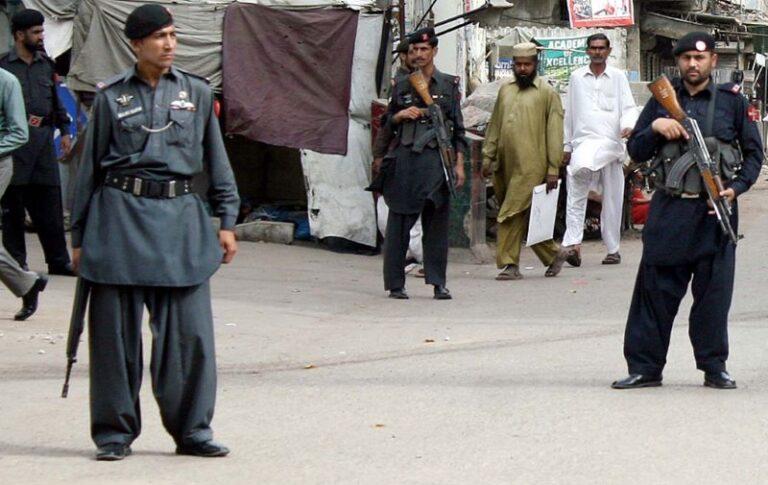
    The ongoing conflict between Shi’ite and Sunni Muslims in Kurram district, where Parachinar is located, has claimed hundreds of lives this year. In November alone, nearly 100 people were killed in a series of ambushes along the main road, which is now controlled by armed groups from both sects. Efforts by authorities to mediate peace talks between the rival communities have yet to yield results, leaving the road – and by extension, the city – in a state of lockdown.

    The blockade has had a devastating impact on the civilian population. Sunni villages near Parachinar face similar fears of venturing outside, while residents of the city itself report being unable to procure basic necessities. “I cannot find any medicine,” lamented Munir Hussain, whose child is hospitalized at Parachinar’s sole state-run medical facility.

    Mounting Deaths and Critical Shortages

    A health-care worker, speaking on condition of anonymity, reported that at least 34 children have died in recent weeks due to a lack of medicine and basic supplies. The only hospital in the city has run out of oxygen, and cases of pneumonia among children have surged as temperatures plummet below freezing.

    Doctors warn that the elderly are also at risk, particularly those with chronic illnesses like cancer, diabetes, and heart conditions who have run out of their prescribed medications. “We are bracing for a wave of deaths,” said a medical professional. Yet provincial officials have downplayed the crisis. Muhammad Ali Saif, a spokesman for the Khyber Pakhtunkhwa government, stated that the reported deaths were under investigation and insisted they were not due to medicine shortages.

    Despite these assurances, residents and activists accuse the government of failing to address their plight. “These minuscule supplies are not enough for such a large population,” said Laiq Hussain, a local activist, referring to a small shipment of medicine sent by the Edhi Foundation, a private charity.

    Humanitarian Efforts Fall Short

    The Edhi Foundation’s intervention, which included flying in medicine and evacuating critically ill patients, provided temporary relief but underscored the scale of the crisis. Faisal Edhi, the charity’s head, described conditions in Parachinar as “critical” and called for sustained efforts to alleviate the suffering.

    Prime Minister Shehbaz Sharif has ordered the provincial government to take immediate steps to send more medicine to the region. However, the lack of security on the road remains a significant barrier. Authorities have acknowledged their inability to reopen the route due to the presence of heavily armed groups.

    Government Measures and Long-Term Goals

    In a bid to restore stability, the Khyber Pakhtunkhwa government has requested federal assistance to deploy the Frontier Constabulary (FC) in Kurram. Key measures outlined by the provincial administration include:

    • Enhanced security: Additional police forces and bomb-proof vehicles for tribal districts and key areas.
    • Crackdown on disruptors: Individuals threatening peace will face a zero-tolerance policy and could be declared terrorists.
    • Sustainable peace efforts: A Grand Jirga continues to mediate between the communities, while authorities aim to dismantle bunkers and confiscate heavy weaponry.

    A Region Scarred by History

    Kurram district’s sectarian strife has deep roots, with decades of sporadic violence claiming thousands of lives. The region’s mountainous terrain and proximity to Afghanistan have further complicated efforts to establish peace. Land disputes, often entwined with sectarian tensions, fuel the cyclical violence that has plagued the district.

    The closure of the Peshawar-Parachinar highway has only exacerbated the suffering of residents, who are now staging protests outside the local press club. The sit-ins reflect growing frustration with the government’s inability to resolve the crisis.

    A Cry for Help

    For families like Munir Hussain’s, the crisis is not just about numbers or political statements but the lives of their loved ones. As he waits for medicine to arrive, his child’s fate hangs in the balance. Activists and aid organizations are calling for immediate action to break the blockade and ensure the safe delivery of essential supplies.

    The people of Parachinar – caught in the crossfire of sectarian violence and governmental inertia – are left to wonder how much longer they can endure. As Munawar Hussain put it, “We are living under tremendous stress.”

    Turkey Is Replacing Iran as Dominant Foreign Player in Syria

    As Turkey consolidates its influence in Syria, the balance of power in the Middle East continues to shift. While Iran seeks to regain its foothold and Russia recalibrates its strategy, Turkey’s ambitions in the region are becoming increasingly evident.

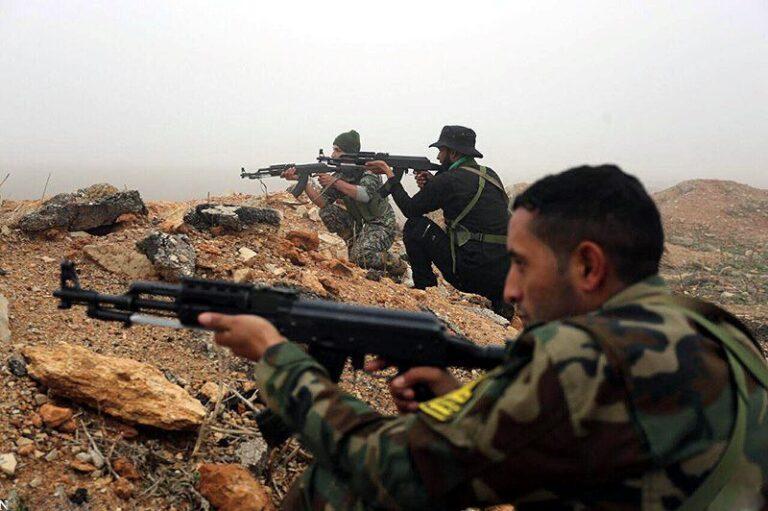
    Turkey has emerged as the dominant foreign actor in Syria following the fall of Bashar al-Assad’s government, significantly diminishing the influence of Iran and its ally, Russia. This shift marks a new chapter in the geopolitical rivalry between Turkey and Iran, which has extended from the South Caucasus to the Levant, according to a report by Radio Free Europe.

    For years, Iran and Turkey have vied for supremacy in the region, but the collapse of Assad’s regime has tipped the scales in Ankara’s favour. Turkey-backed rebel factions played a pivotal role in Assad’s downfall, undermining the position of Iran, which had long relied on Syria as a crucial ally.

    “The Islamic Republic has harboured deep concerns about Turkish influence in Syria—economic, political, and military—well before Assad’s fall,” Radio Free Europe quotes Behnam Taleblu, an Iran analyst at the Washington-based Foundation for Defence of Democracies (FDD). “With the loss of its sole state ally in the region, Iran’s apprehensions are set to grow exponentially.”

    Competing Agendas

    Since the outbreak of the Syrian civil war in 2011, the alliances in Syria have been starkly drawn: Iran and Russia supported Assad’s government, while Turkey aligned with opposition groups seeking his removal. Tehran’s primary interest was maintaining a corridor to supply and support Hezbollah and other proxies in the region. For Moscow, Assad’s regime ensured continued access to its strategic military bases in Syria, including the Hmeimim air base and Tartus naval facility, which are key to projecting Russian power in the Middle East and the Mediterranean.

    In contrast, Turkey sought to reshape Syria’s political landscape in line with its regional ambitions. A significant focus for Ankara was curbing the influence of Kurdish groups in north-eastern Syria, particularly the Democratic Union Party (PYD) and its armed wing, the People’s Protection Units (YPG), which Turkey views as extensions of the outlawed Kurdistan Workers’ Party (PKK). The YPG forms the backbone of the Syrian Democratic Forces (SDF), a U.S.-backed coalition fighting the remnants of ISIS.

    “Turkey’s priorities in Syria have been threefold: neutralizing the YPG/PYD, facilitating the return of Syrian refugees, and preventing further refugee flows into Turkey,” said Daria Isachenko, a Turkey expert at the German Institute for International and Security Affairs.

    The fall of Assad on December 8 addressed the refugee crisis to some extent, but Ankara’s other two objectives remain pressing, Isachenko noted.

    Rising Influence in Syria

    Syria is now largely under the control of Hayat Tahrir al-Sham (HTS), a U.S.-designated terrorist organisation with ties to Turkey. This development has further marginalized Iran’s role in the country. Isachenko suggested that Turkey’s growing presence in Syria could bolster its geopolitical position in the Mediterranean, potentially leading to agreements similar to its maritime deal with Libya.

    However, the road ahead is fraught with challenges. Turkey’s ascension as a dominant player in Syria could have repercussions in the South Caucasus, another region where Iran, Russia, and Turkey compete for influence. The Astana talks – a trilateral framework aimed at resolving the Syrian conflict – might no longer hold relevance, but they offered a platform for managing competing interests.

    “Coordination and consultation on conflict management between Turkey, Iran, and Russia in the Middle East and the South Caucasus cannot be ruled out,” Isachenko said. She added that Turkey and Iran might still find common ground in opposing Israel, which has increased its activity in Syria since Assad’s ouster.

    Iran’s Response

    According to the Radio Free Europe report, Iran is unlikely to accept its diminished role in Syria without a fight. Taleblu of FDD predicts that Tehran will deploy the Islamic Revolutionary Guard Corps (IRGC) to rebuild its influence in the country.

    “Downtrodden, disposed, and spurned local actors are easy to co-opt, particularly in states where central authority is weak,” Taleblu said, suggesting that Iran could exploit Syria’s fragmented political landscape to reassert its presence.

    The Kurdish Dilemma

    The status of Kurdish forces in Syria remains precarious in the wake of Assad’s fall. The US has scaled back its support for the Kurdish-led SDF, partly due to pressure from NATO ally Turkey and the withdrawal of most US troops in 2018 and 2019. Ankara’s growing influence has already led to clashes between Turkey-backed rebel groups and Kurdish forces, with the former seizing previously Kurdish-controlled cities like Manbij and Tal Rifaat.

    “The remaining 900 US troops in Syria might offer some protection to the Kurds, but the situation is tenuous,” said Wladimir van Wilgenburg, an analyst based in Iraqi Kurdistan and co-author of books on Syrian Kurds.

    Van Wilgenburg noted that the new authorities in Damascus, aligned with HTS, are likely to favour relations with Turkey over the Kurds. This could force the SDF to strike a deal with HTS, potentially ending Kurdish autonomy in Syria. HTS leader Ahmad al-Sharaa, formerly known as Abu Muhammad al-Jolani, has expressed a desire to unify all armed groups in Syria under a single banner. However, any Kurdish alignment with HTS would come at the cost of self-rule, Van Wilgenburg warned.

    The Radio Free Europe report says that the balance of power in the Middle East continues to shift as Turkey consolidates its influence in Syria. While Iran seeks to regain its foothold and Russia recalibrates its strategy, Turkey’s ambitions in the region are becoming increasingly evident. The interplay of these forces will shape the future of Syria and its neighbours, with wide-ranging implications for regional stability and global geopolitics.