More

    Sri Lanka Retains Special Commodity Levy to Protect Farmers – Despite Concerns Over Food Prices

    The Special Commodity Levy has been a contentious issue in Sri Lanka’s economic policy. Imposed at high rates under the “Minister’s Prerogative,” these levies bypass parliamentary approval, leading to allegations of corruption and lack of financial transparency.

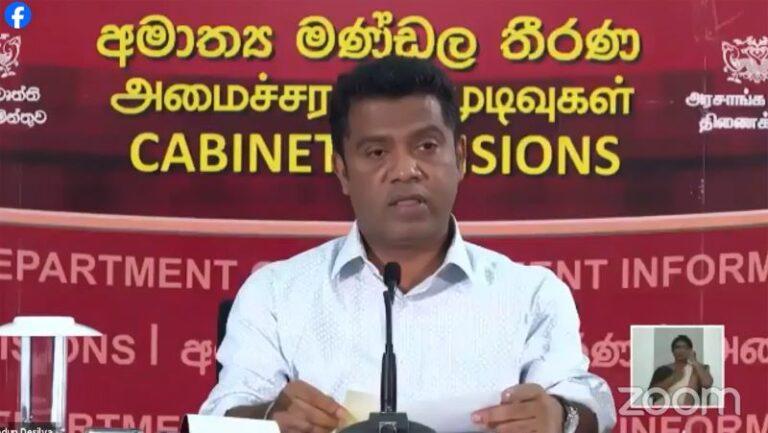
    The Sri Lanka’s cabinet has decided to retain the Special Commodity Levy (SCL) Act, reversing a prior decision to abolish it and replace it with a value-added tax (VAT). The move, announced in a government statement, aims to protect local farmers and manage the impact on food prices.

    Initially, the cabinet, on March 25, 2024, had resolved to replace the SCL with VAT to address issues of corruption and constitutional challenges. However, the decision faced criticism for its potential negative effects on farmers and food security.

    The SCL Act, which covers 63 items, imposes taxes at high rates on staple foods such as rice, potatoes, and maize. Critics argue that while these taxes protect domestic agriculture, they also make basic foods costly, exacerbating malnutrition among poor families. Taxes on rice and potatoes are reportedly close to 50 per cent, while levies on maize drive up the cost of protein for children.

    President Anura Kumara Dissanayake submitted a cabinet paper advocating for the continuation of the SCL from January 1, 2025. The proposal was approved by the cabinet, reflecting the government’s intent to prioritise farmer protection over other economic considerations.

    Royal Prerogative?

    The SCL has been a contentious issue in Sri Lanka’s economic policy. Imposed at high rates under the “Minister’s Prerogative,” these levies bypass parliamentary approval, leading to allegations of corruption and lack of financial transparency. Critics draw parallels with historical practices like the “Royal Prerogative” before the Magna Carta, which allowed rulers to levy taxes without public consent.

    Under an agreement with the International Monetary Fund (IMF), Sri Lanka had committed to replacing the SCL with VAT, citing concerns over governance and its impact on inflation. However, the government now argues that the SCL’s ability to prevent a “tax-on-tax” effect and support domestic agriculture outweighs these concerns.

    While the decision is intended to bolster self-sufficiency and support farmers, critics argue that it pits agricultural interests against the needs of malnourished children and low-income families struggling with high food prices.

    The debate underscores the delicate balance Sri Lanka must strike between supporting its farmers, ensuring food security, and fulfilling its international economic commitments.

    At Cairo D8 Meet, Pakistan PM Sharif and Bangladesh’s Yunus Agree to Strengthen Bilateral Ties

    The Pakistan Prime Minister thanked Bangladesh for waiving off the condition of 100 per cent physical inspection of consignments from Pakistan and abolishment of special security desk at the Dhaka airport earlier established to scrutinise Pakistani passengers.

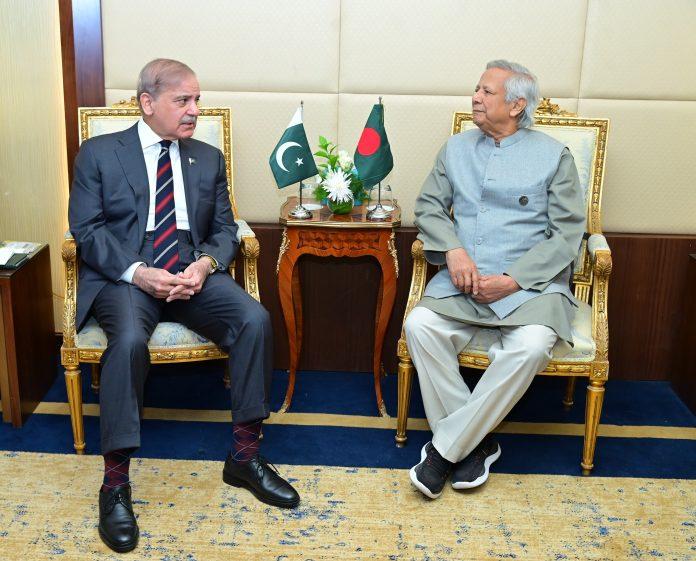
    Chief Adviser to Bangladesh’s interim government, Professor Muhammad Yunus and Pakistan Prime Minister Mohammed Shehbaz Sharif on the sidelines of the D8 summit at Cairo on Thursday. They agreed to strengthen relations between the two countries through increased trade, commerce, and exchange of sports and cultural delegations. 

    The two leaders also expressed their desire to extend cooperation in new areas such as the sugar industry and dengue management, said a spokesperson of the Chief Adviser’s Office.

    The spokesperson said that Bangladesh and Pakistan have pledged to fortify their bilateral relations, exploring new avenues of cooperation in trade, commerce, culture, and health. He said that the leaders’ discussion marked a significant step forward in fostering goodwill and collaboration between the two South Asian nations.

    The D-8 was established on June 15, 1997, after the Summit of Heads of State/Government in Istanbul. Both, Pakistan and Bangladesh are members of the D-8 Organization for Economic Cooperation, also known as Developing-8. Other D-8 countries include, Egypt, Indonesia, Iran, Malaysia, Nigeria and Turkey. 

    Enhancing Economic Cooperation

    In a cordial and constructive dialogue, the two leaders emphasized the immense potential for expanding economic ties. Professor Yunus and Prime Minister Sharif agreed to explore opportunities in sectors such as chemicals, cement clinkers, surgical goods, leather products, and information technology. The discussions also delved into reinvigorating Bangladesh’s sugar industry, with Pakistan offering technical support and technology-sharing to revitalize state-run sugar mills in Dhaka.

    Prime Minister Sharif expressed his gratitude for Bangladesh’s recent measures to ease trade and travel restrictions, such as waiving the condition of 100% physical inspection for Pakistani consignments and abolishing the special security desk at Dhaka airport for Pakistani passengers. He also acknowledged Bangladesh’s removal of additional visa clearance requirements, which is expected to enhance bilateral travel and business exchanges.

    Both leaders highlighted the importance of revitalizing the South Asian Association for Regional Cooperation (SAARC). Professor Yunus, a Nobel Peace laureate, reiterated his commitment to a regional summit. “Even a photo session of SAARC leaders would send a strong message,” he said, underscoring his government’s priority to foster regional unity.

    Prime Minister Sharif praised this initiative and expressed his government’s support for Bangladesh’s efforts. He proposed a strategic partnership between Dhaka and Islamabad to further regional goals and emphasized the historical, cultural, and religious bonds shared by the two nations.

    Addressing Legacy Issues

    During the meeting, Professor Yunus urged the need to resolve lingering issues stemming from the 1971 war, which he described as vital for advancing bilateral relations. He called for a constructive dialogue to address these matters. Prime Minister Sharif referred to the 1974 tripartite agreement involving Bangladesh, Pakistan, and India as a foundation for resolving historical grievances, expressing optimism about fostering mutual understanding.

    Combating Dengue Together

    As part of the health dialogue, the leaders discussed collaborative efforts in dengue management. Bangladesh, currently grappling with a severe outbreak, welcomed Pakistan’s offer to share expertise from its successful dengue containment efforts in Punjab. Prime Minister Sharif proposed dispatching a delegation of health experts to assist Bangladesh in combating the epidemic.

    Cultural and Sports Exchanges

    Acknowledging the role of cultural and sports diplomacy in strengthening ties, the leaders applauded recent initiatives such as the Bangladesh cricket team’s visit to Pakistan and the concert by a Pakistani artist in Dhaka. They agreed to enhance people-to-people contacts by promoting exchanges of artists, sportspersons, academics, and students.

    Commitment to High-Level Engagement

    The leaders expressed satisfaction with the increasing frequency of high-level engagements, noting that such interactions underscore the growing warmth in bilateral ties. To sustain this momentum, Pakistan’s Foreign Minister Ishaq Dar accepted an invitation to visit Bangladesh in February 2024, en route to Malaysia. Similarly, Prime Minister Sharif extended an invitation to Professor Yunus to visit Pakistan, reinforcing the mutual commitment to continued dialogue.

    Professor Yunus shared insights into his government’s ongoing reforms and plans to hold general elections before mid-2026. He emphasized the importance of building a consensus for meaningful reforms, which he described as crucial for Bangladesh’s democratic and economic progress.

    The meeting concluded with a shared vision for fostering a robust and dynamic partnership. Both leaders reaffirmed their dedication to aligning efforts for mutually beneficial development, emphasizing cooperation at multilateral forums such as the D-8. As Bangladesh and Pakistan embark on this renewed chapter of cooperation, their commitment to overcoming historical challenges and leveraging shared opportunities holds promise for strengthening ties in South Asia and beyond.

    Standing Up for Science with Science Communication

    Most scientists lack training in effective science communication, and their use of jargon often hinders public understanding and trust in scientific papers and findings.

    By Esther Ngumbi

    New research shows that AI-generated summaries of scientific writing made the information more approachable and easier to understand, and thus created more public engagement with the information. This is notable because most scientists aren’t trained in science communication tactics and so their jargon affects many people’s ability to understand and trust scientific papers and findings.

    Science communication has always been an important part of the scientific process because discoveries, solutions and findings that can help solve our world’s greatest challenges cannot be adopted or understood by the public without clear communication.  Communicating science well also can shape and inform public policy.

    Scientists, therefore, have a responsibility to make sure that they communicate their knowledge and findings in a way that the public and policymakers can understand, but too often that is not happening.

    Due to the importance of science communication, it is necessary for scientists to be trained in science communication. That is why I started a science communications course at my university.

    I have taught it for over four years and cover topics like the art of writing opinion pieces and creating science stories, communicating science to different audiences through careful use of metaphors and minimal use of jargon.

    Additionally, the class covers topics such as communicating science using social media and communicating with politicians and creating visual science stories.  Students who have taken the class have continued to use the skills learned in class in their careers while others went on to become science communicators.

    The people who need to learn these skills include recent PhD graduates, post-doctoral fellows, assistant professors, newly tenured and full professors.

    Can turn to social media

    There are several resources including textbooks, science communication workshops, and many trusted organizations and institutions to which scientists can turn. Science communication newbies can also turn to social media including Bluesky social and Instagram to meet other science communication enthusiasts.

    Notably, there are institutions and organizations to which scientists can turn. The American Association for the Advancement of Science, for example has developed a communication toolkit to help science communication newbies.

    The OpED project has programs to help people learn how to write OpEds and a few times a year, they offer science communication workshops.  Moreover, most universities also have webpages listing science communication resources.

    For example, Duke University has a webpage listing the resources available including science communication workshops, events and classes.

    Communicating science effectively via OpEds, blogs, and social media outlets is not only important for reaching the public and policy makers, but it can help scientists themselves, too.

    First, through public publishing and engagement, scientists can establish their own reputation. Journalists and policymakers will often reach out to whatever expert they can easily find, and being active on social media and op-ed pages will make a person easier to find.

    Being a consistent public voice – backed up by good work – can help establish someone as an expert in their field. Moreover, scientists that regularly and consistently participate in science communication can track its impact and include that on tenure promotion packages.

    This happened to me. Being consistent with writing over 150 OpEds, since 2015, for example has helped to advance my career.

    Capitalising on newsworthy moments

    Second, communicating science publicly help a person build a professional network, which can lead to peers reaching out for collaborations and co-writing of grant proposals.

    It can lead to people recommending each other for awards or invitations to speak on panels, workshops or to give plenary talks.

    This has been my experience, and I’ve received a few invitations thanks to my public writing. For instance, I was invited to give a plenary talk at the annual 2019 British Ecological Society, and I’ve been invited to speak at various universities.

    In 2021, I was awarded the American Association for the Advancement of Science Mani L. Bhaumik Award for Public Engagement with Science.

    Third, communicating science can help a scientist grow their skills and become better at speaking and writing in publicly accessible language. And it can help scientists learn to become better at capitalising on newsworthy moments. In addition, this can also facilitate the building of trust among different communities and the public.

    Fourth, it can allow scientists to offer a public service and provide accurate information about their discoveries and recent scientific and technological advancements to reporters and policymakers.

    Of course, for new beginners, it can be overwhelming to join the science communication bandwagon. Not only may it be unfamiliar and a new skill to develop, but there are concerns like being unable to control what happens to your writing or how it is used once it’s published, or the fact that science is ever evolving, and new information may agree or disagree with previously held truths. But the benefits outweigh the negatives.

    Science communication is critical for conveying important scientific information. Scientists must stand up for science. When scientists become better science communicators, the public, society, and scientists benefit.

    Esther Ngumbi, PhD is Assistant Professor, Department of Entomology, African American Studies Department, University of Illinois at Urbana-Champaign.

    Most Internally Displaced People Prefer to Stay Rather Than Return: IOM Report

    Early in their displacement, many people already favour remaining where they have settled, challenging the common assumption that returning to one’s area of origin is always preferred. 

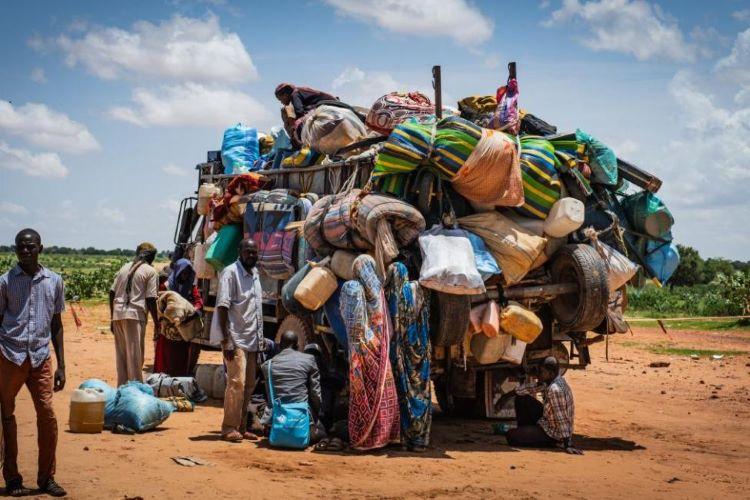
    Sixty per cent of persons internally displaced by conflict or disaster would rather remain in their current locations than return to their communities of origin, according to newly released findings from the second edition of the PROGRESS report. Published on Tuesday by the International Organisation for Migration’s Global Data Institute (GDI) in partnership with Georgetown University, the study offers a comprehensive analysis of the global state of solutions to internal displacement worldwide.

    “Humanitarian and development partners often struggle to identify and measure solutions to internal displacement,” said Ugochi Daniels, IOM Deputy Director General for Operations. “To address this need, IOM has collected IDP data for two decades, but the dedicated solutions-oriented evidence base was still required. PROGRESS aims to fill this gap.” 

    “The findings invite humanitarians and development partners alike to take a renewed look at our collective advocacy, planning, data collection, and operational delivery, to help IDPs find and achieve the durable solutions they prefer,” says IOM Director General, Amy Pope.

    With over 58.5 million people currently displaced within their own countries, this data provides crucial guidance on how to create and support lasting solutions for millions in crisis. Early in their displacement, many people already favour remaining where they have settled, challenging the common assumption that returning to one’s area of origin is always preferred. 

    Quantitative and qualitative analysis

    PROGRESS responds to a longstanding gap in understanding what displaced people themselves want and need. Based on over 116,000 household surveys and 463 qualitative consultations across 12 countries, it provides an in-depth assessment of the factors shaping displaced persons’ choices.

    “Partnering with IOM has been a unique opportunity,” said Dr. Elizabeth Ferris, Director of the Institute for the Study of International Migration at Georgetown University’s School of Foreign Service.

    “IOM’s unparalleled data collection capacity in the field combined with Georgetown’s academic expertise allowed for a rich blend of quantitative and qualitative analysis. We hope these findings will help stakeholders better understand what displaced people want and guide them toward sustainable solutions.” 

    Among those displaced by disasters for more than five years, a staggering 96 percent wish to remain where they are. Safety emerges as the top determinant: when people feel secure, 71 percent prefer to stay, while those who feel unsafe are more likely to consider returning to their areas of origin. 

    Economic opportunities also become increasingly pivotal over time. For individuals displaced five years or longer, 25 per cent cite livelihoods and employment as their main priority, compared to 18 per cent among those displaced for less than a year. Although people displaced by conflict may consider return more often than those displaced by disasters, the underlying factors remain consistent across contexts—safety, stability, and livelihood opportunities are paramount. 

    As the report says, “Livelihoods become an increasingly important influence on solutions intentions the longer people remain displaced. Approximately 2 out of 10 surveyed IDPs (18.1 per cent) displaced up to a year reported livelihoods and employment as the major factor influencing solutions intentions compared to 25.2 per cent of those displaced for over five years.

    Returns-oriented approach

    The PROGRESS initiative is an essential resource to advance the UN Secretary General’s Action Agenda on Internal Displacement, equipping the humanitarian and development community to better resolve, prevent and address internal displacement worldwide.

    PROGRESS24 breaks new analytical ground in several ways: it is the first effort to systematically analyse differences between those displaced by conflict and by disasters. It provides an analysis of key variables that influence durable solutions intentions. The report provides an evidence-based, operationally relevant and people-centric analysis of factors to support IDPs find solutions to internal displacement.

    The report says, “National authorities and international partners have historically practiced a returns-oriented approach to resolving displacement. Findings from this report, strongly suggests the need for a pivot by all stakeholders to improve IDP prospects for achieving the preferred solutions, by making local integration support programmes widely available.”

    Additionally, it says, “information sharing with IDPs about available support provided by the authorities and partners to achieve solutions and a consistent monitoring of the intentions of IDPs would help identify any new trends in the durable solutions.”

    Microfibres in India’s Dhobi Ghats a ‘Silent Disaster’

    Open-air laundries hold a special cultural significance in India. But the practice is being questioned for causing microfibre pollution. Filters to trap fibres and biodegradable detergents could offer solutions

    By Mehroob Mushtaq 

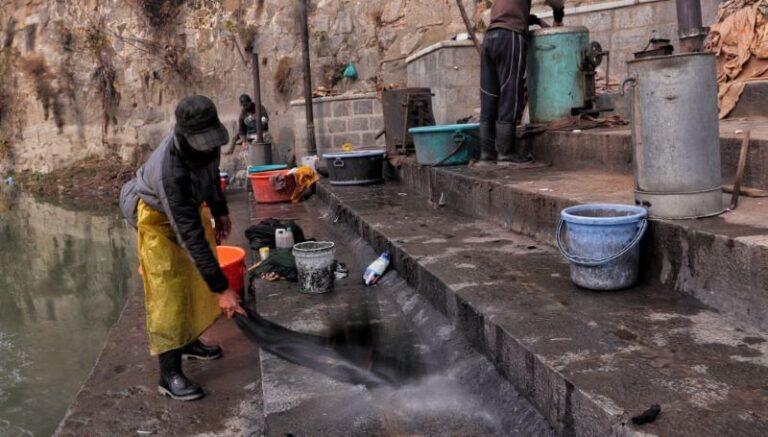
    India’s traditional open-air laundries, known as dhobi ghats, hold cultural significance and have provided livelihoods to thousands of washers for generations.

    But these communal washing facilities now face a modern environmental challenge, in the form of microfibre – putting aquatic and human health at risk.

    Tiny synthetic particles, released from clothes during washing, are polluting rivers, lakes and other water bodies in India, according to researchers.

    They say major rivers such as the Jhelum in Kashmir and the Ganges in the north, as well as lakes across the country, are under threat.

    Rouf Rafiq, assistant professor at the University of Kashmir, told SciDev.Net: “Microfibre pollution is a silent yet growing issue.

    “Millions of synthetic fibres are shed from clothes during washing, especially in dhobi ghats and commercial laundries, where filtration systems are often absent.

    “These fibres enter water bodies, accumulate over time, and disrupt aquatic ecosystems.”

    A study by researchers at the National Institute of Technology (NIT) Srinagar, published earlier this year, was the first to measure the levels of microfibres in wastewater from dhobi ghats and similar commercial laundries.

    In Hindi, dhobi means washerman, and ghats are landing or steps leading to the river for bathing or washing. They are part of India’s huge informal economy.

    But according to the study dhobi ghats release over 3,200 microfibres per litre of wastewater, while commercial laundries discharge almost 37,000 microfibres per litre.

    Most of these particles come from synthetic fabrics such as polyester and nylon, which are non-biodegradable. Once in the water, these microfibres harm aquatic life and eventually make their way into the human food chain.

    In Kashmir, the Jhelum River and Dal Lake are crucial for the region’s ecosystem. They support tourism and provide livelihoods for thousands of people, including fishermen. However, microfibre pollution poses serious risks, affecting both wildlife and humans.

    ‘A silent disaster’

    Many dhobi ghats in Srinagar operate along the banks of the Jhelum River, with the wastewater from these ghats flowing untreated into the river.

    “Dal Lake and the Jhelum River are lifelines for thousands of families in Srinagar,” said Irfan Khan, a local environmentalist.

    “The rising microfibre pollution is a silent disaster we must address immediately.”

    However, for washermen like Bashir Ahmad, a third-generation worker at a dhobi, the river is central to their work and life. “This is our only source of income,” he said. “If we are forced to stop or change how we work, what will happen to our families?”

    Ahmad and others like him feel helpless as they lack resources and knowledge about alternatives. “No one has guided us or given us affordable solutions. We need help from the government and experts,” Ahmad added.

    Nazir Ahmed, another washerman, stressed that the ghats are a part of their heritage. “We’ve inherited this work from our fathers and grandfathers. It’s not just a job; it’s our identity,” he said.

    Ghulam Hassan Mir, an elder from the dhobi ghat community, shared a similar sentiment. “This work has been passed down to us for centuries.

    “Washing clothes in the river is not just a livelihood; it’s an art and a responsibility we’ve carried with pride.”

    But, he added: “Times are changing and we need guidance to protect both our heritage and the water that sustains us.”

    Pollution solutions

    As well as microfibres, chemical detergents pose a huge risk to aquatic life and human health, while untreated sewage ends up in many rivers.

    Rafiq believes there are ways to balance tradition with sustainability.

    He suggests installing low-cost microfibre filters at dhobi ghats. These filters can trap synthetic fibres before the wastewater enters water bodies.

    “Centralised laundry facilities with proper wastewater treatment systems could also help. These would reduce pollution and improve working conditions for washermen,” Rafiq said.

    Other solutions include using biodegradable detergents and raising awareness about eco-friendly practices among washermen.

    Local residents and organisations are also calling for government action. Mohammad Yaseen, a Srinagar resident, stressed the need for financial aid and education programs for washermen. “They are willing to adapt, but they need resources and support. This is a shared responsibility,” he said.

    Environmental groups are also emphasising the role of households in minimising microfibre pollution.

    “This problem starts at home because we all use synthetic clothes,” said Suhaib Rafiq, a member of a Srinagar-based NGO Shahr-e-Khaas Literary & Cultural Welfare Society, adding: “People need to be aware of how their laundry choices impact the environment.”

    This piece has been sourced from SciDev.Net

    Germany’s Labour Market Shortages a Boon for Indian Workers

    With strategic planning and investment, Germany’s labour market challenges could become opportunities for India’s skilled professionals and students, fostering a brighter future for both nations.

    Germany is grappling with significant labour shortages, prompting the nation to actively recruit skilled professionals from India. This growing trend, marked by collaborations, increasing Indian student enrolment, and rising workforce integration, reflects a transformative phase in Indo-German relations.

    Labour Shortages

    Germany’s labour market is under strain, with acute shortages across healthcare, IT, engineering, and other skilled trades. To address this, Germany has launched targeted initiatives, including direct agreements with Indian states like Kerala. One successful collaboration involves the recruitment of nurses, which may pave the way for similar partnerships with other states, including Madhya Pradesh, Tamil Nadu, and Maharashtra.

    “Germany recognises the immense potential of the Indian workforce,” said Steffen Sottung, Managing Director of International Affairs at Germany’s Federal Employment Agency. Since 2015, the Indian workforce in Germany has grown five-fold, reaching 137,000 by February 2024. This influx includes a diverse range of professionals, from healthcare workers to IT specialists.

    Gateway to the German Workforce

    Indian students now form the largest group of international students in Germany, comprising 12.3 per cent of the international student body – a remarkable 49,000 students in the 2023 winter semester alone. This demographic shift underscores Germany’s growing appeal as an education destination, with institutions offering affordable, high-quality education and pathways to employment.

    Dr. Kartja Hartmann, Head of the Scholarship Division at the Friedrich Naumann Foundation (FNF), noted that studying in Germany often lays the groundwork for Indian students to seamlessly transition into its workforce. A recent survey revealed that 40 per cent of Indian students plan to stay in Germany after completing their studies, highlighting the country’s allure as a career destination.

    Challenges in Integration

    Despite the positive trend, significant hurdles remain. Language barriers, visa processing delays, and integration into German society are prominent challenges. Housing, in particular, poses a critical issue. Nils Haupt, Head of Corporate Communications at Hapag-Lloyd, remarked, “Wait times for housing can range from one to two years, with rents in major cities starting at 500 euros for a shared room.” The housing crisis, exacerbated by the influx of migrants from Arab countries and Ukraine, adds another layer of complexity.

    Additionally, integrating spouses of Indian recruits often proves difficult. Haupt noted that some employees relocate to Dubai due to challenges faced by their families in Germany. He emphasized the need for greater investment by federal and regional governments to resolve these issues.

    Qualifications and Language Barriers

    Standardization of qualifications and language training are critical areas of focus. Santosh Kumar Mehrotra, Visiting Professor at the Centre for Development Studies, University of Bath, highlighted that small and medium enterprises (SMEs) in rural Germany often struggle to attract international talent due to limited English proficiency in these areas.

    Language training remains a significant investment for job seekers. Aditi Banerjee, Co-Founder and CEO of Magic Billion, noted that while her organization provides 6-8 months of full-time language training in India, the lack of real-world practice limits proficiency. She advocated for training programs in Germany, enabling students to adapt to regional accents and cultural nuances.

    Apprenticeships and Vocational Training

    Germany’s apprenticeship system offers another avenue for Indian workers. However, employers remain hesitant to offer paid apprenticeships to international candidates due to concerns about retention. Banerjee suggested better collaboration between Indian educational institutions and German companies to ensure job-ready candidates.

    Dr. Dhanya M.B., a faculty member at the V.V. Giri National Labour Institute of India, echoed this sentiment, advocating for pathways from Indian colleges to the German labour market. She proposed that German companies invest in Indian education and vocational training to build a pipeline of skilled workers.

    Building a Cultural Bridge

    The Indo-German Society is fostering cultural integration through events like Diwali celebrations, promoting a positive image of Indian culture. Dr. Jurgen Morhard, former Consul General for Germany in Mumbai and Chairperson of the Indo-German Society, emphasized the importance of mutual understanding and realistic expectations.

    “More than 85 per cent of German companies in India are led by Indians or individuals trained in German companies,” Morhard said, highlighting the symbiotic relationship between the two countries.

    As Germany continues to face labour shortages, its collaboration with India offers a promising solution. However, addressing systemic challenges – from housing to standardizing qualifications – remains crucial. Enhanced dialogue between German and Indian governments, investment in vocational training, and improved integration measures will ensure the success of this partnership.

    The steady rise in the Indian workforce and student population in Germany signals a mutually beneficial relationship, poised to strengthen further in the coming years. With strategic planning and investment, Germany’s labour market challenges could become opportunities for India’s skilled professionals and students, fostering a brighter future for both nations.

    Experts Debate New Findings on Poverty in India at FAS Panel Discussion

    The panel discussion underscored the critical importance of accurately measuring poverty in India, not just as an academic exercise but as a foundational step toward addressing systemic inequities.

    The Foundation for Agrarian Studies (FAS) hosted an online panel discussion on “Measuring Poverty in India,” bringing together prominent economists and statisticians to critically examine poverty estimation methods and recent data on poverty levels in the country. The event followed the release of the Household Consumption and Expenditure Survey (HCES) 2022–23 by the Government of India, sparking renewed debate on the nation’s poverty landscape.

    While initial reports from the HCES indicated a significant reduction in poverty to approximately 10 per cent, a recent article published in the Review of Agrarian Studies offered a starkly different perspective. Using the methodology recommended by the Rangarajan Committee, the article estimated that over 26 per cent of India’s population remains below the poverty line.

    The event was chaired by Madhura Swaminathan, Professor at the Indian Statistical Institute, and featured a distinguished panel, including Gaurav Datt, Associate Professor at Monash University; Himanshu, Associate Professor at Jawaharlal Nehru University; P. C. Mohanan, Chairman of the Kerala State Statistical Commission; and R. Ramakumar, Professor at Tata Institute of Social Sciences.

    The discussion began with a presentation by Sethu C. A., Senior Research Assistant at FAS and one of the authors of the article under review. Sethu outlined the article’s findings, emphasizing that even with a conservative poverty line – Rs 2,515 for rural areas and Rs 3,639 for urban areas in 2022–23 – more than one in four Indians lives in poverty.

    Critiques and Perspectives

    Gaurav Datt praised the authors’ consistent use of the Rangarajan methodology but critiqued the framework itself, advocating for a “cost of basic needs” approach to better account for temporal comparisons. “Resetting the poverty line,” he argued, “is more important than merely updating it.”

    Himanshu delved into the historical context of poverty estimation methods, highlighting flaws in both the Tendulkar and Rangarajan Committees’ approaches. He flagged potential non-sampling errors in National Sample Surveys, which could distort poverty estimates, and underscored the arbitrariness of existing methods.

    P. C. Mohanan focused on field-level data collection challenges in National Sample Survey Office (NSSO) surveys, especially for consumption data. While lauding the study’s thorough recalculation of the poverty line, he questioned the feasibility of replicating such detailed exercises with each new dataset.

    Ramakumar emphasized the broader implications of the findings, noting that the recalculated poverty line offers a robust counter to claims of a dramatic decline in poverty. “This analysis sets a new benchmark for assessing poverty,” he remarked.

    The Chair’s Reflections

    In her concluding remarks, Madhura Swaminathan, Professor, Indian Statistical Institute addressed the broader challenges of poverty estimation in India, pointing out the lack of official poverty estimates. She highlighted the limitations of relying solely on multi-dimensional measures like the Multi-Dimensional Poverty Index (MDPI), which exclude income or expenditure metrics.

    “MDPI is entirely based on indicators like housing, health, and education,” Swaminathan explained. “While these are vital, those of us concerned with not just measuring poverty but also ending it need to incorporate the money metric in some way, even if it’s not the sole basis.”

    She said, “Those of us concerned with not just measuring poverty but also the real problem of ending it need to bring back the money metric [in estimating poverty] in some way, even if not basing all our understanding on just using that.”

    The panel discussion concluded with an interactive Q&A session, where audience members explored the nuances of poverty estimation methods. Topics ranged from the implications of methodological choices to potential improvements in survey design and data interpretation.

    A Renewed Call for Action

    The panel discussion underscored the critical importance of accurately measuring poverty in India, not just as an academic exercise but as a foundational step toward addressing systemic inequities. The findings presented, particularly the 26.4 per cent poverty headcount ratio, challenge narratives of widespread economic uplift and highlight the need for continued scrutiny and recalibration of poverty metrics.

    As India grapples with questions of equity and development, events like this reaffirm the need for rigorous, evidence-based approaches to inform policy and ensure no one is left behind.

    Image: Hippopx

    In the Rajya Sabha: Multi-State Cooperative Societies to Boost Exports, Organic Farming and Seed Quality

    The National Cooperative Organics Limited (NCOL) has been established to support the organic farming sector. Promoted by entities such as Amul, NAFED, and NDDB, NCOL began with a paid-up capital of ₹100 crore and an authorized share capital of ₹500 crore.

    In a landmark initiative aimed at empowering India’s cooperative sector, the Ministry of Cooperation has established three national-level multi-state cooperative societies under the Multi-State Cooperative Societies (MSCS) Act, 2002. These societies focus on exports, organic produce, and quality seeds, respectively, providing institutional support to cooperatives across the country. The Minister of Cooperation, Shri Amit Shah, shared these details in a written reply to the Rajya Sabha.

    National Cooperative Exports Limited

    The National Cooperative Exports Limited (NCEL) is spearheaded by prominent organizations, including the Indian Farmers Fertilizer Cooperative Limited (IFFCO), Krishak Bharati Cooperative Limited (KRIBHCO), and Gujarat Cooperative Milk Marketing Federation Limited (Amul), among others. With an initial paid-up capital of ₹500 crore contributed equally by its five promoters, NCEL aims to tap into global markets for Indian cooperative products. Its authorized share capital stands at ₹2,000 crore.

    NCEL seeks to enhance the demand for Indian cooperative goods and services worldwide by providing a range of services such as procurement, branding, packaging, certification, and market intelligence. The society also assists cooperatives with finance, technical guidance, and capacity-building initiatives.

    Key milestones include:

    • Membership from 9,510 cooperatives.
    • Export of 31 agricultural commodities worth ₹3,934 crore to various countries, including rice, onions, sugar, baby food, spices, and tea.
    • Collaboration with state governments in Punjab, Uttar Pradesh, Madhya Pradesh, and Maharashtra to streamline the procurement and marketing of export-ready products.
    • A net profit of ₹26.40 crore in the financial year 2023-24, with a 20 per cent dividend distributed to members in its first year of operations.

    Bharatiya Beej Sahkari Samiti Limited (BBSSL)

    The Bharatiya Beej Sahkari Samiti Limited (BBSSL), established with an initial paid-up capital of ₹250 crore, aims to improve seed production and distribution in India. The cooperative is supported by leading institutions like IFFCO, KRIBHCO, and the National Dairy Development Board (NDDB). With an authorized share capital of ₹500 crore, BBSSL focuses on producing high-quality seeds to boost agricultural productivity, reduce reliance on imports, and support the “Make in India” initiative.

    BBSSL is involved in the production, certification, branding, and distribution of foundation and certified seeds through primary agricultural credit societies (PACS).

    • Membership from 14,816 cooperatives.
    • Production of 11,594 quintals of foundation seeds during the Rabi 2023-24 season.
    • Cultivation of 23 crop varieties across 457 acres in 10 states during Kharif 2024.
    • Distribution of 38,126 quintals of seeds across various regions.
    • By leveraging government schemes and policies, BBSSL aims to enhance agricultural output and promote inclusive growth under the vision of “Sahakar-se-Samriddhi.”
    • National Cooperative Organics Limited (NCOL)

    The National Cooperative Organics Limited (NCOL) has been established to support the organic farming sector. Promoted by entities such as Amul, NAFED, and NDDB, NCOL began with a paid-up capital of ₹100 crore and an authorized share capital of ₹500 crore.NCOL provides services for certification, branding, storage, and marketing of organic products. It also facilitates financial assistance and promotes organic farming through collaboration with various governmental and non-governmental organizations.

    Highlights include:

    • Membership from 5,184 cooperatives.
    • Marketing of 14 organic products under the brand name “Bharat Organics” in Safal outlets and two products across all distribution channels in the Delhi-NCR region.
    • Memorandums of Understanding (MoUs) signed with states like Nagaland, Assam, and Uttarakhand to promote organic farming and create bio-villages.
    • Collaboration with Mother Dairy Fruit & Vegetable Pvt. Ltd. for broader distribution of Bharat Organics products through general trade, modern trade, and e-commerce platforms.
    • National Urban Cooperative Finance and Development Corporation (NUCFDC)

    Recognizing the challenges faced by Urban Cooperative Banks (UCBs), the Ministry of Cooperation has established the National Urban Cooperative Finance and Development Corporation (NUCFDC). Registered with the Reserve Bank of India (RBI) on February 8, 2024, the organization aims to enhance the financial stability, governance, and competitiveness of UCBs.

    NUCFDC provides both fund-based and non-fund-based support to UCBs, including:

    • Fund-based support: Capital assistance, secured credit lines, refinancing, emergency liquidity, and market borrowings.
    • Non-fund-based services: IT platform support, treasury management, payment and settlement services, and capacity-building initiatives.

    The NUCFDC has mobilized a paid-up capital of ₹117.95 crore, with plans to reach ₹300 crore by February 2025 to comply with RBI guidelines. It also acts as a Self-Regulatory Organization (SRO) for the UCB sector, as per RBI directives.

    These initiatives represent a significant step toward strengthening India’s cooperative sector. By fostering innovation, collaboration, and market expansion, the national-level multi-state cooperative societies and NUCFDC aim to drive economic growth, empower farmers and cooperatives, and establish India as a global leader in cooperative products and services.

    In the Lok Sabha: Crop Damage Assessment System with Cutting-Edge Technology

    By leveraging advanced systems like YES-TECH for crop insurance and promoting sustainable and climate-resilient agriculture, the government aims to ensure financial security, higher incomes, and a brighter future for India’s farmers.

    In a significant step toward modernising crop insurance mechanisms, the Government of India has introduced advanced technology-driven systems under the Pradhan Mantri Fasal Bima Yojana (PMFBY). Minister of State for Agriculture and Farmers’ Welfare, Ram Nath Thakur, informed the Lok Sabha today that the updated framework will ensure accurate yield estimation, timely compensation, and increased transparency for farmers across the nation.

    YES-TECH: A Technological Leap for Accurate Yield Estimation

    The agriculture ministry has rolled out the Yield Estimation System Based on Technology (YES-TECH) starting from the Kharif 2023 season to enhance precision in crop yield assessments. The initiative leverages satellite imagery, drones, Unmanned Aerial Vehicles (UAVs), and remote sensing technology to streamline crop damage evaluation, ensuring efficient payout of claims. YES-TECH was initially launched for paddy and wheat crops, where 30 per cent weightage was assigned to technology-derived yield estimates. From the upcoming Kharif 2024 season, soybean has also been added to the programme, the minister said.

    Thakur emphasised that YES-TECH has already been successfully implemented in 10 states, with claim payouts for Kharif 2023 completed across seven of them. The system aims to migrate fully to remote-sensing-based yield estimation in the future, improving fairness, objectivity, and transparency in assessing losses.

    Detailed guidelines for YES-TECH implementation have been provided in the YES-TECH Manual, 2023. Under the new system, Technology Implementation Partner (TIP) agencies selected by states will carry out yield assessments under the supervision of Mentor Institutes for Technology Roll-out (MITR), such as ISRO and ICAR. Financial assistance will also be extended to states to facilitate the smooth adoption of the technology.

    To ensure accountability, the system includes clearly defined roles for stakeholders, including state governments, insurance companies, TIPs, and MITR agencies. Progress timelines, penalty mechanisms for delays, and grievance redressal frameworks have been incorporated into the manual, guaranteeing efficiency and adherence to deadlines.

    The minister said that the union government retains the authority to amend, clarify, or review any provisions of the YES-TECH Manual. Thakur highlighted that this structure eliminates conflicts of interest and ensures transparency in yield assessments, directly benefitting farmers through quicker and fairer claim settlements.

    Doubling Farmers’ Income: A Multifaceted Approach

    The minister reiterated the government’s commitment to doubling farmers’ income by adopting a range of strategic interventions. The minister said that while agriculture is a state subject, the union government supports state efforts through schemes, policy reforms, and budgetary provisions. The budget allocation for the Department of Agriculture and Farmers’ Welfare has seen a remarkable increase from Rs. 21,933.50 crore in 2013-14 to Rs. 1,22,528.77 crore for the 2024-25 fiscal year.

    Key strategies for increasing farmer incomes include improving crop productivity, reducing production costs, agricultural diversification, and enhancing climate resilience. Various schemes have been launched under the Department of Agriculture and Farmers’ Welfare (DA&FW) to address specific needs of farmers, including income support, modernised farming practices, and infrastructure development.

    Some major schemes include:

    Pradhan Mantri Kisan Samman Nidhi (PM-KISAN): Providing income support to small and marginal farmers.

    Pradhan Mantri Kisan MaanDhan Yojana (PM-KMY): Ensuring old-age security for farmers.

    Agriculture Infrastructure Fund (AIF): Promoting post-harvest management projects.

    Per Drop More Crop: Encouraging micro-irrigation technologies to improve water use efficiency.

    National Food Security and Nutrition Mission: Enhancing food grain production and nutritional security.

    Mission for Integrated Development of Horticulture (MIDH): Supporting climate-resilient horticulture practices.

    Formation of 10,000 Farmer Producer Organisations (FPOs): Strengthening collective bargaining power and market access.

    The government has also launched the Agriculture Infrastructure Fund (AIF) to mobilise investments for infrastructure gaps. The programme has facilitated projects such as 18,606 custom hiring centres, 13,724 warehouses, and over 3,000 sorting and grading units, strengthening agricultural supply chains.

    The Indian Council of Agricultural Research (ICAR) has documented over 75,000 success stories of farmers who have doubled their income by utilising multiple government schemes in tandem. Minister Thakur noted that this reflects the success of a comprehensive, integrated approach to agricultural development.

    Mitigating Climate Change and Market Volatility

    The government has also undertaken measures to address the challenges posed by climate change and market volatility. The National Mission for Sustainable Agriculture (NMSA) promotes practices such as micro-irrigation and integrated farming systems to enhance agricultural resilience. Rainfed Area Development (RAD), another component of NMSA, focuses on sustainable agriculture in vulnerable areas.

    To mitigate market risks, initiatives like the National Agriculture Market (e-NAM) and Pradhan Mantri Annadata Aay Sanrakshan Abhiyan (PM-AASHA) have been implemented. e-NAM facilitates transparent digital trade across 3,771 market yards, covering over 300 commodities. Meanwhile, PM-AASHA ensures price support for farmers, protecting them from market fluctuations.

    Thakur further highlighted that the government is promoting digital solutions to empower farmers. Platforms such as the Agmarknet portal, Kisan Suvidha app, and e-NAM provide real-time updates on agricultural commodity prices and market arrivals. The government is also working with stakeholders to integrate agricultural marketing with the Open Network for Digital Commerce (ONDC), enhancing farmers’ access to alternative markets.

    The initiatives announced by the Minister of State for Agriculture and Farmers’ Welfare on Tuesday underscore the government’s determination to improve the lives of farmers through technology, policy reforms, and increased investments. By leveraging advanced systems like YES-TECH for crop insurance and promoting sustainable and climate-resilient agriculture, the government aims to ensure financial security, higher incomes, and a brighter future for India’s farmers.

    Image: Wikimedia

    Bangladesh in Crisis: Which way out?

    It is ironic that a country, where democracy is one of its founding principles, turned into a one-party state in 1975 within four years of its independence, shutting down most of the news media and allowing only state-run ones.

    By Anis Chowdhury

    This piece is not about the crisis or the chaos that the country is now facing after successfully toppling the autocratic regime of Sheikh Hasina. Rather, it is about the crisis of confidence and social capital or trust — interlinked, nonetheless.

    The thread that binds a nation together is trust or social capital. There could be many factors that contribute to social capital, but one that stands out is equity or fairness. Social capital or trust is low in a country where income and wealth gaps are high, and the general people feel unfairly treated or deprived.

    The fallen autocratic regime prided itself on rapid economic growth, averaging approximately 6 per cent a year. However, the regime’s kleptocratic system of ruling by plunder and favour to its cronies has contributed to accelerated wealth and income gaps as well as relative deprivation; thus, it has caused fissures in the social fabric.

    Rising relative deprivation

    Income and wealth gaps have yawned wide, turning a reasonably equitable society at the time of independence into one of the most unequal societies. The Gini coefficient, a common measure of income inequality, has increased from 0.36 in 1973 to 0.499 in 2022, according to the latest (2022) Household Income and Expenditure Survey (HIES) of the Bangladesh Bureau of Statistics.

    The Gini coefficient was 0.39 in 1990–1991, marginally above the 1973 value (0.36), accelerating to 0.46 in 2010. Income inequality in Bangladesh has deepened since 2016. The 2022 survey reveals that about 30 per cent of the income generated in the country is concentrated within the top 5 per cent of household. This proportion was 27.82 per cent in the 2016 Household Income and Expenditure Survey.

    Furthermore, the top 10 per cent of the wealthiest households in Bangladesh hold about 41 per cent of total income. This proportion was about 38 per cent in 2016. Concurrently, the income share for the bottom 50 per cent of households decreased to about 19 per cent in 2022 from 20.23 per cent in 2016.

    Disturbingly, there has been a secular transfer of income from the lowest quintile of the households to the highest quintile. The average annual loss of the bottom 1st quintile’s share in the national income has been -0.71 per cent as opposed to the average annual gain of 0.46 per cent for the highest (top) quintile during 1973–2010. The middle-class also lost; income shares of 2nd, 3rd and 4th quintiles declined since 1973.

    This does not augur well for our democracy. Nor can we celebrate this development in a country where one of the founding principles is socialism.

    Suppression of democracy driving growing disparities

    Professor MG Quibria of Morgan State University and ADB’s former Senior Advisor pointed out, ‘possession of political capital opens up myriad economic opportunities, including preferential access to finance and business, restructuring and loan default options, lucrative employment, access to privileged information, tax evasion or even outright corruption’.

    The link between corruption and economic growth could be debated, but it is a method of plunder and primitive capital accumulation by the lumpen bourgeoisie that exacerbates inequality of wealth.

    An environment conducive to unchecked corruption emerges when democracy is suppressed and the institutions that ensure accountability, transparency and the separation of powers between various branches of the government are weakened. Where democratic institutions are weak, political capital is a powerful instrument for advancing one’s economic and social position.

    Unfortunately, suppression of democracy in Bangladesh began as soon as it emerged as an independent nation with the rigging of its first parliamentary elections in 1973. It is ironic that a country, where democracy is one of its founding principles, turned into a one-party state in 1975 within four years of its independence, shutting down most of the news media and allowing only state-run ones.

    Sadly, instead of trust — built through accountability and transparency — election manipulations became the norm for all political parties to gain power and then retain it. Therefore, each successive government became more repressive, more lacking in accountability and more vigorous in election rigging.

    However, such regimes suffer from legitimacy deficits — both legal and moral; they can only survive by allowing corruption and distributing favour. Thus, a vicious circle develops — a regime that resorts to more election manipulations becomes more beholden to its cronies, allowing them to plunder the state.

    Undoubtedly, this process reached its zenith during Sheikh Hasina’s rule. Unchecked corruption, tax evasions and financial crimes such as defrauding bank loans enabled Bangladesh to become the global leader in wealth growth during 2010–2019. New York-based research firm Wealth-X, reported a remarkable 14.3 per cent annual increase in the number of individuals with a net worth exceeding $5 million, surpassing Vietnam, which ranked second with a 13.2 per cent growth rate.

    Neoliberalism and the demise of democracy

    Bangladesh is not alone in witnessing widening income and wealth gaps and consequently democratic backslides. This is a global phenomenon coincided with the embrace of the neoliberal economic philosophy of privatisation, liberalisation, deregulation and globalisation dictated by the interests of the corporate power.

    In the process of multinational corporations-driven globalisation, the civil society simply became apolitical NGOs, happy to receive crumbs from the donors to engage in so-called development activities. Citizens became ‘stake-holders’ together with the large corporations and donors, instead of ‘right-holders’.

    Bereft of rights and no longer an end itself of development, citizens are now ‘human resources’, an epitaph cleverly designed to hide that they are simply fodder for the profit machines of corporations. In a deregulated economy, workers are dehumanised, constrained to socialise and participate in political activities.

    Should one be surprised in the falling share of wages in the national income, stagnating or falling real wages and tragedies like the ‘Rana Plaza incident’?

    Under the corporate globalisation, schools and universities — both public and private — are no longer places of learning where youths are transformed into enlightened citizens and agents of change, and where visionary future social-political leaders are produced. They are simply factories for mass-producing so-called ‘job-ready’ certificate or diploma holders, apathetic to social, economic and political issues.

    An additional boost to accelerating inequality in Bangladesh comes from a three-stream education system (Bengali-medium national curriculum, traditional religious curriculum and English-medium overseas curriculum). It perpetuates inter-generational inequality.

    Which way out?

    One can get some cue in AK Sen’s observation that ‘a country becomes fit through democracy,’ and democracy versus development is a false dichotomy. Sen defines development as freedom — freedom from hunger and poverty; freedom from fear and persecution; and freedom to express, associate and participate. In sum, freedom to enhance one’s capabilities to attain one’s full potential as a human being.

    Sen insists that political and civil rights are ends in themselves. Their denial cannot be acceptable even if it promotes economic growth and some well-being as such a development path is not sustainable. Suppression of political and civil rights results in growing income and wealth inequalities, where obnoxious, luxurious living by the few coexists with a large populous struggling to survive. This fuels a sense of relative deprivation contributing to violent social conflict.

    Therefore, the first step is strengthening democratic institutions or consolidation of democracy. This requires the depoliticisation of administration and civic associations.

    There exists a large volume of research findings showing that the politicisation of administration and the organisation of civic associations along party lines not only boost corruption but also accelerate social cleavage.

    Civic associations where members hold different political views help build trust among political parties. They can agree on critical national issues while still disagreeing on details.

    A depoliticised public administration serves a wider citizenry. In the process, the government, even though led by the winning party, governs for all and becomes inclusive, thus strengthening the trust between the state and the governed.

    As for the political parties, they need to practise democracy themselves. That is, all party posts should be open for contest and there should be transparent rules for elections. As the primary organisational vehicles of electoral democracy, political parties are themselves judged in terms of their democratic character.

    The most engaging models of internal party democracy are inclusive, participatory, deliberative and accountable and include fair distribution of power. It involves non-discriminatory open memberships and the inclusion of all party members in decision-making processes, leadership selection, policy formulation, as well as ensuring accountability of party leadership to its members. In short, internal rules of political parties should be guided by inclusiveness, clarity, transparency, accountability and independence. Their interaction with society should be based on dialogue, interdependence and cooperation.

    Rough edges of market forces

    In the economic arena, there is an urgency for reorienting to pursue strategies for growth with equity. This is an imperative if Bangladesh is serious about its state principle of socialism. The state has to recapture its lost leverage over the corporate sector to protect the interest of the wider community and to ensure decent jobs and a fair living wage.

    It has to give priority to citizens’ well-being over balancing the budget and be bold enough to use its fiscal power to redistribute the growing wealth by using progressive taxation and widening public provisions of basic services, such as healthcare, education, housing and universal social protection. There is ample evidence of a close negative association between the tax-GDP ratio and inequality as well as between public social expenditure and inequality, clearly indicating the redistributive role of the government.

    State actions are needed to smoothen the rough edges of the market forces that manifest in exclusion and inequality, which are found to fuel social and political unrest harming growth in the long run. Equity of access, opportunities and outcomes are fundamental aspects of socialism. They enhance both economic and political freedom, essential for rights-based development that empowers citizens and expands their capabilities.

    Weakened democratic institutions and rising inequality create a vicious circle that leads to diminished trust — among citizens and between the state and citizens — which chips away social capital, the glue that binds society.

    Bangladesh has to find the solution to its woes in its founding principles — a democratic polity and a socialist economic construct. Both are critical in rebuilding trust and social capital, needed to overcome the current national crisis.

    Anis Chowdhury is emeritus professor, Western Sydney University, Australia. He held senior United Nations positions (economic and Social affairs) in New York and Bangkok.