More

    One-Time Boost With Cow, Cash Eases Poverty, Says Study

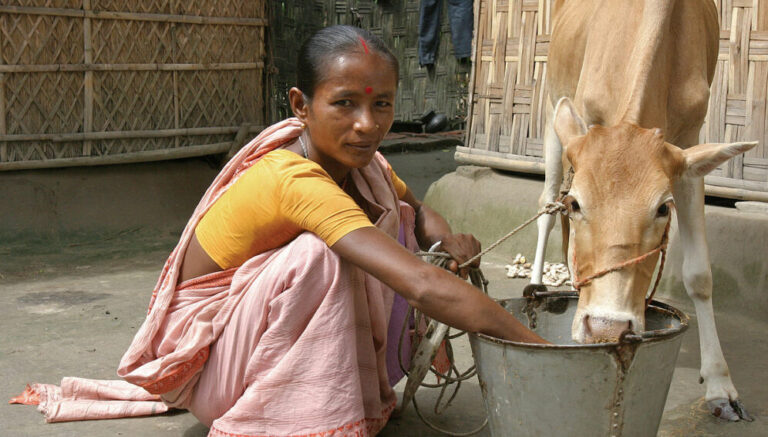
    Transfer of assets such as cows to rural Bangladeshi households can help them rise from poverty, according to a study that says that details how poverty blocks general progress and is an important cause of ill health.

    By Sanjeet Bagcchi

    Removing chronic poverty in developing countries may be as simple as providing a one-time capital boost to help individuals gather assets, find suitable jobs and run small businesses, says a long-term study carried out in rural Bangladesh.

    According to the World Bank, poverty is a major cause of ill-health and limits access to health care and adequate nutrition. “Ill-health, in turn, is a major cause of poverty. This is partly due to the costs of seeking health care, which include out-of-pocket spending on care, transportation costs and informal payments to providers,” the bank noted.

    Results of the research, published May in The Quarterly Journal of Economics, suggest that people who are extremely poor usually face a “poverty trap” where the initial lack of resources stops them from improving their circumstances.

    However, the transfer of an asset such as a cow may be enough for some households to transform domestic servants or labourers into farmers and small livestock businessmen, and engage in a profitable activity such as rearing livestock that brings in far more income, indicated the study that involved 23,000 households in 1,309 villages.

    “Our study did not directly speak to the healthcare situation in Bangladesh [though it] targeted the poorest, most marginalised women of rural Bangladesh — their economic situation likely impairs their health directly and precludes them from accessing health services,” said Anton Heil, co-author of the study and a research manager with the London School of Economics, UK.

    “As households improve their economic lives, improvements in health can be expected,” Heil told SciDev.Net.

    Health services important

    The study project included a specific anti-poverty programme covering 6,000 poor rural households: women in half of those households were offered a one-time ‘asset transfer’ of about US$500 accompanied by training and support in 2007. The rest served as a control group after 2011, with surveys of the households conducted in 2007, 2009, 2011, 2014, and 2018.

    “In summary — and with the caveat that this goes beyond the narrow focus of our study — I believe that both cash and asset transfer programmes can have positive health impacts if they cause a meaningful improvement in beneficiaries’ economic lives,” said Heil.

    “However, a direct and systemic approach targeted at universal health coverage [here, all individuals and communities get required health services without facing financial hardship] and improvements in the healthcare system may hold great promise compared to interventions targeted at the individual or household,” he said.

    “After four years, the earnings of the women increased by 37 per cent, consumption rose 10 per cent, ownership of household durables increased 110 per cent, and extreme poverty (those living on under $US1.25 per day) declined by 15 per cent, compared to the control group,” the study said.

    “One should not forget factors apart from the transfer of the assets, including training, food ration, community support and health services,” said Mushtaque Chowdhury, former vice-chair of the Bangladesh Rural Advancement Committee, a non-governmental organisation.

    “I think the existing ‘health systems’ [in Bangladesh] played an important role [too] — it is well acknowledged that every year health shocks push about 2 to 3 per cent of the population into poverty (about 4 to 5 million people),” Chowdhury told SciDev.Net.

    “Any intervention that purports to deal with extreme poverty must consider health services as an important component,” he said.


    This piece has been sourced from SciDev.Net.
    Study Establishes Key Areas for Tiger Movement in Central India

    Researchers found that land ownership in consensus connectivity areas is complicated, with overlapping or contested ownership among villages and multiple arms of India’s Forest Department. Specifically, about 70% of the areas fell within village administrative boundaries, 100% overlapped with Forest Department management boundaries.

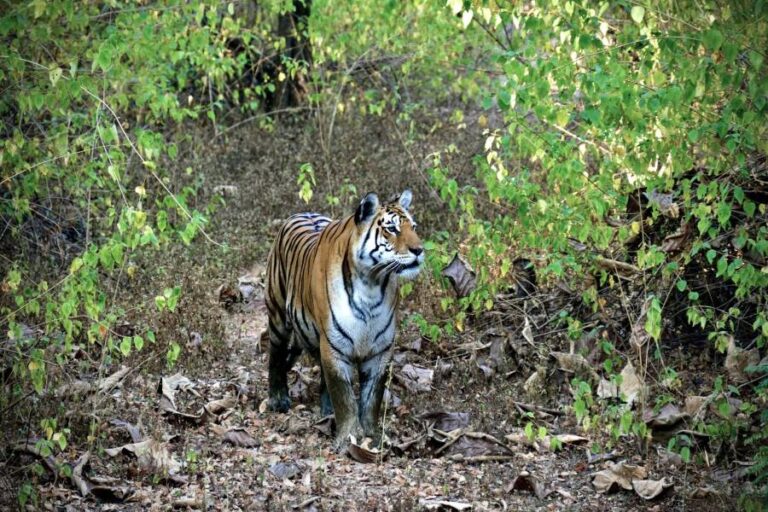
    Tigers across central India traverse long distances to get from one protected area to another. Maintaining safe areas for the big cats to move through — known as wildlife corridors — is essential for allowing tigers to thrive and avoid inbreeding. However, different studies and institutions have provided conflicting messages on which areas are most important to tiger movement.

    In a paper published in March, researchers from five previous studies that had mapped out tiger corridors in central India came together to combine their results. The collaboration identified overlapping areas where all five studies agreed that habitat connectivity is key for tiger movement in central India. The study authors call these areas “consensus connectivity areas.” They say they hope that having a single map based on scientific consensus will be useful for informing local infrastructure projects and measures to protect and maintain these areas.

    “We hope that this result offers a clear message about where the current science agrees, and can bolster existing efforts to conserve tigers and other species that share their habitat in central India,” says Jay Schoen, a PhD student in Columbia University’s Ecology and Evolutionary Biology Programme, who led the study’s connectivity data analyses.

    The five studies that were analysed agreed most on areas that impede tiger movement, mainly urban areas, and the areas where tigers could move freely with minimal barriers, mainly forests. In agricultural areas, the presence or absence of tiger corridors was less certain.

    Complicated to conserve

    The researchers found that land ownership in consensus connectivity areas is complicated, with overlapping or contested ownership among villages and multiple arms of India’s Forest Department. Specifically, about 70 per cent of the areas fell within village administrative boundaries, 100 per cent overlapped with Forest Department management boundaries, and over 16 per cent of the total consensus area was within one kilometre of infrastructure such as roads, railways, canals, mines, and transmission lines that can inhibit tiger movement. These factors make it complicated to manage and conserve the land for tiger movement.

    “The successful management of connectivity areas will require consensus among stakeholders on the appropriate balance between potentially competing objectives for safe passage of dispersing wildlife, livelihood needs for local communities, and infrastructure development,” said Amrita Neelakantan from the Network for Conserving Central India, who led the study’s analysis of management implications.

    By clearly defining the target conservation areas and identifying the populations and businesses that would most likely be affected by land-use decisions in these areas, the study could make it easier for communities to collaboratively build upon existing efforts to conserve the country’s tiger population, say the authors.

    They note that the approach could also be applied in other regions of the world to support applied conservation work and ultimately to promote coexistence between humans and nature.

    India Flip-Flops on Wheat Exports

    India announced plans in May to export 10 million tonnes of wheat, but the plans were soon scuttled over concerns about food security at home. Analysts are now blaming poor policy and planning for the about-turn, arguing that the decision of the Indian government to ban wheat exports will deny farmers and traders the opportunity to earn from the global market. 

    By Ranjit Devraj

    India’s ban on wheat exports has denied the country’s farmers and traders an opportunity to earn money from the sale of wheat in the global market that is currently facing shortages of the prime staple as a result of Russia’s war in Ukraine, say analysts.

    India produced an estimated 107.9 million tonnes of the grain in 2020—2021, second only to China with 134.3 million tonnes. Russia came in third with 85.4 million tonnes.

    Farmers’ hopes were raised when the government announced on 12 May plans to export 10 million tonnes of wheat during 2022—2023 and identified Algeria, Egypt, Indonesia, Lebanon, Morocco, Philippines, Thailand, Tunisia, Turkey and Vietnam among potential buyers.

    But two days later, the trade department under the Ministry of Commerce and Industry did an about-turn by issuing a notification restricting wheat exports except through government channels and where private traders had already contracted export deals.

    “Raising expectations of making good the global supply shortfall and then back-tracking creates a real problem,” said Biswajit Dhar, professor and head of the Centre for WTO studies, New Delhi. “Trade channels seek reliable suppliers for good reasons and India’s credibility would therefore take a hit — future exports could be affected as a result.”

    Push up prices

    During a press conference on 14 May, Commerce Secretary B.V.R. Subrahmanyam, explained that the export restrictions would help domestic food security and as well as neighbouring and vulnerable countries. Afghanistan, Bangladesh and Sri Lanka are among neighbouring countries that receive wheat from India.

    Subrahmanyam said the restrictions could be lifted “if the global supply and demand is the same and once cooling (of prices) happens”.

    India’s ban on wheat exports drew criticism from the Group of Seven (G7) countries with German food and agriculture minister Cem Özdemir saying at a press conference in Stuttgart on 20 May that if countries begin imposing export restrictions it could only worsen shortages.

    While the bulk of India’s wheat production is consumed locally, the country has increasing presence in the global markets. In the 2021—2022 financial year India exported 7.85 million tonnes of the grain which was more than four times the 2.1 million tonnes exported in the preceding fiscal year.

    Dhar said it was interesting that China has defended India’s move to control wheat exports. “Blaming India won’t solve the food problem, although there is no denying that India’s move to stop its wheat exports may push up wheat prices a little bit,” Global Times, the Chinese government-controlled portal said on 15 May. “Why won’t the G7 nations themselves move to stabilise food market supply by hiking their exports?”

    National Food Security Act

    There were other compelling reasons that prompted the government to restrict wheat exports. “Private traders, sensing the rise in global prices of wheat, were suddenly buying up stocks at rates higher than the government’s minimum support price,” said Devinder Sharma, food and policy analyst and founder member of Kisan Ekta Morcha, an umbrella organisation for more than 65 farmers’ groups.

    Sharma said past experience had shown that allowing free trade helps traders rather than farmers or consumers. “There were times when traders mopped up so much grain that the government had to import wheat at twice the price at which it had been exported months earlier.”

    Said Dhar: “Given the nature of India’s agricultural markets and the stranglehold of traders, it is unlikely that exports would have directly benefited the farmers. Unless farmers are more organised and develop better bargaining power, they would have difficulties in taking advantage of the favourable circumstances in the international market.”

    The main government constraint is that it is committed to providing some 800 million Indians highly subsidised food grains under the National Food Security Act. Each beneficiary is entitled to five kilograms of grains per month at Rupees 3 (US$0.039) per kilogram for rice and Rupees 2 (US$0.013) per kilogram for wheat.

    Policy failure

    Sharma said it was important for the government to maintain large buffer stocks, or public stockholding, against unpredictable events like monsoon failures or the recent heat waves which affected harvests. “During the pandemic, India could distribute subsidised grain only because bumper harvests over the last five years had allowed the building of 50 million tonnes of surplus stock.”

    “What we are actually staring at is a failure of policy arising from lack of reliable data systems with different ministries unable to coordinate with each other,” said Kavitha Kuruganti, leader of the Alliance for Sustainable and Holistic Agriculture, a national network that promotes farmers’ rights and food security.

    “Farmers and traders need a predictable policy environment. Also, there should be no mid-way changes in export-import policies between sowing season and marketing,” Kuruganti said.

    “Right now, the government could offer a bonus over the minimum support price,” she said. “That way, enough stocks can be ensured for poor consumers, while not penalising farmers who have been waiting for higher prices from exports but lost out thanks to ad-hoc decision-making and policy flip-flops.”

    A mega policy flip-flop happened when the government was forced by striking farmers to repeal in November 2021 laws aimed at freeing up controls on the marketing of farm produce and doing away with the minimum support price for commodities that had become a budgetary burden.


    This piece has been sourced from SciDev.Net.
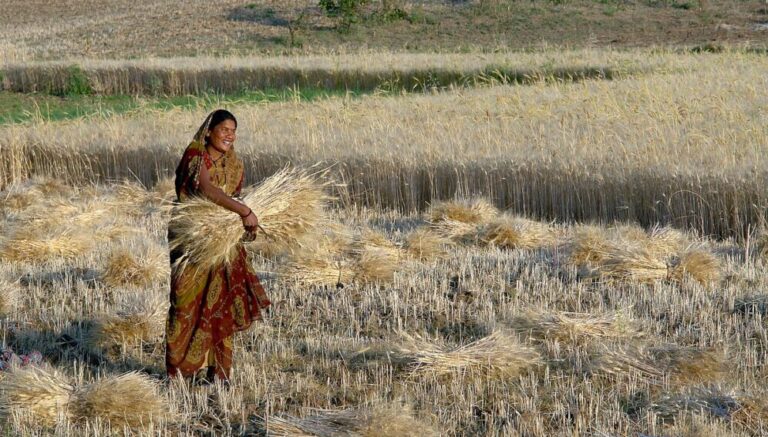
    Image: Wikimedia / Yann Forget

    A Tale of Two Genocide Cases: International Justice in Ukraine And Myanmar

    The way Russia and Myanmar have responded to the cases reveals much about the strengths and limits of international justice mechanisms in addressing global atrocities.

    By Juliette McIntyre and Adam Simpson / University of South Australia

    The International Court of Justice (ICJ) is dealing with two very different cases under the Genocide Convention — one against Myanmar and one against Russia. The way that the defendant states have responded to the cases reveals much about the strengths and limits of international justice mechanisms in addressing global atrocities.

    In the first case, filed in November 2019, The Gambia alleges that Myanmar is responsible for committing genocide against the Rohingya ethnic minority during ‘clearance operations’ in Rakhine State in 2017. During these operations, which resulted in the exodus of 740,000 mostly Rohingya refugees to Bangladesh, Myanmar’s military forces committed serious human rights violations including mass killings, torture and rape, and the destruction of homes and mosques.

    In December 2019, the ICJ heard arguments on whether to grant an interim order for provisional measures under Article 41 of the Court’s Statute — a hearing notorious for the appearance of former state counsellor Aung San Suu Kyi as the Agent for Myanmar. The Court’s unanimous order, issued in January 2020, required Myanmar to ‘to take all measures within its power to prevent the commission of all acts’ of genocide against members of the Rohingya group in its territory.

    Myanmar was also required to report back to the ICJ ‘on all measures taken to give effect’ to this order within four months and then every six months until a final decision on the case was reached. In compliance with the order, Myanmar submitted its first report on 22 May 2020 and a second on 23 November 2020.

    In February 2021, the Myanmar military staged a coup, which led to Aung San Suu Kyi’s jailing and a bloody crackdown on the military’s political opponents and civilians. But the military government has continued its engagement with the ICJ proceedings. Ko Ko Hlaing, Union Minister for International Cooperation under the junta, appeared as the agent for Myanmar at a second round of hearings in February 2022, along with Attorney General Thida Oo.

    Does Russia even care?

    The second case derives from Russian President Vladimir Putin’s assertion that Ukraine’s government and military committed genocide against Russian speakers in the Luhansk and Donetsk oblasts of eastern Ukraine. He has made this allegation several times since 2015, but most poignantly on 23 February 2022 as one of the justifications for Russia’s invasion of Ukraine the following day.

    Ukraine applied to the ICJ for an order that Russia’s aggressive war could not be justified based on false claims of genocide. This is a ‘negative genocide’ case where Ukraine will have to establish that it has not committed genocide in the Donbas to deny Russia’s legal explanation for the invasion any legitimacy.

    During the arguments on whether to grant an interim order for provisional measures, Russia did not appear before the ICJ or submit any proper pleadings. Instead, the Russian government  announced  on Twitter that ‘in light of the apparent absurdity of the lawsuit, we decided not to attend it’.

    In cases of non-appearance, the ICJ is obliged to ensure that any claims made are well-founded and will sometimes bend over backwards to ensure fairness to the absent party. Even so, in mid-March, the ICJ found in favour of Ukraine and issued a provisional measures order. It accepted as plausible Ukraine’s argument that it had a right under the Genocide Convention not to be subjected to a false claim of genocide, which is then used as a basis for using force against it.

    The judgment was not unanimous — the Russian and Chinese judges voted against key provisions. But the ICJ held that Russia was required to immediately suspend its military operations in Ukraine. Russia has not complied with this order, marking a key difference from the Myanmar case.

    Rules-based order?

    The Gambia, Myanmar, Ukraine and Russia are all parties to the Genocide Convention, which provides that disputes relating to the ‘interpretation, application or fulfilment’ of the treaty shall be submitted to the ICJ. Provisional measures orders issued by the ICJ are binding on the parties to the proceedings.

    For Myanmar, there was no significant cost of non-compliance. The Rohingya pogrom and exodus occurred in 2017, long before the ICJ case and resultant ruling. But for Russia, compliance would mean effectively cancelling the invasion of Ukraine — clearly not in Putin’s interest.

    Myanmar is a small state while Russia is nuclear-armed, a permanent member of the United Nations Security Council and provides the European Union with most of its energy needs. For Myanmar’s military junta, continued participation in the ICJ proceedings provided some benefits. It contributed to the military’s diplomatic efforts to convince both international and domestic audiences that it is the legitimate government. Russia needs no license from the ICJ to establish itself as a key actor on the international stage.

    An extended ICJ proceeding may also result in evidence being presented of ongoing Russian war crimes, crimes against humanity and potentially genocide. For Putin it is better to let the case conclude quickly and ignore the decision.

    The tale of these two genocide cases demonstrates the gaps between international law, international justice, and the actions of powerful states.

    As these two ICJ cases show, major international actors, particularly those who pay lip service to the ‘rules-based order’, must ensure that they fully respect international law so that future belligerents have fewer grounds to justify their aggression.


    Juliette McIntyre is a Lecturer in Law at the University of South Australia and a PhD candidate at the University of Melbourne.

    Adam Simpson is Senior Lecturer in International Studies at the University of South Australia.


    This piece has been sourced from the East Asia Forum of the Australian National University


    Image: Wikipedia

    Gulabi Sambad: Discussing What Needs Discussion

    One podcast hopes to provide a safe, open space for young people in Nepal to talk about menstruation, consent, and sexual and reproductive health. 

    By Prasansha Rimal

    It was 2009. She was a 14-year-old student from Gulmi who had just completed her SLC examinations. While waiting for the exam results, she was tasked with taking care of the neighbour’s three children. Her neighbour was in the Indian Army and his wife had gone to India to take care of some documentation. So she often went over to the neighbour’s house to take care of the children and even spent the night there.

    One fateful night, as she lay sleeping, she heard the door open. A man entered and placed both hands on her mouth, preventing her from screaming out. The man raped her and before leaving, threatened to kill her if she ever told anyone. She later learned that the rapist had been the conductor of a local bus driver. One of the neighbour’s children, who was also in grade 10, had fallen in love with the driver and had invited him over for the night. He had brought his conductor with him and that was who had raped her.

    She spent the next weeks waiting for her period, afraid that there was now a child growing inside her. She felt her stomach and even measured it with a belt to see if it was growing. She contemplated suicide. She was just 14.

    She never told her parents or anyone else. It took her 12 long years to even be able to write down just what had happened to her that night. Her story was published as a blog in March 2021 by Gulabi Sambad, a weekly podcast about sexual and reproductive health and rights.

    Blog to podcast to broadcast

    Over the past week, one woman’s story of rape and sexual abuse at the hands of a beauty pageant organizer when she was just 16 has led to an outpouring of outrage and grief from many Nepali women. Protests have been organized and there is a movement to tackle such cases structurally – through changes to rape laws and by affecting a change in broader rape culture.

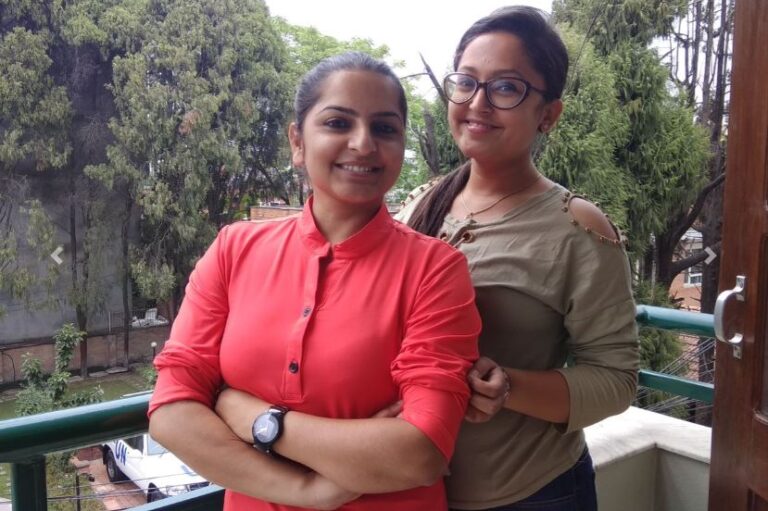
    Amidst the current discourse on rape, one of the primary issues that have come to light is the lack of spaces to discuss sex, sexual and reproductive health, and issues of assault, harassment, and consent. Gulabi Sambad, a podcast hosted by Sabita Acharya and Karuna Devkota, aims to provide precisely such a space.

    “There was a clear lack of space where teenagers, along with adults, could talk about sexual and reproductive health, share their experiences of menstruation, and have an open discussion on sexual assault and harassment,” said 30-year-old Acharya.

    When Acharya and Devkota first met, they were both working at Sathi Sanga Manka Kura, a popular youth-oriented radio show broadcast on Kantipur FM. (Sathi Sanga Manka Kura literally translates as speaking one’s mind with a friend.) For the show, the two often travelled to remote villages and spoke to young people about issues such as sexual and reproductive health, educational opportunities, and life skills training.

    The experience they gathered quickly led the two to realize how much the topic of sexual and reproductive health and rights was neglected in schools and in society at large. The duo then decided to create their own space to provide a platform where such issues could be discussed freely. Their attempt began with a blog, which then led to their podcast, which is now regularly broadcast on local radio every Friday.

    Anonymous queries

    Both Acharya and Devkota knew since their days at Sathi Sanga Manka Kura that they wanted to work in sexual and reproductive health rights. But it was clear to them that addressing such issues in Nepal’s remote areas would be a massive challenge, considering that even talking about the topic remained taboo.

    “In schools, girls would not even raise their head to look at us when talking, so we would ask them to write down their queries anonymously and we would address their issues,” said 26-year-old Devkota.

    Their own experiences learning about their bodies had also been less than thorough. Acharya didn’t tell her mother about her period until the next day as she was scared of what her brother would say. She was confined to a room and not permitted to leave for the duration of her period.

    “My mother didn’t teach me any basic hygiene during my first menstruation. I even missed three days of school,” said Devkota. “Blood would often leak out in class and we would be compelled to clean the bench with water. Menstruation was never talked about as something natural.”

    Also Read: Is This Nepal’s Nirbhaya Moment?

    A colourful phase of life

    However, it was a visit to a school in Dailekh that sparked the creation of Gulabi Sambad. Acharya had gone to Malika village in Dailekh to discuss self-identity and hobbies with young people, but also to talk about sexual harassment. She quickly discovered that female students struggled to attend classes due to chhaupadi practices in the area.

    “The teachers asked what we would be discussing with their students. When we told them that we would be talking about sexual health, the school’s health teacher started yelling at us,” said Acharya.

    According to the teacher, talking about sex was shameful and the duo would be “dishonoring” the students’ families by discussing such topics.

    “We later found out that he would skip chapters on reproductive health while teaching,” said Acharya.

    The incident only shed more light on how poorly educated young Nepalis were in terms of their own bodies and led the two to decide that it was time to create a safe, open space where young people from around the country could discuss such issues freely and openly. Gulabi Sambad was thus founded.

    “We initially wanted to name it Yonika Kura, but something didn’t feel right. Our show didn’t solely focus on matters of sexual health, so during a conversation we had with Amar Neupane, the writer of Seto Dharti, he suggested we name it Gulabi Sambad,” said Acharya.

    According to Devkota, the ‘gulabi’ of the title denotes a curious, colourful phase of life, although not everyone experiences it in that way.

    “The process of growing up and going through puberty is natural and beautiful. No one should be ashamed of it,” said Acharya.

    Come a long way discussing taboo

    The current explosion of anger and dismay at the distressing prevalence of rape and abuse are partly due to the fact that Nepali society remains patriarchal and closed off to open discussions about subjects that are deemed to be taboo, like menstruation, sexuality, and reproductive health. This makes it difficult for minors to comprehend what has happened to them and when they do understand, they are unable to speak out about it due to fear of ostracization. Acharya and Devkota, with Gulabi Sambad, hope to change that.

    “I have come across two types of people – one who doesn’t consider such issues to be important enough to discuss and the other who wants to talk about them but doesn’t know how,” said Devkota.

    Conversations are important, say the duo. So far, they’ve released 76 episodes, 15-20 minutes each, and have also started publishing blogs written by young women and men from across the country detailing their own stories and experiences. They’ve come a long way from recording in a public park to now at each other’s homes and they only aim to continue.

    “These days, there is more of a general awareness among the population regarding sexual health but the question is whether people are getting the right information,” said Acharya.


    This piece has been sourced from The Record.

    Is This Nepal’s Nirbhaya Moment?

    People, at times even a few thousands of them, have come out to rally in support of an abused Nepali woman, galvanized by a series of videos detailing how she was raped as a minor. It is a howl for justice and changing existing laws.

    Laxmi Khanal

    On Wednesday, May 18, a string of videos posted by a young makeup artist went viral on the social media app, TikTok. In the videos, the woman shared distressing details of being raped by an organizer of Nepal’s Miss Global International 2014, a beauty pageant she had participated in. She was 16 years old at the time.

    The videos have since been taken down by TikTok and now appear on Istagram. The unidentified woman, now 25, describes in detail how the much-older man drugged and raped her. She speaks of blackmail and repeated abuse over six months, her confronting the said rapist in public and the exploitation of her trauma over the years.

    The videos detail the woman’s traumatic experiences with a psychologist she’d reached out to for help and rebuffs from a former Miss Nepal, considered an outspoken feminist with whom she shared her problem.

    The videos have garnered thousands of views since they appeared online. The resulting discussions, online as well as in social gatherings and living rooms alike have brought into question the culture of silence regarding rape and sexual harassment, the lack of space for survivors and, of course, the rebuff by people who supposed to be natural allies.

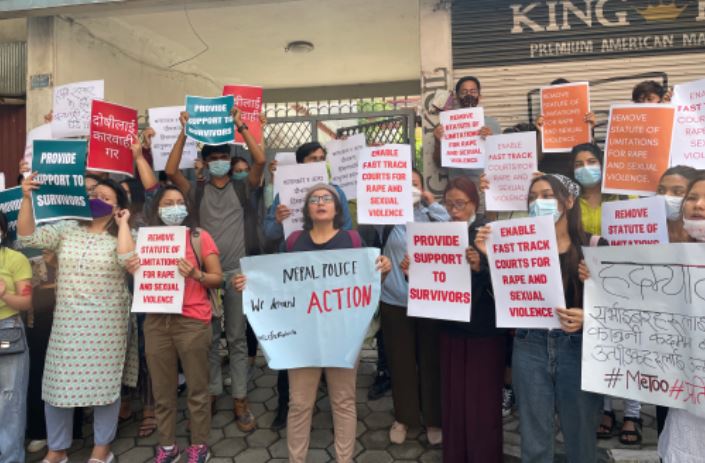
    People take to streets

    Silence from those in power resulted in people spilling out on to the streets and protests close to the residence of the country’s Prime Minister.

    “The protest was initiated to extend support to the survivor and express our outrage and desire for change,” Subin Mulmi, an advocate and researcher who has a long history of engagement with Nepal’s feminist movement told media.

    The outpouring of solidarity from across Nepali society has been unprecedented. Many women said that the survivor’s testimony had brought them to tears while highlighting just how unsafe women remain in this country.

    “I could not get past the fourth video. That was enough to bring me here, not because I’m feeling sorry for her but because I’m here to support her morally and to demand justice,” 21-year-old student Priyanka Shrestha told Record Nepal.

    A demand is for a change in the country’s law that puts a year’s limit on victims filing rape charges with the police. The only exceptions are for minors, who may file their complaints with the police within a year past their eighteenth birthday.

    It is a change many activists have demanded for a while, but their demand has so far fallen on deaf ears.

    Activists in Nepal have drawn inspiration from the Nribhaya movement in neighbouring India, fired by a demand for police action after a young woman was brutally raped and murdered on a moving bus in the heart of the country’s capital, New Delhi.

    But activists have not exactly witnessed crowds throng the protest site. Moreover, unlike the Nirbhaya movement in Delhi, there has been very little participation from men. Similarly, the voices coming out of the protests have belonged to the Baun and the Chhetri caste groups that have traditionally dominated Nepali politics and society.

    Also read:  Gulabi Sambad: Discussing What Needs Discussion  

    Nepal’s #MeToo moment?

    The only high protestors have seen thus far has been a sole Member of Parliament, Gagan Thapa, raise the issue briefly in the parliament of the former kingdom, only sufficient for the Speaker to direct the government to look into the matter of the law of limitation on rape complaints.

    Thapa has also been joined by Arzu Rana Deuba, Prime Minister Sher Bahadur Deuba’s spouse.

    There are already fingers pointing to the government, alleging its role in taking the videos dismantled from Tik-Tok.

    Over a week since it began, the protest is now getting organised with committees formed to campaign on social media. Another committee has been formed to organise events. But there is little movement further – exposing large shortcomings of organisers being able to carry more people along.

    Advocate Mulmi says that besides demanding legal action, the protestors want the government to remove the time limit for complainants from survivors of rape and sexual violence and the setting up of fast track courts besides providing survivors with support.

    Organisers are realising that they need to make this protest more inclusive for the protest to gather steam and become a popular movement that builds solidarity and provides collective responses that can sustain the conversations.

    Till such time, with a single woman coming out with her story, Nepal is way away from its version of neighbouring India’s Nirbhaya moment, leave aside something like the global #MeToo movement, though four other women have come out with cases of rape and sexual harassment so far.

    As Mulmi says, “What the movement needs is sustained action. The first day was a spectacle of public support and outrage and we aim to keep it going.”


    Image: Nishi Rungta via Record Nepal

    World Health Assembly: Focus On Food Safety, Oral Health, Tuberculosis, Innovations

    The health assembly is WHO’s highest decision-making body, setting out the Organisation’s policy and approving its budget. WHA is attended by delegations from all 194 WHO member states. The assembly’s plan is prepared by the programme, budget and administration committee of the executive board.

    By Joe Thomas 

    The 75th World Health Assembly opened in Geneva in the backdrop of the COVID-19 pandemic that tested the resilience of health systems worldwide. The focus of the assembly is on ‘Health for Peace, Peace for Health’ for recovery and renewal. At least 5 million people have died and an even larger number are still suffering from the long-term consequences of the pandemic. When the world is struggling to cope with the economic and social consequences of the pandemic, an avoidable war was unleashed by Russia on its neighbour Ukraine. The war has created further financial stress worldwide, and the resultant food crisis has brought misery to millions of the poorest people.

    The theme ‘Health for Peace, Peace for Health’ is timely and appropriate for the world ravaged by the pandemic and the war. Global health needs new approaches and priorities and must focus on impactful interventions. The World Health Assembly, the premier forum for global health discourses, has a crowded agenda. Global strategies for food safety, oral health, tuberculosis research, and health innovations are some of the issues that will be discussed at the week-long assembly. The assembly has about 73 items on its agenda.

    Spotlight on ASHA’s

    At the opening of the assembly, WHO director general Tedros Adhanom Ghebreyesus announced awards for individuals who went beyond the call of duty to protect life and promote health. “The turmoil of these pandemic years has been profound, unlike anything we have ever experienced. It has been a time of suffering and great loss,” he said.

    India’s accredited social health activists, or ASHAs, were among the recipients of the WHOs annual health award for their work connecting people with health services. ASHAs are more than one million trained female volunteers who take health services to rural, marginalised and hard-to-reach communities across India.

    ASHAs provide maternal care, immunisation for children, community healthcare, treatment for hypertension and tuberculosis, and services for nutrition, sanitation, and healthy living. They play a critical role in India’s primary healthcare system, including providing essential health services to millions of people. Ms Seema Pujani, first secretary from the permanent mission of India, received the award for ASHAs. Health ministers and their delegations will meet in Geneva next week after a two-year hiatus to decide on important global health issues ranging from Ukraine’s health needs to preparing the globe for the next pandemic.

    Some of the topics under discussion include strengthening WHO preparedness for and response to health emergencies, a roadmap 2023–2030 for the global action plan for the prevention and control of non-communicable diseases, intersectoral global action plan on epilepsy and other neurological disorders, prevention of sexual exploitation, abuse and harassment, poliomyelitis and the Global Health for Peace Initiative. The forum will also discuss the working group report on sustainable financing of WHO.

    The health assembly is WHO’s highest decision-making body, setting out the Organisation’s policy and approving its budget. WHA is attended by delegations from all 194 WHO member states. The assembly’s plan is prepared by the programme, budget and administration committee of the executive board.

    Pandemic treaty

    An in-depth discussion on the proposed amendments to the International Health Regulations (IHR) is on the agenda. The United States has already put forward proposals for amendments to the IHR. However, it is unclear whether member states will reach an agreement and when amendments will be considered for adoption. Therefore, the revisions may not be implemented until the 77th World Health Assembly in 2024.

    Preparations for a Pandemic treaty are also on the agenda of the WHA. An Intergovernmental negotiating body was established in December 2021 to draft and negotiate a global agreement on pandemic preparation. No decision on a prospective international pandemic instrument is expected at the 75th WHA. However, the group will discuss the working draft that will be the basis of the discussions.

    WHO funding is still a significant issue. The WHO’s working committee on sustainable financing has unanimously recommended that member governments boost their annual assessed payments. The proposed increase will be phased over, beginning in May 2024. All the 194 member states of the WHA may support this recommendation. The Health Assembly is open to member states, associate members, observers, invited representatives of the UN and other participating inter-governmental organisations and non-state actors.


    Dr Joe Thomas is Professor of Public Health, Institute of Health and Management, Victoria, Australia and is currently attending the 75th World Health Assembly in Geneva.

    This piece has been sourced from Policy Circle – www.policycircle.org

    Pakistan’s Coal Miners Mourn For The Dead; Fight For The Living

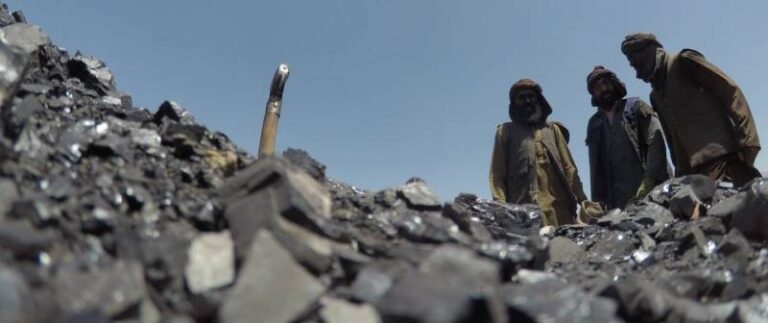
    More workers have lost their lives in Pakistan’s deadly coal mines this month. 18 miners have been killed at work in May alone, according to the Pakistan Central Mines Labour Federation. But Pakistan’s government is reluctant to ratify ILO C176, a 1995 convention on safety and health in mines. Until that happens, miners are condemned to work in death traps.

    On 19 May, a miner fell through a roof and died at work in the Ghazi mine.

    Just two days later, on 21 May, a worker was electrocuted in the Duki coal field, and a landslide killed another miner in the same field. And on 22 May, three miners were injured in a gas blast in a mine belonging to Shakot Charat Coal Company.

    And importantly, the hazardous conditions are made worse by an inherent neglect of workers’ safety by both mining companies and state authorities.

    “The poor working conditions pose a real threat to workers’ lives and we need assistance in training, organizing and awareness raising activities for our workers,” says Sultan Khan, president of the Pakistan Central Mines Labour Federation.

    PCMLF estimates that Pakistan’s coal mining sector employs more than 100,000 workers in 400 coal mines. Miners usually start working at the age of 13. By the time they reach 30, they are forced into unemployment due to chronic respiratory illnesses, tuberculosis, loss of eyesight, and injuries.

    Poverty and a lack of job opportunities force people to work in the mines where workers often have to work for over 10 hours a day without adequate safety equipment, in violation of Pakistan’s own labour laws, Khan says, adding, “When accidents occur, the first respondents are usually other workers in the mine, as there is no access to well-equipped emergency response teams.”

    The Pakistan’s government is reluctant to ratify ILO C176, a 1995 convention on safety and health in mines of the International Labour Organisation. Until that happens, miners are condemned to work in death traps.

    A prayer on the lips

    Mohammad Israr, 17, says that he prays with a heavy heart every time he enters the deadly coal mine in the mineral-rich, south-western province of Balochistan that claimed the life of his father.

    “My father worked in coal mines for over two decades, but ever since his death over a year ago, I had to quit my studies and leave my home to come and work here as a miner,” Israr says.

    With his basic knowledge of Arabic writing and a short background of religious studies, Israr has written various holy verses on the stained black entrance of the mine with white chalk as an omen for good luck and safety. “Our wholesale reliance is on Allah. Nothing else can protect us here,” says Israr, a native of the former Taliban stronghold of Swat Valley in Khyber Pakhtunkhwa, northern Pakistan, which is over 1,600 kilometres away.

    Israr labours for at least 10 hours a day as a helper underground, and occasionally as a coal loader. The work earns him around US$ 10 per day, but it is exhausting and perilous. Adapting to the extreme temperatures of Balochistan, where it plummets below zero in the winter and routinely exceeds 40°C in the warmer months, as well as the life-threatening work of small-scale mining, has been physically and mentally very hard for the teenager.

    But Israr has no choice. “I have to pay back the loans that we took out to pay for things when my father died, and I have to help look after my nine siblings and my mother. There is no other work available,” he confides.

    Blinded by profits

    According to the British Petroleum Statistical Review of World Energy 2020, Pakistan has some of the largest coal reserves in the world (3,064 million tonnes), and coal is used to power everything from brick kilns to cement factories to electricity power plants. But coal mining in Pakistan is incredibly dangerous.

    Reliable data is hard to come by as most workers are informal and work attendance registers at the mines are poorly maintained, but at least 100 mine workers lose their lives every year; in 2020, it is estimated that 208 mine workers died in Pakistan. Thousands more are injured and an untold number develop serious illnesses and diseases as a result of their work.

    The mines tend to be operated by small and medium-sized mining groups, or individuals, many of whom operate on a short-term basis with a sole focus on profit-maximisation. With so many informal enterprises numbers vary, but there are thought to be over 3,000 registered coal mines in Balochistan, engaging over 40,000 miners. Pakistan’s miners are mostly subcontracted, doing manual or semi-mechanised work in privately owned mines which receive little technological investment because the cost is shouldered by mine owners who do not want to impact their profit margins. The government offers little to no legal, financial, technological or social support to mine owners.

    The hours are long, up to 14 hours a day, and while it is illegal for workers under the age of 18 to be engaged in hazardous work in Pakistan, child labour in the mining industry is common, and children as young as 14 years old can be found working underground. There are few health and safety measures for mine workers, little or no training, no paid holidays, no health insurance, and very low wages.

    Ukraine Refugee Rape Survivors Struggle to Access Abortions in Conservative Poland

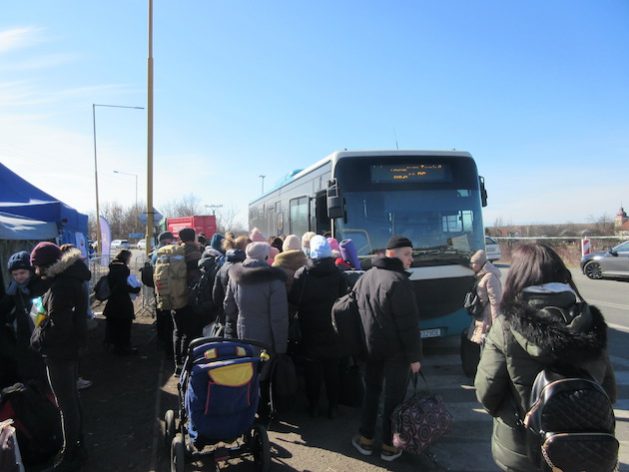
    As well as complying with the stringent laws on abortions, refugees must also battle widespread stigmatisation fuelled by a vocally anti-abortion government. The right-wing, conservative government pushed through legislation that tightened already stringent abortion laws last year.

    By Ed Holt

    An ultraconservative group in Poland has begun checking with hospitals to find out if Ukrainian refugees are being offered terminations in line with the country’s strict abortion laws amid warnings refugee victims of rape are struggling to access local help and clinical services.

    Increasing evidence of sexual violence by Russian troops in Ukraine has emerged in recent weeks, and in neighbouring states, including Poland, local organisations have reported refugees contacting them about terminations.

    But Poland, which has taken in 3.5 million of the 6.4 million refugees who have fled Ukraine since the Russian invasion, has some of the world’s strictest abortion laws. Terminations are only permitted where the pregnancy threatens the mother’s life or health or if it results from a criminal act, such as rape or incest.

    In the latter instance, confirmation of the crime must be given by prosecutors, and the Catholic fundamentalist organisation Ordo Iuris has admitted it has been checking with hospitals about this.

    Meaningless exceptions

    In a letter seen by Polish media, the group asked a Warsaw hospital to provide information on what terminations due to a criminal act it provided between February 1 and May 11. It also asked whether they had been provided to Polish women or foreigners and if, where necessary, official confirmation of rape had been provided by prosecutors.

    The group admitted it had asked other hospitals for similar information and said it believes pro-choice groups could be using the rape exception to Poland’s almost total ban on abortions to help Ukrainian women skirt round legislation and get what would essentially be “abortion on demand”.

    Katarzyna Gesiak, director of Ordo Iuris’ centre for medical law and bioethics, told Polish news site Wirtualna Polska: “We are aware of what the pro-abortion groups are currently doing. They place a strong emphasis on special treatment of Ukrainian women when it comes to the rape premise [for abortion].

    “[But] Polish law is what it is. It doesn’t matter what country a person comes from. Without [requiring] a prosecutor’s opinion, it would be abortion on demand, without verifying if the woman is telling the truth that she was raped… Some people will always want to take advantage of a given situation.”

    The claim has been dismissed by activists working with victims of gender-based and sexual violence. They say it is so difficult that the exception is meaningless.

    “Getting proof from a public prosecutor that you were raped – think about how long that would take! It would just take so much time. It makes it not worth bothering with,” Mara Clarke of the UK-based Abortion Support Network, which has a Polish-based helpline, told IPS.

    She said that Ordo Iuris’ actions highlighted the challenges women face accessing abortion in Poland.

    Greeted with warnings

    As well as complying with the stringent laws on terminations, they must also battle widespread stigmatisation fuelled by a vocally anti-abortion government with a close relationship to a Catholic Church widely seen as having a great influence on its policies.

    Only last year, the right-wing, conservative government pushed through legislation that tightened already stringent abortion laws.

    Meanwhile, leaders in the Catholic Church, which, although viewed negatively by increasing numbers of Poles, still holds a central position in society – in a survey last year, 92% of the population identified as Catholic – fervently promote their support of strict legislation on terminations.

    Anti-abortion campaigners have been promoting their message among refugees fleeing the war in Ukraine.

    As they come over border crossings into the country, refugees are greeted with posters and flyers carrying warnings about jail terms for breaking local abortion laws, images of miscarried foetuses, and a quote from Mother Theresa saying: “Abortion is the greatest threat to peace”.

    Rights activists say this can add to the trauma of those arriving from a country with more liberal laws. In Ukraine, terminations upon request are legal for up to 12 weeks and under certain circumstances to 28 weeks. The government also provides emergency contraception without prescription – for those who have suffered sexual violence or who, for other reasons, may want to terminate their pregnancy.

    “It can be quite a shock when a woman from Ukraine arrives in Poland, having previously planned to terminate her pregnancy in Ukraine, or having found herself with another pregnancy that she doesn’t want to continue. There’s a high level of distress finding out that access to services is basically impossible within Poland,” Julie Taft, humanitarian director at the International Planned Parenthood Federation (IPPF), told international media.

    Lack of clarity

    The situation has already come to the attention of the United Nations High Commissioner for Refugees (UNHCR), which has demanded refugees coming to Poland must have access to reproductive rights that meet international standards, including abortions.

    UNHCR communication officer in Poland, Olga Sarrado Mur, said: “We are engaging with government structures and have established co-operation with local civil society groups to ensure victims of gender-based violence, including rape victims, can access the support they need, including legal, psychological, and clinical services, in a timely manner and in a way that does not stigmatise those victims or put them off trying to access them.”

    “Reports suggest that barriers may put some women off trying to access them. This needs to be addressed,” she added.

    However, it is unclear what the UNHCR could do to ensure Ukrainian refugees who are victims of sexual violence can get abortions under Polish law, given the strictness of local legislation. The time it would take for prosecutors to confirm any rape, notwithstanding the difficulties Polish law enforcement would face investigating a crime which would likely have taken place hundreds of miles away in a war zone.


    This piece has been sourced from Inter Press Service.

    Disaster Prevention, Risk Reduction, Critical to Sustainable Future: UN Deputy Chief

    The World Meteorological Organization has been charged with the task of preparing and presenting an action plan aimed at ensuring that every person on earth is covered by early warning systems within five years.

    The world will experience 1.5 medium to large-scale disasters every day through the end of the decade, unless countries ramp up action on prevention and risk reduction, UN Deputy Secretary-General Amina Mohammed said in Bali, Indonesia, on Wednesday.

    Amina Mohammed was speaking at the opening of the Seventh Global Platform for Disaster Risk Reduction – the first international forum on the issue since the start of the COVID-19 pandemic – bringing together governments, the UN and key stakeholders.

    During the three-day meeting, participants will take stock of implementation of a 2015 agreement known as the Sendai Framework, which aims to protect development gains from the risk of disaster.

    The UN deputy chief told participants that the world is looking to the forum for leadership, wisdom, and expertise.

    “The decisions you take can play a significant part in preventing another calamity like the COVID-19 pandemic,” she said.  “We can – and we must – put our efforts firmly behind prevention and risk reduction, and build a safe, sustainable, resilient and equitable future for all.”

    Disasters are already hampering global efforts to achieve the Sustainable Development Goals (SDGs).

    Lessons from COVID-19

    Stressing the need for urgency, Mohammed outlined four areas for action, starting with learning from the pandemic.

    “We must secure better coherence and implementation of the humanitarian development nexus.  That means improving risk governance. Because despite our efforts, risk creation is outpacing risk reduction,” she said.

    Mohammed noted that currently, there are no governance frameworks in place to manage risks and to mitigate their impact. She said the UN’s 2022 Global Assessment Report, published last month, outlines ways in which governance systems can evolve to better address systemic risks.

    The report “makes clear that in a world of uncertainty, understanding and reducing risk, is fundamental to achieving sustainable development”, she added.

    Invest in data

    For her second point, Mohammed emphasized the importance of investing in stronger data capabilities.

    She pointed to “new multilateral instruments” in this area, such as the UN’s Complex Risk Analytics Fund, which supports “data ecosystems” that can better anticipate, prevent, and respond to complex threats, before they turn into full-blown disasters

    “This includes jointly developing risk analysis, and investing in coordination and data infrastructure that enables knowledge-sharing and joint anticipatory action. Such investments will us help us navigate complex risks earlier, faster, and in a more targeted and efficient manner,” she said.

    Support vulnerable countries

    As the world’s Least Developed Countries and Small Island Developing States suffer disproportionately during disasters, her third point centred on giving greater focus to them.

    Disasters in these countries can wipe out decades of development progress and economic growth, she said, with very serious long-term economic and social consequences.

    “We urgently need to step up international cooperation for prevention and disaster risk reduction in the most vulnerable countries and for the most vulnerable communities, including women and girls, people with disabilities, the poor, marginalized and isolated,” she said.

    Early warning saves lives

    Mohammed listed the provision of Early Warning Systems as one example of an effective measure that provides a considerable return on investment.

    She said the UN Secretary-General has asked the World Meteorological Organization (WMO) to present an action plan at the next UN Climate Conference (COP27), to be held in Egypt in November, aimed at ensuring that every person on earth is covered by Early Warning Systems within five years.

    For her final point, Mohammed called for the public and financial sectors to be “risk proofed”, stating that “we need to ‘think resilience’, account for the real cost of disasters and incentivize risk reduction, to stop the spiral of disaster losses.”

    Governments also need to factor disaster risk reduction into financial frameworks, while “alternative measurements, beyond Gross Domestic Product, should take account of disaster risk and resilience.”

    Resilience the mantra

    The President of the UN General Assembly, Abdulla Shahid, said that one overriding lesson of COVID and the climate crisis, was that those who are furthest behind, and who suffer the most are “far to often, wiped away by whatever crisis comes their way.”

    “Our recovery from the pandemic must reflect this knowledge. Resilience, must be our mantra”, he said.

    “Every new building, every new social programme, every budget and every initiative must be designed and executed in a way that reduces risk. It must be embedded into everything we do, from the very beginning, and cross-checked at each step of the way.

    “And the importance, no, the necessity, of this will only increase.”

    Shahid said the requirement now, was for a “transformative recovery” that makes up for gaps in economic, social, and environmental policies, and over production and consumption.

    “Everything about the way we live on this planet, must now be seen through a precautionary lens, ever mindful of the volatility that exists, and laser focused on covering gaps and strengthening defences.

    Such a recovery, he said, “requires more than policy, it requires whole-of-society ownership.”

    Seize the moment

    The Seventh Global Platform for Disaster Risk Reduction was organized by the UN Office for Disaster Risk Reduction (UNDRR) and is being hosted by the Government of Indonesia.

    President Joko Widodo said his country is highly prone to disasters.

    “In 2022, as of May 23, 1,300 disasters have taken place, and in a month, on average, 500 earthquakes happened,” he said.

    “Therefore, at the Global Platform for Disaster Risk Reduction, today, the government of Indonesia offers to the world the concept of resilience as a solution to mitigate all forms of disasters, including pandemics.”

    President Widodo also called on all nations to “commit and be serious” in implementing the Sendai Framework.


    Image: Climate Visuals Countdown / Debsuddha Banerjee