More

    The Dangers of Defending Women Accused of Sorcery in Papua New Guinea

    Human rights defenders are often targeted when they assist a survivor of sorcery accusation-related violence because they are seen as interfering in a customary practice. Likewise, they are also targeted for offering to help survivors of gender-based violence to move provinces, because they are considered to be meddling in a family matter.

    In Papua New Guinea, defending women accused of sorcery, has become a life-threatening occupation. The Spotlight Initiative is one of the handful of civil society interventions promoting legislation to protect threatened human rights defenders in the country, who risk violence, torture, and death.

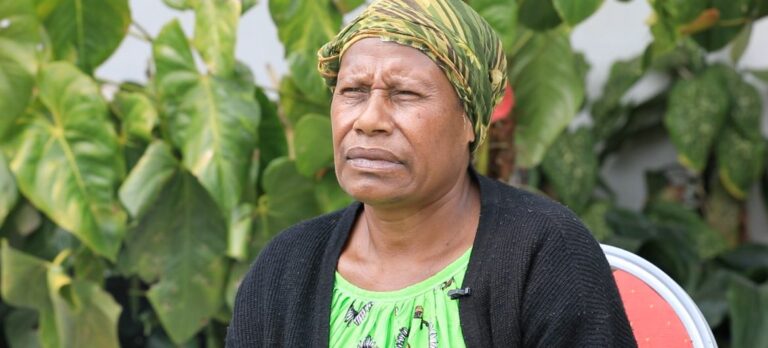
    “When we are trying to help others, or when we go to court to take up someone’s case, we face threats and intimidation,” says Mary Kini, of the Highlands Human Rights Defenders Networks.

    For more than 14 years, Mary has been working to assist victims of sorcery-related violence, and gender-based violence, in Papua New Guinea (PNG), despite the high personal cost that often comes with it.

    Mary recently joined fellow human rights defenders Eriko Fuferefa, of the Kafe Urban Settlers Women’s Association, and Angela Apa, of the Kup Women for Peace in Mount Hagen, for a three-day consultation on the development of a Human Rights Defenders’ Protection bill.

    “For so many years we have not been protected and some human rights defenders have been killed along the way,” said Eriko Fuferefa. “Some of them are abused, or tortured. We have so many bruises.”

    ‘Wanted to kill me’

    An average of 388 cases of sorcery accusation-related violence are reported across four Papua New Guinea’s Highlands provinces every year, but fear of retaliation means the true number of victims is likely far higher.

    Following advocacy from the Spotlight Initiative, there is now greater political ownership of issues of violence against women and children, demonstrated by the country’s first Special Parliamentary Inquiry on gender-based violence, which delivered recommendations to parliament and has made notable legislative advances in the area of sorcery accusation-related violence.

    Practices to identify those accused of sorcery vary between districts, but generally, when someone has died unexpectedly, the family of the deceased will consult a Glasman (male) or Glasmeri (female) to identify who in the community is responsible.

    Accusations of sorcery by a glasman or glasmeri have led to the torture and murder of dozens of women across PNG. While accusations can be levelled at both men and women, most of the victims of violence are women.

    “When my husband died, we took him to his village and there, his family began to suspect that I killed him, so they planned to cut off my head and bury me with my late husband,” explains one survivor. “It wasn’t true, they just wanted to kill me.”

    “People have these norms, these beliefs,” said Mary. “When a Glasman or Glasmeri comes along and says something, people automatically react to what they are saying.”

    Volunteers risk defend Women Accused Sorcery Papua New Guinea

    Long overdue change

    Amendments to the Criminal Code make it illegal to use, attempt to use, or threaten to use their services. Penalties include up to 10 years in jail and fines of up to 10,000 PGK.

    In submissions to the Special Parliamentary Inquiry in 2021, the Spotlight Civil Society Reference Group (of which Ms. Kini is a co-chair) recommended that the Government review policies and laws that address social norms that allow for sorcery-related violence, including the use of glasman and glasmeri.

    “This is very important, and I am really pleased that this has passed as this is something we have been asking for, for a long, long time,” concluded Mary.


    Image: Spotlight Initiative  /  Rachel Donovan

    Neighbours Prodded Taliban to Ensure Rights While UN ‘Pledgers’ Spoke of Taliban’s Track Record

    The UN conference spoke of the Taliban’s order extending the closure of girls’ secondary schools. Simultaneously, at a parallel conference held in China, neighbouring countries and friends of the present Afghan Taliban regime brought up the subject of terrorism.

    Even friends are refraining from endorsing the rights track record of Afghanistan’s Taliban government.

    A joint statement signed at the end of the conference of seven of Afghanistan’s neighbours end-March noted the need for the Taliban-led government to ensure women’s rights and children’s education in Afghanistan and “guarantee the basic rights of all Afghan people, including all ethnic groups, women and children.”

    More harsh was the stress of the joint statement on the need to curb terrorism emanating from Afghanistan.

    The conference in China coincided with another simultaneous United Nations ‘pledging’ conference wherein 41 international donors pledged US$ 2.44 billion in humanitarian aid for Afghanistan – almost half of the US$ 4.4 billion target.

    At the UN -led partners’ conference, US’ ambassador to the UN, Linda Thomas-Greenfield, said that the new US humanitarian assistance for Afghanistan’s 22 million people through UN and nongovernmental partners is meant to ameliorate the food insecurity situation in the country.

    Yet, she stressed “The Taliban will not control our humanitarian funding,” adding further that “the Taliban’s ambition to improve its own relations with the international community depends on its conduct.”

    To buttress her point, she cited the Taliban’s March 23 orders extending the nationwide closure of girls’ secondary schools.

    “It is impossible not to feel a sense of profound outrage when we see girls and young women across Afghanistan wracked with tears as they learn they will have to leave their classrooms after all,” she had said.

    Notably, there were not dissenters to what the US ambassador to the UN said.

    Chinese dragon

    The conference in China, however, did not get as much public attention. The joint statement released at the end of the day, however, reveals the division among the international aid community. Pakistan was the chief propeller of this conference.

    The joint statement voiced an “opposition to the politicization of humanitarian aid, stressing the “dominant role of the relevant Afghan authorities in the distribution and use of aid to the Afghan people by the international community and international organizations.”

    But the terrorism word did figure in the joint statement. “We call on the relevant Afghan authorities to take more visible measures to draw a clear line with various terrorist forces,” the statement said, adding, the need to “ensure that Afghanistan will no longer become a terrorist organization a breeding ground, a sanctuary and a source of diffusion,” the statement said.

    Similarly, the joint statement noted the “importance of continuing to take necessary measures to ensure women’s rights and children’s education in Afghanistan.” It called for “further measures to improve people’s livelihood and guarantee the basic rights of all Afghan people, including all ethnic groups, women and children.”

    That the Taliban representative signed on the joint statement with a clear reference to terrorism and the issue of women’s rights is indicative of the compulsion of today’s rulers in Afghanistan to dance to the tune of the Chinese dragon.

    Interestingly, the joint statement also paid its due respect to the host country’s Belt and Road Initiative, committing to “deepening cooperation under the framework of the Belt and Road Initiative and regional cooperation organizations, absorbing Afghanistan into regional connectivity, energy and transportation networks and economic and trade systems, and helping Afghanistan realize its geographical advantages and economic development potential.”


    Image: UNICEF

    How Accurate Is Nepal’s COVID-19 Death Toll?

    According to government data, nearly 12,000 Nepali deaths have been attributed to COVID-19 but poor data keeping and discrepancies call the number into question.  

    By Marissa Taylor 

    Ganesh Shrestha was a healthy man. In his 68 years, he had never had any serious health issues nor had he ever been hospitalized.

    But in May 2020, during the second wave of the pandemic, he contracted COVID-19 and was hospitalized due to breathing difficulties. After 20 days in the hospital, Shrestha died. The Nepal Army disposed of his body and he was among the nearly 11,928 Nepalis who have died because of COVID-19 over the past two years.

    The immediate cause of Shrestha’s death was refractory bradycardia, which in layman’s terms means a decrease in the heart rate that occurs to prevent abnormal increases in blood pressure. Bilateral COVID pneumonia was a contributing cause to his death, according to Karishma Shrestha, his daughter.

    “My father’s CT value was already 35 [a CT value of above 35 may be considered as negative for COVID-19] and we were preparing to actually take him home when he suddenly died,” said his 28-year-old daughter, whose first name along with her father’s has been changed for privacy reasons. “Because he was admitted in the COVID ward, he was automatically counted as a COVID death.”

    Ever since the pandemic began, questions regarding what exactly constitutes a COVID-19 death have been asked time and again. Ganesh Shrestha’s case can be seen as emblematic of the confusion surrounding what ascribes COVID-19 as the primary cause of death. Although Ganesh Shrestha would’ve technically tested negative for the coronavirus, doctors attribute his death to complications developed from COVID -19, which makes it a COVID death.

    But things get more complicated when it comes to patients with comorbidities and long-term afflictions. There’s confusion over whether reported death statistics reflect those who’ve died from COVID -19 or those who’ve died with the virus, because the COVID -19 death toll published daily by governments around the world — including Nepal — does not differentiate between the two. Lumping these two statistics together does not provide a true picture of the pandemic’s death toll and can hinder targeted public health measures to prevent future deaths.

    WHO recommendations

    According to the WHO’s international guideline for certification and classification (coding) of COVID-19 as the cause of death, a COVID-19 death is one “resulting from a clinically compatible illness, in a probable or confirmed COVID-19 case, unless there is a clear alternative cause of death that cannot be related to COVID disease (e.g. trauma).”

    In line with the WHO’s guideline, the Nepali Health Ministry’s Epidemiology and Disease Control Division (EDCD) only came up with its own guideline for recording COVID-19 deaths in January 2021. Before that, it was standard practice to record as a COVID death anyone who was positive for the coronavirus at the time of death.

    “Following WHO recommendations, we define COVID-19 deaths as all deaths where the individuals had the virus in their body at the time of death,” said Dr Amrit Pokhrel, chief of the Emergency and Outbreak Management Section at the EDCD. A unit at the EDCD is responsible for tallying confirmed COVID-19 cases, along with fatalities, reported by hospitals from across the country. The daily tally is then published every evening on the Health Ministry website.

    “Except for deaths like road accidents, suicide, and those caused by crime, anyone who tests positive for COVID at the time of death is counted as a COVID death,” said Dr Pokhrel.

    Doctors decide too

    But such a blanket rule does not provide an accurate picture of COVID deaths. It is important to distinguish between those who died with COVID and those who died from COVID to understand which section of the population remains susceptible to the virus and at this point in time, to assess the efficacy of the various vaccines that have been deployed.

    “At the time the guidelines were made, we were all scared of the virus and how fast it would spread. So the WHO and the EDCD established these guidelines in the hope that people would take the disease seriously and that would help to lessen the risk of spread,” said Dr Pokhrel.

    However, doctors have the authority to assess and decide on what is a COVID death on their own too. A doctor, alongside a committee of three other health professionals, can decide on the cause of death, whether a patient died with COVID or because of it, said Dr Pokhrel.

    But given the manner in which Nepal’s data is collected, there is no indication of how many COVID deaths were decided upon by doctors and how many were simply chalked up to COVID-19 due to the presence of the virus.

    To better assess the actual mortality from COVID-19, many countries are calculating ‘excess mortality’ during the pandemic. Excess mortality is measured as the difference between the reported number of deaths in a given period of time and an estimate of the expected number of deaths for that period had the COVID-19 pandemic not occurred. It is, in other words, all deaths arising from the pandemic but not just directly from a medical infection.

    Excess mortality

    Excess mortality provides a clearer picture of the actual effects of the pandemic as it doesn’t just take into account the deaths directly from COVID-19 but also the associated consequences of the pandemic like loss of employment, mental and physical stress, and increased poverty.

    For example, according to The Economist, in India, estimates suggest that perhaps 2.3 million people had died from COVID-19 by the start of May 2021, compared with about 200,000 official deaths, suggesting the country’s death toll is severely underreported.

    The estimated excess mortality for Nepal was 114,126 as of February 13, 2022. The reported mortality rate from COVID -19 is currently 392.6 per 1 million ( or about 39 per 100,000) which implies that there could be many more deaths due directly to the coronavirus, in addition to other related stressors.

    These, however, are estimates and COVID -19 has been a thoroughly unpredictable pandemic. This further hammers home the importance of accurate, reliable data, which is sorely lacking in Nepal. Unavailability of data remains a critical problem in Nepal, especially at a time when accurate data is necessary to gauge the extent of COVID-19 and its myriad effects. Even the data that is available is notoriously unreliable and unscientific.

    “Even if we wanted to look for discrepancies, we can’t because we don’t have any data to compare. All the COVID -19 numbers we have are coming directly from the Health Ministry,” said Yogendra Gurung, a professor of population studies at Tribhuvan University.

    Not defined properly

    Neither the health ministry nor the Central Bureau of Statistics has records of annual deaths. The only data that is available is Nepal’s annual death rate. If we look at the death rate of Nepal from 2020-2022, it ranges from 6.264 to 6.327 per thousand (6.327 in 2020, 6.295 in 2021, and 6.264 in 2022). If we compare just the death rate, then the last three years’ numbers are the lowest yet, declining each year even during the pandemic years. But these are just projections made by the UN and do not help us discern how accurate the national COVID-19 death toll is.

    “These projections are most probably based on the 2001 census and do not take into account the deaths caused by the pandemic,” said Gurung. “Maybe the 2021 census could help us look at the numbers but it is not complete yet.”

    Globally, there have been other discrepancies surrounding COVID-19 deaths. According to this data tracker, Peru has the highest number of deaths per million (6,216, as of February 22). Nepal, for comparison, had 416.83 deaths per million as of February 22. But if you take a look at the total number of cases, Peru is 25th, with 3,497,896 cases. This discrepancy raises questions as to whether testing is limited in Peru, if death cases are being over-reported because COVID-19 deaths are not defined properly, or if the data calculation is faulty.

    Complex job

    Dr Sher Bahadur Pun, chief of the Clinical Research Unit at the Sukraraj Tropical and Infectious Disease Hospital in Teku, acknowledges that determining the cause of death amidst COVID-19 is complex.

    “COVID-19 can cause an extraordinarily wide range of clinical complications. And at the core of the issue is the fact that COVID-19 kills in myriad ways, typically setting off a combination of potentially fatal afflictions. Thus it can become challenging for medical professionals themselves to distinguish COVID deaths,” said Dr Pun.

    While some reports suggest that COVID-19 deaths have been grossly exaggerated, there are others that suggest that cases are severely being underreported.

    Dr Pun and Dr Pokhrel, like many other health professionals, believe that Nepal’s death toll is severely underreported and that the total number of fatalities may be much higher. There are several reasons for this.

    “First, there could be a lot of people who died because of coronavirus but did not get themselves tested or visited hospitals or health care centers due to a lack of financial resources, or even social stigma,” said Dr Pokhrel.

    Second, Nepal has limited testing capabilities and limited resources to keep track of everything, he said.

    There’s yet another issue with keeping track of COVID fatalities currently.

    “Earlier, the Nepal Army would dispose of all the bodies and it was easier to keep track of the number of casualties. But now that the fear of COVID has decreased among the public, people are disposing of the dead themselves and because of that, there could be cases that are slipping out from the national record,” said Dr Pokhrel.

    Subjective

    Data from the Health Ministry and the Nepal Army have conflicted at times. Last year, during the height of the second wave, the Nepal Army and the ministry released different numbers for COVID-19 fatalities. On May 11, 2021, the Health Ministry had placed the death toll at 4,084 while the Nepal Army said that it was 4,682. Public health experts had sided with the army’s data.

    Periodically, the Health Ministry omits deaths in its daily update while it tallies its data with that of the Nepal Army, leading to sudden jumps in the daily death rate. On May 12, 2021, the Health Ministry suddenly added 168 deaths to the day’s death count, without explicitly specifying that the deaths were cumulative over the past few days based on Nepal Army data. Again, on September 9 last year, 14 deaths were cumulatively reported.

    Officially, nearly 12,000 people have died due to COVID-19 but the true death toll of the pandemic is certainly much higher, both in terms of direct deaths and those from related causes. Accurate, disaggregated data is part of the public’s right to information and in the midst of the pandemic, part of their right to life and an adequate standard of health. But doctors say that this is par the course for Nepal – things get done very late, if they ever get done at all.

    “I too have heard of family and friends who did not die directly from COVID but were declared dead due to the virus,” said Gurung, the Tribhuvan University professor. “But this is all subjective. There’s no way we can know the true death count unless we do a recount keeping in mind a more clear definition of a COVID-19 death.”


    Marissa Taylor is Assistant Editor of The Record. She previously worked at The Kathmandu Post.

    Banner illustration: Prajesh Sjb Rana

    This piece has been sourced from The Record.

    First Person From Congo: From Taking Lives To Saving Lives

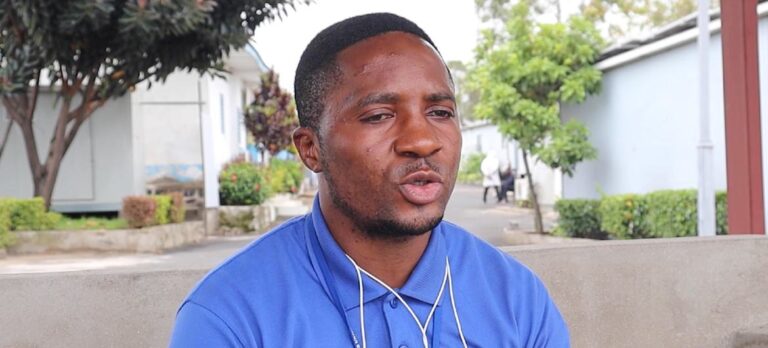
    Fabien Mwingwa once fought as a child soldier with an armed group in the Democratic Republic of the Congo. Today, he has turned his life around, and works for the UN peacekeeping mission in the country as a firefighter, helping to keep local people safe.

    Fabien Mwingwa was 17 when a rebel group – RCD Goma – convinced him to join its ranks, and fight against the then government of President Laurent Kabila, with promises of a life of prosperity.

    He was recruited in Goma, the capital of North Kivu province, and started military training in the bush. After fighting for seven years, Fabien surrendered and is now an employee of the UN peacekeeping mission in DRC, (MONUSCO) as a Fire Safety Assistant.

    “When I joined RCD Goma, a gloomy future was in store for me. The government was trying to impose one tribe, to rule over the entire country, and the rebel leaders promised that once we had liberated the country, we would prosper.

    After recruitment, we stayed in Goma for a month and then we were sent to Rwampara military camp, located in Bunia, Ituri province. The rebel leaders realized that our parents were looking for us, and it could have been easier for them to spot us in Goma.

    In 1999 the training was moved to Kisangani, before we were sent to the battlefield in Manono, Tanganyika province. The fighting was intense. We used heavy weaponry like Rocket-Propelled Grenades (RPGs). We were very young, and some of those who survived later, had mental breakdowns.

    I suffered a lot. The conditions were filthy and stinking, and we were infested with lice.

    ‘Please return home’

    I was picked to escort our leader back to Goma, along with other fighters, and when my mother found out that I was back, she pleaded with me to stay home, as family members were saddened by what they heard I went through in the bush.

    But I stayed with the group, and it wasn’t until 2004 that I decided to leave. I realized that life with armed groups did not bring the prosperity they had promised: whatever money we got, we had to give to the leadership, who did not even provide us with shelter.

    The following year, I heard about the Disarmament, Demobilization and Reintegration (DDR) programme, run by the UN peacekeeping mission. I surrendered my weapons and uniforms, and followed all procedures, including visiting an office that verified whether or not I had indeed taken military training, or committed any crimes in the community.

    I got a job as a security guard, where I received training in engineering and fire safety. When my contract ended, I secured several further short-term contracts until I was employed by MONUSCO as a Fire Safety Assistant in 2015.

    I am grateful that MONUSCO has been with me since my surrender. I make a decent salary and I own a house. I am married, and am able to provide my children with a good education.

    My message to young people is that they should not go fighting in the bush, as there are no benefits. I suffered, I wasted time. And to combatants, I say, please come home and learn various skills. You could be hired like me, and life is good”.


    Image: UN

    South-East Asian Rice Bowl Depleting Fast

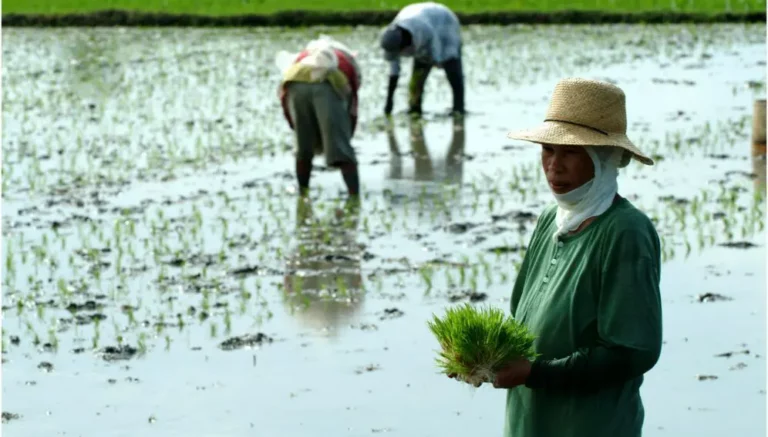
    A new analysis warns that South-East Asia may lose its status as a major international rice exporter due to diminishing crop yields, land pressures and climate change. This calls for the introduction of better management and production techniques.

    By Sanjeet Bagcchi

    Dwindling crop yields, land scarcity and climate change may cause South-East Asia to lose its status as a major rice exporter — unless changes in production and management techniques are introduced, says an analysis.

    Published March in Nature Food, the analysis evaluates the gap between potential and actual yields of rice across South-East Asian countries, including Cambodia, Indonesia and the Philippines, and shows ways to augment rice production in the region.

    South-East Asia accounts for about 40 per cent of international rice exports but the region is also a substantial consumer of rice. The researchers note that by 2050, owing to increasing populations, there will be 18 per cent higher demand for rice in the region.

    With limited scope in other major rice-producing countries like China and India to generate a rice surplus, South-East Asian countries with a larger yield gap must step up production to avoid the need for import in the future, the researchers say.

    Yield gaps

    Rice yield stagnation has been noted in countries like Myanmar, Thailand and Vietnam, owing to residential and industrial encroachment on rice-growing areas with little prospect to expand irrigated paddy lands, thanks to inadequate investment and other reasons.

    “Our analysis shows that South-East Asia will not be able to produce a large rice surplus in the future if current trends continue,” says Alice Laborte, an author of the study and senior scientist at the Philippine-based International Rice Research Institute. “Failure to increase yield on existing rice area will drastically reduce the capacity of countries in the region to achieve or sustain rice self-sufficiency and export rice to other regions.”

    Using a data-intensive approach the researchers found that the average gap in rice yield represents about 48 per cent of the “yield potential” estimated for the region although there were significant differences among countries.  Cambodia, Myanmar, the Philippines and Thailand were showing larger ‘rice yield gaps’ than Indonesia and Vietnam.

    Closing the “exploitable yield gap” by half through proper crop management and other measures would drastically reduce the need to import rice and generate an “aggregated annual rice surplus of 54 million tons available for export,” the researchers say.

    They recommend specific measures to improve the rice yields such as investments in agricultural research and scaling up of productivity-enhancing technologies to narrow the exploitable yield gap over the next 20 years. Crop management practices such as better use of fertiliser and irrigation, nutrients, water, and pest management are particularly useful in lowland rainfed environments, they add.

    “Closing of yield gaps requires the concerted effort of policymakers, researchers and extension services to facilitate farmers’ access to technologies, information, and markets,” says Laborte.

    Fertiliser prices

    South-East Asia needs to produce more rice with reduced inputs, including land and water, and also leave behind a smaller environmental footprint, says Samarendu Mohanty, Asia regional director of the International Potato Center.

    “With consumption still rising along with population growth, these countries need to accelerate yield growth in targeted countries to remain net exporters of rice,” Mohanty tells SciDev.Net.

    “Increasing rice production in the region will enhance food security not only in the region but also globally,” Laborte says. “Maintaining the capacity of South-East Asia to produce a large rice surplus can help reduce global price volatility and provide a stable and affordable rice supply to many countries in Sub-Saharan Africa and the Middle East.”

    “With soaring fertiliser prices, many farmers may choose to reduce fertiliser usage which could lead to lower rice production,” she adds.

    According to Mohanty, fertiliser prices have skyrocketed in the past several months with the Ukraine war making it even worse; in February alone, fertiliser prices went up by 40 per cent.

    “The wet season paddy crop in Asia, [the crop of] the main growing season, which is just a couple of months away, will be severely impacted by high prices and shortages in fertiliser,” says Mohanty.


    This piece has been sourced from SciDevNet

    Image: International Rice Research Institute (IRRI) (CC BY-NC-SA 2.0).

    Sri Lanka’s Political Turmoil Risks Derailing the Economy Further

    Sri Lanka is facing unprecedented political turmoil, and with the economy in a tailspin it is in its weakest state in decades. The country is staring down the barrel of a sovereign debt default and is exposed to external shocks.

    By Anushka Wijesinha

    Usable foreign exchange reserves are at just a few weeks of imports (estimated at below US$200 million), and there are shortages of fuel, gas and electricity. Banks and businesses are short of dollars for trade transactions and households are struggling to get basic food items.

    President Gotabaya Rajapaksa announced his request for support from the International Monetary Fund (IMF) in March 2022 as a precursor to pursuing a sovereign debt restructure. He has appointed a three-member group of eminent experts to advise him on multilateral engagement. Ensuring that the government can come to an agreement with the emergency lender — with political consensus and public acceptance — is crucial.

    Political consensus around economic policies in Sri Lanka has always been elusive. In recent political cycles, economic reform agendas have been promptly reversed by the next government, resulting in policy whiplash and macroeconomic damage. This trend must be reversed. Political consensus in key reforms areas, such as fiscal adjustment, market-based pricing of energy, rationalising state expenditure — including state-owned enterprise reform and a halt on state sector recruitment — is essential.

    For international institutions and investors awaiting Sri Lanka’s next step, the political turmoil of the last few days is troubling. In the face of public protests, the cabinet of ministers has resigned, forty-two MPs have exited the government, and the newly appointed finance minister quit a day after being appointed. Last month, three MPs begun shaping an anti-IMF narrative. One of them has even suggested that the IMF, and Western institutions in general, are responsible for the current crisis in Ukraine.

    Can’t burden the poor

    As calls for the president to step down have grown, there have been efforts to form an ‘interim government’ with ‘multi-party representation’. Given the divergent political views and economic ideologies among these parties, getting any form of political consensus on an economic reform programme will be challenging. Anti-IMF public posturing, party-led protests due to budget cuts and disagreements on the reform pathway risks derailing urgent macroeconomic stabilisation measures and undermines short-term restructure and reform efforts.

    The Sri Lankan economy has been running on excessive money printing in the last two years. The Central Bank of Sri Lanka’s balance sheet and the role of the state in the economy has expanded.

    Everything from construction firms to retailers of consumer goods have done well during this time. Inflation is now at over 17 per cent — four times that of two years ago. It is inevitable that an austerity programme will be implemented as part of an IMF bailout package and sovereign debt restructure.

    The fiscal adjustment must be swift, sensible and sensitive to vulnerable groups. Budget cuts need to be prioritised in a way that doesn’t burden poorer households. As the leader of the opposition recently stated, ‘We have to cushion the less fortunate in society, we cannot have social upheaval just in the name of and for the sake of restructuring and reform’.

    Non-urgent capital expenditure projects — notably, infrastructure construction — would be first to be deprioritised, especially amidst cost inflation controversies in projects like the construction of the Central Expressway. The construction sector has been a mainstay of economic activity since the end of the Sri Lankan Civil War in 2009. A cut back would see localised impacts on jobs too — many seasonal farm workers often take on jobs in these projects.

    Political consensus for reform

    Taxes and interest rates must rise and spending needs to be curtailed. This will hit aggregate demand in the economy that has a large state role. Those who benefited from government stimulus payments will be hit hard.

    Domestic political consensus on the core reform areas must accompany efforts to agree on a reform programme with the IMF that sets the stage for a sovereign debt restructure. The IMF and bondholders need assurances of political continuity. Any attempt to push through the reform programme without clear articulation of its rationale, expected outcomes, and measures to protect the vulnerable, will be met with resistance by politicians and the public.

    The government needs to explain what the next year will be like, why the steps being taken are necessary and how it will help ease peoples’ economic pains. Ensuring that key economic decision-making roles are filled by individuals with credibility and competence is essential to building confidence in the government’s economic management and its ability to engage in productive dialogue with the IMF and international creditors.

    The main risk facing Sri Lanka is the fallout of the current political instability on macroeconomic stabilisation efforts. Facing the prospect of a disorderly default, Sri Lankan officials have a decision to make — will they kow-tow to narrow political compulsions, or come together to agree on a common programme that steers the economy out of the current crisis and towards macroeconomic stability? Perhaps the current turmoil in parliament and the public’s growing recognition of the cause of the crisis will be what catalyses a political consensus for reform that has eluded Sri Lanka for so long.


    Anushka Wijesinha is an Economist from Sri Lanka and Co-Founder of the Centre for a Smart Future, an independent public policy think tank. He was formerly Advisor to the Minister of Development Strategies and International Trade and Chief Economist of the Ceylon Chamber of Commerce.

    This piece has been sourced from East Asia Forum of the Australian National University


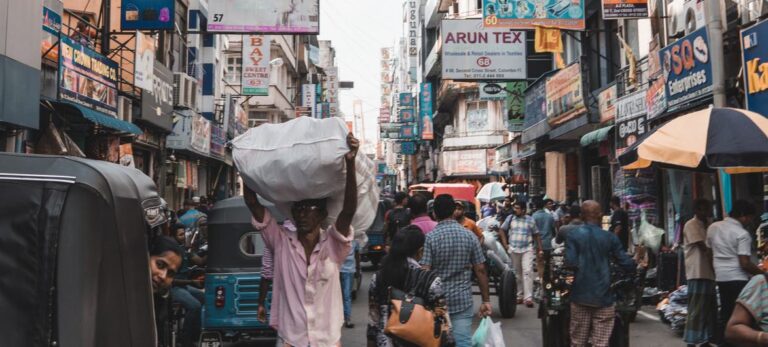
    Image: UNSPLASH / Alex Azabache

    Protests a Basic Human Right, UN Experts Tell Sri Lanka

    The experts called on the authorities to engage in constructive and open dialogue with the Sri Lankan people, saying that “peaceful protests and voices of legitimate dissent should not be met with unnecessary and excessive use of force by authorities.”

    A group of five UN human rights special rapporteurs and independent experts today urged the Sri Lankan Government to guarantee the fundamental rights of peaceful assembly and of expression during peaceful protests, amid the country’s severe economic crisis.

    “We are gravely concerned by the recent proclamation of a state of emergency as well as the order that blocked access to social media platforms,” they said.

    “These measures seem aimed at discouraging or preventing peaceful protests in the wake of the worsening economic crisis and the lack of access to fuel, electricity, medicines and essential food items.

    A foreign exchange scarcity has stoked an economic crisis, coupled with rising inflation, shortages of fuel and essential goods, and prolonged power cuts.

    It has aggravated an already dire situation over access to food and health causing difficulties for millions of persons living in poverty and for persons with serious medical conditions to access medicines or hospitals.

    Security forces fired teargas and water cannon to disperse thousands of Sri Lankans who took to the streets in protest, demanding the president’s resignation over his handling of the crisis.

    Nearly 50 people were injured, including several journalists, and there were more than 50 arrests.

    “We condemn the excessive use of teargas and water cannon to disperse protesters, as well as the recent block of social media platforms,” the experts said, urging the Sri Lankan Government to allow students, human rights defenders and others to protest and to freely share their political views and express their discontent, both online and offline.

    Need open dialogue

    The compounded impact of foreign debt, corruption and the COVID-19 crisis, has affected the country’s economy. Experts called on the government to ensure that all human rights be respected and protected.

    Thousands of people have since joined the daily protests, calling for political and economic reforms. The government imposed nationwide curfews from 2 to 4 April, arresting over 600 people found in violation of the curfew. On 2 April, the president declared a nationwide public state of emergency, that has since been revoked, empowering him to override most laws with the exception of the constitution, while the government blocked access to several social media platforms. Access to these platforms was later restored.

    The experts called on the authorities to engage in constructive and open dialogue with the Sri Lankan people, saying that “peaceful protests and voices of legitimate dissent should not be met with unnecessary and excessive use of force by authorities.”


    Image: UNSPLASH / Alex Azabache; Streets of Colombo, Sri Lanka.

    Pandemic “Far From Over”, says UN Chief Guterres

    The window is closing fast. All countries need help to prepare for future pandemics by multiplying the number of countries able to locally produce tests, vaccines and treatments, the UN Secretary General said.

    United Nations Secretary-General António Guterres said Friday that the spread of Omicron – now surging in the form of the BA2 variant in many parts of the world – was “a startling reminder of how quickly COVID-19 can mutate and spread — especially in the absence of high vaccination coverage.”

    He was addressing the GAVI COVAX international vaccine equity initiative’s Advance Market Commitment Summit 2022, which saw world leaders commit $4.8 billion to help lower-income nations boost vaccination rates, and secure better access for new vaccine procurements.

    The GAVI Vaccine Alliance hosted the summit alongside G7 president, Germany, Ghana, Indonesia (which holds the presidency of the G20 industrialized nations forum), and African Union chair, Senegal.

    Raise the game

    Guterres said in order to reach the billions who have so far not received vaccine shots, countries needed to fulfil and accelerate dose-sharing and donation commitments to COVAX, with better quality of supply.

    “And it means having strong national vaccine-delivery systems at the ready – including efforts to counter disinformation and get vaccines into arms,” he said.

    He said the summit was “a critical reminder that the COVID-19 pandemic is far from over. We’re seeing 1.5 million new cases each day. Large outbreaks are spreading in Asia”, he continued together with “a new wave sweeping across Europe.”

    And some countries are reporting their highest death rates since the start of the pandemic.

    UN Secretary General said the spread of Omicron – now surging in the form of the BA2 variant in many parts of the world – was “a startling reminder of how quickly COVID-19 can mutate and spread — especially in the absence of high vaccination coverage.”

    A third of the planet is still lacking even one dose, and yet, some high-income countries are preparing for their second booster doses, the UN chief said, adding that governments and pharmaceutical companies need to work together in a better way, to deliver vaccines “to every person, everywhere” – not simply in the wealthiest nations.

    Brutal indictment

    “This is a brutal indictment of our deeply unequal world. It’s also a prime breeding ground for new variants, more deaths, and increased human and economic misery.

    “The next variant is not a question of ‘if’. It’s a question of “when’”, he said.

    We are far from our target of every country reaching 70 per cent vaccination coverage by the middle of this year, he stressed, and with new variants emerging roughly every four months, “time is of the essence.”

    He said there was plenty of global supply of vaccines, with 1.5 billion doses per month being manufactured, and the “remarkable” procurement, shipment and delivery system, of the COVAX Facility and its Advance Market Commitment mechanism, had managed to deliver 1.2 billion doses so far to countries in need.

    “This proves that progress is possible. But the window is closing fast. And we need to help all countries prepare for future pandemics by multiplying the number of countries able to locally produce tests, vaccines and treatments.”

    Although the pandemic is not over, “it can be” he said. “Let’s end it together.”


    Image: Wikimedia

    Afghan Refugees Stigmatized, Harassed in the Aftermath of Koocha Risaldar Attack

    While 1.4 million Afghan refugees arrived with proper documentation following the fall of Kabul, there are many more who just managed to escape their country without any documents and their presence is not legal.

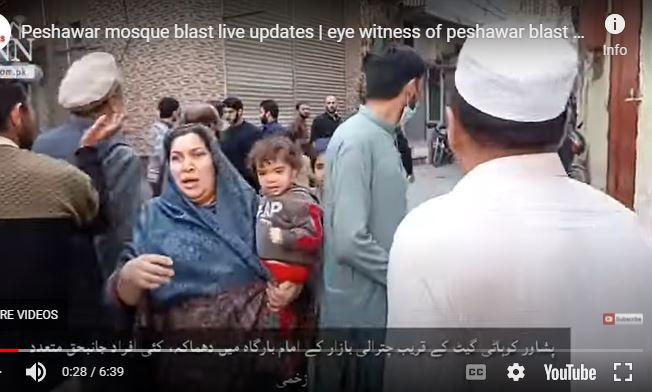
    Afghan refugees in Pakistan’s north-western Khyber Pakhtunkhwa province are stigmatised in the aftermath of a suicide attack targeted at a Shia mosque in Koocha Risaldar, in the old quarters of Peshawar.

    For a start, strict security measures have been put in place, causing inconveniences and difficulties for unregistered Afghan refugees in the city.

    Pakistan has about 1.4 million Afghan refugees according to the United Nation’s refugee organisation, the UNHCR. Government and aid agencies estimate that there is a larger number of unregistered Afghan migrants who arrived without the required documents. The Afghan arrived in droves following the fall of Kabul on 15 August last year.

    Behashta Ayubi is one such refugee. She and her family arrived in the country on official visas. Life as a refugee is tough, she says, as she speaks of discrimination.

    “It is very difficult for Afghan refugees to rent houses,” according to Behashta Ayubi. She says that the suicide bomber in Peshawar has made life difficult for Afghans to rent a house.

    Behashta was a journalist in Afghanistan. Her father was a government employee. She says that her family was an influential one, yet, they had to wait for a visa for three months and bribes had to be paid. Yet, in Pakistan, they have had to beg people to be able to rent an accommodation.

    Behashta’s family is a registered refugee. Her stay in the country is legal.

    Illegal presence

    But simultaneously, there is a large number of Afghans who do not have the paperwork because they could not afford to wait in Afghanistan much longer. Nor could they afford to pay bribes.

    Haseebullah, an Afghan who works in a brick kiln in Peshawar says he had no documents to be registered. In plain words, his presence in the country is illegal.

    Under the circumstance, it is difficult for him to even step out of his workplace because he does not have a proof of registration card, or POR card. Police harassment is rampant.

    “I cannot move around or go to other province and buy a phone SIM card in the absence of a POR card,” he says.

    He said that he came to Pakistan without legal documents. However, wanted to stay here legally, which was not possible because UNHCR is not issuing cards to newly arrived Afghans.

    “I travelled from Nangarhar to Spin Boldak to entre Pakistan through Chaman crossing,” he said. He spoke of the arduous travel along dirt track to enter Pakistan, paying Rs 20,000 to human smugglers.

    Police action

    Atiq Shah, the superintendent of police of Peshawar City says that the police would act against illegal Afghan refugees. So far, he says the police has rounded up over 850 illegal Afghan migrants in 2022 itself under the Foreigners Act. Any Afghan arriving in Pakistan without a valid visa is an illegal resident.

    Yet, whenever there is any violent incident, the needle of suspicion turns towards the Afghans, who are Sunnis. They say that harassment at the hands of law enforcement agencies has become routine.

    Most of Kocha Risaldar’s residents are Shias. The increasing violence and terrorism since the arrival of Afghans has meant that they face police action.

    The Afghanistan-based Khorasan chapter (IS-K) of the Islamic State group claimed responsibility for the Kocha Risaldar suicide bombing. IS-K’s targets have been the city’s Shia population. The 5 March attack on a Friday prayer congregation is said to be the biggest and most deadly such attack since 2020. That year, eight students were killed and over a hundred were injured in a mosque classroom bombing in Peshawar.

    Could 2022 Be The Endgame For Polio?

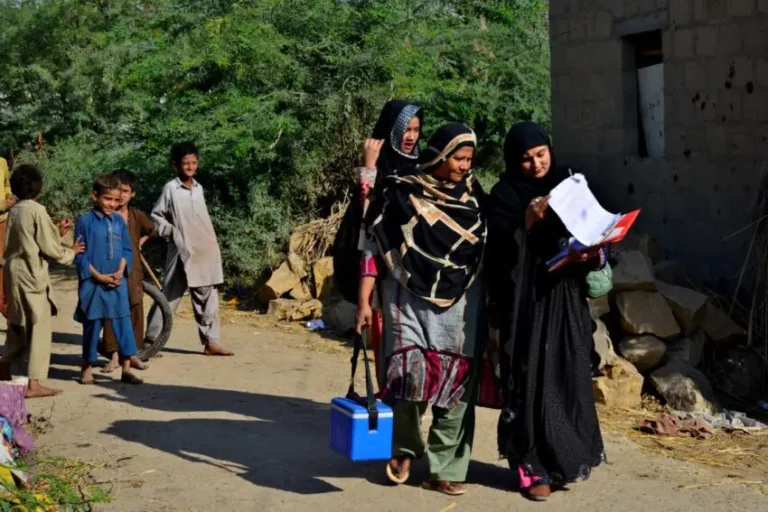
    Polio close to eradication but vaccination must continue. COVID-19 restrictions brought down polio cases but disrupted routine immunisation systems, especially in Afghanistan and Pakistan, limiting fresh reports of polio cases from these two polio-endemic countries.

    By Nirmal Kumar Ganguly and Simba Makoni

    Polio eradication has advanced remarkably, despite the COVID-19 pandemic. The limitations on travel and movement during the pandemic contained the spread of poliovirus in endemic countries — Afghanistan and Pakistan. Even circulating vaccine-derived poliovirus (cVDPV) cases that accounted for most polio-related paralysis in recent years, have dropped.

    But the impact of the pandemic on health and routine immunisation systems might make it more difficult to keep the world polio-free, even after the last case. To avoid recurrence, polio vaccines will have to be administered long after polio is eradicated.

    The disruption of routine immunisation systems due to COVID-19 saw a global drop of about seven per cent for two sets of childhood vaccines’ estimated coverage in 2020, with eight million more children missing vaccine doses as a result. Ninety per cent of 105 countries reported disruptions to immunisation services, according to a The Lancet paper.

    That said, the crippling, paediatric disease polio, first recorded in an Egyptian painting 3,500 years ago, is definitely on its way out. There were no symptomatic cases of wild polio between the end of January and mid-November 2021—the longest period in modern history, without any new polio paralysis cases. At the end of 2021, there were five cases of wild poliovirus (compared to 140 cases in 2020) and 643 cases of cVDPV (compared to 1,113 cases in 2020).

    Systems under stress

    The Global Polio Eradication Initiative’s plan to be officially rid of wild polio and of cVDPV by 2026 seems on course, although a recent report of a wild poliovirus case in a three-year-old girl in Malawi has raised serious concerns. The first case of wild poliovirus in Africa in more than five years, it underlines the risk of infections in the future.

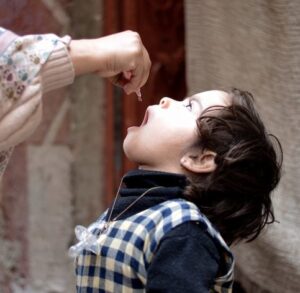
    Thousands of biological samples around the world may still contain live polioviruses. Some immunocompromised children were given oral polio vaccines, which have a weakened live poliovirus, and they might keep shedding the virus for the rest of their lives.

    We must now think about stopping polio recurrence, by integrating polio prevention into immunisation systems. The WHO’s Strategic Advisory Group of Experts on Immunisation (SAGE) meeting in October 2021, acknowledged that “countries have different epidemiological risks and supported the use of injectable polio vaccine (IPV)-only schedules in countries in polio-free regions with high routine immunisation coverage…that decide to withdraw bivalent oral polio vaccine (OPV) before certification of eradication”.

    As routine immunisation systems are under stress, the SAGE said that, once adequate supplies are available, countries could consider adopting hexavalent (six-in-one) vaccines, as soon as they decide to modernise their Expanded Programme on Immunisation, by increasing the IPV regimen from two to three or more doses. Hexavalent vaccines can reduce the number of injections, making vaccination more acceptable to parents.

    In South Africa, where hexavalent vaccines are used, 86 per cent of caregivers felt that three or more injections in a single visit were excessive for their children. Recently a South African expert told us that improvements in uptake translate into increased vaccine coverage[1]. GAVI, the Vaccine Alliance, has a planning process through 2022 and 2023, on how to incorporate hexavalent vaccines into its programmes.

    Polio communicable disease vaccination children health

    Plan better

    Countries in Europe and North America have all been using combination vaccines for several years. But most countries currently using oral polio vaccines rely on a different type of combination vaccine — a whole-cell vaccine, to prevent pertussis, or whooping cough. These combination vaccines have complex manufacturing processes and are challenging to formulate.

    Future shortages of combination vaccines, and probably of the IPV containing combination vaccine, seem highly likely, as confirmed through an independent modelling exercise. It takes five years or more, from planning to the first vials of a vaccine being shipped; and much longer for producers to recoup the large investments required. Yet, most vaccine purchases are made on shorter tenders, with uncertainty about demand.

    Without some guarantee of future demand for combination vaccines in the post-polio era, vaccine producers are unlikely to invest now. That is true even of the biggest vaccine developers, and more so for emerging producers in Africa and Asia. Policymakers see these as crucial to future health security in geographies that may not have access to vaccines produced out of traditional hubs.

    We are both part of a group called RISE – Routine Immunisation to Secure Eradication – that brings together experts in infectious diseases, supply chain management, financing and policymaking. At a recent meeting, we agreed to work with the polio community to develop an ‘advance guarantee mechanism’, to give producers the assurances they need to invest now. Over the next few months, we will be consulting and working to propose a mechanism that finance institutions, donors and implementing countries can adopt.

    Among the lessons from COVID-19 is that the world has to plan better to deal with infectious diseases. Polio is one of humanity’s oldest foes. Extraordinarily brave immunisation workers have almost wiped it out. We must plan now to make sure that it can never come back.


    Nirmal Kumar Ganguly is a former director general of the Indian Council of Medical Research.

    Simba Makoni has held the positions of deputy minister of agriculture, minister of industry and energy development, minister of youth, sport and culture, and minister of finance and economic development, in Zimbabwe.


    This piece has been sourced from SciDev.Net


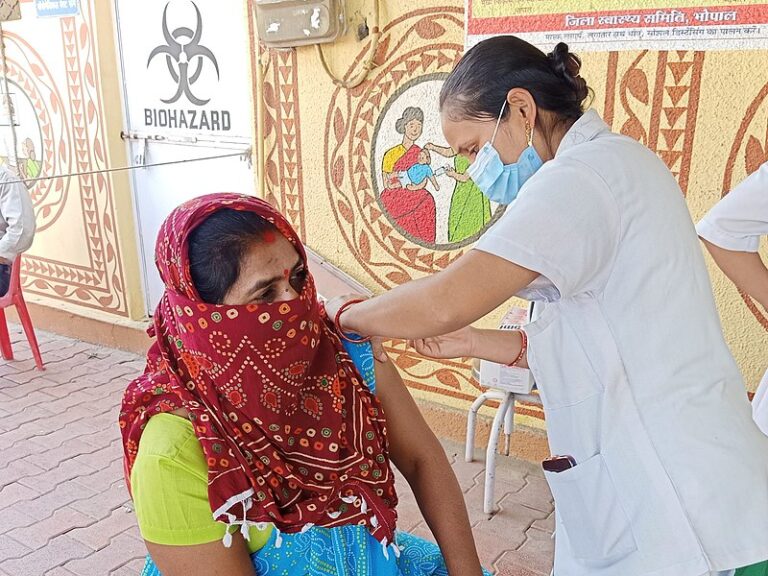
    Banner image: UNICEF