More

    Can the Upcoming WHO Pandemic Treaty Negotiations be Immunised Against Profiteers?

    In a letter written to the WHO, civil society leaders have urged the global health body to ensure equity, transparency and accountability during public hearings.

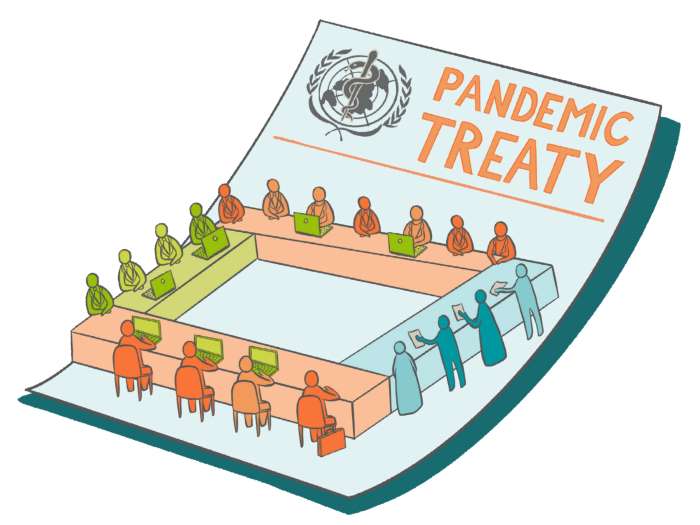
    Limited public hearings are now in progress for the proposed WHO global accord on pandemic prevention, preparedness and response (pandemic treaty). In negotiation since February, the process is already raising significant concerns, not least of which is who is allowed to offer substantive input and how will the treaty negotiation harmonize with the WHO review of the existing vehicle for addressing health emergencies, including pandemics. More than 200 civil society organizations (CSOs), health experts, and lawmakers are appealing to the International Negotiating Body Members (INB) and negotiators to shift course without delay.

    At stake, civil society claims, is history repeating itself. Millions of deaths. Staggering health care costs. Livelihoods decimated. Widespread and severe illness. All thanks in large part to a “lack of international cooperation” and failure to fully recognize “the inherent injustice and structural inequities exacerbated by such crises”—crises that cannot be properly addressed by a purely biomedical approach, if future pandemics are to be avoided.

    In their letter, signatories are calling for the INB to inoculate the process against the “undue influence of the private sector and its powerful lobbyists.” Commercial interests and their proxies have prevented publicly-funded vaccines from reaching millions in need. They’ve used the pandemic crisis to advance the privatization of healthcare, often with support from international development circles. And the tobacco industry’s ownership of pharmaceutical corporations is already providing a potential back door for perpetrators of another global health crisis to influence how pandemics are governed into the future. Yet WHO leadership insists on  embracing a “multistakeholder model” in this treaty making process, inviting such conflicted commercial interests to sit at the table as “relevant stakeholders.”

    ‘Whole of Society’ approach?

    Organisations have pointed out that the WHO Director-General’s repeated reference to negotiations inspired by a “whole-of-society” approach – adding that “it is not easy to comprehend what this soothing locution really means”.

    “For several years now the WHO has opened its doors to philanthropic organizations, transnational corporations and their proxies, and has invited them into policy spaces under the guise of “stakeholders”,” they had said.

    “We are at the treaty’s first fork in the road. Will negotiators go down a path that allows big, vested interests to steer the process? Or will Member States’ delegates establish the primacy of human rights and indispensable safeguards against corporate political interference?” said Ashka Naik, research director for Corporate Accountability.

    Both the WHO and the INB claim to be looking to the precedents of the WHO’s only other treaty as guidepost, the breakthrough Framework Convention on Tobacco Control (FCTC). Not only does the FCTC have strict provisions and guidelines on conflicts of interest, its negotiations have long involved broad and consistent civil society participation. This despite the tobacco industry’s attempts to ensure otherwise in the early 2000’s. As the letter notes, “the limited transparency on the INB process so far is reason for serious concern.” Details for the public hearings, including times, procedures, and other key issues, were only made available last week. Those who are selected for “substantive” oral testimony have no more than two minutes to speak, while written, “open-ended” submissions are limited to no more than 250-words.

    Just a checked box?

    “Public hearings are welcome, but we fear they may amount to little more than a checked box. Broad, substantive civil society participation needs to be an enduring and a vital part of the process, not a one-off,” said Nicoletta Dentico, co-chair of the Geneva Global Health Hub (G2H2).

    “What’s more, the elements of the treaty must be selected based on a coherent ex-ante vision of what countries realistically need to prevent and prepare for future pandemics, rather than a lengthy shopping list of elements hastily provided in a few weeks”.

    Another primary concern raised in the CSO letter is around the international community’s ongoing neglect of the “interconnected dynamics” contributing to pandemics. For example, “unsustainable food production and livestock breeding, wildlife trading, resource intensive lifestyles and consumption systems” cause and exacerbate global pandemics. The very model for providing health care is similarly fundamental to the treaty’s aspirations.

    “Discussing the strategy for the prevention and preparedness for future pandemics entails, among many other radical decisions in the economic governance of the world, a clear uncompromising option for universal and public health systems in countries,” said Giulia Grillo, Italy’s former minister of health. “This is the only reliable barrier to safeguard a society when an outbreak emerges, and it must be supported financially, with no hesitation, for the public interest.”

    These concerns are being raised at this week’s hearings. The World Health Assembly presents the next vital juncture for the nascent treaty in late May. Draft treaty language is anticipated in September.
    Drugged Water: A New Global Pandemic Hiding in Plain Sight?

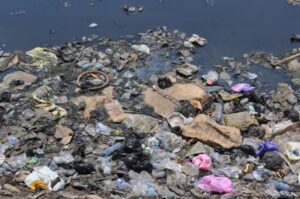
    A recent study on pharmaceutical pollution of the world’s rivers concluded that higher levels of antibiotic-resistant pathogens were found in low- to middle-income countries and were associated with areas with poor wastewater and waste management infrastructure and pharmaceutical manufacturing.

    By Baher Kamal

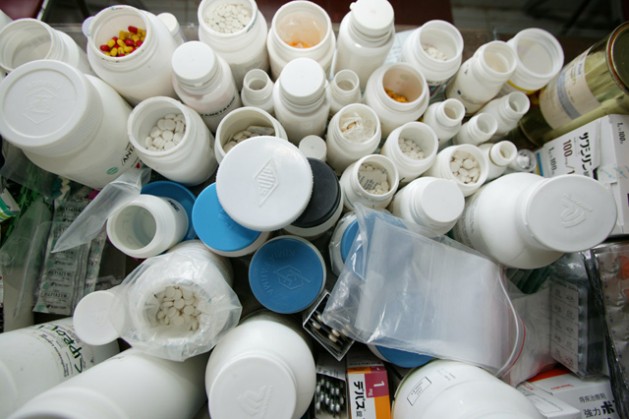
    People around the world are unknowingly being exposed to water laced with antibiotics, which could spark the rise of drug-resistant pathogens and potentially fuel another global pandemic, warns a new report.

    The study, elaborated by the United Nations Environment Programme (UNEP), found that, globally, not enough attention is being focused on the threat posed by antimicrobial resistance with most antibiotics being excreted into the environment via toilets or through open defecation.

    Already in 2015, 34.8 billion daily doses of antibiotics were consumed, with up to 90 percent of them excreted into the environment as active substances. Since then the amount of daily consumed antibiotics has been increasing considerably.

    Pharmaceutical pollution drugs antimicrobial pathogen water sanitation sewage treatment Environment health

    Wastewater

    While 80 per cent of wastewater in the world is not treated, even in developed countries treatment facilities are often unable to filter out dangerous bugs.

    Untreated wastewater could breed superbugs that can evade modern medicine and trigger a pandemic, the report’s authors warned.

    In 2019, antibiotic-resistant infections were linked to the deaths of nearly 5 million people. Without immediate action, those infections could cause up to 10 million deaths per year by 2050, the report found.

    “Another pandemic is hiding in plain sight,” the report said. “The consequences of the continuing development and spread of antimicrobial resistance could be catastrophic.”

    According to a study, Pharmaceutical manufacturing facility discharges can substantially increase the pharmaceutical load to U.S. wastewaters – drug manufacturing facilities are a source of environmental pollution.

    “Wastewater treatment plants are unable to filter out chemical compounds used to manufacture personal care products and drugs, so these chemicals seep into freshwater systems and into the oceans.”

    Birguy Lamizana, Programme Management Officer at UN Environment and expert on wastewater and ecosystems, explains that modern wastewater treatment plants mostly reduce solids and bacteria by oxidising the water. They were not designed to deal with complex chemical compounds.

    Antimicrobials

    Antimicrobials are agents intended to kill or inhibit the growth of pathogens. They include antibiotics, fungicides, antiviral agents, parasiticides, as well as some disinfectants, antiseptics and natural products.

    Antimicrobial resistance occurs when microbes, such as bacteria, viruses, parasites and fungi evolve to become immune to the drugs to which they were previously susceptible, explains the report.

    The more microbes are exposed to pharmaceuticals, the more likely they are to adapt to them.

    According to the report, this global threat can be tackled by curbing the release of antibiotic-tinged pollution, including through improved wastewater treatment and more targeted use of antibiotics – too often these drugs are used when they need not be.

    The report also called for enhanced environmental governance and national action plans to limit the release of antimicrobials.

    One strategy, for example, calls on countries to “limit deforestation, which often brings humans face-to-face with virus-carrying wild animals, giving pathogens a chance to jump species.”

    The COVID-19 pandemic provides lessons learned, one of which is the need to prevent and tackle various health threats concurrently, especially their environmental dimensions, said the report.

    A recent study on pharmaceutical pollution of the world’s rivers concluded that higher levels of antibiotic-resistant pathogens were found in low- to middle-income countries and were associated with areas with poor wastewater and waste management infrastructure and pharmaceutical manufacturing.

    According to the UNEP report, the main pollutant sources contributing to the development and spread of antimicrobial resistance stem from poor sanitation, sewage and waste effluent, aggravated, for example, by open defecation and the overuse of antibiotics to treat diarrhoea. Besides these, effluent from pharmaceutical manufacturing and waste from healthcare facilities too contaminate these water sources as do livestock farming.

    Higher temperatures are also associated with increased antimicrobial resistant infections, says the report.

    “Many diseases are climate-sensitive, and changes in environmental conditions and temperature may lead to an increase in the spread of bacterial, viral, parasitic, fungal and vector-borne diseases.”

    On 2 March 2022, the United Nations Development Programme (UNDP) explained that although pandemics are a fact of human life, the world was blindsided by the impact and devastation of COVID-19.

    Modern medicine a curse?

    Back in 2018, the world environmental body had already warned that the aquatic and human health consequences of pharmaceutical drugs entering the environment through wastewater treatment plants is not yet well understood.

    As the world’s population expands and we become wealthier, drugs and chemical-based care products become more prevalent.

    “While pharmaceuticals are essential for human health and well-being, less is known on the effects they have on the freshwater sources on which we depend for our existence, and their impact on human health and biota”.

    The occurrence of pharmaceutical substances in the environment is of global concern.


    This piece has been sourced from Inter Press Service.


    Image: WHO

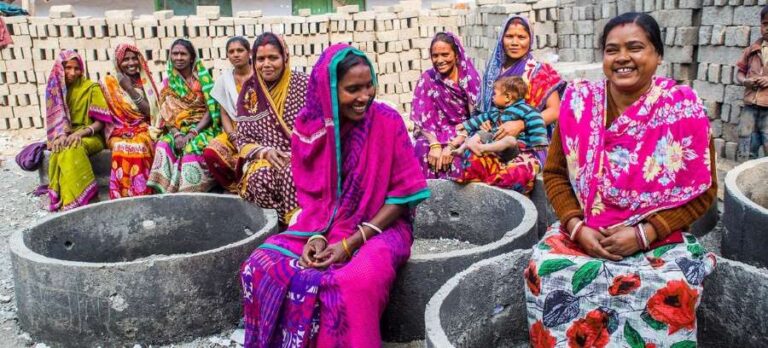
    ESCAP’s ‘Build Forward Fairer’ Report, Urges New Social Contract for Asia and Pacific

    ESCAP’s new survey says that economic recovery from the COVID-19 pandemic and other global shocks must be anchored in an inclusive “new social contract”, to protect the vulnerable.

    Amid continuing uncertainty over the trajectory of the COVID-19 pandemic and increased global risks, the region’s economic recovery and progress must be anchored in “a new social contract” of inclusiveness to protect the vulnerable from future shocks, according to the Economic and Social Survey of Asia and the Pacific for 2022, released today by the United Nations Economic and Social Commission for Asia and the Pacific (ESCAP).

    The Economic and Social Survey of Asia and the Pacific is the UN’s oldest and most comprehensive annual socioeconomic study informing policymaking in the region, first published in 1947. Its latest edition advocates for shifting the tax burden towards high income groups.

    With dwindling fiscal space in many developing countries in the region, the survey cautions against cuts in fiscal expenditures on health care, education and social protection in order to protect the development gains of past decades and prevent further deepening of inequalities in the region.

    Economic growth in developing countries within the vast region, is projected to fall to 4.5 per cent in 2022 and five per cent during 2023, compared with an estimated growth rate of 7.1 per cent in 2021.

    In addition to the pandemic, the report shows that regional economies face several downside risks related to supply constraints, rising inflationary pressures, prospects of increases in interest rates, shrinking fiscal space, and the emerging global economic fallout from the ongoing Russian-Ukrainian conflict.

    $2 trillion loss

    The cumulative output loss due to COVID-19 for the region’s developing economies between 2020 and 2022 is estimated to be nearly US$2 trillion.

    The pandemic has denied more than 820 million informal workers and over 70 million children in low-income households in the region adequate access to incomes and schooling. An additional 85 million people in Asia and the Pacific had already been pushed back into extreme poverty in 2021.

    “As developing countries in the region move ahead with learning to live with COVID-19, balancing the protection of public health and livelihoods, it is time to lay the foundations for a fairer future of equal opportunities and inclusive outcomes,” said Armida Salsiah Alisjahbana, United Nations Under-Secretary-General and Executive Secretary of ESCAP.

    Three-point plan of action

    The Commission recommends a “three-pronged policy agenda” aimed at shaping an inclusive economy for the region.

    First, instead of reductions, developing countries in the region must tilt public spending towards basic universal health coverage, push further towards universal primary and secondary education, and expand social protection coverage.

    The commission argues that “smart” fiscal policies can improve the overall efficiency and impact of public spending and revenue collection. At the same time, new sources of revenue should be explored, such as taxing the digital economy, along with shifting the tax burden towards high income groups.

    Secondly, the 2022 survey argues that central banks in the region can and should tilt their traditional monetary policy conduct towards promoting inclusive development. While remaining focused on keeping inflation low and stable, central banks can invest part of official reserves in social bonds, explore how a central bank digital currency can enhance financial access, and encourage more innovative financial instruments to secure a social safety net.

    Thirdly, governments can also proactively guide, shape and manage the structural economic transformation process, which is increasingly driven by the digital-robotics-AI revolution, for more inclusive outcomes.

    This includes supporting the development of labour-intensive technologies, inclusive access to good-quality education, reskilling, strengthening labour negotiation capacities, and social protection floors.


    Tackling the Pandemic of Inequality in Asia and the Pacific

    Amid continuing uncertainty over when the pandemic will finally be behind us, the one certainty for the region’s policymakers is that the benefits of recovery and progress must reach everyone.

    By Armida Salsiah Alisjahbana

    After two years of human devastation, the world is learning to live with COVID-19 while trying to balance the protection of public health and livelihoods.

    For countries in Asia and the Pacific, this is challenging not only because national coffers are heavily strained by record public spending to mitigate pandemic suffering, but also due to deeper structural economic issues.

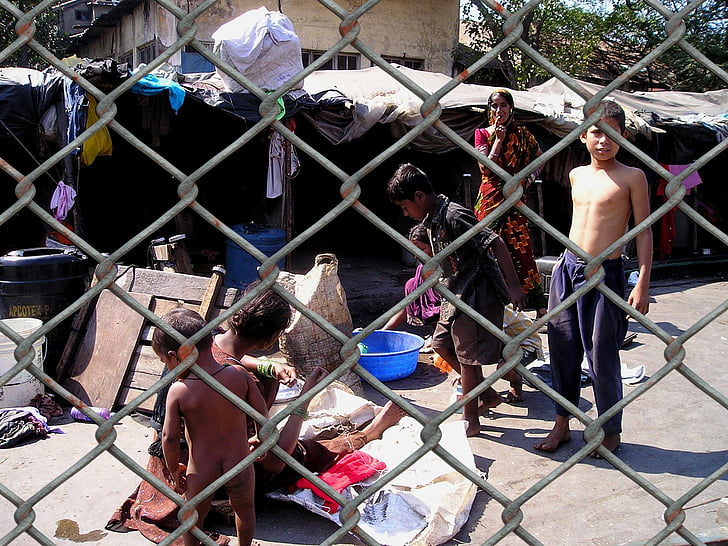
    COVID-19 has exposed a pandemic of inequality in a region which has the world’s most dynamic economies but also half of the global poor. A region where nearly half of the total income goes to just 10 per cent of people while the poorest 10 per cent get just 0.2 per cent.

    This failure to grow together meant that the pandemic worsened the circumstances of those left behind. Estimates suggest that more than 820 million informal workers and over 70 million children in low-income households have been denied access to adequate income and education since the outbreak. Even more worryingly, this will leave long-term scars on economic productivity and learning, harming the future earning potential of those already marginalized.

    Amid continuing uncertainty over when the pandemic will finally be behind us, the one certainty for the region’s policymakers is that the benefits of recovery and progress must reach everyone.

    The prospects of the regional economy are riddled with downside risks related to the pandemic and emerging challenges in the external policy environment, according to the 2022 Economic and Social Survey for Asia and the Pacific released today by ESCAP. The cumulative output loss for the region’s developing economies between 2020 and 2022 is estimated to be nearly $2 trillion. Prolonged pandemic disruptions will further exacerbate the uneven recovery.

    Policies for a fairer future

    COVID-19 has created a generational opportunity to build a more equitable and sustainable world. As emphasized by the United Nations Secretary-General, this transformation process must be anchored on a New Social Contract with equal opportunities for all.

    Countries can pursue a three-pronged policy agenda for laying the foundations of an inclusive stakeholder economy in Asia and the Pacific.

    The immediate priority is avoiding fiscal cuts so that the development gains of past decades are not irreversibly lost. Amid fiscal consolidations, developing Asia-Pacific countries must maintain public spending on health care, education and social protection to keep inequalities from deepening and becoming entrenched.

    Instead of cuts, “smart” fiscal policies can improve the overall efficiency and impact of public spending and the scope of revenue collection. Public expenditures should be tilted towards primary health care, universalizing basic education and making tertiary education more inclusive while increasing and eventually extending social protection coverage for informal workers. Concurrently, new sources of revenue should be explored, for instance, by bringing digital economy under the tax net. Digital technologies can improve the delivery of health care and social protection services.

    Given the fiscal constraints, as the second policy pillar, central banking can move beyond its traditional roles and share the onus of promoting economic inclusiveness, not least because high and persistent levels of inequality can reduce monetary policy effectiveness. Only half of central banks in the region have financial access, financial literacy or consumer protection among their objectives and strategies. This is a missed opportunity.

    An opportunity we cannot waste

    Conservative reserve allocation strategies deter central banks from deploying part of the region’s $9.1 trillion official reserves towards social-oriented financial instruments. Amendments in central bank laws and investment strategies can make this possible. An appropriately designed central bank digital currency, supported by an enabling digital infrastructure and financial literacy, can enhance financial inclusion among other benefits. Central banks should also promote the use of social impact and sustainability-linked bonds for social purposes.

    The third policy pillar addresses the root cause of inequality. Economic structure determines inequality dynamics and the path to “growing with equity”. Thus, policymakers must focus on pre-distributive rather than redistributive policies. Developing countries can learn from the experiences of advanced economies in the region to proactively guide, shape and manage the structural transformation process for inclusive development.

    The digital-robotic-AI revolution is increasingly influencing economic transformation with great uncertainties for inclusiveness. To prepare for this, public support is needed to develop labour-intensive technologies, inclusive access to quality education, reskilling, strengthening labour negotiation capacities and social protection floors, among others.

    Although COVID-19 is a major setback to the 2030 Agenda for Sustainable Development, it is also a chance to accelerate investments in people and the planet, and to speed up regional progress towards achieving the Sustainable Development Goals.

    This is an opportunity that we cannot waste.


    Armida Salsiah Alisjahbana is Under-Secretary-General of the United Nations and Executive Secretary of the Economic and Social Commission for Asia and the Pacific (ESCAP)


    This piece has been sourced from the Inter Press Service

    Ukraine War Drives International Food Prices To ‘New All-Time High’

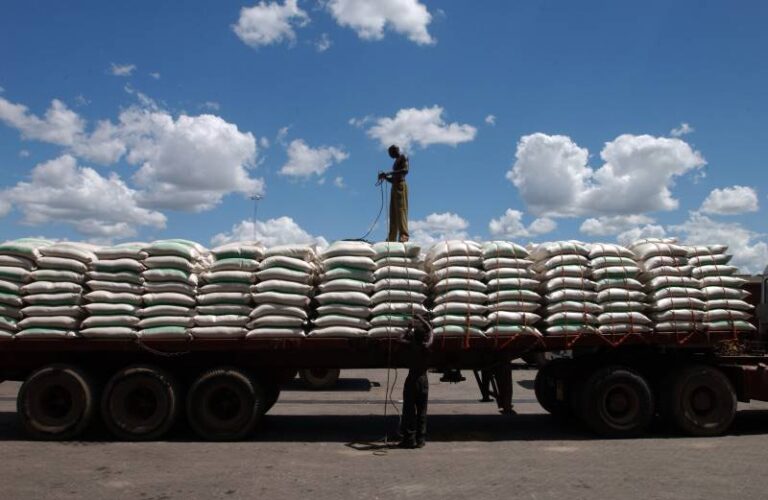
    The Russia-Ukraine war has driven large increases in international prices for wheat, maize and vegetable oils and Global food prices have reached “a new all-time high,” posting a significant leap in March, the head of the UN Food and Agriculture Organization says, “hitting the poorest the hardest.”

    FAO’s newly released Cereal Supply and Demand Brief estimates that at least 20 per cent of Ukraine’s winter crops that were planted, may not be harvested.

    But, it also points to a worldwide cereal production of 2,799 million tonnes, up slightly from 2020, with rice production reaching an all-time high of 520.3 million tonnes.

    And global cereal use in 2021-22 is projected to reach 2,789 million tonnes, including a record level for rice, with increases also expected for maize and wheat.

    Global cereal stocks are forecast to rise by 2.4 per cent by the end of this year, from their opening levels, largely due to higher wheat and maize stocks in Russia and Ukraine, on account of lower expected exports.

    FAO lowered its forecast for world trade in cereals in the current marketing year to 469 million tonnes, marking a contraction from the 2020-21 level, largely due to the war in Ukraine and based on currently available information.

    Expectations point to the European Union and India increasing wheat exports, while Argentina, India and the United States ship are likely to ship more maize – partially compensating for the loss of exports from the Black Sea region.

    Harvest of COVID-19

    “It is now more than two years that the COVID-19 pandemic continues to negatively impact our lives, our health and our economies,” said FAO chief QU Dongyu.

    Explaining that the neediest “face greater exposure to the pandemic and are the most affected by rising food and fuel prices,” he pointed out that prices for staple foodstuffs such as wheat and vegetable oils have soared, “imposing extraordinary costs on global consumers, particularly the poorest”.

    Repercussions of war

    Conflict has driven up international prices for wheat, maize and vegetable oils, as war in the Black Sea region spread shocks through the markets trading in these staples.

    The FAO Food Price Index averaged 159.3 points in March, up 12.6 per cent from February when it had already reached its highest level since its inception in 1990.

    The Index tracks monthly changes in the prices of a basket of commonly traded food commodities. Last month’s prices were 33.6 per cent higher overall, than March last year.

    Driven by soaring wheat and coarse grain prices – largely as a result of the war in Ukraine – the FAO Cereal Price Index was 17.1 per cent higher in March than it was just a month earlier.

    Over the past three years, Russia and Ukraine combined, accounted for around 30 per cent and 20 per cent of global wheat and maize exports, respectively.

    More restrictions

    “In the space of a few weeks, the number of countries slapping on food-export restrictions jumped by 25 per cent, bringing the total number of countries to 35,” the World Bank Group President David Malpass writes in his blog. “By the end of March, 53 new policy interventions affecting food trade had been imposed—of which 31 restricted exports, and nine involved curbs on wheat exports,” he says quoting the latest data.

    Malpass says that while food crises are bad for everyone, they are more devastating for the poorest and most vulnerable. The reasons, he argues, are twofold. First, the world’s poorest countries tend to be food-importing countries. Second, food accounts for at least half of total expenditures of households in low-income countries.

    “In 2008, the food crisis brought on a significant increase in malnutrition, particularly in children,” Malpass wrote in his blog. “Many households pawned family valuables to buy food.”

    Studies showed school drop-out rates of as much as 50 per cent among children from the poorest households. “Social and economic damage of that kind cannot be easily reversed,” the World Bank Group President says.


    Image: UN

    Engaging with Central Asia Vital for China and India

    The Central Asia Republics (CARs) of Kazakhstan, Kyrgyzstan, Tajikistan, Turkmenistan and Uzbekistan occupy an important place in the geopolitical frameworks of India and China. Both India and China have initiated a new wave of diplomatic engagements with the CARs after the announcement of the US military withdrawal from Afghanistan.

    By Adil Khan Miankhel  /  Australian National University

    China launched a new ‘5+1’ dialogue arrangement with all five CARs in July 2020. China was late to work with the CARs in this new format, having only engaged with the countries at the bilateral and multilateral levels going back to 2004. The first ‘5+1’ meeting focussed on COVID-19, trade and investment.

    China’s second meeting took place on 12 May 2021. The meeting focussed  on cooperation, COVID-19, and adopting an inclusive political approach in engaging with Afghanistan. In the same format, President Xi Jinping held a virtual summit with Central Asian leaders on 25 January 2022 seeking cooperation in combating terrorism and strengthening regional security.

    India was also late to engage the CARs through the ‘5+1’ format. Prime Minister Narendra Modi last visited Central Asia in 2015. After the US exit from Afghanistan, the second meeting was held on 10 November 2021 in the ‘5+1’ format at the Regional Security Dialogue on Afghanistan. The third meeting took place in December 2021.

    United States

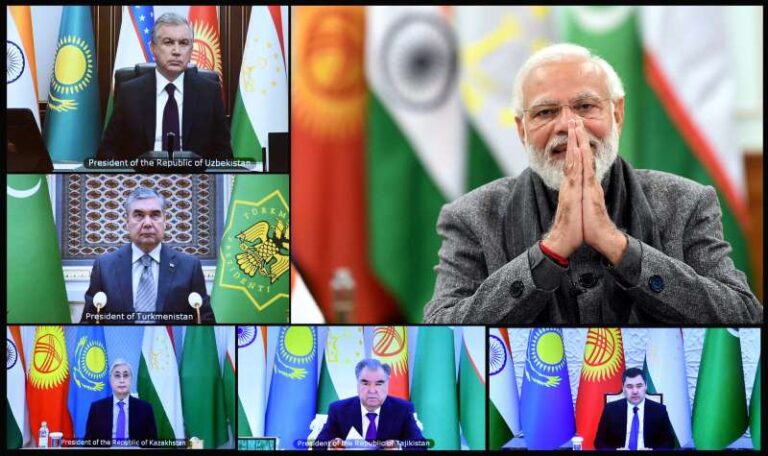
    India hosted the first virtual meeting of the India–Central Asia Summit involving the heads of states in the ‘5+1’ format. It was held just two days after China held its meeting at the same level. The major focus of the summit was developments in Afghanistan and the development of the Chabahar Port in Iran, a rival port to Gwadar Port in Pakistan being built with Chinese investment.

    China has labelled the ‘5+1’ forum as engaging with friendly neighbours — Kazakhstan, Kyrgyzstan and Tajikistan share a border with China. India has characterised their Central Asian relations as engagement through the ‘Extended Neighbourhood’ policy. Both China and India see geopolitical value and potentially competition in their overlapping Central Asian neighbourhood.

    US presence in Afghanistan previously provided a buffer for China to pursue its own economic engagement activities with Central Asia. But with the US gone, and uncertainty about the behaviour of the Taliban regime, China formed the ‘5+1’ institutional arrangement to provide a buffer at its western border.

    US withdrawal from Afghanistan has also proved to be an important factor for India’s renewed engagement with the CARs. India invested heavily into development projects in Afghanistan following the US invasion in 2001. India did not feel the need to engage directly with CARs as a single group in any other format.

    Afghanistan

    India’s security paradigm requires securing its North-Western Frontier. This was previously achieved through US presence in Afghanistan and deep engagement with previous Afghan regimes. With the US withdrawal, engaging with CARs has become imperative for India from a trade and security perspective.

    From a Central Asian perspective where economic and military capabilities to counter extremism and terrorism is limited, any arrangement will add value to their own security interests.

    China has already realised the importance of engaging Afghanistan and has extended humanitarian aid to Afghanistan. Until the cause of threat is neutralised through an engagement strategy, all institutional arrangements that ensure stability may not prove to be effective and sustainable.

    Afghanistan still occupies a pivotal position in ensuring the stability of the region. The situation has currently become more precarious. If Afghanistan is left to its own fate, it may have spill over effects that could destabilise the whole region.

    Dr Adil is an alumni of Australian National University and was Visiting Fellow at Crawford School of Public Policy, Australia National University.


    This piece has been sourced from the East Asia Forum of the Australian National University

    Nepal Works to Promote Remittances; Tightens Screws on Imports

    Banking bodies and associations of non-residents have been roped in by the Nepal government to curb the flow of currency and attract foreign exchange in the form of remittances.

    Seeing the disturbing developments in Sri Lanka, Nepal has begun to take action to pre-empt a foreign exchange crisis.

    The international coordination committee of the non-resident Nepalis association (NRNA) held an emergency meeting on Monday and decided to lend hands to the government’s efforts to resolve a possible economic crisis in the country. A second interaction with the Finance Minister, officials of the central bank, the Nepal Rastra Bank and economists and other government officials is planned for Wednesday.

    The meeting decided to send word to all non-resident Nepalis to apply for a US Dollar account in any bank in Nepal and to deposit at least 1,000 USD in that account during the course of the coming month.

    A NRNA task force will also appraise the government of the hiccups of initiating a dollar account, remitting dollars and also operating the account.

    Over the past few months, a large number of Nepal workers have been given high-visibility farewells by government officials. These workers had returned home during the COVID-19 pandemic and their return to their foreign workplaces, or karma bhoomi, is important not only for their families, but also for the government that now realises the value of the remittances these workers send back home.

    Nepal’s biggest source of dollars has been its tourism industry. But that has taken a big hit since the COVID-19 pandemic struck the Himalayan country.

    Bankers tighten controls

    Earlier, over the weekend, a meeting of the Nepal Bankers’ Association (NBA) announced a decision not to issue letters of credit for the import of essentials except in case of extreme urgency. The ban on the imports of vehicles, gold, silvers, sugar, chewing gum, dry foods, furniture, cigarettes, alcohol, perfume and mobile phones will be non-negotiable, the bankers said.

    This followed on a decision of the Nepal Rastra Bank, which, in the past week had imposed 50 to 100 percent cash margin on the import of some 47 goods in a bid to stop the outflow of the country’s depleting foreign exchange reserves.

    Likewise, the central bank had called and directed CEOs of all 27 commercial banks to halt letters of credit to the imports of luxury goods, mainly vehicles.

    Simultaneously, exports are being promoted – mainly, tea from the estates and gardens in Ilam to the country’s east; soyabean oil, carpets and fibre.

    Petrol

    Nepal’s biggest worry are its petrol bills. It is dependent on fuel imports from India and the galloping bills are causing late-night meetings to curb inflationary trends that come with a hike in fuel prices.

    The price of petrol, according to the Nepal Oil Corporation Ltd (NOC) was Nepali Rupees 160 on Tuesday (corresponding to Indian Rupees 100). NOC is a government owned organization that imports, stores and distributes petroleum products.

    Corporation officials have complained to the government that they are losing over Rs 20 for every litre of petrol. They have said that this cannot be sustained much longer.

    More worrisome is the cost of cooking gas, a cylinder of which costs 1,600 Nepali Rupees (or 1,000 Indian Rupees). The Nepal Oil Corporation is incurring a loss of over Rs 930 on every cylinder of cooking gas, officials say. Even a litre of kerosene oil costs 143 Nepali rupees.

    In fact, the government has been even wary of undertaking any publicity of its agreements with India for the supply of oil and the joint inauguration of the Motihari-Amlekhgunj petroleum pipeline by Prime Ministers Narendra Modi and Sher Bahadur Deuba.

    The Nepal government is keenly watching the turn of events in Sri Lanka – apprehensive of any political fallout of inflationary pressures.

    Traditional, Time-Tested Methods and a Modern App Helps Beat Climate Change

    Farmers have a trying time during summer, preventing the soil from cracking from intense heat. Erratic and untimely rains exacerbate the pest problem. Now, help is at hand in the form of a new farming technique.

    By Rina Mukherji

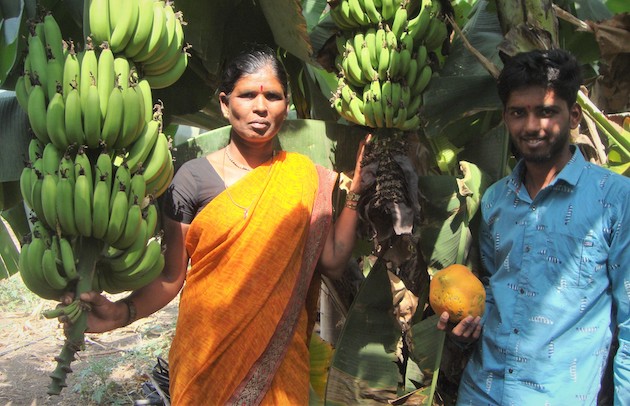
    Even as erratic weather and extremely high temperatures increase pest infestation and affect harvests, a combination of traditional methods, integrated pest management through intercropping and multilayering is helping farmers in Ahmednagar and Aurangabad districts of Maharashtra, India.

    Ahmednagar and Aurangabad districts in the western Indian state of Maharashtra are semi-arid regions in the hinterland. Ahmednagar is drought-prone with erratic rains. Aurangabad district lies in the water-starved Marathwada region of Maharashtra. The mean maximum temperature is high, and the area experienced severe droughts in 2012 and 2014. Barring the Godavari, there are no perennial rivers in the region. Farmers have a trying time during the summer months, trying to prevent the soil from cracking due to intense heat. The rains are erratic, with untimely rains further exacerbating the onset of pests.

    Yet, both districts lead in the production of pulses, maize, and grams. Since these crops are susceptible to aphids and pod-borers, high temperatures and erratic rains due to climate change have seen farmers resort to increased chemicals to check pest infestation.

    This is where multilayer farming using natural organic methods, integrated pest management, and intercropping has proved beneficial to farmers in Gangapur, Shrigonda and Karjat.  Gradually reducing the chemical content in their farms over three full years, farmers are now opting for natural organic farming, with the help of technical expertise from the non-profit Watershed Organization Trust (WOTR) and scientists from WOTR-Centre for Climate Resilience (W-CRES).

    Right plant, right place, right time

    The design incorporates a variety of vegetable and fruit varieties planted in limited space. This means using trees and plants of varying heights and maturing time next to one another so that each is dependent on the other. Smaller plants grow under the canopy of tall trees and yield well, even as tall fruit trees shoot up to the sun. It also ensures adequate shade in the summer months to keep the farms cool and congenial for growth. Water consumption is minimised using a rain-pipe sprinkler that runs around the patch. The method also uses integrated pest management to control pests by choosing the right plants in a cluster, and natural pesticides, without using any chemicals.

    W-CRES Senior Researcher Dr Nitin Kumbhar and Junior Researcher Satish Adhe explains: “Integrated pest management works at several levels. It works through the choice of natural and organic methods, natural pheromone traps, intercropping (as per a formula we have developed), and the use of organic fungicides/pesticides that can be easily made by farming households.”

    A simple square design is used, wherein bananas are intercropped with marigold, mango, maize, and black gram (urad), and papayas are intercropped with chilli black gram, drumstick, and guava. Onions are intercropped with ginger; tomatoes are intercropped with spinach and pumpkin. Radish is planted in a single row, while ridge gourd, lemongrass, and coriander are grown on the outside flanks of the farm.

    Soft-stemmed coriander attracts pests. When attacked, the affected stalks of coriander are easily discarded. Marigold destroys nematodes in the soil through its alkaloid roots and protects crops. It also attracts female moths who lay eggs on the plant (leaving other crops untouched). Maize attracts beneficial insects such as the ladybird beetle, which feeds on the aphids that destroy crops.

    Science at work

    Integrated pest management also involves pheromone traps to attract and kill destructive pests. These traps can be used against leaf-eating insects, pod borers, mealy bugs, aphids, sucking pests or fruit flies.

    For all crops grown on patches, it is imperative that planting is done in a north-south direction. “This allows the crops to access sunshine throughout the day,” explains Kumbhar.

    Once the farmers did away with hybrid varieties and opted for traditional ones, there was less vegetative growth and fewer insect attacks.

    “Part of the problem with hybrid varieties is more vegetative growth and softer stems. This makes it attractive for pests to attack. Traditional varieties are hardier and can withstand extreme temperatures that are now common due to climate change. Farmers do not lose their crops easily due to pest attacks,” Kumbhar tells IPS.

    Dipali Bankar, whose family owns a 3-acre farm in Ambelohol village in Gangapur (taluka) of Aurangabad district. A Savita Bachat Gat (Savita microfinance group) member, Dipali used her savings to widen the varieties cultivated on her family’s farm, using the multilayer model on a patch.

    “Earlier, we would grow cotton from June to October, Jowar in summer, soybeans and pigeon pea in the monsoons, chickpeas, and onion in winter. Limited availability of water-limited our options. In February 2020, I took the advice of experts from WOTR and went in for multilayer farming on four gunthas (400 square metres of our land. We planted papaya, moringa (drumsticks), bananas, mangoes, guava, lemon, figs, tomatoes, brinjal, chilli (curry leaves), and marigold. Despite the COVID-19 -induced lockdown, the family earned a sizeable sum from the fruit and vegetables cultivated.

    Reaping profits

    The Bankars had their first crop of chillies in April 2020 and have sold a sizeable amount every 15 days, helping the family earn Rs 15000 so far. Papaya matures in nine months, while bananas bear fruit in eight months, and moringa yields drumsticks in seven months. This helped the Bankars earn Rs 70,000 from papayas, Rs 28000 and Rs 56 000 from two banana harvests, respectively and Rs 40,000 from selling drumsticks. Although markets were shut during the lockdown, the family managed to sell through local grocery shops and used the rest for their consumption. Dipali’s husband, Devidas Bankar, managed to sell part of his produce in Surat and Mumbai, where he travelled once the lockdown eased.

    Sindhubai Ramnath Desai of Ambelohol village in Gangapur taluka of Aurangabad was sceptical. She initially opted to experiment on just 100 square metres, planting moringa, bananas, papaya, lemon, mango, figs, tomato, chilli, brinjal, lemongrass, spinach, coriander, curry leaves and garden sorrel. But the earnings were so substantial that she soon revised her opinion on multilayer farming.

    “We earned Rs 7000 from bananas, Rs 5000 from papaya, Rs 2000 from drumsticks, Rs 1500 from chillies, and Rs 2000 selling spinach following the first harvest, besides saving Rs 2000 every month using vegetables and fruit for our consumption.”

    Cows come home

    The Desais used to hire bullocks for their farm – with the extra money earned they bought cattle which they fed with home-grown fodder.

    “We have a cow and two bullocks of our own, now. The special fodder bag we now make, using jaggery, salt and (maize) fodder grass, is very nutritious and has helped them yield good milk. The cattle relish it too, as you can see,” she points to her cow, hungrily devouring the contents of the fodder bag from a feeding bucket. The family has now decided to double the land under multilayer farming to 200 square metres (two gunthas).

    Sangita Krishna Ballal and her family had been growing cotton as a monoculture crop on their farmland until the recent past. Their fortunes changed once they opted for multilayer farming on a single guntha (approximately 100 square metres). With drumsticks, papaya, mango, guava, figs, lemongrass, coriander, chilli, lemongrass, brinjal, tomato, curry leaves, marigold, spinach and dill to supplement their income, the family fortunes started looking up. Lemongrass proved an excellent cash crop, with factories regularly collecting it to manufacture flavouring essence.

    Dipak Dattatraya Mandle and his wife Mangal Mandle of Mahandulwadi in Shrigonda taluka of Ahmednagar district found that apart from other achievements, marigolds were successful.  With marigolds priced at Rs 200 per kg, sales during the festive season in September-October clocked around Rs 7000/ per month.

    Kavita and Aruna Bhujbal used the extra money earned to buy cattle.

    “We now have 20 goats, in addition to our two buffaloes, and seven cows (four Guernsey and three local breeds). We have been selling the milk to the local dairy. Goat milk is in big demand,” Aruna said. Others are diverting their additional income to diversify into other livelihood options. For instance, Kausar Sheikh has used the money to expand her bangle business, while Mira Mahandule and Sangita Popat Birekar have started rearing goats.

    New technology

    In this, the FarmPrecise app developed by WOTR has been of immense help. A multilingual app, FarmPrecise helps the individual farmer with advice related to the amount of water, fertilizer, fungicide, or pesticide to be used for every crop and at what intervals. The farmers are also instructed on the organic concoctions for stimulating growth and keeping their crops pest-free.

    For instance, the farmers use Bengal gram flour, jaggery, cow dung and cow urine to make Jeevamrut fertilizer, while Neemastra is made out of neem leaves, cow dung and cow urine to serve as a pesticide. The Amrutpani spray (pesticide), is made of a mixture of neem leaves, Bengal gram flour, jaggery and cow dung. The Dashaparni spray – a composition using ten different types of leaves along with garlic, chillies, cow dung and cow urine is another useful biopesticide that serves as a pesticide and growth stimulant.

    This combination of traditional, time-tested methods and a modern app is helping farmers combat and overcome climate change, the newest scourge on the block.


    This feature has been sourced from Inter Press Service.

    Lankans Suspend Repayment of Foreign Debts

    In a sudden, though not unexpected development, Sri Lanka today announced the suspension of the island nation’s debt repayments.

    Sri Lanka’s Treasury Secretary Mahinda Siriwardena announced this morning that the country will suspend debt repayments of debt, said to be in excess of US$ 50 billion.

    He said that this was a temporary arrangement – for an interim period pending an orderly restructuring of debt. Officials took pains to clarify that this was not a move towards defaulting on the country’s external debts.

    The affected debt would include the principal amount and the interest falling due after 1700 hour today, April 12 Sri Lanka time, Siriwardena said.

    Analysts in the country see this as a first step in the direction of undertaking a restructuring of debts in the run-up to negotiating a financial bail-out package from the International Monetary Fund (IMF). The finance department’s top techno-bureaucrat said that bilateral support was expected.

    The IMF program would move in parallel.

    Central Bank Governor Nandalal Weerasignhe said inflows could now be used for essential imports.

    The government has given multilateral and bilateral creditors to receive their dues in Sri Lankan rupees, though there are unlikely to be any takers since the value of the Sri Lankan rupee has tanked.

    Apart from a slew of ill-planned moves like an overnight imposition of an organic farming regimen, the Sri Lanka government undertook a money-printing overdrive. The ill-advised steps and a general economic and political mismanagement have landed the island nation in an economic mess.

    The runaway inflation has seen people step out on the streets and demands have been growing for Sri Lankan President Gotabaya Rajapaksa’s resignation.

    This is a developing story and will be updated as more information arrives.

    How Putin Underestimated Ukraine

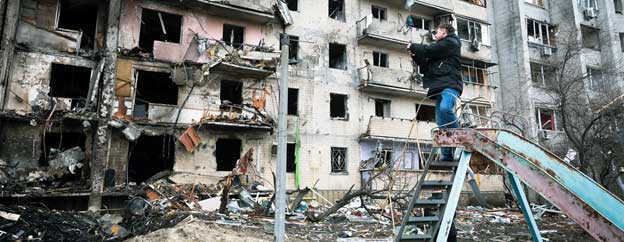
    After three weeks of the Russian invasion, it seemed that despite military superiority, the Russian army is confused and demoralised. On the other hand, the newly established Territorial Defence Forces of Ukraine has been overwhelmed with applicants.

    By Hanna Shelest

    In the eyes of the Kremlin leadership, the basic precondition of the successful war against Ukraine has been the perceived power of the Russian Armed Forces and possible superiority over the Ukrainian forces.

    This idea is clearly visible in the numerous pre-war statements in which it was assumed that Ukrainian people would not fight, that they would welcome Russians, and that they would and should be ‘liberated’ or ‘protected’.

    The reality showed the opposite. Not only did Ukrainian Armed Forces fight back, but Ukrainian society demonstrates unity and resistance, something that definitely contradicts the notion of a ‘divided East and West’ promoted by Russian propaganda for years.

    Do Ukrainians still have different views regarding politicians, economic development, and even the state of their foreign policy? Yes, absolutely, as any other democratic nation should.

    Still, according to the latest sociological surveys (March), 76 per cent of Ukrainian think that their country is going in the right direction, in February, this number was just 25 per cent.

    Moreover, Ukrainians are not ready to give up Crimea and the occupied territories of the Lugansk and Donetsk regions: 86 per cent think that Ukraine should use all means necessary to return Donbas, and 80 per cent – to return Crimea – these numbers are also higher than they were before the war started.

    A united Ukrainian people

    The imperative of the Russian leadership was that Russian-speaking cities such as Kharkiv and Odesa would surrender first. Just before the invasion, there had been rumours in Odesa’s social networks that a mayor bought one million roses to greet Russian soldiers.

    Moreover, Kharkiv appeared in the Ukrainian president’s interview with the Washington Post as a city that has the potential to be occupied by the Russian Federation. The latter provoked strong opposition among the local politicians and activists who have been publicly confirming the readiness to resist and the pro-Ukrainian mood of the city.

    Some experts now consider that the brutal Russian shelling of Kharkiv is a punishment for that January position. In Odesa too, sociological polls on the third week of the war demonstrated that 91 per cent agreed that Russia is at war with Ukraine, 74 per cent absolutely disagreed that Russia is liberating Ukraine from ‘nationalists’, and 93 per cent supported the actions of President Zelenskyy.

    Moreover, an initial plan that these occupied cities would quickly follow ‘the Crimea scenario’ of the fake referendum and the instalment of proxies as heads of the municipality did not work out.

    The occupied cities of Kherson, Kahovka, and Energodar have seen daily participation of pro-Ukrainian demonstrations against the Russian forces. Mayors of several towns in Eastern Ukraine, including Melitopol, were kidnapped, but local inhabitants still did not support a new ‘leadership’.

    In 2013, hundreds of thousands of Ukrainians came to the Maidan after the brutal attack against a small group of students. In 2022, millions of Ukrainians, despite ethnicity, religion, or language preferences, came out in support of the towns that have been under constant attack.

    While in January, the newly established Territorial Defence Forces of Ukraine was trying to attract 100 thousand reservists, in March, it is almost impossible to join the TDF because of quantity of applications.

    These volunteers now have an experience of eight years of continuous war with Russia and bring both humanitarian aid and military supply. But what is most important is that people believe in the Armed Forces, and this trust and support is what makes the situation so difficult for the Kremlin.

    2014 is not 2022

    In the development of different strategic documents for the Armed Forces or diplomats of Ukraine, we always emphasised an important element – personnel and their motivation. Air superiority or outnumbering in personnel and missiles are important, but only if you have personnel ready to fight and with an understanding for what the country is fighting.

    After three weeks of the Russian invasion, it seemed that despite military superiority, the Russian army is confused and demoralised. But unfortunately, not their leadership.

    These examples clearly demonstrate the how the Russian leadership underestimated Ukraine’s military, as most conclusions were based on the 2014 situation. Ill-equipped Armed Forces, significant support of the pro-Russian political parties, misunderstanding of the undemocratic processes happening in Russia itself have diminished gradually after eight years of the occupation of Crimea and the war in Donbas.

    The desire for peace cannot be confused with the willingness to surrender, and the desire for stability should not be confused with willingness to suppress a democratic and sovereign choice of people.

    ‘It is our land, it is our home’. ‘We are not contesting anybody or disputing over something. We defend our family’. ‘Don’t ask how is my family, my family is 44 million Ukrainians’. These are the most popular slogans these days. It is not nationalism or excessive patriotism.

    This is the type of resilience which experts and politicians have been discussing during the last years. Ukraine adopted its first National Resilience Concept in September 2021. Six months later came a reason to check its validity.


    Dr Hanna Shelest is editor-in-chief of Ukraine Analytica and heads the security policy department at the Ukrainian think tank Ukrainian Prism.

    This piece first appeared International Politics and Society and has been obtained via Inter Press Service. 

    Image: UNICEF