More

    A first person account: ‘I speak up for those who cannot’

    Sixty million workers across the developing world rely on the garment industry for their livelihoods. The vast majority of these workers are women.

    Jordan’s garment sector employs more than 65,000 workers, 72 per cent of whom are women. Migrant workers make up 76 per cent of the workforce, with nearly 80 per cent of workers coming from Bangladesh.  Migrant workers face unique challenges regarding language and representation.

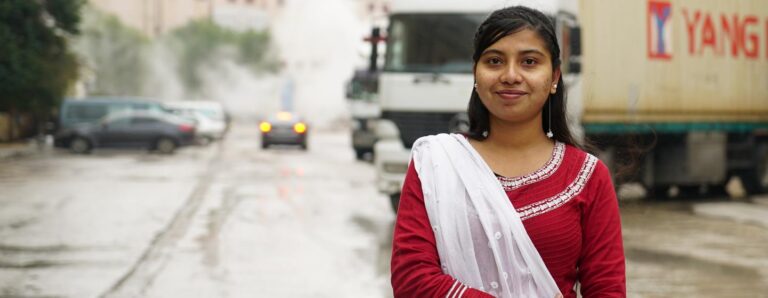
    Maya Aktar, a garment worker from Bangladesh, represents other migrants employed in the sector, in Jordan. She explains how she became involved in the union movement, and the positive difference this has made to the lives of her members.


    “I left my home in Bangladesh for a job at a garment factory in Jordan six years ago, I had no idea what the future would hold.  But I took an unexpected step that changed my life.

    I was 19. My father owned a small fruit shop in Dhaka and my mother worked at home sewing and selling clothes. There are six of us in the family. We could hardly make ends meet.

    I thought that I could support the family financially by working in Jordan. I also hoped to save money to go to university.

    The first time I went, I worked as a receptionist at a factory in Irbid. When I returned home after my contract ended, I found out that my father had cancer and that our family’s financial problems had worsened.

    In addition to my native language, Bangla, I am fluent in Hindi and in English. So when I went back to Jordan I worked as a liaison officer at a garment factory in Sahab, assisting management and workers to communicate better.

    From a pond to a river

    One day, I met Mr. Arshad, who was an organizer in the General Trade Union of Workers in Textile, Garment, and Clothing Industries. He explained what a union organizer does.

    I told Mr. Arshad that it would be a dream come true for me to get the chance to help champion other workers and speak up on behalf of those who cannot.

    To my surprise, Mr. Arshad reached out to me a few months later, asking if I was interested in the position. I agreed.

    It was liberating. I was like a fish who had been living in a pond and had moved to a river. I was so honoured to be able to represent migrant workers.

    Being multilingual and a good communicator has enabled me to represent and help many workers who only speak their native languages.

    A bridge between workers and management

    I started my work as a union organizer in November 2020.

    One of my top priorities was to identify the issues that migrant workers faced and find solutions through open lines of communication with garment factory management.

    Arranging meetings with workers was a challenge at first because of their long work hours. Many also hesitated to open up, even to a representative from Bangladesh.  Some were afraid of losing their jobs and had managers that had advised them against cooperating with union organizers because they thought we would cause problems.

    But I was determined to ensure these workers would get their voices heard. I promised them anonymity and met with them outside of their workplaces to help them feel comfortable enough to express themselves

    Some workers do not know how to present their complaints, and others avoid talking about their problems for fear of punishment or losing their jobs.

    Do also read: Lebanon crises increases suffering of migrant domestic workers

    Some workers, for instance, had been kept on by their employers after their contract ended, but then lost the right to a plane ticket home, or an end of contract bonus. Others have come to me about experiences of sexual harassment. Some reported delays in receiving their salaries or arguments they have had with their supervisors.

    Most workers from Bangladesh, Sri Lanka, India and other countries do not speak or read Arabic or English. When instructions, announcements, and financial documents are in these languages, it can create problems for workers. Being multilingual and a good communicator has enabled me to represent and help many workers. I feel proud to be able to help them overcome these language barriers.

    I have also taken part in different training programmes run by Better Work Jordan, covering issues such as sexual harassment in the workplace, effective communication, personal hygiene, collective bargaining, working conditions, and labour laws. These trainings have positioned me to be an even better advocate for women and migrant workers. Helping and empowering migrant workers has been one of the most rewarding experiences of my life.

    Under COVID-19 restrictions, I could not hold in-person meetings with workers and had to rely on telephone calls to see how the workers were doing. During the lockdown, many workers wanted to return to their countries but could not travel because the airport was shut down. I had to explain the difficult situation and offer counsel to these workers, who often remained stranded in Jordan.

    Looking ahead

    Helping and empowering migrant workers has been one of the most rewarding experiences of my life. Being able to act as their representative gives me a sense of purpose and motivates me to keep moving forward.

    I am also happy to be able to continue to send money back to my family in Bangladesh and feel pride in my representation of other Bengali people.

    I plan to become a trainer so I can help migrant workers even more. I also want to do a degree in psychology, which will help me understand people better.

    I think that my success in becoming a union organizer is a success for all of us who are migrant workers in Jordan.”


    Image: Wael Liddawi  /  ILO
    World Bank approves Pakistan Housing Project for Low-Income Groups

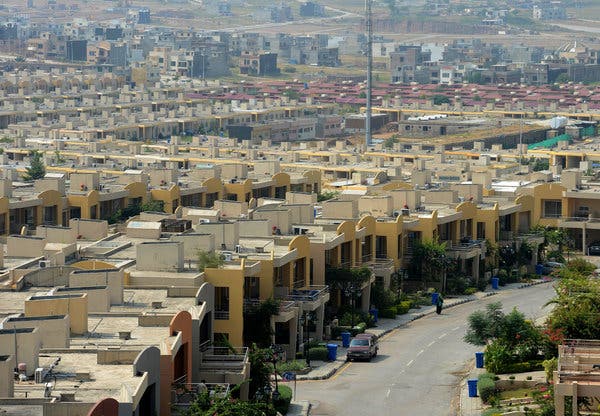
    The Wold Bank approved a US$ 435 million loan for the Pakistan government’s initiative to expand access to housing finance, particularly for low-income households under the Imran Khan government’s twin programmes of Mera Pakistan, Mera Ghar and Naya Pakistan.

    The World Bank on Friday approved a US$ 435 million for three projects in Pakistan, the Pakistan Housing Finance project, the Punjab Urban Land Systems Enhancement project and the Punjab Affordable Housing Program.

    The projects are designed to expand access to housing finance, particularly for low-income households, improve land tenure rights and facilitate affordable housing developments in the state of Punjab.

    “Affordable and accessible housing is in high-demand in Pakistan, which is home to over 200 million people and is the most urbanized country in South Asia,” said Najy Benhassine, World Bank Country Director for Pakistan.

    “These projects will contribute to addressing housing needs, particularly for low-income households, by leveraging the private sector and by facilitating access to mortgage options for those who currently cannot access financing to buy a home. They will also strengthen property rights and increase the supply of climate-resilient, affordable housing developments.”

    The US$ 85 million financing will help expand access to affordable mortgages to increase homeownership among low-income households under the Pakistan Housing Finance Project. It will also scale up the credit risk-sharing facility launched in 2018, to provide partial credit guarantees to banks, in order to incentivise them to lend to borrowers traditionally excluded from commercial financing.

    The project is expected to benefit up to 70,000 first-time homebuyers under the Mera Pakistan, Mera Ghar (My Pakistan, My Home), a government-aided housing interest rate subsidy program.

    A part of this loan, the Punjab Urban Land Systems Enhancement Project is meant to strengthen land administration and facilitate housing authorities’ efforts to identify suitable areas and public lands for affordable housing developments in the Punjab province. The project, to the tune of US$ 150 million, will support the provincial government upgrade its land registry by creating a digital, province-wide inventory of lands and deeds for investments from the country’s private housing and construction sector.

    Another component, the Punjab Affordable Housing Program, will increase the availability of affordable housing for low-income households in the province through better targeted subsidies under the government’s scheme for low-income households, the Naya Pakistan Housing Programme.

    This component of the loan will benefit approximately 77,000 households over the next five years, half of which will be low income families living in urban areas.

    Exploring the Future of Climate Justice Through My Daughter’s Eyes

    Putting justice, equity and human rights at the core of global climate action can only be done by focusing climate action on the priorities and agency of those disproportionately impacted by climate change.

    By Carolina Zambrano-Barragán

    People often feel that climate change is difficult to grasp and relate to. I have heard that it’s “too technical, too intangible, or too complicated” for us to care about. As a Latin American mother of two, I confess that for me, relating to climate change is becoming ever more simple. All I do is try to imagine the world my kids will live in in 2050 if we don’t do anything now, and I immediately understand the urgent need for bold, transformative global climate action.

    The IPCC WGII report on Impacts, Vulnerability and Adaptation, released on February 28, gives us all a clearer picture of where we are now and what that future may look like. After reading the Summary for Policy Makers and different sections of the report, I tried to imagine what its findings would mean for my daughter Maya’s life. Maya is a six-year-old who lives in Quito, a city in the Andean mountains. She will be 35 in 2050, and she wants to be an explorer.

    The IPCC report, which has been described as “an atlas of human suffering” by UN Secretary-General Guterres, and a “reality check” by IPCC’s Debra Roberts, taught me the following.

    Maya’s present

    As an Ecuadorian girl, Maya is more vulnerable to climate change. Gender and other social inequities (including race, age, and geographic location) increase her vulnerability and determine her ability to adapt to current and future impacts.

    Like 3.3 to 3.6 billion other people in the world, Maya and our family live in a vulnerable country. Currently, around 40 percent of the global population lives under circumstances – like poverty, inequalities and weak governance frameworks – that make people more vulnerable. Differences are such that death rates due to extreme weather events are 15 times higher in vulnerable regions.

    Since Maya was born, she has witnessed bad droughts and fires in the Amazon forest, rapid glacier retreat in the Andes, and the loss of lives and infrastructure due to large landslides in Quito.

    Maya’s future

    Even with a 1.5ºC average temperature rise, which is what governments have agreed upon as “safe,” the population affected by floods in Ecuador will increase by 300 percent.

    If she stays in Quito, Maya may experience water shortages because of our city’s high dependence on high altitude ecosystems – páramos – and glaciers for drinking water and hydric balance.

    Maya may also be more exposed to dengue, malaria and other vector-borne diseases. Due to changes in temperature and precipitation, mosquitoes like Aedes aegypti will spread to places they couldn’t survive in before.

    Even if she does become an explorer, Maya may never see a living coral reef or study frogs in the Amazon rainforest. Rising water temperatures and more extreme weather events are putting coral reefs at high risk, and deforestation and forest fires are threatening to turn the Amazon into a savannah.

    I confess that reading the IPCC WG2 Report has filled me with sadness, anxiety and anger. However, as my friend Natalie said recently, “This is reality shock, not game over.” While some losses and damages caused by climate change are already irreversible, there is still “a brief and rapidly closing window of opportunity to secure a live-able and sustainable future for all” according to the IPCC’s closing statement. So faced with such urgency, all I can do as an individual and as part of Hivos is turn my feelings into actions.

    So, what does climate action look like to us?

    The IPCC report on Impacts, Vulnerability and Adaptation reaffirms the basic premise of our Climate Justice work: we need to put justice, equity and human rights at the core of global climate action. This can only be done by focusing climate action on the priorities and agency of those disproportionately impacted by climate change. In my view, achieving climate resilient development calls for work in three main areas.

    1. Building political power and influence

    The IPCC highlights the key role of inclusive governance in achieving more effective and enduring adaptation outcomes and enabling climate resilient development. As Hivos, e.g. in our All Eyes on the Amazon program, we work to bring diverse rightsholders and movements together so they can pressure governments and the private sector, engage in climate change decision-making processes, and hold duty bearers to account. This includes work in movement building and advocacy from local to international levels, with a special focus on women, youth, Indigenous peoples and the urban poor.

    2. Redirecting financial flows towards climate resilient development

    Equitable access to climate finance, technology, and markets enables adaptation and climate resilient development.

    Through programs like Voices for Just Climate Action, ENERGIA and Green Works, we support programmatic and policy engagement to ensure just climate action around: i) influencing the global climate finance architecture so that it adequately and fairly supports the people and communities most affected by climate change (prioritizing adaptation); ii) promoting investment and job creation in local climate and clean energy solutions driven by women, youth and marginalized groups in the Global South.

    3. Inspiring and mobilizing civic action

    Public and political awareness of climate impacts, risks and their links to social justice are the foundation of adaptation and climate resilient development. In the midst of disinformation, knowledge gaps, and multiple crises, we work with diverse voices and movements to reshape climate narratives at local, national and international levels. We look to invest in strategic communications targeting popular culture and amplifying diverse rightsholders’ voices to drive transformative climate action.

    Hope and simple actions driving change

    Today, I asked Maya to tell me how she sees her world when she’s 35. “I imagine more blue rivers, a lot of rainbows, and I see myself surrounded by many animals. I also want to work at my school,” she said. Her words, her dreams, and her ability to connect with nature give me hope every day.

    Besides my work at Hivos, I also try to drive change as a mom and a member of my community. I feel that doing some simple things can help. I talk to my family and friends about the climate crisis and its impacts, I teach my kids to listen to – and care about – the most marginalized and vulnerable groups, and I guide them on their way to becoming political actors that can demand change.

    As a family, we also try to minimize our impact on the environment and explore and enjoy nature as much as possible. In this way we’re not letting the window close on Maya’s future explorations of a live-able and sustainable world.


    Carolina Zambrano-Barragán is the Climate Justice Lead in Hivos’ Strategy and Impact department.

    This piece first appeared on Hivos.

    Social media poses ‘existential threat’ to traditional, trustworthy news, says new UNESCO study

    Journalists continue to be targeted around the world, the report examining global trends in freedom of expression and media development says. Besides, a survey among 1,400 journalists found that at least two-thirds of them now feel less secure in their jobs, because of the economic pressures of the COVID-19 pandemic.

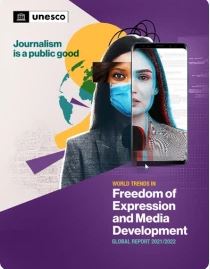
    A newly released UNESCO report says that the business model of the news media is broken with both, news audiences and advertising revenues migrating in vast numbers to internet platforms. The report, World Trends in Freedom of Expression and Media Development, examines global trends in freedom of expression and media development from 2016-2021.

    It says that the business model of the news media is ‘broken’ and with it, the fundamental right to information is at risk, a new UNESCO report examining global trends in freedom of expression warns.

    The report indicates that news outlets often struggle to get clicks from readers that determine advertising revenue, and many find themselves “squeezed out” by the proliferation of new voices in the online space and algorithms of digital intermediaries.

    “The digital ecosystem has unleashed a flood of competing content and turned large internet companies into the new gatekeepers”, the study explains.

    Moreover, with social media users nearly doubling from 2.3 billion in 2016, to 4.2 billion in 2021, there has been greater access to more content and more voices – but not necessarily with the distinctive added value of journalistic content, the study says.

    In the past five years, both news audiences and advertising revenues have moved in huge numbers to internet platforms, with only two companies – Google and Meta (formerly known as Facebook) – soaking up half of all global digital advertising spending.

    Journalists are still under attack

    Besides the economic and misinformation/disinformation hurdles journalists face, they have also continued to be targeted around the world over the past five years, the report says.

    From 2016 to the end of 2021, UNESCO recorded the killings of 455 journalists, who were either targeted as a result of their work, or while on the job. Almost nine out of 10 killings remain unresolved, shining light on a general impunity for these crimes around the world.

    According to the report, 23 journalists were killed in Pakistan between 2016 and 2020. India saw the killings of 22 journalists. 51 journalists were killed in Afghanistan in the same period (which is prior to the Taliban taking over the country in August 2021).

    According to the report, there have also been increasing threats to the safety of journalists not only from governments and criminal groups but also from private lobbies and from some members of the public who feel increasingly emboldened to launch slurs and attacks online.

    In fact, a surge in online violence against journalists is another new and evolving trend, and one which disproportionately affects women journalists all around the world.

    A 2021 UNESCO paper found that more than seven out of ten of women journalists surveyed had experienced online violence and a fifth reported being victims of offline violence in connection with online threats.

    Worrying imprisonments

    At the same time, attacks against journalists covering protests, demonstrations and riots are “worryingly common” while imprisonment of journalists has reached record highs.

    In many countries, laws do not protect journalists against these threats, and in some, they actually increase the risk of them.

    According to the report, since 2016, 44 countries have adopted or amended new laws that contain vague language or threaten disproportionate punishments for actions like spreading so-called fake news, alleged rumours, or “cyber-libel”, leading to self-censorship.

    Meanwhile, in 160 countries charges of defamation are still a criminal offence. When defamation law is criminal, rather than civil, it can be used as grounds for arrest or detention, effectively muzzling journalists, UNESCO warns.

    The report cites data from the Committee to Protect Journalists showing that 293 journalists were imprisoned in 2021, the highest yearly total in three decades.

    COVID-19 pandemic

    The COVID-19 pandemic has only made the trend worse by exacerbating the decline of advertising revenue, job losses and newsroom closures, the report finds.

    In a pandemic, journalism is a life-saving frontline service. However, false content related to COVID-19 spread rapidly on social media, while journalistic job cuts created a ‘significant vacuum’ in the information landscape, particularly in low and middle-income countries.

    “In September of 2020, over one million posts circulated on Twitter with inaccurate, unreliable, or misleading information related to the pandemic, according to the COVID-19 Infodemics Observatory, an initiative of the Fondazione Bruno Kessler”, UNESCO details.

    Meanwhile, a survey among 1,400 journalists found that at least two-thirds of them now feel less secure in their jobs, because of the economic pressures of the pandemic.

    Days are getting warmer, says the weatherman

    The weatherman has warned that the maximum temperatures are likely to rise over Northwest and Central India from 12 March 2022. This rise will be anywhere in between 2 and 5°C. A heat wave could envelop parts of Saurashtra-Kutch over the next two days.

    Just into the second week of March and the temperatures are rising, the Indian Meteorological Department has observed.

    The weatherman has warned that the maximum temperatures are likely to rise over Northwest and Central India from 12 March 2022. This rise will be anywhere in between 2 and 5°C.

    The IMD’s maximum temperature forecast warns of a likely gradual rise in maximum temperatures by 2 to 4° C over Gujarat during next five days.

    “Heat wave very likely to prevail in isolated pockets over Saurashtra-Kutch during next two days,” the department has warned, adding that a dry weather has prevailed over most parts of the country.

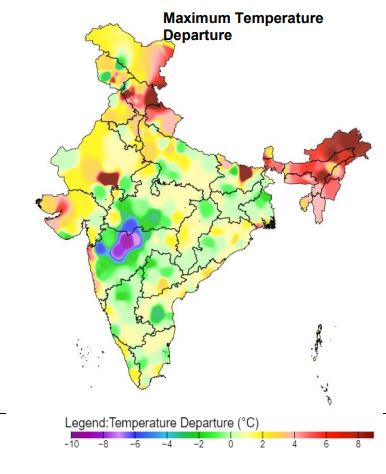
    On Thursday, the department observed that maximum temperatures have been markedly above normal at many places over Assam-Meghalaya and Arunachal Pradesh. The temperatures have been 5.1°C or more in these states. The temperatures have been above normal also at a few places over sub-Himalayan West Bengal-Sikkim and at isolated places over Konkan-Goa.

    Further, the temperatures have been 3.1°C to 5.0°C above normal in at most places over Himachal Pradesh and Nagaland, Manipur, Mizoram and Tripura and many places over Jammu Kashmir, Ladakh, Gilgit, Baltistan, Muzaffarabad, Uttarakhand and Saurashtra-Kutch and at isolated places over coastal Andhra Pradesh. A maximum temperature of 39.0°C was reported from Nalgonda (Telangana).

    Higher than normal temperatures were also recorded in parts of Gujarat, coastal Karnataka and Kerala as well where the temperatures were between 1.6°C and 3.0°C above normal. This was also the case in another few places over Rajasthan, Tamil Nadu, Puducherry and Karaikal and at isolated places over Madhya Pradesh and Uttar Pradesh.

    While the weatherman has not classified the nights as warm, the IMD has said that minimum temperatures are appreciably above normal (between 3.1°C and 5.0°C) at a few places over Gujarat and above normal (between 1.6°C and 3.0°C) at many places over Delhi, Haryana, Chandigarh, Punjab, Konkan, Goa,  and Maharashtra. This is also the case at a few places over Uttarakhand, Assam, Meghalaya, Madhya Pradesh and Kerala and at isolated places over West Rajasthan, East Uttar Pradesh, sub-Himalayan West Bengal and Sikkim.

    Saurashtra and Kutch recorded the highest temperature of 37.6°C. Temperatures recorded at 1430 hours on 10 March have risen by 1 to 3°C or more at a few places over Jammu, in Kashmir, Ladakh, Gilgit-Baltistan and Muzaffarabad besides Himachal Pradesh, Vidarbha, Bihar and at isolated places over East Madhya Pradesh, Odisha, Coastal Andhra Pradesh and Saurashtra and Kutch.


    Image: IMD

    Reliable internet unavailable for 90 per cent of poorest

    Only one in ten people have ‘meaningful connectivity’ to fully benefit from the internet, a recent report says, iterating that women’s web exclusion cost poorest countries US$1 trillion in GDP. Campaigners for equal access call for 4G connectivity as standard.

    By Dann Okoth / SciDev.Net

    A decent internet connection – essential for many basic tasks in the COVID-19 era – is out of reach for 90 per cent of people in low- and middle-income countries, a report has warned.

    While just under half of people in low- and middle-income countries have access to basic internet connectivity, this isn’t adequate for them to access essential health, education and employment services, a report by the Alliance for Affordable Internet has warned.

    The researchers looked at nine low- and middle-income countries — Colombia, Ghana, Nigeria, Kenya, Mozambique, South Africa, Rwanda, India and Indonesia — using mobile phone surveys to estimate the number of people with meaningful connectivity.

    They found significant inequalities in online access, with only around one in ten people having meaningful connectivity, compared to four in ten with basic access.

    The group, which aims to drive down the cost of internet usage in these countries through policy and regulatory reform, defines so-called ‘meaningful connectivity’ in terms of access to faster, 4G internet speeds, smartphone ownership, and daily, unlimited access in a regular location, such as home, work, or school.

    People who have this are three times more likely to access healthcare, get a job, or take a class online, than those with basic internet access, it says.

    Fourth generation mobile phone technology, or 4G, can be up to 10 times as fast as the previous 3G technology.

    “We found that internet users with meaningful connectivity experience a range of social and personal benefits,” said Ana Maria Rodriguez, a researcher at the organization who co-authored the report.

    Digital exclusion

    “This can mean the difference between access to education, banking and healthcare, or none of these.”

    Once considered a luxury, internet connectivity became crucial for many during the COVID-19 pandemic as populations faced stay-at-home orders and many practices moved online.

    In Colombia, while two in three had basic access, only one in four had meaningful connectivity. In Rwanda, one in five had basic access, but less than one in 160 had meaningful connectivity.

    According to the UN’s International Telecommunication Union, 2.9 billion people — over a third of the world’s population — have never used the internet. Most of these are found in East Asia, South Asia, the Pacific Islands, the Caribbean and Africa, according to Anju Mangal, head of Asia-Pacific region at the Alliance for Affordable Internet.

    “They are digitally excluded because of various challenges including poverty, lack of digital skills, lack of electricity and geographical challenges,” she told SciDev.Net.

    “Most of the communities we work with live in remote islands and mountainous areas.”

    The Alliance for Affordable Internet is calling on governments and service providers to provide 4G, which it sees as the minimum threshold for meaningful connectivity.

    “Governments should also consider reducing tariffs on data charges and on gadgets such as smartphones to improve digital accessibility,” Mangal added.

    However, the concept of meaningful connectivity does not seem to resonate with everyone in the countries surveyed.

    Just being online is good enough, says Joram Onyango, a Kenyan construction worker in Nairobi, who saved for more than six months to afford a US$90 smartphone.

    “Usually I don’t bother too much about the quality of the connection, provided I can finish the task,” he told SciDev.Net.

    “I keep shifting from one provider to another until I get a more reliable access. This can mean moving from place to place to find where the internet feed is strongest.”

    Gender divide

    Men who are online are more likely to have meaningful connectivity than women, according to the Alliance for Affordable Internet, which says that these disparities exist even in countries that have closed the gender gap in basic access, such as South Africa and Colombia.

    Governments are missing out on billions of dollars because of the digital gender gap, according to a separate report the alliance produced with the World Wide Web Foundation in October last year.

    The Costs of Exclusion report found that 32 low- and lower-middle-income countries missed out on US$1 trillion in GDP in the last decade as a result of women’s exclusion in the digital world.

    Alliance for Affordable Internet executive director Sonia Jorge said it was time to “raise the bar” for internet access.

    “It has never been more clear that internet access is a basic right,” she said. “It is now time that governments recognise that if people are to harness the full power of the internet to transform lives and societies, quality access matters.”


    This piece has been sourced from SciDev.Net

    Image:  Gabriel Pecot / ODI

    War in Ukraine Poised to Threaten Global Food Security

    Ukraine has long been the “breadbasket” of Europe, but the fighting could disrupt global wheat trade, with knock-on impacts on food prices and overall food security.

    By Lawrence Haddad

    The war in Ukraine is a catastrophe for that country and for the world. In any crisis it is the most vulnerable that will be most affected, and this time it is no different.

    Women, children and the elderly in Ukraine are suffering terribly in the country, with many fleeing the conflict as refugees. Tragically, women, children and the elderly in many other parts of the world will experience the effects of the war too.

    This is because this crisis comes on top of two others. Pre-war, the most vulnerable had already been pushed to the limit by COVID-19 and climate change. This led to unprecedented annual rises in hunger and malnutrition.

    The current crisis will worsen things considerably, not only within Ukraine, obviously, but also outside it, because Ukraine is a key exporter of wheat, maize and sunflowers and because Russia is a key exporter of oil and gas.

    The loss of food production and exports from Ukraine (and to some extent Russia) will push world food prices up as the lack of supply fails to meet demand. High energy prices due to the loss of production, trade and the sanctions imposed will do the same, making food production, distribution and preparation more costly.

    Higher food and fuel prices will lower people’s income for other necessities such as clean water, sanitation and health care. Pre-war, food prices were already at the highest levels since 1975. Now, they will rise even further.

    Prevent an inter-generational legacy

    If we do not act, the number of people experiencing hunger will likely rise towards one billion and the number of people that are at risk of malnutrition will likely rise to half of the world’s population. We must now seriously contemplate the ugly prospect of famine in many places in the world. Decisive action is needed, but what?

    First, obviously, end the war, so that the immediate suffering of the Ukrainian people can begin to be addressed. This will also allow Ukrainian farmers to get back to their fields in the next month or two for planting season and it will allow the rest of us to support them. It will also allow supply chains critical for food to begin to be rebuilt.

    Second, keep food trade flowing. Exporting countries must resist the temptation to “beggar thy neighbour” by hoarding exports, that simply leads to a race to the bottom for all.

    Third, diversify food production sites around the world: the war has shown the fragility of depending on a few breadbaskets: there need to be many. For example, Africa has immense agricultural potential, but the Malabo agricultural investment and policy targets its governments have set for themselves are not being met.

    Fourth, the amount of overseas development finance directed at ending hunger needs to double: public and private. We have never known so much about where and what to invest in to get hunger numbers down from 768 million today to less than 200 million by 2030. We know what to do, now we need to fund it.

    The G7 hosted by the German Government is an excellent opportunity to make such commitments.

    Finally, we need more money for humanitarian hunger and malnutrition relief. The increased funding requests from the World Food Program and others must be met rapidly. But we also need more relief from existing money: humanitarian aid needs to do more to provide not just food, but nutritious and safe food containing the micronutrients that are so essential for human development.

    Most importantly, we must protect the nutrition status of the very youngest and deny the Ukraine war a terrible intergenerational legacy.


    Lawrence Haddad is Executive Director, Global Alliance for Improved Nutrition (GAIN)

    This piece has been sourced from Inter Press Service

    Image: Marco Frattini / WFP

    States band together to save migratory species

    The Convention on the Conservation of Migratory Species of Wild Animals has pioneered a framework for global cooperation to address multifaceted global challenges like biodiversity and climate change.

    When world leaders gather in Kunming, China, for the 15th meeting of parties to the Convention on Biological Diversity next month, they are expected to endorse a global roadmap to conserve and restore biodiversity and ecosystems over the next decade.

    Biodiversity loss is one of the world’s greatest environmental challenges facing the planet today. In 2019, the Intergovernmental Science-Policy Platform on Biodiversity and Ecosystem Services (IPBES) Global Assessment warned that humanity was losing biodiversity at an unprecedented rate. One million species could go extinct in the near future if current trends are not reversed.

    The Convention on the Conservation of Migratory Species of Wild Animals (CMS), the only global convention specializing in the conservation of migratory animals, their habitats and migration routes confirmed this trend. A CMS report presented at the 13th Conference of the Parties (COP-13) found that up to 73 per cent of its listed species were in decline.

    The loss of biodiversity and ecosystems, both of which sustain humanity, is nothing short of an existential crisis, say experts.

    “Migratory animals are an essential part of the ecosystems in which they are found,” said Amy Fraenkel, the Convention’s Executive Secretary. “They directly contribute to the functioning and the balance and the makeup of healthy ecosystems which provide us with countless benefits, such as pollination, food, pest control and many economic benefits.”

    Because migratory species cross-national, regional, and even continental boundaries, CMS has pioneered a framework that supports global cooperation – the kind that is needed to address multifaceted global challenges like biodiversity and climate change.

    Hope ahead

    Despite dire assessments around species loss, several Multilateral Environmental Agreements and projects are offering hope for the future of the planet’s biodiversity.

    The African Eurasian Waterbird Agreement (AEWA), one of nine regional legally-binding instruments developed under the CMS framework, covers 255 species of migratory waterbirds across Africa, Europe, the Middle East, Central Asia, Greenland and Canada.


    The Northern Bald Ibis is one of the waterbirds listed under the agreement. Once revered as the spiritual guide of ancient Egypt’s pharaohs, the Ibis is globally endangered, having dwindled to a population of approximately 700 individuals left in the wild in Morocco. The bird’s decline owes to habitat and land-use changes, pesticide poisoning, human disturbance of nesting sites, and hunting.

    To save this iconic species, Member States established a Species Action Plan under the African European Waterbird Agreement. The implementation commenced in 2005. Ongoing priority actions aim to improve breeding conditions in Morocco and to reintroduce the Ibis to Algeria, amongst others.

    The Slaty Egret is the only globally threatened heron or egret on mainland Africa, and its declining conservation status owes to habitat conversion and the degradation and destruction of wetlands. To address these issues, the AEWA Species Action Plan for the species aims at habitat conservation measures as a priority.

    This bird’s action plan will benefit species from other regions that migrate to wetland habitats within its range. The improved health of wetlands, which provide food, fresh water and other resources, are expected to boost local livelihoods and wellbeing.

    Global cooperation

    Countries also work together under CMS on challenges that span continents such as the Intergovernmental Task Force on Illegal Killing, Taking and Trade of Migratory Birds in the Mediterranean.

    The task force brings together the countries of the Mediterranean with experts and other organizations to stop the killing of protected birds, many of which migrate between Africa and Europe. It supports conservation across two continents and serves as a model that is now being replicated to stop the illegal killing and trapping of migratory birds in the East Asian-Australasian Flyway.

    The impacts of CMS are as visible as the birds in the sky. People have increasingly sought out birds and their songs as beacons of hope.

    Preserving these wonders of the world is what CMS, along with UNEP and other partners is working to achieve for future generations.

    Impact of Lost Earnings due to COVID-19 to last for Generations says New Report

    Although households with three or more children were the most likely to experience a loss of income, they were also most likely to receive government assistance, with 25 per cent accessing this support, compared to 10 per cent of households with no children.

    At least two-thirds of households with children have lost income since the COVID-19 pandemic hit two years ago, according to a joint report published by UNICEF and World Bank.

    The report, Impact of COVID-19 on the Welfare of Households with Children, presents findings from data collected in 35 countries, and notes that households with three or more children were most likely to have come up short, with more than three-quarters experiencing a reduction in earnings.

    Going without food

    “Families cannot afford food or essential healthcare services. They cannot afford housing. It is a dire picture, and the poorest households are being pushed even deeper in poverty,” said Sanjay Wijesekera, UNICEF Director of Programme Group.

    The report says that the lost earnings have left adults in a quarter of all households, in the position where children are going a day or more, without food.

    Moreover, adults in nearly half of households with children, reported that they themselves were skipping a meal due to a lack of money.

    Around a quarter of adults in households with or without children, reported finding themselves out of work, during the course of the pandemic so far, the report says.

    “The modest progress made in reducing child poverty in recent years risks being reversed in all parts of the world. Families have experienced loss at a staggering scale. While last year, inflation reached its highest level in years, more than two thirds of households with children brought in less money”, Wijesekera added.

    Preventing a lost decade

    According to recent data, the economic crisis generated by COVID-19 threatens to hit children and families the hardest.

    The number of children living in multidimensional poverty – without access to education, health, housing, nutrition, sanitation or water – soared to approximately 1.2 billion in 2020, while an estimated additional 100 million children were projected to have fallen into multidimensional poverty in 2021.

    Basic deprivation

    As explained in the report, with children in 40 per cent of households not engaging in any form of educational activities while their schools were closed, children were being deprived of the basics.

    “The disruptions to education and healthcare for children, coupled with catastrophic out-of-pocket health expenses which affect more than one billion people, could put the brakes on the development of human capital – the levels of education, health and well-being people need to become productive members of society,” said Carolina Sánchez-Páramo, Global Director of Poverty and Equity for the World Bank.

    Generations of inequality

    The report also notes that prior to COVID-19, one in six children worldwide – or 356 million – experienced extreme poverty, where household members struggled to survive on less than $1.90 a day.

    More than 40 per cent of children lived in moderate poverty. And nearly one billion children lived in multidimensional poverty in developing countries, a figure that has since increased by 10 per cent as a result of the pandemic.

    Speaking on the lack of development of human capital, Sánchez-Páramo added that the current situation “could lock in increases in inequality for generations to come, making it less likely that children will do better than their parents or grandparents.”

    More social protection

    Although households with three or more children were the most likely to experience a loss of income, they were also most likely to receive government assistance, with 25 per cent accessing this support, compared to 10 per cent of households with no children, the report advanced.

    Furthermore, this helped to mitigate the adverse impact of the crisis on households who received support.

    In their joint call, UNICEF and the World Bank, are urging a rapid expansion of social protection systems for children and their families.

    Support should include the delivery of cash transfers and the universalization of child benefits, seen as critical investments that can help lift families out of economic distress and help them prepare for future shocks.

    According to the World Bank, since the start of the pandemic, more than 200 countries or territories have introduced thousands of social protection measures, and the Organization has supported countries with approximately $12.5 billion to implement such measures, reaching nearly one billion individuals worldwide.


    Image: UNICEF

    World Bank to aid Jai Bangla

    A US$ 125 loan from the International Bank of Reconstruction and Development (IBRD) has been signed to fund various social sector programmes of the West Bengal government.

    India and World Bank today signed a US$125 million loan to support access to social protection services in the state of West Bengal.

    The agreement was signed by Rajat Kumar Mishra of the union finance ministry’s department of economic affairs and Sudip Kumar Sinha of the finance department of the West Bengal government and Mr Junaid Ahmad, the World Bank country director in India who signed the loan document on behalf of the IBRD, a development bank administered by the World Bank.

    The loan will “support efforts to help poor and vulnerable groups access social protection services in the state of West Bengal.”

    The IBRD loan will fund over 400 programmes providing social assistance, care services and jobs under an umbrella platform, Jai Bangla implemented by the government of West Bengal.

    The IBRD loan will cover these programmes. In particular, the loan will provide support the West Bengal for these interventions at the state level, with particular focus on vulnerable groups such as women, tribal and scheduled caste households, and the elderly, as well as households in the state’s disaster-prone coastal regions.

    Over the next four years, the project will help strengthen the state’s capability to expand coverage and access to social assistance and to deliver cash transfers for the poor and vulnerable through a consolidated social registry.

    According to the department of economic affairs, “The COVID-19 pandemic has highlighted the need to have seamless systems in place to deliver inclusive and equitable social protection in times of crisis. This project will focus on building the capabilities of the state government to expand coverage and access to social assistance and targeted services for poor and vulnerable groups within the state.”

    A recent survey found that while food and in-kind transfers reach most poor and vulnerable households in West Bengal, the coverage of cash transfers is weak, a release of the press information bureau says. Access to social pensions by the elderly, widows, and disabled persons is also weak due to cumbersome application processes and a lack of automated systems for application and eligibility verification, says the PIB.

    West Bengal faces challenges related to manual data entry, inconsistent beneficiary data across departments, and a lack of data storage and data exchange protocols. The project will help digitize the state’s unified delivery system, the Jai Bangla platform, to help consolidate disparate social assistance programs and speed the delivery of social pensions to vulnerable and poor households.

    The project will also support the creation of a tele-consultation network for social care services, complemented by a cadre of case management workers who can help households with advice on eldercare and links to health services and facilities. It will also create an institutional platform to improve coordination and effectiveness of government interventions to address the state’s low participation of women in the labour force.