More

    Ukraine Challenges Legitimacy of Russia’s UN Membership

    The USSR and the Republic of China – not the ‘Russian Federation’ or ‘the People’s Republic of China’ (PRC) — are still two of the five permanent members of the most powerful body in the UN.

    By Thalif Deen / Inter Press Service

    The overwhelming condemnation of the invasion of Ukraine — which triggered a veto from Russia and an abstention from China last week — has raised a challenging question about the legitimacy of UN memberships of both countries which are permanent members of the Security Council.

    The Union of Soviet Socialist Republic (USSR) ceased to exist back in 1991, with the Russian Federation assuming the rights and obligations as a successor state.

    And the Republic of China (Taiwan) was expelled from the United Nations — and ousted from its highly-prized permanent seat in the UN Security Council (UNSC) — about 51 years ago.

    But according to the UN charter, “the USSR and the Republic of China” — not the “Russian Federation” or “the People’s Republic of China” (PRC) — are still two of the five permanent members of the most powerful body in the Organization.

    If both countries assume they are rightful successors, why aren’t they going before the General Assembly to help amend the Charter? As a result of the anomaly, the un-amended UN charter remains outdated and a relic of a distant past.

    According to Article 108 of the Charter, amendments must be adopted by two-thirds of the 193 members of the General Assembly and be ratified by two-thirds of the members of the United Nations, including all five permanent members of the Security Council, namely the US, UK, France, China and Russia.

    Russia’s membership is not legitimate

    The Charter has been amended five times:

        1. In 1965, Articles 23 was amended to enlarge the Security Council from 11 to 15 members.
        2. In 1965, Article 27 was amended to increase the required number of Security Council votes from seven to nine.
        3. In 1965, Article 61 was amended to enlarge the economic and Social Council from 18 to 27 members.
        4. In 1968, Article 109 was amended to change the requirements for a General Conference of Member States for reviewing the Charter.
        5. In 1973, Article 61 was amended again to further enlarge the Economic and Social Council from 27 to 54.

    But it was never amended to reflect the two successor states, namely the Russian Federation and the People’s Republic of China (PRC).

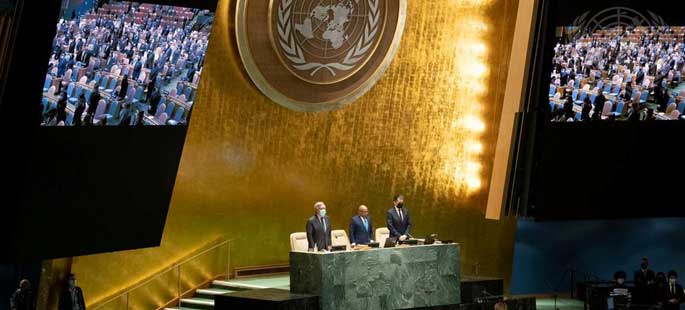
    During the Emergency Special Session of the General Assembly last week, Ukraine’s Ambassador, Sergiy Kyslytsya, pointed out that while “the Russian Federation has done everything possible to legitimize its presence at the United Nations, its membership is not legitimate, as the General Assembly never voted on its admission to the Organization following the fall of the Soviet Union in December 1991”.

    With the collapse of the USSR in late 1991,the Commonwealth of Independent States signed a declaration agreeing that “Member states of the Commonwealth support Russia in taking over the USSR membership in the UN, including permanent membership in the Security Council.”

    And in October 1971, the General Assembly decided to recognize the representatives of the Government of the People’s Republic of China as the only legitimate representatives of China to the United Nations.

    Scenarios of succession states

    But one longstanding question remains: why has Russia and PRC not moved for an amendment of the charter?

    Is it that both countries fear they will not be able to garner the two thirds majority needed in the General Assembly for any amendments to the charter?

    In a December 1991 inter-office memo, the UN’s Office of Legal Affairs said: “For the present, the old Union of Soviet Socialist Republics remains a member of the United Nations with all the rights and obligations of memberships. Its representatives, whose credentials have been approved by the Credentials Committee, continue to occupy the seat of the USSR in all organs of the United Nations.”

    “In considering the changes which may come about in the near future and their implications within the internal constitutional order of the United Nations, it should be borne in mind that the United Nations will, of necessity, be obliged to proceed from whatever arrangements are made internally in the Soviet Union in relation to the break — up of the USSR and the decisions which are taken by the republics regarding their individual status in international law and that of any collective entity which might emerges.”

    The memo lays out several scenarios over succession states, including “a similar issue following the partition of India and Pakistan when certain Members objected to India’s automatic retention of its seat while Pakistan had to apply as a new state.”

    Responsibility of Member States

    But the question of an un-amended Charter remains unanswered.

    In response to a question, UN Spokesperson Stephane Dujarric told reporters March 4, the UN’s Office of Legal Affairs (OLA) had “undertaken a review of its relevant files”.

    “I was informed that the search is continuing through the paper-based files, and non-digitized files, and that some related documents have been found, including an interoffice memo dated 19 December 1991”.

    He said it has been declassified, and “I can share it with you if you are interested.”

    The interoffice memo, he pointed out, does not in any way alter the Secretariat position, which is that, in accordance with the UN Charter, “the question of UN membership is the responsibility of Member States”.

    In his 165-page book on the Security Council titled “Of Foxes and Chickens– Oligarchy and Global Power in the Security Council”, James Paul, then Executive Director of the New York-based Global Police Forum, writes the dissolution of the Soviet Union in late 1991 provided another act in this strange drama (following the admission of PRC).

    A number of successor states came into being of which the Russian Federation was the largest.

    “It was certainly not the major power that the USSR had been, having a far reduced population and economy. The new state was not clearly the same as the old, but the permanent members did not want to open up the dreaded membership question.”

    “With most diplomats celebrating a holiday (at the time) or out of town on vacation, no delegation raised immediate objections. Without even calling a meeting to examine the matter, the Council President took silence as consent.”
    Need a more consistent policy

    Meanwhile, any attempts to expel or suspend Russia from the General Assembly — primarily because of its invasion of Ukraine — will be difficult to justify judging by the track record of some of the member states.

    Stephen Zunes, Professor of Politics and International Studies at the University of San Francisco, who has written extensively on the politics of the Security Council, told IPS this proposal seems like a stretch.

    The United Nations technically might be able to remove Russia from the Security Council, but politically it would come across as vindictive and would likely weaken the United Nations’ authority, he said.

    “There would also be the question of double-standards,” he pointed out.

    Morocco was elected to a non-permanent seat in the Security Council in the 1990s despite its invasion, occupation, and illegal annexation of Western Sahara.

    Indonesia was elected to the Council during the same decade following its conquest and occupation of East Timor.

    And Israel’s admission into the United Nations, he argued, was conditional on the grounds “that Israel is a peace-loving State which accepts the obligations contained in the Charter, and is able and willing to carry out those obligations,” which it clearly has not done, as exemplified through its conquests of neighboring countries, its illegal colonization of occupied territories, and its illegal annexation of parts of them, he noted.

    “For the United Nations to take such drastic action targeting Russia in response to its invasion of Ukraine, it would need to have a more consistent policy towards aggressor nations,” declared Zunes.

    China, Russia – not identical cases

    Since the international community has pretty recognized there is only one China and plenty of member states have changed their formal names over time, he pointed out, “I don’t think the representation of China is an issue. If it did come to a vote, I’m quite confident they would get a two-thirds majority.”

    The Soviet/Russia case is more complicated, he noted. “Even here, though, since a case could be made that the Soviet Union was the successor state to the Russian Empire, a reduced Soviet Union would still be Russia. I don’t think Russia would have had any problems getting the two-thirds support either—until recently,” he declared.


    This piece has been sourced from Inter Press Service

    Image: UN Photo / Evan Schneider
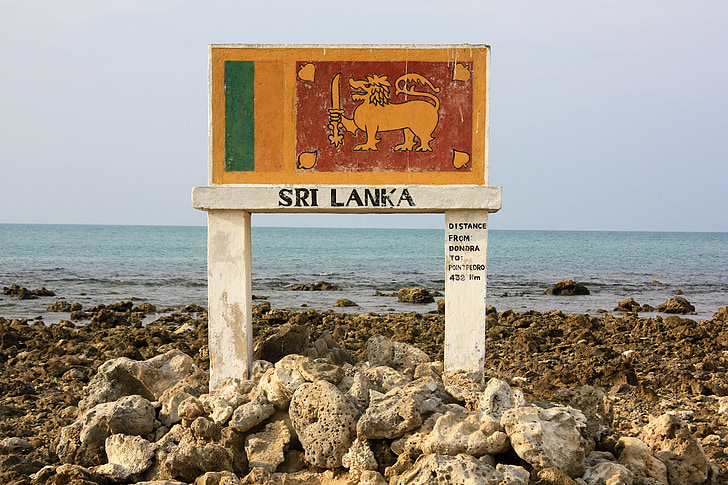
    Why is India’s financial aid offer to Sri Lanka getting delayed?

    Sri Lankan finance minister Basil Rajapaksa’s visit to clinch a big-ticket loan from India has been postponed. Is this go-slow a deliberate strategy to signal China?

    Sri Lanka’s economic crisis is aggravating each passing day – foreign exchange reserves have tanked and inflation has made food beyond the reach of the ordinary citizen.

    Over the past six months, India has announced assistance to Sri Lanka of a US$ 500 million oil line of credit, a debt deferral of US$ 515 million and a currency swap to the tune of US$ 400 million. These are besides the COVID-19 relief in the form of rapid antigen test kits and liquid medical oxygen India has provided.

    The line of credit that the island nation thought was a lifeline and fuel on credit. But this is yet to see the light of day.

    India has sought a road map from Sri Lanka. But economists and bureaucrats besides the island nation’s central bank are yet to come up with a plan they can share with the Indian government. The roadmap needs to elaborate on how they country will overcome its economic crisis.

    Importantly, the roadmap is also required to detail how bilateral economic plans will be implemented in the North and the East of the island.

    There are strategic interests too – ranging from the harbour of Trincomalee to selling Donier surveillance aircraft for the Sri Lanka Air Force. Both issues are in a bureaucratic tailspin, toughened by prospects of an upcoming BIMSTEC summit in Colombo on March 30.

    Sri Lankan finance minister Basil Rajapaksa’s visit to Indian has been postponed. This visit, say Sri Lankan officials, is important to clinch a big-ticket loan. But, there are others who say that the go-slow is a purposeful bureaucratic strategy to signal China.

    India’s interests

    India is also negotiating a few energy generation projects with Sri Lanka. Sri Lanka’s policy of moving away from coal-powered electricity plants has already jolted an earlier Indo-Japanese joint partnership plan in the country.

    New Delhi is keen on a pact for solar-power projects in Trincomalee and in the Delft Island. The Delft Island deal is pending for some time since the Asian Development Bank tendered for interests. High decibel reactions from the Chinese embassy on the subject was matched by a low decibel visit to the island by Indian industrialist Gautam Adani whose business group has an interest in the project.

    Sri Lanka’s economy has been in trouble since an abrupt government fiat to farmers to switch to organic farming. It caused a poor harvest and the government was suddenly saddled with huge financial costs of importing organic fertilisers

    This was further aggravated by the COVID-19 pandemic that resulted in halting tourist arrivals to the emerald island. Inflows from tourism contribute largely to Sri Lankan foreign exchange. The pandemic also brought back Sri Lankan overseas workers who would otherwise have sent remittances back home.

    The rising price of international petroleum crude in the past weeks has also added to the deteriorating economic situation.

    Alluding to the delays in drawing up plans for closer cooperation with India, Sri Lanka foreign minister G L Peiris had said that these were due to “logistical issues and bureaucratic reasons”.

    Those bureaucratic reasons are now proving to be too expensive for the island nation.


    Scientists describe a new Himalayan snake species found via Instagram

    Locked down at home during the pandemic last year, a postgraduate student photographed a hitherto unseen snake in his backyard and uploaded it to Instagram, attracting attention of herpetologists. The new-to-science species belongs to the group of kukri snakes.

    By Liz Kimbrough

    Researchers have found a snake species new to science in the Himalayas — on Instagram!

    During the COVID-19 lockdowns, Virender Bhardwaj, a master’s student at Guru Nanak Dev University, Amritsar, explored the backyard of his house in Chamba at the foot of the Himalayas. He began photographing the snakes, lizards, frogs and insects around home and uploading those photos to the social media platform, Instagram.

    In one of these posts, uploaded on June 5, 2020, Zeeshan A. Mirza, a herpetologist from the National Centre for Biological Sciences in Bengaluru noticed an unfamiliar snake. The snake belonged to a group commonly called kukri snakes, named after their teeth which are curved like a kukri, or Nepali dagger. But this specimen didn’t match the common kukri snake of the region.

    Identification process

    Bhardwaj was able to locate two of the snakes, enough for the team, which included Mirza and Harshil Patel of Veer Narmad South Gujarat University, Surat, western India, to begin the identification process.

    The work was put on hold due to COVID-19 restrictions, which made visiting labs and natural history museums difficult. But once the labs opened back up in early 2021, molecular data for the species confirmed it was indeed different from the common kukri snake. Morphological data from the literature, as well as computerised tomography (CT) scans of the species’ skeletal structure further revealed that the species was undescribed.

    The new-to-science species was named Oligodon churahensis, after the Churah Valley in Himachal Pradesh, where the species was discovered. A description of the species is published in the journal Evolutionary Systematics.

    Diverse backyards

    The western Himalayas are comparatively less explored than many other regions, and dedicated work in this region is necessary to reveal the biodiversity of the region, Mirza says. The region harbours unique species of reptiles that scientists have only begun to unravel in the last couple of years.

    “It is quite interesting to note that how an image from Instagram led to the discovery of such a pretty snake that was unknown to the world,” Mirza told Mongabay.

    “Exploration of your own backyard may yield species that are perhaps undocumented. Lately, people want to travel to remote biodiversity hotspots to find new or rare species, but if one looks at their own backyard, one may end up finding a new species right there.”


    This story was first published on Mongabay.com 

    Image: Virender Bhardwaj 

    Russian military control of Ukraine nuclear plants cause for concern, IAEA warns

    Reports that Ukraine’s, and Europe’s, largest nuclear power plant is under the control of Russian forces is a cause for grave concern, the IAEA Director-General Rafael Mariano Grossi, said on Sunday.

    In a statement released by the IAEA, Rafael Mariano Grossi, Director-General of the International Atomic Energy Agency (IAEA) said he had been informed by Ukrainian authorities that, although regular staff continue to operate the Zaporizhzhya Nuclear Power Plant, any action of plant management – including measures related to the technical operation of the six reactor units – requires prior approval by the Russian commander of the Russian forces that took control of the site last week.

    Mr. Grossi said that this development contravenes one of the seven pillars of nuclear safety and security that he outlined at a meeting of the IAEA’s Board of Governors on 2 March: that “operating staff must be able to fulfil their safety and security duties and have the capacity to make decisions free of undue pressure”.

    Communication restricted

    Ukraine’s nuclear regulator has informed the IAEA that it is having major problems communicating with staff operating Zaporizhzhya, due to Russian forces at the site switching off some mobile networks and blocking the internet. Some mobile phone communication is understood to still be possible, albeit with poor quality, but fixed phone lines, as well as e-mails and fax, are reportedly no longer functioning.

    The IAEA noted that this situation contravenes another of its seven indispensable pillars of nuclear safety, that there must be “reliable communications with the regulator and others”.

    “I’m extremely concerned about these developments that were reported to me today”. Said Mr. Grossi. “Just a few days after I presented the seven main elements of nuclear safety and security to the IAEA Board, several of them are already being compromised. In order to be able to operate the plant safely and securely, management and staff must be allowed to carry out their vital duties in stable conditions without undue external interference or pressure”.

    “The deteriorating situation regarding vital communications between the regulator and the Zaporizhzhya NPP is also a source of deep concern, especially during an armed conflict that may jeopardize the country’s nuclear facilities at any time”, continued the Director-General. “Reliable communications between the regulator and the operator are a critical part of overall nuclear safety and security”.

    Radiation levels normal

    Despite the communication issues, the regulator was able to provide updated information about the operational status of the Zaporizhzhya NPP to the IAEA, and to confirm that radiation levels there remained normal.

    Operational teams at the plant are now rotating in three shifts but, the regulator added, the availability and supply of food is limited, which is having a negative impact on staff morale.

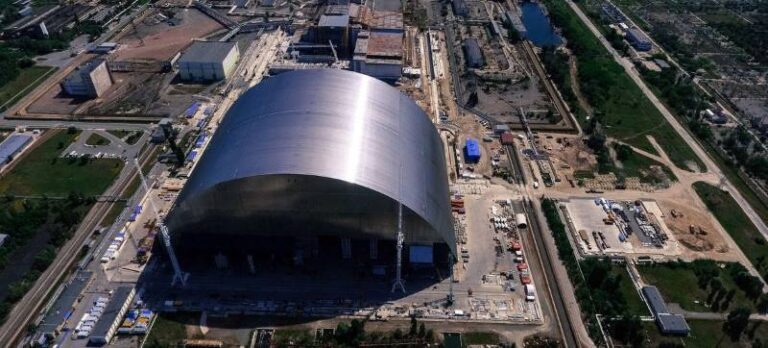
    Chornobyl, Mariupol safety

    Responding to reports that the technical staff and guards at the site of the Chornobyl nuclear accident site have not been rotated since 23 February, Mr. Grossi called on the Russian forces controlling the site to allow them to be relieved by other colleagues and rest, in order to carry out their jobs safely and security.

    The Ukraine regulator has informed the IAEA that communication with Chornobyl is currently limited to emails.

    In another worrying development, the regulator said that all communications have been lost with the enterprises and institutions in the port city of Mariupol that use category 1-3 radiation sources, and there is no information about their status. Such radioactive material, warned the IAEA, can cause serious harm to people if not secured and managed properly.

    Ukraine nuclear danger

    Ukraine gave up its rights to nuclear weapons following the dissolution of the Soviet Union, and all the nuclear weaponry on its territory was removed by June 1996. However, the country retained the right to develop nuclear energy for peaceful purposes, and some 114 enterprises are believed to have nuclear materials of some kind, including four nuclear power plants (NPPs).

    The military conflict in Ukraine is the first to take place on the territory of a country with large nuclear facilities. On Thursday night, Zaporizhzhia NPP, the largest and most powerful in Europe, was shelled, raising fears of an explosion, and radiation leaks.

    Memories of the Chornobyl disaster, which occurred on April 26, 1986, have also been revived: Chornobyl was one of the most serious nuclear incidents in human history, and led to a radioactive plume covering a large part of north-eastern Europe.

    Thursday’s attack on Zaporizhzhia saw shells hitting a training complex near the nuclear reactors. No radioactive material was released, and the plant’s safety systems were not compromised.

    However, an accident or explosion at Zaporizhzhia, which is far bigger than Chornobyl, could lead to far more serious consequences than the 1986 incident. This could result from fresh attacks, or even a loss of electricity. The latter situation could prevent the reactor cooling system from working, and lead to an explosion (this was the cause of the Chornobyl disaster).

    Miles’ Law and the War in Ukraine

    The vast majority of the people on the planet don’t give a hoot about who is right and who is wrong. They will simply curse the big powers whose ambitions have raised the price of food and fuel, making their life ever harder.

    This aphorism which dates back to the late 1940s points out that one’s position on issues (where you stand) is shaped by your relationship with the events taking place (where you sit).


    Since the start of the Ukrainian war I have been working in a small country very much in Russia’s shadow. Local TV channels are dominated by broadcasts from Russia. Russian is widely understood here, much more than English, and these channels provide a major source of news.

    Not having any Russian, most of my information over the past week has come through listening to the BBC World Service on the radio. By chance the other day I stumbled across the English language channel of Russian state TV and was fascinated by their well-argued and highly polished presentation of the Russian version of facts. It was interesting, although not surprising, to see how differently the war is presented by the two sides.

    What is seen in as an invasion of a free democratic country in the West is presented by Moscow as a necessary intervention to halt the interrupted eastern creep of NATO – an issue that threatens their very survival and on which they have repeatedly warned NATO leaders.

    The West sees the events as the imposition of Russian rule on freedom loving Ukrainians, while Moscow presents it as the liberation of the Russian speaking people of the Donetsk and Luhansk Republics from Ukrainian bullying and thuggery. The West calls it an invasion and a war; Moscow calls it an operation.

    Ordinary citizens

    Reporters from each side interview “ordinary citizens” to provide support for their point of view. News agencies such as the BBC and CNN interview ordinary Ukrainians who say how they love their country and want to live in peace but are prepared to defend their homes and families; the other side also interview ordinary people of the Donbas who offer tearful thanks to their Russian liberators.

    The arming of ordinary citizens by the Ukrainian Government is seen in western media as giving patriots the means to defend their homeland; in Moscow’s version all this does in armed criminal gangs – some of these have been turning up in pickup trucks to load up dozens of machine guns and thousands of rounds of ammunitions. Moscow say 500 of their soldiers have lost the life, the other side reports a number more than 10 times that.

    It is quite futile to ask who is right and about what. Maybe the Russians are right about the eastern creep of NATO but maybe they are lying about the number of deaths. Or maybe both sides are partly right – say about the distribution of arms; it may well be that ordinary patriotic Ukrainians as well as criminal gangs are arming themselves.

    In the age of internet and social media, most people have access to both versions of the facts and have a choice about which narrative to believe? And there is where Miles’ Law kicks in – most people will choose the narrative that fits in with their past experiences and their current needs and desires.

    National interests

    At Government level the choice of which narrative to accept, and what positions to take, for example at the UN, will be based on the economic, political and strategic interests of the country or of its rulers. Did Palau (population 18,000) make any objective assessment of facts before cosponsoring the UN motion condemning Russia, or did they simply go along with the wishes of Australia and New Zealand their largest trading partners and donors? Did the Government of Bangladesh, Pakistan and Sri Lanka assess the evidence or did they abstain in the General Assembly vote in order to have the option to make deals with whichever side offers better terms? And did China abstain because it wants to prepare the ground for its own invasion of Taiwan? And what about Afghanistan? Is their vote condemning Russia based on what they believe are the facts of the matter, or is it simply because their representative at the UN is still the one appointed by the Ashraf Ghani Government and whose salaries and expenses are likely paid by the USA?

    Will positions change?

    And what about “ordinary individuals”? What do they believe? Those who have lived in Iraq or in Afghanistan, or in other places where USA and western countries have played havoc, will tend to have sympathies with the Russian narrative. For them someone is finally standing up to western bullying; someone is prepared to give NATO a bloody nose.

    In contrast many in Europe will believe the Western version of facts – that Putin is a power hunger lunatic, a megalomaniac who is single handedly driving the invasion, and he will soon be replaced by the oligarchs who see their wealth and privileges dwindling due to sanctions. Their views and predictions are based not only on cultural ties with the Ukraine but is influenced by the fact that most Europeans have benefited from closer economic links with Russia and in particular on plentiful Russian energy supplies – supplies that are at now at risk. For them the quicker the war is over and Russians booted out of the Ukraine the better for everyone. And what if the war is not over quickly? What if energy supplies are cut off, if prices go on rising, and millions of refugees continue to turn up? Will positions change?

    But whatever views we hold, and however strongly we wish to argue about who is right and who is wrong, let us not forget that the vast majority of the people on the planet don’t give a hoot about who is right and who is wrong. They will simply curse the big powers whose ambitions have raised the price of food and fuel, making their life ever harder.


    Daud Khan is a consultant and advisor for various government and international agencies. He lives partly in Italy and partly in Pakistan.

    This piece has been sourced from Inter Press Service.

    Egypt Rushes to Find Alternative Wheat Suppliers Following Ukraine Crisis

    Egypt’s strategic wheat stock is approximately five million tonnes, enough to cover the local market’s needs for nine months, and will be augmented when the local wheat harvest season begins mid-April.

    By Hisham Allam

    Egypt is scrambling to find alternate sources of wheat after the Russian invasion of Ukraine has put supply to the country in jeopardy. This is especially urgent because the price of bread in Egypt has in the past sparked protests in the country.

    Russia and Ukraine are key players in the global grain market, with their wheat exports accounting for 23 per cent of international trade in 2021-22, according to the US Department of Agriculture.

    Egypt, Lebanon, and Libya are among the MENA region’s top wheat importers from Ukraine.

    In 2021, Egypt imported 6.1 million tonnes of wheat; 4.2 million came from Russia, worth US$1.2 billion, representing 69.4 per cent of total Egyptian wheat imports. Imports from Ukraine amounted to 651,400 tonnes, worth US$649.4 million, accounting for 10.7 per cent of total imports.

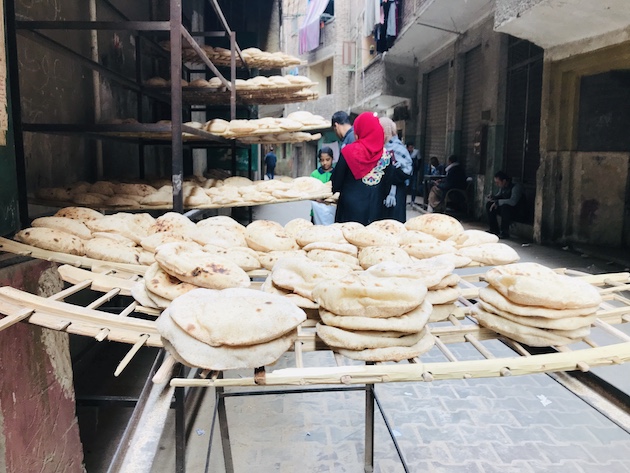
    Over the last 50 years, the price of bread has been a politically controversial topic in Egypt, triggering various protests. A subsidised flat loaf costs 0.05 Egyptian pounds, less than one US cent.

    Subsidised bread

    Naguib Sawiris, the Egyptian tycoon, appealed to Egypt’s Minister of Supply on February 22 to acquire and store large quantities of wheat.

    “We must purchase and stockpile wheat as quickly as possible before the Ukraine-Russia war breaks out, “Sawiris had tweeted.

    Mohamed Elhady, who runs a family-owned bakery at Menoufia Governorate, 80 km north Cairo, is deeply concerned about the business he has been running for 20 years.

    “The government-subsidised bread diminishes the bakery’s profit margin since we are required to sell a loaf of bread at the government-set price. But we get the cost difference through banks after calculating the number of loaves produced by each bakery using a smart ration card system,” Elhady said.

    “Some bakeries gather cards from ordinary residents and report fictitious sales to gain the value of subsidised bread for themselves, increasing their earnings considerably while reselling raw wheat on the informal market,” he explains.

    To eat less or to pay more

    In August 2021, Egyptian President Abdel Fattah al-Sisi said it was time to increase the country’s subsidised bread price, revisiting the issue for the first time since 1977, when then-president Anwar Sadat reversed a price rise in the face of riots.

    “It is time for the five-piece loaf to increase in price,” Sisi said.

    Elhady believes that the government will turn the president’s words into action soon, expecting that the new increase in subsidised bread will take place by April, the anticipated time for receiving wheat from the new suppliers. This will decrease daily production rates and, therefore, his profits.

    “Once the wheat prices increase, the government will reduce the number of subsidised loaves from five a day to three or increase the price of the 5-piaster loaf,” Elhady says.

    The president is also expected to exclude more citizens from the subsidy programme covering more than 60 million Egyptians.

    “People will have to choose; to eat less or to pay more,” Elhady adds.

    Strategic stocks

    Egypt’s main state buying agency, the General Authority for Supply Commodities (GASC), has issued a second international wheat tender to import wheat from April 13 to 26. The tender was issued 48 hours after it was cancelled because it only received a single offer of French wheat. A least two offers are required before a purchase can go ahead.

    The Egyptian GASC set the end of February as a deadline to receive offers for the new tender. In addition to Russia and Ukraine, the GASC sought bids from the United States, Canada, France, Bulgaria, Australia, Poland, Germany, the United Kingdom, Romania, Serbia, Hungary, Paraguay, and Kazakhstan. The delivery needs to take place before April 1, 2022.

    Despite the ongoing Russian-Ukrainian military escalation, an Egyptian ship carrying 60 tons of Ukrainian wheat has left the Ukrainian ports and is en route to Egypt, a grain consultant at the Ministry of Supply, Salah Hamza, told IPS.

    “This shipment was contracted with Ukraine for $361 per ton in an international tender in December 2021. The consignment is part of a 300 000-ton wheat shipment that will arrive by March 2022.”

    “Egypt produces 275 million loaves of bread per day, consumes 900,000 tonnes of wheat per month, and the strategic stock is enough for the next five months, in addition to 4 million tons expected from the domestic harvest by mid-April, “Hamza adds.

    Egypt has a strategic reserve of wheat, enough to cover the local market’s needs for nine months, the Cabinet’s spokesman, Nader Saad said.

    The strategic wheat stock is approximately five million tonnes, according to Saad, and will be augmented when the local wheat harvest season begins on April 15.

    In February of this year, the price of an ardeb of wheat climbed by 65 percent compared with February of last year.

    The US Foreign Agricultural Service expected Egypt’s wheat consumption in 2021-22 would exceed 21.3 million tonnes, up about 2.4 % from 2020-21.


    This piece has been sourced from Inter Press Service.

    India’s aloof response to the Ukraine crisis

    Moscow’s decision to recognise the Lugansk and Donetsk People’s Republics and then launch a ‘special military operation’ in Ukraine has created a tricky balancing act for India. Delhi’s immediate reaction to the crisis has been restrained, neutral and focused on ensuring the safety of its nationals inside Ukraine.

    By Artyom Lukin and Aditya Pareek

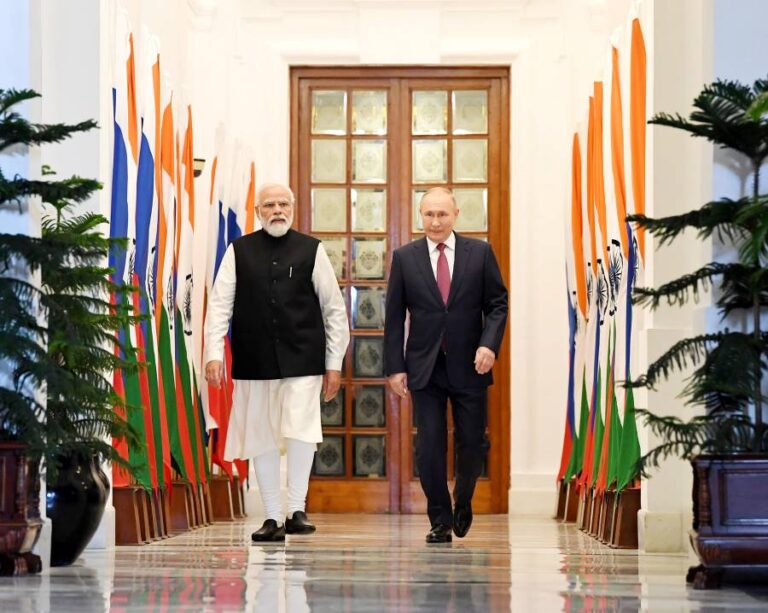
    Several hours after Russian military action was underway, Indian Prime Minister Narendra Modi held a phone call with Russian President Vladimir Putin. Modi urged that all violence should be ceased immediately and reiterated India’s emphasis on diplomacy and ‘honest and sincere dialogue’ between Russia and NATO.

    On 26 February 2022, the United Nations Security Council held a vote on a resolution demanding that Moscow immediately stop its attack on Ukraine and withdraw all troops. India was among the three countries to abstain, along with China and the United Arab Emirates. India’s UN envoy expressed his ‘regret that the path of diplomacy was given up’. India also abstained on a procedural resolution to call for an emergency session of the UN General Assembly.

    Modi also held a phone call with Ukrainian President Volodymyr Zelensky, in which he expressed ‘his deep anguish about the loss of lives and properties’ but refrained from directly criticising Russia.

    The India–Russia relationship is officially characterised as a ‘special and privileged strategic partnership’. The entente between Moscow and Delhi dates back decades. Though the bond is no longer the de facto alliance it once was in the 1970s and 1980s, Moscow remains Delhi’s an important strategic partner, on par with the United States. The two nations don’t have any significant areas of disagreement and both share a fundamental interest in a multipolar balance of power in Eurasia.

    India’s security stake

    India relies on Russia for the majority of its imported military equipment, nuclear submarine technology and some vital space faring technology. A highlight of India–Russian defence cooperation has been the US$5.43 billion deal for the S-400 air defence system, which Russia began delivering in December 2021. Russian-made weapons are critical to India’s ability to counter its main external threat — China.

    There are also perhaps ideational factors behind India’s reluctance to censure Russian actions toward Ukraine. The conflict over Ukraine may have some parallels with India’s historic traumas. The fragmentation of the Soviet Union that led to the birth of an independent Ukraine was not dissimilar to the partition of the British Raj, which produced India and Pakistan, two culturally close but still antagonistic entities. Putin characterises the modern state of Ukraine in antagonistic terms as an ‘anti-Russia’ project.

    Western powers portray the conflict as a struggle between an imperialistic autocracy and a young democracy, but Delhi may not buy this narrative. India has always been somewhat sceptical about the US-led discourse on liberal democracy. This remains the case despite the Westernisation of Indian elites. Under Modi, India has been evolving in an illiberal and ethno-nationalistic direction. It is an open secret that India wants to maintain its sphere of influence in parts of South Asia.

    India does not have many significant security interests in Europe, which helps explain its relative aloofness to the Ukraine crisis. But Delhi does have some stakes in Ukraine. For instance, the Indian Space Research Organisation’s semi cryogenic engine is being developed based on Ukrainian supplied RD-810 designs and many Indian navy warships depend on Ukrainian gas turbines, including those under construction at Russian shipyards. So India has a national security stake in not alienating Ukraine.

    There’s China too

    Another reason for India’s repeated calls for the cessation of violence, de-escalation and resolving the situation through diplomacy is high energy prices, which may negatively affect India’s stressed economy.

    Delhi’s position on the Ukraine crisis also needs to be examined in the context of the Russia–China–India triangle. Some subtle evolution has taken place here. India spoke of Russia’s ‘legitimate interests’ in the wake of the 2014 events on the Crimean Peninsula, which could be interpreted as a position of implicit support for Russia. By contrast, Beijing maintained a more neutral position at the time. India has also since then abstained or voted against Russia-denouncing UN resolutions concerning Crimea.

    However, as the Ukraine crisis continues to unfold, China seems to have become more supportive of Russia as indicated in Chinese Foreign Minister Wang Yi’s remarks during a phone call with Russian Foreign Minister Sergei Lavrov. During the call, Wang Yi mentioned ‘Russia’s legitimate concerns on security issues’. India has made no such reference to ‘Russia’s legitimate interests’ and remains more neutral compared to China in the current crisis.

    A key concern for Indian foreign policy is how the Ukraine crisis — and its unpredictable outcome — will affect Russia’s relations with China. There is little doubt that the security mess in Europe and the West’s ostracisation of Russia will push Moscow further toward Beijing. If Russia’s dependence on China deepens and Western condemnation of Russia intensifies, the Delhi–Moscow ‘privileged partnership’ could be at serious risk.


    Artyom Lukin is Deputy Director for Research at the School of Regional and International Studies, Far Eastern Federal University, Vladivostok.

    Aditya Pareek is a research analyst at the Takshashila Institution.


    This piece has been sourced from East Asia Forum of the Australian National University

    Targeting Only Russian Oligarchs, a Historic Mistake

    All illicit financial flows should be targeted, not just those from Russian oligarchs. All assets should be placed in public beneficial ownership registries for everyone to see. These registries should be connected to a multilateral Global Asset Registry. 

    By Matti Kohonen

    The war in Ukraine has highlighted Russian kleptocrats funnelling billions of dollars out of the country and investing them in London and other major global financial centres, prompting political leaders in Europe and USA to crack down on this shady money. Russian oligarchs are believed to hold as much as $1 trillion in wealth abroad, often hidden in offshore companies whose true ownership is hard to determine.

    Focusing only on Russian oligarchs however would be a terrible mistake.

    In a bid to undermine Russian’s war effort, the European Commission, France, Germany, Italy, UK, Canada and the US announced the launch of a transatlantic task force against Russian oligarchs and officials close to the Kremlin and their lawyers, real estate agents and other ‘enablers’, aiming to identify and freeze their assets held in their jurisdictions. Yet this declaration does no say anything about kleptocrats everywhere, such as those in developing countries who use Global North tax havens to hide their assets.

    Laundered by criminals

    Last year the Pandora Papers investigation, for instance, showed that hundreds of public officials in 90 countries such as Kenya and Jordan used shell company schemes to hide wealth offshore and avoid taxes with the assistance of global banks and law firms – revealing among others that South Dakota had become the tax haven of choice.

    More recently, the Suisse Secrets investigation led by the Offshore Crime and Corruption Reporting Project showed that Credit Suisse bank handled $100 billion in hidden wealth of thousands of clients – the majority of them from developing countries including Venezuela, Egypt and Ukraine – linked to corruption, drug trafficking and other major crimes.

    Tackling offshore secrecy and tax abuses, not just from Russian kleptocrats, has never been more urgent than today as the world also continues to fight the COVID-19 pandemic. Every year $1.6 trillion is laundered by criminals, equivalent to 2.7 percent of global GDP, while $7 trillion in private wealth is hidden in haven countries. Meanwhile 100 million people are expected to be pushed into extreme poverty as a result of the pandemic, while the gap between rich and poor continues to grow.

    A year ago, the United Nations Financial Accountability, Transparency and Integrity (FACTI) panel proposed 14 recommendations to overhaul the financial system, fight tax evasion and crimes and generate a fair global tax system. The report was endorsed in a UN General Assembly resolution in November 2021 and would have helped tackle the growing power and influence Russian kleptocrats, but was largely ignored as rich countries do not want to share the proceeds from these shady deals.

    Target illicit financial flows

    Yet things seem to be changing. Prime minister Boris Johnson’s recent promise to rush forward a public register to reveal the ultimate owners of properties across the UK is welcome news. An estimated $230 billion-worth of UK property is held overseas, much of it anonymously to avoid publicity, and escape money laundering or tax laws, or worse.

    Meanwhile Switzerland is now pledging to freeze assets of 367 sanctioned Russian individuals and companies, a historic step for this country in freezing assets of people linked to illicit funds. Swiss national bank data showed that Russian companies and individuals for example held assets worth more than $11 billion in Swiss banks in 2020, an underestimate given most assets are not held directly.

    But this is not enough. For one, all illicit financial flows should be targeted, not just those from Russian oligarchs, while all assets should be placed in public beneficial ownership registries for everyone to see. Crucially, these registries should be connected to a multilateral system called a Global Asset Registry where all assets would be listed, as suggested by the independent commission for the reform of international corporate taxation (ICRICT) and major economists like Thomas Piketty and Gabriel Zucman.

    Clamp down on kleptocrats

    Currently, organisations or individuals trying to hunt for hidden wealth are still often served with pre-action letters by top law firms and threatened with lawsuits after they are named. For instance, Tom Burgis, who wrote the book Kleptopia about dirty money in conquering the world is being sued now by a London company owned by oligarchs from the former Soviet Union. Similarly, Swiss journalists were not able to participate in reporting the Suisse Secrets due to the country’s draconian banking secrecy laws which make this a crime.

    The Ukraine crisis should be seen as a historic opportunity to clamp down on kleptocrats everywhere, not just the Russians, putting an end to the secret world of finance that enables them to hide and launder their shady money. The last time a similar opportunity arose was following the attacks in the United States on 9/11 when the authorities wanted to uncover terrorist funding networks and assets, but no significant public wealth and asset registries were introduced, and reforms ignored real estate money laundering, ultimately being ineffective. We cannot afford to repeat the same mistake.

    Matti Kohonen is director of the Financial Transparency Coalition, a major global coalition of organisations working on tax crimes, money laundering and illicit financial flows. 


    This piece has been sourced from the Inter Press Service.

    Drugs pollute rivers, add to resistance crisis

    Pharmaceutical pollution could contribute to antimicrobial resistance and affect human health, says a river study that finds the highest concentrations in SouthAsia, Africa and South America.

    By Pablo Corso / SciDev.Net

    Pharmaceutical pollution in the world’s rivers is threatening environmental and human health and the attainment of UN goals on water quality, with developing countries the worst affected, a global study warns.

    Active pharmaceutical ingredients (APIs) could be contributing to antimicrobial resistance in microorganisms, and may have unknown long-term effects on human health, as well as harming aquatic life, according to the report published in Proceedings of the National Academy of Sciences.

    APIs – the chemicals used to make pharmaceutical drugs – can reach the natural environment during their manufacture, use and disposal, according to the study.

    Researchers say they monitored 1,052 sampling sites along 258 rivers in 104 countries, representing the “pharmaceutical fingerprint” of 471 million people linked to these areas.

    The highest cumulative concentrations of APIs were seen in Sub-Saharan Africa, South Asia and South America, with the most contaminated sites found in low-to-middle income countries where waste water management infrastructure is often poor, the report says.

    Exposure for lifetime

    Concentrations of at least one API at 25.7 per cent of the sampling sites were greater than those considered safe for aquatic organisms, it reveals. The most frequently detected substances were the antiepileptic carbamazepine and the antihyperglycemic metformin.

    Although the risks of consuming these chemicals individually are low, people could be exposed to a complex mixture of pharmaceuticals throughout their lifetime, said co-author Alistair Boxall, a professor of environmental science at the University of York in the UK.

    “Some of the pharmaceuticals we detected act through the same mechanism of action, so we think the effects of these will just add up,” he told SciDev.Net. “The mixture effects of pharmaceuticals with different modes of action is tougher to assess”.

    Following the publication of the paper, the authors began to perform studies to clarify that question. “Early results suggest that some of the more polluted mixes are extremely toxic to plants and invertebrates,” said Boxall.

    Waste dumping, manufacturing

    On-the-ground observations revealed high API concentrations at sites receiving inputs from pharmaceutical manufacturing such as Lagos, Nigeria, or discharge of untreated sewage, such as Tunis, Tunisia, and those receiving emissions from sewage extractor trucks and waste dumping, as in Nairobi, Kenya.

    The highest mean concentrations were detected in Lahore, Pakistan (70.8 micrograms per liter), La Paz, Bolivia (68.9 µg/L) and Addis Ababa, Ethiopia (51.3 µg/L).

    “Some of the most polluted sites were associated with waste dumping,” said Boxall. “We suspect they receive waste illegally from Europe and North America. We need to stop these practices.”

    “Manufacturing is also a major contributor so we need to encourage industry to better treat their releases.”

    Marcos Cipponeri, president of Cap-Net, a body of organisations specialising in water resources in Argentina, also singled out wastewater treatment systems.

    La Plata River, in South America, “is both a receptor of sewage flows and a source of drinkable water”, he said. “And most of the treatment plants of Buenos Aires [a province which is home to 17 million people in Argentina] are not properly operated”.

    Climate change and contaminants

    Cipponeri also highlighted the connection between climate change and the presence of contaminants.

    “As the average temperature increases, there is less rain and snow to supply water for rivers. Their dilution capacity is weakened, leading to a higher concentration of pollutants,” explained Cipponeri, who did not take part in the study.

    The compounds with the highest percentage of sites exceeding safe concentrations were sulfamethoxazole (in Africa), ciprofloxacin (Asia), propranolol (Europe), enrofloxacin (Oceania), propranolol and sulfamethoxazole (North America), clarithromycin, enrofloxacin and metronidazole (South America).

    “Sulfamethoxazole and propanol will be affecting the ecology of the rivers whereas ciprofloxacin, enrofloxacin, clarithromycin and metronidazole will be selecting for antimicrobial resistance [AMR] and possibly affecting primary production through their effects on bacteria and cyanobacteria in the environment,” said Boxall.

    Antimicrobial resistance occurs when bacteria, viruses, fungi and parasites no longer respond to medicines that formerly killed them, due to genetic changes and adaptation. “Lack of clean water and sanitation and inadequate infection prevention and control promotes the spread of microbes, some of which can be resistant to antimicrobial treatment,” the World Health Organization states.

    “The AMR Industry Alliance [a coalition of biotech and pharmaceutical companies] is working to encourage industry to better treat their releases, but there is still a long way to go,” added Boxall.

    “We not only need tighter regulation but also to start introducing low cost and low maintenance treatment approaches that can be applied at a very local scale,” he recommended.

    Need global collaboration

    Low complexity sewage treatment plants, such as stabilisation ponds, are simple to operate and can purify sewage if well managed, says Cipponeri.

    “But they are only useful for isolated households. At a large scale, their nitrate-derived compounds are still contaminants,” he cautioned. “In urban areas, a sewage network should always be the first choice.”

    The researchers warn that API pollution may risk achievement of the United Nations Sustainable Development Goal 6.3, which aims to “improve water quality by reducing pollution, eliminating dumping and minimising release of hazardous chemicals and materials”.

    As we move toward 2030, environmental monitoring should involve inclusive and interconnected efforts, they suggest. “Only through global collaboration will we be able to generate the monitoring data required to make informed decisions on mitigation approaches,” the study concludes.


    This piece has been sourced from SciDev.Net

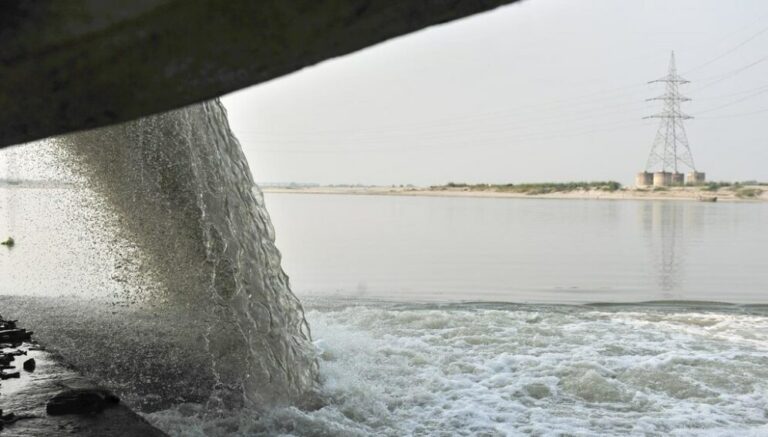
    Image: Neil Palmer (IWMI)

    Sri Lanka: UN Report Describes Alarming Rights Situation

    UN’s human rights body has recommended targeted sanctions on Sri Lankan rights violators, pursuing justice for international crimes and providing asylum for Sri Lankans at risk of persecution.

    The report by the United Nations High Commissioner for Human Rights on Sri Lanka shows the rights situation in alarming decline and contradicts government claims of improvement, Human Rights Watch said today. The report, issued on February 25, 2022, documents discrimination against religious and ethnic minorities and security forces’ targeting of civil society groups, while accountability for past abuses has been blocked.

    UN member states should carry out High Commissioner Michelle Bachelet’s recommendations, including by imposing targeted sanctions on alleged Sri Lankan rights violators, pursuing justice for international crimes committed in Sri Lanka through universal jurisdiction, providing asylum for Sri Lankans at risk of persecution, and supporting the UN Accountability Project mandated by the Human Rights Council in 2021. The UN should apply human rights due diligence standards in its engagement with the Sri Lankan security forces, and review Sri Lanka’s contributions to UN peacekeeping operations.

    “The Sri Lankan government has responded to international scrutiny of its rights record with a false and misleading public relations offensive,” said Meenakshi Ganguly, South Asia director at Human Rights Watch. “UN member countries should redouble their efforts to press the Sri Lankan government to make real progress on rights.”

    Sri Lanka’s devastating civil war, from 1983 to 2009, between the government and the separatist Liberation Tigers of Tamil Elam (LTTE) resulted in numerous abuses by both sides. The UN documented large-scale war crimes by government forces and the LTTE in the final months of the war. Instead of providing accountability for abuses, the current government, led by President Gotabaya Rajapaksa, is pursuing policies that are hostile to the Tamil and Muslim communities, while using the security forces to intimidate and suppress human rights activists and the families of victims of enforced disappearance. Abuses, including torture, arbitrary detention, and extrajudicial killings, have continued.

    War crimes, disappearances

    The High Commissioner noted in her report that the current government “has continued to demonstrate its unwillingness to recognise those serious international crimes and pursue accountability,” and instead has appointed “some military officials who may have been implicated in alleged war crimes into the highest levels of Government.” Those who held command responsibility for alleged violations include President Rajapaksa, Defense Secretary Kamal Gunaratne, and the army chief, Gen. Shavendra Silva.

    The UN report highlights the case of former Admiral Wasantha Karannagoda, who was charged in connection with the enforced disappearance of 11 people in 2008 and 2009 until the attorney general dropped the charges in August 2021. In December, President Rajapaksa appointed him a provincial governor.

    The High Commissioner described a growing militarization of civilian government functions, including law enforcement. She highlighted the large number of military checkpoints in the Tamil majority Northern Province, where there are “complaints of discriminatory treatment or harassment… particularly for women.” In the Eastern Province, the UN recorded 45 land disputes involving government officials and members of minority communities between January and November 2021. Bachelet found that minority communities fear that a government program to identify and construct Buddhist sites is “being used to change the demographic landscape of the [eastern] region.”

    Targeting civil society

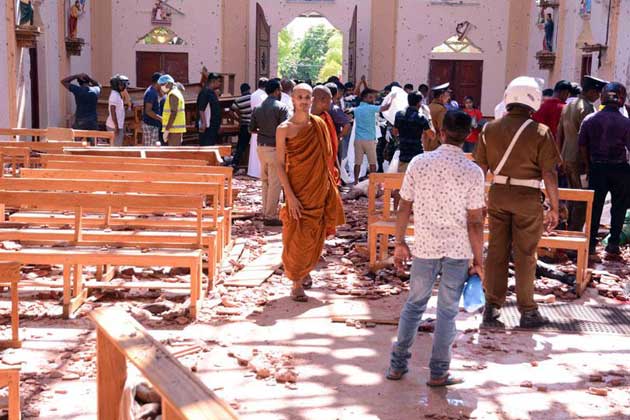
    In addition to Tamils and Muslims, Christians also face abuses and discrimination. Bachelet wrote that the victims of the 2019 Easter Sunday bombings, in which a militant Islamist group targeted churches and hotels, killing over 260 people, “continue to call urgently for truth, justice, reparation for victims and a full account of the circumstances that permitted those attacks, in particular the role of the security establishment.” On February 18, a former senior police investigator filed a petition in the Supreme Court alleging that military intelligence officers had sought to protect the bombers prior to the attacks.

    The authorities have continued to target civil society groups, including human rights defenders and the families of victims of past violations who are campaigning for justice, Bachelet found. Activists are “regularly visited in their offices or homes or called by the police for inquiries,” while, in the north and east, “[o]rganisations report being unable to work without surveillance” and have to “get approval from the [government] district secretariat for any activity.”

    Abusive law

    Bachelet also detailed how the authorities have repeatedly sought to prevent members of the Tamil community from commemorating those who died in the civil war, while “[r]eports indicate that at least 70 people have been arrested under the Prevention of Terrorism Act (PTA) for sharing social media posts commemorating victims of the war.”

    The PTA has been used for decades to enable prolonged arbitrary detention and torture. A recent Human Rights Watch report documented that the Rajapaksa administration has used the law to target Tamils and Muslims, as well as civil society figures, including lawyers, journalists, and opposition politicians. On February 10, amid growing international pressure, including from the European Union, the Sri Lankan government submitted amendments to the law.

    In her report, High Commissioner Bachelet found that the “proposed amendments do not comply fully with Sri Lanka’s international human rights obligations and leave intact some of the most problematic provisions of the PTA,” and said that the government should address the “five key benchmarks identified by seven Special Procedures [UN experts] mandates… as ‘necessary prerequisites’ to ensure the PTA is amended to be compliant with international law obligations.”

    On March 2, UN rights experts said the proposed amendments fell short of Sri Lanka’s international human rights obligations. They said there should be an immediate moratorium on the use of the law and that “[t]he actions of the Sri Lankan Government call into question its commitment to reform.”

    Targeting minorities, protecting violators

    Foreign Minister G.L. Peiris has told diplomats that the Office of Missing Persons, which was set up in 2017 to establish what happened to victims of enforced disappearance, and the Human Rights Commission of Sri Lanka, are part of a domestic effort to provide “accountability” and “meaningful reconciliation.”

    However, the UN High Commissioner found that the policy of the Office of Missing Persons “seems to be aimed at reducing the case load and closing files rather than a comprehensive approach to establish the truth and ensure justice and redress to families.” In October, the Global Alliance of National Human Rights Institutions found that the status of the Human Rights Commission of Sri Lanka should be downgraded, due to its lack of independence from the government.

    “The Sri Lankan government is actively targeting minorities and civil society groups, while it protects alleged rights violators and undermines the rule of law,” Ganguly said. “Victims of abuses and vulnerable groups are depending on the United Nations and Sri Lanka’s international partners to keep up the pressure, to help protect what remains of civil society space, and to push for justice and accountability.”