More

    Eight polio workers killed in Afghanistan

    Eight people, all part of a polio vaccination drive, were killed in simultaneous attacks in Afghanistan on Wednesday, say reports arriving from Kabul.

    Eight polio vaccination workers in four locations in northern Afghanistan were killed today while administering polio vaccinations on Thursday, according to reports arriving from Kabul today.

    The simultaneous attacks in three different districts indicate a well-thought out and orchestrated killings. The murders were carried out in the districts of Taloqan, Kunduz and Emamsahed.

    A member of a vaccination transit team was killed in Taloqan district in the province of Takhar. In the following hours, another four members of a campaign and vaccination team visiting homes were killed in two separate incidents in the city of Kunduz city. Two vaccinators and a social mobilizer were killed in Emamsaheb district, not very far from Kunduz city.

    Polio vaccinators and workers undertake a risky job in Afghanistan which has a history of killing of polio workers. But workers had begun to feel safe till nine polio workers were killed in 2021 while carrying out their work.

    Thursday’s attacks on polio workers are the workers since nationwide campaigns resumed in November last year.

    The United Nations office issued a statement condemning the attacks. “We are appalled by the brutality of these killings, across four separate locations,” the statement read, adding, “This is not the first time health workers have come under attack.”

    The UN has responded by suspending the national polio vaccination campaign in Kunduz and Takhar provinces.

    Violation of humanitarian law

    Calling such attacks a violation of international humanitarian law, the UN said, “This senseless violence must stop immediately, and those responsible must be investigated and brought to justice.”

    Ramiz Alakbarov, the Secretary-General’s Deputy Special Representative for Afghanistan, took to Twitter to express his condemnation of the killings, iterating that the attacks and assassinations were a violation of international humanitarian law.

    The director general of the World Health Organization, Tedros Adhanom Ghebreyeus, has also expressed his profound shock.

    “We extend our deepest condolences to their families and colleagues,” he wrote on Twitter, imploring that health workers should not be targeted.

    But all UN official’s messages were silent about mentioning the Taliban for any role in the attacks.

    Children suffer most

    The polio vaccination campaign in Afghanistan is supported by WHO, together with the UN Children’s Fund, UNICEF and other national and international partners.

    The agencies had planned to target nearly 10 million children under the age of five years across the country this month, with four more rounds scheduled for the rest of the year.

    Ahmed Al-Mandhari, WHO’s regional director for the Eastern Mediterranean, said the suspension of the programme in Kunduz and Takhar provinces leaves thousands of children unprotected and exposed to a life-threatening disease that can result in permanent paralysis.


    Image: A child is vaccinated against polio, in Kandahar, Southern Afghanistan.
    Courtesy, UNICEF  /  Frank Dejongh

    Women’s voices raised against hate in India

    The Fearless Collective is a movement that helps citizens move from fear to love through the creation of participatory art in public space.

    By Mehru Jaffer / Inter Press Service

    More and more women from different walks of life and corners of the world are raising their voices against the treatment of minorities in India today.

    “Unity and the safety of citizens is the first and foremost condition of a country’s security,” Roop Rekha Varma, former vice-chancellor of Lucknow University (LU), told IPS.

    With Ramesh Dixit, a former professor LU, Varma walked into a local police station to file a police report against hate speech against those who have threatened to kill Muslims in India.

    In a recent case, provocative speeches allegedly calling for a genocide of Muslims were made at a December 2021 conclave held in the Himalayan town of Haridwar.

    “If 100 of us become soldiers and are prepared to kill two million (Muslims), then we will win … protect India, and make it a Hindu nation,” said Pooja Shakun Pandey, a senior member of the right-wing Hindu Mahasabha political party in a video recording of the event.

    Pandey, Wasim Rizvi alias Jitendra Narayan Tyagi, Yati Narsinghanand Saraswati, and Sagar Sindhu Maharaj are facing hate speech charges for their utterances.

    Varma is shocked at rising incidents of unprovoked targeting of Muslims, including Muslim women, in recent times.

    Sunita Viswanath, founder and executive director of Hindus for Human Rights, a US-based civil society organization, is equally anxious.

    Tryst with hate on overdrive

    “Muslim women in India are being barred from entering college for wearing the hijab. This is a country where the Prime Minister rode to power promising equal rights for women. Clearly, not everyone is equal. If this is not apartheid, please tell what is,” Viswanath says. She referred to the controversy that erupted in January when a government-run college in the Udupi district of Karnataka state barred girls from attending lectures for wearing headscarves. The matter is now under judicial review.

    Along with 16 other civil society organizations in the US, Viswanath organized two Congressional briefings on India’s treatment of Muslims.

    “We are US citizens of Indian origin, and we have the power to influence and to move US lawmakers and the Biden Administrations to speak out,” says Viswanath on social media. She feels that the world needs to understand that something is wrong in India, that India is on a perilous path.

    “India’s tryst with hate is on overdrive. The only way we can fight systematic hate is to stand by India’s tried and tested secular fabric,” Saumya Bajaj told IPS on the phone. Bajaj is associated with Gurgaon Nagrik Ekta Manch (GNEM), a Delhi-based group for unity among citizens.

    “Terrorizing Muslims and Christians on a daily basis seems to be the new norm. We, as citizens, can no longer afford to remain silent spectators to this macabre celebration of hate engulfing us?” reads a circular, inviting citizens to say no to hate mongers.

    GNEM demands that the police investigate all violence cases against fellow citizens, including online abuse.

    Majoritarian hate against minorities

    Nayantara Sahgal, 94, an award-winning Indian, says she does not recognize the new India.

    “Today, that India is disappearing. My country is unrecognizable. It seems like a foreign country full of hatred and exclusion. There is a deep slide in democracy. It is utterly despairing. Yet we cannot be silent. A writer has to speak loud and clear,” the former vice president of PEN International said in a recent interview.

    Booker Prize-winning author and essayist Arundhati Roy fears that Hindu nationalism could break India into little pieces like Yugoslavia and Russia. The hope is that ultimately the Indian people will resist what she calls the fascism of the ruling party.

    Sahgal is pinning her hopes on the elections in five Indian states, including Uttar Pradesh (UP), until 7 March.

    In UP, interfaith marriages have been restricted in recent times. Muslim men married to Hindu women have been harassed by vigilante mobs and often arrested by the police. Many online attempts to humiliate and terrorize Muslim women continue.

    Sahgal is the daughter of Vijay Laxmi Pandit, sister of Jawaharlal Nehru, first prime minister of independent India. She is also the widow of the late bureaucrat Edward Nirmal Mangat Rai, an Indian Christian. Today she is concerned about the safety of her Christian relatives and Muslim friends as incidents of majoritarian hate against minorities peak.

    Time to speak up

    Sabika Naqvi, community and advocacy head at The Fearless Collective, says that vocal and assertive Muslim women have woken up in India to find their names on Auctioning apps – from Sulli Deals over the last two years to Bulli Bai. The call to rape and kill Muslim women is routine, and efforts to dehumanize Muslim women is on the rise, she says.

    “They fear our ability to write, to speak, to journal, to dream, articulate, assert, organize, and fiercely fight the oppressors. They either sexualize us, try to act as our messiahs or plot to kill. But we are here to conquer the world. We are lawyers, poets, journalists, actors, activists, entrepreneurs, scholars and much more,” says Naqvi, adding that this is not just a ‘prank’ or mere ‘bullying’ but harassment that Muslim women face every day.

    The Fearless Collective is a movement that helps citizens move from fear to love through the creation of participatory art in public space.

    Naqvi feels that the time has come to speak up and ensure that solidarity voices are louder than those who support hatred.


    This piece has been sourced from Inter Press Service

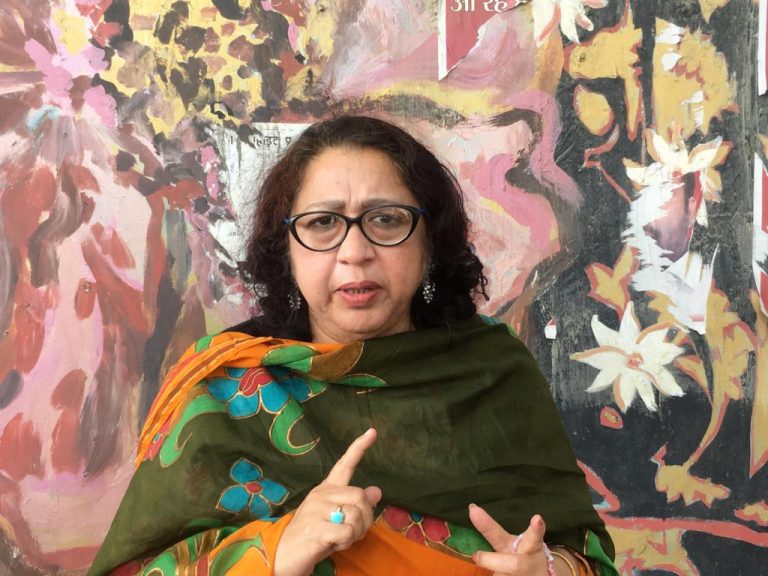
    Image: Tahira Hasan poses under the Fearless Collective public wall artwork.
    Photograph by Mehru Jaffer/IPS 

    Global road safety crisis: three questions to ask to help solve it

    Unlike COVID-19, road traffic injuries are the leading cause of death from people between the ages of 5-29. And, with an estimated 1.35 million fatalities and 50 million non-fatal injuries every year, unsafe vehicles and roads affect everyone.

    By Nneka Henry

    When we think about global crises, road safety isn’t one that comes to mind. The reality is that unsafe roads is a health crisis gone rogue.

    Unlike the COVID-19 pandemic, road traffic injuries are the leading cause of death from people between the ages of 5-29. And, with an estimated 1.35 million fatalities and 50 million non-fatal injuries every year, unsafe vehicles and roads affect everyone and impact several areas of development – including environmental sustainability.

    In 2015, the United Nations raised the alarm. The 2030 Global Development Agenda expressly recognizes that road safety can be improved by governments providing access to safe, affordable and “greener” ways of moving, including public transport. (Sustainable Development Goal 11.2)

    There are plenty of things that the UN is doing to solve this global crisis, but it cannot solve it alone. Here are three questions to spur action towards making roads safer for road users everywhere.

    How committed are governments to solving the road safety crisis?

    To solve this crisis, we need a show of commitment, especially from governments. One way of doing that is for leaders across the developed and developing world to take an active role in safe and sustainable mobility.

    The UN General Assembly High-Level Meeting on Improving Road Safety on 30 June 2022 in New York could be the moment in history when UN member states commit to consciously prioritize and fund a development assistance package of safe and clean mobility measures in low- and middle-income countries.

    This package could include designing and implementing safe modes of transport that are equally low-emission solutions such as affordable public transportation; accessible walking and cycling lanes; or safe and clean used vehicle standards.

    It’s time for governments to show support, attend the High-Level Meeting and make the case for why road safety is a national priority and a priority for development assistance. And, in turn, for G7 countries to include road safety as a priority in the G7 Summit Communique 26-28 June 2022, just days before the UN High-Level Meeting on Road Safety.

    How can we collectively build capacity in countries with high road fatalities?

    The WHO together with UN Regional Commissions have helped structure a targeted action plan on road safety for the global community to rally around and implement. However, with more than 90% of road traffic fatalities occurring in low- and middle-income countries, with Africa as the hardest hit region, mobilizing finances to implement the plan remains a critical challenge.

    The UN is crowding in and around a wide range of partners to ensure the transfer of technical knowledge, best practices, and financial resources to the countries that need help the most.

    Since 2018, the United Nations Road Safety Fund has been playing a coordinating role among UN agencies to support governments through projects to improve land use for walking and cycling lanes, driving licensing, vehicle inspection, speed enforcement, safe school zone design and emergency post-crash response systems.

    FIA Foundation, the World Bank’s Global Road Safety Facility, the International Federation of the Red Cross, Bloomberg Philanthropies, NGOs, regional Road Safety Observatories and major government and corporate funders are among those consulted and engaged in designing and delivering these projects.

    From Armenia to Paraguay to West Africa, UNRSF now serves 30 countries with new calls for proposals to respond to country-led priorities that catalyze investments for better road safety.

    How do we advocate for effective road safety financing?

    Awareness-raising and advocacy of road safety financing is a game changer. The UN’s Special Envoy for Road Safety, Jean Todt’s, advocacy efforts helped launch the UN Road Safety Fund and raised close to $20 million dollars for related UN road safety performance reviews in Africa and capacity building projects in developing countries across the world.

    Organisations such as the Global Alliance of NGOs for Road safety are there to support and empower local groups and community-based organisations working on road safety. And at the grassroots we can replicate and take part in global advocacy initiatives such as the biennial UN Global Road Safety Week.

    The week’s 2021 edition, through a Streets for Life campaign, called for 30 km/h speed limits worldwide on streets with mixed vehicular and pedestrian traffic. Or the Global Road Safety Film Festival on 21-22 February 2022, which screens short films from all over the world to help explain the challenges and solutions to improve road safety.

    For the Second Decade of Action for Road Safety 2021 – 2030, success hinges on the marriage between safe, sustainable mobility and targeted financing, which promises to bear fruit for people and the planet. Together with UN efforts, it’s time we all started doing more about it.

    Asking the right questions is the start of a positive disruption to the global road safety crisis.


    Nneka Henry is head of the UN Road Safety Fund

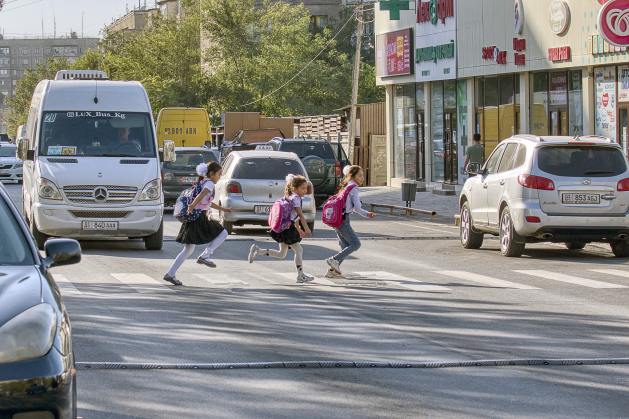
    Image: UNRSF / Victor Lacken

    This piece has been sourced from Inter Press Service

    Rising incomes do environment more harm than population growth

    The number of people on the planet more than tripled since 1950 and could reach nearly 11 billion by the end of the century, says the Global Population Growth and Sustainable Development report.

    Higher incomes contribute more to environmental degradation than population growth, a report by the UN Department of Economic and Social Affairs (DESA) has revealed.

    The Global Population Growth and Sustainable Development report, launched on Wednesday, is the latest in a series on major demographic trends.

    The number of people on the planet more than tripled since 1950 and could reach nearly 11 billion by the end of the century, according to the study, which examines the links between population growth and the social, economic and environmental dimensions of sustainable development.

    Rich nations must act 

    “Whereas population growth magnifies the harmful impact of economic processes on the environment, the rise in per capita income has been more important than population growth in driving increased production and consumption and emissions of greenhouse gases,” the authors said.

    “More affluent countries bear the greatest responsibility for moving rapidly to achieve net-zero emissions of greenhouse gases and for implementing strategies to decouple human economic activity from environmental degradation.”

    Other key findings include that most of the world’s future population growth will take place in developing countries.

    “Given the intrinsic momentum of population growth, the range of plausible trajectories for the size of global population is quite narrow over the next few decades,” DESA says. “For this reason, increased action by Governments to limit the growth of populations can do little to mitigate the forces of climate change between now and 2050.”

    The report says that low-income and lower-middle-income countries need rapid and sustained growth of their economies to achieve the Sustainable Development Goals (SDGs). “Wealthy countries and the international community can help to ensure that these countries receive the necessary technical and financial assistance so that their economies can grow using technologies that will minimize future greenhouse gas emissions,” says DESA.

    Success and failure

    Populations are rising rapidly because people are living longer, thanks to improvements in public health, nutrition, personal hygiene and medicine.

    The authors described this as “one of the greatest successes of social and economic development”.

    However, rapid population growth also represents failure to ensure all people have the knowledge, ability and means to determine whether and when they want to have children.

    Relatedly, providing access to reproductive health care, particularly for women, can accelerate social and economic development and help to disrupt intergenerational cycles of poverty.

    ‘Window of opportunity’

    Meanwhile, countries with relatively high levels of fertility could invest in education and health, as well as promote full employment for all.

    A resulting decline in fertility could create a “window of opportunity” for accelerated economic growth.

    Other findings reveal how developing countries will require support to reduce future emissions as their economies advance, as well as the necessary technical and financial assistance.

    Food systems will also have to become more sustainable to both meet growing needs and limit environmental damage.


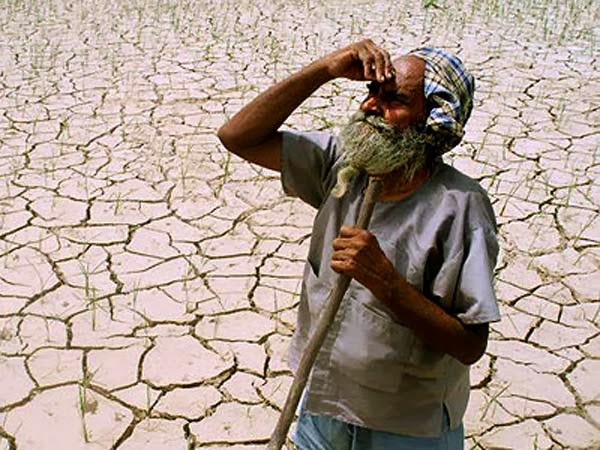
    Image: Wikimedia; By Ranjith66

    If security council fails, violation of UN charter should go before international court of justice

    The UN security council faces the threat of a double veto by Russia and China against any possible sanctions or resolutions condemning Russia for an attack on Ukraine – and a resulting violation of the UN charter.

    By Thalif Deen / Inter Press Service

    The widening political crisis in Ukraine, which has taken a turn for the worse with the declaration of two new independent states — the Donetsk People’s Republic and the Luhansk People’s Republic —  is likely to prove once again the ineffectiveness of the 15-member UN Security Council (UNSC).

    The UN’s most powerful political body, whose primary mandate is the maintenance of international peace and security, has remained paralyzed because of the threat of a double veto by Russia and its new found ally China against any possible sanctions or resolutions condemning Russia for an attack on Ukraine’s sovereignty and its territorial integrity – and a resulting violation of the UN charter.

    UN Secretary-General Antonio Guterres, who abruptly cut short an overseas trip, declared: “Let me be clear: the decision of the Russian Federation to recognize the so-called “independence” of certain areas of Donetsk and Luhansk regions is a violation of the territorial integrity and sovereignty of Ukraine.”

    “Our world is facing the biggest global peace and security crisis in recent years – certainly in my tenure as Secretary-General. The principles of the UN Charter are not an a la carte menu. They cannot be applied selectively”.

    He said the UN’s 193 Member States have “accepted them all and they must apply them all”.

    “I am also concerned about the perversion of the concept of peacekeeping,” he said, criticizing the Russians, who claimed that any troop movements in and around Ukraine were meant for purposes of “peacekeeping.”

    Breach of international peace

    Andreas Bummel, Executive Director, Democracy Without Borders, told IPS the Russian invasion of Donetsk and Luhansk is a blatant military aggression and a clear violation of the UN Charter.

    President Putin, he pointed out, has put into question the existence of Ukraine as an independent state. “Russia’s actions obviously represent a breach of international peace and security which must trigger international sanctions.”

    It is not acceptable, he argued, that Russia can use its veto right in the Security Council to stop an effective response of the UN or even a condemnation. As Russia is acting only in its own interest, the use of the veto in this case is a misuse of this privilege, he noted.

    The International Court of Justice (ICJ) in The Hague should be called upon to examine whether such a misuse can be reconciled with the UN Charter, said Bummel.

    “In addition, given the Security Council’s impotence in this situation, the UN General Assembly needs to assume its subsidiary competence as the UN’s highest body”.

    Under the principle of “Uniting for Peace”, he pointed out, an emergency meeting of the General Assembly should be held that overrules a Russian veto in the Security Council and which mandates sanctions or other measures it deems necessary.

    Europe’s security architecture

    Speaking from the White House, US President Joe Biden condemned President Putin for his aggression against Ukraine, saying that Russian action is “a flagrant violation of international law and demands a firm response from the international community.

    The US imposed a set of new sanctions — particularly against Russian oligarchies, their families and Russian banks.

    “Who in the Lord’s name does Putin think gives him the right to declare new so-called countries on territory that belonged to his neighbors? Biden asked.

    Putin, in an address to the nation, claimed that all of Ukraine was “created by Russia” and described the country’s pro-Western government as a threat to Russia.

    James Paul, former Executive Director the New York based Global Policy Forum and author of “Of Foxes and Chickens” — Oligarchy and Global Power in the UN Security Council” told IPS the veto power certainly tends to freeze Security Council action whenever the core interests of the five Permanent Members are in conflict.

    “This has always been a deep problem of the Council and prevented it from being effective, not only when vetoes are cast but also when they lurk in the background and sabotage action”.

    In the case of Ukraine, he argued, the problem is not just in the present moment of high danger but in the whole long build-up that has centered on the post-Soviet security architecture in Europe and the eastward expansion of NATO.

    In theory, he pointed out, this might have been managed by the Council and a security system for Europe built that would have included Russia. “Instead, we saw a whole series of moves by the United States that the Russians saw, not unreasonably, as threatening”.

    P5’s arbitrary veto powers

    Activities in the Council and veto-use have exacerbated US-Russian hostility rather than easing it, said Paul, a prominent figure in the NGO advocacy community at the UN and a well-known speaker and writer on the UN and global policy issues.

    Meanwhile, the UNSC has remained politically impotent because the veto powers of the big five, namely the US, UK, Russia, China and France (P5), have always been a major obstacle in resolving some of the world’s ongoing military conflicts and civil wars.

    Asked about the deadlock and the potential veto by Russia, US Ambassador Linda Thomas-Greenfield said: “We get things done by engaging every single day with other countries, because sometimes the veto power isn’t as powerful as you might think when other countries are unified in expressing their concerns”

    Mandeep S. Tiwana, Chief Programmes Officer at CIVICUS, a global alliance of over 9,00 civil society organisations in more than 175 countries, told IPS the veto power of the permanent members of the Security Council has been a major impediment to saving future generations from the scourge of war as promised in the UN Charter.

    Selective invocation of outrage by the P5 over military aggression, war crimes and crimes against humanity is a major impediment to achieving peace in our times. Civil Society groups, he said, have lobbied hard for many years to get the P5 to voluntarily give up their arbitrary veto powers to no avail.

    Veto: a political disease

    Ironically, the P5 who are supposed to maintain international peace and security continue to be major producers and proliferators of weapons of war which fuel major conflicts, he declared.

    Elaborating further, Paul said the Council has been a wrestling ring, a stage for enacting battles and for staging arguments to win over public opinion and media coverage.

    The US has been able to count on the UK and France much of the time and whip many elected members of the Council into line as part of this drama.

    “So, what we see today is a Council that is (as so often in the past) sidelined while other initiatives like the Franco-German effort take place beyond the UN. We see Germany acting more robustly than in the past, as the most powerful European state. The Europeans can’t use the Council, so they are using other means”.

    “The veto is and always has been the Council’s political disease”, declared Paul.

    In the 76-year history of the UN, the US has exercised an estimated 82 vetoes, and USSR 91, and its successor state, the Russian Federation about 28 vetoes.

    Decolonization, not recolonization

    US Ambassador Thomas-Greenfield, speaking at a Security Council Emergency Meeting on Ukraine, told delegates, that President Putin asserted that Russia today has a rightful claim to all territories – all territories – from the Russian Empire; the same Russian Empire from before the Soviet Union, from over 100 years ago.

    “That includes all of Ukraine. It includes Finland. It includes Belarus and Georgia and Moldova, Kazakhstan, Kyrgyzstan, and Tajikistan, Turkmenistan, Uzbekistan, and Lithuania, Latvia, and Estonia. It includes parts of Poland and Turkey,” she said.

    In essence, Putin wants the world to travel back in time. To a time before the United Nations. To a time when empires ruled the world. But the rest of the world has moved forward. It is not 1919. It is 2022, she added.

    “The United Nations was founded on the principle of decolonization, not recolonization. And we believe the vast majority of UN Member States and the UN Security Council are committed to moving forward – not going back in time”.

    “We must all stand with Ukraine in the face of this brazen attempt to usurp Ukraine’s sovereign territory. There can be no fence-sitters in this crisis,” she declared.


    This piece has been sourced from Inter Press Service

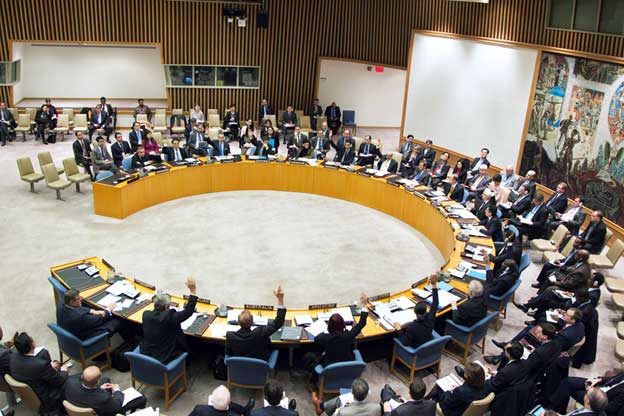
    Image: UNAMA

    Stop weapons supply to Myanmar, rights expert urges

    Conditions have ‘worsened’ in Myanmar following a military coup in February 2021, according to a UN human rights rapporteur.

    Weapons exports to the military rulers in Myanmar by UN Member States must stop, the UN independent expert on the human rights situation in the country said on Tuesday.

    In a report to the UN Human Rights Council in Geneva, Special Rapporteur Tom Andrews insisted that these arms had been used against civilians.

    He also called for the UN Security Council to convene an emergency session to vote on a resolution to ban this trade.

    Transfers ‘shock the conscience’

    “It should be incontrovertible that weapons used to kill civilians should no longer be transferred to Myanmar. These transfers truly shock the conscience,” Mr. Andrews said in a statement.

    “Stopping the junta’s atrocity crimes begins with blocking their access to weapons. The more the world delays, the more innocent people, including children, will die in Myanmar.”

    Mr. Andrews identified China, Russia and Serbia as countries that have supplied weapons to Myanmar’s military rulers since they seized power in a coup last February.

    The weapons include fighter jets, armoured vehicles, rockets and artillery.

    Families in the crosshairs

    “The people of Myanmar are imploring the UN to act,” said Mr. Andrews. “They deserve an up-or-down vote on a Security Council resolution that will stop the sale of weapons being used to kill them. Too many families are finding themselves in the crosshairs of weapons of war that Member States are supplying. This must end.”

    The report also names countries that have authorized weapons transfers to Myanmar since 2018, a time he said when military atrocity crimes against the Rohingya ethnic minority were widely documented.

    It further calls for coordinated action by countries to cut the junta’s access to revenue.

    Mr. Andrews urged the Security Council to take action.

    “I appeal to Member States of the UN Security Council who are appalled by the killing of Myanmar civilians to put forward a resolution to stop it,” he said.

    “Transparency matters. The Security Council should consider, at the very least, a resolution to ban weapons that are being used by the Myanmar military to kill innocent people.”

    Special Rapporteurs like Mr. Andrews are appointed by the UN Human Rights Council to monitor and report on specific country situations or thematic issues.

    They operate in their individual capacity and are neither UN staff nor do they receive a salary from the Organization.


    Image: ADB

    Beginning to gather data on plastics, for a start

    Research is on to estimate the quantity of marine plastic litter. There is no creditable nor dependable data to drive informed decision on handling marine litter.

    By Aditi Angelina Patro

    India is set to undertake its first proper scientific estimation of the extent of marine litter, over 60 years after Rachel Carson’s 1962 book, Silent Spring raised concern about plastic debris in the oceans.

    A project to monitor the temporal and spatial distribution of marine litter along Indian coasts and adjacent seas has been initiated in a joint partnership between the German development agency, GIZ, and the ministry of environment and forests the ministry of housing and urban affairs.

    The estimation of quantity is part of the Indo-German collaboration, “Circular Economy Solutions Preventing Marine Litter in Ecosystems” project. It will develop and use digital technologies to quantify and track marine litter, monitor leakages in the selected ecosystems, and work on implementing extended producer responsibilities.

    Yet, despite ambitious goals to reduce marine plastic pollution, work to combat plastics reaching the oceans are mere end of pipe measures, mainly in the form of beach clean-ups.

    The dearth of accurate data on plastic waste, in particular marine litter, has been a foremost reason.

    This is a first step towards the formulation of a national policy on marine debris that threatens ecosystems and affects public health around the globe.

    Currently, there is a shortage of data on marine litter sources, pathways, transport processes, and quantification of the amount of litter entering the marine environment.

    The government had announced its intent to phase out single use plastics by 2022.

    Also read: High quantities of marine litter noticed during monsoon, minister tells Rajya Sabha

    Plastics, river, seas

    The study will estimate the level of contamination to understand the effect of different types of polymers (micro-plastics) on fisheries and other forms of marine life.

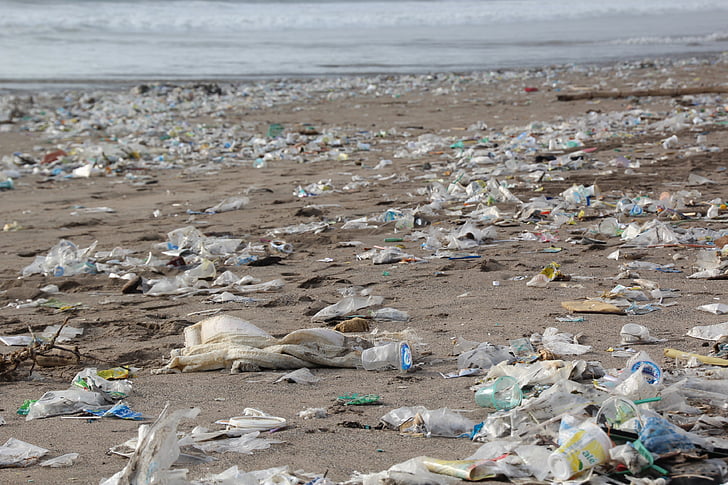
    Whilst accurate data on plastic waste and marine litter in particular is largely unavailable, the extent of the menace is visible in the form of illegal landfills, plastic piles along roadsides, rivers and beaches, and clogged drainage systems.

    Anywhere between 15 and 20 per cent of all plastics enter oceans via riverine ecosystems. 90 per cent of these are contributed by 10 of the world’s most polluting rivers, including Ganga and Brahmaputra.

    About 40 per cent of the plastic waste generated remains uncollected. Three of the ten rivers transporting most of the world’s plastic waste to the oceans are located in India. The plastics in these rivers come from the states of Uttar Pradesh, Tamil Nadu and Kerala.

    Research conducted so far indicates that marine litter is spread along the entire water column and sediment, and high quantities are noticed during monsoon due to its spread into coastal water through creeks, rivers and estuaries by rainwater.

    Red Cross: Global support critical for Afghanistan as COVID-19, measles run rampant

    Health facilities have shut down for lack essential medical supplies and funds to pay for utilities and salaries.

    Aid groups have sounded an upcoming health emergency in Afghanistan, warning that the country’s fragile health system will get stretched as rising COVID-19 infections compete with an alarming outbreak of measles in the impoverished, war-torn country.

    This warning comes as a new wave of COVID-19 is surging across Afghanistan. It has prompted an urge for global support to curb the virus from humanitarian organisations. According to the World Health organisation, there have been over 172,000 confirmed cases of COVID-19 and over 7,500 deaths in Afghanistan since 3 January 2020.

    The International Federation of Red Cross (IFRC) on Wednesday called for worldwide support for treatment and testing services, as well as for vaccinations to slow the spread of the coronavirus.

    “A new wave is hitting Afghanistan hard,” the IFRC said in a statement. “Testing is inadequate, and the World Health Organization reports that almost half of tested samples are coming back positive, indicating an alarming spread of the virus.”

    With only 10 per cent of people fully vaccinated according to Our World in Data, the country’s fragile health system is struggling to cope with the surge in COVID-19 infections after dozens of COVID-19 health facilities were forced to close due to lack of medicines, essential medical supplies, and a lack of funds to pay for utilities and salaries of health workers.

    Impact of sanctions

    “Fewer than 10 of the country’s 37 public COVID-19 health facilities remain functional,” the IFRC statement reads, adding, “they are unable to keep up with demand.”

    The Red Cross in Afghanistan is ramping up services at its health clinics across Afghanistan and its COVID-19 hospital in Kabul while supporting nationwide vaccination efforts for preventing the spread of the disease.

    Mawlawi Mutiul Haq Khales, the organisation’s president in Afghanistan, has said that the number of COVID-19 infections is increasing with its spread from cities to remote corners of the country. “The international community needs to open up the doors to support critical healthcare, testing and other essential services before it’s too late for the people of Afghanistan,” he said.

    “It is vital to increase the number of functional COVID-19 health facilities so that pressure can be eased on the few functioning hospitals.”

    International sanctions have severed hundreds of millions of dollars in foreign aid that is critical for maintaining the country’s health care system, including forcing the closure of dozens of COVID-19 case management facilities.

    Measles outbreak

    Compounding the health crisis, a measles outbreak has infected thousands and killed dozens of people last month alone in Afghanistan.

    The simultaneous outbreak of measles has made matters worse. As the International Red Cross’ Necephor Mghendi says, “The measles outbreak is alarming since Afghanistan is in the middle of one of the worst droughts and food crises in decades, leaving children malnourished and far more vulnerable to the highly contagious disease.”

    Measles is endemic in Afghanistan and the WHO voiced its concern over the sharp rise in measles cases in the country. It said that the number of cases of measles and deaths caused by measles among increased by 18 per cent during the last week of January. The number of cases swelled in the first week of February to 40 per cent, the WHO had said.

    The IFRC is urgently appealing for about US$ 70 million to support the Afghanistan’s health services and emergency relief and provide assistance to more than 1 million people in the country.


    Image: Afghanistan Red Crescent medical teams have ramped up their work to provide primary health care services in remote districts across Afghanistan – ARCS

    Hefazat-e-Islam and the rise of Islamic fundamentalism in Bangladesh

    Although Bangladesh has now adopted a zero-tolerance approach to extremism, efforts are lacking to counter violent ideology and behaviours by non-state actors. The conventional approach to countering terrorism is insufficient to prevent ideologically motivated violence.

    By Roshni Kapur

    Islamic fundamentalism and violence is on the rise in Bangladesh. Anti-France protests, violent protests during Indian Prime Minister Narendra Modi’s visit and communal violence in Comilla all demonstrate the influence Islamist radicals have, particularly Hefazat-e-Islam. The rise of hardline Islamic forces poses a challenge to the Bangladeshi government on whether it will protect its secular principles or continue its patronage politics.

    Hefazat-e-Islam was formed in January 2010 in Chittagong under the leadership of Ahmad Shafi to safeguard Islam from alleged anti-Islamic policies and to end secularism. The group’s inception was triggered by the 2009 Women Development Policy draft that proposed giving equal inheritance rights to women. The group is comprised of Sunni Islamists and their vast madrassa network and supporters. Although Hefazat-e-Islam is not a political party, the leaders have openly lobbied for political and legal reforms. The group publicly opposed the secular judicial system, called for a revolution and creation of an Islamic State in Bangladesh under Sharia Law.

    In 2013, Hefazat-e-Islam came up with a 13-point agenda, including gender segregation, releasing imprisoned Islamic scholars and opening more space for. They protested against secular activism such as demands for the execution of Jamaat-e-Islami leaders.

    The group’s widespread appeal among the general public forced the government to capitulate, but Hefazat-e-Islam also proved to be a useful political weapon. The Awami League government has used the group to counter the political power of its main political opponent, Bangladesh National Party, and another radical group called Jamaat-e-Islam.

    Costly concessions

    The government has conceded to Hefazat-e-Islam’s demands, including arresting some secular activists on the grounds that they were pursuing ‘anti-Islamic’ activities. In 2017, Dhaka ordered the removal of 17 stories and poems by secular and non-Muslim writers from Bengali textbooks following demands by the group. In the same year, the government removed the Lady Justice statue from the Supreme Court following objections from the group. The following year the government passed a bill recognising Dawra-e-Hadith — an academic degree program given by a top madrassa controlled by Hefazat-e-Islam — as having the same academic credentials as a master’s degree in Islamic studies.

    Prime Minister Sheikh Hasina received the title ‘Mother of the Qawmi’ — referring to Hefazat-e-Islam’s Qawami madrassa — seen by some as an endorsement for her party prior to the 2018 parliamentary elections. Former Hafazat-e-Islam chief Shah Ahmad Shafi had a good working relationship with the government. However, a more hardline faction under the leadership of Junaid Babunagari has come into power following Shafi’s death in 2020. The faction cut off all unofficial communications with the government. Despite the deterioration in ties, the Awami League government still tried to engage the group instead of cracking down on them.

    Bangladesh only changed its stance in March 2021, arresting hundreds of members and supporters of Hefazat-e-Islam for orchestrating wide ranging protests during Modi’s visit celebrating the country’s 50 years of independence. Government offices and properties were damaged in Chittagong and Brahmanbaria in the eastern part of the country. The violence persisted beyond Modi’s visit when a train and some Hindu temples were attacked in Brahmanbaria. The violent protests resulted in the deaths of 11 people and were not only seen as a threat to the government’s legitimacy, but also its bilateral relations with India.

    Religious intolerance

    Still, the Awami League government could not afford to completely dismiss Hefazat-e-Islam and the group’s demands given the sizeable conservative constituency in the country. The government has emboldened the group by ceding to their demands to Islamise Bangladeshi society. The need to appeal to conservative voters has made the group a more powerful force.

    The latest round of violence against the Hindu community in October 2021 raises concerns of growing religious intolerance. The violence was related to a blasphemy allegations that were raised when images of a Quran placed on a Hanuman statue in a shrine in Comilla circulated on Facebook during Durga Puja. Alleged blasphemy has turned into an emotive issue where even the vaguest allegation has resulted in communal violence. The Comilla incident raises worries that groups such as Hefazat-e-Islam can easily galvanise hardliners to target minority groups.

    Although Bangladesh has now adopted a zero-tolerance approach to extremism, efforts are lacking to counter violent ideology and behaviours by non-state actors. The conventional approach to countering terrorism is insufficient to prevent ideologically motivated violence from taking place in the first instance. The government needs to go beyond military and law enforcement efforts. It must look at initiatives involving engagement, prevention, deradicalisation and rehabilitation to reduce Islamic fundamentalism in the country.


    Roshni Kapur is an independent researcher based in Singapore.

    This piece has been sourced from the East Asia Forum of the Australian National University.

    A man in a Myanmar village advocates against men battering their wives

    Ko Aung Lin, a father of three boys, knows exactly what violence against women is because he has committed it himself. Now, he has set out to persuade other men about just how wrong it is.

    Ko Aung Lin, a father of three boys, knows exactly what violence against women is because he has committed it himself. “I once hit my wife when we quarreled, and I never thought it was wrong,” he said.

    Now Ko Aung Lin has volunteered to try to persuade other men that it is indeed wrong, that the domineering-male tradition and culture that they grew up in needs to be changed.

    Ko Aung Lin, a 36-year-old famer and a member of the Mro ethnic group, lives in Ah Htet Myat Lay village, Ponnagyun Township, in Sittwe of Rakhine state in Myanmar’s far west. He is the only man among the 10 volunteers chosen in Rakhine for a joint project by UN Women and United Nations Population Fund to prevent violence against women and girls and help survivors during the COVID-19 pandemic.

    Following a training he received, Ko Aung Lin and the nine women volunteers set out to speak to some 400 people in 20 villages in Ponnagyun township about respecting their partners and to abhor violence.

    The project also involves helping 740 survivors of violence get work and earn incomes and giving cash transfers to another 420 survivors and women at risk of violence so they can be better protected. In addition, the project will refer survivors to legal counsel and psycho-social support services.

    Violence against women deeply entrenched in men’s minds

    Violence against women appears to be an all-too-common problem in Myanmar. At least 21 per cent of ever-married women have experienced physical, sexual or emotional violence from their spouses, according to the Myanmar Demographic and Health survey of 2015-2016. The survey said only 7.8 per cent of survivors 15-19 years old had sought help.

    Ko Aung Lin said the volunteers’ training made him think more about on his own actions and attitudes. He said that he will focus on men and boys when he does the outreach sessions in his village..

    “Being a man myself, I think it will be easier to organize and facilitate this session, and they can also relate to me,” he said.

    “Men think that once you marry a woman, you own her, and that if she doesn’t listen to you, you can blame her and hit her,” he said. “This thinking needs to change. It will be challenging, but to advocate to men and boys to change their perception needs a consistent long-term approach.”

    Customs and cultures

    Ko Aung Lin said his culture sees a woman’s role as being a wife who bears and cares for the children. He said that violence between married couples is common in his village but “men do not think that gender-based violence issues need to be brought up for discussion.”

    He described instances in which husbands could not control their tempers or drank too much, broke the doors when they came home, and beat their wives. In one case, a man beat his wife unconscious.

    And conflicts over gender-based violence are still resolved through customary means, Ko Aung Lin said.

    “Rather than reporting the cases, people pay money or offer livestock to the survivors to solve the issues,” he said. “These practices need to change because the survivors do not get justice through this traditional solution.”

    “My sons are very young, but I will teach them to respect women and girls,” Ko Aung Lin said. “As their father, I have to make myself a good example for them and show respect to my wife and to them, and not use violent means.”