More

    Ukraine crisis: the stakes are high

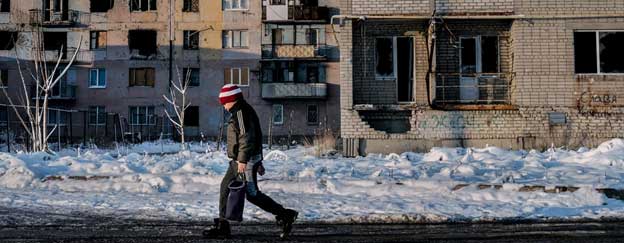
    Around 1.5 million Ukrainians have been forced from their homes since fighting in the far east of the country began in 2014. The UN and other humanitarian organizations are supporting those who have been displaced, as they try to adjust to their new lives.

    By John Burroughs

    If the Ukraine crisis erupts into war – even intensified limited war in Eastern Ukraine with overt Russian intervention – the consequences will be severe and far-reaching.

    A non-comprehensive list includes: vastly greater loss of life due to armed conflict in Ukraine; destabilization of global peace and security, not least the always urgent pursuit of nuclear arms control and disarmament; and impairment of the will and capability for cooperation on climate protection, public health, and other vital matters.

    The proximate cause of the crisis is Russia’s menacing behavior, including deployment of troops and equipment near the border with eastern Ukraine and in Crimea and Belarus, and conducting a nuclear forces exercise in Belarus.

    Especially in context and combined with Putin’s at times bellicose rhetoric, these actions are unlawful threats under the fundamental UN Charter prohibition of the “threat or use of force against the territorial integrity or political independence of any state”.

    In the case of the exercise, it is also an unlawful threat because it is contrary to general international law to threaten the commission of an illegal act – here the use of nuclear weapons.

    The only rational path is diplomacy

    Longer-term causes of the crisis are the utterly reckless declaration, made in 2008, the last year of the second George W Bush term, that NATO membership is in principle open to Ukraine and Georgia; and more broadly the long history since the mid-1990s of US and NATO disregard of Russian security interests and proposals.

    To take just one example, when the first GW Bush administration determined that the US would withdraw from the ABM Treaty, Russia proposed renegotiation of the treaty. The US answer was simple: No.

    The United States then proceeded to establish missile defense facilities in Romania and Poland that Russia, with some reason, regarded as destabilizing.

    The only rational path is diplomacy. At two Security Council meetings on Ukraine, on January 31 and February 17, this was the refrain of all Council members, including Russia.

    Diplomacy is indeed mandated by the UN Charter, which requires member states to “settle their international disputes by peaceful means in such a manner that international peace and security, and justice, are not endangered.”

    Lack of creativity, imagination

    As the Russian response to a US proposal conveyed, there is some common ground for negotiation on such matters as limits on military deployments and regional arms control, conventional and nuclear. Former US Ambassador to Ukraine Michael McFaul surveys possible topics in this recent Foreign Affairs article.

    However, as Russia has been insisting, what is lacking above all is US interest in addressing Russia’s categorical opposition to even the possibility of NATO membership for Ukraine. Instead, the United States has been mechanically saying that foreclosing that possibility is a “non-starter”.

    This displays a lack of the creativity and imagination that diplomats on occasion are quite capable of putting to good use. Among possible courses of action: neutrality for Ukraine; an alternative European security arrangement; a long-term moratorium on NATO expansion; or some combination of the foregoing and other measures.

    Also, a resolution of the status of eastern Ukraine will have to be reached, with the people of that region having a voice in the outcome. Similarly, the status of Crimea will have to be addressed or the issue deferred.

    The stakes are very high. Energetic, creative, and determined problem solving is imperative.


    The writer is Senior Analyst, Lawyers Committee on Nuclear Policy, New York City


    Image: UNICEF / Ashley Gilbertson V 

    Caption: A child walks past a damaged building in eastern Ukraine. Around 1.5 million Ukrainians have been forced from their homes since fighting in the far east of the country began in 2014. The UN and other humanitarian organizations are supporting those who have been displaced, as they try to adjust to their new lives. 

    On a mission to alleviate chronic pain

    MIT scientist Fan Wang’s studies of how the brain controls pain may one day lead to new treatments that could help millions, giving people a chance to get back their control.

    Anne Trafton     |     MIT News Office

    About 50 million Americans suffer from chronic pain, which interferes with their daily life, social interactions, and ability to work. (A 2018 study titled ‘The Prevalence of Chronic Pain among Adults in India’ found that 19.3 per cent of the Indian adult population suffers from chronic pain.)

    MIT Professor Fan Wang wants to develop new ways to help relieve that pain, by studying and potentially modifying the brain’s own pain control mechanisms.

    Her recent work has identified an “off switch” for pain, located in the brain’s amygdala. She hopes that finding ways to control this switch could lead to new treatments for chronic pain.

    “Chronic pain is a major societal issue,” Wang says. “By studying pain-suppression neurons in the brain’s central amygdala, I hope to create a new therapeutic approach for alleviating pain.”

    Wang, who joined the MIT faculty in January 2021, is also the leader of a new initiative at the McGovern Institute for Brain Research that is studying drug addiction, with the goal of developing more effective treatments for addiction.

    “Opioid prescription for chronic pain is a major contributor to the opioid epidemic. With the Covid pandemic, I think addiction and overdose are becoming worse. People are more anxious, and they seek drugs to alleviate such mental pain,” Wang says. “As scientists, it’s our duty to tackle this problem.”

    Sensory circuits

    Wang, who grew up in Beijing, describes herself as “a nerdy child” who loved books and math. In high school, she took part in science competitions, then went on to study biology at Tsinghua University. She arrived in the United States in 1993 to begin her PhD at Columbia University. There, she worked on tracing the connection patterns of olfactory receptor neurons in the lab of Richard Axel, who later won the Nobel Prize for his discoveries of odorant receptors and how the olfactory system is organized.

    After finishing her PhD, Wang decided to switch gears. As a postdoc at the University of California at San Francisco and then Stanford University, she began studying how the brain perceives touch.

    In 2003, Wang joined the faculty at Duke University School of Medicine. There, she began developing techniques to study the brain circuits that underlie the sense of touch, tracing circuits that carry sensory information from the whiskers of mice to the brain. She also studied how the brain integrates movements of touch organs with signals of sensory stimuli to generate perception (such as using stretching movements to sense elasticity).

    As she pursued her sensory perception studies, Wang became interested in studying pain perception, but she felt she needed to develop new techniques to tackle it. While at Duke, she invented a technique called CANE (capturing activated neural ensembles), which can identify networks of neurons that are activated by a particular stimulus.

    Wild idea

    Using this approach in mice, she identified neurons that become active in response to pain, but so many neurons across the brain were activated that it didn’t offer much useful information. As a way to indirectly get at how the brain controls pain, she decided to use CANE to explore the effects of drugs used for general anesthesia. During general anesthesia, drugs render a patient unconscious, but Wang hypothesized that the drugs might also shut off pain perception.

    “At that time, it was just a wild idea,” Wang recalls. “I thought there may be other mechanisms — that instead of just a loss of consciousness, anesthetics may do something to the brain that actually turns pain off.”

    Support for the existence of an “off switch” for pain came from the observation that wounded soldiers on a battlefield can continue to fight, essentially blocking out pain despite their injuries.

    In a study of mice treated with anesthesia drugs, Wang discovered that the brain does have this kind of switch, in an unexpected location: the amygdala, which is involved in regulating emotion. She showed that this cluster of neurons can turn off pain when activated, and when it is suppressed, mice become highly sensitive to ordinary gentle touch.

    “There’s a baseline level of activity that makes the animals feel normal, and when you activate these neurons, they’ll feel less pain. When you silence them, they’ll feel more pain,” Wang says.

    Turning off pain

    That finding, which Wang reported in 2020, raised the possibility of somehow modulating that switch in humans to try to treat chronic pain. This is a long-term goal of Wang’s, but more work is required to achieve it, she says. Currently her lab is working on analyzing the RNA expression patterns of the neurons in the cluster she identified. They also are measuring the neurons’ electrical activity and how they interact with other neurons in the brain, in hopes of identifying circuits that could be targeted to tamp down the perception of pain.

    One way of modulating these circuits could be to use deep brain stimulation, which involves implanting electrodes in certain areas of the brain. Focused ultrasound, which is still in early stages of development and does not require surgery, could be a less invasive alternative.

    Another approach Wang is interested in exploring is pairing brain stimulation with a context such as looking at a smartphone app. This kind of pairing could help train the brain to shut off pain using the app, without the need for the original stimulation (deep brain stimulation or ultrasound).

    Help people get back their control

    “Maybe you don’t need to constantly stimulate the brain. You may just need to reactivate it with a context,” Wang says. “After a while you would probably need to be restimulated, or reconditioned, but at least you have a longer window where you don’t need to go to the hospital for stimulation, and you just need to use a context.”

    Wang, who was drawn to MIT in part by its focus on fostering interdisciplinary collaborations, is now working with several other McGovern Institute members who are taking different angles to try to figure out how the brain generates the state of craving that occurs in drug addiction, including opioid addiction.

    “We’re going to focus on trying to understand this craving state: how it’s created in the brain and how can we sort of erase that trace in the brain, or at least control it. And then you can neuromodulate it in real time, for example, and give people a chance to get back their control,” she says.


    Reprinted with permission of MIT News 

    Image: Courtesy MIT

    Halt all retaliation attacks against Indian journalist Rana Ayyub – UN experts

    UN-appointed independent rights experts issued a statement on Monday calling on India to end relentless misogynistic and sectarian attacks against an investigative journalist.

    The appeal from special rapporteurs on the right to freedom of opinion and expression, Irene Khan and situation of human rights defenders, Mary Lawlor follows what they have called “relentless misogynistic and sectarian attacks” against Rana Ayyub – including death and rape threats.

    Rana Ayyub, independent journalist and defender women’s human rights, continues to be the target of intensifying online harassment by far-right Hindu nationalist groups, they said.

    ‘Maliciously targeted’

    They pointed to the attacks as resulting from Ms. Ayyub’s reporting on issues affecting minority Muslims in the country, her criticism of the Government for its handling of the pandemic, and comments that she made on a recent ban on hijabs at schools and colleges in Karnataka state.

    “In response to Ms. Ayyub’s efforts to shine a light on public interest issues and hold power to account through her reporting, she has been maliciously targeted with anonymous death and rape threats by organised groups online,” said the experts.

    “The lack of condemnation and proper investigation by the Government, coupled with the legal harassment it has itself inflicted on Ms. Ayyub, has only served to falsely legitimise the attacks and attackers and further endangered her safety.”

    End the judicial harassment

    For a number of years, the Indian authorities have been legally harassing Ms. Ayyub in relation to her reporting, according to the independent experts.

    On 11 February, for the second time in six months, the journalist’s bank account and other assets were frozen in response to seemingly baseless allegations of money laundering and tax fraud related to her crowd-funding campaigns to provide assistance to those affected by the pandemic.

    As with many of the false and defamatory accusations made against Ms. Ayyub in retaliation for her reporting, the experts said, the bogus allegations can be traced back to a far-right social media group.

    Government failing to comply

    Previously, UN human rights experts have written to the Indian Government on a number of occasions to express their concerns over threats against and legal harassment of the journalist.

    “The Government is not only failing in its obligation to protect Ms. Ayyub as a journalist, but through its own investigations of Ms. Ayyub, it is also contributing to and exacerbating her perilous situation”, the Special Rapporteurs said.

    “It is imperative that the authorities take urgent measures to protect her from the onslaught of threats and hate online and end the investigation against her.”

    Special Rapporteurs are appointed by the Geneva-based UN Human Rights Council to examine and report back on a specific human rights theme or a country situation. The positions are honorary and the experts are not paid for their work.


    Image: Wikimedia Commons — Rana Ayyub at Times Litfest 27 November 2016.
    Picture by Satdeep Gill

    Alarm: Every two weeks a mother tongue disappears due to globalisation

    At least 43 per cent of the estimated 6,000 languages spoken in the world are endangered. Only a few hundred languages have genuinely been given a place in education systems and the public domain, and less than a hundred are used in the digital world.

    By Baher Kamal / Inter Press Service

    “Every two weeks a language disappears taking with it an entire cultural and intellectual heritage. At least 43 per cent of the estimated 6,000 languages spoken in the world are endangered. Only a few hundred languages have genuinely been given a place in education systems and the public domain, and less than a hundred are used in the digital world.”

    This shocking fact has been highlighted by the United Nations on the occasion of International Mother Language Day, marked 21 February.

    Languages, with their complex implications for identity, communication, social integration, education and development, are of strategic importance for people and the planet, says the UN Educational, Scientific and Cultural Organization (UNESCO)

    “Yet, due to globalisation processes, they are increasingly under threat, or disappearing altogether. When languages fade, so does the world’s rich tapestry of cultural diversity. Opportunities, traditions, memory, unique modes of thinking and expression — valuable resources for ensuring a better future — are also lost.”

    Mother tongues in education

    The International Mother Language Day recognises that languages and multilingualism can advance inclusion, and the Sustainable Development Goals’ focus on leaving no one behind.

    UNESCO believes education, based on the first language or mother tongue, must begin from the early years as early childhood care and education is the foundation of learning.

    This year’s observance is a call on policymakers, educators and teachers, parents and families to scale up their commitment to multilingual education, and inclusion in education to advance education recovery in the context of COVID-19.

    A full decade for indigenous peoples’ languages

    This effort also contributes to the United Nations International Decade of Indigenous Languages (2022-2032), for which UNESCO is the lead agency, and which places multilingualism at the heart of indigenous peoples’ development.

    Participants at the High-level event, “Making a decade of action for indigenous languages,” on 28 February 2020 issued a strategic roadmap for the Decade of Indigenous Languages (2022-2032) prioritising the empowerment indigenous language users, UNESCO reported.

    More than 500 participants from 50 countries, including government ministers, indigenous leaders, researchers, public and private partners, and other stakeholders and experts, adopted the Los Pinos Declaration, at the end of the two-day event in Mexico City, which was organised by UNESCO and Mexico.

    “Nothing for us without us”

    The Declaration places indigenous peoples at the centre of its recommendations under the slogan “Nothing for us without us.”

    The Declaration, designed to inspire a global plan of action for the Decade, calls for the implementation of the internationally recognized rights of indigenous peoples, expressed notably in the UN Declaration on the Rights of Indigenous Peoples of 2007, the UN System-wide Action Plan (SWAP) on the Rights of Indigenous Peoples of 2017, among several others.

    On the verge of extinction

    In its strategic recommendations for the Decade, the Los Pinos Declaration emphasises indigenous peoples’ rights to “freedom of expression, to an education in their mother tongue and to participation in public life using their languages, as prerequisites for the survival of indigenous languages many of which are currently on the verge of extinction.”

    With regard to participation in public life, the Declaration highlights the importance of enabling the use of indigenous languages in justice systems, the media, labour and health programmes. It also points to the potential of digital technologies in supporting the use and preservation of those languages.

    Building on the lessons learnt during the International Year of Indigenous Languages (2019), the Declaration recognises the importance of indigenous languages to social cohesion and inclusion, cultural rights, health and justice and highlights their relevance to sustainable development and the preservation of biodiversity as they maintain ancient and traditional knowledge that binds humanity with nature.

    But, what is a “mother tongue”?

    According to the United Nations Association – UK (UNA-UK), Your ‘mother language’, or ‘mother tongue’, is the language you spoke from earliest childhood. For most people, this is just one language but children in multilingual families may learn two simultaneously.

    UNESCO considers mother languages to be an essential part of culture and identity, and carriers of values and knowledge.

    They are vital to the preservation and transmission of traditions, expressions, songs, jokes and rituals, which make all our lives richer, adds the Association, which was founded in 1945, advocating for UK action at the UN; and is the UK’s leading source of analysis on the UN; with a vibrant grassroots movement of 20,000 people from all walks of life.

    UNESCO recommends that countries that have a bilingual or multilingual education system (where they use one or more official languages) give its school students the opportunity to use their mother tongue as their language of instruction.

    Research shows that particularly in early years education, use of a child’s mother tongue helps to create a strong foundation for learning.

    “However, in some countries, a particular language might be preferred for political or cultural reasons. This can result in the domination of one language in education and other public services.”

    People that don’t speak the dominant language or speak it poorly can thus be disadvantaged and in the worst cases, it can lead to discrimination in daily life, exclusion from jobs or services and even oppression, says UNA-UK. “It can also result in other languages becoming endangered and ultimately extinct.”


    This piece has been sourced from Inter Press Service


    Image: Danilo Valladares / Inter Press Service

    Effects of colonialism ‘still being felt to this day’ 

    The consequences of colonialism are “still being felt to this day”, United Nation’s secretary general’s chef de cabinet Courtenay Rattray said at a meeting of the special committee on decolonization on Friday. Decolonization remains a work in progress.

    Since the birth of the United Nations in October 1945, more than 80 former colonies comprising some 750 million people, have gained independence.

    But the process of decolonization continues as 17 Non-Self-Governing Territories (NSGTs), home to nearly two million people remain.

    Completing the mandate will require the special committee to continue dialogue among the administering powers, the 29 different nations that make up the special committee, and the non-self-governing territories.

    Speaking at a meeting of the special committee on decolonization on Friday on behalf of United Nations’ Secretary-General António Guterres, his chef de cabinet Courtenay Rattray reminded the participants of the challenges which face the so-called Non-Self-Governing Territories which remain around the world.

    “Global cooperation is central to addressing its impacts”, he underscored, urging the Committee, also known as C-24, to “commit to making 2022 a year of recovery for everyone”.

    A unique platform

    The Special Committee is “a unique platform to promote the implementation of the Declaration on Decolonization”, in accordance with all relevant resolutions, the senior UN official said.

    Last year, the C-24 made every effort for the territories and others to engage and be heard.

    Rattray drew attention to new working methods, that allow the Committee to hear first from the territories before considering related resolutions.

    The C-24 remains committed to the fulfilling its mandate, he assured.

    He described transparent and constructive dialogue as “pivotal” in opening further opportunities which could see progress towards full decolonization.

    Guided by the UN Charter and relevant resolutions, “the Secretariat will continue to support the Special Committee in its work to promote decolonization”, the chef de cabinet concluded.

    COVID in the mix

    The under-secretary-general for political and peacebuilding affairs, Rosemary DiCarlo, pointed out that the “health, social and economic consequences of COVID-19” have served to compound the development challenges that territories have long faced.

    “Addressing these impacts requires improved global cooperation and solidarity”, including vaccine equity to enable COVID inoculations that are affordable and accessible to all, she said.

    “Vaccinationalism is self-defeating and will only delay global recovery”, added Ms. DiCarlo, encouraging countries to stick to the commitment to leave no-one behind.

    Constructive relationships ‘indispensable’

    This session marks the beginning of the Fourth International Decade for the Eradication of Colonialism and December 2020 marked the 60th anniversary of the decolonization declaration.

    The committee continues its efforts to implement the declaration and is further determined to strengthen informal dialogues with “administering powers” – the countries which continue to hold or claim sovereignty over territories – and other stakeholders, according to the UN political chief.

    “A constructive relationship with all involved is indispensable for the advancement of the decolonization process, on a case-by-case basis”, she said.

    In closing, DiCarlo stressed that expediting the decolonization process is “imperative” and urged everyone to “engage in new dynamics” to address the challenges ahead.


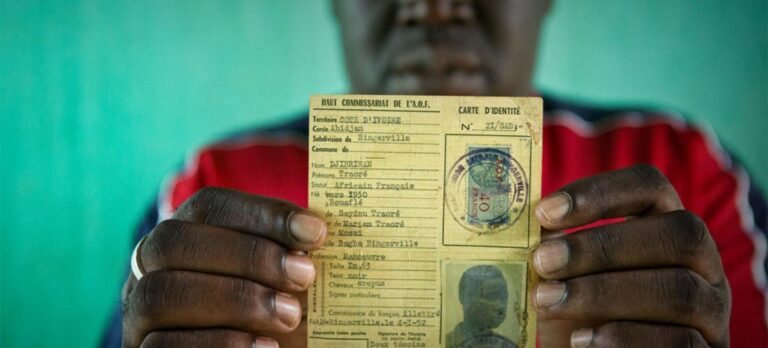
    Image: United Nations — A man identified as Oumar, who was at risk of statelessness, holds his father’s identity card from French colonial times.

    Rich countries still need to step up on global COVID vaccine access

    The immediate need is for increased dedicated production and export from advanced economies and developing countries, like India, with the necessary capacity, to developing countries of variant-adapted COVID-19 vaccines.

    By Ken Heydon / London School of Economics

    Among the G20 goals being pursued by the Indonesian chair this year is ‘ensuring equitable access to COVID-19 vaccines’. This has become a pressing task, though one that’s part of a bigger picture. Developing country vulnerability means global vulnerability. The Delta variant, first detected in India in April 2021 before becoming a world crisis, illustrates the danger of having large pockets of unvaccinated people.

    There is both an ethical and a self-interested reason for helping poorer countries cope with COVID-19.

    Between mid-2020 and the end of 2021, 10 billion COVID-19 vaccine doses were produced and there is now global capacity to produce 12 billion doses a year. But distribution has been highly uneven with less than 1 per cent of the vaccines going to low-income countries.

    The World Health Organization’s (WHO) COVAX initiative has fallen well short of its target of delivering two billion doses to lower-middle and low-income countries by the end of 2021. Low-income countries have received barely 3 per cent of the US$650 billion in special drawing rights issued for the International Monetary Fund’s pandemic response.

    The result — compounded by widespread vaccine hesitancy in poor countries — is a high discrepancy in vaccination rates across the world. Nigeria, for example, has vaccinated less than 2 per cent of its population, and nearer to Australia Papua New Guinea less than 3 per cent. Some 40 per cent of the world’s population is yet to receive a single shot of a COVID-19 vaccine.

    Sanofi template

    Epidemiologists now warn that large swaths of the world may soon be inundated with new waves of COVID-19. Totally eliminating the virus seems to be a pipe dream — it simply has too many chances to multiply.

    Two much discussed ways of helping developing countries are problematic and will not help in the short run. The first is the relaxation of intellectual property rights to facilitate the transfer of mRNA technology to developing countries, that, for the moment, neither Pfizer nor Moderna is willing to consider. Patents — guarding knowledge now to promulgate more in the future — remain a crucial incentive for needed research into emerging variants.

    Pfizer and Moderna have agreed to the second course of action: building factories of their own within developing countries, with early moves in South Africa, Rwanda and Senegal. Johnson and Johnson and Oxford-AstraZeneca have also set up multiple manufacturing sites globally. International institutions are backing these private sector initiatives with, for example, the International Finance Corporation making significant investments in India, Senegal and South Africa.

    In fostering developing country manufacturing capacity, Singapore has been identified as a possible role model. French pharmaceutical company Sanofi’s proposed production facility there offers a potential template in digital infrastructure and equipment capabilities that allow for quick changeovers, enabling toggle between three or four different types of vaccines.

    But here is the rub — and the qualifier to this second course of action. Singapore is hardly representative of developing countries that, for the most part, have neither the trained people nor the regulatory regime needed to establish and maintain a safe and reliable vaccine manufacturing capacity. Some developing countries also impede their own manufacturing potential by imposing tariffs on critical vaccine inputs. In short, new factories will not come online fast enough to meet demand.

    Increased vaccine supply not sufficient

    The immediate need is for increased dedicated production and export from advanced economies (and developing countries, like India, with the necessary capacity) to developing countries of variant-adapted vaccines — whether mRNA, viral vector or recombinant protein vaccines. This will need to be backed by financial transfers to the poorest countries to enable them to import vaccines.

    Increased vaccine supply to poorer countries, though essential, is not sufficient. It needs to be accompanied by improved vaccine advocacy, and, critically, by wider curative treatment in developing countries, like Pfizer’s antiviral pill, because, realistically, many of the poorest countries will not be able to maintain a full repeat vaccination program. A necessary complement to increased vaccine availability in poorer countries is the establishment of reliable drug distribution channels making treatment cheap, widely available and free of counterfeits.

    Even better developing country access to both vaccines and treatment will not guarantee that the virus will be denied opportunities to multiply. Effectively dealing with COVID-19 also calls for greater vaccine mobility in the rich world, especially the United States where only 64 per cent of the population is fully vaccinated, and in China where reliance on relatively inefficient inactivated vaccines has left many people still insufficiently protected against serious illness.

    All this serves to highlight the importance — and difficulty — of Indonesia’s task as G20 chair in 2022 of ensuring equitable access to COVID-19 vaccines. It also highlights the need for a holistic approach based on multilateral cooperation on what is likely to be a continuing global challenge.


    Ken Heydon is a Visiting Fellow at the London School of Economics and Political Science. He is a former Australian trade official and senior member of the OECD secretariat.

    This piece has been sourced from the East Asia Forum of the Australian National University.

    Image: Hippopx image, licensed to use under the Creative Commons Zero – CC0

    Sri Lanka to get Australian help for its maritime disaster preparedness mechanism

    The effort is to build capacities to develop a suitable system, especially with a systems engineering approach to build a more resilient system that can help prevent and respond to future maritime disasters.

    Australia has offered to help Sri Lanka develop a national maritime disaster preparedness mechanism, a statement released by the Sri Lanka foreign ministry said.

    The realisation and the urgency of preparing for maritime disasters has gained currency following the X-Press Pearl disaster, the biggest maritime disaster in the island nation’s history.

    A Sri Lanka foreign ministry statement on Friday said quoting Australia’s High Commissioner to Sri Lanka David Holly that the Australian government is ready to assist Sri Lanka in building capacity to develop a suitable system, potentially with a systems engineering approach. The government statement added that Holly acknowledged that Australia’s approach to maritime disaster preparedness may not be the best fit for Indian ocean island.

    In May 2021, X-Press Pearl, a cargo ship carrying chemicals caught fire off the Sri Lanka coast causing an environmental disaster. For days, plumes of dark, thick smoke engulfed the skyline until the ship, along with its stock of polluting chemicals (and plastic nurdles) sank in the Indian ocean.

    Maritime disaster management

    There is agreement that the disaster has long-term impacts. Media reports and images of partially burnt debris and tonnes of nurdles turning up on Sri Lanka’s shores along with marine litter, including dead animals had caused panic among citizens who even stopped purchasing seafood, otherwise a regular part of their diets.

    A contract for the removal of debris from the wrecked ship was signed with a Chinese salvage company earlier this month. The company has been given four months to complete the work. The Sri Lankan government is anxious to complete the work soon so that activities like fishing and tourism can pick up. These sectors are important contributors to the Sri Lankan economy, currently facing an acute shortage of foreign exchange.

    The government is also being assisted by an Australian law firm on the environmental damage claims Sri Lanka can make of the Singaporean shipping company X-Press Pearl belonged to.

    It is envisaged that the experience from the disaster and the assistance from Australia will help Sri Lanka establish a maritime disaster management entity or a maritime safety authority to address disasters similar disasters in the Indian Ocean and also to provide search and rescue facilities in the region in its role as a regional centre.

    The foreign ministry statement said that government authorities have been in discussions to learn from the Australian experience of managing maritime disasters.

    Upside to the disaster

    Hasanthi Urugodawatte Dissanayake, additional secretary for ocean affairs, environment and climate change in Sri Lanka’s foreign ministry said that an upside to the X-Press Pearl disaster would be that it will catalyse building a more resilient system to prevent and respond to future maritime disasters.

    “This means prioritising maritime emergency preparedness and management through development of a maritime disaster preparedness plan, strengthening the institutional basis for its implementation with adequate capacity building for the staff of relevant agencies,” Dissanayake said.

    Both, Sri Lanka and Australia agree on the need of a collective initiative to achieve a minimum level of preparedness and expertise in the area. This will require setting up mechanisms to facilitate international assistance to avoid overlaps and address key gaps.

    According to the Australian embassy, this will need to be complemented by a systems engineering approach to enable Sri Lanka focus on ‘needs’ rather than ‘wants’ based on its current capacity and resources.

    Sri Lanka developed an initial working draft for a maritime disaster preparedness mechanism for Sri Lanka in September 2021, almost five months after the X-Press Pearl disaster.

    A committee is currently in the process of fine-tuning the mechanism together with other stakeholders “to bring the issue of marine pollution and immediate recovery to global level, particularly caused by plastic nurdles,” the foreign ministry statement said.

    New twist to Sri Lanka’s Easter Sunday bombing case as former top investigator spills the beans

    In a new twist to the Easter Sunday bombing case, a former CID director told the Sri Lanka Supreme Court that the country’s top intelligence services actively prevented criminal investigators closing in on the Easter Sunday bombers.

    A former director Sri Lanka’s criminal investigations department (CID) set the cat among the pigeons by saying that evidences were planted by military and civilian intelligence operatives to mislead the department’s investigations into the Easter Sunday bombings.

    The former investigation department’s boss, Shani Abeysekara told the Supreme Court on Saturday that on several occasions, intelligence operatives misled criminal investigators chasing suspects by planting “evidence” in the run up to the bombings in April 2019.

    The Easter Sunday bombings had shaken the nation. Abeysekara said that on a number of occasions, “national security” imperatives were invoked to block enquiries by investigators.

    Abeysekara presented himself to the court in a bid to stop the police from arresting him for dereliction of duties by not intervening on time to stop the bombings. He had earlier been in police custody for 10 months until his release by a court of appeals. The court severely castigated the police for the unlawful arrest.

    The case threatens to unwrap a pack of lies to spread Islamophobia for political ends by the country’s ruling party, the Sri Lanka Podujana Peramuna.

    The Easter Sunday left 269 dead and more than 500 injured. While Sri Lanka’s Christian community still awaits justice, the island nation’s Muslims are reeling from the bombing’s backlash, facing restrictions in social and public life.

    Framed to mislead

    According to Abeysekara, the directorate of military intelligence (DMI) and the state intelligence service (SIS) the government’s two primary intelligence wings had previous also framed Tamil-speaking men in the murder case of two police constables in November 2018.

    He said that military intelligence led investigators astray with a concocted story of the wife of one of the policemen being in an extra-marital relationship with one of the murderers. He said that if that investigation had not been misled, the involved persons would have been apprehended well in time, thereby pre-empting the Easter Sunday bombings.

    Similarly, the SIS planted a jacket on a purported motorcyclist. In both cases, the investigators were put on a wild goose chase by the intelligence agencies.

    Filing a fundamental rights petition against his imminent arrest on a new charge that he neglected to investigate the Vavunathivu murders which were a precursor to the Easter Sunday bombings, Abeysekara listed how the intelligence units collaborated to divert attention from Islamic extremists.

    The DMI gave four reports on December 5, 8, 14 and January 3, 2019 making a case that the murders of the two constables were committed by ex-LTTE men as retaliation for police blocking a Tiger war memorial in November 2018.

    The DMI had suggested that an extra marital affair one of the victims had with a married woman had resulted in her husband getting an ex-LTTE cadre to kill the constable. Subsequently, the DMI went as far as to name the ex-LTTE men who were allegedly responsible for the killings. But, they turned out to be innocent.

    Sri Lanka Easter Sunday Bombing investigations Sinhala-Muslim politics

    National security a ruse

    Similarly, Abeysekara said that the SIS chief had tipped off the CID about a motorcycle jacket said to have been worn by one of the men who killed the two police constables. Later it turned out that the “evidence” had been planted.

    He said that “national security” secrecy provisions had also been invoked to prevent the CID questioning an SIS operative called ‘Sonic-Sonic’ who had been communicating with a suspect.

    Abeysekara told the court that he was told by a top SIS official “not to proceed with the said interrogation”, which, the official said was art of covert operation connected to national security.

    Politicians and Sinhalese nationalists have used the Easter Sunday attacks to justify their actions against Muslims. Sentiments have been stirred and businesses owned by Muslims were reportedly targeted in the aftermath through disinformation campaigns.

    The targeting of Muslims by religious leaders of the majority Sinhala community have led to exacerbated religious tensions in the country. This suits the politics of the

    South Asian nation and risk alienating large portions of the community.


    Image: Inter Press Service

    Nepal’s digital economy plans get a leg up with UPI

    As an open interoperable payments system, UPI will bring the convenience of digital payments to citizens of Nepal and will help modernise the country’s digital payment infrastructure.

    The National Payments Corporation of India (NPCI) today announced it will share technology to with a Nepal company to provide unified payments interface (UPI) services in the Himalayan country. This has the potential to pave the way for transforming the country’s digital economy.

    With this, Nepal will be the country outside India to adopt India’s UPI system technology. UPI provides real-time person-to-person and to-merchant payment transactions.

    NPCI International Payments has partnered with Gateway Payments Service, an operator authorised to implement the payment system in Nepal.

    As a payments platform, UPI will help catalyse the process of financial inclusion in Nepal. It has the potential to transform the regional economy by creating real-time cross-border facilities for businesses. Besides, it will also help person to person remittances between people in the two countries.

    UPI will enable the final stretch of consumers in Nepal to reap the benefits of an open interoperable payments system and bring the convenience of digital payments to citizens of Nepal.

    In 2021, UPI enabled 39 billion financial transactions amounting to commerce worth $940 billion, which is equivalent to approximately 31 per cent of India’s GDP.

    45 per cent of Nepalis hold a bank account and mobile penetration in the country is over 135 per cent. Besides, 65 per cent of the population use smartphones.

    GPS CEO Rajesh Prasad Manandhar says, “We expect UPI in Nepal would play a pivotal role in transforming the digital economy of the country and dreams of building a less-cash society.”

    Himalayan ecosystem under threat with China’s building spree in Nepal

    China’s role in Nepal has intensified in the period since the 2015 earthquake, mostly in the form of investments in rebuilding projects. In 2019 alone, China initiated a series of projects, including factories and hydropower plants, worth $2.4 billion in Nepal that run through sensitive environments.

    By Johan Augustin

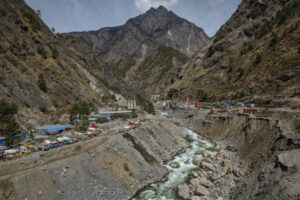
    Trucks stir up dust on the gravel road here in Syabrubesi, an eight-hour drive from Kathmandu, the capital of Nepal. From Syabrubesi, the road winds 11 kilometers (7 miles) north to the border with China, the only open route north since a 7.8 magnitude earthquake in 2015 devastated much of the region.

    The road itself is being widened, and the trucks carrying rock and gravel here are part of China’s global Belt and Road Initiative (BRI), one of many infrastructure projects in Nepal being financed by its powerful neighbor. Next to the road, a group of Nepali workers are building a tunnel through a mountain, watched over by a Chinese supervisor. Further up the road, Neehima Sangbo Tamang is bracing for the inevitable moment when his land and home are lost to the road-widening project.

    “We will have to move shortly,” he says, adding that the government’s promised compensation won’t cover for the loss.

    China’s role in Nepal has intensified in the period since the 2015 earthquake, mostly in the form of investments in rebuilding projects. For decades, Nepal’s southern neighbour, India, was its main economic partner, a role that is now being challenged by China. In 2019 alone, China initiated a series of projects, including factories and hydropower plants, worth $2.4 billion in Nepal — about 7 per cent of the latter’s GDP.

    Finding a balance

    The BRI, under which China is building a web of roads, railways, power plants and other infrastructure across countries along key trade routes, arrived in Nepal in 2017. Here, it includes airports, hydroelectric plants and paved roads. There’s also a planned 70-km (43-mi) railway line from Gyirong in the Tibet Autonomous Region to Kathmandu, which has raised concerns in India about Beijing’s growing influence in the region.

    But there’s more than geopolitics at stake under the infrastructure boom. Tourism accounted for nearly 8 per cent of Nepal’s economy prior to the COVID-19 pandemic, and was the fourth-largest industry by number of people employed. More than half of the million-plus foreigners who arrived pre-pandemic came to visit national parks, including the Himalayan ones that are home to the highest peaks on Earth.

    Yet many of the road and tunnel projects run through sensitive environments, including national parks, and the construction of hydropower plants has been criticized by environmental organizations and local communities for destroying river ecosystems. Shakti Bahadur Basnet, Nepal’s minister of forests and environment, says he’s well aware of this emerging problem.

    “We need to find a balance to preserve nature and develop our infrastructure,” he tells Mongabay at his office in Kathmandu, adding that the government conducts environmental assessments in sensitive areas before any projects are allowed to commence. “It’s not prioritized to develop those areas.”

    China, infrastructure, environment, landslide, Nepal

    Ambitious replanting plans

    The aim is to keep protected areas intact, he says. “Our policy is not to build roads in the core of national parks but instead in buffer zones,” Basnet says.

    He adds Nepal has ambitious replanting plans ahead. Forty-five percent of the country is already covered in various forms of forests, and 24 per cent is protected in national parks and conservation areas. The government wants to add to that tree cover.

    “We have a much higher percentage of protected areas than the international standard of 14 per cent, but we still want to plant more forests,” Basnet says. “We will focus on parts where there is no forest, and areas prone to landslides, as well as planting trees in urban areas.”

    He adds the government will plant native trees, as well as herbal and fruit trees.

    Basnet says infrastructure projects, particularly road building, will boost development in Nepal by creating jobs and lowering transportation costs and travel time. Many parts of the Terai, the lowland region of southern Nepal, have already seen construction projects benefit local economies. But in the country’s less-developed Himalayan region, where tourism and traditional livelihoods such as yak grazing and small-scale farming are the dominant economic drivers, many worry the environmental and social costs will be too high. They warn that infrastructure projects will pay little consideration to fragile alpine ecosystems, and that carving up the land for roads and tunnels could exacerbate landslides caused by the yearly monsoon.

    Illegal loggers

    Raj Bhatta, a trekking guide in the Himalayas for the past 17 years, is among those who are wary of the projects in this region. He says they will ruin villages, farmland and trekking trails. The explosives being used to carve tunnels through the mountains disrupt farming activity, he says, and push wildlife out of their natural habitat. Bhatta cites reports of monkey troops raiding villages for crops.

    “Nepal needs roads and hydropower, but at the same time the government needs to develop our country sustainably,” he says.

    He adds that many nature trails that previously wound through serene and ancient landscapes have been expanded into roads, which has affected the trekking industry negatively: “Tourists don’t want to trek dusty roads.”

    Critics say the new roads will also open up access for illegal loggers into once-remote forests and help fuel the trade in endangered species, such as parts from tigers, rhinos and elephants, which are highly prized in China.

    China construction infrastructure Nepal Himalayas landslide disaster risk

    Natural haven

    Raj comes from a village near Langtang National Park, Nepal’s first Himalayan national park, created in 1976. A day’s drive from Kathmandu, the Langtang Valley is one of Nepal’s most popular trekking sites and rich in biodiversity. The park is home to species like the red panda (Ailurus fulgens), as well as deer, wild boars, Nepal gray langurs (Semnopithecus schistaceus) and occasionally Indian leopards (Panthera pardus fusca). The more elusive goat-like Himalayan tahr (Hemitragus jemlahicus) and snow leopard (Panthera uncia) prowl the park’s higher altitudes.

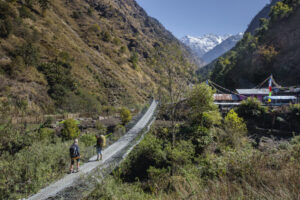
    The narrow trekking trails through Langtang National Park weave through lush subtropical forest, where ferns and mosses clothe the tree trunks, and rivers rush by from snowcapped peaks and glaciers. These forests, at an altitude of 4,000 meters (13,100 feet), are home to Indigenous Tamang communities.

    Now, this natural haven is under threat from modern development.

    “I have heard plans of road construction in Langtang,” Raj says, adding he worries that the national park will end up like the famous Annapurna Circuit, where roads have been built. Another such area is the Manaslu Conservation Area, also in the Himalayas. The Manaslu treks are, like in Langtang, famous for their breathtaking scenery. Manaslu, centered around the world’s eighth-highest peak of the same name, is also protected and of high value to the trekking industry. Despite this, several road projects are underway that will cut through its ancient forests and isolated valleys.

    “I’m really worried. This will destroy our environment and scare away the tourists,” Raj says.

    Exporting electricity

    Further up the gravel road from Syabrubesi, and closer to the Chinese border, lies the village of Timure. Since the 2015 earthquake razed the area, the rebuilding, with Chinese assistance, has gone remarkably quickly. Semi-finished hotels and restaurants, made of concrete and wood, dot the side of the road. Prior to the pandemic, the area was buzzing with foreign tourists, Nepali truck drivers, Chinese businessmen, and officials. Work on the Rasuwagadhi hydroelectric project, part of China’s Belt and Road Initiative, resumed here in 2016, despite protests from locals who blamed the dam for mass fish deaths.

    Taxi driver Njawang Dorje, one of around 20,000 Tibetan refugees living in Nepal, says the Chinese presence in the village has been good for business, but he still resents it. He says the environment is ruined, and describes the river where the dam is built as “once pure white rapids, and now … a clogged-up waterway with filthy dark water.”

    A detonation shakes the massif above the river; work is still underway on the 111-megawatt plant. It won’t benefit the Nepali people, Njawang Dorje says, since the electricity will be sold to India.

    “It’s only the government making money, and at the same time China controls the river and road,” he says.

    Respect for the environment

    For Basnet, the minister of forests and environment, Nepal’s rivers cutting through mountainous terrain are an untapped powerhouse. The country currently generates 787 MW of hydroelectricity, but could potentially boost this to 100,000 MW within a decade, with the help of China, Basnet says. That’s more power than Nepal needs, and it can sell the surplus to neighboring countries.

    “Nepal takes advantage of the collaboration, both directly and indirectly,” Basnet says. “Hydropower generates electricity that we can use in our factories, as well as selling the residual electricity to India and Bangladesh.”

    But Njawang Dorje, the ethnic Tibetan, warns against betting Nepal’s resources on China, which he says has “no respect for the environment.”

    “We Tibetans have no freedom in China,” he says. “It will be the same situation here.”


    This story was first published on Mongabay.com

    Image: Mongabay