More

    Nepal sees a hike in rights violations

    INSEC-Nepal has documented 6,285 victims of human rights violence and abuses in 2021. There were 5,163 cases of women and 560 cases of men among the reported instances of victims of human rights abuses.

    Intimidation, torture, violence, murder, rapes, abuse, deaths in custody of the State or the violation of rights to assembly or right to free expression or the right to association – data from the past year put together by Kathmandu-based INSEC Nepal tells the grim story of the human rights situation in the country.

    INSEC’s detailed break-up of the victims of human rights violation includes, among many, 74 deaths in jail and five in detention, besides victims of torture, intimidation or threats, arrests and sheer violence or beating and sustaining injuries.

    Civil liberties

    And, while COVID-19 grabbed public attention through the year, there were 363 instances of people being deprived of their right to assembly, free expression and association. There were also instances that pass off as inhumane behaviour (for want of a more appropriate language for being stigmatised, discriminated or being meted out undignified treatment).

    Among the documented cases of human rights violations and abuses, 16 per cent were from Province 1 (also referred to as Koshi or Purbanchal), 11 per cent from Madhesh Province, 17 per cent from Bagmati Province, eight per cent from Gandaki Province, 23 per cent from Lumbini Province, seven per cent from Karnali Province and 12 per cent from Sudurpaschim Province. 86 per cent of the total cases pertained to violations and abuses against women and child rights.

    Women abused

    INSEC (Nepal Informal Sector Service Centre) has documented 6,285 victims of human rights violence and abuses in 2021. There were 5,163 cases of women and 560 cases of men among victims of human rights abuses.

    2021 also saw 3,417 cases of complaints of violation of the rights of women, besides 1,522 instances of victims of child rights violation.

    The discrimination, violence, and exclusion against women violates the humanitarian principles of equality and respect, INSEC says. The organisation’s documentation shows a surge of barriers, in the last decade, as result of a person’s gender identity, adversely impacting their dignity, security, and a spectrum of political, economic, social, cultural rights.

    While, 49 per cent of the cases documented over the space of 10 years relate to the violations of women rights, the instances of violation of the rights of women shot up to 61 per cent in the past year.

    “Fifty-two women were victims of human rights violation by the State and 5,161 women were victims of human rights abuse,” a statement released by INSEC says.

    25 per cent of the cases pertained to matters relating to the rights of children.

    Custodial deaths

    In the last five years, INSEC has documented suspicious trends in relation to death in custody. A total of 19 deaths were documented in this period.

    “The rise of human rights violations and accountability gap in cases of custodial death authorities have not elicited response or actions from authorities,” INSEC says, adding that “there is criticisms in mass media that the State’s treatment of detainees is based on their caste, structural control, and poverty and thus, extra-legal.”

    The INSEC statement says, that there has not been any action nor investigations on the suspicious custodial deaths. Neither have there been any prosecutions. This “demonstrate(s) the dwindling accountability of State institutions on this issue,” says the INSEC Nepal statement.


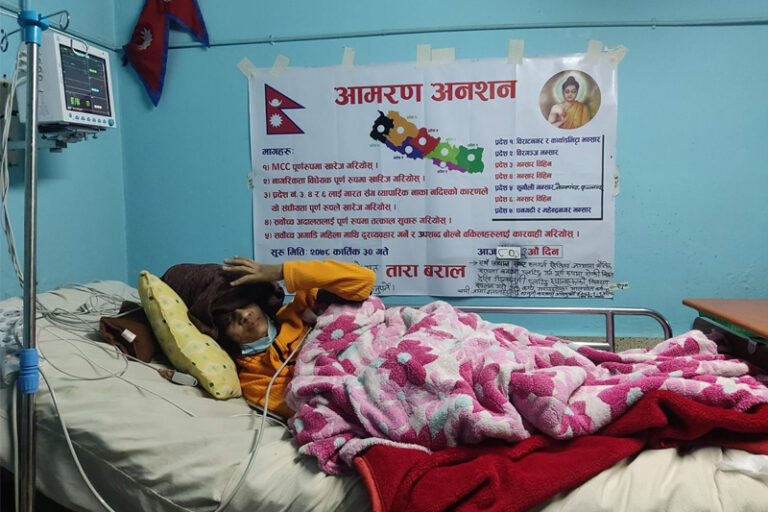
    Image: Tara Baral, 39, has on a fast unto death since 16 November 2021 to oppose an US$630 agreement the government of Nepal is entering into with the US-based Millennium Challenge Corporation. INSEC-Nepal

    Child sex abuse in Madagascar ‘widespread and tolerated’

    Droughts and food scarcity is leading children to sell sex in Madagascar. Two deadly cyclones in recent weeks have heightened worries as successive drought years have led to poverty and food shortage in Madagascar.

    Child sex abuse is “widespread and tolerated” in tourist hotspots in the African island nation of Madagascar, a UN-appointed rights experts said on Thursday.

    In a call to the authorities to take action to protect youngsters from child prostitution and other violations, the UN Committee on the Rights of the Child (CRC) heard that the majority of children who had sex for money, do so to survive.

    CRC is a body of 18 Independent experts that monitors implementation of the Convention on the Rights of the Child by its State parties.

    The international panel urged Madagascar’s government to strengthen multilateral, regional and bilateral accords, to prevent sex tourism.

    Its recommendations followed a scheduled rights review of the Indian Ocean island nation, which in 2004 committed to eradicating all forms of violence against children – including sexual abuse and exploitation.

    Heightened vulnerabilities

    During exchanges with the Malagasy authorities and civil society in Geneva, the UN panel noted the extreme vulnerability of communities affected by recurring drought and chronic shortages of water and food, particularly in southern areas.

    Linked to this, rates of acute malnutrition among children have worsened “exponentially” in Madagascar, said the UN-appointed independent panel, which oversees how member states implement the convention on the rights of the child.

    Madagascar has seen three years of consecutive droughts created one of the worst food insecurity and nutrition crisis in decades. The country is among the 20 countries and regions named as “hunger hotspots” that face acute food insecurity that has driven people to despair, the UN’s World Food Programme had said in January.

    However, a study by a team from the World Weather Attribution  published in late-2021 felt that the drought in Madagascar was not linked to climate change. The study said that “while climate change may have slightly increased the likelihood of this reduced rainfall (over 2019-21), the effect is not statistically significant”.

    Madagascar has also been struck by two deadly cyclones in recent weeks, causing widespread loss of life and damage to parts of the country. UN and humanitarian partners have been providing support and aid to those affected, and extreme weather events have led to widespread hunger across the country.

    Prostitution ‘trivialized’

    In its submission to the panel, the civil society group ECPAT International, explained that child prostitution “has become trivialized in Madagascar and is conducted openly in bars, nightclubs, massage salons and hotel establishments”.

    ECPAT International added that poverty was the main driver of the practice and that some families even pushed their children into vice, the majority being girls, although the prostitution of boys has increased in recent years.

    It said that while more than 250,000 tourists visited Madagascar according to latest data from 2017, the majority of abusers were citizens of the island nation, with most affected areas being the capital and coastal towns.

    The CRC also monitors implementation of two optional protocols to the Convention on the Rights of the Child – one the involvement of children in armed conflict and on the sale of children, child prostitution and child pornography.


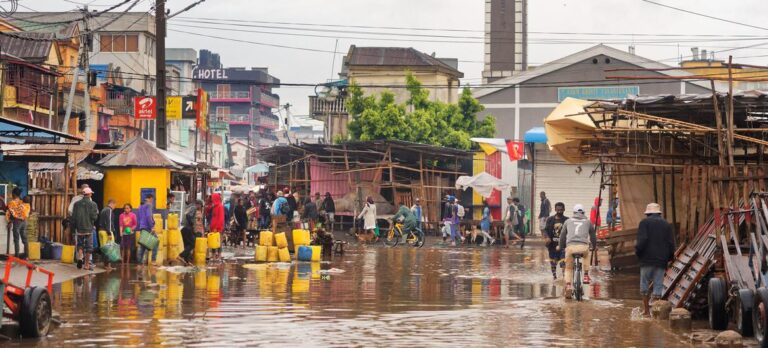
    Image: UNICEF/Rindra Ramasomanana – A road flooded with rain water in Antananarivo, Madagascar.

    UP polls: Did Budget 2022 do enough to placate angry North Indian farmers?

    Hopes that the government would pump money into the farm sector were belied by the fiscal conservatism of Budget 2022.

    When the Narendra Modi government repealed the three controversial farm laws in November 2021, no one had any doubt about the reason for the hurried action. It was clear that the government was trying to douse the anger among the farming community ahead of the crucial assembly elections in five states. The biggest compulsion would have been the polls in Uttar Pradesh, a state the ruling coalition can ill-afford to lose.

    The commentators were unanimous that the government will pacify the farmers by pumping money into the crisis-ridden agricultural sector. They believed that Union Budget 2022-23 would contain some big announcement specifically targeted at the farming community in North India. Surprisingly, the government decided not to have any major measure for the sector that employs roughly 42.6 per cent of India’s workforce and contributes 20.19 per cent of the gross domestic product.

    Budget 2022 disappoints the farm sector

    The reaction to the Budget 2022-23 from farmers unions and the agriculture industry were indicative of the direction of the policies. Farmers unions were quick to attack the government, alleging that it was taking revenge on farmers who forced it to withdraw the farm laws brought in with fanfare. However, the agriculture industry welcomed the Budget, saying the efforts towards strengthening infrastructure and promoting technologies will help farming activities.

    One cannot blame farmers for reacting the way they did. There is hardly a noise about doubling farmers’ incomes nor is there any hike in PM Kisan pay-outs. There were expectations that the finance minister will pump money into the agricultural sector considering that the bulk of the people who lost their jobs in manufacturing and services will crowd the sector, which is already burdened by low productivity and disguised unemployment.

    Fiscal prudence of Budget 2022

    Budget 2022 earmarked Rs 1.24 lakh crore for the department of agriculture and farmers’ welfare. This is nearly 3.1 per cent of the projected expenditure of the government. The agricultural sector is under tremendous pressure due to disguised unemployment and low productivity. Headline-grabbing announcements like doubling of farmers’ incomes have been replaced by more pragmatic steps.

    The three flagship schemes will consume most of the outlay for agriculture. PM Kisan will get Rs 68,000 crore, interest subvention on loans will get Rs 19,500 crore, and the Fasal Bima Yojana (crop insurance scheme) will get Rs 15,500 crore. Budget 2022 has increased the allocation for the Rashtriya Krishi Vikas Yojana, launched in 2007-08, which allows state governments to allocate funds based on local conditions. There is a 422 per cent increase in allocation to Rs 10,433 crore which will give the scheme a fresh lease of life. The Krishi Unnati Yojana, launched in 2016-17, as a bunch of 10 green revolution schemes, has been rejuvenated in the 2022-23 Budget with an outlay of Rs 7,183 crore.

    Foodgrain procurement

    The government has budgeted Rs 2.37 lakh crore for procuring paddy and wheat under the minimum support price scheme. However, there was no plan for the expansion of the MSP regime. The year 2023 has been named as the International Year of Millets. The government will support value addition and consumption of millets for branding millet products in domestic and global markets.

    The finance minister has actually reduced allocation for PM Asha, a scheme to stabilise prices of oil seeds, to just Rs 1 crore from Rs 400 crore last year. This is because the market price of oil seeds is higher than the minimum support price offered under the scheme. The government will implement a scheme to raise domestic production of oilseeds to cut dependence on edible oil imports.

    Stung by the farmer strike that forced the withdrawal of the three farm laws, the Narendra Modi government seems to have reset priorities in the sector. Sitharaman has announced a scheme to use crop residues for thermal power production, instead of allocating funds to bring down stubble burning that results in a spike in air pollution in Delhi and other north Indian cities. There has also been an increase in allocations for animal husbandry and fisheries, clearly reflecting their ability to generate rural jobs.

    Budget and the ballot

    Budget 2022 has cut the allocation for the department of fertilisers, reducing it drastically from Rs 1,49,663.28 crore to Rs 1,09,242.23 crore on the expectations of a fall in urea prices globally.

    To benefit from the advancements in technology, the government will promote ‘kisan drones’ for the digitisation of land records, spraying nutrients and crop assessment. The FM also announced the government’s plans to promote chemical-free natural farming and public-private partnerships to deliver digital services to farmers. NABARD will introduce a fund to finance start-ups in agriculture and rural enterprise.

    In a surprising decision, the government reduced fund allocation to MGNREGA, the government’s rural employment guarantee scheme. It was widely expected that there will be an increase in allocation for the scheme in view of the job losses due to the Covid-19 pandemic and the lockdown measures taken by the government.

    Overall, it has been a disappointing Budget for the sector and the farming community. The government may have to raise allocations beyond the Budget outlay for the year because of uncertainties about the trajectory of the Covid-19 pandemic and the unemployment situation in the country.

    One has to wait and see if the disappointment caused by Budget 2022 will have a bearing on election results. Farmers are central to BJP’s chances of retaining Uttar Pradesh and wresting Punjab from a faction-ridden Congress. While nobody is giving it a serious chance in Punjab, the ruling party is on a strong wicket in India’s most populous state. Samajwadi Party’s Akhilesh Yadav, BJP’s main rival in Uttar Pradesh, has promised a slew of measures targeted at farmer votes. Not to be left behind, BJP also has made several announcements. Only time can tell if these came a bit too late for the ruling party.


    This piece has been sourced from Policy Circle – www.policycircle.org/

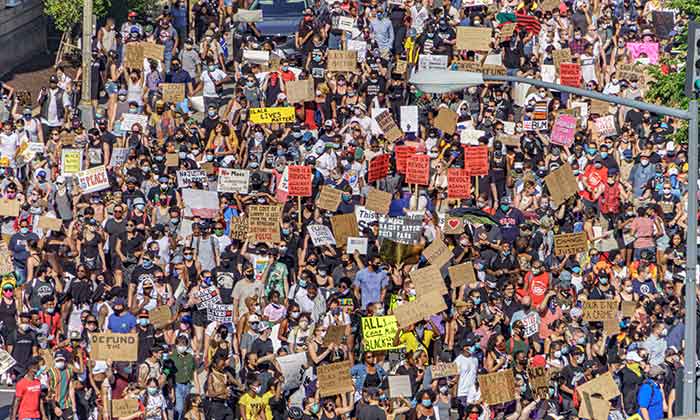
    Image: Ted Eytan / Cambridge Globalist

    State ministers moot environment council at TERI summit

    Environment ministers from various state governments attending a session of the ongoing World Sustainable Development Summit have mooted the idea of an environment council to implement climate action at all levels.

    Ministers taking part in the World Sustainable Development Summit (WSDS) mooted the idea of setting up a dedicated environmental council composed of representatives from the Centre and the states.

    They pointed out that the implementation aspects of climate action, be it mitigation, adaptation and resilience, often falls on the state governments.

    “On the lines of the GST Council, if we have the environment and forest ministers of all states along with the union minister of environment in a council, I think that is where we can set targets and policies at the national level and implement at the state level,” said Maharashtra minister of environment Aaditya Uddhav Thackeray

    The ministers had e-assembled for the ‘Ministerial Session on Sub-national Leadership for Inclusive Green Growth’ at WSDS.

    Echoing Thackeray’s suggestion, Tamil Nadu finance minister Palanivel Thiagarajan said that, “Lot of implementation needs happen at the local body, district and the state level. While policies are framed at the national level, bulk of the work is to be done at these levels.”

    Emphasising on the crucial role of sub-national governance to tackle climate change as well as aid green growth, James K Sangma, minister for forest and environment of Meghalaya said, “The need of the hour is to have a concerted effort where all the states come together, put aside their differences and work collectively.”

    Sangma pointed out that Meghalaya, along with Arunachal Pradesh form the biggest carbon sinks crucial for India to honour the commitments made at the Paris Agreement. He also put forth the need for the North-Eastern region to be a unique green laboratory.

    “Meghalaya aspires to be a leader to create a green bloc coalition to find solutions to fast depleting natural assets,” he added.

    Green budgeting

    At the session, the ministers highlighted the need for newer measures and yardsticks to assess and tackle climate change related impacts. Thackeray suggested putting out an annual environment report. “We can think of an ‘Ease of Living’ report that lists out environmental steps and targets, and what can be done in terms of climate action such as mitigation, adaptation and resilience,” Sangma observed.

    Noting that the diversity between states is vast and so are their needs and capacities, Dr Thiagarajan observed that for India to achieve the target of net-zero by 2070, “A state like Tamil Nadu has to get there no later than 2050 for it to be a realistic outcome for rest of India as we are far ahead in terms of the average per capita income and per capita consumption, education and growth.”

    The session stressed the need for the states to take up green budgeting in a big way and to draw up district-level maps for an inclusive green economy.


    Image: TERI

    Science for the city by citizens: Enhancing local water system resilience

    Skyrocketing hospital bills and rising costs for water, only to be matched by costly repairs of the homes we live in – all because of a taken for-granted attitude to the water around us. Or, for that matter, the lack of it.

    By Zeenat Niazi

    Hospital bills are rising, as gastro-intestinal epidemics, skin allergies, cancers, and chronic impacts on kidneys, bones and teeth become rampant pointing to pollution from water sources. Water bills, too, are rising as bore wells need to be sunk deeper and deeper and often water pipes run dry because treatment plants shut down as these cannot handle the chemical loads in rivers and ground water.  Building repairs are becoming more frequent with foundations settling and walls cracking as the ground subsides, roads need repair more often under stress of alternate high heat and flooding. Drains cannot handle rain showers and street flooding is a regular phenomenon with low-income settlements in a state of permanent water logging. Old deep-rooted trees get uprooted in storms regularly as their roots cannot reach to water anymore, and shallow-rooted trees have no more soil to hold them. There are fewer parks for children to play in as the land is swallowed by parking lots. Fewer trees with shade to sit under in the scorching summer even as soaring temperatures break century-old records. Sparrows have disappeared and so have many other common birds. The city lakes and rivers are foaming with industrial effluents and the stream has become a drain clogged full of sewage and plastic waste.

    This is the story of many a people and cities and towns across India today. Such news raises questions regarding the agency and engagement of common citizens with the governance of our city and its services and infrastructure.

    Inter-connections

    Beyond being consumers and users of the urban water system, what is our understanding of the close inter-connections between urban water systems, public health, quality of life in a city and the city economy, now and in the long term? Do we know the quality of the water that we drink? Do we know what are the parameters it is tested for? Do we know the energy and resources needed to bring it our homes when our overheads water tanks overflow?  Do we know where that overflow is going?  Do we know what happens when we allow our sewage pipe from toilets to empty into a storm water drain? Or do we even wonder what could be happening when our streets flood at the first rain? How do we as residents and citizens respond to that shiny new shopping mall on a land that was designated as the urban forest? Do we look out for that hillock and that urban forest and wonder what happened to our water catchment, when the land use changes? How do we view a new residential development on what was a lake some years back? Do we enjoy the water flowing in that nallah or a turn away at the stench of the drain it has become?

    Information

    From the individual and local to the more complex neighbourhood, ward and city level, there are layers of engagement that we as citizens have with our water system both blue and green; both tangible and virtual and both visible (on the surface) and invisible (in the ground). We, however, may choose to engage with the governance and management of this system either actively or passively. A vast majority of urban residents probably consider water systems management as something that is the sole responsibility of the municipality, and rarely will one find citizens giving their local government high marks for doing this job well. Municipalities, similarly, lament the lack of citizen awareness but beyond public messages for rainwater harvesting and penalising water misuse, do not seem to create mechanisms for active citizen engagement.

    The key to engagement is information and understanding the water system through education about the system. A search on the internet is quite revealing. There is a lack of updated, dynamic and easy to understand information that would enable citizens to become aware of, and appreciate the water system of the area they live in. While educational information in general about urban water supply, sanitation and sewage management and rainwater harvesting is available in plenty, in various platforms and in different forms at state and city levels; it certainly is not in a form adequate to enable citizen engagement with their water system governance and management at the level of their neighbourhood, ward and city.

    Citizen science

    In the digital age, websites of government and public service agencies (including civil society and academic) become the place to search in. A deeper search reveals that the information one finds on the electronic media is very technical and not relatable to the everyday life experiences of common citizens and is often in English, excluding many citizens. The tone and tenor are prescriptive, designed for, and delivered through one-way communication methods. The space for dialogue, discussion and co-creating knowledge informed by good science is not very active at present. Going beyond media reports of water stress and health impacts, and water management communication campaigns issued in public interest, and painting competitions for primary school students, we need active engagement through co-creating knowledge about our water system by engaged aware informed citizens from all strata of the city.

    Here is where perhaps we could place the role of citizen science, where citizens actively engage in creating new scientific knowledge. Crowd-sourced seasonal data, simple high-school level analysis, maps and traffic lights on key indicators, and interactive digital games could enable school children, young university students, Resident Welfare Associations and concerned citizen clubs to get to know their city and participate in making their cities water secure, resilient and eminently more liveable than today.

    Civic engagement

    Citizen science has often emerged from citizen activism. Campaigns led by concerned citizen groups have sought to bring environmental and social issues related to their cities to the forefront. These localised area- and issue-specific people’s movements use scientific evidence, socio-economic analysis coupled with communication skills and information technology and increasingly Artificial Intelligence to create awareness, educate and enlarge citizen engagement with their local issues. Citizen campaigns not only bring different perspectives that are useful to build a shared understanding; they also bring together people from different strata with a variety of skill sets and expertise. Waste management, water and sanitation management, air quality, traffic management and city forests, rivers and lakes have been some of the main issues raised.

    Recent citizen campaigns in India have included citizen action in Bengaluru regarding disappearing and polluted lakes, the popular ‘Kodaikanal Won’t’ movement to build a case for environmental justice and clean-up of the Kodai lake, the ‘Arrey forest movement’ in Mumbai, ‘Save the Aravali’ campaign in Gurugram and NCR, and the two-decade-long ‘Yamuna Jiye Abhiyaan’ in Delhi among many others that seek to conserve urban ecosystems and build water system resilience. They use simple and powerful science communication techniques for common citizens. They not only educate, they also advocate for behaviour change, share knowledge and skills and also, where necessary, demand accountability from their governments through available legal channels. These citizen platforms with their websites and citizen volunteers involved in hands-on, ground level work, armed with technical expertise and strengths in social media communication, and now increasingly networked across the country, are a formidable growing movement which state and local governments would do well to support, encourage and collaborate with.

    Scientific temper

    Citizen Science has led to documentation and analysis of evidence of change in urban eco-systems that can be very helpful for designing technical and management solutions by governments, and for measuring the impact of government programmes and policies. Examples from the participatory learning and mapping exercise in Bengaluru, the Vembanad lake assessment in Kerala, the tree census in Delhi, the Great Backyard Bird Count, the ‘One School One Pond’ project in Puducherry and myriad other ‘river and jalyatras’ by citizen groups in different cities are producing rich data and knowledge.

    With this in mind, Development Alternatives has partnered with a host of agencies to develop a science programme for the citizens of Udaipur city in Rajasthan. This involved designing a comprehensive collaborative initiative to bring together students from school and university and educators and citizens to explore the social, technical, and governance facets of the water system in their city. Armed with basic scientific understanding of rainwater conservation, ground water flows, public sector programmes etc. and trained in simple data collection methods, citizens will collect local information at periodic intervals that will be used to analyse the selected water system of interest.

    We expect to see an increase in the scientific temper and kindle an interest in local water systems and in turn, greater engagement in water governance and employing appropriate technologies and management solutions for the city as result of improved data systems and public acceptability of these solutions.

    This is a long road to travel. However, anchoring and integrating citizen science and citizen participation into our education and local governance processes is likely to deliver robust and sustainable outcomes in enhancing local urban water system resilience. A science – policy – community interface will go a long way in strengthening environmental and social democracy at the grassroots.


    Zeenat Niazi is Chief Knowledge Officer and Senior Vice President of Development Alternatives Group

    This piece has been sourced from Mainstreaming Alternative Perspective

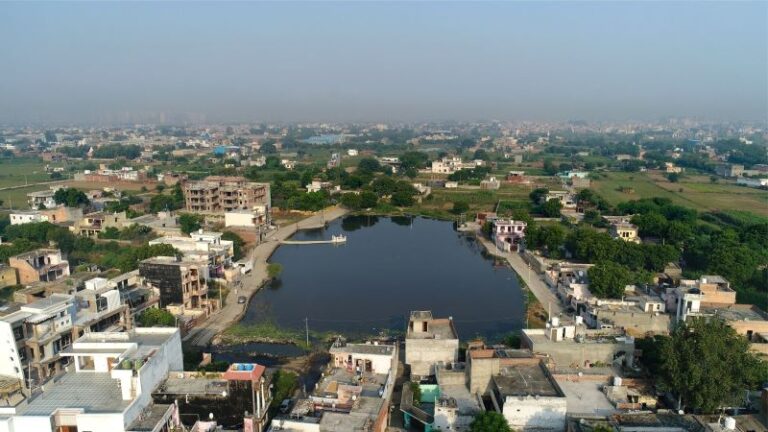
    Image: Development Alternatives

    Latin America’s most corrupt countries – a roll call

    Data collected by Transparency International looks at bribery, the diversion of public funds, officials using their office for private gain, conflicts of interest and legal protections for those denouncing corruption. South American nations scored poorly.

    By Gabrielle Gorder and Seth Robbins 

    Latin American countries scored poorly on Transparency International’s latest corruption index, with the worst joining the ranks of war-torn nations and dictatorships.

    Of the 19 Latin American countries ranked, three-quarters scored below 50 in the Corruption Perceptions Index (CPI) for 2021. The worst was Venezuela, which scored below North Korea and Afghanistan.

    Using assessments from country experts, business analysts, and international organizations, the index rates countries on a scale from zero to 100. Scores below 50 indicate flagrant corruption problems.

    The data collected by Transparency International looks at bribery, the diversion of public funds, officials using their office for private gain, conflicts of interest and legal protections for those denouncing corruption.

    Caribbean countries fared better in the index. Of the ten ranked, six scored above 50, though none rated above 65.

    When Canada and the United States are excluded, the average score for the region is 41, putting it a notch below the global average of 43. Without the Caribbean, it drops to 37.

    Below is a break-down of the scores, as provided by InSight Crime, from a region that continues to be rife with corruption.

    Scores of 0 to 25: Highly corrupt

    Venezuela held the title for the seventh consecutive year as the most corrupt country in the Western Hemisphere with a score of 14, an all-time low for the country.

    As InSight Crime has reported, Venezuela has essentially become a mafia state. Officials and security forces at every level are involved in criminal activity. Pilfering of state coffers is rampant, while drug trafficking, illegal mining, and other criminal economies are widespread.

    Venezuelan government officials are known to collaborate with gangs. State security forces have colluded with the Colombian guerrilla group the National Liberation Army (Ejército de Liberación Nacional – ELN) to take control of illegal gold mines in the Amazon.

    The rot in Venezuela starts at the top, with President Nicolás Maduro, whom the United States Department of Justice has accused of narco-terrorism, corruption, drug trafficking and other offenses.

    Just above Venezuela were Haiti and Nicaragua, which each received a score of 20.

    Haiti saw a slight uptick as compared with the last two years, as the effects of the July 2021 assassination of the country’s president, Jovenel Moïse, are only just beginning to be felt.

    Meanwhile, Nicaragua saw its score hit a new low. This is not surprising, considering that, on his way to winning his fourth consecutive presidential election, President Daniel Ortega used the country’s justice system to silence political opponents, some of whom were jailed or subjected to a range of abuses.

    Honduras also hit a new low, scoring a 23 — tying the country with Iraq. The low score stemmed partly from accusations linking Honduras’ former president, Juan Orlando Hernández, to his brother’s drug trafficking ring.

    Meanwhile, Guatemala’s score of 25 remained unchanged from the previous year. The country tied with Iran. High-profile graft probes and the dismissals of those investigating corruption explain the country’s low ranking.

    Scores of 26 to 50: Corruption issues

    The average global corruption perception score was 43 out of 100. Of the 21 Latin American and Caribbean countries scoring less than 50, 19 fell below the global average.

    The countries scoring in this bracket were Paraguay (30), the Dominican Republic (30), Bolivia (30), Mexico (31), El Salvador (34), Panama (36), Ecuador (36), Peru (36), Brazil (38), Argentina (38) and Colombia (39), Guyana (39), Suriname (39), Trinidad and Tobago (41).

    Only Jamaica (44) and Cuba (46) scored higher than the global average.

    In the case of Paraguay, InSight Crime published an investigation just last year revealing how a Paraguayan congressman conspired with an alleged drug trafficker to protect cocaine shipments in exchange for illicit funds.

    El Salvador’s declining score reflects growing corruption within the government of President Nayib Bukele, including the decision to dissolve the International Commission against Impunity in El Salvador (Comisión Internacional Contra la Impunidad de El Salvador – CICIES) after the entity started to investigate several members of the Bukele administration for mismanaging coronavirus emergency funds. Additionally, the US government, in 2021, blacklisted two officials with close ties to Bukele for allegedly making deals with street gangs.

    Ecuador’s plummeting score was also to be expected. The country has emerged as a key trafficking route for drugs, arms, explosives, and migrants. Corruption has eaten away at state institutions.

    Peru’s falling score comes as President Pedro Castillo faces corruption allegations that have led to impeachment proceedings, while in Argentina, instances of corruption among judicial authorities have created the impression of impunity.

    Cuba’s comparatively high CPI ranking may come as a surprise to some, given that it is a one-party state.

    While Cuba’s low corruption perception score may reflect steps taken to rein in corruption during the administrations of former president Raúl Castro and President Miguel Díaz Canel, political corruption remains an issue, and the low perception score could be more a reflection of the country’s limits on press freedom.

    Scores of 50 to 100: Relatively clean

    Only three Latin American countries scored above 50: Uruguay, Chile and Costa Rica.

    Uruguay scored higher than the United States, but lower than Canada. Transparency International credited its “independent judiciary and the protection of basic rights [as] vital in preventing corruption from permeating the [Uruguayan] State.” Chile, meanwhile, tied with the United States.

    The Caribbean countries of Barbados, The Bahamas, Saint Vincent and the Grenadines, Saint Lucia, Dominica and Grenada all scored above 50, suggesting minimal corruption concerns. But these countries are all known hubs for money laundering, a known contributor to corruption worldwide.


    This story has been sourced from Inter Press Service It was originally published by InsightCrime


    Image: UN News / Daniel Dickinson

    Babies can tell who has close relationships based on one clue: saliva

    Sharing food and kissing are among the signals babies use to interpret their social world, according to a new study.

    Anne Trafton     |     MIT News Office

    Learning to navigate social relationships is a skill that is critical for surviving in human societies. For babies and young children, that means learning who they can count on to take care of them.

    MIT neuroscientists have now identified a specific signal that young children and even babies use to determine whether two people have a strong relationship and a mutual obligation to help each other: whether those two people kiss, share food, or have other interactions that involve sharing saliva.

    In a new study, the researchers showed that babies expect people who share saliva to come to one another’s aid when one person is in distress, much more so than when people share toys or interact in other ways that do not involve saliva exchange. The findings suggest that babies can use these cues to try to figure out who around them is most likely to offer help, the researchers say.

    “Babies don’t know in advance which relationships are the close and morally obligating ones, so they have to have some way of learning this by looking at what happens around them,” says Rebecca Saxe, the John W. Jarve Professor of Brain and Cognitive Sciences, a member of MIT’s McGovern Institute for Brain Research and the Center for Brains, Minds, and Machines (CBMM), and the senior author of the new study.

    MIT postdoc Ashley Thomas, who is also affiliated with the CBMM, is the lead author of the study, which appears today in Science. Brandon Woo, a Harvard University graduate student; Daniel Nettle, a professor of behavioral science at Newcastle University; and Elizabeth Spelke, a professor of psychology at Harvard and CBMM member, are also authors of the paper.

    Sharing saliva

    In human societies, people typically distinguish between “thick” and “thin” relationships. Thick relationships, usually found between family members, feature strong levels of attachment, obligation, and mutual responsiveness. Anthropologists have also observed that people in thick relationships are more willing to share bodily fluids such as saliva.

    “That inspired both the question of whether infants distinguish between those types of relationships, and whether saliva sharing might be a really good cue they could use to recognize them,” Thomas says.

    To study those questions, the researchers observed toddlers (16.5 to 18.5 months) and babies (8.5 to 10 months) as they watched interactions between human actors and puppets. In the first set of experiments, a puppet shared an orange with one actor, then tossed a ball back and forth with a different actor.

    After the children watched these initial interactions, the researchers observed the children’s reactions when the puppet showed distress while sitting between the two actors. Based on an earlier study of nonhuman primates, the researchers hypothesized that babies would look first at the person whom they expected to help. That study showed that when baby monkeys cry, other members of the troop look to the baby’s parents, as if expecting them to step in.

    The MIT team found that the children were more likely to look toward the actor who had shared food with the puppet, not the one who had shared a toy, when the puppet was in distress.

    In a second set of experiments, designed to focus more specifically on saliva, the actor either placed her finger in her mouth and then into the mouth of the puppet, or placed her finger on her forehead and then onto the forehead of the puppet. Later, when the actor expressed distress while standing between the two puppets, children watching the video were more likely to look toward the puppet with whom she had shared saliva.

    Social cues

    The findings suggest that saliva sharing is likely an important cue that helps infants to learn about their own social relationships and those of people around them, the researchers say.

    “The general skill of learning about social relationships is very useful,” Thomas says. “One reason why this distinction between thick and thin might be important for infants in particular, especially human infants, who depend on adults for longer than many other species, is that it might be a good way to figure out who else can provide the support that they depend on to survive.”

    The researchers did their first set of studies shortly before Covid-19 lockdowns began, with babies who came to the lab with their families. Later experiments were done over Zoom. The results that the researchers saw were similar before and after the pandemic, confirming that pandemic-related hygiene concerns did not affect the outcome.

    “We actually know the results would have been similar if it hadn’t been for the pandemic,” Saxe says. “You might wonder, did kids start to think very differently about sharing saliva when suddenly everybody was talking about hygiene all the time? So, for that question, it’s very useful that we had an initial data set collected before the pandemic.”

    Doing the second set of studies on Zoom also allowed the researchers to recruit a much more diverse group of children because the subjects were not limited to families who could come to the lab in Cambridge during normal working hours.

    In future work, the researchers hope to perform similar studies with infants in cultures that have different types of family structures. In adult subjects, they plan to use functional magnetic resonance imaging (fMRI) to study what parts of the brain are involved in making saliva-based assessments about social relationships.


    Reprinted with permission of MIT News (http://news.mit.edu/)

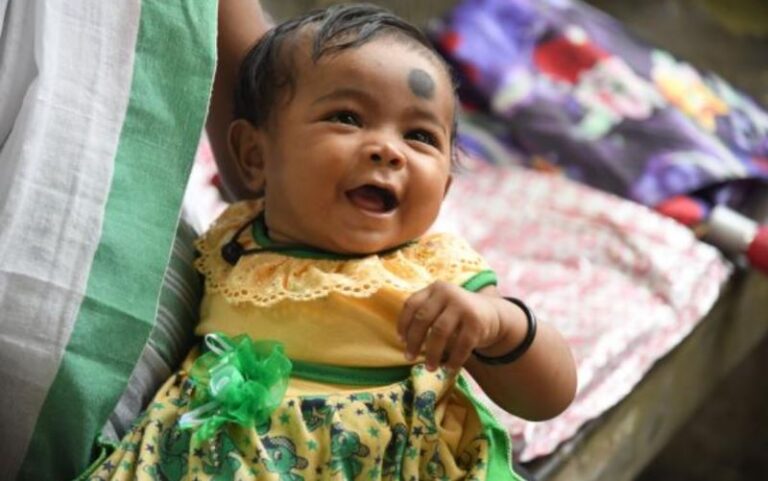
    Image: UNICEF India

    When the fate of half our planet is being discussed, it’s too important to shut out civil society

    Over 100 governments claim to back ocean protection and almost five million people globally are demanding urgent action to tackle the ocean crisis. But organisations amplifying their voices are kept out as decisions are being made.

    By Will McCallum

    Over the past two weeks, a petition signed by almost five million people globally was handed in to governments around the world. It called for a global ocean treaty to help rescue our oceans.

    Yet with governments gathering next month to discuss the fate of half our planet, civil society is being shut out. The climate crisis and industrial fishing are pushing our oceans to the brink. Wildlife populations are collapsing, our oceans are heating and their very chemistry is changing.

    World leaders will meet at the so-called BBNJ negotiations from 7-18 March to attempt to reckon with the scale of the crisis facing one of our planet’s key life support systems. But, as NGOs found out in a closed-door briefing call on 15 February, the meeting will not allow for proper participation from civil society.

    This is effectively closing the door to organisations which represent millions of people worldwide, many of whom rely on the ocean for their lives and livelihoods, and all of whom depend on the ocean for the oxygen it gives us.

    It is worth noting that without years of campaigning by organisations like Greenpeace and many others, this treaty process would not even be happening: civil society has played a crucial role in getting us to this stage.

    It contributes expertise and information, facilitates policy development and provides a network of connections and experts, as well as a platform for frontline communities facing these issues day in, day out.

    Democratic engagement at UN?

    The extremely limited participation at this meeting simply does not represent the urgency with which we need a rescue plan for our oceans: a Global Ocean Treaty that allows us to cover at least a third of international waters with ocean sanctuaries – areas free from harmful human activity like destructive fishing.

    As COVID-19 continues to impact on all of our lives, we all recognise and appreciate the seriousness of health measures around large international conferences. But there has to be a way to also ensure that the vital voices which civil society represents are heard in a safe and meaningful way, particularly during a time when not only our global health, but our planetary health, is in jeopardy.

    Closing the doors to civil society – and even restricting government participation so severely – should be unthinkable and sets a worrying precedent for democratic engagement at the UN. What possible justification can there be to deny civil society the right to speak on video screens?

    It hampers the important role that civil society has played, and continues to play, in the global ocean treaty negotiations, as well as other UN processes. Two years into the COVID-19 pandemic, innovative hybrid models and flexible health measures have shown that effective and safe participation is possible, and a failure to embrace this approach at the UN – especially as we face critical decisions that affect us all – is simply untenable.

    Almost five million people globally are demanding urgent action to tackle the ocean crisis. Over 100 governments claim to back ocean protection. Organisations amplifying the voices of millions of people worldwide must be represented as decisions are made.

    Ocean protection a scientific imperative

    These negotiations are simply too important to avoid proper scrutiny: the UN should review its decision and work to ensure that civil society can participate in global ocean treaty negotiations in a safe and meaningful way.

    This means allowing in-person representation from NGOs during the deliberations, timely access to information prior to and during the meeting, and the opportunity to provide interventions and written submissions.

    This isn’t simply a matter of transparency and accountability: ocean protection is a scientific imperative and governments are not acting fast enough. We know that for the three billion people who depend on the oceans for their food and livelihood, for the wildlife that call the ocean home and for the fight against climate breakdown, we need a network of ocean sanctuaries across at least a third of the world’s oceans by 2030.

    To do that we first need to win an ambitious Global Ocean Treaty at the UN that gives us the tools we need to meet that target in the vast majority of the oceans beyond national boundaries.

    The pandemic has pressed the pause button on so many things, but not for our natural world. From the melting Arctic to the plundered Pacific, the climate and nature crises are accelerating. Political momentum for a network of ocean sanctuaries across our oceans is gathering pace, but governments need to act like our lives depend on it, because they do.

    Our oceans connect us all

    Out on the water, while we delay, destructive fishing companies are operating out of sight and beyond the rule of law, stripping the oceans of life. This plunder of the seas is pushing wildlife populations towards collapse and leaving nothing for the coastal communities who rely on artisanal fishing to survive.

    Pollution, oil drilling and the emerging threat of deep-sea mining, are poisoning marine life and making the climate crisis worse by killing off vital ecosystems.

    Our oceans connect us all and what happens there will impact the future of life on earth. Ocean sanctuaries can give wildlife space to recover and, in turn, help to cycle carbon and avoid the worst effects of the climate crisis. We need to protect at least 30 per cent of the oceans by 2030, not the paltry one per cent of the global ocean that is currently protected.

    We desperately need progress at this meeting: governments were expected to conclude the treaty at these negotiations, and so it is vital that every effort is made to ensure the maximum participation possible, so that essential negotiations can take place.

    To do that, we need civil society organisations in the room.


    Will McCallum runs Greenpeace’s Protect the Oceans campaign and is head of oceans at Greenpeace UK

    This piece has been sourced from Inter Press Service


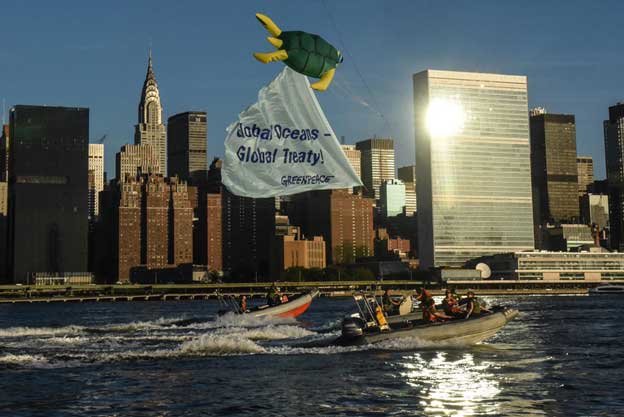
    Image: Greenpeace activists fly a giant turtle kite outside the United Nations headquarters in New York as countries gathered to begin negotiations towards a treaty covering all oceans outside of national borders. September 2018
    Credit: Greenpeace

    Environmental conflict threatens iconic Auroville

    A midnight action on a contentious development plan rattled the residents of Auroville in December 2021. The community is divided on the master plan and protesting residents claim the planned development will destroy the forest ecosystem around the centre. 

    By Sarosh Bana

    At a time when India’s standing forests are under threat – with 14 per cent of the country’s tree cover being lost in 2019-20 alone, according to Washington-based Global Forest Watch – a swath of forestland created by human effort over half a century ago faces desecration owing to contentious policies.

    In the dead of night last December, bulldozers rolled into the forested idyll of Auroville, the global community in southern India fostered by the vision of Indian philosopher, nationalist, poet and seer Sri Aurobindo. Indian and foreign residents, who rushed out of their homes to inquire, were overpowered by the excavators that razed over 900 trees across 67 acres. The tree clearance is for a proposed 75-metre-wide circular road through the township.

    Aggrieved residents petitioned the national green tribunal (NGT) of south zone to halt “the proposed construction and development”, based on the Auroville Universal Township Master Plan (Perspective 2025) that they say has not been subjected to the mandated Environmental Impact Assessment (EIA) notification. After imposing a series of short-term stays against further development, the NGT has now reserved its final ruling.

    The contested project is being executed by the Auroville Foundation and its Town Development Council (TDC), and newly-appointed government authorities.

    Straddling the border of Tamil Nadu and the adjoining Union Territory of Puducherry, Auroville was developed as a unique experiment in human unity, with two-thirds of its 3,500 inhabitants hailing from 59 other nations, and from all age groups (from infancy to over 80, averaging 30), backgrounds and cultures.

    Political angle

    Auroville evolved from the philosophy of Sri Aurobindo, who was born in Kolkata (then Calcutta) in 1872 and died in Puducherry (then Pondicherry) in 1950. It was his spiritual collaborator, the French woman Mirra Alfassa, who became known as ‘The Mother’, who in 1968 laid the foundations of this ‘universal town’ where people of all countries would cohabit in peace and harmony.

    At its foundation, some 5,000 people assembled near the banyan tree at the centre of the future township for a ceremony attended by representatives of 124 nations, as also of all the states of India. They brought with them some soil from their homelands, to be mixed in a white marble-clad lotus-shaped urn that became the centrepoint of Auroville.

    Auroville was taken over by the central government through the Auroville Emergency Act, 1980, and granted autonomy under the Auroville Foundation Act passed eight years later under the UNESCO division of the Ministry of Education (later, Ministry of Human Resource Development (HRD). The Foundation is supported by annual grants from the Central government.

    Section 10 (3) of the AF Act divides the Foundation into the Governing Board, Residents’ Assembly, and Auroville International Advisory Council. The plaint before the NGT cites only the Governing Board as being behind the development work.

    Some Aurovillians see a political angle to the dispute, pointing out that the Crown project has been expedited after Tamil Nadu Governor Ravindra Narayana Ravi, Puducherry Lieutenant Governor Tamilisai Soundararajan, and Gujarat cadre IAS officer, Dr Jayanti Ravi, took over last year as the chairman, member and secretary of the Governing Board respectively.

    Internal squabble?

    Long-time resident, architect, designer and TDC member Tejaswini Mistri-Kapoor, says she and two more of the seven members of the Council, have stepped down because of the recent developments. She explains that the Master Plan took off from French architect Roger Anger’s ‘galaxy model’ for Auroville that he had developed in the ‘60s in collaboration with the Mother. She, however, emphasises that the Master Plan is more a concept note as it lacks the required Detailed Development Plans (DDPs) necessary to ‘flesh out’ its sketches prior to implementation.

    The plaint before the NGT also contends that the respondent (AF) is by its action contravening not only the EIA notification of 2006, but also the Forest (Conservation) Act, 1980, Environment (Protection) Act, 1986, the principles of sustainable development, the precautionary principle, and the eco-centric principle.

    Terming the dispute an “internal squabble” that does not require NGT scrutiny, the Auroville Foundation notes, “Based on the Mother’s vision, the Master Plan was made as per law, and approval was received from the Central government in 2010.” It adds that while the plan was accepted by the Residents Assembly as early as 1999, a few residents were now resisting all development, due to which instead of 50,000 residents, there were only 3,500 today.

    In its affidavit before the NGT, the Foundation clarifies, “Auroville has been conceived and has been developed as an international cultural township and not as a forest.” It notes that the Master Plan provides for a green belt three times the size of the city area, which will also have green corridors and parks. Ownership of the land is vested in the Foundation, which currently owns about 850 hectares. It has been progressively securing the lands required for development.

    Seek collaborative planning

    Declaring that the land area of the Crown Right of Way (RoW) is only 0.36 per cent of the Master Plan land area, the Foundation maintains that a major part of it has already been cleared, and infrastructure like electricity, water and optical fibre cable have been installed.

    The petitioners argue that “the alleged fact” that the Crown road is but 0.36 per cent “is irrelevant”. “Statistics often provide a misleading picture when taken out of context,” they explain. “By this logic, the Congo rainforests account for only 0.6 per cent of the earth’s surface – that does not mean that the entire rainforest can be cleared.”

    They charged the Foundation with violating the NGT’s stays, with its contractors engaging in installing high tension cables and also preparing the cleared area for laying black kadappa limestone slabs. “It is abundantly clear that the 1st respondent (Foundation) is keen on presenting a fait accompli before this Hon’ble Tribunal,” they contended.

    The petitioners note that the minutes of the 57th meeting of the Governing Board on 2 November 2021 contradict the Foundation when they record the Board’s observations that: “2.2 There is scattered, sporadic and ad-hoc development resulting in high-cost infrastructure and lack of a cohesive social fabric 2.3 Master Plan RoWs (the Crown, radials, outer ring and international zone loop etc.) have not been cleared, resulting in haphazard infrastructure development and high installation and maintenance costs 2.4 There is lack of focus on the development of the township amongst the various working groups and Auroville residents.”

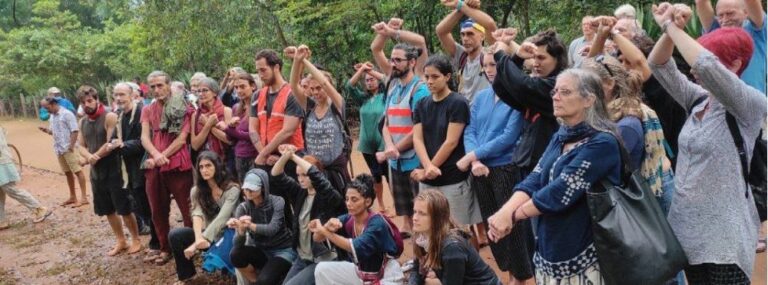
    Auroville residents seek collaborative planning for sustainable development

    Creating an ecosystem

    A former forester and resident since 2002 going only by her first name, Natasha, says Aurovillians are not opposed to development, but do look to participatory and collaborative planning to ensure that any development considers the environment and ground realities. “Afforestation in Auroville has been a long-term endeavour where people are invested not as scientists, but as enthusiasts,” she maintains. “Auroville is to be a point of inspiration, its forests being the most advanced pioneering experiment in recreating a tropical forest.” Tropical forests can fix much more carbon than was previously believed, and this incredible diversity was now regenerating within Auroville.

    Auroville arose from a parched plateau that was rapidly eroding into gullies and furrows, says Kundhavi Devi, an Auroville resident for the past 15 years. Today, the forests, farms and water bodies flourishing in the greenbelt bear testimony to the self-healing power of nature when it is assisted with concern and commitment. The first settlers toiled in the sun-baked expanse to recharge aquifers by preventing rainwater run-off and by nurturing a green cover to improve soil fertility. Auroville has received international acclaim for greening its landscape.

    “We’re not simply planting trees, but creating an ecosystem comprising trees, shrubs, woody species, creepers, lianas, that host insects, birds, animals, microorganisms, and fungi,” adds Natasha. “We have introduced around a thousand different plant species, and raise between 5,000 and 10,000 seedlings a year.”

    The Mother’s charter declares that Auroville belongs to humanity as a whole and that to live there, one must be a willing servitor of divine consciousness. She envisaged an eventual population of 50,000, by around 2025, with Matrimandir, the meditation centre, as its “centre and soul”. It was envisaged that systematic development of infrastructure would attract a working population of 15,000 by 2010.

    An equilibrium disturbed

    Asserting that the Foundation was under the “mistaken assumption” that it has a duty to build for a population of 50,000, the plaint stressed that the growth of Auroville has been organic and fuelled by the people who have chosen to be a part of it. “Constructing infrastructure for 50,000 people when only 3,500 reside is putting the cart before the horse,” it noted. “The need for infrastructure and facilities should be driven by the population and necessity, and not the other way around.”

    The petitioners were expected to appeal before the Supreme Court in the event the petition was dismissed because they anticipate that the NGT will generally not question a central government project.

    Auroville Working Committee member Hemant Lamba says the planned RoW requires the felling of over 150,000 trees and shrubs of tropical dry evergreen forest species, some of which are endangered trees. “Politics has the power to tear the delicate fabric of our path to human unity, and for this reason, most Aurovillians shun all political activity,” he remarks.

    Lamba maintains that the Aurovillian equilibrium has been stricken by some fanatical interpretations of ‘development’ that ignore ground realities. In recent years, a few community members have developed more extreme views about the Mother’s wish to build a ‘city of the future’, believing that the execution of the Crown as a ‘perfect circle’ is essential to hasten Auroville’s spiritual development.


    This article was first published on Mongabay-India


    Image: Mongabay-India with through a special arrangement

    Myanmar’s minefields continue to kill and maim

    Antipersonnel landmines continue to be produced in state-owned factories in Myanmar while resistance groups employ improvised landmines.

    Antipersonnel mine blasts claimed 88 lives in Myanmar in 2021, according to UNICEF’s mine action team in Myanmar. Another 196 individuals were maimed for life. Children represent 27 per cent of casualties from landmines or other similar explosive remnants of war – 19 among the 88 dead and 55 children were injured as a result of mines exploding, UNICEF’s data shows.

    The figures, covering 284 casualties from 169 different landmine blast incidents suggest a 113 per cent jump in the caseload of landmine incidents in 2020.

    Leading the list of incidents is the Shan state that shouldered about 38 per cent of the total casualties from 66 blast incidents. Landmine blasts killed 32 people, including seven children. Shan is particularly vulnerable as it borders China to the north, Laos to the east and Thailand to its south.

    The Kachin and Rakhine states followed, accounting for 18 per cent and 17 per cent respectively. Rakhine accounted for the highest rate of child casualties with 44 per cent of the total.

    The combination of the other areas including Bago, Chin, Kayah, Kayin, Mon, Magway, Sagaing and Tanintharyi accounted for 27 per cent of the total casualties.

    “Landmines continue to be planted as a method of warfare, obstructing the movement of civilians and provision of humanitarian aid,” says the international campaign to ban landmines (ICBL).

    Myanmar’s mined areas are located adjacent to the country’s borders with Bangladesh, China, India, and Thailand. New mines continue to be laid by both the military and non-State armed groups.

    Even on roads

    While people and organisations like ICBL involved in landmine monitoring are not exactly aware of the extent of mines planted in the country, they do confirm that mines continue to be produced in state-owned factories.

    In the meanwhile, resistance groups also employ improvised landmines. The planting of mines impedes the return of refugees and internally displaced persons.

    In June 2021, the International Campaign to Ban Landmines had voiced concern over reports of new antipersonnel mine use and civilian casualties due to landmines and other explosive ordnance in the country, especially following the coup by the military in February 2021. The coup was followed by violent crackdowns and fighting between the Myanmar military and two newly formed non-State armed groups, the ethnic armed group and the people’s defence forces.

    Tom Andrews the UN special rapporteur for Myanmar, had said on 8 June, “I have received distressing reports that junta forces are laying landmines on public roads.” Andrews was referring to reports from the Kayah State.


    Image: UNICEF