More

    BNP Accuses India of Aggression, Stages Protest March in Dhaka

    As the region grapples with economic challenges and strained diplomatic ties, Sunday’s developments highlight the fragile balance between political alliances and national interests in South Asia.
    The Bangladesh Nationalist Party (BNP) escalated its criticism of India on Sunday, accusing the Indian government of interfering in Bangladesh’s sovereignty and supporting and giving refuge to the now-exiled former Prime Minister Sheikh Hasina. In a series of fiery speeches, BNP leaders alleged “direct aggression” by India and staged a protest march toward the Indian High Commission in Dhaka.

    Allegations of Indian Interference

    BNP Senior joint secretary general Ruhul Kabir Rizvi led the charge, accusing India of orchestrating Sheikh Hasina’s return to power and maintaining her 15-year-long rule through what he described as manipulation of Bangladesh’s electoral system.

    “What the ruling party of India is doing to bring Sheikh Hasina back is nothing but direct aggression in the language of political science,” Rizvi said, addressing party supporters before the march. He claimed that India disregards Bangladesh’s sovereignty and has shown no respect for its people.

    Rizvi also criticized India for allegedly fostering communal tensions in Bangladesh by spreading false narratives of minority oppression. He attributed these efforts to a broader agenda aimed at creating division and fostering Hindutva-driven policies. He said India is upset as no country in the subcontinent, including Bhutan, Nepal, Pakistan, the Maldives, and Sri Lanka, currently stands with them. “No one can be their friend because, despite their talks of secularism, their hearts are filled with nothing but hardline Hindutva.”

    He further alleged that Indian propaganda had real-world consequences, citing the recent killing of a Muslim lawyer in Chattogram, which Rizvi claimed was a result of tensions incited by India’s portrayal of minority issues in Bangladesh.

    Protest March Blocked

    The BNP, through its associate bodies – Jatiyatabadi Jubo Dal, Swechchasebak Dal, and Chhatra Dal – organised a march toward the Indian High Commission to protest what they termed as “anti-Bangladesh incidents” in India.

    However, the march was halted midway by police barricades. Law enforcement officials urged protesters to cooperate to maintain law and order. In response, a six-member BNP delegation was allowed to proceed to the Indian High Commission, where they submitted a memorandum outlining their grievances.

    The memorandum protested alleged attacks on Bangladesh’s mission in Agartala, the desecration of the national flag, and India’s supposed attempts to incite communal violence in Bangladesh.

    A Wider Regional Context

    The BNP’s accusations come against the backdrop of an anticipated visit by Indian Foreign Secretary Vikram Misri to Dhaka. The visit is expected to address bilateral trade issues and other matters of mutual concern. Speaking at a separate event, Bangladesh’s Foreign Affairs Adviser Md Touhid Hossain expressed optimism about resolving the ongoing trade slowdown affecting both nations.

    Foreign Affairs Adviser Md Touhid Hossain said Bangladesh anticipates a resolution to the ongoing trade recession with India that has persisted over the past two to three months.

    Hossain highlighted the broader challenges facing South Asia, including stalled regional cooperation under the South Asian Association for Regional Cooperation (SAARC). He urged member states to prioritise dialogue and collective efforts to overcome bilateral differences, emphasising that cooperation is essential for economic growth and poverty alleviation in the region.

    Expressing optimism, Hossain added, “We hope the standoff will be resolved soon.”

    “If we want to solve problems, we have to first acknowledge their existence,” Hossain remarked, emphasizing the importance of frank dialogue between the neighbours.

    He highlighted a qualitative shift in the Bangladesh-India relationship following the political changeover in India on August 5.

    BNP’s Defiance

    During Sunday’s protest, Rizvi declared that the 180 million people of Bangladesh are prepared to resist any perceived hegemony by India. “We know how to use sophisticated equipment to safeguard our country in every domain – from air to sea to land. We have capable members in our smart military,” he asserted.

    Rizvi also accused Indian media and politicians of disseminating propaganda against Bangladesh to undermine the country’s religious harmony. “Despite their talk of secularism, their hearts are filled with nothing but hardline Hindutva,” he said, adding that India’s actions have isolated it within the subcontinent.

    In a provocative remark, Rizvi suggested raising demands for the return of historical territories, such as Bengal, Bihar, and Odisha.

    Their audacity has reached such a level that they now claim Chattogram as part of India… If they can make such a demand, then we too will raise our demand for the return of Siraj-Ud-Daulah’s Bengal, Bihar and Orissa,” the BNP leader said.

    Political Implications

    The BNP’s protest and harsh rhetoric underscore the growing tension in Bangladesh’s political landscape ahead of the upcoming national elections. The party has long accused Prime Minister Sheikh Hasina and her Awami League government of authoritarianism and reliance on Indian support to maintain power.

    India, as a key regional ally, has played a significant role in Bangladesh’s political and economic affairs. However, the BNP’s accusations reflect a shift toward a more confrontational stance, potentially complicating bilateral relations.

    Despite the charged atmosphere, BNP leaders emphasised the peaceful nature of their march. The event concluded with the submission of the memorandum, marking a symbolic assertion of Bangladesh’s sovereignty.

    As the region grapples with economic challenges and strained diplomatic ties, Sunday’s developments highlight the fragile balance between political alliances and national interests in South Asia.
    Syria: “A New Dawn” After Five Decades of Rule by Assad’s Family

    For the people of Syria, the fall of the Assad regime marks the end of an era. Yet, the path ahead remains uncertain. The coming weeks and months will be critical as the country attempts to navigate its way toward peace and stability.

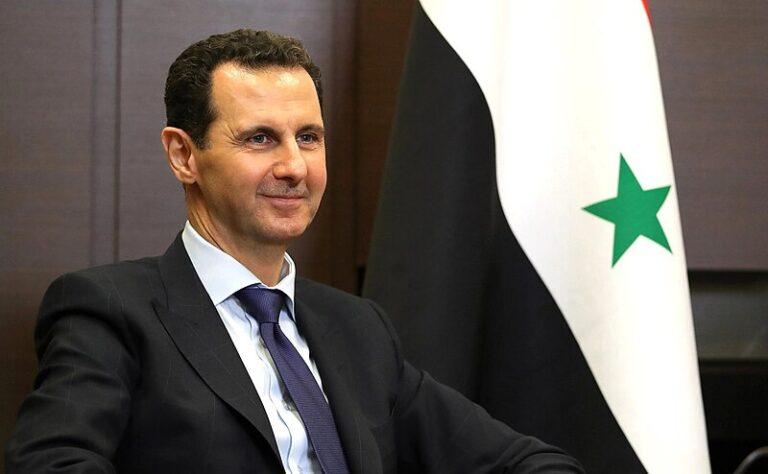
    The decades-long rule of the Assad family in Syria came to an abrupt end as rebels took over the country and President Bashar al-Assad fled the country.

    After nearly 50 years under the Baath Party, including 24 years of Bashar al-Assad’s leadership, the collapse of Assad’s regime marked the conclusion of a civil war that began in 2011.

    The change of guards in Damascus was brought about by a rebel coalition, bolstered by recent geopolitical shifts, swept through Syria with stunning speed, toppling the government in Damascus in a matter of just 10 days.

    Assad Flees as Rebels Seize Control

    Bashar al-Assad’s departure was confirmed by the Syrian army after rebels captured Damascus and declared the country free. Reports suggest Assad fled aboard a Russian-made Ilyushin Il-76 cargo aircraft, which vanished from radar near the city of Homs. The Russian Foreign Ministry later confirmed Assad’s resignation and his agreement to a peaceful transfer of power.

    The rebel coalition, including the Islamic extremist group Hayat Tahrir al-Sham (HTS), announced their vision for a “new Syria,” emphasising peace and the release of political prisoners. Public institutions are set to remain under the oversight of former Prime Minister Mohammad Ghazi al-Jalali until a new government is formed.

    The rebels toppled statues of Assad as gunfire echoed in the air. News channels showed images of a deserted presidential palace and the Iranian embassy being stormed by them.

    Fall of the Assad Dynasty

    The Assad family’s grip on Syria began in 1971 when Hafez al-Assad seized power in a military coup. For nearly three decades, Hafez ruled with an iron fist, consolidating power through the Baath Party, which championed Pan-Arab socialism.

    Hafez al-Assad was succeeded in 2000 by his son, Bashar.

    An account on X (formerly Twitter) has described him as follows: “Between 1990-1994, Bashar Al Assad was an eye surgeon in London and was described as geeky and quiet. His boss and colleagues recalled him as humble and whom nurses thought exemplary in reassuring anxious patients about to undergo anaesthetic.”

    Again, an account on X reads: “His time in London also served as an important period where he was somewhat distanced from his family’s political activities, as his older brother Basil was being groomed as the heir to their father, Hafez al-Assad. However, Basil’s sudden death in a car accident in 1994 prompted Bashar’s abrupt return to Syria to assume a political path.”

    The Arab Spring of 2011 brought unprecedented challenges to Assad’s regime. Though initially resilient, Assad’s government faced mounting pressure from domestic opposition and international sanctions, the government fell following the past weeks’ rebel offensive, bolstered by global shifts.

    Uncertainty Ahead: Who Will Govern Syria?

    As the dust settles, attention turns to the future of Syria. The coalition of rebel groups now faces the daunting task of rebuilding a fractured nation. Questions loom over how power will be distributed among the diverse factions, many of which hold radical ideologies.

    Former Prime Minister Mohammad Ghazi al-Jalali has expressed willingness to work with the rebels to establish a transitional government. However, analysts warn that infighting among the factions could derail efforts to form a stable administration.

    The international community is closely watching developments in Syria, with concerns about the influence of extremist groups and the potential for renewed conflict.

    A Nation at a Crossroads

    For the people of Syria, the fall of the Assad regime marks the end of an era. Yet, the path ahead remains uncertain. The coming weeks and months will be critical as the country attempts to navigate its way toward peace and stability. In the words of a rebel spokesperson, “This is the beginning of a new Syria. After 50 years of oppression and 13 years of war, we have a chance to rebuild our nation and our future.”

    Bangladesh to Introduce Policy Promoting Volunteerism for Societal Welfare

    Representatives from various international and national organizations also spoke at the event, reinforcing the global significance of volunteerism. Experts from academic and from humanitarian fields also shared insights on the transformative impact of volunteerism.

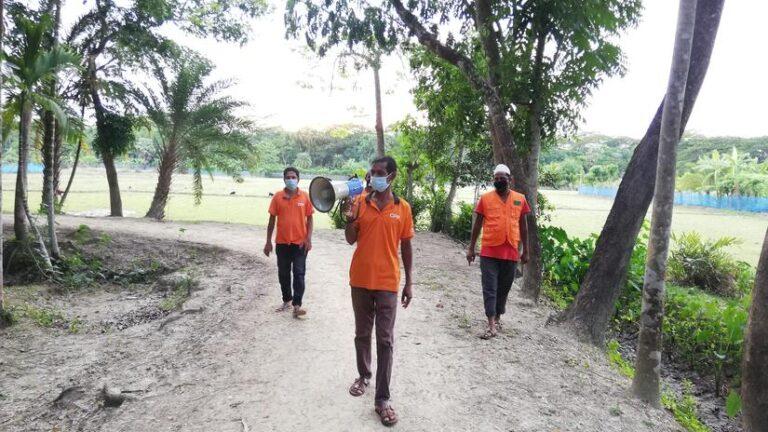
    The Bangladeshi government is gearing up to implement a comprehensive policy aimed at fostering volunteerism among individuals of all ages, both locally and internationally. The initiative, intended to enhance societal welfare, was announced by Relief and Disaster Management Secretary Kamrul Hasan during an event celebrating World Volunteer Day 2024 at Dhaka University.

    Organized by Voluntary Service Overseas (VSO) Bangladesh, the event focused on this year’s theme, “Everything for Everyone,” highlighting the universal value of volunteerism. Speaking at the gathering, Hasan emphasized the critical role volunteers play in disaster management.

    “Our volunteers have been instrumental in disaster response. Without their dedication, many successes would have been unattainable,” he noted.

    The event also saw the Dhaka University Vice-Chancellor, Professor Niaz Ahmed Khan, inaugurate the celebrations, during which 21 exemplary volunteers were honoured for their contributions.

    Unifying Volunteer Efforts

    VSO Bangladesh Country Director Khabirul Haque Kamal underscored the importance of unified volunteer efforts to drive national prosperity. He highlighted that coordinated volunteerism can address pressing challenges and build a resilient society.

    The Directorate of Youth Development, represented by Manikhar Rahman, stressed the government’s efforts to collaborate with NGOs to provide training for 900,000 individuals, enabling them to effectively contribute to volunteer initiatives.

    Global and National Collaboration

    Representatives from various international and national organizations also spoke at the event, reinforcing the global significance of volunteerism. Among the speakers were Swedish Embassy representative Nyoka Martinez Backstrom, Dutch Ambassador Andre Carstens, UNFPA Country Representative Masaki Watabe, and National Youth Forum President Dr. Arman Hossain.

    Experts from academic and humanitarian fields, such as Mohammad Moniruzzaman Khan, Director of the Institute of Disaster Management and Vulnerability Studies, and Dr. Rudaba Khandaker, Country Director of the Global Alliance for Improved Nutrition, shared insights on the transformative impact of volunteerism.

    Md. Shafiqur Rahman, VSO Bangladesh Project Manager, echoed these sentiments, emphasizing the need for structured volunteer initiatives to address societal challenges and build resilience.

    A Path Toward National Progress

    The government’s upcoming policy aims to streamline and promote volunteer activities as a pathway to achieving sustainable development and societal wellbeing. With international support and local dedication, Bangladesh seeks to harness the spirit of volunteerism as a cornerstone for progress.

    The initiative reflects the country’s commitment to fostering a culture of service and collaboration, demonstrating how volunteerism can contribute to a more inclusive and resilient future.

    Over 60 Sri Lankans Face Potential Sanctions for Alleged Economic and Human Rights Crimes

    As the international community considers its response, the ITJP emphasizes that its recommendations are a step toward justice for victims and a more transparent and equitable governance structure in Sri Lanka.

    An investigative report by the International Truth and Justice Project (ITJP) has identified over 60 individuals in Sri Lanka who are alleged to have committed economic and human rights crimes, calling for targeted international sanctions and travel bans. The list includes military officials, bureaucrats, and individuals linked to corruption, war crimes, and other human rights violations.

    The ITJP, an organization focused on accountability for international crimes, has submitted the names to several countries, urging action under mechanisms such as the Global Magnitsky Act. This move comes as part of a broader effort to ensure justice for victims of Sri Lanka’s civil war and address the mismanagement and corruption that contributed to the country’s economic crisis.

    Allegations and Context

    The individuals on the ITJP list are accused of a range of offenses, from wartime atrocities during Sri Lanka’s civil conflict to economic mismanagement that led to widespread suffering during the recent financial crisis. The group has highlighted systemic issues, including the misuse of public funds and the targeting of minority communities during and after the war.

    Among the individuals named are high-ranking military officials implicated in war crimes and enforced disappearances, alongside public officials accused of enabling or participating in large-scale corruption schemes. The ITJP argues that these actions have had a direct impact on Sri Lanka’s ongoing political and economic challenges.

    Calls for International Accountability

    The ITJP has urged nations like the United States, Canada, and European countries to impose sanctions that freeze assets and restrict travel for those on the list. This approach, according to the ITJP, would serve as a deterrent against future crimes and signal international commitment to upholding justice and human rights.

    These recommendations align with ongoing international scrutiny of Sri Lanka’s governance. The United Nations and other global organizations have repeatedly criticized the country for failing to adequately address past atrocities or implement effective anti-corruption measures.

    Recent Developments

    Efforts to hold Sri Lankan officials accountable are not new. Earlier this year, Canada imposed sanctions on members of the Rajapaksa family for alleged involvement in human rights violations and economic crimes. The ITJP’s current push aims to expand these measures, targeting a broader network of individuals responsible for Sri Lanka’s ongoing challenges.

    The call for sanctions coincides with international pressure for reform within Sri Lanka. Critics argue that the lack of accountability perpetuates a culture of impunity, allowing economic and human rights violations to continue unchecked.

    Broader Implications

    Sanctions and other accountability measures could have significant implications for Sri Lanka’s international relations and internal governance. While such actions are intended to promote justice, they may also strain diplomatic ties and complicate the country’s efforts to recover from its economic crisis.

    As the international community considers its response, the ITJP emphasizes that its recommendations are a step toward justice for victims and a more transparent and equitable governance structure in Sri Lanka.

    In the Rajya Sabha: eShram Portal Achieves Milestone with Over 30.43 Crore Registrations

    The integration of eShram with employment and social security initiatives underscores a holistic approach to workforce development in India. By bridging gaps between unorganised workers and government schemes, the platform seeks to improve economic resilience among vulnerable populations.

    The Ministry of Labour and Employment’s eShram portal, launched on August 26, 2021, has registered over 30.43 crore unorganised workers as of December 1, 2024. Union Minister of State for Labour and Employment, Shobha Karandlaje, shared this information in a written reply in the Rajya Sabha on Thursday. The minister said that this milestone reflects a significant step toward creating a comprehensive National Database of Unorganised Workers (NDUW) and integrating these workers into various social security and welfare programs.

    Empowering Unorganised Workers with eShram

    The eShram portal, accessible at eshram.gov.in, provides unorganised workers with a Universal Account Number (UAN) based on self-declaration. The initiative aims to streamline access to government schemes, skilling opportunities, and social security measures, thus empowering unorganised workers. A majority of the registrations – 27.22 crore – are from rural areas, highlighting the portal’s wide reach among India’s informal workforce.

    To further support unorganised workers, the Ministry has undertaken several initiatives:

    • Integration with Key Platforms: eShram is linked with the National Career Service (NCS) and Skill India Digital Portal for employment and skilling opportunities. It also connects with the Pradhan Mantri Shram Yogi Maandhan (PMSYM) pension scheme and the myScheme portal for one-stop access to government benefits.
    • Awareness Campaigns: The Ministry uses SMS campaigns, social media platforms, and Common Service Centres (CSCs) to educate workers about the portal. Additionally, the Unified Mobile Application for New-age Governance (UMANG) app facilitates registration and updates via mobile phones.
    • Launch of One-Stop-Solution: On October 21, 2024, the Ministry introduced eShram – “One-Stop-Solution,” which integrates 12 central government schemes, including Pradhan Mantri Suraksha Bima Yojana (PMSBY), Ayushman Bharat, and MGNREGA, into the portal.

    These measures aim to improve the social security coverage and livelihood opportunities for India’s vast unorganised workforce.

    Positive Employment Indicators

    India’s employment landscape has also shown notable improvements, according to the latest Annual Periodic Labour Force Survey (PLFS) conducted by the Ministry of Statistics and Programme Implementation (MoSPI). Between 2017-18 and 2023-24, the Worker Population Ratio (WPR) increased from 46.8 per cent to 58.2 per cent, while the unemployment rate dropped from 6.0 per cent to 3.2 per cent. These trends highlight a growing formalisation of the job market and expanding employment opportunities.

    Key developments in employment include:

    • Rising Workforce Participation: As per the Annual Survey of Unincorporated Sector Enterprises (ASUSE), the number of workers in the unorganised sector grew from 9.79 crore in 2021-22 to 10.96 crore in 2022-23.
    • Growth in EPFO Subscribers: Over seven crore new subscribers joined the Employees’ Provident Fund Organization (EPFO) between September 2017 and September 2024, reflecting an increase in formal employment.
    • Substantial Employment Growth: The KLEMS database published by the Reserve Bank of India (RBI) indicates that employment grew by 17.18 crore, from 47.15 crore in 2014-15 to 64.33 crore in 2023-24.

    Government Initiatives for Employment Generation

    The government has prioritised employment generation and employability through various schemes and programs implemented by multiple ministries. Notable initiatives include:

    • Prime Minister’s Employment Generation Programme (PMEGP): Focused on creating micro-enterprises.
    • Mahatma Gandhi National Rural Employment Guarantee Scheme (MGNREGS): Providing wage employment in rural areas.
    • Pradhan Mantri Mudra Yojana (PMMY): Offering loans to small businesses.
    • Deen Dayal Upadhyaya Grameen Kaushalya Yojana (DDU-GKY): Promoting skill development for rural youth.

    Additionally, the government announced a five-year employment and skilling package in the 2024-25 Union Budget. This initiative targets 4.1 crore youth with an outlay of ₹2 lakh crore, aiming to create a robust ecosystem for job creation and skills enhancement.

    A Holistic Approach to Workforce Development

    The integration of eShram with employment and social security initiatives underscores a holistic approach to workforce development in India. By bridging gaps between unorganised workers and government schemes, the platform seeks to improve economic resilience among vulnerable populations.

    Furthermore, the positive employment indicators, driven by concerted policy efforts and formalisation of jobs, point toward a brighter future for India’s labour market. With rising registrations on eShram and an expanding workforce, the government’s multifaceted strategy appears to be yielding results, fostering inclusivity and growth for workers across the nation.

    Shobha Karandlaje’s remarks in the Rajya Sabha shed light on these significant milestones, reinforcing the government’s commitment to improving the lives of millions of workers and building a more equitable and dynamic economy.

    Tree Islands ‘Restore Biodiversity’ in Oil Palm Farms

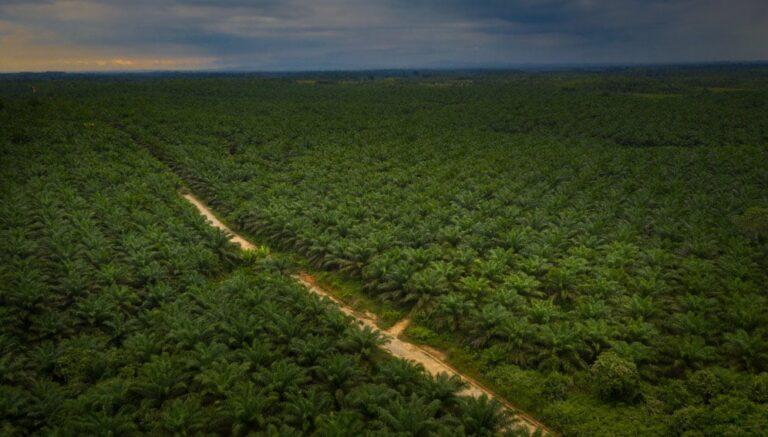
    Oil palm plantations are known for environmental harms such as biodiversity loss. Now, a study suggests that establishing tree islands within large oil palm farms can help restore biodiversity as the small forest clusters promote recovery of native trees and biodiversity.

    By: Sanjeet Bagcchi

    Environmentalists have long worried about the negative impacts of oil palm cultivation, especially on biodiversity when forests are burned and turned into plantations.

    Now researchers say there is a solution that could mitigate the damage.

    Setting up forests or “tree islands” in large oil palm farms can help restore biodiversity and ecosystems by aiding the natural regeneration of native trees, their study suggests.

    Increasing international demand for palm oil triggered vast forest destruction in Indonesia and Malaysia — responsible for 85 per cent of global palm oil production.

    These plantations have been a catastrophe for endangered animals, such as tigers in Indonesia’s Sumatra. They also aggravate conflicts with local Indonesian communities on traditional land rights.

    In 2023, with the production of 47 million tonnes of crude palm oil, Indonesia became the leading palm oil exporter in the world. But in the past two decades, the country has also lost 3 million hectares of natural forest areas, thanks to the spread of oil palm plantations.

    Protect the Remaining Forests

    Published this month in the journal Science, the study says the extensive conversion of Southeast Asian natural forests into plantations of African oil palm (Elaeis guineensis Jacq.) has led to alarming losses of biodiversity, ecosystem functioning and evolutionary history.

    The researchers say it’s essential to protect the remaining forests to conserve their rich, tropical biodiversity.

    In the study, the researchers looked at how ecological restoration contributes to the recovery of biodiversity in oil palm agricultural areas in Sumatra. The researchers strategically planted trees to set up 52 tree islands of different sizes and diversity levels to find out how the restoration strategies influence biodiversity in the oil palm agricultural area.

    “The main implication of our study is that it supports the use of tree islands, strategically planted patches of native vegetation within agricultural landscapes, as a viable approach to restoring plant diversity in oil palm landscapes,” said Gustavo Paterno, an author of the study and postdoctoral researcher at Göttingen University in Germany.

    The researchers observed that six years after being set up, tree islands hosted a broad range of native species, including more than 2,700 woody plant species.

    They say developing large and diverse tree islands is important for conserving “rare, endemic, and forest-associated” plant species in oil palm agricultural areas.

    Native Plants, Birds and Insect Diversity

    Tree islands speed up the natural revival of native trees by helping the spread of seeds by birds and wind, according to the study. This process improves biodiversity, important for developing resilient ecosystems that can resist climate change.

    “Our study demonstrates the potential of tree islands to transform biodiversity-poor agricultural lands into biodiversity-enriched ecosystems, offering a promising restoration strategy for oil palm landscapes,” said Paterno.

    “Based on these results, we recommend the establishment of large tree islands with a high initial diversity of planted tree species to promote biodiversity recovery within conventional oil palm plantations,” he told SciDev.Net.

    However, Johny Tasirin, from the faculty of agriculture at the Indonesia-based Sam Ratulangi University, believes the solution has limitations.

    “Overall, the native plants, birds, and insect diversity may increase, but I still doubt about recovering the large mammalian species which are a typical part of natural forests in Sumatra,” he told SciDev.Net.

    Clara Zemp, assistant professor and head of the Conservation Biology Lab at the University of Neuchâtel in Switzerland, said: “Tree islands in oil palm landscapes do not replace existing rainforests that have unique value for biodiversity.

    “Hence, the top priority is to protect remaining patches of natural forests and to avoid further deforestation.”

    This piece has been sourced from SciDev.Net

    Courage, not Compromise? A Rallying Cry that Failed at Deadlocked COP Meetings

    Only more pressure from the below, from the global civil society can push governments to make the right choice: setting aside, at least for once, the word compromise and instead chose another one that instead can make the difference while instilling hope.

    By Simone Galimberti

    Courage and not compromise. That was the motto desperately launched by members of the civil society in the twilight of the negotiations of the Plastic Pollution Treaty in Busan, South Korea last week.

    As we now know, the negotiations did not yield the results that would have helped Planet Earth set a groundbreaking target to reduce the amount of plastic being produced.

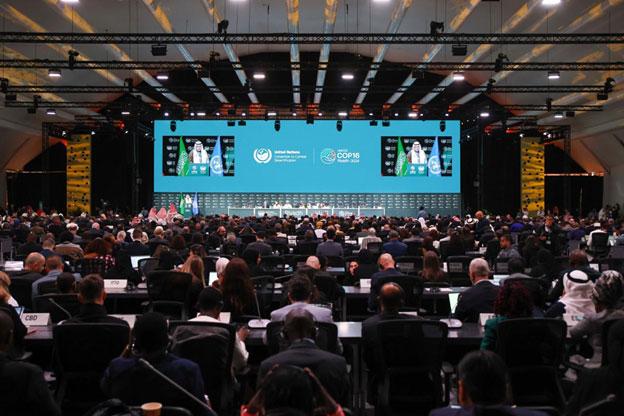
    Meanwhile, the international community is onto another crucial meeting in Riyadh, the capital of Saudi Arabia to discuss global efforts against desertification. It is going to be another COP process, what is formally known as the 16th Session of the United Nations Convention to Combat Desertification or UNCCD. (COP16, December 2-13).

    Apparently, this time, the host, Saudi Arabia, is going to lead a tremendous effort to ensure a strong outcome. Over the last two and half months, Riyadh, rather than being a global leader to ensure the survivability of our planet, a champion of sustainability, has been a disruptor.

    The Saudis were among those who have been undermining the recently concluded Climate COP 29 in Baku and, to a lesser extent, the COP 16 on Biodiversity in Cali, Colombia.

    But a review of what unfolded over the last two and half months, would also bring an indictment for act of omission not only to the Petro states but also to all developed nations.

    Indeed, the eleventh-hour rallying cry– “courage, not compromise”– should have been embraced as the North Star by all those nations who were ready to take bold steps in the three recently concluded COP processes.

    Miniscule Contribution

    In Busan, as explained by the Center for International Environmental Law, CIEL, ” negotiators had several procedural options available, including voting or making a treaty among the willing”. Yet the most progressive nations, around 100 countries, including the EU and 38 African nations and South American countries, did not dare to go beyond the traditional approach of seeking a consensus at any cost.

    Ironically what happened at COP 16 and COP 29 was equally a travesty of justice as developed nations did not budge from their positions. At the end, the final deals on biodiversity and climate financing, were in both cases extremely disappointing especially in relation to the former.

    Indeed. in Cali, there was no agreement at all in finding the resources needed to implement the ambitious Kunming- Montreal Global Biodiversity Framework.

    According to BloombergNEF (BNEF), in its Biodiversity Finance Factbook, ” the gap between current biodiversity finance and future needs have widened to $ 942 billion”.

    The Global Biodiversity Framework Fund (GBFF), the financial vehicle to implement the Framework, is still very far from becoming a true game changer.

    The millions of dollars that a small group of European nations have pledged during the negotiations in Cali, are still a miniscule contribution in relation to what was agreed two years ago in Montreal where the second leg of the COP 15 was held.

    There, the final outcome underpinning the Framework, required the mobilisation of financial resources for biodiversity of at least US$200 billion per year by 2030 from public and private sources and identifying and eliminating at least US$500 billion of annual subsidies harmful to biodiversity.

    Constructive Ambiguity

    What unfolded in Baku at the climate COP was also, in terms of financing, embarrassing for developed nations. The hardly negotiated agreement of tripling the US$ 100 billion per year by 2035 with a commitment to reach up to US$ 1.3 trillion by the same year through different sources of money, including difficult to negotiate levies, is far from what is required.

    On this front, the embarrassment was not only on the traditional developed nations but also on countries like China and the Gulf Nations who stubbornly rejected their responsibility to play their part in climate financing.

    At least, as part of a last minute compromise, the developed nations (G7 and few others like Australia) will now co-lead the responsibility of finding the resources. China and others wealthy nations that, according to an outdated UN classification are still officially considered as “developing”, will contribute but only on voluntary basis.

    As we see, the final outcomes of these three COPs were far from being courageous. Compromising, epitomized by concepts like “constructive ambiguity”, agreeing on something that can be interpreted differently by the nations at the negotiating tables, instead dominated.

    At this point, considering the frustrations of these mega gatherings, what could be done? Is the existing model of the COP with its complexities and endless delays and bickering, still viable?

    The influential Club of Rome, on the last days of COP 29, had released a strongly worded press release asking for a major reform of the ways negotiations were carried out. “The COP process must be strengthened with mechanisms to hold countries accountable”. The document went even further with calls to implement robust tracking of climate financing.

    Also, with each COP, a series of new initiatives are always launched, often just for the sake of visibility and prestige.

    Nationally Determined Contributions

    The risk is having a multitude of exercises and mechanisms that drains resources that, are at the end, are neither productive nor meaningful but rather duplicative and ultimately, a waste of money.

    We should be even more radical, I would say. For example, the international community should introduce the same peer to peer review process in place in the Human Rights Council that, frankly speaking, is hardly a revolutionary tool.

    And yet, despite the fact that nations with a solid track record in human rights abuses remain unscathed in the Council, such a change would represent some forms of accountability in the areas of biodiversity and climate.

    This could be envisioned as a reform that should accompany the implementation of the upcoming 3rd wave of Nationally Determined Contributions due by 2025. Getting rid of the consensus model is also something that should truly be considered.

    Why not holding votes that would break the vetoes of even one single nation? Why being so attached to unanimity when we do know that it is not working at all?

    As show in Busan, it is the traditionally developed nations that lack courage and farsightedness in pursuing a procedure that might backfire against them. This is, instead, a cause that at least the EU, Canada and Australia should embrace. Yet we are still very far from reaching this level of audacity.

    Another fanciful thinking relates to tie nations’ actions to the possibility of hosting prestigious sports tournament. Why not forcing international sport bodies like FIFA to reward the hosting rights for its mega events only to nations which are climate and biodiversity leaders in practice rather than through empty but lofty declarations?

    Creative Solutions

    Unfortunately, there will never be consensus within the football federations that run FIFA governing body or say, within the International Olympic Committee. A more promising area, though also not easy to put into practice, would be to find ways in which non state actors would have a real say in the negotiations.

    Both the COP 16 and the COP 29 reached some breakthroughs in relation to giving more voice, for example, to indigenous people. In Cali, it was decided to establish a new body that will more power to indigenous people.

    It is what is formally known, in reference to the provision related to the rights of indigenous people of the International Convention on Biodiversity, as the Permanent Subsidiary Body on Article 8(j).

    The details of this new body will be object of intense negotiations but at least a pathway has been created to better channel the demands of a key constituency who, so far, has struggled to gain its due recognition.

    Also at COP 29 saw some wins for indigenous people with the adaption of the Baku Workplan and the renewal of the mandate of the Facilitative Working Group (FWG) of local Communities and Indigenous Peoples Platforms.

    Surely there can be some creative solutions to strengthen what was supposed to be the platform to incorporate and engage non state actors, the Marrakesh Partnership for Global Action.

    The members of civil society could come up with new ideas on how to formally have a role in the negotiations. While it is impossible to have non state actors at the par of member states party to the conventions around which the COPs are held, surely the latter should be in a better place and have some forms of decision power.

    Courage

    Lastly one of the best ways to simplify these complex and independent from each other negotiations, would be to work towards a unifying framework in relation to the implementation of the biodiversity and climate conventions.

    On this, the Colombian Presidency of the COP 16 broke some important grounds with Susana Muhammad, the Minister of Environment and Sustainable Development of Colombia who chaired the proceedings in Cali, pushing for bridging the gap between biodiversity and climate negotiations.

    None of the propositions listed here are going to be easy to implement. What we need is simple to understand but also extremely hard to reach.

    Only more pressure from the below, from the global civil society can push governments to make the right choice: setting aside, at least for once, the word compromise and instead chose another one that instead can make the difference while instilling hope.

    This word is called courage.

    Simone Galimberti writes about the SDGs, youth-centered policy-making and a stronger and better United Nations

    This opinion piece has been sourced from Inter Press Service.

    Sri Lanka Expands and Enhances Aswesuma Welfare Programme

    The Aswesuma program’s expansion aligns with Sri Lanka’s broader economic recovery goals. The country recently restructured its external debt and implemented fiscal reforms in collaboration with international lenders like the International Monetary Fund.

    The Sri Lankan government has announced significant expansions and adjustments to the Aswesuma welfare programme, a key social safety net aimed at supporting vulnerable families. These changes reflect the administration’s commitment to addressing economic challenges while providing relief to the country’s most disadvantaged communities.

    The Aswesuma programme is part of a broader strategy to rebuild public trust and enhance social equity as Sri Lanka continues its recovery from economic crises. By combining welfare initiatives with structural reforms, the government aims to strike a balance between immediate relief and long-term development.

    The Aswesuma Welfare Benefit programme was introduced by the Sri Lankan government as a successor to the Samurdi Programme. The Aswesuma programme was established to ensure more effective and inclusive support for vulnerable populations. Its primary objective is to provide financial aid to deserving individuals and families facing economic hardships.

    Increased Coverage and Payments

    The government plans to extend the Aswesuma programme by adding over 300,000 families to the welfare scheme. This increase comes as part of broader efforts to mitigate the financial hardships experienced by citizens due to the ongoing economic recovery. The monthly allowance for beneficiaries will also be raised to ensure that recipients can better cope with rising living costs. This marks a significant shift in the government’s welfare approach, prioritizing direct aid to households​.

    Commitment to Economic Recovery

    The Aswesuma program’s expansion aligns with Sri Lanka’s broader economic recovery goals. The country recently restructured its external debt and implemented fiscal reforms in collaboration with international lenders like the International Monetary Fund (IMF). The increased welfare support demonstrates the government’s dual focus on stabilizing the economy and addressing immediate public needs​.

    Despite these efforts, the government has faced criticism from opposition parties and public stakeholders. Some argue that the programme adjustments are insufficient to address the widespread economic challenges faced by the population. Others emphasize the need for greater transparency in identifying and enrolling eligible families. However, officials remain optimistic, asserting that the updated program will create a robust safety net and reduce inequalities​.

    In the Lok Sabha: Centre, TMC Clash Over MGNREGA Fund Disbursal to West Bengal

    The Enforcement Directorate conducted raids in West Bengal earlier this year as part of its probe into the alleged irregularities in the scheme. These developments have further strained relations between the Centre and the state government.

    The Mahatma Gandhi National Rural Employment Guarantee Act (MGNREGA) became a flashpoint between the Centre and the Trinamool Congress (TMC) in the Lok Sabha on Tuesday. During the question hour in the Lok Sabha, TMC MP Kalyan Banerjee accused the central government of withholding MGNREGA funds meant for West Bengal for the fiscal years 2022-2023 and 2023-2024, claiming it was an act of discrimination against the state.

    TMC Alleges Discrimination

    Raising the issue, Kalyan Banerjee demanded answers on why West Bengal had been excluded from receiving MGNREGA funds. “Why has the West Bengal government been left out? Why wasn’t there any consultation? If you don’t like Bengalis, you won’t provide funds to Bengal?” Banerjee asked the union government during the question hour in the Lok Sabha, accusing the Centre of discriminating against the people of West Bengal. Banerjee charged, suggesting that the Centre’s actions violated Article 14 of the Constitution, which guarantees equality before the law.

    He also questioned the rationale behind the union government’s decision, stating, “For the last year, we have been hearing about some irregularities. We insist that if there are any irregularities, you should detect and arrest those responsible. But you don’t do it. How can you discriminate against the people of West Bengal? Doesn’t that violate Article 14 (of the Constitution)?” Banerjee questioned.

    Centre Cites Irregularities

    Responding to the accusations, union agriculture and farmers’ welfare minister Shivraj Singh Chouhan detailed alleged mismanagement in the implementation of MGNREGA by the West Bengal government. Chouhan claimed that large-scale irregularities had been uncovered, prompting the suspension of funds.

    “It has been demonstrated that non-beneficiaries have been registered as beneficiaries, and vice versa, under this scheme. The names of village development schemes were changed, which is not permissible. For instance, they committed an offence by renaming the Pradhan Mantri Awas Yojana as their own. Furthermore, benefits intended for beneficiaries have been given to non-beneficiaries,” Chouhan alleged in his response. Banerjee denied these claims.

    The union minister for agriculture and farmers’ welfare, Shivraj Singh Chouhan  underscored that, as per the provisions of the MGNREGA Act, funds can be withheld if central allocations are misused.

    Audit Revelations and Funds Freeze

    The clash in Parliament comes amid an ongoing freeze on MGNREGA funds to West Bengal, which has been in place since March 2022. According to an earlier report in the Hindustan Times, two un-named senior officials had told the newspaper that audits revealed large-scale irregularities in the scheme’s implementation in West Bengal. The union government decided to halt disbursals after the state failed to take corrective measures despite being alerted.

    “₹6,913 crore is due under MGNREGA since FY 2021-22,” the Hindustan Times quoted an unnamed senior West Bengal bureaucrat who said, “The chief minister ordered in February that the state should pay this amount to the beneficiaries in phases from its own funds. We have started the process.”

    However, Chouhan highlighted that West Bengal is not the only state under scrutiny. “Some other states have also been alerted to certain irregularities in implementing the scheme, and they have assured the Centre that they will take corrective measures. If they don’t follow the stated guidelines, they will also face action as per provisions of the Mahatma Gandhi National Rural Employment Guarantee Act, 2005,” he said.

    ED Investigation and State’s Rebuttal

    Adding to the controversy, the Enforcement Directorate (ED) conducted raids in West Bengal earlier this year as part of its probe into the alleged irregularities in the scheme. These developments have further strained relations between the Centre and the state government.

    West Bengal Chief Minister Mamata Banerjee, meanwhile, has consistently accused the central government of playing politics with welfare schemes. In a recent NITI Aayog meeting, she claimed she was stopped from raising issues related to the suspension of central funds, including those for MGNREGA.

    The Broader Impact

    The suspension of MGNREGA funds has had a significant impact on rural households in West Bengal, which rely on the scheme for employment and livelihood support. Banerjee argued that withholding funds punishes the state’s residents rather than addressing governance issues.

    The state government has attempted to mitigate the fallout by using its own funds to pay beneficiaries. However, the delayed disbursal and allegations of corruption have clouded the state’s efforts.

    Political Ramifications

    The TMC’s allegations of bias against West Bengal have escalated into a larger debate on federalism and the constitutional obligations of the central government. As Banerjee put it, “Doesn’t this violate Article 14?”

    The union government, on the other hand, has maintained that strict adherence to MGNREGA’s provisions is non-negotiable, insisting that accountability and transparency are paramount in managing public funds.

    As the stalemate continues, both sides remain entrenched in their positions, leaving the future of MGNREGA disbursals to West Bengal uncertain. The issue not only underscores the challenges of cooperative federalism but also raises questions about the intersection of politics and welfare.

    Expanding India’s Fisheries Sector: Employment, Infrastructure, and Credit Support

    In Uttar Pradesh, the PMMSY has expanded across all 75 districts, directly benefitting 14,013 people and providing indirect employment to 3.5 lakh others. Projects worth ₹1,294.32 crore have been sanctioned, focusing on infrastructure, training, and awareness programs for fish farmers.

    India’s fisheries sector has witnessed significant advancements under various government initiatives aimed at enhancing livelihoods, developing infrastructure, and fostering sustainable practices, the union minister of fisheries, animal husbandry and dairying, Rajiv Ranjan Singh alias Lalan Singh, said in a written reply in Lok Sabha on Tuesday. Key among these efforts is the Pradhan Mantri Matsya Sampada Yojana (PMMSY), a flagship scheme targeting comprehensive development in fisheries and aquaculture. Implemented from FY 2020-21 to FY 2024-25, PMMSY aims to generate 55 lakh employment opportunities nationwide and support fishers, fish farmers, and allied workers.

    Development Projects Across Regions

    Under PMMSY, the Union Territory of Dadra Nagar Haveli and Daman & Diu received approvals for projects worth ₹135.17 crore. These include construction of rearing ponds, cold storage facilities, and a modern fishing harbor at Vanakbara in Diu. To date, 10 beneficiaries in the UT have received support, ranging from freshwater aquaculture assistance to motorized transport vehicles for fish vendors, the minister said. Additionally, the UT runs three other schemes to assist fishermen, including financial aid for those affected by natural calamities and subsidies for equipment purchases, benefiting over 450 individuals in recent years.

    In Uttar Pradesh, the PMMSY has expanded across all 75 districts, directly benefitting 14,013 people and providing indirect employment to 3.5 lakh others. Projects worth ₹1,294.32 crore have been sanctioned, focusing on infrastructure, training, and awareness programs for fish farmers. Training sessions have been conducted for over 3,200 fish farmers to enhance skills and awareness about modern practices.

    Meanwhile, Karnataka has leveraged the Blue Revolution scheme to modernize its fisheries sector, particularly in Dakshina Kannada District. Fishermen have transitioned from traditional wooden boats to fiber-reinforced plastic boats and advanced fishing methods like gillnet and deep-sea fishing. Infrastructure improvements include developing 10 fishing harbors and 13 fish landing centers along the coast. Artificial reefs have been established at 56 locations to support small-scale fishers, boosting sustainability and catch efficiency.

    Credit Access for Fishers

    The government has extended the Kisan Credit Card (KCC) scheme to fishers and fish farmers, enabling them to access working capital. Since 2018-19, 4.39 lakh KCCs have been issued, disbursing ₹2,810 crore. Over the last three fiscal years, a cumulative credit of ₹57,864 crore was allocated to the fisheries sector, with states like Andhra Pradesh, Kerala, and Gujarat leading in disbursement.

    Achievements and Future Outlook

    The minister said that the initiatives under PMMSY and related schemes have resulted in multifaceted benefits, including increased fish production, enhanced exports, and adoption of sustainable practices. Development of modern infrastructure, such as cold chains and fishing harbors, has further bolstered India’s blue economy. With ongoing investments and focused programs, the fisheries sector is poised to significantly contribute to food security, rural employment, and economic growth.