More

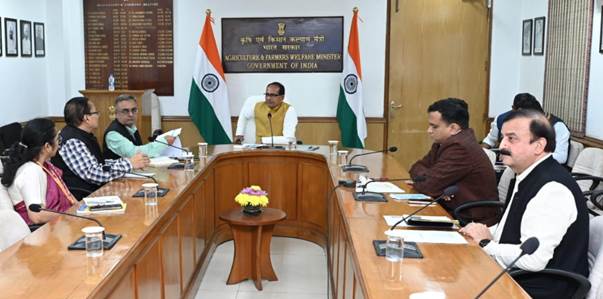
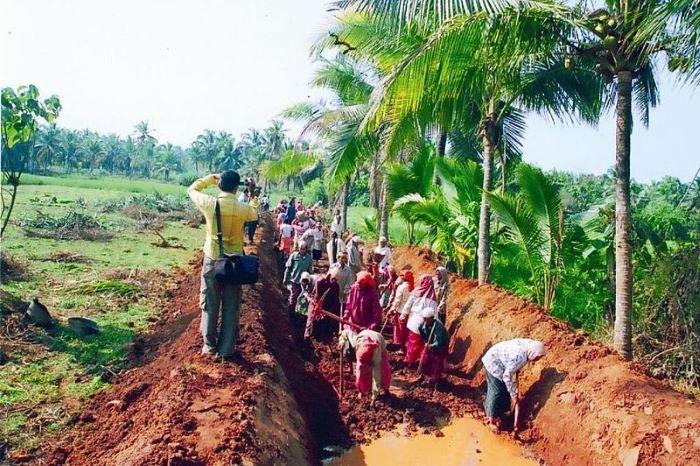
    In the Lok Sabha: Centre, TMC Clash Over MGNREGA Fund Disbursal to West Bengal

    The Enforcement Directorate conducted raids in West Bengal earlier this year as part of its probe into the alleged irregularities in the scheme. These developments have further strained relations between the Centre and the state government.

    The Mahatma Gandhi National Rural Employment Guarantee Act (MGNREGA) became a flashpoint between the Centre and the Trinamool Congress (TMC) in the Lok Sabha on Tuesday. During the question hour in the Lok Sabha, TMC MP Kalyan Banerjee accused the central government of withholding MGNREGA funds meant for West Bengal for the fiscal years 2022-2023 and 2023-2024, claiming it was an act of discrimination against the state.

    TMC Alleges Discrimination

    Raising the issue, Kalyan Banerjee demanded answers on why West Bengal had been excluded from receiving MGNREGA funds. “Why has the West Bengal government been left out? Why wasn’t there any consultation? If you don’t like Bengalis, you won’t provide funds to Bengal?” Banerjee asked the union government during the question hour in the Lok Sabha, accusing the Centre of discriminating against the people of West Bengal. Banerjee charged, suggesting that the Centre’s actions violated Article 14 of the Constitution, which guarantees equality before the law.

    He also questioned the rationale behind the union government’s decision, stating, “For the last year, we have been hearing about some irregularities. We insist that if there are any irregularities, you should detect and arrest those responsible. But you don’t do it. How can you discriminate against the people of West Bengal? Doesn’t that violate Article 14 (of the Constitution)?” Banerjee questioned.

    Centre Cites Irregularities

    Responding to the accusations, union agriculture and farmers’ welfare minister Shivraj Singh Chouhan detailed alleged mismanagement in the implementation of MGNREGA by the West Bengal government. Chouhan claimed that large-scale irregularities had been uncovered, prompting the suspension of funds.

    “It has been demonstrated that non-beneficiaries have been registered as beneficiaries, and vice versa, under this scheme. The names of village development schemes were changed, which is not permissible. For instance, they committed an offence by renaming the Pradhan Mantri Awas Yojana as their own. Furthermore, benefits intended for beneficiaries have been given to non-beneficiaries,” Chouhan alleged in his response. Banerjee denied these claims.

    The union minister for agriculture and farmers’ welfare, Shivraj Singh Chouhan  underscored that, as per the provisions of the MGNREGA Act, funds can be withheld if central allocations are misused.

    Audit Revelations and Funds Freeze

    The clash in Parliament comes amid an ongoing freeze on MGNREGA funds to West Bengal, which has been in place since March 2022. According to an earlier report in the Hindustan Times, two un-named senior officials had told the newspaper that audits revealed large-scale irregularities in the scheme’s implementation in West Bengal. The union government decided to halt disbursals after the state failed to take corrective measures despite being alerted.

    “₹6,913 crore is due under MGNREGA since FY 2021-22,” the Hindustan Times quoted an unnamed senior West Bengal bureaucrat who said, “The chief minister ordered in February that the state should pay this amount to the beneficiaries in phases from its own funds. We have started the process.”

    However, Chouhan highlighted that West Bengal is not the only state under scrutiny. “Some other states have also been alerted to certain irregularities in implementing the scheme, and they have assured the Centre that they will take corrective measures. If they don’t follow the stated guidelines, they will also face action as per provisions of the Mahatma Gandhi National Rural Employment Guarantee Act, 2005,” he said.

    ED Investigation and State’s Rebuttal

    Adding to the controversy, the Enforcement Directorate (ED) conducted raids in West Bengal earlier this year as part of its probe into the alleged irregularities in the scheme. These developments have further strained relations between the Centre and the state government.

    West Bengal Chief Minister Mamata Banerjee, meanwhile, has consistently accused the central government of playing politics with welfare schemes. In a recent NITI Aayog meeting, she claimed she was stopped from raising issues related to the suspension of central funds, including those for MGNREGA.

    The Broader Impact

    The suspension of MGNREGA funds has had a significant impact on rural households in West Bengal, which rely on the scheme for employment and livelihood support. Banerjee argued that withholding funds punishes the state’s residents rather than addressing governance issues.

    The state government has attempted to mitigate the fallout by using its own funds to pay beneficiaries. However, the delayed disbursal and allegations of corruption have clouded the state’s efforts.

    Political Ramifications

    The TMC’s allegations of bias against West Bengal have escalated into a larger debate on federalism and the constitutional obligations of the central government. As Banerjee put it, “Doesn’t this violate Article 14?”

    The union government, on the other hand, has maintained that strict adherence to MGNREGA’s provisions is non-negotiable, insisting that accountability and transparency are paramount in managing public funds.

    As the stalemate continues, both sides remain entrenched in their positions, leaving the future of MGNREGA disbursals to West Bengal uncertain. The issue not only underscores the challenges of cooperative federalism but also raises questions about the intersection of politics and welfare.

    Expanding India’s Fisheries Sector: Employment, Infrastructure, and Credit Support

    In Uttar Pradesh, the PMMSY has expanded across all 75 districts, directly benefitting 14,013 people and providing indirect employment to 3.5 lakh others. Projects worth ₹1,294.32 crore have been sanctioned, focusing on infrastructure, training, and awareness programs for fish farmers.

    India’s fisheries sector has witnessed significant advancements under various government initiatives aimed at enhancing livelihoods, developing infrastructure, and fostering sustainable practices, the union minister of fisheries, animal husbandry and dairying, Rajiv Ranjan Singh alias Lalan Singh, said in a written reply in Lok Sabha on Tuesday. Key among these efforts is the Pradhan Mantri Matsya Sampada Yojana (PMMSY), a flagship scheme targeting comprehensive development in fisheries and aquaculture. Implemented from FY 2020-21 to FY 2024-25, PMMSY aims to generate 55 lakh employment opportunities nationwide and support fishers, fish farmers, and allied workers.

    Development Projects Across Regions

    Under PMMSY, the Union Territory of Dadra Nagar Haveli and Daman & Diu received approvals for projects worth ₹135.17 crore. These include construction of rearing ponds, cold storage facilities, and a modern fishing harbor at Vanakbara in Diu. To date, 10 beneficiaries in the UT have received support, ranging from freshwater aquaculture assistance to motorized transport vehicles for fish vendors, the minister said. Additionally, the UT runs three other schemes to assist fishermen, including financial aid for those affected by natural calamities and subsidies for equipment purchases, benefiting over 450 individuals in recent years.

    In Uttar Pradesh, the PMMSY has expanded across all 75 districts, directly benefitting 14,013 people and providing indirect employment to 3.5 lakh others. Projects worth ₹1,294.32 crore have been sanctioned, focusing on infrastructure, training, and awareness programs for fish farmers. Training sessions have been conducted for over 3,200 fish farmers to enhance skills and awareness about modern practices.

    Meanwhile, Karnataka has leveraged the Blue Revolution scheme to modernize its fisheries sector, particularly in Dakshina Kannada District. Fishermen have transitioned from traditional wooden boats to fiber-reinforced plastic boats and advanced fishing methods like gillnet and deep-sea fishing. Infrastructure improvements include developing 10 fishing harbors and 13 fish landing centers along the coast. Artificial reefs have been established at 56 locations to support small-scale fishers, boosting sustainability and catch efficiency.

    Credit Access for Fishers

    The government has extended the Kisan Credit Card (KCC) scheme to fishers and fish farmers, enabling them to access working capital. Since 2018-19, 4.39 lakh KCCs have been issued, disbursing ₹2,810 crore. Over the last three fiscal years, a cumulative credit of ₹57,864 crore was allocated to the fisheries sector, with states like Andhra Pradesh, Kerala, and Gujarat leading in disbursement.

    Achievements and Future Outlook

    The minister said that the initiatives under PMMSY and related schemes have resulted in multifaceted benefits, including increased fish production, enhanced exports, and adoption of sustainable practices. Development of modern infrastructure, such as cold chains and fishing harbors, has further bolstered India’s blue economy. With ongoing investments and focused programs, the fisheries sector is poised to significantly contribute to food security, rural employment, and economic growth.

    Maldives and India: Parallels in Constitutional Challenges

    Recently, the Maldives Supreme Court accepted a case challenging amendments made to its Constitution. The amendments, which critics claim contravene the Constitution’s fundamental principles, include changes potentially aimed at consolidating power and altering governance frameworks.

    An ongoing controversy in the Maldives over constitutional amendments and its subsequent legal challenges has striking parallels with India’s landmark Kesavananda Bharati case. Both instances highlight the tension between political aspirations and the fundamental structure of their respective constitutions.

    The lawsuit was filed by former Kendhoo MP and lawyer Ali Hussain, who contends that the recent amendments contravened the Constitution and the fundamental structure of the Malidves Constitution.

    Opposition parties, the Maldivian Democratic Party (MDP) and The Democrats, have announced their decision to join the lawsuit.

    According to the constitutional amendment submitted by ruling party People’s National Congress MP for Hulhudhoo Mohamed Shahid on behalf of the government, MPs who leave or are removed from the party they contested with during parliamentary elections will lose their parliamentary seats if the switch occurs within the same term. Additionally, the amendment stipulates that if an independent MP joins a political party, they will also lose their seat.

    The amendment now also requires that a public referendum must be held when amending important articles of the Constitution that relates to citizens, stating that if this is to amended, a public referendum also has to be held.

    The Maldives’ Constitutional Dilemma

    Recently, the Maldives Supreme Court accepted a case challenging amendments made to its Constitution. The amendments, which critics claim contravene the Constitution’s fundamental principles, include changes potentially aimed at consolidating power and altering governance frameworks. Critics argue these changes undermine democratic values and the separation of powers, essential elements of the Maldivian Constitution.

    The case has sparked debates about the principles underpinning constitutional amendments. While the government defends the changes as essential for political stability, opponents warn of potential misuse of power and erosion of democratic safeguards.

    Kesavananda Bharati Case: Defining India’s Basic Structure Doctrine

    The Maldives case bears resemblance to India’s Kesavananda Bharati case of 1973. In this landmark judgment, the Indian Supreme Court introduced the “basic structure doctrine,” asserting that certain fundamental features of the Constitution cannot be amended, even by Parliament. The court held that while constitutional amendments are permissible, they must not alter the core principles – such as sovereignty, democracy, and the rule of law – that form the foundation of the Constitution.

    The doctrine of Basic Structure was propounded by the Indian Judiciary in 1973 in the Keshavananda Bharati case to put a limitation on the amending powers of the Parliament so that the ‘Basic Structure of the Constitution’ cannot be amended in the exercise of its ‘constituent power’ under Article 368 of the Indian constitution.

    This ruling was a response to attempts by the Indian government to use its majority to amend the Constitution for political gains. By setting this precedent, the Indian judiciary positioned itself as a guardian of constitutional integrity, ensuring that the Constitution’s essence remains untarnished, regardless of the political climate.

    Parallels Between the Two Cases

    Both cases involve significant constitutional amendments that sparked legal challenges. In India, the amendments sought to curtail judicial review and expand the government’s authority. Similarly, in the Maldives, the contested amendments are perceived as altering the balance of power between branches of government and potentially undermining democratic principles.

    Central to both cases is the judiciary’s role in preserving constitutional sanctity. In the Maldives, the Supreme Court is poised to determine whether the amendments align with the foundational principles of the Constitution. This echoes the Kesavananda Bharati case, where the Indian judiciary asserted its authority to safeguard the Constitution’s “basic structure.”

    In both scenarios, the stakes are high, with significant political and public implications. In India, the judgment shaped the balance of power between the legislature and the judiciary. Similarly, the Maldives’ legal challenge could redefine the boundaries of constitutional amendments and set a precedent for future governance.

    Implications for Democratic Governance

    The outcomes of both cases are not just legal milestones but pivotal moments for democratic governance. The Kesavananda Bharati case underscored the importance of limiting political power to prevent authoritarianism and preserve democratic ideals. Similarly, the Maldives’ Supreme Court decision will likely impact the country’s political trajectory and reaffirm—or redefine – the principles guiding its constitutional framework.

    The Maldives’ case reflects a broader global challenge of balancing constitutional flexibility with the preservation of foundational principles. Drawing from India’s experience, the Maldives’ judiciary has an opportunity to reinforce its Constitution’s integrity while navigating political complexities. As the Supreme Court deliberates, the parallels with Kesavananda Bharati remind us of the judiciary’s critical role in upholding democratic values in the face of political pressures. The verdict in this case will not only shape the Maldives’ constitutional future but also contribute to the discourse on governance and constitutionalism in democratic societies.

    In Lok Sabha: Union Minister Highlights EPR Implementation for Waste Management

    By involving local authorities, formalising waste management sectors, and promoting sustainability, the Extended Producer Responsibility framework seeks to address the dual challenges of environmental protection and efficient resource utilisation.

    In a detailed response in the Lok Sabha, Union Minister of State for Environment, Forest, and Climate Change, Kirti Vardhan Singh, outlined the framework for managing various waste streams under the Extended Producer Responsibility (EPR) regime. He provided updates on the registration and monitoring of Producers, Importers, and Brand Owners (PIBOs) involved in handling plastic packaging, e-waste, battery waste, waste tyres, and used oil.

    Verification and Auditing of Waste Processors

    The Minister emphasized that State Pollution Control Boards (SPCBs) and Pollution Control Committees (PCCs) are responsible for verifying waste processors before their registration under the EPR framework. Centralised online EPR portals facilitate transparency by allowing registered recyclers to upload certificates. Additionally, the Central Pollution Control Board (CPCB) and SPCBs/PCCs are empowered to conduct inspections and periodic audits of PIBOs and Plastic Waste Processors (PWPs) to ensure compliance.

    Random audits conducted by CPCB revealed irregularities in some plastic waste processors, leading to directives for SPCBs to impose Environmental Compensation (EC) and enforce applicable legal actions against violators.

    Annual Reporting and Market-Based Mechanism

    PIBOs are required to file annual returns detailing plastic waste generation, procurement of raw materials, and sales of packaging materials. The EPR framework relies on a market-driven approach, enabling recyclers to develop independent mechanisms for sourcing waste. Recyclers generate EPR certificates after processing the waste, which are then purchased by PIBOs to meet their obligations.

    Urban local bodies (ULBs) also play a role under the EPR guidelines. They can receive plastic waste processing certificates and trade them with PIBOs to fulfill EPR obligations. This collaborative mechanism ensures efficient waste collection, segregation, and recycling.

    Strengthening Waste Management Sector

    The EPR regime aims to formalize the informal waste management sector by recognizing registered recyclers and fostering partnerships with urban local bodies, gram panchayats, and third-party waste management entities. PIBOs are encouraged to establish infrastructure for the collection and segregation of waste, tailored to specific plastic categories.

    The guidelines mandate minimum recycling levels for various waste streams, including plastic packaging, e-waste, battery waste, used oil, and waste tyres. This ensures the active involvement of both formal and informal sectors, thereby strengthening the waste management ecosystem.

    Transparency and Sustainability Measures

    Centralized EPR portals provide public access to data on PIBOs’ EPR targets and the availability of EPR certificates generated by registered waste processors. The guidelines also promote sustainable practices, including enhancing the recyclability of plastic packaging.

    The Minister highlighted that the government’s EPR guidelines are designed to ensure transparent and effective implementation, overseen by a Steering/Implementation Committee constituted under the respective waste management rules.

    Actions Against Non-Compliance

    In response to observed irregularities, the CPCB directed SPCBs to levy environmental compensation for non-compliant EPR certificates and take legal action against violators. These measures aim to ensure adherence to stipulated requirements and maintain the integrity of the waste management process.

    A Comprehensive Waste Management Framework

    The government’s EPR strategy integrates rigorous verification, robust reporting mechanisms, and market-driven solutions to manage waste streams effectively. By involving local authorities, formalising waste management sectors, and promoting sustainability, the EPR framework seeks to address the dual challenges of environmental protection and efficient resource utilization.

    This detailed update highlights India’s commitment to building a sustainable waste management ecosystem, reinforcing the importance of accountability, transparency, and collaborative governance.

    Cyclone Remal Inflicts $622 Million in Losses on Bangladesh; Highlights Risks of Floating LNG Terminals

    The findings align with a growing recognition that climate change is intensifying weather patterns, making energy infrastructure increasingly vulnerable. Stronger storms, higher wind speeds, and rougher seas are likely to become more frequent, posing long-term challenges.

    Bangladesh suffered significant economic losses of approximately $622 million due to Cyclone Remal, with the storm exposing vulnerabilities in the country’s energy infrastructure, particularly its reliance on floating liquefied natural gas (LNG) import terminals. The findings, revealed in a report by the US-based Institute for Energy Economics and Financial Analysis (IEEFA), underscore the challenges faced by nations dependent on such offshore facilities.

    The cyclone, which struck in May 2024, caused extensive damage, including the prolonged shutdown of the Summit LNG terminal, one of Bangladesh’s two floating, storage, and regasification units (FSRUs). The Summit LNG Terminal Company, partly owned by Japan’s JERA (16.5 per cent) and Mitsubishi (25 per cent), demanded $22 million in contractual payments while the terminal was offline. This amount is in addition to the $600 million in broader economic losses attributed to the storm.

    Prolonged Shutdown and Its Impact

    The Summit LNG terminal experienced nearly six months of downtime, significantly disrupting Bangladesh’s LNG import capabilities. Initially taken offline for routine maintenance from January to March, the terminal sustained structural damage during the cyclone. It was transported to Singapore for extensive repairs before returning in July. However, adverse oceanic conditions delayed its reconnection, postponing its operations until September.

    The disruption underscores the susceptibility of floating LNG terminals to weather-related challenges, which can have far-reaching consequences for energy security. “Bangladesh’s experience highlights how severe weather can create prolonged disruptions, raising risks for other nations pursuing offshore LNG projects,” the IEEFA report noted.

    Growing LNG Markets Face Challenges

    South and Southeast Asia are projected to drive LNG demand growth over the next two decades. To meet this demand, the LNG industry has promoted floating terminals as cost-effective and faster alternatives to onshore facilities. However, the IEEFA report warns of significant downsides to these floating solutions.

    “While floating terminals have lower upfront costs, their higher operating expenses can surpass the costs of onshore facilities within seven years,” said Sam Reynolds, the report’s co-author and LNG Research Lead for IEEFA Asia. “Additionally, their vulnerability to inclement weather, exacerbated by climate change, poses critical risks.”

    The report also highlighted operational challenges for floating LNG terminals, which can struggle to function during moderate breezes and rough seas. Such conditions often force these vessels to temporarily relocate, further impacting their reliability.

    Regional Implications for LNG Projects

    The vulnerabilities exposed by Cyclone Remal mirror broader regional issues. Several floating LNG projects in South and Southeast Asia have faced delays or cancellations. Recent examples include halted projects in Bangladesh and the Philippines, alongside persistent delays in Vietnam.

    “It is telling that none of Asia’s largest LNG importers, such as Japan, China, South Korea, Taiwan, India, or Thailand, rely on floating LNG terminals,” said Christopher Doleman, co-author of the IEEFA report. “These nations have likely recognized the operational and security risks of such technology.”

    Climate Change and Energy Security

    The findings align with a growing recognition that climate change is intensifying weather patterns, making energy infrastructure increasingly vulnerable. Stronger storms, higher wind speeds, and rougher seas are likely to become more frequent, posing long-term challenges for offshore LNG projects.

    “Stronger and more harmful weather events increasingly threaten the reliability of offshore LNG projects and the energy security of importing countries,” Reynolds said. The report suggests that reliance on floating terminals may ultimately undermine the LNG industry’s efforts to expand in fast-growing Asian markets.

    Future Outlook

    As climate-driven risks escalate, the IEEFA recommends re-evaluating the role of floating LNG terminals in energy strategies. For Bangladesh and other nations considering similar projects, the choice between floating and onshore facilities may increasingly hinge on balancing cost efficiency with long-term reliability and resilience.

    The experiences of Cyclone Remal serve as a stark reminder of the high stakes involved in energy infrastructure planning, particularly in regions prone to severe weather. The report concludes with a call for greater scrutiny of offshore LNG terminals as countries navigate the twin challenges of energy security and climate adaptation.

    World Court Begins Historic Climate Change Hearings

    Advocates also hope the case will create momentum for climate justice by establishing the principle that nations causing the most greenhouse gas emissions bear heightened responsibility for mitigation and adaptation.

    In a landmark moment for international law and climate action, the International Court of Justice (ICJ) convened on Monday to deliberate on the legal obligations of states in combating climate change. The hearings, spurred by a resolution from the United Nations General Assembly and backed by vulnerable Pacific Island nations, could shape global climate governance for decades.

    The case seeks an advisory opinion from the ICJ, clarifying how existing international laws—such as the United Nations Framework Convention on Climate Change (UNFCCC), human rights treaties, and customary international law — apply to states’ responsibilities to prevent and address climate-related harms.

    Small Island States Drive Legal Push

    The push for ICJ involvement was led by Pacific nations like Vanuatu, whose very existence is threatened by rising sea levels. Speaking outside the court, Vanuatu’s ambassador to the UN emphasized the moral and existential urgency of the hearings. “This case is not just about law — it’s about survival,” they said, highlighting the devastating impacts of intensifying storms and eroding coastlines.

    Supporters argue that clear legal guidance from the ICJ will reinforce global commitments under the Paris Agreement and hold major polluting states accountable for their inaction. Advocates also hope the case will create momentum for climate justice by establishing the principle that nations causing the most greenhouse gas emissions bear heightened responsibility for mitigation and adaptation.

    Complex Legal Arguments

    During Monday’s session, state representatives, environmental organizations, and legal experts laid out their positions. Proponents of the advisory opinion stressed that international law already imposes a duty to prevent significant harm to the environment, a principle enshrined in the Stockholm Declaration of 1972 and subsequent agreements.

    Counterarguments raised by some states warned against politicizing the ICJ, contending that climate change is primarily a matter for diplomatic and scientific cooperation rather than judicial determination. They argued that assigning legal blame could jeopardize ongoing international negotiations under the UNFCCC.

    The ICJ’s decision to take up the case reflects growing recognition of climate change as a critical issue for international law. Legal scholars highlighted parallels with past rulings, such as the ICJ’s advisory opinion on nuclear weapons, which addressed global risks through legal principles.

    Implications for Climate Justice

    An advisory opinion from the ICJ is non-binding, but its influence could be transformative. Legal clarity from the court could strengthen climate litigation worldwide, encouraging courts in various jurisdictions to recognize state and corporate liability for climate harms.

    For activists and vulnerable communities, the hearings represent an opportunity to shift the balance of power. “This is about ensuring that no nation, no matter how small, is left behind in the global fight against climate change,” said a representative of a Pacific Island coalition.

    On the other hand, skeptics question whether the ICJ ruling will have practical effects, given the lack of enforcement mechanisms in international law. Still, proponents argue that moral and political pressure resulting from a strong ICJ opinion could compel greater action from reluctant states and major emitters.

    Next Steps

    The hearings are expected to continue for several days, with written submissions and oral arguments providing a detailed roadmap of the legal landscape. Observers anticipate a decision in 2024, though the deliberation process could extend further given the complexity of the issues.

    As the world watches, the ICJ’s hearings underscore the growing intersection of law, human rights, and environmental protection. The case highlights the role of international institutions in addressing what UN Secretary-General António Guterres has called “the defining issue of our time.” Whatever the outcome, this week’s proceedings mark a pivotal moment in the global struggle against climate change, offering a legal platform for the voices of those most affected by the crisis.

    New FAO Report Offers Guidance and Data on Integrating Nutrition Goals into Food Trade Policies

    International trade on average doubles the diversity of foods available in a country catalysing more diverse food supply and diets which are a net plus for nutrition goals, especially in countries with less diverse geographies.

    International trade of food and agricultural products has grown robustly in recent decades and makes very significant contributions to food and nutrient diversity, availability and affordability around the world, a new report from the Food and Agriculture Organization of the United Nations (FAO) shows.

    At the same time, trade can, in some contexts, be an accelerator of unwelcome changes in dietary patterns, boosting consumption of foods with low nutritional value, and high in fats, sugar and/or salt. This highlights the need to develop trade policies that are coherent with national nutrition and public health objectives, according to The State of Agricultural Commodity Markets (SOCO) 2024.

    “The expansion of global food trade has been influenced by multilateral trade rules that have shaped a freer, fairer, and more predictable trade environment, which, along with an increasing number of regional trade agreements, has promoted trade in food,” said FAO Director-General QU Dongyu.

    The report, entitled Trade and Nutrition: Policy Coherence for Healthy Diets, emphasizes the need to strengthen policy coherence between trade and nutrition sectors to make sure that trade does not undermine diet quality and contribute to rising rates of obesity and overweight.

    It also notes that links between trade and nutrition are intricate and heterogeneous, and warrant closer attention. As incomes rise, a welcome effect of development, import demand for ultra-processed foods rises even faster, underscoring the utility of enabling policy makers to consider the role of nutrition.

    Trade is fundamental for food security and nutrition

    International trade on average doubles the diversity of foods available in a country catalysing more diverse food supply and diets which are a net plus for nutrition goals, especially in countries with less diverse geographies such as Kiribati or Norway. Dietary diversity is key for the adequacy of micronutrient supply.

    Trade-driven diversity also leads to a more equal distribution of nutrients such as vitamin C, calcium, and zinc, which is key given that the domestic food production of many countries does not meet the nutrient requirements of their populations. SOCO 2024 presents ample data on how global flows of critical nutrients fill such gaps.

    Food prices tend to be lower in countries that are open to trade. This finding applies across the board including staples, fresh foods, and processed foods.

    Although food trade is a cornerstone of food security, in some contexts it may produce unwanted effects, in particular obesity, a subject that SOCO 2024 investigates in depth. The worldwide prevalence of undernourishment, FAO’s anchor metric for hunger, declined to 9.2 percent in 2022 from 12.7 percent in 2000. Over that period, the global prevalence of obesity in the adult population increased from 8.7 percent to 15.8 percent.

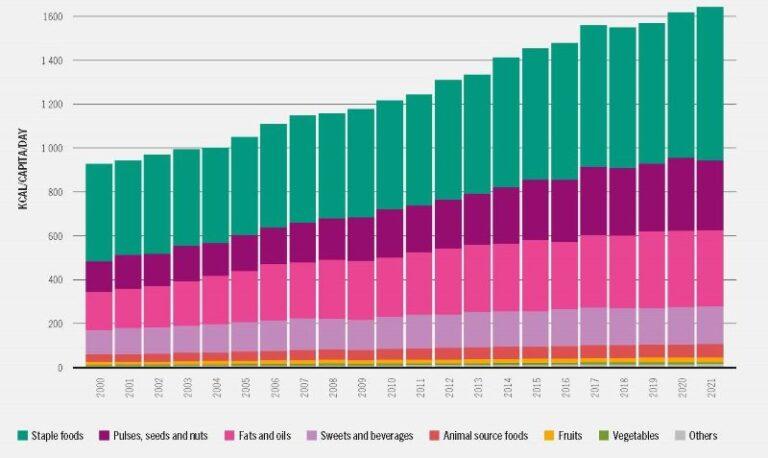
    Trade has increased in all food categories, and at all processing levels, since 2000. Staple foods account for the largest share of calories traded, but their share is declining while those of fats and oils, pulses, seeds and nuts and animal-source foods is rising.

    Some key findings

    Nearly 5 000 trillion kilocalories were traded in 2021, more than double the dietary energy traded in 2000. Daily per capita food trade increased to1 640 kcal from 930 over that time.

    A 10 percent increase in income results in an 11 percent increase in the demand for imports of ultra-processed foods and a 7 percent increase in the demand for imports of unprocessed and minimally processed foods.

    Between 1961 and 2021, the global per capita average dietary energy available for human consumption increased by 35 percent, from 2 200 to 2980 calories per person per day. In 1961, staple foods accounted for 57.4 percent and declined to 48.4 percent. The share of animal source foods grew from 12.2 percent to 15.1 percent and that of fats and oils increased from 8.4 to 12.7 per cent.

    Per capita trade in vitamin C and calcium from food increased by almost 90 percent between 2000 and 2021.

    In 2020, countries produced an average of 120 different food items, while trade lifted the number of food items available to an average of 225, with significant growth recorded in the past decade.

    Ultra-processed foods accounted for 7 per cent of globally traded calories, and 12 per cent of food imports in high-income countries in 2021. In monetary terms, the value of imported ultra-processed foods was much larger than their caloric share.

    Increasing investment and innovation in food processing sectors means more processed foods are available locally and distributed widely through the proliferation of supermarkets. SOCO presents evidence of how the pace of dietary transformation in low- and middle-income countries linked to this, and to rapid urbanization, significantly outpaces such changes in what are now high-income countries.

    Trade governance

    While trade liberalization has numerous benefits for food security, questions linger about whether it is conducive to healthy diets. An analysis for SOCO 2024 using FAO’s Cost and Affordability of a Healthy Diet indicator found that higher import tariffs are associated with higher food prices irrespective of the healthy qualities of the foods, indicating that, in general, trade openness does not have a disproportionate effect on high-energy low-nutrition foods.

    The SOCO 2024 report offers considerations of the role of modern regional trade agreements, which go beyond market access and tariff reductions and focus more on harmonizing non-tariff measures and domestic regulations covering standards related to additives, pesticide residues and labelling requirements.

    It finds some evidence that regional trade agreements with a high number of sanitary and phytosanitary provisions tend to increase imports of ultra-processed foods, which are also notably more responsive to income changes.

    The report also reviews case studies of efforts to integrate nutrition goals into trade policies and how these can comply with or run afoul of multilateral rules.

    Wage Inequality has Declined in Two-Thirds of Countries Worldwide Since Start Of 21st Century: ILO

    According to the International Labour Organisation (ILO), global real average wage growth has started to rise again as inflation progressively eases. Yet, ILO says that despite these positive outcomes, high levels of wage inequality remain, making it a pressing policy issue.

    A new report from the International Labour Organization (ILO) reveals that wage inequality has decreased in about two-thirds of all countries since 2000. Despite this positive trend, significant wage differentials persist worldwide. 

    The Global Wage Report 2024-25: Is wage inequality decreasing globally?, finds that since the early 2000’s, on average, wage inequality, which compares the wages of high and low wage earners, decreased in many countries at an average rate that ranged from 0.5 to 1.7 per cent annually, depending on the measure used. The most significant decreases occurred among low-income countries where the average annual decrease ranged from 3.2 to 9.6 per cent in the past two decades. 

    Wage inequality is declining at a slower pace in wealthier countries, shrinking annually between 0.3 and 1.3 per cent in upper-middle-income-countries, and between 0.3 to 0.7 per cent in high-income countries. Moreover, even though wage inequality narrowed overall, decreases were more significant among wage workers at the upper end of the pay scale.

    Notable Recovery

    Pay packets around the world rose 1.8 per cent in 2023 and continued their positive trajectory in the first half of the year, rising by 2.7 per cent on the back of a strong post-COVID global recovery, the ILO said.

    “If this trend is confirmed, it will be the largest gain in more than 15 years… however, this positive trend is not shared equally across regions,” said ILO Director-General Gilbert Houngbo.

    Speaking in Geneva at the launch of ILO’s Global Wage Report, Mr. Houngbo noted that today’s global wage gains reflect a notable recovery compared with the 0.9 per cent decline in 2022, when high inflation – and higher prices – outpaced wage growth.

    The trend for bigger pay packets is less marked in highly-industrialized economies, however, where wages “grew modestly” by 0.9 per cent last year, the ILO chief said. This contrasts with a bumper near-six per cent wage increase in emerging economies in 2023 after a 1.8 per cent rise in 2022 – a positive trend that has continued in 2024.

    Despite this welcome development, prices remain too high for low-income households who have continued to struggle with the rising cost of living. “Inflation – albeit reduced – remains a harsh reality in many emerging and developing countries,” the UN labour agency chief noted.

    Regional trends

    From a regional viewpoint, average wages increased faster in Asia and the Pacific, Central and Western Asia, and Eastern Europe, compared to the rest of the world.

    In 2022, Africa, Asia and the Pacific, and Central and Western Asia were the only regions that witnessed increases in average wages in 2022, while average real wages decreased in all other regions. Declines ranged from minus 0.8 per cent in Eastern Europe to minus 3.7 per cent in Northern, Southern and Western Europe, ILO said.

    In 2023, wage growth was positive in most regions, with the exception of Africa, Northern America, and Northern, Southern and Western Europe.

    In 2024 – except for African and Arab States, where average real wages remained stable – wages grew in all regions in 2024, from 17.9 per cent in Central and Western Asia, to 0.3 per cent in Northern America.

    Persistent Inequality

    Amid these gains, ILO pointed out that productivity increased “more rapidly” than wages in high-income countries from 1999–2024 (a 29 per cent output increase compared with a 15 per cent pay packet change). This discrepancy originated mainly between 1999 and 2006, then during the financial crisis of 2008 to 2009 and latterly as a result of the COVID-19 crisis.

    According to ILO data crunched from some 150 countries, wage inequality – the difference between the lowest and highest-paid workers – has decreased in two-thirds of countries since the early 2000s, at an average annual rate of between 0.5 and 1.7 per cent.

    “The most significant decreases occurred among low-income countries where the average annual decrease ranged from 3.2 to 9.6 per cent in the past two decades,” the UN agency explained.

    Conversely, wage inequality has remained stubbornly persistent in wealthier countries, shrinking annually between 0.3 and 1.3 per cent in upper-middle-income-countries and 0.3 to 0.7 per cent in high-income countries. “Decreases were more significant among wage workers at the upper end of the pay scale,” ILO said.

    Without a Moral Mainframe, AI Will Stymy Gender Equality

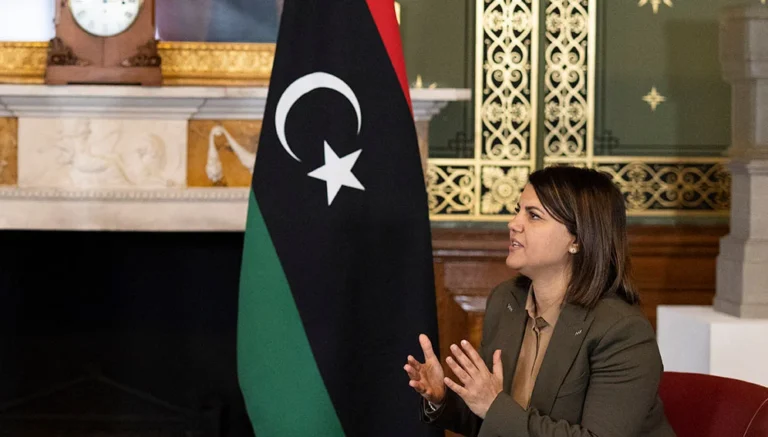
    Former Libyan foreign minister Najla Mohammed El Mangoush says systemic gender bias must be stamped out as we embrace the reality of AI. She says that women from immigrants to world leaders are negatively impacted. ‘Bias bounty hunters’ and other solutions needed for equitable future.

    By Najla Mohammed El Mangoush

    There is no doubt that AI is having increasing control over our lives – an impact that is felt far more by girls and women.

    In Britain, a freedom of information battle between the Home Office and the campaign group Privacy International recently revealed that AI is influencing the fate of immigrants. The algorithm recommends whether to return people to their home country based on a range of data, including ethnicity and health markers, ready to be rubberstamped by human officials.

    For unaccompanied women, especially those who are pregnant or travelling with children, such algorithm-driven decisions do nothing to protect them from the disproportionate risks they face, including exploitation, sexual violence and trafficking.

    This story forms part of an unsettling trend that reveals a sinister truth: the unstoppable rise of AI is worsening the global gender divide.

    For years, AI has relentlessly attacked women’s personal security, spreading deepfakes, revenge porn, and online harassment, erasing decades of hard-fought progress towards closing the gender gap with a few clicks.

    Moldova’s recently reelected president, Maia Sandu, was repeatedly targeted with AI-generated deepfakes as part of a gendered disinformation campaign designed to weaken public trust in her ability to lead. Earlier this year, a single deepfake photo of Taylor Swift was reportedly viewed 47 million times before being taken down.

    But this is a common experience even for women out of the public eye. Swarms of AI-powered bots harass women online, working tirelessly to uphold male-dominated power structures. According to one estimation, as much as 96 per cent of deepfakes are pornographic videos targeting women, the vast majority of which have been created without the featured person’s consent.

    Flawed, Discriminatory Data

    No doubt, AI is also making strides in transforming our lives for the better – from identifying new medical drug targets and breeding more productive crops, to diffusing bombs and predicting ever more tumultuous weather patterns. But today’s systems are built on flawed, discriminatory data.

    Even something as seemingly uncontroversial as health data is a minefield for women’s rights. Take the example of car safety measures – seatbelts, headrests and airbags. These are designed using the data collected from crash test dummies based on the male physique. The result? Women are far more likely to die or be injured in an accident, according to US-based campaign group Verity Now.

    AI’s core problem is that it perpetuates and amplifies many existing biases like these, which subsequently remain uncorrected by AI’s predominantly white male Silicon Valley tech-bros with a product to push.

    As a result, it is being weaponised by oppressive regimes and institutions and is rapidly becoming a tool for a very modern kind of oppression.

    Look to Iran, where AI-driven facial recognition is being used by the government to track and crackdown on women who do not meet its draconian dress codes – the violation of which can carry up to ten years in prison.

    This time last year, an Iranian teenager, Armita Geravand, died after an altercation with morality police at a Tehran metro station. The alleged assault left the 16-year-old with head injuries from which she never recovered.

    Spreading Misogyny

    Tragic events like this have led the Muslim World League’s (MWL) Secretary-General, Mohammad bin Abdulkarim Al-Issa, to raise concerns about AI’s potential to manipulate ideologies and influence billions of people around the world, highlighting the need for ethical and moral oversight in the development of AI.

    While the MWL – the world’s largest Islamic NGO – intends to discuss women’s rights in the context of the digital revolution at an upcoming summit on girls’ education in Pakistan in January, further action is needed, as well as discussion.

    AI is set to cement itself as a tool for spreading misogyny, coding anti-women rhetoric deeper into our digital world. It will become our truth.

    We need to go back to basics and improve the foundational data that AI is built upon. This requires urgent legislation to enforce gender equity standards and a council of female AI experts, activists, and policymakers to call out and confront systemic bias on a global scale.

    Unfortunately, this may be another case in which the people who suffer under an unjust system must be the ones to overcome it. Women can get the job done, but they are woefully underrepresented. They make up just 22 per cent of AI talent globally, with less than 14 per cent in senior executive roles.

    We must expedite moves to encourage women into the sector and ensure they are fairly treated and exempt from sexism during their careers.

    ‘Bias bounty hunters’

    To draw women into this fight, I believe we must crowdsource solutions. Let us wage war on misogynistic AI by employing “bias bounty hunters” who will receive financial rewards for identifying and correcting damaging biases.

    This means all sectors of society – from governments and NGOs to individual citizens – must actively participate in the conversation. In March, the UK-based group Women in Data will host the “world’s largest female data event”, focused on reducing AI bias and promoting gender diversity.

    Other global initiatives, such as those by AnitaB.org India and Women in AI Africa, are also advancing efforts to support women’s representation and leadership in AI, fostering a more inclusive tech landscape worldwide.

    The stakes could not be higher. The coming months are likely to see Trump dismantle safeguards on the development of AI – including an amendment to ban government policies that require the equitable design of AI tools – and Musk poised to lead unchecked, self-aggrandising development.

    Without decisive action now, AI’s viral misogyny will push back hard-won progress on gender equality in every corner of the world.

    Najla Mohammed El Mangoush was Libya’s first female foreign minister (2021-23) and the fifth in the Arab World. She was named in the BBC 100 Women 2021 list for her work building links with civil society organisations and received the International Women of Courage Award from the US State Department in 2022.

    This piece has been sourced from SciDev.Net

    Shivraj Singh Chouhan Calls for Strict Action Against Spurious Agricultural Inputs

    The minister stressed the importance of severe penalties for manufacturers and large-scale distributors of substandard products. Effective regulatory measures, including frequent inspections and quality checks, were proposed to ensure compliance across the supply chain.

    In a decisive move to address issues affecting Indian farmers, Union Agriculture and Farmers’ Welfare Minister Shivraj Singh Chouhan has emphasized the need for uncompromising quality in fertilizers, seeds, and pesticides. During a department-wise review meeting held at Krishi Bhawan in New Delhi, Chouhan directed officials to ensure the consistent availability of high-quality agricultural inputs and called for stringent action against those involved in the manufacture and distribution of substandard or spurious products.

    Highlighting the significance of these measures for the upcoming crop season, Chouhan expressed deep concern over farmers’ recurring complaints about poor-quality inputs leading to crop losses. “We cannot remain mute spectators to such complaints,” he said, underscoring the urgency of addressing this persistent issue. He directed that all departments collaborate in launching a nationwide campaign to tackle the distribution of spurious agricultural products effectively.

    Nationwide Effort to Ensure Quality Inputs

    Chouhan emphasized that state-level actions are pivotal to tackling the problem. He announced plans to engage with Chief Ministers and state Agriculture Ministers to ensure that robust measures are taken against offenders. Pointing to the lack of effective prosecution in many states, he called for stronger investigation and enforcement mechanisms. “Many guilty parties are either acquitted or given negligible punishment. This must change,” he stated, advocating for the strictest penalties under existing laws and procedures.

    The minister instructed officials to prepare a detailed action plan for a joint campaign involving relevant departments. This initiative, he noted, should prioritize inputs from farmers, as they are directly affected by substandard agricultural products. “It is essential to involve farmers in the process to understand their challenges and ensure effective solutions,” Chouhan added.

    Focus on Prosecution and Prevention

    The review revealed gaps in current enforcement efforts, with several states failing to prosecute offenders effectively. Chouhan pledged to address these shortcomings, stating that such negligence allows the continued proliferation of spurious products, harming farmers and the agricultural sector. He urged state governments to employ existing laws rigorously and take proactive measures to curb the production and sale of spurious agricultural inputs.

    Additionally, the minister stressed the importance of severe penalties for manufacturers and large-scale distributors of substandard products. Effective regulatory measures, including frequent inspections and quality checks, were proposed to ensure compliance across the supply chain.

    Campaign for Farmer Welfare

    Chouhan directed the Agriculture Ministry to finalize and implement a nationwide campaign aimed at ensuring quality inputs for farmers. The campaign will focus on raising awareness among farmers, improving supply chain monitoring, and encouraging the use of innovative solutions to combat counterfeit products.

    Reaffirming the government’s commitment to farmers’ welfare, Chouhan stated, “Ensuring good quality agricultural inputs is not just a priority but a responsibility. The livelihoods of crores of farmers depend on this.” The campaign, supported by state governments, will also emphasize timely intervention to safeguard farmers’ interests during critical farming periods.

    This comprehensive approach aims to eliminate the root causes of substandard agricultural products, ensuring that Indian farmers have access to reliable inputs, thereby enhancing their productivity and safeguarding their livelihoods.