More

    Remote Sensing for Development of “Green Cover Index” for India’s National Highways

    Since the initiation of the Green Highways Policy in 2015, the prioritization of greening highway corridors has been a focal point for the Ministry of Road Transport and Highways and NHAI. Presently, the monitoring of plantations relies on site visits by field personnel.

    The National Highways Authority of India (NHAI) has entered into a three-years Memorandum of Understanding with ISRO’s National Remote Sensing Centre (NRSC) to develop and report a “Green Cover Index” for the extensive network of National Highways in India.

    The NRSC will undertake a comprehensive pan-India estimation of green cover, referred to as the “Green Cover Index” for national highways using high-resolution satellite imagery. This innovative approach promises to be a robust and reliable mechanism, providing a time-saving and cost-effective solution to generate a macro-level estimate of the degree of greenness along national highways. It will also facilitate targeted interventions in regions that are reported to lack adequate green cover.

    Since the initiation of the Green Highways Policy in 2015, the prioritization of greening highway corridors has been a focal point for the Ministry of Road Transport and Highways and NHAI. Presently, the monitoring of plantations relies on site visits by field personnel.

    NRSC, headquartered in Hyderabad, has the mandate for establishment of ground stations for receiving satellite data, generation of data products, and development of techniques for remote sensing applications including geospatial services for good governance among other things. As a proof of concept, NRSC has already conducted successful pilot projects for estimation of green cover along national highways.

    The project will capture the Green Cover Index region-wise for National Highways in the first assessment cycle. Subsequent annual cycles will focus on estimating the growth patterns of green cover for National Highways using scientific techniques.

    The findings of the index will facilitate comparison and ranking of various national highways for timely and periodic intervention. As green cover would be estimated for every 1 km length of the National Highways, it would be possible to generate granular metrics for individual projects/packages as well.

    Image: Hippopx Creative Commons Zero – CC0

    ADB, Maldives Sign Agreements to Expand Renewable Energy Access

    ADB’s support consists of $41.5 million from the Asian Development Fund which provides grants to ADB’s most vulnerable developing member countries, an $8.5 million concessional loan from ordinary capital resources, and a $500,000 grant from the Climate Change Fund.

    The Asian Development Bank (ADB) and the Government of Maldives have signed loan and grant agreements of up to US$50.5 million to expand renewable energy generation and distribution in Maldives.

    ADB Deputy Director General for South Asia Cindy Malvicini and Maldives Finance Minister Mohamed Shafeeq signed the agreements at the Ministry of Finance for the Accelerating Sustainable System Development Using Renewable Energy (ASSURE) Project. Climate Change, Environment, and Energy Minister Thoriq Ibrahim and Japan’s Ambassador to Maldives Midori Takeuchi participated in the ceremony.

    “The project is designed to enhance energy security and facilitate the sustainable transition of the power sector in the Maldives through strategic capital-intensive investments in energy storage and related technologies—supporting scalable investments and preparedness of island grids for heightened renewable energy integration and private sector investment in renewable energy on the outer islands,” said Ms. Malvicini. “ADB recognizes and appreciates the collaborative synergy that has been fostered through this partnership, underscoring the collective determination to propel Maldives toward a more resilient, green, and energy-efficient future.”

    “ADB has been a vital development partner for the past 45 years in Maldives, particularly in the realms of energy, transport, water and urban infrastructure and public sector management. The overall engagements with the bank and technical teams have assisted in strengthening the human capital, which is the most important factor in ensuring the development of the nation,” said Mr. Shafeeq. “I am also pleased to see the bank and other partner’s commitment toward our journey on expanding the renewable energy sector.”

    Floating solar panels

    ADB’s support consists of $41.5 million from the Asian Development Fund which provides grants to ADB’s most vulnerable developing member countries, an $8.5 million concessional loan from ordinary capital resources, and a $500,000 grant from the Climate Change Fund. This package will be supplemented with a $48 million cofinancing from the Asia-Pacific Climate Finance Fund, Clean Technology Fund, Japan Fund for the Joint Crediting Mechanism (JFJCM), and investments from the private sector, as well as a $1.97 million counterpart financing from the government.

    The ASSURE project will install grid-scale energy storage, energy management systems, and distribution grid upgrades in 20 outer islands, to attract private sector investments to establish solar photovoltaic facilities in these areas. Emerging technologies, such as ocean-based floating solar panels, ocean energy devices, small wind turbines, and flow batteries, will be installed. ADB will also provide support through transaction advisory in developing public–private partnerships for solar independent power producer projects.

    The project will also strengthen the capacity of the Ministry of Environment, Climate Change, and Technology, as well as other related agencies. This includes enhancing skills in financial management and design and implementation of emerging renewable energy systems and technologies.

    “During the high-level segment of COP28, President Mohamed Muizzu announced the government’s target to produce 33 per cent of electricity in Maldives within 5 years from renewable energy sources with support from international partners,” said Mr. Ibrahim. “The loan agreement that we signed today is a testament to the ADB’s contribution to our country. It will greatly contribute to achieving the renewable energy targets of this government.”

    “JFJCM has allocated grants to eight ADB investment projects, and three out of the eight projects are in Maldives,” said Ms. Takeuchi. “The international community collectively needs to commit and mobilize technology and innovation to achieve carbon neutrality, while maximizing the introduction of renewable energy sources. To this end, Japan is determined to lead the way in clean energy transition and ready to fully support Maldives on this endeavor.”

    Image: ADB

    Nepal Apex Court Seeks Government Response on Climate Law

    Nepal’s Supreme Court has sought a written response from the government on a case registered on contempt of court for not making laws as per the mandamus order given by the apex court on making laws relating to climate change.

    A single bench of Justice Bal Krishna Dhakal of the Nepal Supreme Court has sought written response from the government within 15 days on why the climate change related laws were not drafted. Advocate Padam Bahadur Shrestha had lodged contempt of court case two weeks ago stating that the government is yet to make laws on climate change as per the SC’s mandamus order given five years ago.

    In the mandamus order, the Supreme Court of Nepal had asked the government to immediately formulate integrated laws on climate change since a separate law was needed to address the problems caused from the climate change, and for resilience and mitigation.

    On 23 August 2017, Advocate Shrestha had filed an application to compel the government of Nepal to enact a new climate change law. When the authorities failed to respond, Shrestha petitioned the Supreme Court of Nepal to issue a writ of mandamus or other appropriate order to enact such a law. According to the petition, the Environmental Protection Act of 1997 was inadequate because it did not address climate change. Shrestha contended that Nepal’s Climate Change Policy of 2011 had not been implemented, and as a result, the humans and ecosystems of Nepal had experienced grave climate impacts.

    Shrestha had alleged that the government’s failure to adequately address climate had violated the rights to a dignified life and a healthy environment guaranteed in the Constitution of Nepal, and violated Nepal’s commitments under the UNFCCC and the Paris Agreement. He claimed that the existential threat created by climate change impaired his constitutional rights to (i) live with dignity, (ii) live in a healthy and clean environment, (iii) access basic healthcare services, and (iv) food and protection from starvation. He further argued that a specific climate change law was needed as the Environment Protection Act made no provision for climate change mitigation and adaptation. He contended that the gap must be rectified immediately.

    Writ of mandamus

    In a decision issued on December 25, 2018, the Supreme Court found that action was needed to ensure climate justice, sustainable development, and intragenerational and intergenerational justice. Nepal’s commitments under multilateral climate change treaties and the operation of the 2015 constitution required action. Nepal’s Constitution obligates the government to protect the environment, and thus, the court concluded, climate change impaired the petitioner’s constitutional right to a dignified life and a clean and healthy environment.

    The Court ordered the government of Nepal to enact a new climate change law to (i) mitigate and adapt to the effects of climate change, (ii) reduce the consumption of fossil fuels and promote low carbon technologies, and (iii) develop scientific and legal instruments to compensate those harmed by pollution and environmental degradation, among other provisions.

    The Supreme Court of Nepal issued a writ of mandamus and ordered the government to pass and implement a new climate law to effectuate Nepal’s commitments under the Paris Agreement and obligations under the Constitution. The Supreme Court of Nepal further reasoned that the Environmental Protection Act of 1997 was inadequate to address needed climate change mitigation and adaptation, and ordered the government to implement existing national climate policy until the new law would be enacted.

    Further, pending passage of the climate change law, the court directed the government to implement its climate change policy, National Adaptation Programme of Action 2010, and National Framework on Local Adaptation Plans for Action 2011.

    Subsequent to the Supreme Court decision, the government of Nepal passed the Environment Protection Act of 2019 and the Forests Act of 2019.

    Image: Hippopx Creative Commons Zero – CC0

    Over 9,300 Retail Outlets Selling Ethanol Blended Petrol, says Minister

    Petroleum Minister Hardeep Singh Puri said on Wednesday that India is taking global leadership role in Biofuels supply chain with the successful launch of Global Biofuels Alliance.

    Elaborating on the growth-energy correlation in Indian context, Hardeep Singh Puri, Minister for Petroleum and Natural Gas said on Wednesday that the growth-energy correlation is evident in India as it is now the world’s third largest energy consumer, third largest consumer of oil, the third largest LPG consumer, the fourth largest LNG importer, fourth largest refiner and the fourth largest automobile market in the world.

    Puri talked about the steps taken by Government to augment India’s Exploration and Production (E&P) sector while interacting with the media. He said that the “No Go” areas in EEZ have been reduced by almost 99 per cent and 10 Lakh sq km area is now free in EEZ for E&P Activity.

    The minister stressed that ethanol blending during ESY 2022-23 has saved approximately 509 crore litres of petrol resulting in savings of more than Rs. 24,300 crore of foreign exchange and expeditious payment of about Rs.19,300 crore to farmers including net CO2 reduction of 108 lakh metric tonnes.

    The number of retail outlets retailing E20 is now more than 9300 and will cover the entire country by 2025, said the Petroleum Minister.

    E20 (20 per cent ethanol blended) petrol is a mixture of 20 per cent anhydrous ethanol with 80 per cent motor gasoline fuel volume by volume. Government is promoting biofuels with the broader objectives of reducing import dependency, generating employment, providing better remuneration to farmers, for associated environmental benefits, promoting better waste management practices, etc. Public Sector Oil Marketing Companies (OMCs) started selling E20 petrol from 6th February 2023 and E20 fuel is currently sold at more than 1900 retail outlets across the country.

    He said that India has taken global leadership role in Biofuels supply chain with the successful launch of Global Biofuels Alliance (GBA) in September 2023. “India has been successful to promote GBA as a pivotal path in the sustainability journey at COP 28 held in December 2023. GBA is also an important part of India’s agenda in WEF that is scheduled in Jan’2024”, he said.

    The minister said that the government has taken many steps to increase share of natural gas from present 6.3 per cent to 15 per cent in primary energy mix with an investment of $67 billion in natural gas infrastructure over the coming five to six years. This will translate into increase in the gas consumption by over three-fold by the year 2030.

    India-Nepal Joint Commission Meetings to Kick Off Today

    External Affairs Minister Dr. S Jaishankar will begin on Thursday a two-day visit to Kathmandu to co-chair 7th meeting of India-Nepal Joint Commission.

    External Affairs Minister Dr. S Jaishankar on Thursday begins a two-day visit to Nepal at the invitation of Foreign Minister of Nepal, N.P. Saud. The two ministers will co-chair the seventh meeting of the India-Nepal Joint Commission in Kathmandu. The India-Nepal Joint Commission was established in 1987 and provides a platform for both Ministers to review all aspects of the bilateral partnership between the two neighbours.

    Nepal’s Minister for Foreign Affairs, Narayan Prakash Saud held a meeting with former foreign minister, former foreign secretaries and former ambassadors to India on the eve of Minister for External Affairs of India, S. Jaishankar’s visit to Nepal. According to the Minister, the participants gave their suggestions on various agendas about Nepal-India relations. The meeting stressed on the significance of Nepal’s relations with India, with advice to take ahead an understanding based on cordiality and mutual interests. Nepal looks forward to exploring ways for promoting Nepal’s exports to India in view of a widening trade deficit between the two countries, improving cross-border infrastructure, concluding development projects launched in the past and other important issues.

    In a statement, the External Affairs Ministry said, Nepal is a priority partner of India under its Neigbhbourhood First policy and the visit is in keeping with the tradition of high-level exchanges between two close and friendly neighbours.

    A press release issued by Nepal’s ministry of foreign affairs said that “the joint commission meeting will review the overall state of bilateral relations and various areas of mutual cooperation.”

    At least two agreements related to long-term energy cooperation and India’s proposal to increase funds for small development projects under the High-impact Community Development Projects are likely to be signed in the coming days.

    Image: S Jaishankar X (formerly Twitter) Account.

    Pakistan: 2023 ends with 70% Increase in Militant Attacks, 81% Rise in Deaths

    The average militant attacks per month rose from 32 in 2022 to 54 attacks per month in 2023. This is the highest monthly average in any year after 2015 according to the Pakistan Institute for Conflict and Security Studies. There was a consistent decline in militant attacks from 2015 to 2019.

    Pakistan witnessed another year of an unprecedented surge in militant attacks as the country saw a staggering 70 per cent rise in attacks, an 81 per cent increase in resultant deaths, and a 62 per cent surge in the number of wounded, according to a study published by the Pakistan Institute for Conflict and Security Studies (PICSS).

    According to the study, the year 2023 witnessed at least 645 militant attacks across the country in which 976 people were killed and 1354 injured. The year 2022 had witnessed 380 militant attacks resulting in 539 deaths and 836 injuries. The situation could have been even worse if Pakistani security forces had not foiled hundreds of attacks and attempts during the year. Overall, there was a 74 surge in the actions of the security forces against the militants in which around 612 suspected militants were killed and at least 625 were arrested. By combining militant attacks and security forces actions the country saw 1016 violent incidents in which 1529 people were killed and 1442 injured.

    Stalled talks

    The PICSS database shows that the average militant attacks per month rose from 32 in 2022 to 54 attacks per month in 2024 which is the highest monthly average in any year after 2015. There was a consistent decline in militant attacks from 2015 to 2019. The average number of militant attacks per month had dropped to just 13 attacks per month. However, from 2020 onwards a consistent increase has been observed every year.

    Security experts attribute this alarming rise to the stalled talks between the Pakistani Taliban and the government, an increase in jihadist group manpower, and a weakening of the Afghan Taliban’s control over Tehreek-e-Taliban Pakistan (TTP).

    Journalist Mushtaq Yousafzai supports the report, citing two reasons for the upswing in attacks. Firstly, the breakdown of negotiations with armed groups extinguished hope, leading to a shift in tactics, with suicide attacks targeting security forces to signal their resolve. Secondly, the strategy of focusing on security forces instead of civilians learned from the Afghan Taliban’s experiences, became a predominant approach.

    While acknowledging the rise in the number of armed organizations, senior journalist Iftikhar Firdous emphasizes that most suicide attacks are not TTP-affiliated. Groups like Tehreek-e-Jihad Pakistan, Ansar-ul-Islam, and Hafiz Gul Bahadur in North Waziristan claimed responsibility for attacks later in the year.

    Firdous notes the complexity, stating, “If we look at the strategy of militant organizations, whenever they get surplus fighters, they turn to suicide attacks from guerrilla warfare. This means an increase in their numbers has happened.”

    Contrary to the Afghan Taliban spokesperson Zabihullah’s denial of attacks originating from Afghanistan, Iftikhar Firdous suggests a potential link between the violence in Pakistan and Afghanistan. He cautions that without a peace agreement between the two countries, the risk of destabilization persists in 2024.

    Regions affected

    During the year 2023, militant attacks not only increased in Khyber Pakhtunkhwa and its tribal districts but also in Balochistan and Punjab. Khyber Pakhtunkhwa witnessed the highest number of militant attacks and resultant casualties during 2023. PICSS recorded 423 militant attacks in KP in which 621 people were killed including 307 security forces personnel, 222 civilians, and 92 militants while 980 were injured including 525 security forces personnel, 405 civilians, and 50 militants. Within Khyber Pakhtunkhwa, more violence was recorded from mainland Khyber Pakhtunkhwa than the Newly Merged Districts (erstwhile FATA) as the mainland Khyber Pakhtunkhwa witnessed 237 militant attacks in which 336 people were killed including 213 security forces personnel, 67 civilians, and 56 militants while 591 were injured including 383 security forces personnel, 165 civilians and 43 militants. There was an 85 per cent increase in militant attacks in mainland Khyber Pakhtunkhwa.

    The Khyber Pakhtunkhwa region faced 186 militant attacks in which 285 people were killed including 155 civilians, 94 security forces personnel, and 36 militants while 389 were injured including 240 civilians, 142 security forces personnel, and seven militants. The region witnessed a 60 per cent rise in militant attacks in 2023 compared with 2022.

    According to the PICSS Annual Security Report, Balochistan faced at least 170 militant attacks in which 285 people were killed including 151 civilians, 114 security forces personnel, and 20 militants while 388 people were injured including 195 civilians, 99 security forces personnel, and four militants. The rise in militant attacks in Balochistan was 65 per cent in 2023 compared with 2022.

    Sindh also witnessed a 40 per cent rise in militant attacks in 2023 as there were 35 such incidents were reported from the province in which 39 people died including 22 civilians, 11 security forces personnel, and six militants while 35 people were injured including 24 security forces personnel, ten civilians and one militant.

    An unprecedented rise in militant activities was witnessed in Punjab where 14 militant attacks were reported in 2023 compared to just three in 2022. In Punjab, 20 people were killed in militant attacks including 14 militants, four security forces personnel, and two civilians while 14 people got injured including eight civilians, five security forces personnel, and one militant.

    Infants at Higher Risk in Flood-prone Areas of Bangladesh

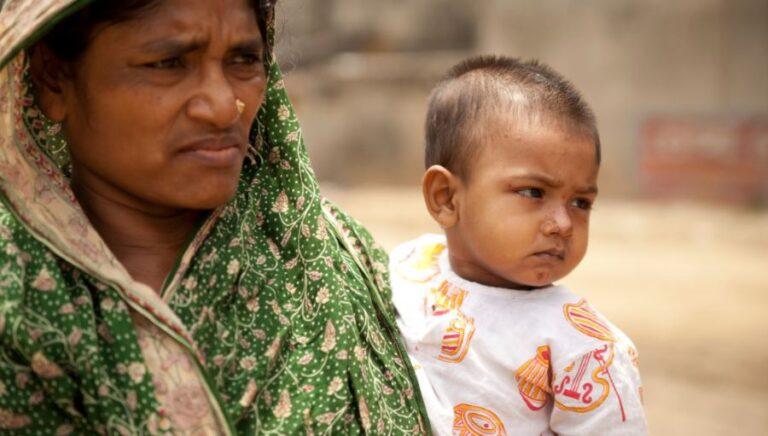
    Every year, monsoon season brings extensive flooding to Bangladesh. Now, a study finds that infant mortality rates are higher among those born in rainy months. Climate change is causing more frequent and extensive flooding, the authors of the study note.

    By Claudia Caruana

    A team of researchers have measured the burden of living in flood-prone areas of Bangladesh and found that it significantly raises the likelihood of children dying by their first birthday.

    Climate change is expected to bring more frequent and extreme flooding events in the coming decades.

    “This is particularly true in Bangladesh, a country with low elevation and where annual monsoons bring extensive flooding to the Ganges–Brahmaputra–Meghna river basin,” says the study, published this month in the Proceedings of the National Academy of Medicine and Infectious Diseases.

    Focusing on this SouthAsian country, the researchers sought to quantify the long-term consequences of climate change.

    “We wanted to document what happens when year after year some communities are exposed to these climate hazards,” said Tarik Benmarhnia, a co-author of the study and an associate professor at the Scripps Institution of Oceanography, in California, US.

    Child mortality figures, according to Benmarhnia, are also an indication of numerous health problems among infants.

    “Child mortality is a proxy for easily avoidable negative health outcomes,” he explained.

    “If we can’t avoid child mortality, there are also likely to be issues with malnutrition, mental health, and communicable diseases.

    “From a public health perspective infant mortality is only the tip of the iceberg.”

    Using high-resolution maps of recent large floods, the researchers identified the flood-prone areas in the country.

    They analysed this information alongside health data collected by USAID Demographic and Health Surveys Program between 1988 and 2017.

    According to the researchers, there was an increase of more than 152,000 infant deaths in flood-prone areas of Bangladesh over the 30-year period.

    This represents an eight per cent higher risk of dying in the first year of life or 5.3 additional infant deaths per 1,000 births.

    They also found that children born during rainy months faced a higher risk of death than those born in dry months.

    Co-author Benjamin Arnold, an associate professor at the University of California San Francisco, said the research helped show the true extent of extreme weather events like flooding.

    “This study’s results provide new motivation to keep an eye on significant, longer-term health impacts of extreme weather events, such as infant mortality, in addition to the more obvious impacts that we see in the days and weeks that follow,” he said.

    The authors believe that the approach used in the study could also be useful in studying the long-term health effects of other climate-related hazards such wildfires and extreme heat.

    Javier Mateo-Sagasta, senior researcher at the International Water Management Institute, Sri Lanka, says the study addressed a gap in research in quantifying the broader health impacts of floods, as opposed to those related to injury and drowning, water pollution, or the spread of infectious diseases.

    Preventative action

    Mateo-Sagasta told SciDev.Net that it will be essential to adapt to increasingly frequent and intense floods and mitigate the health risks.

    “There should be early warning systems that allow government to anticipate the potential health risk from floods and take preventive action such as getting healthcare facilities ready for flood-related admissions,” he said.

    “There should be climate-resilient sanitation safety plans and WASH [water, sanitation and hygiene] infrastructure should be flood resilient.”

    He added that policies should incorporate the One Health approach which addresses human, animal and ecological determinants of health.

    More research is also needed, says Mateo-Sagasta, to fill knowledge gaps in the interface of water, climate change and human health, including water quantity and quality modelling, to help build climate resilience.

    This piece has been sourced from SciDev.Net

    Image: Copyright: IFPRI, (CC BY-ND 2.0 DEED)

    Significant Milestone Crossed for Sickle Cell Anaemia

    This is a significant milestone crossed as more than one crore people have been screened for Sickle Cell Disease under the National Sickle Cell Anaemia Elimination Mission.

    A significant milestone has been crossed by India’s health ministry, the ministry announced on Tuesday as more than one crore people have been screened for Sickle Cell Disease under the National Sickle Cell Anaemia Elimination Mission.

    The mission endeavors to screen a population of seven crore people in three years. Sickle cell disease is a genetic blood disease which affects the whole life of the affected patient. It is more common in the tribal population of India but occurs in non-tribals too.

    The National Sickle Cell Anaemia Elimination Mission was launched by Prime Minister Narendra Modi on 1 July 2023 at Shahdol, Madhya Pradesh. The programme is being carried out in a mission mode for screening, prevention, and management of sickle cell anemia in all tribal and other high prevalent areas States/UTs of India. The focus is on 278 districts of 17 states with higher prevalence of Sickle Cell Disease, viz., Gujarat, Maharashtra, Rajasthan, Madhya Pradesh, Jharkhand, Chhattisgarh, West Bengal, Odisha, Tamil Nadu, Telangana, Andhra Pradesh, Karnataka, Assam, Uttar Pradesh, Kerala, Bihar and Uttarakhand.

    El Nino to Pile on Suffering Kashmir Saffron Farmers

    Rainfall-dependent saffron is the world’s most expensive spice. Climate change has resulted in serious dry spells in Kashmir, made worse with El Nino. Rainfall in Kashmir “down by nearly 50 per cent” in two decades. Herein lies the challenge for the saffron farmers of Kashmir.

    By Athar Parvaiz

    The long-suffering saffron farmers in India’s Kashmir region might have to brace themselves for further dry spells due to the effects of the El Nino weather pattern.

    “If January precipitation remains below normal, drought-like situations may develop in many areas of Kashmir,” said Mukhtar Ahmad, director of Meteorology at the Srinagar station of Indian Meteorological Department.

    EL Nino is the warm phase of the El Nino-Southern Oscillation weather system, which often brings heavy rainfall to South American countries and drier than average conditions in many Asian countries.

    It can have a big impact on the production of saffron, the world’s most expensive spice, which is already facing difficult conditions in India as climate change cuts rainfall levels.

    “Three to four major spells (of snow) are needed to compensate the deficit for November and December,” Ahmad told SciDev.Net, explaining that precipitation in this period plays a crucial role in making water available for crop irrigation in the coming months.

    According to an update from the World Meteorological Organization (WMO), the ongoing El Nino event is expected to last at least until April 2024.

    As a result of record-high land and sea-surface temperatures since June, the WMO said that the 2023 is on track to be the warmest year on record.

    Focus on better data

    Farhet Shaheen, an agricultural economist at Sher-e-Kashmir University of Agricultural Sciences and Technology, said that shifting weather patterns are taking a heavy toll on Kashmir’s farmers, losing up to 70 per cent of their crops in a single season.

    “There has to be focus, especially from the government, on collecting better data on what kind of help Kashmir’s farmers need,” Shahee said. “Once the data is available, adaptation strategies can be implemented accordingly.”

    Adaptation strategies can include collecting water more efficiently, building up flood resistance, and strengthening early warning systems, Shahee added.

    Dwindling rainfall

    The saffron crop in Kashmir is totally dependent on rainfall, which farmers say has become erratic over the past two decades.

    Saffron is a fragrant and expensive spice derived from the stamen of the crocus sativus flower. The tiny orange strands are used for seasoning all over the world and as a key ingredient in many classic dishes such as risotto and paella.

    It’s so valuable that it’s often referred to as red gold. Iran is the world’s top producer, followed by India where it is mainly grown in the Kashmiri Himalayas, supporting thousands of families.

    Heritage crop

    But saffron has been facing challenges for years in India mostly related to yields and inadequate irrigation compounded by the climate crisis.

    While the government had tried to mitigate these challenges by launching the 4.1 billion rupees (US$50 million) National Saffron Mission rejuvenation project in 2010, farmers are complaining that they have yet to see its impact.

    The UN’s Food and Agriculture Organization (FAO) has declared Kashmiri saffron as a heritage crop, a distinction only a few crops have achieved globally.

    “This plant is mentioned in the 5th century B.C in Kashmiri records and is still part of the agricultural economy,” the FAO noted.

    Saffron in the Kashmir valley reached its peak in the 1990s at an annual average total yield of about 15.5 tonnes coming from 5,700 hectares. Both the land farmed for saffron and yields have declined since then.

    According to Kashmir’s agriculture department, land available for saffron cultivation was down to 3,715 hectares in 2016, while per-hectare production has come down to less than 1.88 kg, compared to 6 kg in other parts of the world.

    According to Firdous Nahvi, a retired professor at Sher-e-Kashmir University of Agricultural Sciences and Technology, until 1999-2000, Kashmir received well-distributed precipitation of 1,000 to 1,200 mm per year, in the form of rain and snow, but that has now decreased to 600 to 800 mm.

    Nahvi was the expert who advised the Indian government about the need to install sprinkle irrigation systems for saffron cultivation in Kashmir to help farmers improve their yield and rely less on the unpredictable rainfall.

    “In any part of the world, farming is unthinkable without water,” Nahvi said.

    This piece has been sourced from SciDev.Net

    Image: Hippopx Creative Commons Zero – CC0

    ASEAN’s Credibility and Centrality on the Line amid Crisis in Myanmar

    During the Cold War, ASEAN states found a unifying rationale — holding back communism at the Mekong River. The unifying force of anti-communism served ASEAN states well and provided ASEAN itself with a veneer of credibility.

    By William J Jones and Douglas Rhein / Mahidol University International College

    In the post-Cold War era, ASEAN shifted its focus to economic cooperation, its most successful area of cooperation. ASEAN centrality is a de facto outcome of US foreign policy during the Cold War but also a hard-won point of pride for the original five members of ASEAN.

    ASEAN member states have increasingly been unable to find common ground on regional security issues, best exemplified by the lack of a joint communique at the 2012 ASEAN Summit in Phnom Phen due to divergent positions on the South China Sea dispute.

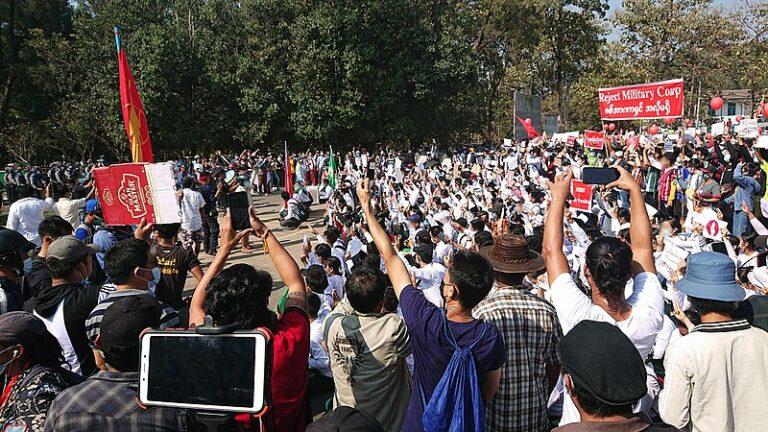
    The situation in Myanmar again threatens regional security and ASEAN’s credibility. With China and Russia opposing arms embargoes and sanctions, the United Nations Security Council has essentially subcontracted the work of solving the crisis to ASEAN. But the junta in Myanmar has steadfastly refused to engage in meaningful dialogue to end the crisis or cede power. Since the February 2021 coup, ASEAN has struggled to cope with the unfolding humanitarian catastrophe in its backyard and its once cherished centrality and unity is nowhere to be found.

    The April 2021 ASEAN Summit further highlighted the fractured nature of internal ASEAN affairs. Cambodia and Laos took a neutral stance on Myanmar. Indonesia voiced frustration, emphasising that any peace process must be a ‘Myanmar-led and Myanmar-owned process with ASEAN as a facilitator’. Malaysia counselled patience while Thailand discouraged sanctions. The Philippines equated the need for ASEAN to address the issue to ‘the hurt of the small finger [being] felt by the whole body’. Singapore stridently refused to legitimise coup leader Min Aung Hlaing, stressing that ‘ASEAN needs to take action as silence will affect ASEAN’s credibility’.

    The most interesting position by far was that of Vietnam. At the time, Vietnam was a non-permanent member of the United Nations Security Council. Hanoi used its enhanced stature in the international arena to shield Myanmar and paper over the fractured and divergent positions of ASEAN members.

    Human rights disaster

    Sadly, it has become apparent that if ASEAN continues to sit back and watch Myanmar implode, there will be a major human rights disaster that will flow over into other ASEAN states.

    Myanmar has long been discussed as a nation on the brink of becoming a failed state. Economists and political experts have warned that Myanmar is teetering on the verge of collapse. With a military council in control, the country’s economy, politics, education, healthcare and society have deteriorated significantly.

    There is also escalating civil unrest and conflict in the country. This conflict has intensified after one of Myanmar’s most powerful ethnic armed alliances, the Three Brotherhood Alliance, initiated a coordinated attack on military outposts in northern Shan State. The operation, dubbed Operation 1027, aimed to defend territory, combat the military dictatorship and address online fraud along the border.

    The Chinese border in the north has closed, leaving refugees little choice but to flee east across the border to Thailand or south into Malaysia and Brunei. The ongoing civil war in Myanmar has led to a severe humanitarian crisis, resulting in the displacement of a significant number of individuals. It is estimated that around 1.6 million people have been internally displaced since the military coup. While approximately 9000 refugees have sought shelter in the Mae Sariang district of Northwestern Thailand where humanitarian aid is being provided, the overall situation in Myanmar continues to deteriorate.

    The central issue in resolving the crisis is whether principles of democratic legitimacy and basic humanitarian standards should be prioritised even if it means sacrificing ASEAN solidarity and consensus.

    Consensus position on Myanmar

    Failure to advocate for the wellbeing of citizens within its member states would damage ASEAN’s credibility and legitimacy. But merely denouncing the regime won’t be enough to achieve the goals of normalising the situation and restoring a more benign political order in Myanmar. The Five-Point Consensus peace plan endorsed in Jakarta in April 2021 by ASEAN’s member states, including Myanmar’s military junta, has been inadequately enforced and only partially implemented.

    During the reform process of 2009–2010, which Thailand spearheaded, a consensus position on Myanmar was found, with the understanding that if reforms did not take place soon ASEAN members would appreciate if Myanmar rescinded its membership. The current Thai government is changing the approach towards Myanmar from one of disinterest and tacit support to one of pressure and returning to an ASEAN-centred approach. This is largely due to fears in Bangkok of regime and state collapse in Myanmar and the serious security ramifications that would ensue.

    It is essential that the original five ASEAN members begin to speak with one voice. If they do, a regional tipping point may be reached. Only time will tell if ASEAN members can get their act together, push for the Tatmadaw’s withdrawal and restore their credibility to the world. Given that credibility is ASEAN’s currency, it is essential that it move to shore up regional order.

    William J Jones is Assistant Professor and Chair of the Social Science Division at Mahidol University International College.

    Douglas Rhein is Associate Professor of Psychology at Mahidol University International College.

    This piece has been sourced from the East Asia Forum of the Australian National University.

    Image: Wikimedia