More

    Taliban Feels Women at Risk are Safer Behind Bars

    UNAMA’s report says that, there was a “lack of clear delineation of responsibilities” with regard to gender-based-violence complaints.

    Afghan officials have, for the first time, admitted to protective imprisonment of women. They have admitted to imprisoning women, ostensibly to save them from violence.

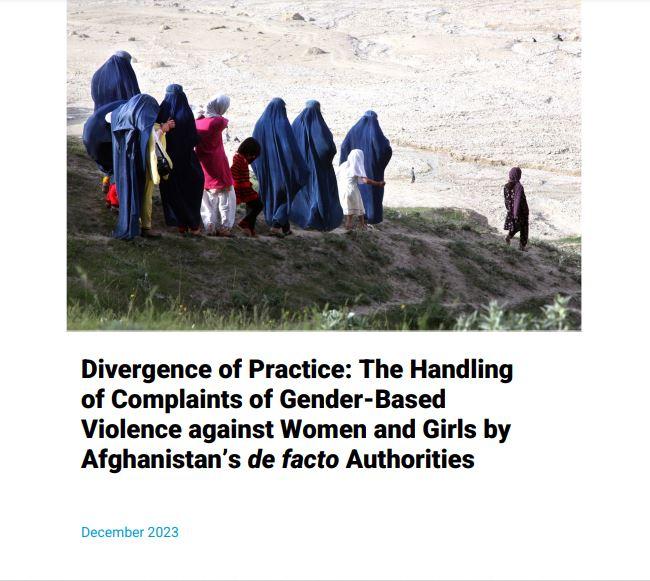
    This is detailed in a report published by the United Nations’ Assistance Mission in Afghanistan (UNAMA). The report, titled, ‘Divergence of Practice: The Handling of Complaints of Gender-Based Violence against Women and Girls by Afghanistan’s de facto Authorities’, says that the Taliban have been putting Afghan women in prison for protecting them from violence.

    “Some de facto officials stated that in instances where they had safety concerns for a survivor, she would be sent to the women’s prison, for her protection, akin to how prisons have been used to accommodate drug addicts and homeless people in Kabul.”

    Speaking of the Taliban authorities’ discriminatory policies towards women and girls, it says that their policies have manifested particularly in their right to access education (restricted to education below grade seven as well as reportedly in madrassas after primary school), freedom of movement, freedom of peaceful assembly, freedom of opinion and expression (including choice of dress), employment (limited to the health sector, primary education, security at the airports, some segments of the manufacturing sector, some women’s businesses and some peripheral functions within the de facto police), and participation in public and political life.

    Protection centres eliminated

    The report says, “Taken together, the Afghanistan context after the Taliban takeover and the discriminatory restrictions imposed on women and girls further heightens their vulnerability to gender-based violence, both in the public and private sphere. The latter includes domestic and intimate partner violence given women and girls’ increasing relegation to their homes.”

    The report published on December 14 says that the Taliban has eliminated the country’s 23 state protection centers for women because, as some officials said, “women’s shelters are a Western concept.”

    “Some de facto officials stated that in instances where they had safety concerns for a survivor, she would be sent to the women’s prison, for her protection, akin to how prisons have been used to accommodate drug addicts and homeless people in Kabul,” the report said, stating that women sent to prison as a means of sheltering them either for the purpose of their safety from conditions of domestic violence or because they have no male relatives to stay with.

    Traditional dispute-resolution mechanisms preferred

    The report quotes an official of the Southern region’s of the department of justice who says, “The Islamic Emirate does not have any shelter for women. They must be with their husbands or other male family members – their mahram.”

    Western officials and activists have expressed concerns over the state of women’s rights under the conservative Taliban rulers and its leadership – teenage girls have been stopped from pursuing education, women are banned from employment in most sectors and are discouraged from leaving their homes.

    Authorities have often violently put down protests by Afghan women over their lack of rights and hundreds have been imprisoned for their “illegal” protests.

    UNAMA’s report says that, there was a “lack of clear delineation of responsibilities” with regard to gender-based-violence complaints. It says that “referrals between entities creates a gap in accountability for justice actors and makes it difficult for women and girls to know which entity to approach when they have a gender-based violence complaint.”

    “The situation is compounded by the handling of gender-based-violence complaints predominantly by male personnel of the de facto law enforcement and justice institutions. Many survivors reportedly prefer seeking redress through traditional dispute-resolution mechanisms because of fear of the de facto authorities,” it added.

    UN Staffers Face Threat of Being Forced Out of the US– at Retirement

    This development may affect the ability of United Nations’ staff members who hold G-4 visas to continue to reside in the United States following their separation from service on retirement.

    By Thalif Deen

    Going back to the 1970s, thousands of UN staffers were given legal status opting for permanent residency in the US– after their retirement.

    But that longstanding privilege now seems to be in jeopardy forcing retirees to return to their home countries uprooting their lives in the US.

    The United States Immigration and Nationality Act has for long allowed long-serving UN staff members, who held the traditional G-4 visa status, and who met certain criteria, to apply for Legal Permanent Residency, also known as a “Green Card,” under the “Special Immigrant” category (EB-4), upon separation on retirement.

    The UN’s Department of Management Strategy, Policy and Compliance (DMSPC) last week sent an “urgent notice” to staffers that the United States Citizenship and Immigration Services (USCIS) has temporarily suspended accepting applications to Register Permanent Residence or Adjust Status (I-485 form) under the “Special Immigrant” category (EB-4).

    This development may affect the ability of staff members who hold G-4 visas to continue to reside in the United States following their separation from service on retirement.

    The suspension may also affect recent retirees; children of current or retired staff members, as well as a surviving spouse, who have been planning to apply for Legal Permanent Residency under the “Special Immigrant” category.

    The UN has advised staffers to seek legal advice from an immigration firm about their future status in the US.

    Speaking off-the-record, a long-time UN staffer told IPS the programme is in jeopardy with no clear indication when it will resume or get resolved.

    The reason is apparently a backlog of applications, but it may even be political, he said. ”You may never know”.

    Basically, he said, it has been suspended because of some changes that came into effect early this year in the immigration laws –and also due to the existing backlog of applications.

    “This means no priority processing for G4 visa holders from the UN. The situation is quite serious as it was taken by surprise many in the Secretariat”.

    “We have been told that within 30-days, we have to leave the US upon separation unless the individual manages to change the status by going through an immigration lawyer. I don’t see it restored in the near future. A big disappointment and a mess to say the least.”

    Most UN staffers who own apartments or house and property—and are on short notice– will have to dispose them before they leave the US while others with children in US colleges will have to make adjustments.

    “It’s an absolute nightmare”, said one staffer whose retirement is due in February next year when he will be forced out of the US.

    Meanwhile, In Geneva, which houses more than 40 international organizations, mostly affiliated to the United Nations such as the UN Conference on Trade and Development (UNCTAD), the World Health Organization (WHO) and the International Labour Organization (ILO), staffers apply for “resident permits” on their retirement.

    After they have lived 5-10 years, including years spent at the UN, they are entitled to permanent residency leading to Swiss citizenship.

    Currently, the US is home to over 9,000 staffers who work in the Secretariat and in UN agencies in New York, including the UN Development Programme (UNDP), the UN children’s agency UNICEF and UN Women– with some on retirement after living the US for over 30 to 40 years.

    This piece has been sourced from Inter Press Service.

    Image: Manuel Elías

    First Person: Farmers running out of water in Punjab, India

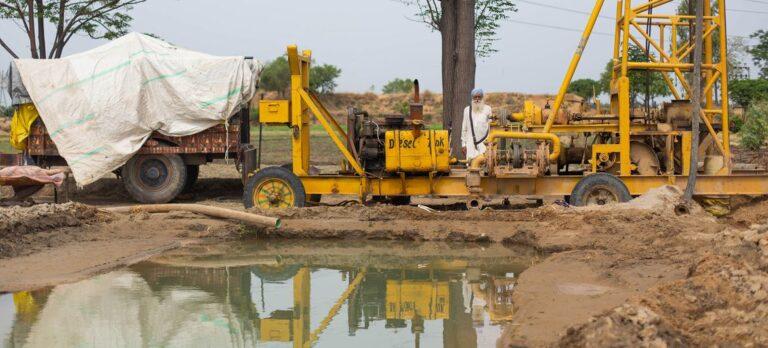
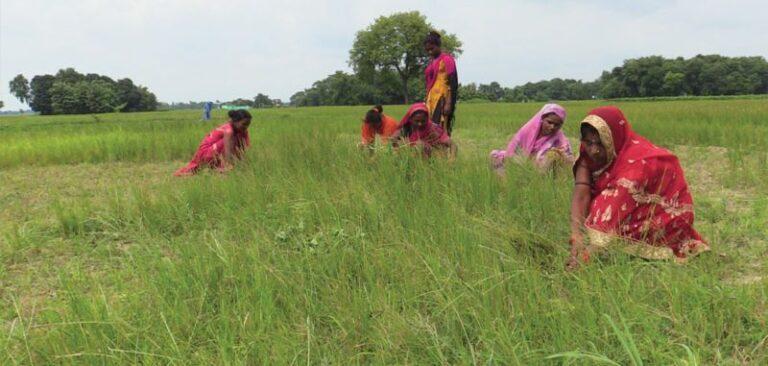
    For farmers in the Punjab region of India, water shortages are a harsh reality. Here, three rice cultivators talk about the challenges they face due to the scarcity of water and the solutions they are adopting. This article appears ahead of the publication of a UN report ‘Interconnected Disaster Risks‘.

    Water is crucial to rice farmers and when it is lacking, they tend to rely on groundwater.

    Globally, water taken from underground reservoirs supports 40 per cent of agriculture, but if groundwater levels fall, it becomes harder to reach over time.

    In Punjab known by some as India’s breadbasket, groundwater is being depleted faster than it is being replenished. 

    Three farmers from Punjab explain how they experience water scarcity and how they deal with it.

    Amandeep Singh, landowner and farmer.

    ‘Not just a problem for future generations’

    Amandeep Singh: Ten years ago, the groundwater here was between nine and 12 metres deep, while today it is found between 18 and 21 metres.

    We very much rely on groundwater, as we only have access to canal water once a week, which is not sufficient for us.

    Every year, we have to dig deeper to reach the groundwater. This is not just a problem for future generations, but something we experience today already. Reaching the groundwater is very expensive, but we landowners have no choice.

    Because of the reduced groundwater level, not only landowners, but everyone will face losses. We will no longer have water for farming or drinking. Without it, there will be no farming, and therefore no future for landowners.

    Harjeet Singh

    Harjeet Singh: The groundwater we use for our paddy fields is not being recharged from above. However, without rains, we have to use groundwater, as canal water is not available here. 

    Seven to eight years ago, we could reach groundwater at 4.5 metres deep, while now it is only reachable at 21 metres. The declining water level affects my income, and I cannot afford to install a borewell.

    It would be devastating if the groundwater disappears, and it is important that the world understands our issue, as only then something can happen. One person alone cannot do anything. Only when we come together and make a collective effort something can change.

    Before the groundwater becomes unreachable or runs out completely, we will have to save rainwater in lower places. For now, there is no other solution.

    Combining tradition with technology

    Vishvajeet Singh Jyani

    Vishvajeet Singh Jyani: Over the years, we have noticed that the rainfall and weather patterns have been quite erratic. The canal water and groundwater we depend upon has also become unreliable.

    At our family farm, the main motto is, “traditional wisdom with modern technology”. My father was also a farmer and used many traditional techniques. I completed an education in computer studies, and together we have combined our core strengths by integrating traditional techniques with modern research and technologies to implement good management of natural resources.

    The main water source we are provided with is canal water that comes from the Harike wetlands and the Satluj River. We store that water by using our water management system, or we put it in the field. Sometimes, we have to supplement it with groundwater.

    The integrated water management system is very important to us because it helps us to save water when it is not required in the field. It functions as a back-up system which supplements our canal water and groundwater. 

    If there is excess rainfall in the field, we store that as well. Whenever we experience drought-like conditions we can use it to water our land.

    We have done much to help the groundwater recharge and are currently very happy that we can reach it between three and six metres.

    When groundwater becomes scarce and reaching it goes beyond the possibilities local farmers have, the state and central government will step in. They have already developed plans and have, in some states, even implemented those. Farmers are being incentivized to plant crops other than rice and equally water-guzzling crops.

    If you want farmers to save groundwater, simply telling them to preserve it does not work. If they get incentives to plant other crops, farmers will need no convincing. As farmers are the backbone of the country, if they follow suit, society will follow.

    Political risks loom over Sri Lanka’s economic stabilisation

    High poverty levels and growing dissatisfaction with mainstream political parties appears to be boosting support for left-wing populist parties, which advocate alternative, home-grown policies.

    By Ganeshan Wignaraja, Gateway House

    Sri Lanka’s economy showed signs of stabilisation in 2023 after the worst economic and political crisis since its independence in 1948. An acute balance of payments crisis caused lower- and middle-income Sri Lankans to pre-emptively default on foreign debt, which exceeded US$50 billion in April 2022. A crippling economic contraction, spiralling inflation, shortages of food and fuel and financial uncertainty followed.

    The remarkable change during 2023 can be traced to decisive policies by President Ranil Wickremasinghe’s new government, formed in July 2022, after mass protests forced then president Gotabaya Rajapaksa to resign.

    The Wickremasinghe government implemented stabilisation measures — namely hiking interest rates to control inflation, removing fuel subsidies, raising taxes and passing a law to improve the independence and accountability of the Central Bank of Sri Lanka. The government also conducted external debt restructuring talks with creditors, intensified discussions with the International Monetary Fund (IMF) on an economic bailout, sought Indian aid and engaged in free trade agreement-led Asian regionalism.

    These efforts made a difference. The Sri Lankan economy is stabilising despite major challenges that remain. Inflation fell from a peak of 70 per cent in September 2022 to 3.4 per cent in November 2023. Foreign exchange liquidity pressures eased, with usable foreign reserves rising from only US$20 million in April 2022 to US$2 billion in October 2023. Waiting lines for essential goods have disappeared.

    Sri Lanka’s performance satisfactory

    In March 2023, the IMF Board approved a tough Extended Fund Facility worth US$2.9 billion over 48 months, which emphasises revenue-based fiscal consolidation and governance reforms. The first review by the IMF Board on 12 December 2023 rated ‘Sri Lanka’s performance as satisfactory’ meaning that total IMF disbursement will be US$670 million (22 per cent) in 2023. The IMF facility unlocked additional funding from the World Bank and the Asian Development Bank for social protection, financial sector development and infrastructure development.

    Subscribing to the notion that the 21st century is the Asian Century, Sri Lanka also formally applied to join the Regional Comprehensive Economic Partnership (RCEP), the world’s largest trading bloc. It also revived stalled bilateral free trade agreement talks with Thailand, India and China. Agreements with these countries could create new trade and supply chain opportunities for Sri Lanka.

    There is cautious optimism in domestic policy circles about concluding a Thailand–Sri Lanka trade agreement in the first quarter of 2024 and an India–Sri Lanka bilateral investment agreement some time in 2024. But RCEP membership may take some time — the trading bloc has yet to agree on accession rules for new members and regulatory reforms are needed in Sri Lanka.

    Partly linked to stabilisation progress and FTA talks, Sri Lanka announced two of its largest-ever foreign investments in late 2023. These are focused on improving infrastructure development.

    One is a project to develop the US$700 million West Container Terminal at the Port of Colombo —a joint venture project between India’s Adani Group and Sri Lanka’s John Keels Holdings. This will expand the capacity of the port, which Lloyd’s List ranks as the world’s 26th largest container port by throughput. The US Development Finance Corporation has announced co-financing of US$553 million for the project.

    In a geopolitical twist, China’s Sinopec Group — which will also operate 200 fuel filling stations in Sri Lanka — will invest US$4.5 billion in an oil refinery in the controversial, low-profit Hambantota Port in Southern Sri Lanka.

    ‘Haircut’ on private creditors’ debt?

    In November 2023, after yearlong talks, Sri Lanka concluded an initial agreement with key bilateral creditors, including India and the Paris Club, to restructure US$5.9 billion in external debt. This was important for reducing interest payments and for unlocking IMF financing in 2024. This deal follows China’s separate agreement with Sri Lanka in October 2023 on conditions for debt restructuring.

    While the details are not public, these agreements are on similar terms, extending deadlines and lowering interest rates. But perhaps ominously, private creditors — who held about 40 per cent of external debt (end-2022)— have expressed concerns about the extent of the ‘haircut’ on debt they could face, and say little engagement has occurred with them due to the focus on talks with official creditors.

    Stabilisation could translate into growth. The World Bank expects Sri Lanka’s GDP to grow at 1.7 per cent in 2024 — up from negative 3.8 per cent in 2023 and negative 7.8 per cent in 2022. But previous poverty reduction gains over past decades have been reversed, because of growth going backwards and job losses. The percentage of people living beneath the US$3.65 a day poverty line has doubled to 25 per cent during the last two years. Child malnutrition increased as many families switched to less healthy diets.

    Few deep structural reforms have so far been implemented to bolster inclusive growth. There has been no privatisation of seven targeted state-owned enterprises, including two hotels and the Sri Lanka Insurance Corporation, despite months of preparation. Sri Lanka’s rigid education system, outdated labour laws, excessive holidays and inefficient agriculture also need reform to attract foreign and domestic investment.

    Worryingly, too, political risks could derail IMF stabilisation and reform efforts beyond 2024 — presidential elections are due by September next year and Parliamentary elections are likely in 2024. High poverty levels and growing dissatisfaction with mainstream political parties appears to be boosting support for left-wing populist parties, which advocate alternative, home-grown policies. And the leader of the opposition, who is the head of a centre right party, says that he wants to renegotiate the IMF agreement.

    There is thus urgent need to build a national coalition for stabilisation and reform if economic recovery in Sri Lanka is to last.

    Ganeshan Wignaraja is Professorial Fellow in Economics and Trade at Gateway House.

    This piece has been sourced from the East Asia Forum of the Australian National University.

    Image: Hippopx, licensed to use under Creative Commons Zero – CC0.

    Is India Really Free from Avian Influenza?

    The virus has been eradicated from 26 compartments limited to the four states of Maharashtra, Uttar Pradesh, Tamil Nadu and Chhattisgarh.

    By Kaushiki Vaish

    The World Organisation for Animal Health (WOAH), on October 13th, approved the self-declaration of freedom from Avian Influenza or bird flu submitted by The Department of Animal Husbandry & Dairying, Government of India.

    In July this year the World Health Organisation had warned about a surge in the cases.

    The virus has been eradicated from 26 compartments limited to the four states of Maharashtra, Uttar Pradesh, Tamil Nadu and Chhattisgarh – this though the virus is found in 24 states and union territories of India.

    “Surveillance was carried out throughout the country and around the areas of the outbreaks since completion of the operation (including culling, disinfection and clean-up), which showed no evidence of presence of Avian Influenza Virus,” a Union Agriculture Ministry release quoted in The Statesman newspaper said.

    Back in 2019, India had proclaimed itself independent of the H5N1 virus but from the end of 2020 to the early part of 2021 saw an outbreak of H5N1 and H5N8 in 15 different states.

    The first case of highly pathogenic avian influenza (HPAI) in India occurred back in 2006. Since then several outbreaks have occurred over the years.

    In 2022, 67 countries in five continents reported H5N1 high pathogenicity avian influenza outbreaks in poultry and wild birds to WOAH, with more than 131 million domestic poultry lost due to death or culling in affected farms and villages. In 2023, another 14 countries reported outbreaks, mainly in the Americas, as the disease continues to spread. Several mass death events have been reported in wild birds, caused by influenza.

    According to a research paper published in the Indian Journal of Medical Research, a total of 284 H5N1 outbreaks were reported since 2006 with a surge in 2021. These outbreaks were reported between October and March, peaking in January.

    “There is a recent paradigm change in the ecology and epidemiology of avian influenza which has heightened global concern as the disease spread to new geographical regions and caused unusual wild bird die-offs, and alarming rise in mammalian cases,” said Dr Gregorio Torres, Head of the Science Department at WOAH.

    Bird flu, or avian influenza, refers to a variety of influenza type A viruses and is a zoonotic disease that affects wild and domestic bird populations. It is a concern because the virus can spread quickly among domestic birds, causing drastic economic losses.

    The only remedy is culling of the birds as usage of vaccine is not permitted by the government.
    Over 9 million birds have so far been culled.

    “As per World Organization of Animal Health (OIE), vaccination is not considered the solution for the control of Avian Influenza (Bird Flu) if eradication is the desired result,” Union Minister Sanjeev Kumar Balyan said in a written reply to the Rajya Sabha.

    Long-term circulation of the virus in a vaccinated population may result in both antigenic and genetic changes in the virus and this has been reported to have occurred in several countries, the Minister of State for Fisheries, Animal Husbandry and Dairying had said.

    The minister further explained that with the long-term use of vaccination either the disease becomes endemic and therefore widespread, or the infection in affected animals gets too difficult to detect.

    Image: Wikipedia commons

    Becoming A Farmer : Where Women Are Already Farmers !

    The woman farmer outstrips Narayana Murthy’s model young worker who puts in 70-plus hours of labour each week, week after week. She does much more. And this she does unseen, unsung.

    By Alok Sinha

    Women are everywhere. Without them, there would be no babies, and without us there would be no rapists either !

    And without women,there would be no farming either. But women remain hidden, from perceptions as well as governmental policies/programmes. As the 2023 Oriental Black Swan booklet called Becoming A Farmer has established, it is outdated (but still going strong) assumptions about gender roles and gendered distribution of labour that keeps this man’s world quite woolly-eyed. “Faulty assumptions that only men perform the primary farming tasks” led the belief that men are ‘natural’ farmers. This has “led to the allocation of government resources into initiatives that targeted men and largely excluded women”.

    I know for a fact that while holding the plough has historically been the man’s prerogative, in Garhwal hills it has been the woman’s burden (more likely an unwanted yet unavoidable privilege ?) as most able-bodies men join the armed forces, the para-military, or any sundry jobs in the vast plains of India. And yet this is changing.

    It is not that the Garhwali woman is being liberated from the shackles of holding the plough. It is that while the plough in the plains has been upgraded to the tractor-pulled one, the woman there too is becoming more and more the primary farmer, as the menfolk turn to other jobs to supplement the home incomes.

    Endless workers

    Curiously, the new term of “female headed rural households” has arisen in South Asia as lure of better-than-meagre incomes in urbanised/industrialised habitat is naturally pushing village men to towns and cities. This phenomenon has perforce turned the rural woman into a seasonal head-of-household.

    But there has been no concurrent shift in ownership rights, and with little control over their own incomes, this newly-emerging situation has made such women more of a multi-tasked worker , though with same levels of spending power. Little reason then to glorify and celebrate the woman farmer. Even when she becomes the principal family farmer, the woman continues in her role as an endless worker.

    In fact, she outstrips Narayana Murthy’s model young worker who puts in 70+ hours of labour each week, week after week. She does much more. And this she does unseen, unsung.

    This major, though unseen and unsung, change is happening because male migration out of the poorer rural areas has been on the rise. The consequent labour vacuum has pushed the left-behind rural women to take up not only household responsibilities but even agricultural activities hitherto done by menfolk.

    Ever-rising footprints

    Such “feminisation of agriculture” has a deep impact hitherto unforeseen.

    Now, a quarter of the world’s population comprises women farmers. In Afro Asia, these percentages go up. 43 per cent of agricultural workforce in developing countries are women. Closer home, in South Asia, this goes up to 70 per cent! And in India, 33 per cent of land-holding cultivators and 47 per cent of agricultural labourers are women.

    No surprise then that according to UN data, women farmers produced almost half of all food crops globally.

    Such are the ever-rising footprints of women in agriculture. Yet, ownership rights are rarely enjoyed by them. Facing domestic violence in most patriarchical societies, now women are also increasingly burdened with the “privilege”of taking on more and more of hitherto male-world of agricultural responsibilities, but without being legally-entitled heads of households.

    This newly-emerging scenario is as yet out of the horizons of both governmental activities as well as the wider world of political action and social activity. In a world increasingly noisy about gender justice, there is a pressing need to recognise this gap in rural gender equity. And consequently, there is an urgent need for a call to action by all stakeholders holders.

    About the author:

    Alok Sinha is a former Additional Secretary Agriculture, Government of India, and retired CMD of the gargantuan Food Corporation of India. He has spent more than half his IAS career in various rural sectors.
    As a Founder of VillageNama, he can be contacted at:
    [email protected]
    alok.sinha@ VillageNama.com

    Image: Hippopx.com Creative Commons

    Shrinking Himalayan Glaciers Spell Trouble Downstream

    Researchers strive to better understand melting glaciers on Asian mountain peaks, the Earth’s ‘Third Pole,’ in light of devastating floods and water supply problems.

    By Kristen Pope

    Melting glaciers in the Hindu Kush, Karakoram, and Himalaya mountains, combined with record-breaking monsoons, fed extreme flooding this year that killed over a thousand people, created a public health crisis and left a third of the country underwater.  Pakistan’s climate change minister tweeted videos of the destruction and blamed “high global temperatures.”

    In Nepal, a Himalayan glacier melted in 2021, triggering an avalanche that flooded and devastated the verdant Melamchi River Valley and destroyed a project to deliver tap water to the country’s capital, Kathmandu. It had opened just a few weeks earlier after 50 years of work and hundreds of millions of dollars of financing.

    Disappearing Glaciers

    Nearly 870 million people rely on the glaciers in the Himalayan and Karakoram mountain ranges to modulate the freshwater they use for drinking, irrigating crops, creating electricity, and providing ecosystem services. These massive bodies of ice are known as the “Third Pole” because the volume of ice is likely third to that of the polar regions. They serve as a “water tower,” and some 2 billion people benefit from glaciers in High-mountain Asia altogether. In addition to providing ecosystem services and daily needs, these mountains have tremendous cultural meaning in two of the world’s major religions, Hinduism and Buddhism.

    A recent study found 40% of the area of many Himalayan glaciers has disappeared since the Little Ice Age 400 to 700 years ago. Duncan Quincey, Professor of Glaciology at the School of Geography at University of Leeds, and colleagues examined over 14,700 Himalayan glaciers, looking back to the Little Ice Age to reconstruct the glaciers and learn about how they have changed. “It’s important to put the current rates of recession in some sort of long term context,” Quincey says.

    They found massively accelerating ice loss, with the authors writing, “The ten-fold acceleration in ice loss we have observed across the Himalaya far exceeds any centennial-scale rates of change that have been recorded elsewhere in the world.”

    “I think we can be quite confident that at least within recent history the rates of recession we’re seeing at the moment are beyond precedence,” Quincey says. “There is a clear acceleration in mass loss and the concern there is for how long that can be sustained until there is some sort of threshold reached.”

    Since the glaciers act as massive water towers storing vital freshwater, when they shrink less water is available for later, such as times of drought. Typically, the monsoon brings rain, which is then followed by snowmelt in the spring, followed by glacier melt.

    “In a normal year, you get quite a lot of spring snow melt coming down,” says British Antarctic Survey glaciologist Hamish Pritchard. “And then as that ran out, the glacier would start contributing to ice melt as well, and that was keeping the rivers flowing.”

    The glaciers are especially vital in drought years, and as they melt, less ice storage is available for the future, and people may lose a critical water source.

    Deadly flooding

    Fast-melting glaciers also create hazards like the flooding that devastated Pakistan this year and wiped out Kathmandu’s tap water project. Glacial-lake outburst floods are a particular concern, as well as run-off floods and debris flows. These onslaughts of water not only cause death and destruction downstream but also destroy hydropower facilities in their path and compromise plans for future electricity development.

    “Glaciers have an end moraine, and if the glacier retreats back and it leaves a hollow behind the moraine where the ice was, that can then fill up with water,” Pritchard says. “And the problem is that moraine dam is unstable. It’s just sediment, it’s not consolidated, not bedrock, not concrete. It’s just stones and mud. At some point it will fail mechanically if you’ve got enough force behind it, enough weight of water, and when that goes that can be really sudden, great volumes of water that flow downstream very fast, you have these flash floods hitting communities downstream, very large volumes very rapidly so they can wipe out bridges, and fields, and hydropower plants, and also railways.”

    If unconsolidated sediment fails, a deadly flood could result. “You just need a failure of that unconsolidated sediment for there to be a catastrophic outburst flood which can wipe out villages and some of their lands in almost an instant,” Quincey says.

    The region is not all melting at the same rate. East Nepal and parts of Bhutan are losing ice at the fastest rates, and a variety of factors come into play, including the albedo effect of glacial surface debris causing the ice to melt faster. While most of the glaciers in the area are losing mass, the Central Karakoram glaciers are changing less, and this is dubbed the “Karakoram anomaly.”

    Four river basins in the Himalaya-Karakoram (Brahmaputra, Ganges, Indus, and Tarim) are expected to see “peak water” around 2050, according to a model set to the “moderate” greenhouse gas scenario of RCP4.5. The exercise found that by century’s end, only 32% of Himalayan glacier area (and 74% of the Karakoram glaciers) would remain.

    Warming temperatures also mean more rainfall instead of snow, which could lead to additional winter runoff, flooding and a lack of water in the spring when winter snowpack would ordinarily melt. Water shortages, combined with flooding, can exacerbate socioeconomic and geopolitical impacts.

    Pritchard, in his 2019 Nature article “Asia’s shrinking glaciers protect large populations from drought stress,” wrote that having summer meltwater available during droughts “reduces the risk of social instability, conflict and sudden migrations triggered by water scarcity, which is already associated with the large, rapidly growing populations and hydro-economies of these basins.”

    Additionally, Pritchard notes the snow and ice are culturally important to many in the region, and the appeal of massive glacier-covered mountains also brings tourists to the area.

    Protecting people

    Scientists point to the need for data collection in the area, to monitor and predict what is to come as well as to create a system to warn people downstream of imminent hazards like flooding. In the Nature Reviews Earth & Environment article, Pritchard and colleagues point to the need for a “widespread array of open-data weather stations, river-flow gauges and glacier mass-balance monitoring sites.” Instruments and warning systems could also give a few minutes warning to people downstream of imminent hazards.

    “What that could buy you is life saving time to escape from that flash flood,” Pritchard says.

    More than anything, what these glaciers need is reducing greenhouse gas emissions. While some have discussed building dams to help take on part of glaciers’ water storage role, Pritchard says that would be very expensive, and would introduce other potential risks, such as dam failure. “Really there aren’t very many good options just to increase water supply,” Pritchard says.

    “Ultimately there is no solution that I can imagine that is better than keeping the glaciers there to whatever extent possible which means to avoid those high emissions scenarios because nothing can replace that,” Pritchard says.

    Models have shown that 83% of the Karakoram glacier would survive to the end of the century in a RCP 2.6 scenario, along with 52% in the Himalayas. However, a RCP 8.5 scenario would lead to only 16% of the Himalayas remaining and 57% of the Karakoram by then.

    Keeping emissions low may help slow the pace of the melting, and also give humans time to adapt and come up with solutions. This is significant on a massive scale.

    “These glaciers have been in these environments for centuries, for ice ages on geological time scales and we’re now at a point where we risk seeing them almost disappear before our eyes,” Quincey says. “[Over] the last 10 years I’ve seen the changes on these glaciers year in year out. It’s going to be within the next generation they’ll start to see some of these areas completely devoid of ice cover. … It’s an iconic region of the world and the interplay between people and the environment is acute, direct, and at the moment we stand on the threshold of that ceasing to be the case because people will simply not be able to survive in the places that they’ve been able to previously.”

    Kristen Pope is a freelance writer and editor who frequently writes about climate change, ecology, wildlife, conservation, and many other topics for a wide variety of publications.

    This piece has been sourced from Yale Climate Connections

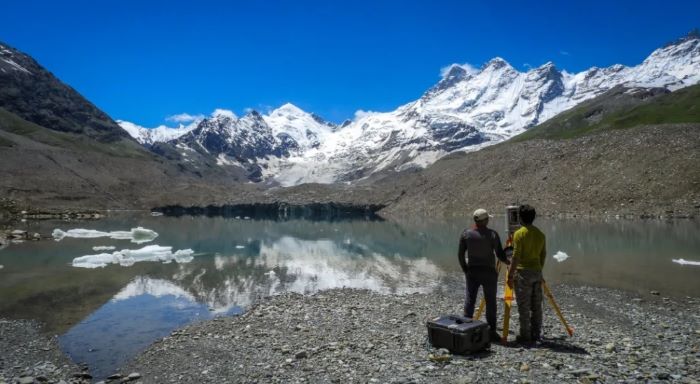
    Image: Rakesh Rao / Climate Visuals Countdown licensed under CC BY-NC-ND 4.0

    Five Decades On, Bangladesh Debates If Its Constitution Retains the Spirit of Liberation War

    Eminent citizens from all walks of life feel that successive constitutional amendments have been made for political, personal gains since the country’s constitution came into being after the liberation war 50 years ago.

    Bangladesh’s freedom fighters, constitutional experts and jurists, journalists and civil society groups and minority groups are questioning if the country’s present constitution at all retains the spirit of the 1972 war of liberation.

    A series of discussions over the weekend suggested a disquiet among jurists, academicians, intellectuals and civil society leaders. The discourse on the path taken by Bangladesh’s constitution over the five decades since the country became an independent nation centres on two points – one of the country going back to the constitution of 1972 that did not specify a state religion and another on how the present day constitution has been purposed to serve the ruling class.

    November 4 is observed as constitution day in Bangladesh, commemorating the constitution’s adoption on this day in 1972 by the constituent assembly.

    At a seminar organised by the Bangladesh Hindu Bouddha Christian Oikya Parishad, former minister Dr Abu Sayeed opined that the 1971 liberation war was fought to establish a democracy, with no space for military dictatorship or religious identity. But, he regretted, the military rulers who took power at the point of the gun changed those features. This was evident as the killers of the country’s first prime minister, Sheikh Mujibur Rahman or Bangabandhu added the invocation from the Quran atop the constitution.

    AMS Arefin Siddique, a former vice chancellor of Dhaka University said that it would be difficult for democracy and for the rule of law and equality to take roots unless the 1972 constitution is restored, as that constitution embodied the spirit and dreams of the liberation war.

    Rising fanaticism

    There was also concern over the rise in religious fanaticism. Senior journalist and freedom fighter Shahriar Kabir said that fanatical forces are working to strangulate democracy and freedom in the country by taking advantage of the ‘state religion’ clause of the current constitution. He said he wants a restoration of the constitution of 1972 as it bore the concept of secularism espoused by the makers of the original constitution of 1972.

    Arguing for the removal of the clause of state religion from the constitution to retain the spirit of the liberation war, secretary of the Bangladesh Hindu Bouddha Christian Oikya Parishad Rana Dasgupta said that religious-ethnic minorities have become state minorities since the idea of ‘state religion’ was introduced, in turn dividing the country.

    Speaking of the modern-day challenges to the Constitution, editor of The Daily Ittefaq, Tasmima Hossain, cited the enactment of the Digital Security Act, which he said works at cross-purposes with the constitutional guarantee of the citizens’ freedom of expression.

    One way out would be the establishment of an ombudsman as this will help upholds the rights of citizens. Former governor of the Bangladesh Bank Atiur Rahman said, “The constitution clearly states the fundamental rights of citizens but there is no ombudsman to monitor whether it is being implemented or not.”

    Political, personal gains

    Krishna Debnath, a former judge said that the many amendments to the constitution over the years have actually mutilated the constitution. He sought to know if these were necessary and if the responsibility for these deviations will ever be fixed.

    He asked, “Were they actually necessary? It was done for political necessity and personal reasons. Who will take responsibility for this?” The responsibility lies with parliamentarians, intellectuals and civil society, he said, adding that the country’s supreme court should act as the guardian of the constitution, not as a guardian of any government or to fulfil the desires of any individual.

    Supreme Court lawyer Qazi Zahed Iqbal spoke of how, entirely for personal reasons, the constitution was amended during General Ershad’s dictatorship to facilitate the swearing in of a hand-picked deputy prime minister.

    Repeated, “haphazard” amendments have led the State to deviate from the aspirations when the constitution was first formulated in the days following the 1972 liberation war as most constitutional amendments were made for either political or personal gains, legal experts associated with the Bangladesh Legal Aid and Services Trust said.

    The felt that though the constitution provides for the fundamental rights of citizens including freedom of speech and expression, the lack of oversight on the part of the state to monitor how many of these rights are actually being ensured is a matter of concern.

    The Best Climate News You May Not Have Heard About

    The Montreal Protocol — designed to save the ozone layer — is also averting a dangerous amount of global warming. And the US has just joined an effort to make the treaty even stronger.

    By Bob Henson

    A treaty adopted 35 years ago and meant to solve an entirely different problem is also protecting the climate. And with bipartisan support from the Senate and President Joe Biden’s 26 October signature, the US became the world’s 139th nation to adopt a key amendment to that agreement — the first time the US has joined a legally binding global measure specifically to combat climate change.

    What is the Montreal Protocol? 

    Global warming was on the back burner in 1985 when scientists from the British Antarctic Survey found a gaping hole in the planet’s stratospheric ozone layer. A natural feature of the atmosphere, the ozone layer is located between about 10 to 25 miles above Earth’s surface. It shields the planet from the sun’s ultraviolet radiation, which is harmful in large doses to our skin and to myriad other aspects of plant and animal life.

    Researchers rapidly pinned down the cause of the ozone destruction: chlorofluorocarbons, known as CFCs, which are chemicals used as refrigerants and to manufacture aerosol sprays and other materials. CFCs had been recognized for years as a threat to the ozone layer, but the ozone hole found in the mid-1980s was far worse than anything expected by that point.

    By 1987, diplomats had crafted a treaty known as the Montreal Protocol to fix the problem. It was an immense success, ratified by every member state of the United Nations.

    There was a major catch, though.

    Both CFCs and their leading replacements – hydrofluorocarbons, or HFCs – trap heat in the atmosphere, causing global warming.

    Atmospheric chemist Susan Solomon led crucial research that found CFCs were reacting with polar stratospheric clouds to destroy ozone above Antarctica. In an email, Solomon pointed out that CFCs were recognized as dangerous heat-trapping gases as far back as the mid-1970s. Once released, they remain in the atmosphere for about a century.

    HFCs have much briefer atmospheric life spans – on the order of a decade or two. So they were “rightly viewed as less damaging both for ozone and climate and as a transition substance,” Solomon said.

    “What changed was that the developing countries began to develop far faster than originally expected,” Solomon said, “which made the world realize that demand for these molecules would shoot up rapidly as the number of people using refrigeration and [air conditioning] would increase in the 21st century.”

    And it soon became clear that a large volume of HFCs could do plenty of damage.

    What is the Kigali Amendment and why did the US Senate support it?  

    Enter the Kigali Amendment.

    Adopted at a United Nations meeting held in the Rwanda capital in October 2016, it uses a variety of policy approaches to throttle back on both the production and consumption of HFCs. The amendment has put the world on track to eliminate more than 80% of HFCs by midcentury.

    One reason the Kigali Amendment passed the Senate with bipartisan support (69-27, including 21 of the chamber’s 50 Republicans) is that national action on HFCs along the lines of Kigali was already in gear. The pandemic stimulus bill of late 2020 specified an 85% cut in HFC production by 2030. Many lawmakers, especially those from states with major chemical manufacturing, had recognized that cutting HFCs made sense. For one thing, nations that have not ratified the amendment cannot trade HFCs with those that have.

    Bringing down HFCs is an undisputed climate win. If HFCs were to grow at an uncontrolled pace, as they were doing just 20 years ago, they could add close to 0.5 degrees Celsius (0.9 degrees Fahrenheit) to the amount of global heating expected by 2100.

    “I think US ratification of Kigali shows that there is no fundamental barrier to stepping up ambition on greenhouse-gas reduction,” Solomon said. “If we can do it with today’s fractured Congress, we can do other things too, like carbon-dioxide reduction.”

    How the Montreal Protocol has protected Earth’s climate 

    But the phaseout of HFCs is not the only way the Montreal Protocol is helping the climate. The climate benefits of the Montreal Protocol gained prominence in a series of “world avoided” papers published starting in 2007.

    In all, researchers have found that roughly 2.5°C (4.0°F) of warming by 2100 is being averted by aspects of the Montreal Protocol unrelated to HFCs. Much of that avoided warming results from the protocol’s phaseout of CFCs.

    In addition, had the world chosen not to ratify the Montreal Protocol and instead continued to damage the ozone layer, plants would have been harmed by extra ultraviolet sunlight. That would have reduced their ability to remove heat-trapping carbon dioxide from the atmosphere and led to still more warming, according to a 2021 paper.

    “So far, the Montreal Protocol has protected climate more than all other efforts combined,” said Stephen Andersen, director of research at the Institute for Governance and Sustainable Development in Washington, D.C., in an email. Andersen is co-author of a special volume, issued jointly on Oct 31 by the institute and the United Nations Environment Program, that commemorates the protocol’s 35th anniversary.

    “The rapid transition from an ozone treaty also protecting climate, to a hybrid ozone and climate treaty with future emphasis on climate, is an amazing diplomatic and environmental success,” Andersen said.

    More pollutants to tackle 

    HFCs are a classic example of what are known as short-lived climate pollutants. It takes well more than a century for an atmospheric infusion of carbon dioxide to work its way back into the oceans and soil. Molecule for molecule, carbon dioxide is not an especially powerful heat-trapping gas, but it’s emitted in titanic amounts — more than 30 billion metric tons per year. Because of this sheer volume combined with its longevity, carbon dioxide is expected to cause the bulk of global warming this century and beyond.

    Short-lived greenhouse gases – most prominently methane, but also nitrous oxide and several others, including HFCs – pack a much more intense punch per molecule than carbon dioxide. The global warming potential of an HFC molecule is more than 10,000 times that of carbon dioxide when the effects of both are summed over a century-long span. This effect is counterbalanced by HFCs being far less prevalent than carbon dioxide.

    Many scientists, activists, and diplomats are pushing for prompt action on other short-acting pollutants in addition to HFCs, especially methane. Since these gases tend to be so powerful over the short term, cutting them ASAP would provide immediate help, they argue.

    Lessons from Montreal and Kigali 

    Durwood Zaelke, president of the Institute for Governance and Sustainable Development, is optimistic that headway on other short-term pollutants is possible, with the Montreal and Kigali agreements serving as important inspirations. The agreements “show we have won the battle before,” he said. “Now let’s get the whole package of short-term pollutants under regional agreements.”

    Methane from fossil fuels is particularly ripe for reduction, Zaelke said. Huge amounts of natural gas are lost through pipeline leakage or burned off in flares. “You can do at least 50% of methane recovery in oil and gas at a profit,” said Zaelke. At this point, he added, “the oil and gas sector understands that to keep their social license they’re going to have to have very low leak rates.”

    A Global Methane Pledge introduced in 2021 advocates for a cut of 30% in worldwide methane emissions from 2020 to 2030. This pledge now includes more than 120 countries; together, they represent about 45% of global methane emissions and around 60% of global GDP.

    Solomon says that the same practical approach employed by the Montreal Protocol – crafting policies that stimulate new, cost-effective technologies – can be used for carbon dioxide as well.

    “Misinformation has led many people to believe it can’t be done or would be enormously expensive for CO2. That is certainly not true now.”


    Bob Henson is a meteorologist and journalist based in Boulder, Colorado.

    This piece has been sourced from Yale Climate Connections.

    Image: Hippopx Images, Licensed to use under Creative Commons Zero – CC0

    Why Greta Thunberg Is Wrong to Boycott COP27

    With time running out, the meeting in Egypt will mark the moment when we start to see if the pledges made at COP26 in Glasgow, are being met. Greta Thunderg’s recent announcement that she will not attend COP27 is understandable, but we still hope she’ll reconsider.

    By Prof. Felix Dodds and Chris Spence

    So, Greta Thunberg won’t be coming to COP27. She’s condemned it as “greenwashing” and cast doubts on the host’s human rights record and lack of access for activists.

    To be clear, we have nothing but admiration for what Greta Thunberg has accomplished as far as increasing the pressure on our political leaders to do more. We agree with her completely that a lot more is needed, and fast.

    But when it comes to COP27, we hope she’ll change her mind. We have three reasons for this: the impact of diplomacy, the urgency of the situation, and COP27’s role convening people with power and influence.

    Diplomacy works

    While Greta Thunberg is right that many international events are mostly “blah, blah, blah,” the United Nations negotiations on climate change have achieved a lot more than many people realize. Prior to the Paris Climate agreement in 2015, for instance, we were on a trajectory of 4-6 degrees Celsius rise in temperature by the end of the century. Now, estimates suggest we’re on track for somewhere around 2.4-2.8 C, if current pledges are met. While this would be a terrible scenario to have to face, it would be less apocalyptic than those higher numbers.

    As we have pointed out in a previous article, international negotiations on climate change have had a profound impact already, kickstarting the shift away from two centuries of fossil fuel dependence and giving us at least a chance of achieving sustainability in the longer term. Just days ago, the International Energy Agency forecast that global emissions will peak in 2025 before beginning to fall. Furthermore, they see all types of fossil fuels “peaking or hitting a plateau” then, too.

    Do we wish this had happened sooner? Absolutely. But it shows progress is being made. Besides, there is no alternative to an international process when it comes to dealing with a global problem of this magnitude. No country, company, or coalition, can solve this problem alone. We all need to work together.

    Urgency means everyone joining the fight

    We agree wholeheartedly with Ms. Thunberg’s exhortation for everyone to “mobilize” and be involved in solving this challenge. Many folks may choose to be activists or advocates for change, pressuring their home governments to be more ambitious, taking action locally, or changing their habits as consumers or investors. Thunberg is also quite right that time is running out; the science tells us the window of opportunity to restrict warming to 1.5C or less is closing rapidly.

    Yet this is exactly why COP27 is so important. With time running out, the meeting in Egypt will mark the moment where we start to see if the pledges made at COP26 in Glasgow, are being met. Is the global community sticking to its promises or falling short? COP27 will give us an opportunity to review, press for greater urgency, and draw global attention to those who are keeping their promises and those who are not.

    The decision at COP26 to not wait for 5 years until governments submit improved National Determined Contributions, but to ask all countries to update their NDCs by COP27, is also important.

    A total of 39 Parties have communicated new or updated NDCs since COP26, including critical countries such as Australia and India. This is clearly not enough, but it is a start. The same request should be made at COP27, pressuring countries to review their NDCs in time for COP28.

    Influencing the powerful

    Finally, UN climate summits present a once-a-year opportunity to engage with powerful politicians and urge decisions on the climate threat. With time so short, no one who can influence the process should stay away.

    Greta Thunberg has already had an outsized influence inspiring people to action and persuading politicians to take the issue more seriously. Her presence at COP27 would undoubtedly make a difference.

    One reason she has given for not attending is her concern that civil society representation may be less this time around, and she doesn’t want to take someone else’s place. This is thoughtful. However, Greta Thunberg has access to leaders’ others may not. Her presence could have a significant impact.

    For these reasons, we hope Ms. Thunberg will reconsider and use her influence to its fullest at COP27. As we write this, it appears that another powerful figure who had earlier ruled out attending may be changing their mind.

    Rishi Sunak will be at COP27

    New British Prime Minister, Rishi Sunak, had initially also said he wouldn’t attend, citing the country’s financial and energy challenges and urgent budget planning as the reason for staying home.

    However, he has now had a change of heart. The public response to his initial decision, as well as concerns from industry and civil society, made the Prime Minister reconsiders his position. This is welcome news and, we believe, the right decision.

    If Rishi Sunak wishes to build on the UK’s solid performance at COP26 and burnish his country’s reputation for taking climate change seriously, we hope he attends with not just positive rhetoric, but new commitments and financing. It would be a positive signal if King Charles also attended.

    After all, the UK is still the President of the COP until the start of COP27. Missing the next COP would not have sent the right message to the UK’s partners and the global community in general.

    With no other realistic way to solve climate change than the multilateral system, we urge Greta Thunberg to follow Rishi Sunak’s lead and join the gathering. In fact, all of those in positions of power or influence should come to Sharm ready to work for the best agreement possible. As John F. Kennedy said. “Let us never negotiate out of fear. But let us never fear to negotiate”.

    Prof. Felix Dodds and Chris Spence have participated in UN environmental negotiations since the 1990s. They co-edited Heroes of Environmental Diplomacy: Profiles in Courage (Routledge, 2022), which examines the roles of individuals in inspiring environmental change.

    This piece has been sourced from Inter Press Service.

    Image: Wikipedia