More

    Can Your Phone Tell if a Bridge is in Good Shape?

    A new study suggests mobile data collected while traveling over bridges could help evaluate their integrity. Researchers at the Massachusetts Institute of Technology find that data collected by mobile phones could be used to evaluate the structural integrity of bridges.

    By Peter Dizikes | MIT News Office

    Want to know if the Golden Gate Bridge is holding up well? There could be an app for that.

    A new study involving MIT researchers shows that mobile phones placed in vehicles, equipped with special software, can collect useful structural integrity data while crossing bridges. In so doing, they could become a less expensive alternative to sets of sensors attached to bridges themselves.

    “The core finding is that information about structural health of bridges can be extracted from smartphone-collected accelerometer data,” says Carlo Ratti, director of the MIT Sensable City Laboratory and co-author of a new paper summarizing the study’s findings.

    The research was conducted, in part, on the Golden Gate Bridge itself. The study showed that mobile devices can capture the same kind of information about bridge vibrations that stationary sensors compile. The researchers also estimate that, depending on the age of a road bridge, mobile-device monitoring could add from 15 percent to 30 percent more years to the structure’s lifespan.

    “These results suggest that massive and inexpensive datasets collected by smartphones could play an important role in monitoring the health of existing transportation infrastructure,” the authors write in their new paper.

    The study, “Crowdsourcing Bridge Vital Signs with Smartphone Vehicle Trips,” is being published in Communications Engineering.

    Driving

    Bridges naturally vibrate, and to study the essential “modal frequencies” of those vibrations in many directions, engineers typically place sensors, such as accelerometers, on bridges themselves. Changes in the modal frequencies over time may indicate changes in a bridge’s structural integrity.

    To conduct the study, the researchers developed an Android-based mobile phone application to collect accelerometer data when the devices were placed in vehicles passing over the bridge. They could then see how well those data matched up with data record by sensors on bridges themselves, to see if the mobile-phone method worked.

    “In our work, we designed a methodology for extracting modal vibration frequencies from noisy data collected from smartphones,” says Paolo Santi, principal research scientist at the Senseable City Lab and research director at the Italian National Research Council who is a co-author of the study. “As data from multiple trips over a bridge are recorded, noise generated by engine, suspension and traffic vibrations, [and] asphalt, tend to cancel out, while the underlying dominant frequencies emerge.”

    In the case of the Golden Gate Bridge, the researchers drove over the bridge 102 times with their devices running, and the team used 72 trips by Uber drivers with activated phones as well. The team then compared the resulting data to that from a group of 240 sensors that had been placed on the Golden Gate Bridge for three months.

    Accuracy

    The outcome was that the data from the phones converged with that from the bridge’s sensors; for 10 particular types of low-frequency vibrations engineers measure on the bridge, there was a close match, and in five cases, there was no discrepancy between the methods at all.

    “We were able to show that many of these frequencies correspond very accurately to the prominent modal frequencies of the bridge,” Santi says.

    However, only one per cent of all bridges in the US are suspension bridges. About 41 per cent are much smaller concrete span bridges. So, the researchers also examined how well their method would fare in that setting.

    To do so, they studied a bridge in Ciampino, Italy, comparing 280 vehicle trips over the bridge to six sensors that had been placed on the bridge for seven months. Here, the researchers were also encouraged by the findings, though they found up to a 2.3 percent divergence between methods for certain modal frequencies over all 280 trips, and a 5.5 percent divergence over a smaller sample. That suggests a larger volume of trips could yield more useful data.

    “Our initial results suggest that only a [modest amount] of trips over the span of a few weeks are sufficient to obtain useful information about bridge modal frequencies,” Santi says.

    Work to do

    Looking at the method as a whole, Markus J. Buehler, the Jerry McAfee Professor in Engineering and professor of civil and environmental engineering and of mechanical engineering at MITB observes, “Vibrational signatures are emerging as a powerful tool to assess properties of large and complex systems, ranging from viral properties of pathogens to structural integrity of bridges as shown in this study. It’s a universal signal found widely in the natural and built environment that we’re just now beginning to explore as a diagnostic and generative tool in engineering.”

    As Ratti acknowledges, there are ways to refine and expand the research, including accounting for the effects of the smartphone mount in the vehicle, the influence of the vehicle type on the data, and more.

    “We still have work to do, but we believe that our approach could be scaled up easily — all the way to the level of an entire country,” Ratti says. “It might not reach the accuracy that one can get using fixed sensors installed on a bridge, but it could become a very interesting early-warning system. Small anomalies could then suggest when to carry out further analyses.”

    Team

    Besides Ratti and Buehler, the authors of the study are Thomas J. Matarazzo, an assistant professor of civil and mechanical engineering at the United States Military Academy at West Point; Daniel Kondor, a postdoc at the Complexity Science Hub in Vienna; Sebastiano Milardo, a researcher at the Senseable City Lab; Soheil S. Eshkevari, a senior research scientist at DiDi Labs and a former member of Senseable City Lab; Paolo Santi, principal research scientist at the Senseable City Lab and research director at the Italian National Research Council; Shamim N. Pakzad, a professor and chair of the Department of Civil and Environmental Engineering at Lehigh University.

    The researchers received support from Anas S.p.A., Allianz, Brose, Cisco, Dover Corporation, Ford, the Amsterdam Institute for Advanced Metropolitan Solutions, the Fraunhofer Institute, the former Kuwait-MIT Center for Natural Resources and the Environment, Lab Campus, RATP, Singapore–MIT Alliance for Research and Technology (SMART), SNCF Gares & Connexions, UBER, and the U.S. Department of Defense High-Performance Computing Modernization Program.


    Reprinted with permission of MIT News 

    Image: Hippopx image, licensed to use under Creative Commons Zero – CC0
    Push to Top COP27 Agenda with Thorny Compensation Talks

    Developing countries have high expectations from the ‘Africa COP’ due next month as the COP27 president, Egypt, says loss and damage finance is ‘well overdue’. Climate advocates say that compensation for irreversible climate impacts should lead negotiations. The bill for climate-linked Pakistan floods around $40 billion.

    By: Eman Mounir and Fiona Broom

    In the months following last year’s United Nations climate conference, developing countries have been hit by waves of extreme weather – floods, fires and drought have killed thousands, displaced millions and caused untold damage to food systems and economies.

    The communities bearing the brunt of this climate chaos are least responsible for the emissions that are driving up global temperatures. And they say it is time that wealthy countries take responsibility.

    Loss and damage – the irreversible harm caused by climate change, which cannot be adapted to or mitigated against – gained focus at Glasgow’s COP26 like never before. Leaders of least-developed and small island states are determined to continue their push for compensation at this year’s COP27.

    “Developing and vulnerable countries are being pushed into deeper and deeper crises by food security, energy poverty, and the debt crisis, which are all underpinned by the colonial extractive legacy,” Sindra Sharma, global policy lead at Climate Action Network (CAN), tells SciDev.Net.

    More than 400 non-government organisations signed an open letter from CAN – a network of 1,500 organisations in 130 countries – that calls on governments to put loss and damage finance on the agenda at COP27.

    Loss and damage is on the provisional agenda, but advocates remain worried that world leaders will find new ways to prevent agreement on financial support for low- and middle-income countries on the climate frontlines. Wealthy countries blocked a proposal at COP26 for a loss and damage financing body, opting instead for a new “dialogue” to continue funding discussions, as they seek to avoid legal liability for historic emissions and related compensation claims.

    Climate damage

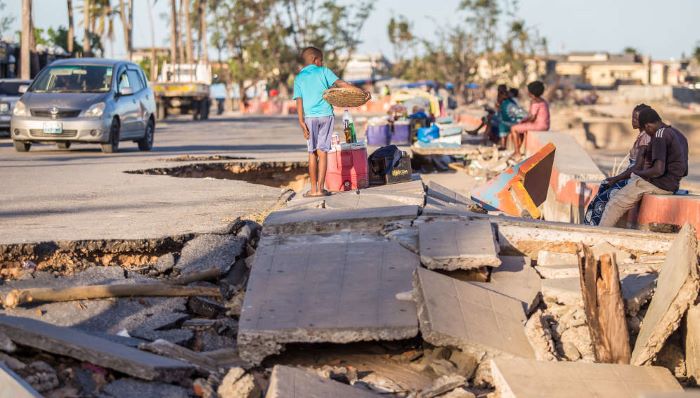
    The World Bank has estimated that Pakistan will need US$40 billion to recover from this year’s devastating floods, which displaced one third of the country’s population. The national poverty rate could increase by up to four percentage points, pushing between six and nine million people into poverty.

    Between 2019 and 2020, around 90 per cent of climate finance went towards mitigation – typically used by rich countries to develop greener technologies – while just over 7 per cent went on adaptation – more frequently used by poorer nations to find ways to live with the changing climate, according to research by the Climate Policy Initiative, a non-profit analysis and advisory organisation.

    Researchers from the Basque Centre for Climate Change, a non-profit research organisation attached to the University of the Basque Country, have estimated that developing countries will need up to US$580 billion a year by 2030 to cover the costs of loss and damage.

    Zoha Shawoo, an associate scientist at the international non-profit Stockholm Environment Institute, told SciDev.Net that climate finance had major gaps, making it ineffective and unjust.

    “To be in line with climate justice principles, finance for loss and damage needs to be made in a way that puts the needs of vulnerable and marginalised communities at the centre and gives them a lot of freedom and decision-making power over how the money is used to meet their needs,” Shawoo says.

    The Alliance of Small Island Developing States has long advocated for a dedicated intergovernmental fund to help vulnerable countries recover from extreme climate disasters and long-term threats. Finance should be provided in the form of grants – rather than loans that will increase the debt burden of developing countries – and come in addition to any Official Development Assistance, emergency aid, or existing commitments to climate mitigation and adaptation finance, the CAN open letter adds.

    Country pledges

    Denmark’s government has pledged more than US$13 million to help developing countries cope with loss and damage, the country’s development minister Flemming Møller Mortensen announced on the sidelines of the UN General Assembly in September.

    At COP26, the Scottish government also pledged around US$2.6 million to address loss and damage, with a similar pledge from the Belgian region of Wallonia.

    Saleemul Huq, director of the International Centre for Climate Change and Development (ICCCAD), an environmental research institute, expects more countries to follow suit this year.

    Egypt’s foreign minister and COP27 president, Sameh Shoukry, has said in a blog post that while loss and damage financing is “contentious”, a credible global climate agenda cannot be achieved without it.

    “The time is well overdue to address the massive loss and damage from climate change suffered by people who did the least to cause it,” Shoukry wrote in the blog post published on 14 October.

    Chile’s environment minister Maisa Rojas and Germany’s climate special envoy Jennifer Morgan have been tasked by Egypt with finding a way to include loss and damage on the summit’s official agenda.

    Huq says that developing countries’ expectations will be high for Egypt’s leadership.

    “As the incoming president of COP27, Egypt has a great role to play in ensuring a successful outcome on finance for loss and damage,” Huq told SciDev.Net. “We expect them to play that role.”

    CAN’s Sharma, however, remains sceptical of claims from the most powerful countries – including the United States and the European Union, who rejected calls for a loss and damage mechanism at COP26 – that they are committed to addressing loss and damage this year.

    She adds: “Egypt needs to bring the moral argument to a higher level and remind wealthy countries that their failure to act quickly on mitigation, to keep their promises about climate finance and the balance of adaptation finance in particular, has caused even more loss and damage.”

    This piece has been sourced from SciDev.Net

    Image: World Bank photo collection, (CC BY-NC-ND 2.0)

    Modi Scores Political Points at Housing Inaugural

    The Prime Minister said, today’s government is the government of the poor, so it cannot leave the poor on their own terms, and therefore, today the poor is at the centre of the country’s policies.

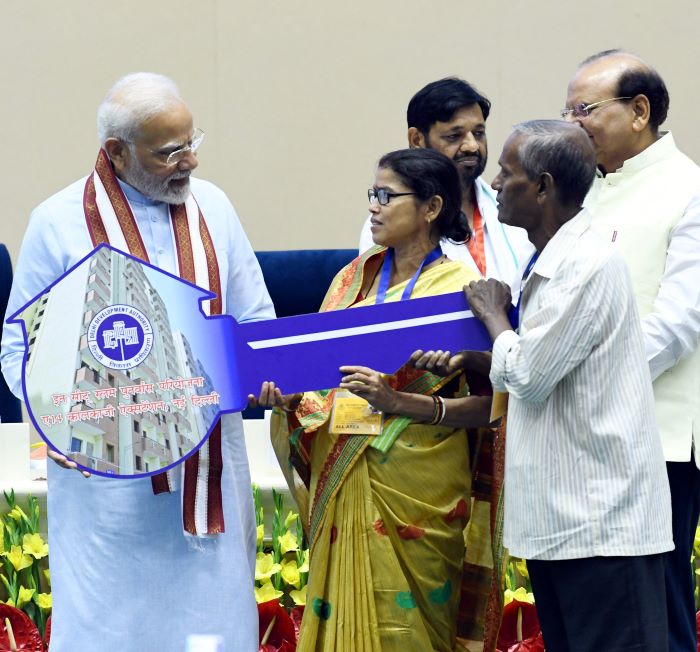
    Prime Minister Narendra Modi on Wednesday inaugurated 3,024 newly constructed flats for the economically weaker sections in Delhi under the government’s ‘In-Situ Slum Rehabilitation’ Project as part of a slum rehabilitation of 376 Jhuggi Jhopri clusters undertaken by Delhi Development Authority.

    Saying that the government has achieved an important milestone by handing over keys of pucca houses to the urban poor, the Prime Minister asserted that the welfare of poor is at the core of government’s policies. He added that work is going on to regularise the houses built in unauthorised colonies of Delhi through the PM-UDAY scheme.

    Prime Minister Modi also took pot-shots at past governments on the occasion, while dwelling on the ‘Sabka Saath, Sabka Vikas, Sabka Vishwas and Sabka Prayas’ mantra of his government. He said, “In the system that prevailed in the country for decades, the thinking was that poverty is only the problem of the poor. But the government in the country today is the government of the poor, so it cannot leave the poor on their own terms, and therefore, today the poor is at the centre of the country’s policies. The poor are at the centre of the nation’s decisions today. Our government is paying equal attention especially to the poor brothers and sisters living in the city.”

    Going on, he said, “When the construction worker is left behind, then the construction also remains incomplete and that is why, in the last seven decades, our cities were deprived of holistic development. The city which has high-rise buildings and glitter on one side, the slums next to it are in a state of disrepair,” he said.

    “On one hand some areas in the city are called posh, on the other hand in many areas people have been longing for the basic necessities of life. When there is so much inequality, so much discrimination in a single city, then how can we imagine holistic development,” he asked.

    The Prime Minister spoke of the government’s initiative to ensuring ease of living for the poor in Delhi through the ‘One Nation, One Ration Card’ scheme, while also mentioning that the national capital’s poor availed the benefits of free ration being provided by the government during COVID-19 pandemic.

    Bangladesh Stares at Severe Multiple Risks From Climate Change

    Average tropical cyclones cost Bangladesh about $ 1 billion annually. By 2050, a third of agricultural GDP could be lost. In case of a severe flooding, GDP could fall by as much as 9 per cent, says a report by the World Bank.

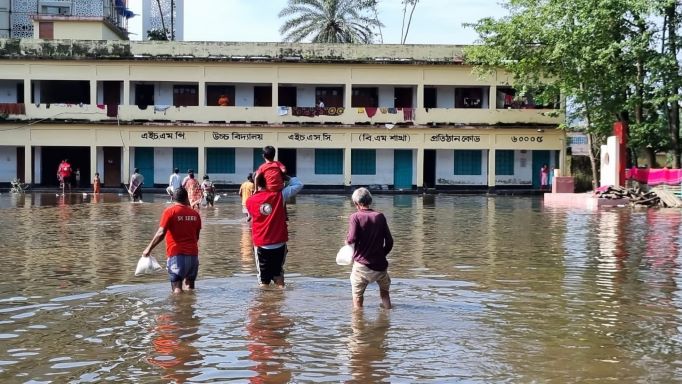
    Bangladesh needs to take urgent action including further adaptation and resilience measures to avoid risking its growth potential, the World Bank has said in its Country and Climate Development Report for the country. Released on Monday, the report outlines priority actions and financing needs to help Bangladesh address the climate crisis.

    Highlighting the impact of climate change, the report says that it will hit poor and vulnerable people the hardest. Even under optimistic global climate scenarios, the country faces multiple severe risks from climate change that will disproportionately affect the poor, with impacts more concentrated in already vulnerable regions of Bangladesh.

    Dire costs

    The costs of environmental degradation and natural disasters are expected to rise over time, compounded by higher heat and humidity and impacts on health, the report says, adding that average tropical cyclones cost Bangladesh about US$ 1 billion annually. By 2050, a third of agricultural GDP could be lost and 13 million people could become internal climate migrants. In case of a severe flooding, GDP could fall by as much as 9 per cent, says the report.

    Air pollution in Bangladesh costs about 9 per cent of GDP annually, says the World Bank report. By implementing policies that abate both air pollution and emissions, Bangladesh can reduce deaths from air pollution by half or save nearly 1 million lives within 2030.

    “Climate vulnerability is particularly acute on Bangladesh’s coast,” the Bank says in its report, adding that “Under a 1.5°C increase in temperature and 4 percent increase in precipitation, sea levels in the Bay of Bengal could rise by 27 centimeters or more by 2050. Such sea level rise would nearly double asset risk, currently at approximately US$300 million per annum, and threaten agricultural production, water supply, and the diversity of coastal ecosystems.”

    Without action, by 2040, cropland could shrink by more than 6.5 per cent nationally and 18 per cent in Southern Bangladesh alone, the World Bank warns in its report. It says that a third of the total agricultural GDP may be lost due to climate variability and extreme events by 2050 – by which time, Bangladesh could see over 13 million internal climate migrants.

    Strengthen climate resilience

    Currently, the GreenHouse Gas emissions in Bangladesh are not significant but it is likely to increase significantly if the country follows ‘business as usual’ development pathway.

    World Bank Vice President for South Asia Martin Raiser pointed out that Bangladesh has led the way in adaptation and disaster risk management. Over the past 50 years, it has reduced the cyclone-related deaths 100 fold, said Martin Raiser but called for adoption of a low carbon development path for a resilient future for Bangladesh.

    The World Bank report has recommended investments in infrastructure and services to strengthen climate resilience and called for action focused on improved agriculture productivity, energy and transport efficiency which can lower future emissions while improving air, soil, and water quality.

    What Does it take to Build a Culture of Equality and Inclusion at the UN?

    This work has also highlighted that whilst the organisational is personal, so too the personal is often dependent on the organisational. Engaging with intersectional feminist principles at the personal level was not enough.

    By Mumtaz Mia and Juliane Drews

    The organisational is personal. Every day since the two of us were asked back in 2020 to co-lead the process of culture transformation at UNAIDS, the United Nations organisation which drives global efforts to end AIDS, we have both felt at our very core how crucial it has been to get it right.

    The mission of UNAIDS is vital to ensuring the health and human rights of every person. Staff and partners need to be confident of a supportive and empowering culture that will enable their work.

    A 2018 Report by an Independent Expert Panel had shone a light on what were important organisational shortcomings, leading to a comprehensive set of changes in leadership, systems and crucially, culture.

    As the Culture Transformation process has got underway, the COVID-19 pandemic has brought unprecedented shifts in work, and a resurgence of global protests, including from the Black Lives Matter movement and for women’s rights, have a generated an inspirational momentum for action to tackle intersectional injustice.

    Reflecting almost three years of UNAIDS culture transformation work, what stands out in particular for the two of us is how the “outer work” has required so much “inner work”. We have needed to be, and to help others be, our full selves, and to acknowledge what we don’t yet know of each other’s experiences.

    The process has deepened our appreciation of how our differences, both personally and professionally, are a key strength, enabling each situation, each process, to be seen from a combination of unique angles, and how equality is crucial in enabling all these to be brought forth.

    Addressing inequalities

    Creating safe spaces for our colleagues to speak about their lived experiences was transformative. We asked ourselves and those around us tough and tender questions. We had colleagues tell us they felt heard for the first time. Brave conversations helped colleagues to connect and to advance the tangible changes that matter most to them.

    We understood the need for a common reference framework for all of us at UNAIDS. This has led to a first set of feminist principles that guide our way forward.

    Through the process, it became ever more clear to both of us that culture transformation begins at the personal level. As a Malawian woman of African-Asian heritage, living and working in Latin America at this time, intersecting identities and multiple cultural heritage became for Mumtaz the centre of personal reflections.

    In leading conversations on decolonizing the HIV Response, Mumtaz’s own colonization was calling for attention. For Juliane, too, this has been powerful journey: as someone who has experienced sexual assault in the workplace, this work is deeply personal, driven by a determination to build safe workplaces for everyone, including by addressing inequalities and unhealthy power balances. Our intersectional feminist approach has brought our experiences to our work.

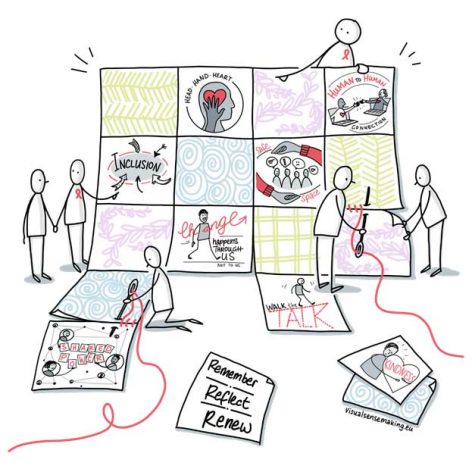
    Quilt in the making

    But this work has also highlighted that whilst the organisational is personal, so too the personal is often dependent on the organisational. Engaging with intersectional feminist principles at the personal level was not enough.

    That is why we were proud to help UNAIDS become the UN entity to put intersectional feminist principles at the core of its being. It is why vital work continues to integrate those principles into policies and practices to advance a workplace culture in which every individual can flourish.

    As we have helped build a movement for change across six regions, engaged in conversation with more than 500 colleagues, and supported some 25 diverse teams in their own journey, we have recognised the centrality of the institutional level.

    Cultural transformation is a long and challenging process that requires the tenacity and creativity of many. To weave the stories and aspirations of so many of the champions for change together while preserving their uniqueness, we have borrowed the quilt symbol that is iconic in the AIDS response.

    As the change process evolves, new tiles will be added, others might fade or need repairing. But the work is not done. It is a ‘quilt in the making’ – individual and collective work, one tile at a time.

    Mumtaz is a Public Health expert with two decades of experience working to end AIDS.
    Juliane is a change management expert with experience in developing inclusive and just organizations.

    This piece has been sourced from Inter Press Service

    Image: Claudia Steinau – “The Quilt in the Making”

    Unchecked Constructions on River Beds Exacerbated Pakistan Floods

    Officials and politicians are now waking up the rampant, illegal encroachments and constructions on the beds of the Swat river and other watercourses. They believe that these activities intensified this year’s flash flood in Khyber Pakhtunkhwa beginning August this year.

    By Asmat Shah

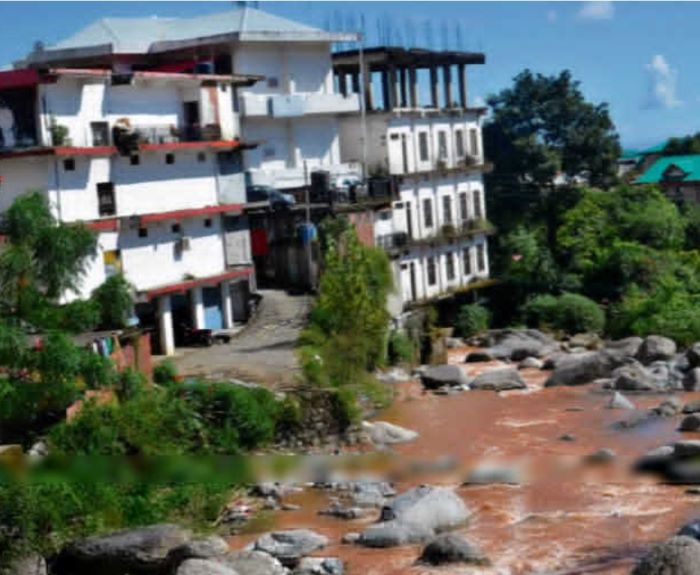
    Civic authorities and planners hove only now woken up to the menace of the encroachments on the river bed of the Swat river over the past two decades. The floods destroyed some 30 illegally constructed hotels, resorts and restaurants in the picturesque valleys between Mataltan and Kalam.

    While this was the worst rain the region has seen in 30 years, almost 250 per cent in excess in some divisions, the unhindered illegal structures on the river beds worked like dams, blocking the passage of water and resulted in massive flash floods in Khyber Pakhtunkhwa beginning August 27, and further damaging dozens of hotels and other settlement along the river banks.

    Data shared by the office of the commissioner of Malakand division shows that about 30 hotels at Kalam, Bahrain, Madain, Landaki and Fizagat built on river Swat’s beds were destroyed and another 50 damaged by flash floods at unprecedented velocity. Another 700 hotels, motels, inns and restaurants were completely inundated at Kalam, Bahrain, Kabal, Charbagh, Manglawar, Khwazakhela, Matta, Madain Mingora bypass road.

    Debris and plastics

    One section of the hotel industry, on the other hand, sees nothing wrong about the constructions, instead speaking of the colossal losses inflicted to it – to the tune of 25 billion Pakistani rupees.

    But there is also better sense elsewhere. Zahid Khan, the president of the hotels association agrees that the constructions contributed to the misery. “The large-scale encroachment and illegal construction around banks of river Swat and other watercourses contributed to massive losses to hotels industry, trout fish, agriculture, orchards and livestock,” he said.

    The situation is worrisome and raises question as to why the concerned departments kept mum when this trend of illegal construction was flourishing. “The people, businessmen, farmers and hoteliers of Swat would continue to suffer from flood hazards if all these illegal structures are not bulldozed,” said Wajid Ali Khan, a former environment minister.

    He said illegal construction of hotels and buildings near banks of river Swat, especially at Kalam, Bahrain and Madain had marred the natural beauty of the tourist areas besides affecting trout fish production. “The people of Swat were mostly relying on tourism business and destruction of a large number of hotels deprived many people of their living,” the former minister, complaining that if the relevant laws been fully complied by them, the losses could have reduced manifold.

    Shaukat Ali Yousafzai, commissioner of the Malakand division also raised the issue of pollution caused by the hotel industry, especially about the amount of plastics strewn around and the dumping of debris along the banks of river Swat. “Such irrational approaches are intolerable. Water and plastic pollution was having negative effects on aquatic resources in river Swat,” he says.

    Law only on paper

    Expressing concern on illegal construction along river banks, especially in Swat, the Pakistan National Assembly’s sub-committee on water resources has sought recommendations from different departments for formulating new water and environment policy for the country in view of climate change challenges.

    The sub-committee, constituted after devastation triggered by recent flash floods and torrential rains along rivers Swat, Indus and Kunhar, reflects the federal government’s willingness to amend existing laws and enacting fresh legislation on encroachment of river beds to avert any future losses due to climate change.

    To begin with, the deputy commissioner has imposed a ban on gatherings on the river bed under section 144 of the criminal procedures code to stop any construction-related activity alongside the river in the aftermath of recent calamity.

    Junaid Khan explained that most hotels damaged in flood were constructed before the Rivers Protection Act was promulgated in 2014. “This Act strictly prohibits construction of hotels, houses and other projects within a distance of 200 feet of the rivers.”

    “From now onwards, no person would be allowed to construct commercial or non-commercial buildings or carryout any other development work within 200 feet of the rivers and streams in Swat,” he said, warning of strict action against violators, saying that an operation has been initiated against illegal construction, encroachment as well as accumulation of debris along the river.

    It is evident that the law, enacted in 2014 by the Khyber Pakhtunkhwa provincial government run by former Prime Minister Imran Khan’s Pakistan Tehreek-e-Insaaf party was not implemented in letter and spirit, resulting in the loss of human lives and property besides colossal damage to habitat, environment and livestock.

    Gujarat Elections: Modi Unveils Water Supply Projects in Gujarat

    Prime Minister Modi touched on the history of water scarcity in Gujarat, highlighting the undying spirit of Gujarat’s people that, he said, gives them the strength to deal with any adversity with whatever resources they have.

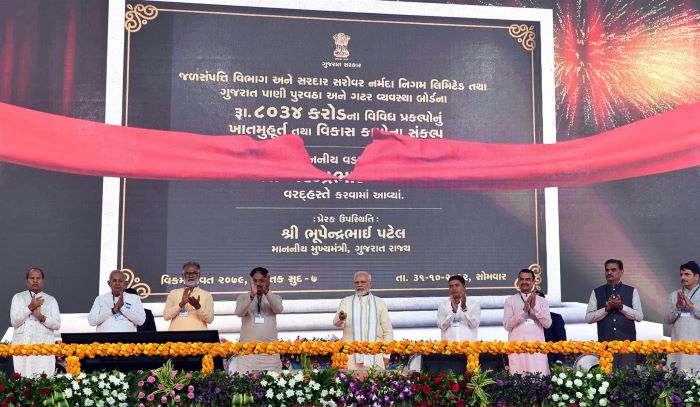
    In days running up to the Gujarat elections, Prime Minister Narendra Modi on Monday unveiled plans for a slew of water supply project in Northern Gujarat. Laying the foundation stone for the project worth over Rs. 8,000 at Tharad in Banaskantha, the Prime Minister said that the projects will help extend irrigation facilities to more than six districts of Gujarat including Banaskantha, Patan and Mehsana.

    The projects include water conservation schemes to irrigate over one thousand villages of the six districts of North Gujarat.

    Speaking at the foundation stone laying ceremony, Prime Minister Modi touched on the history of water scarcity in Gujarat, highlighting the undying spirit of Gujarat’s people that, he said, gives them the strength to deal with any adversity with whatever resources they have.

    “Banaskantha is a living and breathing example of this”, PM Modi said as he highlighted the development works that have transformed the district today.

    Prime Minister spoke of the times when the districts of North Gujarat had fluoride contaminated water, impacting agriculture. Such was the condition, he said, that landowners couldn’t find buyers for their land.

    He said, “Since I have become a ‘sevak’ of the land, it was our government that identified the problems of the region and worked towards completing them with utmost dedication and sincerity.”

    Sujalam-Sufalam

    He congratulated Banaskantha district for establishing a drip irrigation network of over 4 lakh hectares of farmland. Praising the fighting spirit of Gujarat, Modi said that Gujarat has always beaten the odds and overcome the challenges.

    North Gujarat’s arid region has witnessed a massive transformation in the last 20 years following the constant efforts of the government towards water conservation, he said, praising the people of the region who have silenced all the critics with their effort and dedication and made the Sujalam-Sufalam Yojna a grand success.

    The Prime Minister said that the government has focussed on preventing rainwater from flowing into the sea, ensuring construction of check dams, and successful implementation of the Sujalam Sufalam Yojana in the North Gujarat region over the past 20 years.

    “We focussed on water conservation, built check dams and ponds,” he said, dishing out examples of Sujalam-Sufalam Yojna, Wasmo Yojna and Pani Samitis and of drip irrigation and the ‘per drop more crop’ model that have boosted agriculture and tourism in the region.

    Banaskantha’s micro irrigation techniques have drawn the attention of the entire country and also led to worldwide recognition, he said.

    “Today, Banaskanta is writing its own chapter in the history of development,” he said, speaking of how 4 lakh hectares of land in Banaskantha are dedicated to using drip and micro irrigation that has resulted in the water table not getting depleted further. “This is not just benefiting you but also securing the lives of future generations.”

    Election time in Gujarat

    He also underlined the crucial role played by women that has led to the transformation of the North Gujarat region, including Kutch.

    Gujarat is due to go to the polls very soon and the model code of conduct is set to kick in anytime in the coming days.

    “One hand we have the Banas Dairy while on the other hand a 100 MW Solar Power Plant, we have accomplished the goal of getting tap water to every house in the region” the Prime Minister added.

    Modi reiterated government’s commitment to strengthening agriculture and allied sectors including dairy, and cattle rearing to boost the economic development of the villages and spoke of how the government is providing fertilizers to farmers at affordable prices despite the global price hike. He said the central government is also providing assistance to the farmers to establish cold storage networks, food processing plants.

    Later in the day, with Gujarat’s politicians on the stage in Ahmedabad, the Prime Minister also inaugurated two railway projects worth over Rs. 2900 crores.

    Bangladesh: High Growth, But Little Employment

    Many of the new jobless people are women, a large number of whom lost their jobs due to their failure to adapt to technology as they were not given the opportunity for education.

    The high levels of economic growth in Bangladesh in recent years has really not provided the desired level of employment, economists said at a panel discussion in Dhaka on Sunday.

    Economists spoke of the high unemployment rate in the country – a level of unemployment that did not match the high growth and underlined the need to ensure employment-oriented growth to achieve desired levels of sustainable economic development.

    “The country has been on a path of high growth, but unfortunately this growth has not been accompanied by job creation and employment generation,” said Fahmida Khatun, executive director of the Centre For Policy Dialogue who was participating at the panel discussion organised by the German Embassy.

    The youth unemployment rate is an alarming 10.6 per cent, she said, juxtaposing the unemployment levels against the much-spoken of Bangladesh growth story.

    “One factor we have to remember is that not everyone will be able to get a job,” she said while emphasising the importance of providing access to finance to the right person. “So maybe they have to create their own jobs, meaning that they have to be self-employed,” she said.

    She opined that unemployed young people need to be entrepreneurs, and to start their own business they need access to finance, which is a difficult task. Yet, there was an opinion that not everyone can be expected to be enterprising, leaving many to join the queue of the jobless. This could fuel anxiety among youth, and possibly, even unrest.

    Fahmida also said that accessing finance remains a challenge for the enterprising, adding that even existing micro and small businesses face challenges in accessing finance.

    Displaced employees

    Besides, automation that came in with the high growth too created a new pool of the jobless, Fahmida Khatun said, urging the government to ensure jobs for those who lost they jobs in the wake of automation in the industry they worked in.

    Many of these new jobless people were women, a large number of whom lost their jobs due to their failure to adapt to technology as they were not given the opportunity for education, she said, emphasising on the need to provide skills development training to women who have traditionally been left behind when it comes to adaptation to science and technology.

    Bangladesh child labour GSP+

    Bangladesh and GSP+

    MA Razzaque of Dhaka’s Policy Research Institute spoke of the need for further support from the European Union in the country’s drive to achieve middle income status, especially in the context of extending the GSP plus facilities to Bangladesh.

    The ‘zero duty’ access to the EU enjoyed by Bangladeshi exporters will continue for three years after the official announcement of ‘developing country’. The country’s exports could attract an average 8.7 per cent export duties if it fails to qualify for the preferences under ‘Everything But Arms’ (EBA) provisions of the EU. It is also estimated that shipments would drop at the rate of 5.7 per cent per year. Bangladesh needs to qualify for the Sustainable Development and Good Governance’ for ‘vulnerable developing countries’ or the GSP+ scheme in order to preserve its competitiveness in the export market and mitigate these effects.

    To qualify for GSP+ Bangladesh will need to ratify 27 international conventions and fulfil the EU’s ‘vulnerability’ criteria. Bangladesh’s existing labour laws, the employment of child labour, registration of trade unions, elimination of backlog in cases of labour laws are stumbling blocks in the way to the country qualifying for GSP+.

    He recalled the preconditions associated with the EU’s GSP Plus facilities to be offered in the post-graduation era and stated that Germany and other EU countries can assist Bangladesh in meeting such conditions as increasing reliance on green energy.

    “All countries in the world are now confronted with certain challenges. Trade growth has slowed and the global economy is going down,” he said noting the challenges ahead of the country.

    Image: Hippopx, licensed to use under Creative Commons Zero – CC0.

    Youth Become Catalysts of Change in Uttarakhand’s Villages

    Mobilising children to become agents of change for the uplift and betterment of their communities has been the cornerstone of the work of Dehradun’s Mountain Children’s Foundation that has been working with over 40,000 children and about 20,000 families in four of Uttarakhand’s districts since 2003.

    By Nitin Jugran Bahuguna

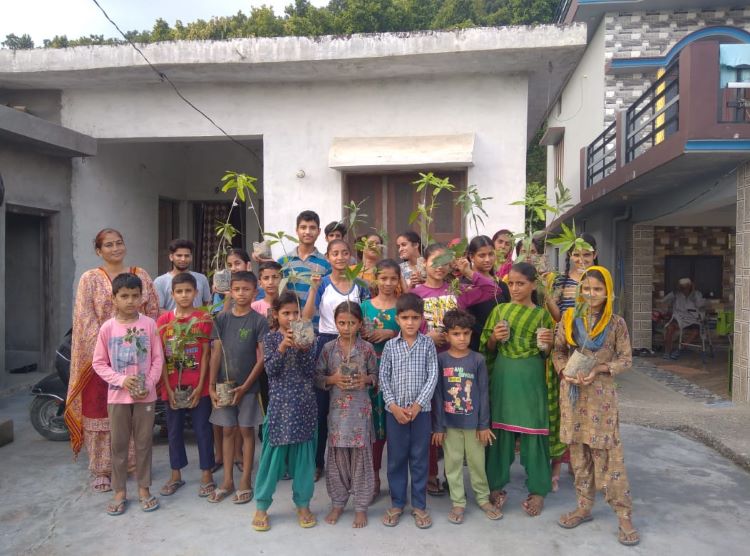
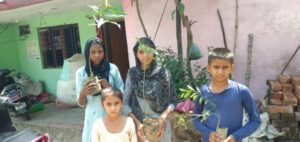
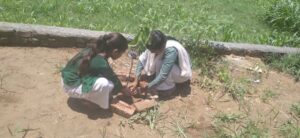
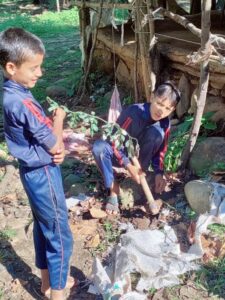
    Arjita flicks a satisfied glance at the row of saplings of different fruit trees that she has planted outside her home in Ghurhal village on the outskirts of Dehradun. This is the second year in a row that the 13-year-old lass has planted saplings in her village and the forest area adjoining it.

    “By planting trees, our environment will be more green and we will get clean air and less pollution,” she states matter-of-factly. “Fruit trees will benefit everyone. The trees we have planted in the jungles will provide food for wild animals which will reduce their attacks on our village.”

    Similarly, Aksha Praveen of nearby Kedarawala village has been planting tree saplings for the past two years to save the environment. “This year, I planted two tree saplings of lichi and chiku and I take good care of them to keep them alive,” says 12-year-old Aksha.

    The two girls are among hundreds of adolescents across 16 villages in Dehradun district who are making a difference in enhancing the green cover of their surroundings. Children in each village have formed Bal Sangathans (children’s unions) to address issues such as pollution, hygiene and cleanliness, good nutrition and the importance of education.

    The Bal Sangathans made ‘hygiene maps’ of their villages indicating how some areas could do better in sanitation. The youth shared their findings with their respective Pradhans (village chief), securing their support for trash removal on public paths.

    Aksha is a member of Khushi Bal sangathan in her village. “We have made a ‘hygiene map’ of our village and every month a didi presides over our meeting where we discuss may things to improve our daily lives. We have even done clean-house surveys to improve our surroundings,’ she discloses.

    Youth for change trees green Uttarakhand

    Idealism and energy

    Mobilising children to become agents of change for the uplift and betterment of their communities has been the cornerstone of the work of Dehradun’s Mountain Children’s Foundation (MCF), a Dehradun-based NGO that has been working with over 40,000 children and about 20,000 families in four of Uttarakhand’s districts since 2003.

    The idealism and energy of youth is the best antidote to the forces of marginalization, corruption, helplessness and apathy under which most rural communities struggle to survive, states Aditi P Kaur, MCF President. “We tap that energy to help young people create a better world for themselves and all around them. It is nothing less than a revolution in how the people — especially young people — of the mountains perceive themselves and how they address problems in their communities.”

    The support of community leaders has given a fresh impetus to and validated the efforts of the youth. Mr Devraj Sharma, Pradhan of Rudrapur village, is all praise for the children who came to him with a proposal to grant them saplings to plant around the village. “The saplings they planted last year are flourishing due to their inspiring efforts. I am thankful that our youth are so responsible about the environment,” he says.

    Youth for change trees environment green Uttarakhand

    Voice and an opportunity

    The Bal sangathans have given children, hitherto unheard, a voice and an opportunity to understand the existing systems and power structures so that they could work as a pressure group to demand inclusive and quality education for all. The sangathans also became a place to hold open and healthy discussions to change attitudes towards gender discrimination.

    Akash Tomar, now in his twenties, was among the first boys to fight the gender divide in his village Dhood way back in 2016. With the help of other boys and girls in his Bal sangathan, he secured the return of several girls to school after they were forced to drop out by their parents. He also helped in constructing a toilet in the local school.

    On the personal front, Akash realized that if he didn’t help with the household chores the burden of responsibility would fall on his young sister. “If I hadn’t helped around the house, a majority of the burden would have fallen on my sister and she wouldn’t have been able to attend school,” he remembers.

    “We saw a great improvement in communities, once un-invested or unaware of the importance of education, now taking an active interest in school for their children after interacting with the sangathans,” reveals Kaur.  “A total of 555 Children who had dropped out of school returned to school because of parental support and encouragement.”

    “The years of interacting with these children have taught an important lesson ~ that working with children delivers results because people listen to and are motivated by their children in a way that cannot be touched by any outsider,” observes Kaur. “Children are both a catalyst for change and a force that brings people together.”


    Nitin Jugran Bahuguna is a Dehradun-based author and journalist covering human development issues.

    Youth children for change trees environment green Uttarakhand

    Swat Women Won’t Be ‘Duped’ by Militants This Time

    Instead of giving the women what the TTP promised, they took away their right to life altogether. They were forced to give up jobs where there was interaction with men, they were forbidden from walking to the market unescorted and adolescent girls were not allowed to go to school

    By Zofeen Ebrahim

    The rise in militancy in Swat still haunts many locals with flashbacks of what they went through 15 years ago.

    Dr Jamila Khan can recall every last detail of the day she and her family were forced to leave their hometown of Matta, in Khyber Pakhtunkhwa’s idyllic Swat valley, along with thousands, days before the Pakistan army launched an offensive, Operation Rah-e-Rast, against the militants of Tehrik-i-Taliban Pakistan (TTP) after the failed peace agreement with the latter, in 2009.

    It was not just the “excruciating” pain running with her braces (Khan is a polio survivor) but the mayhem that afternoon that she recalls.

    “We ran with nothing but the clothes on our back,” and went to Madyan, a town an hour’s drive from Matta, and stayed for three months with their uncle. She was among the nearly three million people, many of whom fled Swat for several years.

    Forced the burqa

    She can still recall the indignity faced by “the women, the children and the elderly – some of whom were being carried on the shoulders of their sons” after they ran for their lives amidst the sound of deafening “bombing”.

    “The militants forced the burqa (the enveloping outer garment worn by women which fully covers the body and the face) upon us, but that afternoon I saw women running for their lives without covering themselves with the chadar (traditional Pashtun cloth that envelops the body from head to foot),” Khan said.

    “I never want to go through that again,” she said resolutely. “We will not let anyone bring us to the brink, and this time, we will not be deceived.”

    The images of dead bodies on streets are as fresh as the hushed tones that echo in her ears of elders talking of young girls from her family being kidnapped, raped, and even forced into marriage to militant commanders and of defiant men who were punished in the most barbaric manner including being beheaded and slaughtered. The victims were then put on public display. “I was old enough to remember many things,” she said.

    “I don’t think I have healed and come out of the horror of all that I witnessed,” said Khan. “Neither has anyone else; we just don’t talk about it and have bottled it all up.”

    Rise of Radio Mullah

    In 2002 a firebrand cleric from Swat, Mullah Fazlullah, set up his headquarters at his village in Imam Dehri.

    Between 2004 and 2007, he started wooing the locals, especially the women, through several dozen illegal FM radio stations promising the Nizam-e-Adal (Islamic justice system), not just in Swat but the entire Malakand division, of the Khyber Pakhtunkhwa province, comprising the districts of Bajaur, Buner, Chitral, Dir and Shangla. He was often referred to as Radio Mullah. By 2007, the TTP had established its writ in the valley, just 160 km from the country’s capital, Islamabad, while the 20,000 army troops deployed looked on helplessly. The Taliban spokesperson Muslim Khan had told IPS in a 2009 interview: “We want to give women their rightful place in Islam”.

    “People say it was the women of Swat who supported Fazlullah by giving large donations, even their jewellery, but no one asks why,” said Musarrat Ahmad Zeb, a Pakistani politician from Swat, who had been a member of the National Assembly of Pakistan, from June 2013 to May 2018.

    Talking to IPS from Swat, she said the TTP promised quick justice to the locals, which they had enjoyed when the wali ruled Swat and had eroded after the princely state acceded to Pakistan in 1969. Zeb is the widowed wife of Miangul Ahmed Zeb, son of the wali of Swat, Miangul Jahan Zeb.

    But instead of giving the women what the TTP promised, they took away their right to life altogether. They were forced to give up jobs where there was interaction with men, they were forbidden from walking to the market unescorted and adolescent girls were not allowed to go to school.

    Arrival of the Taliban

    Twenty-one-year-old Gulalai Noor is worried she may have to close down her beauty parlour in Mingora, the capital city of Swat.

    “We had a fairly good clientele, but since the last two months, it’s a trickle. If this continues, how will we be able to pay the rent and utility bills of the place?” she told IPS over the phone. She not only supports her parents but also pays for her tuition. Noor is enrolled in the two-year diploma course for a lady health visitor programme.

    Senator Mushahid Hussain Sayed, the chairperson of the Senate Committee on Defence and National Security, told IPS the “resurgence of terrorism” in Khyber Pakhtunkhwa was of “serious concern”, recalling the sacrifices made by Pakistan’s armed forces and the people to combat and contain the “scourge”.

    But the arrival of the Taliban is not new and not in Swat alone. “They have been there for many years and are everywhere in Khyber Pakhtunkhwa. I have been bringing it to the notice of colleagues in the assembly since 2018,” Mohsin Dawar, a legislator, from North Waziristan, and chairperson of the National Democratic Movement, a nationalist party.

    He told IPS the militants got energized after the Taliban took over Kabul last year.

    Isolated incidents of terrorism?

    According to a recent research paper produced by the Islamabad-based think tank, Pak Institute of Peace Studies, as many as 433 people were killed and 719 injured in 250 attacks in Pakistan between August 15, 2021.

    Terming them “isolated incidents of terrorism”, the officials claimed all did not take place in Khyber Pakhtunkhwa. However, the TTP has claimed responsibility for a majority of these attacks.

    Last month 86 persons, including a former peace committee head Idrees Khan, were killed by a remote-controlled bomb attack. Khan was at the forefront of mobilizing resistance against the Taliban in 2007. Earlier this month, a minister of Gilgit Baltistan was taken hostage; in return, they demanded the release of their comrades involved in the deadly 2013 terrorist attack on the Nanga Parbat base camp, in which foreign climbers were targeted. They also wanted an end to women’s sports activities in Gilgit Baltistan. “These high-profile cases create fear among the general public and are very demoralizing for them,” Dawar had said in the assembly recently.

    While it was the “people’s resistance” that had “contained” the situation, he warned it can get out of hand and become “even more dangerous than last time” if not taken notice of now.

    No faith in government functionaries

    Fazal Maula Zahid, a member of the Swat Qaumi Jirga (a platform of elders and notables working for peace in the region), has high hopes for the youth and women of the valley. “If they come out as a collective force and are organized,” he said, no harm can come to the valley.

    “Today’s youth are energetic and have seen or heard the troubles of their elders; they will not allow history to repeat itself,” Zahid said, adding the people had no faith in government functionaries who have done little to protect the hapless people.

    For a few weeks now, residents from different towns and cities of Khyber Pakhtunkhwa, like Khawazakhela, Kabal, Matta, Mingora, Charbagh and Madyan, have been coming out to protest against the surge in terrorist attacks.

    “At Mingora, there were more than 80,000 at Nishtar Chowk; it was huge,” said Zahid, who attended the event. “I am told the one at Charbagh was even bigger!”

    “It is heartening that people have risen against this resurgence and showed their resolve to never again allow this phenomenon to pollute their society,” said Sayed and the “gains of the recent past are not frittered away”.

    He informed that at a committee meeting held earlier this month, it was resolved to “revitalise the counterterrorism apparatus”, especially the National Counter Terrorism Authority, (responsible for making counter-terrorism and counter-extremism policies and strategies). He hoped, there “won’t be a yawning chasm between words and deeds” and the interests of the people and the state will remain paramount, not “political expediency”.

    But these were only men, as the custom of segregation in public spaces is still prevalent.

    However, said Zahid, in an unprecedented move, on October 21, a handful of women also protested in Madyan.

    Both Noor and Khan said they, too, want to come out.

    “I think if there are enough women, my family will give permission,” said Khan.


    Note: Names of the women interviewed have been changed to protect their safety.

    This piece has been sourced from Inter Press Service.