More

    Pakistan’s Transgender Legislation in the Line of Fire

    To rule out “real from fake” transgender people, Senator Mushtaq Ahmed’s bill has recommended constituting a gender reassignment medical board in every district, which would include a professor doctor, a male and a female general surgeon, a psychologist, and a chief medical officer. 

    By Zofeen Ebrahim

    It has taken four years for some politicians to oppose a landmark law protecting the rights of transgender persons, saying it’s against Islam and the country’s constitution.

    “This is an imposed, imported, anti-Islam, anti-Quran legislation,” said Senator Mushtaq Ahmed, a Pakistani politician belonging to the Jamaat-e-Islami (JI), spearheading the campaign. “The West is hitting at the two strongest institutions of the Muslim Ummah – the family and marriage; they want to weaken us,” he told IPS from Peshawar, adding that this will “open the road” for homosexuality and same-sex marriage.

    According to Ahmed, for the last four years, the government, with support from non-governmental organizations, was “shamelessly pushing the agenda of Europe and America,” terming it “cultural terrorism.”

    Other politicians have also joined in voicing their concerns. For instance, PTI senator, Mohsin Aziz, said transgender people were homosexuals, and “Qaum-e Loot” referred to homosexuality introduced by the people of Sodom. “The longer we take in making amends, the longer the wrath of God will be upon us,” he added. He is among those who have recently presented amendments to the law.

    “Using religion to stoke people’s sentiments sets a very dangerous precedence,” warned Shahzadi Rai, a Karachi-based transgender person. “Spare us; our community cannot fight back.”

    Rai asked that the issue not be seen through the “prism of religion,” adding, “even we do not accept homosexuality.”

    Physician Dr Sana Yasir, who has a special interest in gender variance and bodily diversity and offers gender-affirming healthcare services, said there was no mention of homosexuality in the Act.

    “The right-wing politicians need such issues to keep their politics alive,” said Anis Haroon, commissioner for the National Commission for Human Rights, which was part of consultations on the Act and fully supported it.

    In the name of Allah

    Ahmed had presented certain amendments to the Act last year, and earlier this month, he introduced a brand-new bill for the protection of khunsa, an Arabic word he said was for people “born with birth defects in the genitalia.” If passed, the Act will apply to the entire country and come into force immediately.

    In the proposed bill, khunsa is defined as a person who has a “mixture of male and female genital features or congenital ambiguities.” The person will have the right to register as a male or female based on certification from a medical board.

    “I studied the old law for a good two years after it was enacted; held discussions with many jurists, even international ones, medical doctors, religious scholars. Based on the information gathered, I came up with amendments to the 2018 law,” Ahmed said, defending his stance and explaining why it took four years to oppose a law passed by a two-thirds majority in the Senate and the Parliament. He has also filed a petition in the Federal Shariat Court against the 2018 Act.

    The right-wing Jamiat Ulema Islam (JUI-Fazl) and parliamentarians belonging to the Pakistan Tehreek-e-Insaf (PTI) have also voiced their concern and opposed the 2018 act.

    “Allah has just mentioned sons and daughters in the Quran; there is no mention of another gender,” said PTI’s senator, Fauzia Arshad, speaking to IPS. She has also presented amendments to the Senate’s standing committee on human rights.

    Not in the Quran

    The country’s top religious advisory body, the Council of Islamic Ideology (CII), has also termed it unIslamic law.

    “We respect the rights of the transgenders given in the 2018 Act, but when it transgresses beyond biology, and psychology and sociology come into play, we have reservations,” said Dr Qibla Ayaz, chairman of the Council of Islamic Ideology, talking to IPS from Islamabad. He also said the council was never approached when the bill was debated.

    The law, instead of defining gender, has defined gender identity: A person’s innermost and individual sense of self as male, female, or a blend of both or neither, that can correspond or not to the sex assigned at birth. It also refers to gender expression: A person’s presentation of their gender identity and/or the one others perceive.

    Jamaat-e-Islami, meanwhile, has defined gender as a “person’s expression as per his or her sex which is not different than the sex assigned to him or her at the time of birth or as per the advice of a medical board.”

    “We do not believe in self-perceived gender identity of a person and are asking for a medical board to be constituted to ascertain that,” said Ahmed.

    Arshad endorsed this: “The sex of a person is determined from where the person urinates and should be determined by a medical board.”

    “Self-perception of who you think you want to be, and not what you are born as is not in the Quran.”

    “CII has some reservations about the self-perceived identity,” said Ayaz.

    “We know who we are”

    To rule out “real from fake” transgender people, Ahmed’s bill has recommended constituting a gender reassignment medical board in every district, which would include a professor doctor, a male and a female general surgeon, a psychologist, and a chief medical officer.

    “Any sex reassignment surgery to change the genitalia will be prohibited if the person is diagnosed with a psychological disorder or gender dysphoria,” he said. Arshad agreed with this view.

    “A medical board can help people figure out their gender identity by offering them personality tests and blood works. They can help decrease the intensity of gender dysphoria by offering non-medical and medical interventions,” said Yasir.

    But the board cannot reject someone’s “experienced gender,” she asserted.

    Yasir added there was no mention of a geneticist, a psychiatrist, or those trained in transgender health on the board.

    Healthcare professionals argue that constituting medical boards in Pakistan’s 160 districts is nearly impossible. The complex issue requires genetic testing (from abroad), which is expensive for a resource-stretched country like Pakistan, and meticulous diagnosis by scarce experts.

    The trans community has rejected the option of the constitution of a medical board outright.

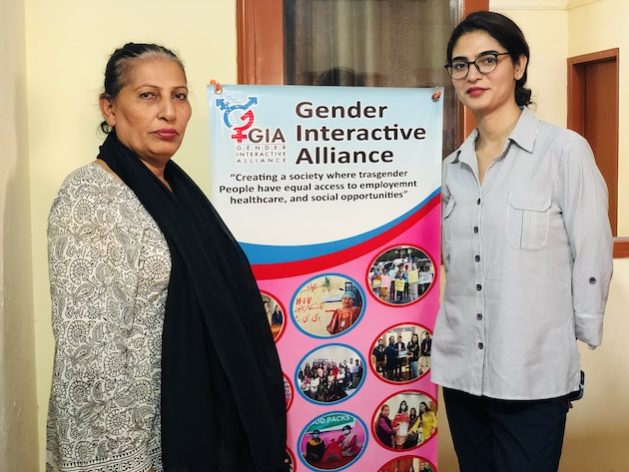
    “We will never allow anyone to examine us,” said Bindya Rana, a Karachi-based transgender activist and founder and president of Gender Interactive Alliance (GIA). “We know, who we are, just like the men and women in this country know who they are!”

    Bullying, threatening, messaging

    If this debate has done one thing, it is to validate and increase transphobia.

    “Harassment, discrimination, and violence have increased due to the negative propaganda led by Jamat-e-Islami,” said Reem Sharif, a trans activist based in Islamabad.

    “A week ago, one transgender was murdered. The alleged murderer is behind bars, but during interrogation, he told the police that he was on jihad as killing transgenders would take him straight to heaven. He is sure he will be released and will finish off the job,” said Rai.

    She also recalled the horrific attack on three well-known transwomen in Khyber Pakhtunkhwa’s Swabi two weeks back. “They received several bullets, but fortunately, all survived,” she said. The attack spread panic and fear among the community. Rai said the transphobia was “contained, but now it is out in the open.”

    “There is a definite backlash,” agreed Lahore-based Moon Chaudhary. “Ten days ago, in Lahore, a few trans persons were publicly harassed at a posh locality. They were forcefully disrobed, asked about their gender, and then raped,” she said.

    According to Aisha Mughal, the “more visible trans activists” like her, are increasingly feeling vulnerable. “Bullying is going on, and people are openly threatening.” She gets scores of text messages from unknown numbers referring to her as a “man,” causing “mental torment.”

    Rai said she feared for her life since she was actively participating in defending the law on various TV channels, and participating in debates organized by clerics. “I’m worried and have told my flatmates to be vigilant and take extra precautions in letting in their friends.”

    A ticking time bomb

    Transgender activists are also fighting on another front – cyberspace.

    “I am being misgendered on national television; then the same clips are shared on social media, which go viral. I am accused of being a man and feigning as a woman,” said Mughal. She said some are provoking people to go on a jihad against them and setting a “dangerous precedent.”

    “I thought I was strong and would be able to handle online abuse, but it is taking a toll and affecting my mental health,” Rai admitted. For instance, of the 900 comments on a video clip on social media, 600 were abusive. There were some that were downright violent in nature, calling for her murder or burning her to death. “My photos are being circulated with vulgar messages attached,” she added.

    Although Rana admitted the campaign against the 2018 law has brought “irreparable damage” to the transgender cause, she is confident the newly-presented bill by JI was just to create a storm in a teacup and will not see the light of day.

    “All that we worked for, for years, has come to naught,” she lamented. While the law prohibited discrimination against transgender persons seeking education, healthcare, employment, or trade, Rana said, “we never benefitted on any score” except the right to change the name and gender on the national identity card, the driving license, and the passport. For us, even that was a big win,” she said. About 28,000 transgender persons had their gender corrected. But now, even that right is in danger.

    Ahmed said his struggle would continue. “If the khunsa bill finds no takers, we [JI] will take it to the Supreme Court of Pakistan and start street protests,” he warned, adding: “It’s a ticking time bomb!”

    This piece has been sourced from Inter Press Service.
    Bangladesh’s rice farmers tap underground ‘reservoirs’

    Bangladesh farmers rely on drawing water from a natural underground water storage system that they call ‘Bangladesh water machine’. The pumped groundwater is replenished during the monsoon season

    By Sanjeet Bagcchi

    The pumping up of groundwater by Bangladesh’s 16 million smallholder farmers has led to a massive storage capture of underground reservoirs rivalling the storage capacity of the world’s large dams, according to a study.

    Published in Science, the study said that groundwater-fed irrigation had transformed much of Bangladesh’s single-crop, rain-watered floodplains into highly productive double-cropping and, in places, triple-cropping lands to make the country the world’s fourth highest producer of rice.

    The researchers say the sustainable irrigation process could be replicated in other areas affected by the impacts of climate change which is intensifying extreme weather events worldwide.

    In Bangladesh, 90 per cent of rainfall occurs during the May to October wet season with the rest of the year considered the dry season. According to the study, following droughts that hit the country between 1992 and 1994, there was a rapid increase in the use of groundwater.

    The researchers explain how the pumping up of water during the dry season reduces groundwater levels that are restored by leaching from the ponds, rivers and lakes during the monsoon months. The capture of surface water leads to recovery of groundwater levels and helps limit flooding in a process the study authors call “The Bengal Water Machine”.

    “The Bengal Water Machine is a nature-based solution, requiring a comparatively minimal intervention — i.e. shallow irrigation wells that are less than 100 meters below ground level — relative to dams, to increase seasonal capture of freshwater that would otherwise drain to the Bay of Bengal,” said Mohammad Shamsudduha, corresponding author of the study affiliated with University College, London.

    The researchers analysed one million weekly groundwater-level observations from 465 wells across Bangladesh, taken between 1988 and 2018.

    Replicable

    Over the past 40 years, according to the study, monsoon rainfall has recharged 75 to 90 cubic kilometres of water in Bangladesh, a volume equivalent to twice the reservoir capacity of the Three Gorges Dam in China.

    Shamsudduha noted that the phenomenon has enabled farmers to transform the country’s economy and food security, and improved resilience to climate change.

    “In order to benefit from the operation of the Bengal Water Machine, we recommend identifying the potential areas where further freshwater capture is possible under current and projected changes in monsoon rainfall and irrigation demand,” Shamsudduha told SciDev.Net. “Continuous monitoring of groundwater levels and abstraction can ensure the sustainability of the Bengal Water Machine”.

    Shafi Mohammad Tareq, professor at the Department of Environmental Sciences in Jahangirnagar University in Dhaka, Bangladesh, told SciDev.Net that the study has implications for the future estimation of groundwater recharge and use in the agriculture sector for the production of food grain in densely populated Bangladesh.

    According to the researchers, wider replication of the study findings may be possible, for example in Vietnam’s Mekong delta and the delta of China’s Huang He river which are prone to the effects of climate change. The Bengal Water Machine can help augment international food security and durability to climate extremes caused by global warming, they said.


    This piece has been sourced from SciDev.Net

    Image: International Rice Research Institute (IRRI). This image has been cropped.

    Civil Disobedience – How to Make Enemies and Influence People

    Radical climate groups are undeterred by risks and unpopularity as long as their message gets across. But with the effects of the climate emergency increasingly manifest, these groups are not worried about being unpopular.

    By Paul Virgo

    Blocking metros and highways in rush-hour traffic to stop commuters getting to work. Vandalizing petrol pumps to put them out of use.

    Halting sporting events such as the French Open and the British Grand Prix. Disrupting bemused art lovers by gluing oneself to priceless masterpieces.

    The methods used by the radical climate groups that have sprouted up in many countries in recent years, such as Extinction Rebellion, Just Stop Oil (JSO) and Insulate Britain, seem better suited to alienating people than bringing them on board efforts to stop the looming environmental catastrophe. And alienate people they have.

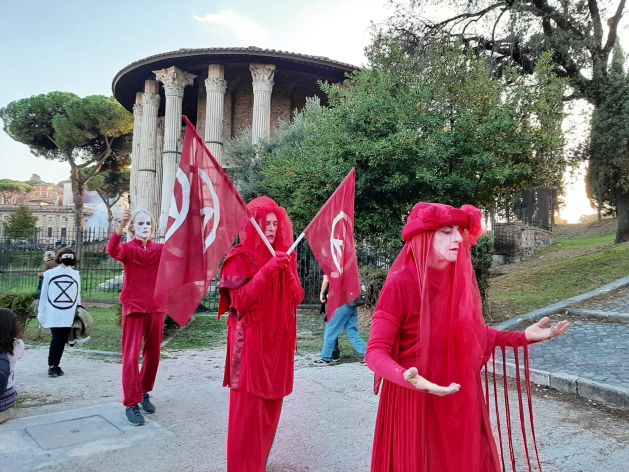
    The reaction to a series of road-block protests in Rome in June by Italy’s Ultima Generazione (UG – Last Generation) group is a good example. Videos released by the group have you on the edge of your seat in fear for the protestors. In one, a car drives so close to a young woman sitting in the road that she appears to go under the vehicle.

    In another, motorists violently drag protestors from the highway, with a young male protestor getting pulled away by his pony tail.

    The online abuse is high voltage too, with group members getting called everything, from spoilt brats to terrorists.

    Many commentators cannot understand why the protests hit ordinary people going about the business, rather than the rich and powerful. Other actions, such protestors gluing themselves to Sandro Botticelli’s Primavera at the Uffizi’s gallery or throwing paint over the Ecological Transition Ministry, have generated bafflement too.

    Touching people’s emotions

    The actions have not just come under fire from people unaware of the scale of the environmental crisis.

    Even Adrian Ramsay, the co-leader of the Green Party in England and Wales, told The i newspaper that “we don’t always agree with their tactics” when asked about Insulate Britain blocking motorways.

    But, with the effects of the climate emergency increasingly manifest, these groups are not worried about being unpopular, as long as their message is heard.

    “The main aim of our protests is to break the wall of indifference and polarize people,” Beatrice Costantino, a qualified vet who quit her career to dedicate herself full-time to fighting the climate emergency with UG, told IPS.

    “We cannot have a constant, deep discussion on climate and ecological emergency without touching people’s emotions. We don’t want to make people feel guilty for driving a car or not doing much to have a lighter carbon footprint. “But we do want them to remember that they’re citizens and members of a community.

    “So they have rights, as we live in a democracy, but they also have duties. We cannot offload our social responsibilities anymore and we must accept that our inaction is the biggest part of the problem. We cannot ask the government to change if we don’t put enough pressure on it and we are not willing to lose our privileges, our goods and our liberty for the (common) good and the truth”.

    Inspired by Suffragettes

    The group that led that way in adopting non-violent civil disobedience to demand climate action was Extinction Rebellion in the UK in 2018. UG and JSO are among several younger, even more radical groups that are part of the international A22 network.

    Stop Old Growth in Canada, Derniere Renovation in France and Declare Emergency in the United States are other members.

    They are inspired by examples of the successful use of civil resistance in the past, such as with the Suffragettes and the civil rights movement in the United States.

    They believe that small groups of determined people can garner the active support of a relatively small proportion of the population, perhaps as low as 1 per cent or 2 per cent, to reach a sort of social tipping point that generates rapid change.

    “We’re confident that this is the number of people that we really need for a non-violent revolution, as it has happened like this most of the time in the past,” Costantino said.

    “When people are constantly bombed by news about climate crisis and people struggling against it, they start looking for more information, discussing it with friends and family, reflecting within themselves”.

    Faced prison for the cause

    Beatrice Costantino says the actions of the A22 network have produced results already.

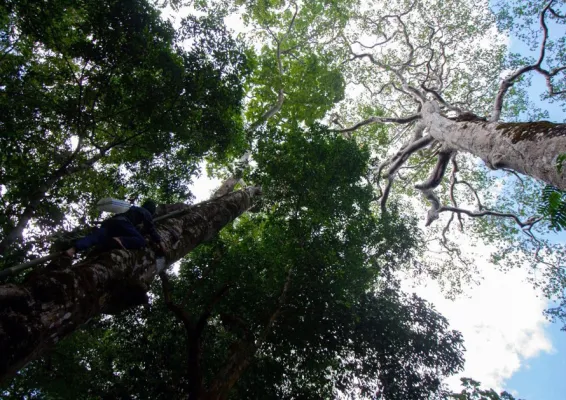
    “In Canada in 2021 more than 1,000 people protested against the destruction of virgin forests, going into the forests, blocking trucks, climbing up trees and tying themselves to them.

    “But they received little media attention and lots of Canadians were not aware of the problem or didn’t care. “Now the Save Old Growth campaign is disrupting the public with fewer than 70 people. “They have been on the national news, they have been taken to prison and they have shocked the nation. “According to polls, now more than 80 per cent of Canadians are worried about the problem and want the government to stop the destruction of their forests”.

    Another characteristic of these protestors is their fearlessness when it comes to putting their safety and freedom on the line.

    Indeed, many have faced prison for the cause, including 51 JSO supporters jailed on September 15 after taking action at the Kingsbury Oil Terminal in Britain.

    Whether the majority like these tactics or not, with more protests planned in the coming weeks and months, we are certain to hear more about these groups. “What’s the price of inaction?” said Costantino.

    “If we don’t cut emissions immediately, more than three billion people will be forced to leave their homes by 2070. “We must open our eyes and understand that our parents, our children, our loved ones are going to die in huge numbers if we don’t act now”.


    This piece has been sourced from Inter Press Service.
    How Far Has the Talk Walked? Glasgow Leaders’ Declaration On Forests and Land Use

    Experts agree there has been “some movement” but inclusivity, political goodwill and resources are still needed. Achieving political commitments on forests and related sectors, sufficient finances and linking science and policies will help accelerate commitment to the Glasgow goals.

    By Edwin Okoth

    When leaders from 141 countries signed the Glasgow Declaration on Forests and Land Use, a critical step had been made in recognizing forests as critical in achieving the Sustainable Development Goals and the Paris Agreement.

    However, what will it take to achieve these commitments? How have governments “walked the talk” so far and what support is needed to reach the six key efforts declared by the world leaders?

    Some seven months after the Declaration, national representatives, speakers for indigenous peoples, and researchers all noted that while some progress had been made in its implementation, the involvement of local communities, political goodwill and adequate financing were still required to walk the talk on the Glasgow Declaration.

    The experts were speaking in a webinar on 14 June 2022 as part of the Bonn Climate Change Conference. Many who had experience with global climate-change and land-restoration programmes — such as Stibniati Atmadja who has been heavily involved in studying the international programme for Reducing Emissions from Deforestation and Forest Degradation (REDD+) — said Glasgow’s commitments need monitoring so that nations will not fall behind.

    “The Glasgow declaration highlights that the USD 100 billion per year financing goal was not met in 2020. Money is tight and we need to monitor if rich countries meet their funding commitments”, she said. “Another side of that is ensuring we use the funds well, to bring real climate, biodiversity and social benefits. Unfortunately, we don’t know because global data linking climate funds to those outcomes is still poor.”

    Forests and indigenous people

    Pham Thu Thuy, CIFOR-ICRAF’s lead of the Climate Change, Energy and Low-carbon Development team who also moderated the webinar, delved into specific scenarios from countries that have already started realizing the Glasgow goals.

    In Viet Nam, for example, where most of the country’s 42 percent of forest is owned by the Government, Vu Tan Phuong from the Viet Nam Forest Certification Office said there were still glaring gaps in aligning the country’s progress with the goals. Viet Nam is experiencing high pressure on its forests while there is low payment for natural forest protection and weak law enforcement.

    “To operationalize the Glasgow pledge, the country needs to strengthen land-use planning and involve environmental impact assessments across all levels of projects with proper involvement of all stakeholders,” said Vu.

    Helen Magata from the Philippines’ Tebtebba Foundation argued that the Glasgow commitments were key to breaking the barriers between climate-change projects and indigenous people.

    Yet, she said, there were few incentives to bring on board indigenous people, who own and use the land that is the central part of the Glasgow commitments.

    “Forests do not exist in silos, they are linked to indigenous people, their culture and socialization, hence, indigenous people must be involved and right of tenure respected to achieve meaningful progress under the Glasgow goals,” she said.

    Indigenous people needed to access climate finance in a sustainable way that would enable them to implement interventions within their immediate priorities, according to Magata.

    Food systems beyond agriculture

    Christopher Martius, CIFOR-ICRAF’s Bonn Hub leader and managing director for Germany, noted that the Glasgow declaration contains commitments to “transformative further action in the  interconnected areas of sustainable production and consumption”; to facilitating “sustainable commodity production and consumption”; and to increased efforts to “implement and … redesign agricultural policies and programmes to incentivise sustainable agriculture, promote food security, and benefit the environment”. He said that in this context in particular there is need to intervene comprehensively in food systems to curb carbon emissions that contribute to the climate crisis.

    “Food systems are not just agriculture,” he said. “There is transport and processing as well and while we get nutritional security it also generates externalities like soil degradation and loss of biodiversity.” Emission reductions in this area might be relatively easy to be had and also would generate other co-benefits such as biodiversity and reduction of fossil fuel use.

    In the Democratic Republic of Congo, several actions have been undertaken since the UNFCCC COP26, including the signature of the second letter of intent between the Government and the Central African Forest Initiative (CAFI), the revision and the submission of the second NDC, numerous discussions on the organisation of the upcoming COP27; the legal review of the forestry concessions done by the General Inspection of Finances (IGF); the adoption by the Senate of the law on the protection and the promotion of Pygmies. There is still more to do, according to Blaise-Pascal Ntirumenyerwa Mihigo, associate professor of International Environmental Law at the University of Kinshasa.

    “We need to achieve political commitments on forests and related sectors, to reorganize forest sector based on the IGF recommendations, national appropriation of forest and climate actions, sufficient finances, linking science and policies, etc. to accelerate our commitment to the Glasgow goals, Mihigo said.

    Under the Glasgow Declaration, the signatory world leaders committed to work collectively to halt, and reverse, forest loss and land degradation by 2030 while delivering sustainable development and promoting an inclusive rural transformation.

    Sustainable land-use transitions are expected to help in meeting the Paris Agreement’s goals, including reducing vulnerability to the impacts of the climate crisis, holding the increase in global average temperature to below 2 °C while pursuing efforts to limit it to 1.5 °C.

    Edwin Okoth is a science blogger.

    Image: Donny Iqbal / CIFOR-ICRAF

    Pakistan’s People Victims of Calculus of Climate Injustice: António Guterres

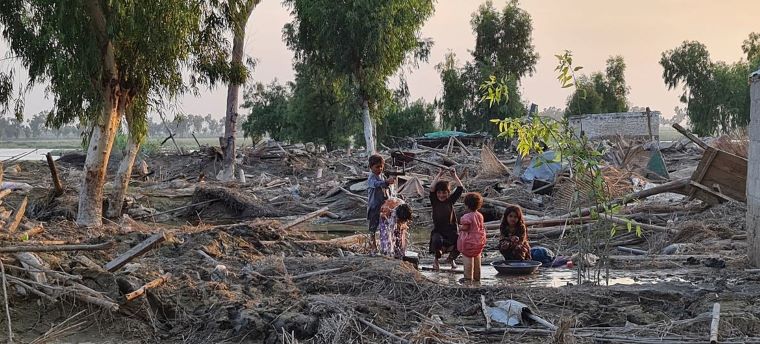
    United Nations Secretary-General António Guterres said at the United Nations General Assembly that a third of Pakistan had been deluged and that many island States face “the very real prospect of their entire homeland going under.” 

    United Nations Secretary-General António Guterres told the UN General Assembly on Friday that while Pakistan was responsible for less than one per cent of global greenhouse gas emissions, it is paying a “supersized price for man-made climate change”.

    During a full session of the UN’s most representative body on the country’s devastating floods, he recalled last month’s visit where he saw “a level of climate carnage beyond imagination”.

    He described flood waters covering a landmass three times the total area of his own country, Portugal, saying that many lost their homes, livestock, crops and “their futures”.

    “Lives were washed away”, he spelled out, calling upon the world community to act.

    Noting that a third of Pakistan had been deluged, Mr. Guterres said that many island States face “the very real prospect of their entire homeland going under”.

    “Communities everywhere are looking down the barrel of climate-driven destruction,” he said. “We must act – and we must act now”.

    While this time it was Pakistan, the Secretary-General warned that tomorrow, “it could be any of our countries and our communities”.

    “Climate chaos is knocking on everyone’s door, right now,” he concluded. “This global crisis demands global solidarity and a global response”.

    The Assembly President, Csaba Kőrösi, highlighted the need to be better prepared as droughts and rains return.

    More than ever, international relief efforts must focus on transformative solutions, he said. “Adaptation and resilience are the seeds of sustainability”.

    Kőrösi urged the ambassadors to “make use of science and solidarity…to enhance our crisis management capacities…[to] rebuild together”.

    Pakistan floods climate change homeless public health emergency
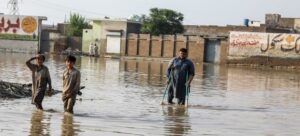
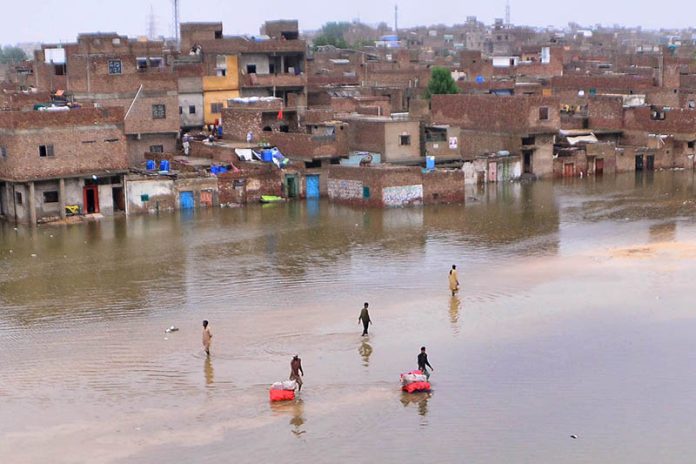
    Young boys and a man using crutches pass through the flooded streets of Nowshera Kalan_one of the worst affected area in Khyber Pakhtunkhwa province, Pakistan.
    Cascading calamities

    While the rains have ceased and water is beginning to recede, many areas in the south remain inundated and, with winter approaching, the situation is going from bad to worse.

    “Pakistan is on the verge of a public health disaster”, warned Guterres, pointing to threats of cholera, malaria and dengue fever claiming “far more lives than the floods”.

    He painted a picture of nearly 1,500 devastated health facilities, two million damaged or destroyed homes and more than two million families without their possessions. “Many have no shelter as winter approaches,” he said.

    At the same time, the scale of crop and livestock destruction is “creating a food crisis today and putting the planting season in jeopardy tomorrow”, Guterres continued.

    “Severe hunger is spiking. Malnutrition among children and pregnant lactating women is rising. The number of children out of school is growing. Heartache and hardship – especially for women and girls – is mounting,” he elaborated.

    Moreover, more than 15 million people could be pushed into poverty.

    The effects of the floods will be felt not just for days or months but will linger in Pakistan for years to come.

    Pakistan Floods climate change climate justice global warming
    Floodwaters in Umerkot district, Sindh Province, Pakistan

    Massive support needed

    Working with the Pakistan Government to convene a pledging conference to provide rehabilitation and reconstruction support, the UN chief urged donor countries, international organizations, the private sector and civil society to fully support these efforts.

    Meanwhile, the Organization launched the Pakistan Floods Response Plan calling for $816 million – a surge of $656 million from the initial appeal – to respond to the most urgent needs through next May.

    “But this pales in comparison to what is needed on every front – including food, water, sanitation…and health support”, said the Secretary-General.

    As the calendar moves quickly to next UN climate conference (COP27) in November, he said “the world is moving backwards [as] greenhouse gas emissions are rising along with climate calamities”.

    Do also read: ‘What happened in Pakistan will not stay in Pakistan’

    The UN chief stressed that COP 27 must be the place where these trends are reversed, serious action on loss and damage taken, and vital funding found for adaptation and resilience.

    Reminding that the G20 leading industrialized nations drive 80 per cent of climate-destroying emissions, he called it their “moral responsibility” to help Pakistan recover, adapt and build resilience to disasters “supercharged by the climate crisis”.

    UNDP Calls for Unfreezing Afghan Assets as Taliban Have Reversed Gains of Past Decade

    In its latest report on Afghanistan under Taliban rule, the UNDP says that ten years of Afghan economic growth have been reversed in just 12 months – and the situation is worsening due to rising inflation and the restrictions imposed on women.

    OWSA Contributor in Kabul

    A year after the Taliban takeover in Afghanistan, the country faces “cascading crises” and a crippled economy that humanitarian aid alone cannot address, according to a new report by the United Nations Development Programme (UNDP).

    The report titled, One Year in Review-Afghanistan since August 2021, draws upon available data from various sources to provide a snapshot of changes in peoples’ socio-economic situation since August 2021. It calculates that the already-declining regular Afghan economy lost nearly $5 billion after August 2021 and is reversing “in 12 months what had taken 10 years to accumulate.”

    “The Afghan people have been relentlessly subjected to extremely difficult circumstances. They have survived numerous challenges in the last 40 years and shown enormous resilience.”, the report states.

    The situation has worsened due to inflation and unemployment. The cost of a basket of essentials needed to avoid food poverty has risen 35 per cent. Simultaneously, nearly 700,000 jobs have vanished, further threatening a population reeling from impacts of the COVID-19 pandemic, the conflict in the country, a worsening drought, and war in Ukraine.

    With the knowledge that there are few drivers for a sustained economic recovery in the light of reduced volumes of international aid, sanctions and restricted access to international payment systems, the UNDP report has called for unfreezing assets of Da Afghanistan Bank or DAB.

    (The seizure of US-based assets​​ DAB owned about US$7 billion in assets held at the Federal Reserve Bank of New York. These assets have been frozen after the 2021 Taliban seizure of power.)

    “It is imperative that the issue of unfreezing DAB assets is resolved as soon as possible. However, in the absence of being able to print its money, the unfreezing of assets will not go far in addressing the resource constraint,” the report says.
    Food insecurity

    The picture on the food security front is equally grim. Afghanistan has a persistently high magnitude and severity of food insecurity that seems largely immune to seasonality and conflicts have let to nearly 11 million people experiencing acute food insecurity since 2018.

    Poorer households have been forced to go deeper into debt or sell off assets just to survive. Some three out of every five households in the country have used crisis or emergency livelihood coping techniques like moving to cities, distress sale of livestock, reducing planting area, skipping meals, or eating poor quality food, the report says.

    “Half of all children under five years of age are facing acute malnutrition and UNICEF estimates that 11. Million children may suffer from severe acute malnutrition, nearly double the number in 2018 and up from just under 1 million last year,” the report says, pointing out that the number of hospital admissions for children under five suffering from severe and acute malnutrition (SAM) has increased sharply since August 2021.

    Declining GDP

    “Yet the last 12 months have brought cascading crises: a humanitarian emergency; massive economic contraction; and the crippling of its banking and financial systems in addition to denying access to secondary education to girls and the restrictions on women’s mobility and participation in the economy”.

    The report paints a bleak fiscal picture of the country, dating back more than a decade before the Taliban ascendency.

    With GDP in steady decline since 2008, Afghanistan had come to rely on international aid to sustain its economy, which accounted for a staggering 75 percent of total Government spending and nearly 40 percent of GDP at the time of transition. But foreign donors largely suspended aid after the transition, UNDP notes.

    “The GDP, already on a declining trend since 2009, contracted by 20 per cent between 2020 and 2021 with an estimated loss of about US$ 5 billion in one year alone,” the report says, explaining how a decade’s worth of hard-won economic gains were wiped out. “This staggering economic shock has resulted in near-universal poverty.”

    Without support from outside, Afghanistan must now rely on limited domestic revenue from agriculture and coal exports.

    Corruption, opium, girls and women

    Authorities have sought to address revenue shortfalls by cracking down on corruption in key revenue streams, such as customs, and by reaching out to the private sector and foreign investors.

    “Two decades of heavy dependence on international aid and imports, a lack of industrialization and competitiveness, and limited mobility and connectivity among regions, among other factors, have hindered Afghanistan’s forward momentum,” the report says.

    Further, the report says that illicit opium cultivation continues to be a key part of the Afghan economy. Opiates generated up to US$ 2.7 billion of gross income in 2021. “The shrinking of the illicit economy after August 2021 has increased the share of the illicit economy in Afghanistan’s GDP to 12-18 per cent, up from about 9-14 per cent one year ago.” (The Taliban took over the reins of power on 15 August 2021.)

    UNDP analysis forecasts that restricting women from working can result in an economic loss of up to $1 billion – or up to five percent of the country’s GDP.

    Women’s participation in the workforce was 22 per cent in 2019. However, this is expected to slip due to newly imposed restrictions on their economic participation.

    “In the private sector, several organisations have reduced the number of female staff, either due to a financial crunch, indirect coercion or as a precautionary measure to avoid controversy.”

    UNDP Resident Representative Abdallah Al Dardari said “Afghans are running out of time and resources. Afghanistan needs support from the international community to bring back to life local markets and small businesses which are the backbone of Afghanistan’s economy.”

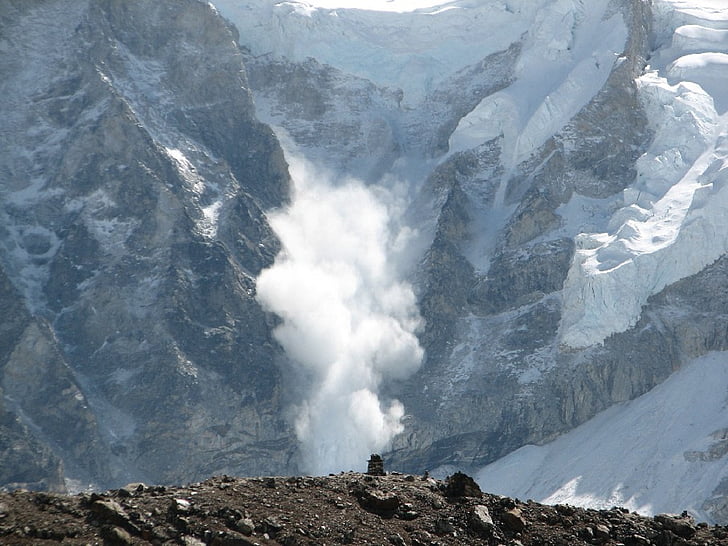
    Death toll from avalanche in India’s Himalayan state climbs to 26

    Officials say the search is still on for the remaining three missing mountaineers still underway in Uttarakhand state.

    The death toll from an avalanche in Uttarakhand, northern India has risen to 26, with authorities saying a search for the remaining three missing mountaineers is still underway.

    The avalanche struck 34 trainees and seven mountaineering instructors from the Nehru Institute of Mountaineering on Tuesday at 8:45 AM (IST) near the Dokrani Bamak glacier, while returning from a high-altitude navigation exercise at Mount Draupadi ka Dhanda- II (5,670 meters).

    The National Disaster Response Force, assisted by the Indian armed forces, and specialized mountaineering teams are currently involved in the search.

    A statement issued by the institute on Friday said that the death toll has now increased to 26 – 24 of them being trainee students and two instructors. 12 climbers were rescued alive, albeit with minor injuries.

    The rescue operation has been hampered by heavy rain and inclement weather that has made aerial search efforts difficult. But district officials say that the search on the ground is still on and injured mountaineers are being airlifted to a base camp of the Indo-Tibetan Border Police before being shifted to hospitals nearby.

    Representational Image of an avalanche on Mount Everest: Hippopx, licensed to use under Creative Commons Zero – CC0.

    ‘What happened in Pakistan will not stay in Pakistan’, PM Shehbaz Sharif Warns

    Sharif had recently actively sought international help for the flood-hit country on international platforms, including at the Shanghai Cooperation Organization summit in Uzbekistan, in London, and at the 77th session of the United Nations General Assembly.

    “What happened in Pakistan will not stay in Pakistan,” Pakistan prime minister Shehbaz Sharif tweeted late Wednesday evening. Sharif was not speaking about terrorism. He was speaking of the looming climate-related disasters.

    Sharif warned that the looming climate change would not spare other countries after the flash floods inundated one-third of Pakistan and left millions homeless.

    “What happened in Pakistan will not stay in Pakistan,” his tweet read, as he reiterated his call for urgent action a day after the UN issued a revised flash appeal of US$ 816 million as relief assistance for the flood-stricken people of the country.

    Pakistan climate change flood disaster humanitarian emergency Shehbaz Sharif
    ‘What happened in Pakistan will not stay in Pakistan’, PM Shehbaz Sharif Warns

    A month ago, an initial US$ 160 million flash appeal was made to address immediate needs based on estimates. However, the results of the recent needs assessments, that led to the up-scaling of the flash appeal to $816 million, revealed that much more was needed to save those struggling to survive the aftermath of the floods.

    Through his tweet, Sharif highlighted that more than 1,600 Pakistanis–including 400 children had lost their lives due to massive floods besides thousands of kilometres of road infrastructure and bridges washed away.

    “Entire villages have been swallowed up by raging waters. Nature has been truly unforgiving,” he said.

    Shehbaz Sharif had recently actively sought international help for the flood-hit country on international platforms, including at the Shanghai Cooperation Organization summit in Uzbekistan, in London, and at the 77th session of the United Nations General Assembly.

    In his meetings with over 50 world leaders on the eves of SCO and UNGA last month, the prime minister called for climate justice and appealed to the world to share the burden of the climate crisis. He also highlighted that Pakistan was responsible for less than one per cent of the world’s planet-warming gases and yet, it was the eighth most vulnerable nation to the climate crisis.

    Pakistan climate change floods disaster humanitarian emergency
    Pakistan is said to be responsible for less than one per cent of the world’s planet-warming gases and yet, it is the eighth most vulnerable nation to the climate crisis.

    During his participation at both the important global and regional forums, Sharif has interacted with foreign media to relay his message about the importance of an emergency action plan against climate change and seek funds for combatting the humanitarian emergency his country faces.

    Nutrition Smart Agriculture: Decoding the Myth

    Orphan crops – like sorghum, jowar, barley, ragi and sweet potato, cowpea, cassava and moong bean to name a few, are back with a vengeance and command a fortune in the market. Smart nutrition is, it appears, being influenced by smart marketing.

    By Tarun Shridhar

    “Caution: Milk is Injurious To Health”. This is the announcement, in bold, capitals and extra-large multi-colour font on a recent cover-spread advertisement carried by a leading newspaper for a particular brand of milk and milk products. The outrageously crude and boisterous proclamation was followed by a perfunctory disclaimer in a much smaller font sans caps, “if it contains antibiotics.”

    This advertisement of a particular dairy brand and its egregious comments don’t stop here. It quotes the Centre of Science and Environment to say that “dairy farmers indiscriminately use antibiotics.” Now, Indian dairy is one of the biggest success stories of our agriculture and cooperatives, besides emerging as a symbol of farmer empowerment. And yet, it is being scandalised and the dairy farmer is being vilified with sweeping generalisations without reliable data. It is dishonest and misleading – all in the name of informing consumers on smart nutrition.

    Why should smart nutrition be building its edifice on deceit?  Further, masquerading as milk, all making suspect claims of health and nutrition benefits, are a plethora of drinks based on soy, almond, oat etc. Smart has become Ignorant. We are witnessing an explosion of smart marketing of livestock products, be it milk, eggs, meat, fish and what have you. Capitalising on consumer gullibility may be smartness, but why should it be tinged with dishonesty. Let smart not end up meaning clever, in fact more akin to cunning.

    Domesticating plants and animals

    Agriculture has always been smart, and animal husbandry smarter. The origin of modern humans or homo sapiens from the great apes is said to date back to 200,000 years ago, and till about 12,000 years ago hunting of wild animals and gathering of wild plants were the primary means of subsistence for our ancestors. The transition to domestication of plants and animals commenced when, as what is known as, the ice age began melting down. What a brilliantly smart idea at the time: collect seeds from the wild, dig the earth, sow the seeds, nurture them and harvest the crop for food. While it is good to extol the virtues of natural farming, we must recall that farming itself was unnatural to begin with. The advent and subsequent growth of agriculture owes to smart initiatives.

    Still greater smartness was taming the animals, which to begin with were all wild, and thereafter domesticating the entire species. Domesticated animals became an invaluable resource with smaller ruminants, goats, sheep, pigs and poultry kept for food production and large ruminants providing the power to operate irrigation systems, ploughs and other farm implements. Further innovations, real smart ones, were exploitation of the milk of mammals, and this graduated to selection of individuals for prolonged lactation, leading to development of dairying; the discovery of methods for incubating birds’ eggs without nesting hens leading to increased availability of poultry products. The domestication of animals has resulted in continuous genetic improvement, manipulation and modification, thus becoming more and more invaluable by the day in the human food and nutrition systems.

    It is an inference universally accepted that domesticating plants, and more importantly animals marked a major and dramatic turning point for humans: the beginning of an agricultural way of life and more permanent and stable civilizations. Agriculture, including animal husbandry transformed man from a hunter to a farmer and thus gave birth to human civilisation. The domesticated creatures also became integrated into the most basic and widespread rituals of the culture. Curiously, all across civilisations and religions, the domesticated animals came to symbolize order as opposed to the chaos of the untamed world. Now, almost all people on earth consume food that they produce themselves or that someone else produces for them. (The few handful communities of hunter-gatherers are at the verge of abandoning their lifestyles and shall soon disintegrate, thereby ending our millions of years of commitment to the hunter-gatherer lifestyle.)

    Common sense, not technology

    Therefore, smart is not a recent phenomenon nor is it a radical departure from how affairs were being managed till now. Smart is not this or that, but this and that; it is dynamic, an ever evolving concept. What is smart today may be stupidity tomorrow. And of course vice-versa. Smart, an ordinary word, has now become an acronym SMART, a much loved jargon of the management consultants. It definitely needs reiteration that agriculture and animal husbandry have been the smartest ideas and interventions in the history of human civilization.

    Agriculture scientists and managers define smart agriculture as management of farms, both agriculture and livestock, using modern Information and communication technologies like Internet of Things, sensors, location systems, robots and artificial intelligence etc. with an objective to increase the quantity and quality of products while optimizing the human labour required. Though correct, this definition confines the concept to the domain of technology. Smart, simply stated, means being dictated by common sense. Smart means innovative. Maximising the gains of effort, resources, inputs etc. Technology is a critical component of smart, but certainly not the whole of it.

    What smart agriculture should recognise is that today’s diet of most peoples around the world is dominated by the ‘Big 3’, rice, wheat, and maize, which account for about 50 per cent of the world’s consumption of calories. According to the Food and Agriculture Organisation (FAO) about 95 per cent of the world’s food needs are provided for by just 30 species of plants. In stark contrast 30,000 plant species are edible of which over 7,000 species, such as millets, yam, cassava, jackfruit, mangosteen, sesame, okra, jowar, bajra and many more were, or still are, a part of the diets of many communities around the world. However, with the rise of industrialized agriculture, the crop diversity on our plates has reduced and only the crops amenable to large-scale industrialized farming have come to dominate our diets.

    Leaving out the producer isn’t smart

    Orphan crops such as millets, sorghum, jowar, barley, ragi, sweet potato, cowpea (lobia), cassava, moong bean, yams and cassava have never received global importance. They have never, or rarely, been the focus of concerted efforts to improve productivity or quality, nor have they been the focus of global value chains. As referred to earlier, the situation is gradually changing. Besides consumer demand, there is a growing recognition of the role of orphan crops in maintaining biodiversity, besides contributing to improved nutrition and local incomes in rural communities, serving as an important safety net for resource-poor smallholder farmers as these crops need fewer inputs. They are also naturally resistant to pests and diseases as they are uniquely adapted to the environment they grow in. There is also an increasing awareness among consumers about the nutritional benefits of these crops. Tools and technology of smart agriculture directed towards these crops to improve productivity and quality would substantially enhance farmer income and the nutrition on our plates.

    Breakfast cereals at the top of the charts of popularity are the ones that are abundant in ragi, millets, quinoa, oats etc., and of course miscellaneous seeds. Essentially what used to be a famished pauper’s diet in the past. An added proclamation of health benefit is “gluten free”. Why should one seek freedom from gluten and how would it be beneficial to one’s health remains unanswered. Smart nutrition is, it appears, being influenced by smart marketing; agriculture and livestock farming is perhaps a mere cog in the smartness wheel. The produce farmer has been growing for generations is suddenly commanding a premium. What are commonly known as orphan crops are back with a vengeance and command a fortune in the market. It is not too distant in the past when the rich farmers were wary of using them even as livestock feed. But for whom do the returns of this “smartness” accrue? The processor, yes; the marketeer, yes. The primary producer? Certainly not.

    The farmer, not Alexa produces food

    Smart Livestock management is already demonstrating impressive gains in introduction of healthy germ plasm leading to breed improvement in all major species including productivity. However, “smart” here too is discriminatory. As is the neglect of orphan crops, so is the indifference to indigenous breeds; and quite akin to the orphan crops the indigenous breeds, apart from enriching the biodiversity, are resilient to climate change and resistant to emerging pathogens. Let smart animal husbandry commit some of its resources, both technology and knowledge to native livestock species. These breeds may not contribute greatly to the volumes, but are significant in value for the farmer and consumer alike.

    Smart is not an antithesis of tradition or conservatism. In fact, smart is a harmonious blend of modern technology and traditional wisdom. Keeping things simple is smart. Living in smart homes in smart cities administered by smart governments with smart phones as our most precious friend, we are actually becoming lazy, if not dumb. Alexa and her technology driven ilk are the smart ones now – but, don’t you forget, farmer and farming have always been smart.

    Tarun Shridhar is former secretary, ministry of fisheries, animal husbandry and dairying.

    Image: Hippopx, licensed to use under Creative Commons Zero – CC0

    What Stray Dogs Need in Thailand: Family and Love

    Even now, there are stray dogs that keep breeding and creating more stray dogs. This is a serious ethical problem, as more and more dogs wander around the streets, where they do not belong, and inevitably become susceptible to rabies.

    By Junwoo Na

    When I started living in Thailand, I noticed something peculiar that I had never seen in other countries I had visited before. It was the stray dogs. I ran into so many stray dogs when jogging on the streets.

    At first, I was scared of them because they might attack me, as I had read in news articles. Surprisingly, most of these stray dogs in Thailand seemed friendly. Unfortunately, since they slept on dirty streets and drank sewage water, they contracted various diseases such as rabies, babesiosis, inflammation of the lungs, canine monocytic ehrlichiosis, etc.

    As a pet owner, I felt they were not supposed to be on the streets. Imagine, my Woods, a little Bichon Frisé, out on dirty streets bitten by ticks and getting rabies! It just breaks my heart. Every time I look at the stray dogs in Thailand, they look like my Woods. And I wondered, “Where do these stray dogs come from? And why do Thai people leave them on the streets?” Then I had a big awakening and decided I needed to help these stray dogs. This is how I began my public campaign and fundraising for stray dogs.

    While organizing the campaign, I found something unique about Thai culture regarding the motivation for raising dogs. Unlike in South Korea, where dogs are treated as life companions for people, Thai people raise dogs to show off their status. As Thai royal families love dogs, many Thai people follow suit. But then, without having enough resources to maintain proper care for their dogs, people abandon these poor creatures onto the streets. And that’s how they end up having so many stray dogs. I realized that without changing Thai people’s minds about dogs, there would be more stray dogs would suffer. My ultimate goal is to spread the message that we have to be responsible for how these dogs become abandoned on the streets, and that, by doing so, we will be able to build a safer community where dogs and humans can happily coexist. The message is clear: Dogs are family. As we need proper health care, they need one too.

    People abuse beliefs
    Thailand campaign stray dogs
    Junwoo Na and his partner Jeeyoon Na campaign to save street dogs.

    So let me talk about my campaign. To spread our message, we designed t-shirts with our slogan, ‘Dogs are Family.’ We also printed out a poster explaining that ‘Dogs’ Lives Matter,’ and that this campaign is for both people and dogs. Thanks to the support from a digital character company, ‘UZZUZZU MY PET’, we could use their characters as a mascot of our campaign.

    We also had a very special interview with the founder of the Voice Foundation, Chollada Sirisant. In her interview, she explained that many Thai people are not aware of the money that it takes to keep a dog as a pet. Some people abuse the Buddhist beliefs that value the lives of all animals and abandon dogs at the Buddhist temples.

    Even now, there are stray dogs that keep breeding and creating more stray dogs. This is a serious ethical problem, as more and more dogs wander around the streets, where they do not belong, and inevitably become susceptible to rabies. Due to the irresponsible behaviour of humans, more dogs are getting in danger, eventually affecting us humans with the fear of rabies.

    Hope for a change
    Thailand campaign stray dogs
    Junwoo Na and Jeeyoon Na’s campaign included meetings with the founder of the Voice Foundation, Chollada Sirisant, and UZZUZZU MY PET’s CEO, Jongse Kim, and fundraising drives for stray dogs.

    According to Chollada, adopting stray dogs isn’t always best for them because some of the rescued dogs wish to go back to the street. This means that so long as they get their rabies vaccine and get neutered, Thai people can coexist with stray dogs. Time will play a role in shaping the new ecosystem.  I have seen how animal farms in Korea were reported and brutally criticized on social media, ending the inhumane treatment of dogs in Korea.  I believe there is also hope for a change in Thai culture.

    I look forward to seeing changes in how Thai people think of animal rights as more people get motivated and get involved in our actions via social media.


    This piece has been sourced from Inter Press Service

    Note: Junwoo Na was the team leader

    Edited by Hanna Yoon