More

    China Suspends Rasuwa Dry Port Project After Devastating Floods

    Despite the setback at Rasuwa, Nepal and China continue discussions on improving cross-border infrastructure and trade connectivity. Bilateral dialogues earlier this year addressed reopening trade points such as Tatopani.

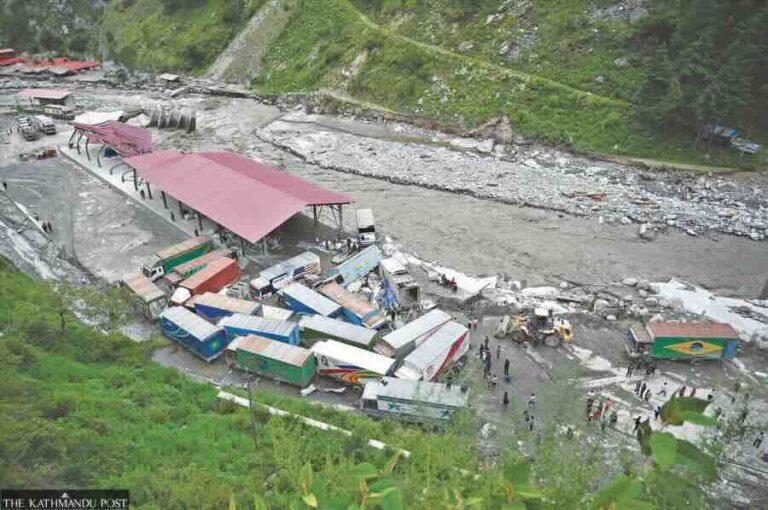
    A key piece of Nepal’s long-anticipated trade infrastructure has stalled dramatically after Beijing informed Kathmandu that it is halting construction of the Rasuwa dry port, a China-funded inland container depot near the Nepal-China border. The decision follows catastrophic flooding in July that obliterated nearly all of the under-construction facility – raising fresh questions about Nepal’s efforts to diversify its trade corridors beyond traditional routes through India.

    Officials from the Nepal Intermodal Transport Development Board (NITDB) confirmed that China formally communicated its decision to suspend work on the project several months ago. While the letter did not provide detailed reasons for the sudden halt, it underscored Beijing’s uncertainty about resuming the work. “It is not clear whether China will resume the project,” said Ashish Gajurel, executive director of the board.

    Floods Reduce Landmark Project to Rubble

    The Rasuwa dry port, envisioned as a transformative hub for Nepal-China trade, was nearing completion when disaster struck. After about 80 per cent of work was finished, a massive flash flood triggered by torrential rains and glacial runoff swept through Rasuwagadhi on July 8, washing away almost all physical infrastructure. Only one structure remained standing.

    The disaster didn’t just demolish buildings. It also wrecked the Nepal–China Friendship Bridge (Miteri Bridge) and severed the vital Rasuwagadhi–Kerung trade route that Nepal had promoted as its primary northern gateway. Around 25 containers parked at the site vanished, and about 90 newly imported electric vehicles (EVs) destined for Nepali markets were either destroyed or severely damaged.

    The floods also exacted a human and economic toll. The disaster along the Lhende (Bhotekoshi) River killed and left missing multiple workers and responders, including both Nepalis and Chinese nationals, underscoring the scale of devastation at the border point.

    For months after the flood, trade through the northern border was effectively halted, cutting off a corridor that had begun to gain increasing traction as an alternative to southern routes. Although a temporary truss bridge has now been installed and the crossing is set for full reopening on January 1, 2026, reconstruction of the broader infrastructure remains a major challenge.

    Strategic Vision Stalled

    Conceived as a gift from the Chinese government, the dry port was designed to handle up to 350 containers, complete with a warehouse, parking areas, customs facilities, quarantine zones, and ancillary services. Construction began in May 2019 after an agreement between NITDB and Tibet Fuli Construction Group Company Limited. The original completion date was set for May 2022, but the COVID-19 pandemic delayed progress.

    China had already invested approximately Rs 1.5 billion – about half the project’s cost – when the disaster hit. With roads, bridges and the dry port itself in ruins, the future of this crucial node in Nepal’s infrastructure network is now in doubt.

    For Nepal, the project had been central to longstanding efforts to lessen dependence on southern trade routes through India, and to build a northern corridor linking directly to China’s vast markets. The Rasuwagadhi–Kerung route had been designated as the “main northern trade gateway” more than a decade ago, reflecting Kathmandu’s strategic priorities.

    Wider Trade Disruptions and Economic Costs

    The impacts on Nepal’s trade have been felt far beyond Rasuwa – with the northern border crossing crippled for months, containers piled up on both sides, supply chains stalled, and traders left stranded. Before the floods, around 80 containers used to enter Nepal daily through Rasuwagadhi and the Tatopani point combined; after the disaster, only a handful trickled in, causing major losses and inventory backlogs.

    Customs data indicate that Nepal’s imports from China have surged even amid constrained logistics, while exports have shrunk sharply – widening a long-standing trade deficit and placing further strain on Nepali businesses. Many traders have shifted focus temporarily to other border points such as Korala in Upper Mustang, where a dry port is also planned but remains in the early stages of development.

    Future of Northern Connectivity

    Despite the setback at Rasuwa, Nepal and China continue discussions on improving cross-border infrastructure and trade connectivity. Bilateral dialogues earlier this year addressed reopening trade points such as Tatopani, reinforcing road links, and enhancing cooperation on transport corridors, including highways and rail feasibility studies.

    Within Nepal, planners are pressing ahead with alternative dry port projects along both northern and southern borders, including facilities at Korala and the India-backed Dodhara Chandani dry port in the far-west. However, none of these options can swiftly replace the scale and strategic promise of the Rasuwa facility.

    For now, the rubble at Rasuwagadhi stands as a stark reminder of the twin vulnerabilities facing Nepal’s ambitious infrastructure goals: the relentless forces of nature and the fragility of foreign-assisted projects when unforeseen calamities strike. As Kathmandu grapples with reconstruction choices, the future of its northern trade ambitions – and the resilience of its Himalayan borderlands – hangs in the balance.

    Journalism “Lost” in Balochistan as Press Freedoms Shrink, New Report Warns of Crisis

    The Freedom Network report highlights how security threats, economic fragility, and structural isolation have eroded the capacity of the press to function as a watchdog and public information provider.

    Journalism in Pakistan’s largest and most restive province, Balochistan, is facing an unprecedented crisis, with press freedoms rapidly shrinking, media outlets collapsing, and journalists operating in a climate of pervasive intimidation and violence, according to a major new research report by the Freedom Network.

    Titled “Journalism in Balochistan: State of Media Freedoms, Access to Information and Safety of Journalists and Media Professionals in Balochistan – Way Forward,” the study paints a stark picture of a media ecosystem under siege. Drawing on desk research, focus group discussions, and interviews with journalists and media stakeholders across the province, the report concludes that the space for independent journalism has all but disappeared.

    A Constrained and Fragmenting Media Landscape

    The Freedom Network report highlights how security threats, economic fragility, and structural isolation have eroded the capacity of the press to function as a watchdog and public information provider. Balochistan’s media, already peripheral to national narratives, now finds itself in an information vacuum that hinders democratic engagement and transparency.

    While Pakistan’s broader electronic media expanded after the early 2000s, Balochistan’s media presence has lagged. National television channels and mainstream newspapers have steadily scaled back their bureaus in Quetta, leaving much of the province unreported. The report notes that outside the provincial capital, coverage is often sparse or non-existent. State-run Pakistan Television and Radio Pakistan operate mainly from urban centres, but their reach into remote rural areas is limited by both infrastructure and language barriers.

    Balochistan remains one of the few regions in Pakistan without a privately owned terrestrial current affairs television channel, and print media – with more than 120 registered publications – sees only a handful regularly circulating beyond city limits due to the high costs of distribution, low literacy rates, and economic precarity.

    Digital Divide and Shutdowns Deepen Information Gaps

    The digital landscape, once seen as a lifeline for journalists covering far-flung areas, is also compromised. Balochistan’s internet penetration remains low – about 15 per cent compared with much higher national averages – and roughly 60 per cent of the province lacks fibre-optic connectivity. Prolonged internet shutdowns, sometimes lasting weeks or months, have become routine following security incidents, further isolating communities and journalists.

    Journalists increasingly turn to social media and messaging platforms to report events and share information, but these tools bring their own risks. The report warns that such digital channels expose journalists to surveillance, content takedowns, and retaliation from state and non-state actors, without the institutional protections afforded by formal media outlets.

    Threats from Multiple Actors: Militants, State and Tribal Elites

    One of the most alarming aspects of the report is its documentation of threats and violence against journalists from a range of actors. Militants and separatist groups operate alongside security and intelligence agencies, political figures, tribal elites, and mobs, creating an environment where independent reporting is practically impossible.

    Over the past two decades, 40 journalists have been killed in Balochistan, with most deaths resulting from targeted attacks and the remainder occurring during bombings and broader violence. Despite repeated assurances from authorities, not a single conviction has been recorded in these cases, underscoring a culture of impunity.

    Journalists describe being caught between competing demands – militants insisting their statements be covered and security agencies pressuring reporters to assist with tracing callers. In such a milieu, self-censorship and enforced censorship have emerged as survival strategies more than editorial choices.

    Economic Fragility and Media Closures

    Economic pressures compound the risks. Regional outlets depend heavily on government advertising, which tends to be delayed or withheld, deepening financial insecurity. The pivot of advertising to digital platforms has squeezed print media further, leading to layoffs, salary arrears, and, in some cases, newsroom closures.

    The absence of sustainable financing has left many media houses unable to invest in reporting beyond urban centres – a situation that reinforces the informational marginalization of remote districts struggling with insecurity and poverty.

    Gendered Barriers in Journalism

    The report also sheds light on gender disparities in Balochistan’s media. Female journalists remain a tiny minority, largely confined to assignments in Quetta. Numerous barriers – including limited mobility due to safety concerns, hostile field conditions, newsroom sexism, pay gaps, and lack of basic facilities such as safe transport and appropriate workspaces – restrict their participation and progression.

    Editors often cite security risks as justification for excluding women from district reporting, inadvertently reinforcing stereotypes and shrinking the diversity of voices in news coverage. As a result, issues affecting women and girls often remain underreported.

    Call for Structural Reforms and Protection Mechanisms

    The Freedom Network report concludes with a call for comprehensive reforms aimed at reversing the decline of regional journalism. Key recommendations include sustainable financing for local media, stronger safety mechanisms for journalists, meaningful enforcement of right-to-information laws, and investment in digital infrastructure to bridge connectivity gaps.

    Iqbal Khattak, Executive Director of Freedom Network, described the findings as a wake-up call for stakeholders: “Journalism is ‘lost’ in Balochistan,” he said, urging urgent action to protect media practitioners and secure citizens’ access to credible information.

    Without decisive reforms, the report warns, the erosion of independent media will not only deepen informational marginalization but also weaken democratic accountability in a region already fraught with conflict and neglect.

    South Asia’s Monsoon Deadliest Climate Disaster of 2025: Christian Aid

    The 2025 monsoon season arrived with unusual ferocity, delivering 8 per cent more rainfall than the long-term average across the Indian subcontinent. What began as essential replenishment for agriculture and water reserves quickly turned catastrophic.

    As 2025 draws to a close, a sobering report from the UK-based charity Christian Aid has crowned the Southwest monsoon floods in India and Pakistan as the year’s deadliest climate-driven catastrophe. With over 1,860 lives lost and economic damages exceeding $5.6 billion, the intensified rains underscore the devastating human toll of a warming planet, particularly on vulnerable populations in the Global South.

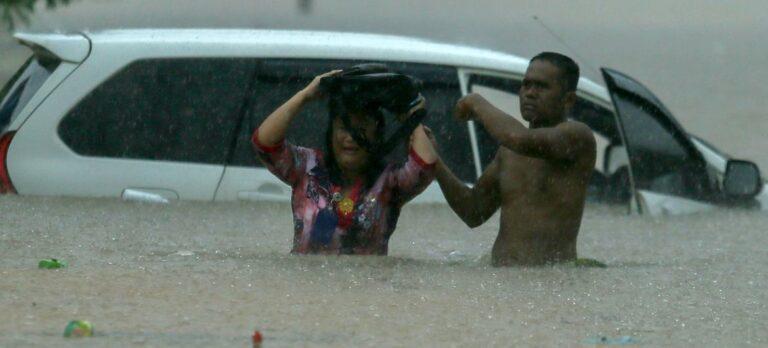
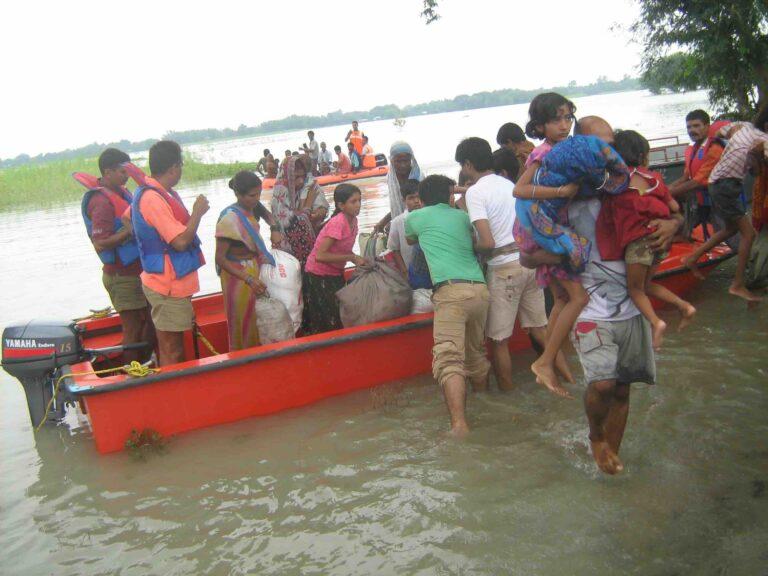
    The 2025 monsoon season arrived with unusual ferocity, delivering 8 per cent more rainfall than the long-term average across the Indian subcontinent. What began as essential replenishment for agriculture and water reserves quickly turned catastrophic. Rivers swelled beyond capacity, triggering widespread flooding, landslides, and flash floods that ravaged rural villages, urban slums, and agricultural heartlands. In Pakistan alone, more than 7 million people were affected, many displaced from homes submerged under muddy waters or buried by collapsing hillsides.

    The human cost was staggering – families were swept away in sudden surges, children drowned in swollen streams, and entire communities isolated for days without food or medical aid. Rescue operations involving armies, helicopters, and local volunteers saved thousands, but the death toll climbed relentlessly.

    Escalating Climate Extremes

    Christian Aid’s report, titled Counting the Cost 2025, highlights that these floods claimed the highest fatalities among all major climate events this year, surpassing even deadly typhoons and hurricanes elsewhere.

    Economically, the destruction was immense. Crops ready for harvest were inundated, livestock drowned, and infrastructure – roads, bridges, and homes – crumbled. Losses reached up to $6 billion in Pakistan and India combined, devastating livelihoods dependent on farming and informal labour. Many of these damages remain uninsured, meaning the true financial burden falls heavily on already impoverished households and governments with limited resources.

    This tragedy did not occur in isolation. Globally, 2025 was a year of escalating climate extremes, with total losses from floods, heatwaves, wildfires, droughts, and storms surpassing $120 billion across the top 10 events. Asia bore a disproportionate share, hosting four of the six costliest disasters. California’s Palisades and Eaton wildfires topped the list at $60 billion in damages, while cyclones ravaging Thailand, Indonesia, Sri Lanka, Vietnam, and Malaysia caused $25 billion in losses. China’s summer floods added $11.7 billion, and Hurricane Melissa’s path through the Caribbean inflicted $8 billion.

    Yet, while insured losses dominate headlines in wealthier nations, the uncounted human suffering in poorer regions like South Asia tells a different story. As Christian Aid CEO Patrick Watt stated, “This year has once again shown the stark reality of climate breakdown… The poorest communities are first and worst affected.”

    Emeritus Professor Joanna Haigh of Imperial College London echoed this, declaring, “These disasters are not ‘natural’ – they are the predictable result of continued fossil fuel expansion and political delay.”

    Heed the Climate Crisis

    Experts attribute the monsoon’s heightened intensity to human-induced climate change. Warmer atmospheres hold more moisture, leading to heavier downpours. Combined with deforestation, poor urban planning, and population growth in flood-prone areas, these factors amplify risks. In South Asia, where monsoons are a lifeline for billions, such extremes disrupt food security and exacerbate poverty cycles.

    The report serves as a dire warning: without accelerated transitions away from fossil fuels and increased adaptation funding for vulnerable nations, such events will become more frequent and severe. Poorer countries, contributing least to emissions, suffer most – a stark injustice highlighted by advocates calling for greater accountability from major polluters.

    As recovery efforts continue into the new year, survivors in India and Pakistan face rebuilding amid grief and uncertainty. Aid organizations urge global action, emphasizing that the costs of inaction far outweigh those of prevention. In the words of Watt, these disasters “are a warning of what lies ahead” if the world fails to heed the climate crisis.

    Afghanistan to Remain Major Crisis in 2026, UN, Partners Warn

    The Afghanistan Humanitarian Needs and Response Plan projects that during the 2025-2026 lean season, more than one-third of Afghanistan’s population will face crisi-level or worse food insecurity.

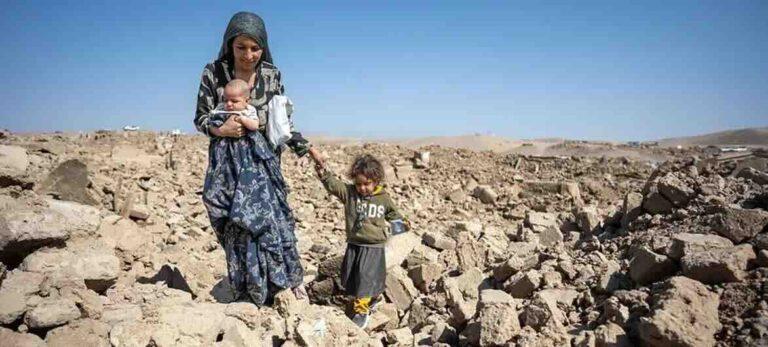
    Afghanistan is expected to remain one of the world’s largest humanitarian crises in 2026, UN agencies and humanitarian partners warned on Tuesday, launching a $1.7 billion appeal to assist nearly 18 million people in urgent need.

    Years of conflict, compounded by worsening food insecurity, recurrent natural disasters, climate change impacts and large-scale returns of displaced people, have left an estimated 45 per cent of the population – some 21.9 million people – in need of humanitarian assistance next year.

    Of those, 17.5 million people – more than three-quarters of them women and children – have been prioritised for support under the coordinated response.

    Food and Basic Hygiene

    Food security and sanitation remain among the most urgent needs.

    The Afghanistan Humanitarian Needs and Response Plan projects that during the 2025-2026 lean season, more than one-third of Afghanistan’s population will face crisis-level or worse food insecurity, as defined by the Integrated Food Security Phase Classification (IPC). 

    This means many households will meet minimum food needs only by depleting essential livelihood assets – a sharp deterioration compared with the previous year.

    The ongoing drought has also led to the failure of nearly 80 per cent of rainfed wheat crops in several regions, leaving many families without food stocks for the winter.

    Sanitation conditions are equally dire: an estimated 25 per cent of households relied on unimproved water sources this year, while 37 per cent lacked soap for basic hygiene. 

    The response will prioritise water, sanitation and hygiene needs in areas most affected by drought, cholera outbreaks, disasters and large-scale returns.

    Returning Home to Crisis 

    Afghanistan is facing one of the world’s largest and fastest-growing returnee-related displacement crises, with around five million people returning to the country this year.

    More than 2.6 million Afghans returned from Iran and Pakistan, driven largely by tightened migration policies and deteriorating protection conditions.

    Many have returned to districts already grappling with poverty, food insecurity, drought and limited access to basic services, further straining local capacities.

    More Aid for Less

    In 2026, humanitarian partners aim to reach more people with fewer resources.

    The $1.71 billion required represents a 29 per cent reduction compared to the resources needed in 2025. Yet it aims to reach about 4 per cent more than the target last year.

    These changes have been “driven by sharper prioritisation, notable efficiency gains, and a strategic shift away from high-cost, less sustainable interventions,” the response plan noted.

    Tobacco Industry’s Grip Tightens: Global Index Flags Persistent Influence in Bangladesh and Worldwide

    Global Tobacco Index Shows Widening Influence of the tobacco industry globally. It shows how the tobacco industry remains deeply entrenched in governmental processes, exploiting policy gaps, weak transparency mechanisms, and official partnerships to undermine tobacco control strategies.

    The newly released Global Tobacco Industry Interference Index 2025 paints a sobering picture of how the tobacco industry continues to shape public health policy across the world, including in Bangladesh, despite international commitments and mounting evidence of tobacco’s devastating health impacts. The index – compiled by the Global Center for Good Governance in Tobacco Control (GGTC) with support from Bloomberg Philanthropies and other partners – assesses how 100 governments fare in limiting tobacco industry interference in health policymaking under Article 5.3 of the World Health Organization Framework Convention on Tobacco Control (WHO FCTC).

    Globally, the tobacco industry remains deeply entrenched in governmental processes, exploiting policy gaps, weak transparency mechanisms, and official partnerships to undermine tobacco control strategies. According to the index’s ranking, countries such as Brunei Darussalam, Palau, and Botswana are among those with the lowest levels of interference, scoring significantly better than many others. Conversely, countries including the United States, Switzerland, and the Dominican Republic register the highest levels of tobacco industry influence, highlighting the spectrum of challenges in protecting health policy from vested corporate interests. Bangladesh – with a score of 66 out of 100 – sits in the mid-to-high interference band, indicating persistent and systemic influence.

    Bangladesh’s Standing and Ongoing Challenges

    In Bangladesh, the Global Tobacco Industry Interference Index 2025 warns that tobacco industry influence remains strong and has not abated despite incremental policy efforts. Weak safeguards, tax concessions, and close official ties to tobacco firms are cited as key factors undermining public health efforts and the government’s WHO commitments.

    The index assesses multiple indicators of interference – ranging from participation in policy development to corporate social responsibility (CSR) activities, transparency measures, and conflicts of interest. Bangladesh’s performance reflects shortcomings across several of these domains. A notable concern is the continued interaction between senior government officials and tobacco companies. In one instance, a senior finance official also served on the board of British American Tobacco Bangladesh, blurring the lines between regulatory responsibilities and industry interests, the report notes.

    Officials’ acceptance of industry assistance on enforcement and consultancy has also raised eyebrows. Even diplomatic engagement with multinational tobacco firms – such as meetings endorsing ongoing business operations abroad – reveals the industry’s strategic reach into policymaking circles that extend beyond domestic health ministry walls.

    Policy Pitfalls: Tax Stagnation and CSR Partnerships

    A critical area where Bangladesh has faltered, according to the index, is fiscal policy. Despite robust evidence that higher tobacco taxes are among the most effective means to curb consumption, the government reportedly opted against raising taxes on bidis in the fiscal year 2024–25 budget. This decision followed targeted lobbying efforts, including a memorandum from a bidi labourers’ association that urged the former prime minister to withdraw proposed tax hikes – illustrating how industry-aligned economic arguments can sway policy direction away from health priorities.

    CSR activities also remain a pivotal conduit for industry influence. Across the world, tobacco companies continue to deploy CSR initiatives – from disaster relief to community development – to gain access and goodwill among policymakers. In Bangladesh, the index highlights occasions where ministries publicly acknowledged or partnered with tobacco firms for events, reinforcing public legitimacy for companies whose products undermine health.

    Public health advocates argue that such partnerships not only contradict WHO FCTC guidelines but also entrench tobacco’s economic and social value at the expense of long-term health outcomes.

    Global Trends and Paths Forward

    The Global Tobacco Industry Interference Index does more than diagnose the problem; it also points to examples of progress and pathways for reform. Nearly 34 countries improved their scores by strengthening legal frameworks that align with WHO FCTC Article 5.3 guidelines, rejecting industry collaborations, and implementing transparency measures such as publishing official meetings with tobacco entities.

    Peru, for instance, is cited as a country that has incorporated Article 5.3 protections directly into national law, effectively ruling out industry involvement in policy decisions and setting penalties for non-compliance. Several other countries have banned tobacco-related CSR contributions and political donations, showing that proactive governance can blunt industry strategies designed to sway public policy.

    The index stresses the importance of comprehensive registers of industry lobbyists, stringent conflict-of-interest rules, and binding codes of conduct that extend beyond health ministries to include finance, agriculture, commerce, and diplomatic services. Only through cohesive government action – treating tobacco companies as incompatible with public health goals – can countries hope to curtail the industry’s influence.

    For Bangladesh, adopting a whole-of-government law on Article 5.3, prohibiting all political and charitable contributions from tobacco entities, requiring full disclosure of industry interactions, and ending incentives that grant the industry legitimacy are among the concrete steps outlined by the index. Such measures are seen as critical to advancing the country toward its tobacco-free goals while safeguarding public health for future generations.

    The Global Tobacco Industry Interference Index 2025 underscores that tobacco industry influence remains a formidable barrier to public health policy in Bangladesh and worldwide. While some countries demonstrate notable progress, Bangladesh’s mid-to-high interference score suggests that institutional reforms and stricter safeguards are urgently needed. The index offers both a stark warning and a strategic roadmap for governments committed to protecting health policy from commercial interests that prioritize profits over people.

    How Climate Change is Threatening Human Rights

    The impacts of climate change must be understood not only as a climate emergency, but also as a violation of human rights.

    By Pooja Yadav / UN News

    With rising effects of climate change across the globe, the world has started recognising that climate change is not just an ecological collapse, but also a human rights crisis.

    UN High Commissioner for Human Rights Volker Türk echoed this message in Geneva earlier this year and posed a question before the Human Rights Council:

    “Are we taking the steps needed to protect people from climate chaos, safeguard their futures and manage natural resources in ways that respect human rights and the environment?”

    His answer was very simple: we are not doing nearly enough.

    In this regard, the impacts of climate change must be understood not only as a climate emergency, but also as a violation of human rights, Professor Joyeeta Gupta told UN News recently

    She is the co-chair of the international scientific advisory body Earth Commission and one of the United Nations’ high-level representatives for science, technology, and innovation for the Sustainable Development Goals (SDGs).

    Who Suffers the Most?

    Professor Gupta said that the 1992 climate convention never quantified human harm. 

    She noted that when the Paris Agreement was adopted in 2015, the global consensus settled on limiting warming to 2° Celsius, later acknowledging 1.5° Celsius as a safer goal. 

    But for small island States, even that was a compromise forced by power imbalance, and “for them, two degrees was not survivable,” said Professor Gupta.

    “Rising seas, saltwater intrusion, and extreme storms threaten to erase entire nations. When wealthy countries demanded scientific proof, the Intergovernmental Panel on Climate Change (IPCC) was tasked with studying the difference between 1.5° Celsius and 2° Celsius,” she continued.

    She said that the results were clear that 1.5° Celsius is significantly less destructive but still dangerous.

    In her own research published in Nature, she argues that one degree Celsius is the just boundary, because beyond that point, the impacts of climate change violate the rights of more than one per cent of the global population, around 100 million people.

    The tragedy, she noted, is that the world crossed one degree in 2017, and it is likely to breach 1.5° Celsius by 2030. 

    She underscored that the promises of cooling later in the century ignore irreversible damage, including melting glaciers, collapsing ecosystems, and lost lives.

    “If Himalayan glaciers melt,” she said, “they won’t come back. We will be living with the consequences forever.” 

    A Question of Responsibility 

    Climate justice and development go hand in hand. Every basic right – from water and food to housing, mobility, and electricity – requires energy.

    “There is a belief that we can meet the Sustainable Development Goals without changing how rich people live. That doesn’t work mathematically or ethically,” Professor Gupta explained. 

    Her research shows that meeting basic human needs has a significant emissions footprint. 

    The research also highlights that since the planet has already crossed safe limits, wealthy societies must reduce emissions far more aggressively, not only to protect the climate, but to create carbon space for others to realise their rights.

    “Failing to do so turns inequality into injustice.” she underlined.

    Climate Change and Displacement

    Displacement is one of the most obvious effects of climate injustice. Yet international law still does not recognise ‘climate refugees.’

    Professor Gupta explains the progression clearly. 

    “Climate change first forces adaptation for example, shifting from water-intensive rice to drought-resistant crops. When adaptation fails, people absorb losses: land, livelihoods, security. When survival itself becomes impossible, displacement begins,” she said.

    “If land becomes too dry to grow crops and there is no drinking water,” she said, “people are forced to leave.”

    She added that the most climate displacement today occurs within countries or regions, not across continents. 

    “Moving is expensive, dangerous, and often unwanted. The legal challenge lies in proving causation: Did people leave because of climate change, or because of other factors like poor governance or market failures?

    “This is where attribution science becomes crucial. New studies now compare decades of data to show when and how climate change alters rainfall, heat, health outcomes, and extreme events. As this science advances, it may become possible to integrate climate displacement into international refugee law,” she noted.

    “That,” she said, “will be the next step.”

    A Broken Legal Framework

    Professor Gupta said that climate harms have been quite difficult to address through human rights law due to the fragmented architecture of international law.

    “This fragmentation allows States to compartmentalise responsibility…They can say, “I agreed to this here, but not there,” she said. 

    “Environmental treaties, human rights conventions, trade agreements, and investment regimes operate in parallel worlds. Countries may sign climate agreements without being bound by human rights treaties, or protect investors while ignoring environmental destruction,” she added.

    She asserted that this is why invoking climate change as a human rights violation at the global level has been so difficult. Until recently, climate harm was discussed in technical terms – parts per million of carbon dioxide, temperature targets, emission pathways – without explicitly asking: What does this do to people?

    Only recently has this begun to change.

    In a landmark advisory opinion, the International Court of Justice (ICJ) clarified that climate change cannot be assessed in isolation. Courts and governments, the ICJ said, must consider climate obligations together with human rights and other environmental agreements.

    For Professor Gupta, this legal shift is long overdue but vital.

    “It finally tells governments: you cannot talk about climate without talking about people.”

    Climate Change is Transboundary

    Assigning responsibility for climate change is exceptionally complex because its impacts cross borders, she said.

    “For instance, a Peruvian farmer sued a German company in a German court for damages caused by climate change. The court acknowledged that foreign plaintiffs can bring such cases, but proving the link between emissions and harm remains a major challenge. This case highlights the difficulties of holding states or companies accountable for transboundary climate-related human rights harms,” she added.

    Professor Gupta said that attribution science is making it possible to link emissions to specific harms.

    The ICJ has now affirmed that continued fossil fuel use may constitute an internationally wrongful act. States are responsible not only for their emissions, but for regulating companies within their borders.

    “Different legal strategies are emerging, from corporate misrepresentation lawsuits in the US to France’s corporate vigilance law,” she added 

    Climate Stability as a Collective Human Right

    Rather than framing climate as an individual entitlement, Professor Gupta argues for recognising a collective right to a stable climate.

    She explained that climate stability sustains agriculture, water systems, supply chains, and everyday predictability, and without it, society cannot function.

    “Climate works through water,” she said. “And water is central to everything.”

    Courts around the world are increasingly recognising that climate instability undermines existing human rights even if climate itself is not yet codified as one.

    This thinking is now echoed at the highest levels of the UN.

    Erosion of Fundamental Rights

    Speaking at the Human Rights Council in Geneva in June of this year, UN High Commissioner Volker Türk warned that climate change is already eroding fundamental rights, especially for the most vulnerable.

    But he also framed climate action as an opportunity.

    “Climate change can be a powerful lever for progress,” he said, if the world commits to a just transition away from environmentally destructive systems.

    “What we need now,” he stressed, “is a roadmap to rethink our societies, economies and politics in ways that are equitable and sustainable.”

    Political Will, Power, and Responsibility

    “The erosion of multilateralism symbolised by repeated US withdrawals from the Paris Agreement has weakened global trust. Meanwhile, 70 per cent of new fossil fuel expansion is driven by four wealthy countries: the US, Canada, Norway, and Australia,” said Professor Gupta.

    She argues that neoliberal ideology focused on markets, deregulation, and individual freedom cannot solve a collective crisis.

    “Climate change is a public good problem,” she said. “It requires rules, cooperation, and strong States.”

    Developing countries face a dilemma: wait for climate finance while emissions rise, or act independently and seek justice later. Waiting, she warns, is suicidal.

    As the UN High Commissioner concluded in Geneva, a just transition must leave no one behind.

    “If we fail to protect lives, health, jobs and futures,” Volker Türk warned, “we will reproduce the very injustices we claim to fight.”

    Source: UN News

    Image: WMO

    Sri Lanka Ranks Among Bottom 40 Countries in Global Health Index 2025

    The Global Health Index specifically highlights poor diet and lack of exercise as significant contributors to Sri Lanka’s low relative standing, noting that even nations often viewed as “tropical paradises” can have poor health outcomes.

    Sri Lanka’s health status has drawn international concern. The island nation has been ranked among the bottom 40 countries in the world for overall health outcomes in 2025, according to the newly released Global Health Index. With a global health index score of 54.55, Sri Lanka is placed 158th out of nearly 200 countries, a position experts say reflects persistent gaps in public health, lifestyle risk factors and healthcare investment despite improvements in life expectancy.

    The Global Health Index – which aggregates ten key health measures including healthy life expectancy, blood pressure and glucose levels, obesity, mental health, happiness, alcohol and tobacco use, physical activity and government health spending – labels Sri Lanka’s overall health as below average and “unhealthy.” The ranking underscores a stark reality: picturesque landscapes and a relatively high Human Development Index (HDI) do not automatically translate into strong population health.

    Health Beyond Longevity: Confronting Today’s Risks

    While life expectancy at birth in Sri Lanka has risen from 71.5 years in 2000 to 77.2 years in 2021, mainly due to reductions in infectious disease mortality and wider access to basic healthcare, non-communicable diseases remain a leading threat. According to the World Health Organisation (WHO), strokes and ischemic heart disease are among the leading causes of death – conditions commonly linked with aging populations, lifestyle factors and gaps in preventive care.

    Public health analysts say these chronic conditions reflect broader lifestyle and environmental issues: high rates of physical inactivity, rising obesity and changes in dietary habits. The Global Health Index specifically highlights poor diet and lack of exercise as significant contributors to Sri Lanka’s low relative standing, noting that even nations often viewed as “tropical paradises” can have poor health outcomes.

    Global Health Security: Preparedness and Weak Links

    A related but broader measure, the Global Health Security (GHS) Index, assesses countries’ readiness to prevent, detect and respond to infectious disease threats. While Sri Lanka’s specific overall GHS score is not published in the 2025 Global Health Security Index yet, historical data show that in earlier assessments Sri Lanka faced challenges across multiple categories – including detection and surveillance, rapid response capability, and health system capacity – compared with global averages.

    The GHS Index, developed by the Nuclear Threat Initiative, Johns Hopkins Center for Health Security and Economist Impact, benchmarks health security across six major categories – from prevention of pathogen emergence to compliance with international norms and risk environment – to gauge pandemic preparedness and biological threat response capacity.

    According to past index documents, Sri Lanka’s scores in areas such as laboratory systems, surveillance, and emergency response planning remained modest, highlighting structural limitations in public health infrastructure that can undermine capacity to control outbreaks swiftly.

    Economic Pressures and Public Health Investment

    Sri Lanka’s position in global health rankings is compounded by years of economic stress. A protracted economic crisis from 2019 to 2024 – the worst since independence – eroded public finances, spiked inflation and led to shortages in essential goods including medical supplies, highlighting the interplay between economic stability and health system robustness.

    Public expenditure on health, a key component of overall population well-being, has struggled under fiscal constraints. Limited government funding for preventative care and lifestyle-related interventions has hampered efforts to curb non-communicable diseases and improve broader health outcomes.

    Social Determinants and Well-being Indicators

    The low health index ranking echoes other indicators of strain in social well-being. Earlier in 2025, Sri Lanka slipped in the World Happiness Report, dropping to 133rd place – a signal that subjective well-being may be lagging alongside objective health outcomes.

    Despite these challenges, Sri Lanka still maintains comparatively strong human development measures within South Asia, with a High Human Development Index (HDI) among regional peers. However, analysts caution that gains in education and life expectancy – drivers of HDI – may mask deeper health system vulnerabilities and growing lifestyle health risks.

    Policy Response and Health Priorities

    Public health experts and government officials have acknowledged these challenges. Strengthening surveillance and response infrastructure, expanding preventive healthcare, and tackling lifestyle risk factors are increasingly viewed as priority areas. Moreover, Sri Lanka has engaged with global frameworks such as the National Action Plan for Health Security, aiming to reinforce capacities to handle epidemics and health emergencies – a move supported by technical partners including the World Health Organization (WHO).

    Policy advocates argue that improving Sri Lanka’s health outcomes will require coordinated investment in non-communicable disease prevention, stronger health system financing, and policies addressing social determinants of health such as nutrition, physical activity and tobacco and alcohol use.

    The 2025 rankings serve as an important – if sobering – reminder that life expectancy and development metrics alone do not capture the full picture of national health. For Sri Lanka to climb out of the bottom tier of global health standings, experts say it must broaden its focus from merely surviving disease to promoting long-term, resilient health across all segments of society.

    Maldives Anti-Scam Initiative Recovers Over One-Third of Stolen Funds

    From historic corruption scandals to contemporary fraud, the Maldives continues to grapple with how best to shield public resources from exploitation and ensure that justice and restitution reach the victims of financial crimes.

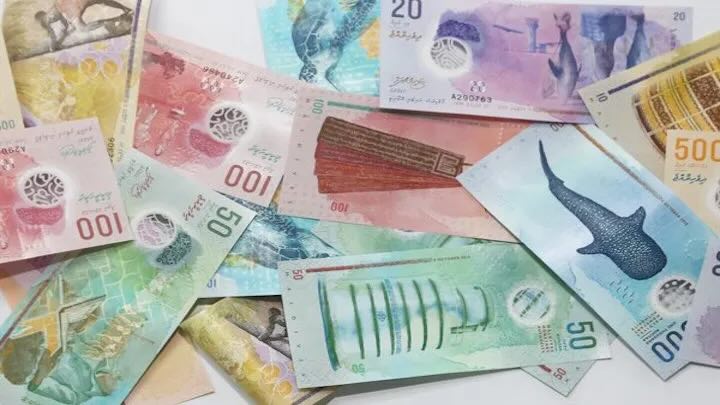
    A newly established Anti-Scam Centre in the Maldives has reported the recovery of 37 percent of funds lost to financial scams, marking a notable stride in law enforcement efforts to tackle widespread fraud and corruption within the island nation. The progress comes amid a long history of high-profile embezzlement scandals that have shaken public trust and exposed vulnerabilities in financial oversight.

    During a press briefing held by the Cyber Crime Department of the Maldives Police Service, Inspector of Police Adam Naveed outlined the significant recovery rate achieved since the Anti-Scam Centre’s establishment in March 2025. According to the police, 1,663 scam cases were reported, with losses exceeding MVR 22.7 million (roughly USD 1.4 million), of which MVR 8.5 million has now been retrieved. Before the centre’s formation, authorities were only able to recover about two per cent of stolen funds.

    “The Anti-Scam Centre has placed a high priority on retrieving lost funds and disrupting the resources available to scammers,” Naveed said, noting that the unit’s efforts have already delivered results on par with some international counterparts. He highlighted that 539 individual cases saw full recovery and 143 saw partial restitution of defrauded money.

    Authorities have also taken proactive steps, freezing 2,949 bank accounts without court orders for 48 hours and obtaining judicial permission to freeze another 754 accounts, operations that have improved their capacity to respond to scam reports quickly. Six cases are currently being forwarded to the prosecutor general’s office for prosecution.

    Scams: A growing threat

    Police data show that scam cases have surged in recent years, increasing by nearly 200 per cent, with more than 6,000 victims losing over MVR 110 million to fraud since 2021. Many scams involve e-commerce fraud, job offer schemes, romance scams and identity theft, reflecting the diverse methods exploited by perpetrators.

    While the high recovery rate achieved in a short period is a positive development, yet police and watchdogs alike emphasize that 63 per cent of the lost funds remain unrecovered, underscoring the need for continued vigilance, stronger enforcement and public awareness campaigns.

    Historic backdrop: MMPRC corruption and siphoned state funds

    The importance of anti-fraud measures in the Maldives cannot be understood in isolation from the country’s history of grand corruption scandals that siphoned tens of millions of dollars from state coffers. The largest and most notorious of these was the Maldives Marketing and Public Relations Corporation (MMPRC) scandal, which first emerged publicly in 2015.

    The MMPRC, a state-owned tourism promoter, was at the centre of a complex embezzlement scheme in which more than $90 million (approximately MVR 1.4 billion) in government funds was diverted to private accounts and used for illicit purposes, including bribery, vote-buying and personal enrichment.

    Former Vice President Ahmed Adeeb and the then-Managing Director of MMPRC, Abdulla Ziyath, were convicted in 2020 for their roles in the scandal, receiving 20-year and 11-year prison sentences respectively for money laundering and embezzlement. However, both were later pardoned in 2023 by former President Ibrahim Mohamed Solih, drawing criticism from anti-corruption advocates who argued the move undermined efforts to hold elites accountable.

    The scandal implicated a wide network of politicians, judges and government officials, with dozens of beneficiaries identified in various investigations. Despite its scale, only a small fraction of the stolen funds has been recovered, and many of the alleged perpetrators remain beyond the reach of Maldivian justice systems.

    Public confidence and ongoing reform

    Transparency advocates and civil society groups have repeatedly called on authorities to accelerate the recovery of stolen assets and ensure that accountability mechanisms are strengthened. A 2021 press release from Transparency Maldives urged the government to publish investigative reports and accelerate prosecutions in high-profile corruption cases, warning that slow progress erodes public trust in governance.

    Today’s focus on scam recovery – distinct from the MMPRC legacy – reflects a broader effort to combat financial abuse at both individual and systemic levels. Strengthening cybercrime response capabilities and improving interagency cooperation are seen as critical components of this strategy.

    While the Anti-Scam Center’s achievements mark an important step in protecting Maldivians from fraud, broader questions about governance, transparency and financial oversight persist. From historic corruption scandals to contemporary fraud, the Maldives continues to grapple with how best to shield public resources from exploitation and ensure that justice and restitution reach the victims of financial crimes.

    “Recovering stolen funds is not just about restoring money; it’s about restoring faith in institutions,” said an anti-corruption analyst who requested anonymity. “The work ahead must be sustained, transparent and backed by strong legal frameworks.”

    Taliban Suspends Salaries for Public Employees in Broad Economic Blow

    As winter settles over Afghanistan, the suspension of public-sector wages casts a long shadow over the daily lives of millions. Public employees and their families are left to navigate an uncertain economic landscape.

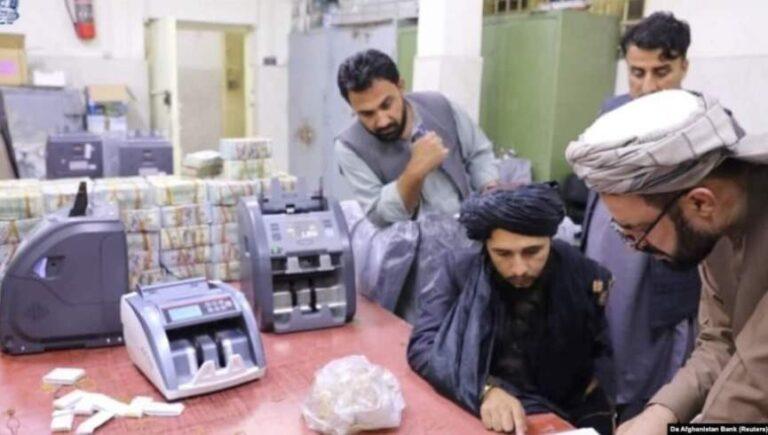
    In a move that has intensified economic hardship across the country, the Taliban’s de facto government has indefinitely suspended salary payments for all public employees, multiple government sources told Amu TV. In what observers describe as one of the most sweeping financial actions since the group assumed full control in 2021, the decision affects civil servants across ministries and state institutions, with no clear timeline for a resumption of wages.

    The suspension was confirmed by several sources within the Taliban-controlled ministry of finance and other government departments, though Taliban officials have not yet issued an official statement explaining the rationale behind the suspension. This marks the first time that such a comprehensive halt has been instituted without a defined date for restoring payments to public workers.

    Uncertainty and Anxiety for Civil Servants

    For Afghanistan’s salaried workforce – already battered by years of economic contraction, international isolation, and frozen foreign assets – the suspension represents a fresh shock. While salary delays have occurred previously under the Taliban’s rule, workers and analysts say the latest development signals deeper financial distress within the administration.

    “Even though our salaries and benefits are limited, receiving them allows us to pay rent and cover basic household needs,” a civil servant in Kabul told Amu TV, speaking on condition of anonymity for fear of reprisal. “Now, with winter cold and rising costs, it feels like everything is collapsing.”

    In northern Afghanistan, another government employee echoed the sentiment of many, saying the indefinite nature of the suspension has plunged families into uncertainty. “Knowing that this affects all ministries means there is no exception or short-term relief,” the government employee said.

    A Deepening Economic Crisis

    Afghanistan’s economy has been in a state of crisis since the Taliban regained control in August 2021. After the withdrawal of international forces, foreign aid – which once made up a significant portion of the country’s GDP – was drastically reduced or cut off entirely. Frozen foreign reserves and stringent banking restrictions have compounded fiscal stress, leaving the government with limited revenue and scant options to meet ongoing public expenditures.

    Economists and donors alike warn that prolonged disruptions to public-sector pay could have cascading effects throughout Afghanistan’s fragile economy. Basic services, such as healthcare, education, local administration, and utilities, are largely dependent on salaried workers showing up to work. With salaries halted indefinitely, the risk of service disruptions and increased poverty rates looms large.

    “The suspension of public-sector payments is a stark reflection of broader financial pressures,” said one regional analyst. “Cash shortages, reduced trade activity, and frozen assets abroad have severely constrained the Taliban’s fiscal capacity.”

    Household Strain and Social Impact

    Many Afghan families rely entirely on the wages of government employees to survive. With limited private-sector opportunities and soaring inflation, especially during the winter months, the removal of this income source adds another layer of hardship. Markets already reflect rising prices for basic commodities, and the cost of heating fuel has surged in recent months, placing additional pressure on low-income households.

    Some civil servants have begun seeking alternative work, including informal labour and small trade, to compensate for lost income. However, such opportunities are sparse, particularly outside major cities. In rural provinces, where agriculture and seasonal work are the primary economic activities, public-sector wages have long been a key source of stability for many families.

    Taliban’s Financial Challenges

    The Taliban’s fiscal struggles stem from multiple sources. International sanctions remain in place, and foreign governments have largely withheld formal recognition of the Taliban administration. Foreign aid that once sustained public wages and development projects has been curtailed, and international financial institutions remain reluctant to engage fully with the country’s economy without clear political progress and assurances on human rights.

    Additionally, Afghanistan’s banking sector has been crippled by restricted access to global financial networks, making it difficult to facilitate government transactions or mobilise reserves for operational needs. Experts say these structural barriers leave the government heavily dependent on limited internal revenue collection – which is insufficient to fund payrolls across the sprawling public sector.

    Political and Social Ramifications

    The decision to halt salary payments has drawn concern from civil society groups and international observers, who warn that continued economic contraction could fuel social unrest or increased migration out of the country. While there has been no major organised protest yet, the sense of frustration among salaried workers is palpable.

    Humanitarian agencies monitoring the situation say that any deepening of poverty could have long-term consequences, particularly for women, children, and other vulnerable populations. Already, many Afghan families are coping with a lack of access to basic services and dwindling resources, heightening the risk of food insecurity and malnutrition in remote areas.

    As winter settles over Afghanistan, the suspension of public-sector wages casts a long shadow over the daily lives of millions. With no clear policy response from the Taliban leadership, public employees and their families are left to navigate an uncertain economic landscape. Unless external support or internal reforms emerge, the ripple effects of this fiscal crisis are likely to be felt across Afghan society well into 2026 and beyond.

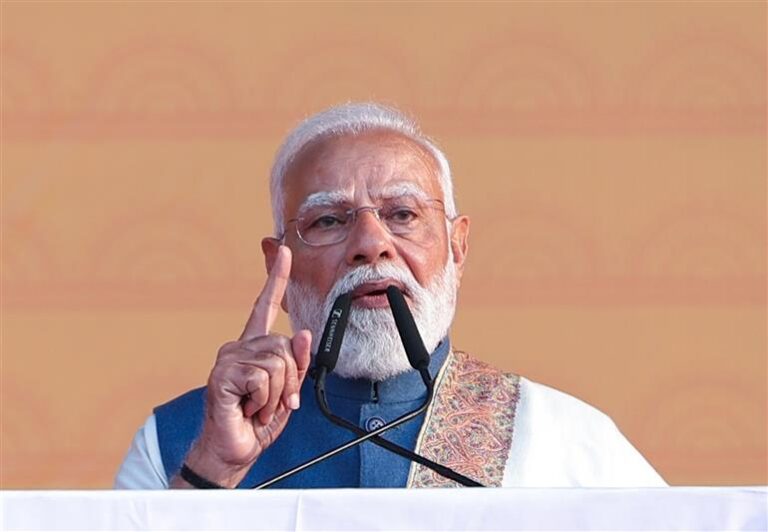
    PM Modi Chairs Fifth National Conference of Chief Secretaries

    “We have boarded the Reform Express,” the Prime Minister said, underscoring the ongoing next-generation reforms aimed at positioning India as a major global economic power.

    Prime Minister Narendra Modi on Sunday chaired the fifth edition of the National Conference of Chief Secretaries, underlining an ambitious vision for “Viksit Bharat” by harnessing India’s demographic dividend and strengthening cooperative federalism. Held over three days from 26 to 28 December 2025 at Pusa, Delhi, the conclave brought together chief secretaries from all states and union territories to deliberate on strategies spanning human capital development, governance reforms, manufacturing, agriculture, tourism and technology.

    Calling the conference a “decisive step” toward deepening Centre-State partnerships, Modi said the summit reflects India’s collective thinking and constructive policy dialogue and provides a platform to translate policy ideas into tangible outcomes for citizens.

    Harnessing India’s Demographic Advantage

    At the heart of discussions was the overarching theme, “Human Capital for Viksit Bharat,” reflecting the government’s emphasis on knowledge, skills, health and capabilities as the central drivers of economic growth and social progress. Modi highlighted that nearly 70 per cent of India’s population is in the working-age group, offering a historic opportunity to accelerate growth.

    “We have boarded the Reform Express,” the Prime Minister said, underscoring the ongoing next-generation reforms aimed at positioning India as a major global economic power. He emphasised that empowering youth remains a top priority for the government.

    Quality, Excellence and Global Competitiveness

    A significant thrust of the Prime Minister’s address was on quality – of governance, manufacturing and service delivery. He said Viksit Bharat must be synonymous with quality and excellence, urging stakeholders to go beyond average results.

    In this context, the Prime Minister reiterated his long-standing vision that the “Made in India” label should embody global competitiveness and superior quality. He urged both the centre and states to identify 100 products for domestic manufacturing, reduce import dependence and strengthen economic resilience aligned with the zero effect, zero defect philosophy.

    Agriculture, Tourism and Livelihoods

    Addressing opportunities beyond traditional domains, Modi emphasised shifting Indian agriculture toward high-value sectors such as dairy, fisheries and export-oriented produce to make India the “food basket of the world.” The Prime Minister highlighted the PM Dhan Dhanya Scheme, which has identified 100 low-productivity districts as focal points for targeted interventions.

    He also underscored tourism’s potential to generate livelihoods for youth. With India’s rich heritage and historical assets, Modi urged states to prepare roadmaps for at least one global-level tourist destination and build a thriving tourism ecosystem.

    Sports, Skills and Future Events

    In a forward-looking appeal, the prime minister stressed the need to align India’s national sports calendar with the global schedule, especially in preparation for the 2036 Olympics. Calling for enhanced sports infrastructure and talent identification programs, he urged significant investment over the next decade to nurture athletes from grassroots levels.

    Modi also talked about mapping skill demand at state and global levels, advocating that academia and industry collaborate more closely to build a high-quality talent pool capable of meeting future market needs.

    National Manufacturing Mission and Services Sector

    The prime minister announced plans for the soon-to-be-launched national manufacturing mission (NMM), which he said should be a top priority for all states. He stressed the need to create enabling infrastructure to attract global companies and improve the ease of doing business, especially in land, utilities and social sectors.

    Beyond manufacturing, prime minister Modi called for boosted momentum in the services sector, including healthcare, education, transport, tourism, professional services and artificial intelligence, to realise India’s ambition of becoming a global services giant.

    Technology, Cyber Security and Manuscript Digitisation

    Reflecting the strategic role of technology, the prime minister urged states to develop capacity building plans in partnership with the capacity building commission and enhance awareness of cyber security to protect citizens. He suggested increased use of technology across governance functions to improve quality and efficiency.

    In a culturally rooted appeal, he also encouraged states to use the gyan bharatam mission to digitise historical manuscripts, then apply artificial intelligence to synthesise and disseminate the knowledge contained in them.

    Actionable Plans and Federal Coordination

    Concluding his address, Modi called for every state to develop 10-year actionable plans with 1-, 2-, 5- and 10-year targets, leveraging technology for regular progress monitoring. He highlighted that the success of Viksit Bharat depends on effective federal cooperation, robust implementation and time-bound outcomes.

    The conference also featured theme-based sessions on early childhood education, schooling, skilling, higher education, and sports and extracurricular activities, recognising the diverse components of human capital development. Discussions emphasised citizen-centric governance, data-driven implementation and inter-departmental coordination as keys to achieving impact at scale.