More

    The Midwifery Gap in Asia-Pacific: India at the Heart of a Silent Crisis

    The report says that among the 21 countries studied, Pakistan and Papua New Guinea (PNG) display the most acute midwife shortages. Projections indicate that even by 2030, these shortages will persist despite current efforts.

    Midwives are foundational to maternal and newborn health. According to UNFPA’s landmark State of Asia’s Midwifery 2024 Report, midwives deliver up to 90 percent of essential sexual, reproductive, maternal, newborn, and adolescent health (SRMNAH) services – yet across the Asia-Pacific region, severe workforce shortages undermine this potential.

    In 2023 alone, roughly 260,000 women worldwide died during or shortly after childbirth, with 22 per cent (about 58,000 maternal deaths) occurring in the Asia-Pacific – many of which were preventable with timely midwife-led care. Additionally, almost a million newborns died in the region in 2022. This grim reality illustrates that midwifery gaps are not just technical deficits – they translate directly into lost lives.

    Countries Facing Critical Shortages

    Among the 21 countries studied, Pakistan and Papua New Guinea (PNG) display the most acute midwife shortages. Projections indicate that even by 2030, these shortages will persist despite current efforts.

    Other countries – Lao PDR, Mongolia, and Timor-Leste – also face needs-based shortages, though to a lesser extent.

    Meanwhile, India, along with Afghanistan and Myanmar, could not be included in workforce availability analyses due to insufficient or outdated data. India is currently in the process of establishing a new cadre of professional midwives, signalling recognition of the gap – but data limitations hamper precise understanding of scale and urgency.

    Beyond Numbers: India’s Context and Challenges

    Though the report doesn’t provide headcount data for India, its absence speaks volumes. As a country with the fifth-largest number of contributors to the report and a vast maternal caseload, India’s midwifery system carries immense responsibility. The decision to establish a professional midwifery cadre signals a policy shift, but implementation remains in its early stages and needs sustained momentum.

    Several factors suggest that India, like many of its regional peers, likely experiences a midwife density below the global average of 4.4 per 10,000 population. The report explicitly notes that midwife density in India, Afghanistan, and Myanmar may be below average, though this cannot yet be confirmed quantitatively.

    Midwife Density Spectrum: From High to Critically Low

    Across reporting countries, midwife density varies starkly – from 42.9 per 10,000 in the Democratic People’s Republic of Korea (DPRK) to just 1.4 per 10,000 in PNG. Four of the countries – Mongolia, Pakistan, PNG, and Viet Nam – fall below the global average of 4.4.

    While India’s specific placement on this spectrum is unknown, this context underscores the need for urgent attention to midwifery investment, especially in densely populated and underserved areas.

    Barriers to Midwifery Impact

    The midwifery gap is not just about numbers – it’s about enabling environments:

    • Only a handful of countries (8 out of 20) have midwife-specific deployment strategies, with just three – Bangladesh, Lao PDR, and the Philippines – reporting sanctioned midwife positions in the public sector.
    • In India, the recent policy move to recognize professional midwives is promising, but deployment schemes and sanctioned positions remain in development, demanding careful planning.
    • Licensing, continuing professional development (CPD), and regulatory oversight vary widely. While most countries have regulatory bodies and licensing systems, others allow automatic licensing or lack CPD requirements completely.
    • Midwives are frequently limited in scope of practice, being barred from medical abortion (where legal), instrumental delivery, and other key services.
    • Education quality, faculty training, and alignment with International Confederation of Midwives (ICM) standards are inconsistent across the region. This undermines both competency and trust.

    What India Must Prioritize

    The UNFPA report lays out clear, actionable recommendations – many aligned with India’s evolving context:

    • Accelerate midwife production by expanding educational programs aligned with ICM standards, and scale up faculty development.
    • Revise practice policies to ensure midwives are empowered to operate at full scope, backed by clear regulations.
    • Scale up sanctioned midwifery posts in public sector facilities, ensuring deployment and retention, especially in underserved districts.
    • Invest in data systems, enabling real-time tracking of workforce availability, deployment, and active practice.
    • Empower midwives through leadership roles in policy, regulation, research, and national SRMNAH decision-making structures.

    A Turning Point for India

    India stands at a pivotal moment. The initiative to create a professional midwifery cadre is a bold and encouraging sign. Yet, without robust data, regulatory frameworks, deployment mechanisms, and professional recognition, this policy’s impact may remain limited.

    For India and the entire Asia-Pacific region, the midwifery gap is not just a statistic – it’s a matter of lives. The UNFPA’s comprehensive assessment and forward-looking recommendations offer a roadmap. The report says that if India seizes this moment, invests in education, regulation, and workforce planning, it could dramatically advance maternal and newborn health, reduce preventable deaths, and uphold the dignity and rights of women across the country.

    The Final Bell: Afghan Students in Pakistan Fear Future as Deportation Deadline Nears

    Pursuing higher education in Pakistan has never been easy for refugees. Completing a Master’s or MS program typically costs 700,000 to 1,000,000 PKR, an unimaginable sum for most refugee families.

    In the quiet classrooms of Pakistani universities, thousands of Afghan students – many in the last stretch of their advanced degrees – are living with an unrelenting countdown. On 31 August 2025, Pakistan’s government has ordered that all Afghan nationals must leave the country or face arrest and deportation. For most, this means abandoning years of study, sacrifice, and ambition. For Afghan girls in particular, it could mean the end of education forever.

    A Deadline That Ends More Than Studies

    Pakistan’s policy applies without exception – to Afghans with Proof of Registration (PoR) cards, Afghan Citizen Cards (ACC), and even those undocumented. The move has spread fear across refugee communities, but none feel it more sharply than students enrolled in Master’s and MS programs. Many are in their second, third, or even final semesters, just weeks away from completing degrees.

    “I am just three months from finishing my thesis,” said Muska Safi, a young Afghan student, speaking at a press conference at the Peshawar Press Club. “If we are forced to leave now, everything my family has sacrificed will be wasted. For Afghan girls, this is not just an interruption – it is the end.”

    The reason is stark: in Afghanistan, current restrictions prohibit girls and women from secondary school and higher education. Returning home would shut classroom doors permanently for thousands of young women.

    Sacrifices Made in Vain

    Pursuing higher education in Pakistan has never been easy for refugees. Completing a Master’s or MS program typically costs 700,000 to 1,000,000 PKR, an unimaginable sum for most refugee families. Parents often sell livestock, or other assets, or take on crushing debts, believing their children’s education would secure a better future.

    Now, those investments hang in limbo. “Our families gave up everything to see us graduate,” said Asadullah Safi, another student leader. “If we are deported, these sacrifices will mean nothing.”

    For many, starting over in Afghanistan or another country is not an option – financially impossible and emotionally devastating. Even if credits could transfer, Afghan universities are not currently recognized as safe or stable institutions for higher education.

    Fear on Campuses

    The looming deadline has poisoned the atmosphere in universities across Pakistan. Students report struggling to concentrate in class, fearing that police checks could begin at any time. Some have already dropped out, terrified of detention or harassment.

    The anxiety is sharper for women, who have fought cultural and financial barriers just to reach a classroom. For them, Pakistan was not just a host country but a rare space where ambition could flourish. “Going back means stepping into silence,” said one female student who asked not to be named. “This could be my last semester ever.”

    University professors and staff have voiced their dismay at the decision. Many describe Afghan students as talented, hardworking, and active contributors to academic life. Removing them, they warn, wastes human potential and damages the educational ties between the two countries.

    International rights groups echo these concerns. The UN Refugee Convention and other treaties protect the right to education, obligations to which Pakistan is a signatory. Human rights advocates argue that even temporary protection – such as extending visas until students complete their degrees – would balance humanitarian needs with Pakistan’s security concerns.

    Students Appeal for Extension

    At their press conference, Afghan students formally urged the government of Pakistan to grant them a five-year extension to complete their education.

    “Thousands of us are studying in colleges and universities across the country. It is simply impossible to leave everything unfinished,” said student spokesperson Agha Jan Humraz. He expressed gratitude to the people of Khyber Pakhtunkhwa for decades of hospitality but alleged that authorities in Punjab have harassed students, even evicting them from hostels.

    The students appealed to both Pakistani authorities and international organizations such as UNHCR to intervene. They also urged Pakistan to ease visa procedures for Afghan students who wish to study legally, noting that current processes are mired in delays and rejections.

    The sharpest impact of this policy will fall on Afghan women. For them, the 31 August deadline is not just a border to cross but a wall that bars them from returning to education.

    Dreams of becoming doctors, teachers, and engineers will dissolve into lives where ambition is outlawed. “The classrooms we sit in today could be the last we will ever see,” said student leader Muska Safi.

    Educators warn that depriving Afghan women of education not only crushes personal futures but also undermines the broader goal of rebuilding Afghanistan. Skilled women professionals are essential in healthcare, education, and development – but only if they are allowed to graduate.

    A Question of Humanity

    For decades, Pakistan has hosted millions of Afghan refugees, often at immense cost to itself, but also with compassion. Many Afghans have come to see Pakistan as more than a sanctuary – a partner in building a more hopeful future through education.

    Afghan students argue that allowing them to complete their studies would honor that history and serve both nations. Graduates could return to Afghanistan with skills to contribute to stability and development, while also fostering goodwill toward Pakistan.

    As the August deadline approaches, Afghan students continue to attend lectures, write dissertations, and prepare for exams – all while knowing their time may be cut short. The atmosphere on campuses is heavy with dread.

    If the policy goes ahead unchanged, thousands will be forced to leave without their degrees, their books packed away, their futures interrupted. The loss will be felt not just by the students and their families but also by the vision of education as a bridge between nations.

    For Afghan refugee girls, the stakes are even more profound. Their fight to learn is already a battle against restrictions, tradition, and exile. The 31 August deadline could silence their voices forever.

    As the clock ticks down, these students wait – hoping for a decision that sees them not as numbers on a deportation list, but as young people with dreams, potential, and the right to learn.

    India Faces Twin Challenge of Job Disruption and Skill Transformation: WEF Report

    The report says that in India, sectors such as manufacturing, customer service, clerical roles, and routine administration are projected to witness the steepest job declines.

    India stands at a defining crossroads in the global labour market transformation, according to the World Economic Forum’s Future of Jobs Report 2025. With automation, artificial intelligence (AI), and climate imperatives reshaping industries, the report warns that millions of jobs in India are at risk even as new opportunities emerge, demanding urgent reskilling of the workforce.

    The report, which surveyed 803 companies across 27 industries and 45 economies, including India, highlights that while global labour markets will see both job losses and gains, the impact on India will be particularly pronounced due to its massive young population and diverse employment base.

    It says that in India, sectors such as manufacturing, customer service, clerical roles, and routine administration are projected to witness the steepest job declines. The automation of repetitive tasks and the rapid adoption of AI-based technologies are already beginning to displace workers in business process outsourcing (BPO) and back-office support, which employ millions in the country.

    Yet, the report also points to areas of growth. India is expected to see rising demand for data analysts, machine learning specialists, cybersecurity experts, renewable energy engineers, and healthcare professionals. The digital economy, already contributing over 8 per cent to India’s GDP, will expand further, opening up opportunities for high-skilled employment.

    AI, Climate, and India’s Labour Market

    Artificial intelligence stands out as the single most transformative force shaping India’s job market. The WEF finds that 75 per cent of Indian employers plan to adopt AI in some form by 2027. However, only 52 per cent of companies believe their workforce is adequately prepared for this transition.

    At the same time, the global push towards green energy and climate adaptation will create new employment avenues in India. With the government committing to achieve net-zero emissions by 2070, the report suggests that jobs in solar and wind energy, sustainable agriculture, and electric mobility will expand rapidly. “India is uniquely positioned to benefit from the green transition due to its renewable energy investments and large pool of engineering talent,” the report notes.

    Reskilling: The Urgent Priority

    One of the starkest warnings for India is the skills gap. The report finds that 44 per cent of Indian workers will require reskilling within the next five years. Skills in AI, big data, and cloud computing top the demand list, followed by adaptability, leadership, and problem-solving.

    The challenge is not just about technical know-how. “Employers in India are increasingly seeking workers who can combine digital expertise with soft skills such as communication and critical thinking,” the WEF observes. Without large-scale training initiatives, India risks a mismatch where new jobs remain unfilled while millions of workers are displaced.

    Government initiatives such as Skill India Mission and the expansion of digital skilling platforms are steps in the right direction. However, the report cautions that the scale of transformation needed far outpaces current efforts. Private sector participation, especially from large IT companies like Infosys, Wipro, and TCS that already run reskilling programmes, will be critical.

    Impact on Women and Youth

    The report also underscores the uneven impact of these shifts. Women, who already face lower labour force participation in India (at just 37 per cent compared to men’s 76 per cent), are disproportionately at risk of displacement from clerical and administrative jobs. Unless deliberate action is taken, automation could worsen gender disparities in the workplace.

    On the other hand, India’s demographic dividend, its youth, could become its greatest asset if properly skilled. With over 12 million people entering the labour market each year, India can potentially supply talent not only for its domestic industries but also for global markets facing ageing populations. “India could be the world’s skills hub, but only if it invests heavily in future-ready education and training,” the report stresses.

    Global Context, Indian Stakes

    Globally, the WEF estimates that 23 per cent of jobs will change by 2030, with 69 million created and 83 million eliminated. For India, with its 500-million-strong workforce, the stakes are higher than most. The country’s economic growth, poverty reduction, and social stability will depend on how it navigates this transition.

    Indian policymakers face the dual challenge of creating jobs for a growing workforce while simultaneously reskilling existing workers. Experts warn that failure to bridge this gap could lead to rising unemployment, underemployment, and social unrest.

    Corporate and Policy Roadmap

    The report calls on Indian businesses and policymakers to act decisively on three fronts:

    1. Accelerating Reskilling: Scale up skill development initiatives to prepare workers for digital and green jobs.
    2. Strengthening Public-Private Partnerships: Leverage the capabilities of the IT sector and global corporations operating in India to design industry-relevant training.
    3. Supporting Vulnerable Groups: Introduce targeted measures for women, low-skilled workers, and those in rural areas most at risk of job losses.

    “India’s future of work story will be defined by how quickly it can transform its workforce for an AI- and climate-driven economy,” the report concludes.

    The WEF’s findings come at a crucial moment for India. With one of the fastest-growing economies and a global reputation as a technology hub, the country has the opportunity to lead in shaping the future of work. But the risks of inaction are equally stark.

    As the report highlights, the future of jobs in India will not be determined by automation alone, but by how effectively the nation can harness technology, invest in people, and ensure that growth is inclusive. The choices made in the next five years will decide whether India’s demographic dividend becomes a driver of prosperity – or a burden of unemployment.

    Rising Risks to Indian Corporates from Higher US Tariffs

    Fitch currently assumes a minimal direct tariff impact on Indian IT service companies and domestically focused sectors such as upstream and downstream oil and gas, cement and building materials, engineering and construction, telecoms, and utilities.

    Fitch Ratings believes India-based corporates generally have low direct exposure to US tariffs, but sectors that are currently unaffected, including pharmaceuticals, could be hit by further US tariff announcements. The risk of second-order effects from existing tariffs is also rising. A US-India trade deal, if secured, would reduce these risks, Fitch says.

    The US imposed 25 per cent “reciprocal” tariffs on India with effect from 7 August 2025 and an additional 25 per cent levy in connection with its oil imports from Russia, effective 27 August.

    India’s direct automotive exports to the US, including parts, are limited. The US accounts for close to 20 per cent of sales for auto supplier Samvardhana Motherson International Limited (SAMIL, BB+/Stable), but mostly from production bases in the US, or those in Mexico that benefit from tariff exemptions under the United States-Mexico-Canada Agreement. Nonetheless, Fitch revised the Outlook on SAMIL to Stable from Positive in May 2025, reflecting our expectation that a weakened global auto sector outlook amid tariff-related uncertainty would limit further improvement in SAMIL’s financial leverage.

    The US is a key export destination for Indian pharmaceutical companies. Biosimilars-focused Biocon Biologics Limited (BB-/Stable) derives around 40 per cent of its sales from the US, mostly from production sites in India and Malaysia. Significant US tariffs on pharmaceutical products are not yet factored into our rating base case and could pose downside risks to its operating performance. The competitive industry landscape could limit Biocon’s ability to pass on higher costs, despite the non-discretionary demand for its products.

    UPL Corporation Ltd

    US customers constitute 10-12 per cent of total revenue for crop-protection chemical producer UPL Limited (UPL), whose consolidated profile forms the basis for the rating of its subsidiary UPL Corporation Ltd (BB/Stable). Tariffs on UPL’s products manufactured in India are set to move closer to those on products from China, potentially affecting its competitive position in the US. Nevertheless, UPL benefits from significant geographical and product diversification. “We believe it will still be able to meet its EBITDA growth guidance of 10-14 per cent in constant currency terms, and we see limited risk to our EBITDA growth estimate of 11 per cent (in US dollar terms) and leverage forecast for the financial year ending March 2026 (FY26),” Fitch says.

    Divert Supply to Other Markets

    Russian crude accounts for about 30-40 per cent of crude imports for Indian oil marketing companies (OMCs), with its discounted price supporting their EBITDA and profitability. Our base case is that the Indian government will not limit OMC purchases of Russian crude. “If these were curtailed, it would hurt OMCs’ EBITDA, but we estimate that the EBITDA impact would be around 10 per cent in the case of a full halt.” Fitch says.

    “We expect that the support-driven OMCs’ Issuer Default Ratings, such as those of Bharat Petroleum Corporation Limited (BBB-/Stable), Indian Oil Corporation Ltd (BBB-/Stable) and Hindustan Petroleum Corporation Limited (HPCL, BBB-/Stable), would be unaffected under this scenario.”

    According to Fitch, HPCL-Mittal Energy Limited (BB+/Stable), however, has a lower rating buffer and its credit profile could be more vulnerable to a sharp deterioration in earnings that would hinder its deleveraging prospects.

    Fitch currently assumes a minimal direct tariff impact on Indian IT service companies and domestically focused sectors such as upstream and downstream oil and gas, cement and building materials, engineering and construction, telecoms, and utilities.

    “However, if US tariffs are sustained at levels significantly higher than in other Asian markets, we see moderate downside risks to our projection that the economy will grow by 6.5 per cent in FY26.” Says Fitch.

    “This would weigh on the operating performance of more Indian companies. India’s corporates could also be affected if US tariffs divert supply to other markets, including India, as this could present downside risks to our domestic price assumptions for some products, such as steel and chemicals.”

    Myanmar: Rights Investigators Reveal ‘Systematic Torture’, Sexual Violence

    In its annual report released on last week, the Independent Investigative Mechanism for Myanmar said it had made “important progress” documenting crimes and identifying those responsible, including commanders of security forces overseeing detention facilities.

    By Vibhu Mishra

    UN-mandated independent investigators have uncovered “systematic torture” in Myanmar’s military-run detention facilities – including beatings, electric shocks, strangulations and gang rape – a pattern of atrocities which is intensifying across the country.

    In its annual report released on last week, the Independent Investigative Mechanism for Myanmar (IIMM) said it had made “important progress” documenting crimes and identifying those responsible, including commanders of security forces overseeing detention facilities.

    Myanmar descended into civil war following the military coup of February 2021 and the detention of civilian leaders, including President Win Myint and State Counsellor Aung San Suu Kyi. The takeover sparked mass protests, a violent crackdown on dissent and a nationwide armed resistance movement.

    ‘Significant Evidence’

    The crimes detailed in Tuesday’s report include burning of sexual body parts, other forms of sexual violence and summary executions of captured combatants or civilians accused of being informers.

    “We have uncovered significant evidence, including eyewitness testimony, showing systematic torture in Myanmar detention facilities,” said Nicholas Koumjian, Head of the Mechanism.

    “We have made headway in identifying the perpetrators, including the commanders who oversee these facilities and we stand ready to support any jurisdictions willing and able to prosecute these crimes.”

    Command Responsibility

    The report covers the period from 1 July 2024 to 30 June 2025 and draws on more than 1,300 sources, including nearly 600 eyewitness testimonies, photographs, videos, documents, maps and forensic evidence.

    It also details intensified investigations into aerial attacks on schools, homes and hospitals – including incidents in the days following the March 2025 earthquake, when rescue operations were still underway.

    The UN Human Rights Council-mandated investigators are analysing the composition of the Myanmar Air Force and its chain of command to identify those responsible for such strikes.

    New investigations have also been opened into atrocities in Rakhine state, where the military and the ethnic armed group Arakan Army are battling for control, alongside ongoing probes into crimes committed against the Rohingya in 2016 and 2017.

    International Accountability

    Evidence collected by investigators has already supported proceedings before the International Criminal Court (ICC), the International Court of Justice (ICJ) and in Argentina.

    It contributed to the ICC Prosecutor’s November 2024 request for an arrest warrant for Min Aung Hlaing, Myanmar’s military chief and to the Argentine Federal Court’s February 2025 warrants against him and 24 others.

    “Our report highlights a continued increase in the frequency and brutality of atrocities committed in Myanmar,” Mr. Koumjian said.

    “We are working towards the day when the perpetrators will have to answer for their actions in a court of law.”

    Spiralling Crisis

    Fighting between the military, pro-democracy forces and ethnic armed groups has displaced millions and pushed the country into deep political, economic and humanitarian turmoil.

    The country also faces the long-running consequences of the 2017 military operations against the Rohingya Muslim minority in Rakhine state.

    Those campaigns – described by the then UN High Commissioner for Human Rights Zeid Ra’ad Al Hussein as “a textbook example of ethnic cleansing” – forced hundreds of thousands of Rohingya to flee across the border into Bangladesh, where most remain in crowded refugee camps.

    Investigators also warn their work is being undermined by the UN’s liquidity crisis, which have cut the mechanism’s 2025 budget to just 73 per cent of the approved amount and will require a 20 per cent reduction in regular budget-funded staff in 2026.

    To address resource constraints and operational challenges – including lack of direct access to witnesses in Myanmar, security risks and cybersecurity threats – the investigation team has adopted a three-year Strategic Plan, focusing on strengthening operational resilience and enhancing capacity.

    Image: By UNICEF/Minzayar Oo : The silhouette of a 15-year-old child on crutches. He lost a leg after accidentally stepping on a landmine in a rice field.

    Nepal Eliminates Rubella

    Innovative strategies such as observing ‘immunization month’, outreach to vaccinate missed children, and motivation for the districts to be declared ‘fully immunized’, provided further impetus to elimination efforts.

    The World Health Organization on Monday announced Nepal has eliminated rubella as a public health problem, a remarkable achievement for a country making concerted efforts to protect its people from vaccine preventable diseases.

    Rubella, or German measles, is a highly contagious viral infection. It is particularly serious for pregnant women as infection can lead to miscarriage, stillbirth, or a range of lifelong and debilitating birth defects. But rubella is preventable with safe and cost-effective vaccines.

    “Nepal’s success reflects the unwavering commitment of its leadership, persistent efforts of the health care workers and volunteers, and unstinting support of engaged and informed communities, for a healthy start for babies and a future free of rubella disease,” said Dr Catharina Boehme, Officer-In-Charge WHO South-East Asia, while endorsing the recommendation of the Regional Verification Commission for Measles and Rubella elimination in South-East Asia Region (SEA-RVC) for Nepal to be verified for eliminating rubella.

    The SEA-RVC which held its annual meeting from 22-24 July 2025, reviewed and evaluated information and data submitted by the national verification committee on measles and rubella disease surveillance and immunization coverage rates, and recommended verification of rubella elimination in Nepal.

    National Immunization Programme

    Nepal is the sixth country in WHO South-East Asia to achieve rubella elimination.  Prioritizing elimination of measles and rubella as public health problems in WHO South-East Asia by 2026, Bhutan, DPR Korea, Maldives, and Timor-Leste have eliminated measles, and Bhutan, DPR Korea, Maldives, Sri Lanka, Timor-Leste, and now Nepal, have eliminated rubella.

    “Nepal’s achievement of rubella elimination is yet another testament to the success of the national immunization programme ahead of the regional target, which has long been one of the strongest pillars of our health care system. Gavi and WHO’s steadfast support to the programme and the overall health sector in Nepal is deeply valued and acknowledged. I take this moment to thank and congratulate all the leaders, health workers, volunteers and community members who’ve contributed to this achievement. And I call upon all stakeholders to continue their unwavering support so that no child in Nepal has to suffer from a vaccine-preventable disease,” said Mr Pradip Paudel, Minister of Health and Population, Nepal.

    National Campaigns

    Nepal introduced rubella-containing vaccine in its immunization programme in 2012 with a nationwide campaign for age group 9 months to 15 years. A second dose of rubella-containing vaccine was added to the routine immunization schedule in 2016.

    Four national campaigns with rubella vaccines in 2012, 2016, 2020, and 2024, helped increase access, despite major public health emergencies such as the COVID-19 pandemic and earthquakes in 2015 and 2023. By 2024, Nepal achieved over 95 per cent coverage for at least one dose of rubella vaccine.

    Innovative strategies such as observing ‘immunization month’, outreach to vaccinate missed children, and motivation for the districts to be declared ‘fully immunized’, provided further impetus to elimination efforts.

    To further strengthen surveillance, Nepal recently introduced a robust laboratory testing algorithm, the first in the WHO South-East Asia Region to do so.

    “Congratulations to Nepal for eliminating rubella. This public health achievement is the result of close collaboration between the government, dedicated health workers, partners and communities. WHO is proud to have contributed to this journey and remains committed to supporting Nepal sustain this accomplishment,” said Dr Rajesh Sambhajirao Pandav, WHO Representative to Nepal.

    Catastrophic Monsoon Flash Floods Devastate Northwestern Pakistan

    As skies remain ominous, the risk of additional flooding looms large. Authorities’ vow to accelerate relief distribution, including tents, rations, and medical aid, though survivors say current provisions are grossly insufficient.

    A sudden and violent deluge triggered by an extraordinary cloudburst has ripped through Pakistan’s Khyber Pakhtunkhwa province, claiming more than 300 lives and leaving entire communities shattered. The full scale of the disaster continues to emerge as relief operations struggle to keep pace with the mounting toll.

    On Friday, August 15, a rare cloudburst unleashed over 150 mm of rainfall in under one hour over Buner district of the Khyber Pakhtunkhwa province of Pakistan – an unprecedented volume that triggered flash floods. Torrential waters, accompanied by rocks, debris, and uprooted trees, swept down the mountainsides, obliterating homes and sweeping away entire villages. Pakistan’s National Disaster Management Authority has confirmed at least 337 deaths province-wide.

    Buner emerged as the hardest-hit district, with 207 fatalities, while hundreds more remain unaccounted for. Survivors described the grief-stricken scene: one local teacher recounted thinking it was “the end of the world,” overwhelmed by thunderous rains and chaos.

    “Initial assessments point to unprecedented levels of destruction,” Relief web says. It adds, “The situation remains fluid, and our response will continue to adapt in close coordination with the government, UN agencies, and humanitarian partners to ensure that no one is left behind.”

    Observers warn that this could be the deadliest monsoon-induced flash flood in the region’s recent history.

    Rescue operations have been hampered by heavy rainfall and poor visibility, culminating in a tragic helicopter crash near Peshawar. The aircraft, en route to aid stricken communities in Bajaur, crashed under adverse weather, killing all five people aboard, including two pilots.

    Survivors, Loss, and Trauma

    In remote villages like Bayshonai Kalay, the stench of decomposing bodies envelops the landscape. One survivor said five homes had once stood, with only scattered remnants – some 30 houses – swept away by the raging waters. He recounted retrieving his cousin’s body nearly two kilometers away.

    In Swat’s Pir Baba and Malik Pura, rescue teams work tirelessly to locate survivors and recover bodies. Mass funerals are underway, and over 3,500 tourists have been evacuated from affected locales.

    Climate Change: An Intensifying Trigger

    Scientists warn that climate change is intensifying monsoon rains across South Asia. A recent study by World Weather Attribution found that rainfall from June 24 to July 23 was 10–15% heavier than normal due to human-driven warming. This resulted in over 300 deaths and approximately 1,600 damaged homes across Pakistan.

    Additionally, rising temperatures have accelerated glacial melting in regions like Gilgit-Baltistan. Unstable glacial lakes overflowed, causing devastating flash floods and landslides that claimed at least 72 lives and injured more than 130 since late June. Infrastructure, crops, and water systems were severely impacted. The frequency and severity of these events are being amplified by a warming atmosphere capable of holding more moisture.

    Government Response and Rescue Efforts

    Khyber Pakhtunkhwa Chief Minister Ali Amin Gandapur urgently pledged to rebuild infrastructure, compensate victims, and resettle those in vulnerable locations.

    Emergency flood control centres have been activated in Peshawar, coordinating rescue operations that include personnel from Rescue-1122, drone surveillance, boats, and ground search teams deployed across Swat, Shangla, and Malakand.

    (Rescue 1122 is an emergency service in Pakistan that provides ambulance, fire, rescue, and disaster response services across the country. It is accessible by dialling 1122 from any phone in Pakistan. The service aims to develop safer communities by providing effective emergency preparedness, response, and prevention.)

    Meanwhile, 1,594 people have been rescued across Pakistan from flooding and related emergencies, authorities said, adding that they are also increasing efforts to crack down on encroachments and illegal construction in riverbeds in Swat to reduce future flood risks.

    Long-Term Considerations

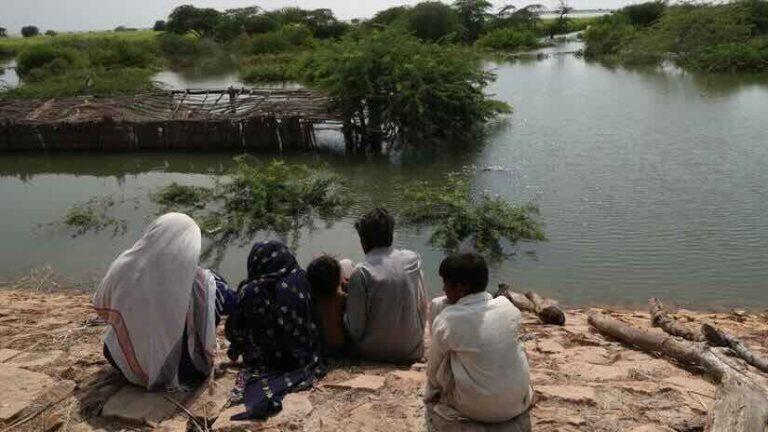
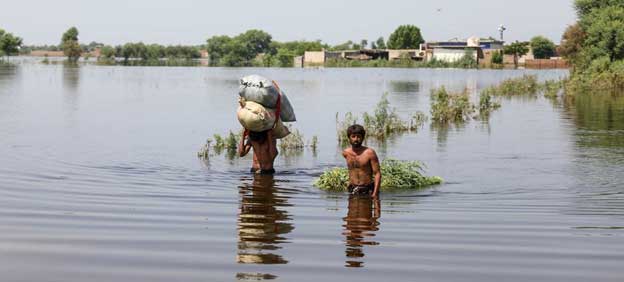
    Beyond human casualties, the floods inflicted widespread infrastructure damage. Destroyed roads, bridges, homes, and schools are leaving communities cut off and impoverished. The heavy losses are not confined to Khyber Pakhtunkhwa; earlier in the season, widespread flooding had affected Punjab and Balochistan – leaving scores dead and hundreds of thousands displaced.

    The crisis has exposed Pakistan’s vulnerability to climate-driven disasters, underlining a pressing need for international support, flood-resilient infrastructure, and proactive adaptation strategies. Experts assert that without strengthened flood mitigation, Pakistan could become ground zero for climate impacts – despite its negligible contribution to global emissions.

    As skies remain ominous – with further rainfall expected through early September – the risk of additional flooding looms large. Authorities’ vow to accelerate relief distribution, including tents, rations, and medical aid, though survivors say current provisions – such as food and just seven tents – are grossly insufficient.

    “This natural disaster lays bare a tragic convergence: intensified monsoon patterns driven by climate change, fragile infrastructure, and inadequate planning,” a senior official connected with Pakistan’s National Disaster Management Authority says. “In the days ahead, rebuilding physically and psychologically will be a Herculean task – for communities in Buner and beyond.”

    The resilience of Pakistan, its governance structures, and the response of the international community may well define how such disasters are mitigated in a warming world.

    Struggle at the Edge: Afghan Refugees and the Ripples of Pakistan’s Border Offensive

    In the capital, tens of thousands of Afghan nationals navigate life under persistent precarity. Of Islamabad’s approximately 41,520 registered Afghan citizens, many retain memories of earlier refuge.

    As Pakistani security forces mounted a fresh offensive near its rugged northwestern frontier, Afghan refugees residing in Islamabad and Rawalpindi find themselves once again in the shadows of wider upheaval. Their enduring struggle – through shifting geography, legal limbos, and social distrust – resonates deeply amid military operations displacing tens of thousands across the border.

    On August 12, 2025, Pakistan launched a “targeted operation” in Bajaur, an erstwhile stronghold of the Pakistani Taliban (TTP), situated along the porous Afghan border. Supported by helicopter strikes and mountainous terrain surveillance, the offensive aimed solely at insurgent hideouts to avoid civilian harm. Yet, within days nearly 100,000 residents were displaced, seeking refuge in government shelters or with distant relatives. The Khyber Pakhtunkhwa government responded with ₨ 50,000 (about US$175) compensation per displaced family and relief distributed by charities like Al-Khidmat Foundation.

    A mortar strike in Mamund – within Bajaur – tragically marshalled the human toll of the operation: two children and their mother were killed, igniting local protests as hundreds refused to bury them until a formal investigation ensued.

    Islamabad’s Afghan Refugees: Between Memory and Margins

    Meanwhile, in the capital, tens of thousands of Afghan nationals navigate life under persistent precarity. Of Islamabad’s approximately 41,520 registered Afghan citizens, many retain memories of earlier refuge. Before 2006, some 25,000 had lived in a refugee camp within the Islamabad Capital Territory. After its closure, they were relocated – and today, roughly 7,335 Afghan refugees are documented as residing in Rawalpindi.

    The tribal news network, TNN, spotlighted these stories, painting a vivid tableau of perseverance amid hardship: displaced families living in makeshift shelters, sustaining daily lives with undocumented jobs, deepening their roots in communities even as their status remains uncertain.

    Legal Limbo, Police Raids, and Deportation Fears

    In recent months, anxieties have surged. Beginning in January, Afghan refugees in Islamabad and Rawalpindi have faced intensifying police raids, detentions, and mounting expulsion orders. Civil society reports that at least 190 people were rounded up in March 2025 in Islamabad alone.

    Simultaneously, the Afghan Embassy, backed by UN observations, accused Pakistan of executing a covert campaign of mass expulsions – targeting nearly 4 million Afghans who fled protracted conflict or the 2021 Taliban resurgence. The deportation impulse has spared few: refugees who arrived years ago, those with UNHCR or POR cards, even long-settled families. As one human rights defender said, “When we wake up we are afraid that the police will show up … People are afraid to leave their house”.

    Amid all this, Pakistan’s government distinguishes between documented and undocumented Afghans, urging expedited resettlement or deporting those whose cases remain pending past a March 31 deadline – even as processing delays linger.

    Life at a Lingering Disadvantage

    Caught in administrative crosshairs, many Afghans say their lives have become akin to indefinite limbo. As one refugee, Shaharzad, described, “The space in which I live has shrunk to the small courtyard of a guesthouse … reminiscent of my life under Taliban rule,” in tones that echo her yearning for agency and security.

    The broader policy picture deepens this uncertainty: Pakistan is not a signatory to the 1951 Refugee Convention nor its 1967 Protocol. Hence, Afghan asylum seekers are processed under the Foreigners Act of 1946. UNHCR conducts status determination under a cooperation agreement – yet recognition, protection, and resettlement remain sluggish and inconsistent.

    A Landscape of Resilience – and Risk

    Against this backdrop, two realities collide: the military push to contain militant threats emanating from Afghan soil and the prolonged struggle of Afghan refugees to simply exist in peace.

    In southern Balochistan’s Zhob district, another engagement saw Pakistani forces eliminate 33 militants in a pre-dawn raid near the Afghan border, under Operation Sarbakaf or similar clearance missions. These cross-border crackdowns reflect Islamabad’s increasingly aggressive posture to deter militants. Yet Afghan refugees—many of whom have no links to insurgency—are inadvertently ensnared in collateral fallout through heightened security, suspicion, and crackdown policies.

    Hope amid High Stakes

    The Afghan refugees in Islamabad and Rawalpindi remain emblematic of resilience. Their lives – shaped by years of displacement, adaptation, community, and longing – reflect a quest not just for safety, but for belonging. While military operations in Bajaur underscore the volatility of the region, the refugees’ ongoing ordeal sparks urgent calls for humane governance.

    Their stories ask: can a nation facing violent threats afford to forego compassion toward people who have long called it home? As Pakistan navigates security pressures and administrative imperatives, the paths available to Afghan refugees – whether integration, formal protection, or safe resettlement – are not just policy choices, but testaments to shared humanity.

    UN Says Sri Lanka has ‘Historic Opportunity’ to End Impunity, Deliver Justice

    In a new report issued on Wednesday, UN human rights chief Volker Türk said the Government’s pledges to deliver justice, restore the rule of law, and eliminate discrimination and divisive politics must finally yield concrete results.

    By Vibhu Mishra

    Sri Lanka’s Government has a “historic opportunity” to end decades of impunity and deliver justice for victims of past violations, the UN human rights office (OHCHR) has said, urging sweeping reforms to address crimes committed during and after the country’s civil war.

    The 26-year conflict, from 1983 to 2009, pitted Government forces against the separatist Liberation Tigers of Tamil Eelam (LTTE) – more commonly referred to as the Tamil Tigers – who sought an independent state for the island’s Tamil minority in the north and east.

    The civil war claimed an estimated 80,000 to 100,000 lives, and thousands more were forcibly disappeared, their fates still unknown. Hundreds of thousands were also displaced from their homes.  

    The final months were among the bloodiest, with tens of thousands of civilians killed in indiscriminate shelling, extrajudicial executions, and other violations of international law committed by both sides.

    Turn Pledges into Results

    In a new report issued on Wednesday, UN human rights chief Volker Türk said the Government’s pledges to deliver justice, restore the rule of law, and eliminate discrimination and divisive politics must finally yield concrete results.

    “Today, an opportunity presents itself for Sri Lanka to break from the past,” he said. “It now needs a comprehensive roadmap to translate these commitments into results.”

    The report follows Mr. Türk’s recent visit to Sri Lanka, where he met officials, civil society, victims’ groups, political parties and religious leaders, and travelled to Trincomalee, Jaffna and Kandy – among the worst-affected areas.

    It calls for a clear acknowledgment of the violations, abuses and crimes committed – including during the civil war – and recognition of the State’s responsibility and that of its security forces personnel as well as non-state armed groups, including the LTTE.

    “The pain and suffering of victims remains palpable and their demands for truth and justice must be addressed,” Mr. Türk stressed.

    Call for Sweeping Reforms

    The report recommends comprehensive security sector reform and broader constitutional, legal and institutional changes to meet international human rights obligations. It welcomes the planned creation of an independent Public Prosecutor’s office.

    It also urges the establishment of a dedicated judicial mechanism, including an independent special counsel, to handle cases involving serious human rights violations and grave breaches of international humanitarian law.

    Other recommendations include the release of military-held land in the north and east, repeal of the Prevention of Terrorism Act (PTA), and the release of long-term PTA detainees – some imprisoned for decades.

    The report further calls for amendments or repeal of several restrictive laws, including those relating to data and online safety, NGOs, and civil and political rights.

    International Support

    While the primary responsibility for investigating and prosecuting crimes lies with the Government, the report calls for complementary international support.

    It urges UN Member States to contribute to accountability and reconciliation efforts, leveraging OHCHR’s  strengthened capacity to undertake related work.

    “These measures are crucial to realizing the Government’s vision of ‘national unity’ and above all ensuring there can never be recurrence of past violations,” Mr. Türk said.

    Image: UNICEF/Suzanne Davey

    Climate Change Intensified Deadly Pakistan Floods, New Study Finds

    The WWA findings echo warnings from the Intergovernmental Panel on Climate Change, which has consistently projected an increase in heavy monsoon rainfall for South Asia.

    Human-caused climate change has made the intense monsoon rains that devastated northern Pakistan in June and July this year significantly more severe, according to a new analysis by the World Weather Attribution (WWA) initiative.

    The report, released this week by an international team of scientists from Pakistan, Sweden, Denmark, the UK and the US, concludes that the 30-day peak rainfall that triggered flash floods in Punjab and Khyber Pakhtunkhwa was about 15 per cent heavier because of global warming. In some climate models that better capture regional dynamics, the increase could be as high as 40–80 per cent, in line with observed data.

    The study examined rainfall from late June to late July 2025, a period when repeated storms inundated the cities of Islamabad, Rawalpindi, Chakwal, Faisalabad, Peshawar and Lahore. Rawalpindi endured its worst single day of rain on July 17, with 230 millimetres falling in less than 24 hours, overwhelming drainage systems and forcing mass evacuations along the Lai Nullah.

    “This is not a rare event anymore,” the scientists said, noting that in today’s climate, warmed by 1.3°C since pre-industrial times, such rainfall is expected roughly every five years. “But climate change has clearly increased its intensity, making its impacts deadlier.”

    A High Human Toll

    The National Disaster Management Authority (NDMA) reported that by August 3, 300 people had died and 715 had been injured nationwide. Punjab recorded 162 fatalities and Khyber Pakhtunkhwa 70. Children accounted for nearly half the deaths – 140 in total – with many killed when homes collapsed under the weight of waterlogged mud walls and rooftops.

    Over 1,600 houses were damaged or destroyed, and at least 164 deaths were directly caused by building collapses. “The vulnerability of children and the fragility of informal housing are two urgent issues Pakistan must address if it is to prevent similar tragedies,” the WWA report stressed.

    From Local Deluge to Global Signal

    The researchers analysed both observational data and climate model simulations to determine the role of human activity in altering rainfall extremes. Historical observations showed a 22 per cent increase in 30-day maximum rainfall compared to a pre-industrial climate, driven largely by fossil fuel emissions and deforestation.

    Climate models, though less accurate in simulating South Asia’s complex monsoon systems, still indicated a 12 per cent increase in intensity. Two models that realistically represented aerosols and irrigation – both major factors in regional rainfall – showed much larger increases of 40–80 per cent.

    “The best available evidence suggests that climate change made this season’s extreme rainfall substantially more intense,” the report noted, adding that uncertainties remain high but point to a consistent upward trend in risk.

    A Mirror of the Past, a Warning for the Future

    The 2025 floods come just three years after the historic 2022 disaster, which submerged a third of Pakistan, killed more than 1,700 people and caused an estimated US$30 billion in losses. While that catastrophe was driven by an exceptional accumulation of monsoon rain over weeks, the WWA findings show that shorter, intense bursts of rain – like those seen this year – are also being turbocharged by climate change.

    Looking ahead, the study warns that under a 2.6°C warmer world, 30-day extreme rainfall events of this magnitude are likely to become more frequent and even more intense.

    An Urban Vulnerability Crisis

    Nearly half of Pakistan’s 96.4 million urban residents live in informal settlements, many perched on riverbanks, drainage basins, or dry riverbeds. These areas are particularly exposed to flash floods. Homes, often built with mud and rice husk, are no match for the force of monsoon waters.

    Weak enforcement of building codes, unchecked construction in flood zones and deforestation have amplified the scale of damage, especially in Punjab’s major cities.

    “The scale of devastation is as much about where and how people live as it is about the rain itself,” said one of the study’s co-authors. “Climate change is the accelerant, but poor planning is the fuel.”

    Adaptation Imperatives

    The WWA report urges Pakistan to prioritise adaptation measures alongside recovery efforts. These include:

    • Nature-based solutions such as reforestation and wetland restoration to absorb floodwaters.
    • Stricter land-use planning to prevent construction in high-risk areas.
    • Improved early warning systems and evacuation protocols to move people out of danger before floods hit.

    Following the 2022 floods, the country estimated its adaptation needs at US$152 billion for 2023–2030. Yet most of this remains unfunded. The gap is not just financial but institutional, with disaster resilience often sidelined in urban development.

    Rainfall Map Highlights Extreme Saturation

    Satellite and ground measurements from June 24 to July 23 show rainfall accumulations of up to 688 mm in some parts of Punjab and Khyber Pakhtunkhwa. The highest concentrations, depicted in dark blue on WWA’s rainfall map, coincide with areas that suffered the highest casualties and housing losses.

    With the monsoon season ongoing, NDMA officials warn the figures for deaths and damage may yet rise. Communities downstream of swollen rivers are on high alert for evacuation orders.

    A Regional Red Flag

    The WWA findings echo warnings from the Intergovernmental Panel on Climate Change, which has consistently projected an increase in heavy monsoon rainfall for South Asia. Pakistan’s combination of rapid urbanisation, fragile housing and climate-driven intensification of extreme weather makes it one of the world’s most at-risk nations.

    “The floods of 2025 are not an anomaly,” the report concludes. “They are a signal of the climate we now live in – and the future we must prepare for.”

    For Pakistan, the challenge now is twofold: to address the immediate humanitarian needs of thousands of displaced people, and to commit to the long-term infrastructure, environmental and policy changes needed to withstand the storms of a warming world.

    As one Rawalpindi emergency official put it: “Climate change is rewriting the rules of our monsoon. If we don’t adapt, the floods will keep coming – and the cost will only rise.”