More

    In Lok Sabha: 2,454 Cold Storage Projects Sanctioned Under AIF for ₹8258 crore

    Farmers Producer Organisations have been on boarded onto digital platforms such as e-NAM, the Open Network for Digital Commerce, and the Government e-Marketplace to enhance digital market access.

    The minister of state for agriculture and farmers’ welfare, Ramnath Thakur said in the Lok Sabha on Wednesday that 2,454 cold storage projects have been sanctioned under AIF with sanctioned amount of ₹8258 crore until 30 June 2025.

    The minister said that under the agriculture infrastructure fund (AIF), support is extended to cold storages in agri-export clusters, at farm gate level, for small and marginal farmers as well as big businesses, APMCs/mandis to reduce post-harvest losses and increase farmers’ returns. Entrepreneurs, cooperatives, PACS, and SHGs are actively availing AIF support for establishing cold chain logistics, often integrated with grading, sorting, and packaging units.

    He said that in 2016, the government had launched a National Agriculture Market (e-NAM) to enable the farmers to transparently sell their produce to large number of buyers accessing multiple markets electronically.

    Farmers Producer Organisations (FPO) have been on boarded onto digital platforms such as e-NAM, ONDC (Open Network for Digital Commerce), and GeM (Government e-Marketplace) to enhance digital market access.

    Tomato, Onion, Potato

    The Reserve Bank of India (RBI) introduced RBI working Paper series to present research in progress of the staff members and are disseminated elicit comments and further debate. Working Paper titled “Vegetables Inflation in India: A Study of Tomato, Onion and Potato (TOP)” estimates farmers’ share in the consumer rupee to be about 33 per cent for tomatoes, 36 per cent for onions and 37 per cent for potatoes.

    In another RBI’s Working Paper “Price Dynamics and Value Chain of Fruits in India”, the farmers’ share in the consumer rupee is estimated at around 31 per cent for bananas, 35 per cent for grapes and 43 per cent for mangoes in the domestic value chain. The factors such as number of marketing channels, higher marketing cost and margins, and high perishability affects the price realisation by the farmers.

    Together with enhancing production and productivity, the government’s priority has been to take various measures to improve marketing of agricultural produce and reduce post-harvest losses to ensure remunerative prices for farmers’ produce, the minister said.

    Besides, the minister said, under the MIDH, for holistic development of horticulture sector, including reducing of harvest and post-harvest losses, financial assistance is provided for various horticulture activities. These include setting up of Pack Houses, Integrated Pack House, cold storages, Reefer Transport, Ripening Chamber etc.

    He said that the component is demand/entrepreneur driven for which Government assistance in the form of credit linked back ended subsidy is available at the rate of 35 per cent of the project cost in general areas and at the rate of 50 per cent of the project cost in hilly and scheduled areas through respective State Horticulture Mission(s).

    UK Envoy Visits Kabul Amid Calls for Closer Engagement with Afghanistan

    Britain is among the countries that have not yet recognised the interim government of Afghanistan. However, it has expressed willingness for limited engagement in order to facilitate aid delivery and manage migration and terrorism-related crises.

    In a significant diplomatic development, the United Kingdom’s Special Envoy for Afghanistan, Richard Lindsay, has completed his first official visit to Kabul, signalling a potential shift in the UK’s approach toward limited engagement with the Islamic Emirate of Afghanistan.

    Britain remains among the countries that have yet to officially recognise the Taliban-led interim government. However, the UK has maintained an open stance on limited engagement to support humanitarian aid delivery and address shared concerns over migration and terrorism.

    During his visit, Lindsay held meetings with officials of the Islamic Emirate as well as key figures from Afghan civil society. Reflecting on the trip, he posted on X (formerly Twitter): “Just returned from my first visit to Kabul as UK Special Envoy. Met a range of Afghans including Taliban ministers, and discussed issues including health, and returnees from Iran and Pakistan. Afghanistan will only move forward through inclusive dialogue and engagement.”

    Analysts and observers in Afghanistan welcomed the visit as a positive step. Ahmad Khan Andar, a political analyst, commented, “The Islamic Emirate must strengthen its political, economic, and diplomatic relations with all neighboring, regional, and global countries, especially the world powers. The UK envoy’s remarks are crucial for fostering a constructive relationship.”

    Fazl-ur-Rahman Oria, another analyst, noted that the UK’s engagement could have a broader impact. “Diplomatic relations with the UK will be elevated, and Afghan diplomats will initially be accepted at a lower level. This will influence Europe and Western nations, which often align with UK policies.”

    Idris Mohammadi Zazai added, “The Islamic Emirate of Afghanistan has realised that it must maintain direct and structured relations with all countries, including the West.”

    In a related development, the acting Minister of Refugees and Repatriation recently met with the UK’s chargé d’affaires and other British diplomats. He stated that the Islamic Emirate had addressed global concerns regarding Afghanistan and urged Western nations, including the UK, to move forward with formal recognition.

    The visit comes shortly after Russia became the first country to officially recognise the Taliban government earlier this month, adding to the pressure on Western nations to reconsider their stance.

    While full diplomatic recognition may still be distant, Lindsay’s visit marks a cautious but noteworthy thaw in UK-Afghanistan relations.

    In Rajya Sabha: 34 Ombudsmen to Address Discrimination Against PLHIV

    NACO has strengthened its nationwide awareness campaigns on HIV/AIDS through multimedia and targeted outreach. A nationwide rollout of 1,619 projects to support high-risk populations in HIV response is also being undertaken, the minister told the Rajya Sabha.

    The union minister of state for health and family welfare, Anupriya Patel stated in a written reply in the Rajya Sabha on Tuesday that the government is taking a number of steps for creating awareness on HIV/AIDS.

    She said that the national AIDS Control Organisation (NACO) has strengthened its nationwide awareness campaigns on HIV/AIDS through multimedia and targeted outreach. A nationwide rollout of 1,619 projects to support high-risk populations in HIV response is also being undertaken, she said.

    Patel said that these efforts are further reinforced through outdoor media such as hoardings, bus panels, information kiosks, folk performances, and IEC (Information, Education, and Communication) vans. Additionally, digital platforms and social media are actively leveraged to ensure broader engagement and awareness generation, especially among younger and tech-savvy audiences.

    At the interpersonal level, the minister told the Rajya Sabha that awareness around HIV/AIDS is promoted through training and sensitization programmes targeting Self-Help Groups, Anganwadi Workers, ASHAs, members of Panchayati Raj Institutions, and other key stakeholders. These grassroots-level interventions play a vital role in fostering community-level awareness and behavioural change.

    In addition, High Risk Groups including Female Sex Workers (FSW), Men having Sex with Men (MSM), People Who Inject Drugs (PWID), Hijra/Transgender (TG) individuals, truck drivers, and migrants are specifically addressed through 1,619 Targeted Intervention projects across the country. These interventions are designed to ensure equitable access to prevention, testing, treatment, and care services for the most vulnerable populations. Through this multi-tiered communication strategy, NACO continues its commitment to eliminating stigma, expanding access to services, and ultimately achieving the goal of ending the AIDS epidemic as a public health threat.

    Patel said that a 84 per cent decline has been reported in mother-to-child HIV transmission and 74.5 per cent drop in transmission rate between 2010 and 2024, outpacing global reduction of 56.5 per cent.

    Ombudsmen

    The minister said that thematic campaigns have been launched to promote inclusivity and safeguard rights of people living with HIV and that ombudsmen have been appointed in 34 states and union territories to address discrimination against People Living with HIV.

    She said that these efforts underscore the government’s commitment to protecting the rights and dignity of PLHIV and promoting an inclusive and supportive environment for all.

    The minister also said that to prevent discrimination against People Living with HIV (PLHIV), thematic campaigns are being implemented across the country. These campaigns aim to raise awareness, reduce stigma, and foster inclusivity in diverse settings, including workplaces, healthcare facilities, educational institutions, and communities at large.

    The minister also updated the Rajya Sabha on India’s achievements in eliminating and controlling major infectious diseases. She said that the country has seen a 17.7 per cent reduction in TB incidence (from 237 to 195 per lakh) and 21.4 per cent decline in mortality (from 28 to 22 per lakh) achieved between 2015 and 2023.

    The minister mentioned that there was a 78.1 per cent drop in Malaria cases and 77.6 per cent decline in deaths recorded from 2015 to 2024.

    Further, kala-azar elimination target of less than 1 case per 10,000 has been achieved in 633 blocks in 54 districts ahead of 2030 SDG target; status maintained to date, she said, adding that the Case Fatality Rate (death per 100 cases) for dengue sustained below 1 per cent since 2008 (0.13 per cent in 2024).

    Ayushman Arogya Mandirs

    Simultaneously, the union minister of state for health and family welfare,  Prataprao Jadhav  informed the Rajya Sabha that the construction of 17,788 sub-centres as Ayushman Bharat- Health and Wellness centres has been provisioned under the Centrally Sponsored Scheme (CSS) component of the Pradhan Mantri Ayushman Bharat Health Infrastructure Mission (PM-ABHIM).

    The Ayushman Bharat- Health and Wellness centres are now know as Ayushman Arogya Mandirs (AAMs), the minister said.

    Besides these, the Pradhan Mantri Ayushman Bharat Health Infrastructure Mission (PM-ABHIM) will also undertake establishing 11,024 health and wellness centres, now (Urban-AAMs) in urban areas with a focus on slum and slum like areas are envisioned in the five years period (2021-26).

    Other initiatives being undertaken by PM-ABHIM include:

    • Establishment of 3,382 Block Public Health Units (BPHUs) at the block level;
    • Establishment of 730 District Integrated Public Health Labs (IPHLs) in the country, wherein each district will have one such lab; and,
    • Establishing 602 Critical Care Hospital Blocks (CCBs) in all districts with population more than 5 lakhs

    Administrative approvals have been accorded to States/UTs for FY 2021-22, FY 2022-23, FY 2023-24, FY 2024-25 & FY 2025-26 for an amount of ₹33081.82 Crore for construction/strengthening of 10,609 Building less-AAMs; 5,456 Urban Ayushman Arogya Mandirs (U-AAMs); 2,151 Block Public Health Units (BPHUs); 744 Integrated Public Health Laboratories (IPHLs) at District level and 621 Critical Care Hospital Blocks (CCBs).

    Extreme Heat Crisis Threatens Lives of Urban Workers in Bangladesh, Report Warns

    Fear of retaliation has left most workers silent, says Climate Rights International. In combination, unsafe working conditions, lack of hydration, and repressive workplace policies create a deadly environment for thousands of workers across Dhaka.

    A new report released Tuesday by Climate Rights International (CRI) warns that extreme heat fuelled by the climate emergency is endangering the lives and livelihoods of Bangladesh’s urban workforce, particularly those labouring in garment factories, construction sites, and the transport sector.

    The 172-page report, “My Body Is Burning: Extreme Heat and Labor Rights in Bangladesh,” documents harrowing stories of workers collapsing, falling ill, and even dying from heat exposure, often while producing goods for multinational corporations. CRI’s findings lay bare the urgent human cost of climate change intersecting with systemic labour rights abuses in one of the world’s most climate-vulnerable countries.

    CRI’s press release says, “Inside garment factories, on construction sites, and in the middle of city streets, workers are fainting, falling ill, and even dying in extreme temperatures, with little protection from the government, employers, or the multinational corporations that profit from their labour.”

    “The clothes we wear every day, including the ones you’re wearing right now, may have been sewn by someone who collapsed or lost consciousness on the job, cried from exhaustion, or suffered long-term health consequences from working in an unbearably hot and humid factory without access to cooling or safe drinking water for hydration,” said Brad Adams, Executive Director at Climate Rights International. “Clothing brands and the factories that supply them need to take urgent steps to provide additional breaks, access to cooling, and hydration.”

    Climate Rights International interviewed over 50 workers across three of the most heat-exposed industries in Dhaka, all of whom described suffering from a range of heat-related health problems – including dehydration, itchiness, headaches, fever, diarrhea, nausea, vomiting, muscle cramps, loss of muscle control, temporary vision loss, chest pain, heart palpitations, and loss of consciousness. 

    Though China, the US, Gulf States, and European countries are primarily responsible for the emissions that have fuelled the climate crisis, Bangladesh is among the countries hardest hit by its impacts. The capital, Dhaka, is uniquely vulnerable to heat impacts and has experienced record-breaking temperatures in recent years. In 2025, the heat index in Dhaka reached almost 48°C (around 118°F), triggering a city-wide health advisory. 

    “Bangladesh is being hit hard by extreme heat resulting from a climate emergency it did almost nothing to cause,” said Adams. “This crisis is being driven by the relentless greenhouse gas pollution of wealthy, industrialized countries, and fossil fuel companies – while frontline communities, including those in international supply chains, are left to suffer, with the fewest resources to cope. This is climate injustice in a nutshell.”

    Labour Rights Abuses

    For many of Dhaka’s workers, avoiding the heat isn’t an option. Climate Rights International found that many workers were forced to continue their jobs in extreme conditions. Most workers interviewed had either fainted in the heat themselves or witnessed a colleague collapse on the job. Several workers reported losing consciousness more than once. Some workers had even watched colleagues die in the heat. 

    Workers suffered mentally and emotionally in the extreme temperatures, reporting feelings of confusion, desperation, hopelessness, and anxiety – some crying while at work. Several shared that they believed they might die on the job. Climate Rights International found that these impacts often resulted in productivity losses, as workers reported moving and working more slowly in the heat, with some needing to work as much as 50 percent more time to complete tasks during the hot season. Others had to cut shifts short due to heat-related illness, forfeiting pay they couldn’t afford to lose.

    The harms of occupational heat exposure are being made worse by systemic labour rights abuses, many of which limit workers’ ability to protect themselves from the heat. CRI documented numerous reports of forced and unpaid overtime; denial of breaks, even in extremely hot conditions; and verbal abuse and threats in response to slowing down or attempting to rest as a result of heat exhaustion or related illness. 

    Many workers lacked access to toilets at their worksites, experienced pressures not to use the bathroom frequently, or feared that the water supply at work was unsafe. These challenges led some workers to deliberately restrict their water intake so as not to have to use the bathroom as frequently, leading to dehydration, urinary tract infections, and increasing their risk of other, more severe heat-related health issues. 

    Workers told CRI that they were afraid to speak up about these abuses, and about their suffering in the heat, for fear of retaliation.

    In combination, these abuses left workers with limited options to protect themselves from extreme temperatures and ultimately compounded the safety risks of the heat, Climate Rights International said. Without the implementation of effective workplace adaptation measures, heat exposure will continue to make already dangerous working conditions worse, compounding vulnerabilities for Dhaka’s workers. 

    Lack of Corporate Accountability

    Multinational corporations play a part in these conditions. Some international clothing brands that source from Bangladesh continue to demand short production timelines and low prices, pushing factories to overwork employees with little regard for conditions on the ground. Almost none take effective steps to ensure their suppliers protect workers from the risks of extreme heat.

    A small number of companies, including VF Corporation, the parent company of major brands like The North Face, Vans, and Timberland, have embedded heat protections into their supplier codes of conduct. Yet even in supply chains where some heat-protections are mandated by a code of conduct, it is clear that additional efforts are needed, and that enforcement must be tightened. CRI spoke with workers who claimed their factories supplied a number of brands, including VF, H&M, C&A, Walmart, Primark, and New Look, that are taking at least some steps intended to protect workers from hot workplace conditions. All of those workers told CRI that, despite the measures brands are taking, they continue to suffer in the heat.  

    Gig and Construction Workers

    Meanwhile, app delivery platforms operating in Dhaka provide few protections for gig workers, who bike long distances and carry heavy loads through peak heat conditions in exchange for poverty wages and limited benefits. CRI spoke with workers from foodpanda, a subsidiary of Delivery Hero, who described the physical, emotional, and financial hardship of delivery work in extreme heat conditions. Construction companies in the city are similarly failing to protect workers from rising temperatures, and failing to provide safe water and bathroom access at job sites, making it practically impossible for workers to stay properly hydrated at work. 

    In Lok Sabha: Improved Access to Education and Training to Empower Women

    Women constitute more than 80 per cent of beneficiaries under Jan Sikshan Sansthan. Besides, there are 19 National Skill Training Institutes (NSTI) and more than 300 ITIs exclusively for women.

    The Government of India is taking proactive steps to improve employability of the youth of the nation, including women, through skill development, Jayant Chaudhary, minister of state of the ministry of skill development and entrepreneurship said in the Lok Sabha on Tuesday.

    The minister said that under the Skill India Mission (SIM), the ministry of skill development and entrepreneurship (MSDE) delivers skill, re-skill and up-skill training through an extensive network of skill development centres under various schemes, viz. Pradhan Mantri Kaushal Vikas Yojana (PMKVY), Jan Sikhshan Sansthan (JSS), National Apprenticeship Promotion Scheme (NAPS) and Craftsman Training Scheme (CTS) through Industrial Training Institutes (ITIs), to all the sections of the society including women, across the country. The Skill Indian Mission aims to enable the youth of the country to get future ready and equipped with industry relevant skills.

    Special provisions have been made for meeting expenditure on conveyance and boarding and lodging as well as enhanced post placement support for women to encourage the participation of women in skill development programmes. Further, the minister said, PMKVY 4.0 prioritizes and provides special focus to projects that emphasize women as primary beneficiaries. Training programs in sectors like electronics, retail, healthcare, beauty and wellness, handicrafts and apparel are structured to attract higher participation from women. Skill hubs and special projects actively encourage women’s enrolment. He said that the projects are designed to align with local skill demands, creating opportunities for rural women to participate and benefit from skill development schemes.

    Significant Representation of Women

    This inclusive approach ensures significant representation and benefit for women in skill training programs across the country, the minister informed the Lok Sabha. Also, in NAPS Scheme, the introduction of trades in services sector (Optional Trade) has led to the significant improvement in the women participation in apprenticeship. The percentage of women apprentices has observed an increase from 22.79 per cent in 2024-25 to 25.80 per cent in 2025-26.

    As part of the JSS scheme, the focus is on women and other vulnerable sections. Women constitute more than 80 per cent of beneficiaries under JSS. Also, there are 19 National Skill Training Institutes (NSTI) and more than 300 ITIs exclusively for women. Government of India approved 30 per cent reservation of seats for women candidates in all ITIs (government and private) in all courses and these seats could be filled based on the general reservation policy of each respective states and union territories.

    MSDE has launched a joint initiative named NAVYA – Nurturing Aspirations through Vocational Training for Young Adolescent Girls. NAVYA is a pilot initiative aimed at equipping adolescent girls aged 16-18 years with a minimum qualification of class 10, with vocational training mainly in non- traditional job-roles. This is in collaboration with ministry of women and child development.

    Further, MSDE in collaboration with the Women Entrepreneurship Platform of NITI Aayog, launched the Swavalambini – a women entrepreneurship programme in February 2025 in the north eastern states of Assam, Meghalaya, Mizoram and also in Uttar Pradesh and Telangana. The programme aims to cultivate an entrepreneurial mindset among female students through Entrepreneurship Awareness Training (EAP) and Entrepreneurship Development Programme (EDP). National Institute for Entrepreneurship and Small Business Development (NIESBUD), Noida and Indian Institute of Entrepreneurship (IIE), Guwahati are the implementing agencies for the programme.

    In Lok Sabha: India Committed to Combat Climate Change

    The minister said that India has reached a major milestone in its energy transition by achieving the NDC goal of 50 per cent of its installed electric power capacity from non-fossil fuel sources; five years ahead of the committed timeline.

    The Government of India stands committed to combat climate change and has taken a number of measures to meet India’s Nationally Determined Contribution (NDC) submitted to the United Nations Framework Convention on Climate Change (UNFCCC) under the Paris Agreement, the union minister of state for environment, forest and climate change, Kirti Vardhan Singh told the Lok Sabha in a written reply on Monday.

    These measures include various policies, schemes and programmes launched from time to time, to scale up India’s action on both, the adaptation and mitigation fronts. Appropriate measures are being taken for promotion of clean energy, especially renewable energy, enhancement of energy efficiency, development of less carbon intensive and resilient urban centres, promotion of waste to wealth, safe, smart, and sustainable green transportation network, creating carbon sink through enhanced forest and tree cover, and strengthening climate resilience in agriculture, water resources, coastal regions, health, and disaster management. India’s climate action also captures citizens’ contributions including those through the activities under ‘Mission LiFE’ (Lifestyle for the Environment) and initiatives like ‘Ek Ped Maa Ke Nam.’

    The government is implementing the National Action Plan on Climate Change (NAPCC), which is the overarching framework for climate actions. The NAPCC comprises of nine national missions in specific areas of solar energy, enhanced energy efficiency, water, agriculture, Himalayan Ecosystem, sustainable habitat, green India, human health, and strategic knowledge on climate change. The Government is also supporting States and Union Territories (UTs) for preparation of their respective State Action Plans on Climate Change (SAPCC), in line with the strategy outlined in the NAPCC.

    Major Milestone

    To support the objectives of NAPCC, 34 States and UTs have prepared their SAPCCs to address State specific actions, the minister said. The missions under the NAPCC have been revised to align with India’s Nationally Determined Contribution (NDC) under the Paris Agreement. The missions under NAPCC are at various stages of implementation.

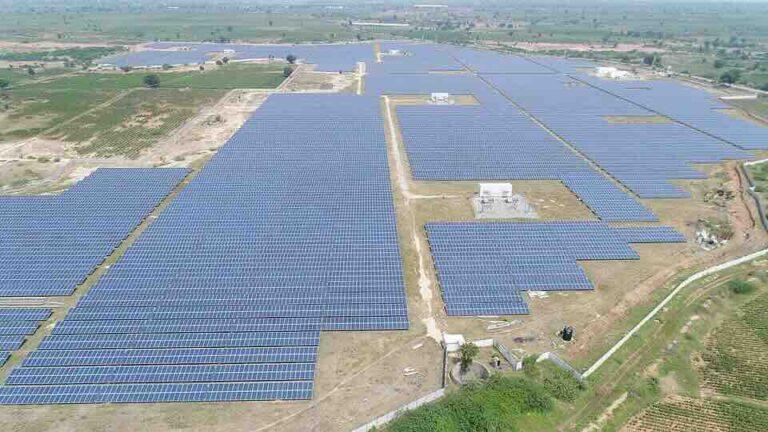
    As a result, installed capacity of solar energy in India has increased more than 41 times, from 2.82 GW in 2014 to 116.25 GW in June 2025. India has progressively continued decoupling of economic growth from greenhouse gas emissions. The emission intensity of India’s gross domestic product (GDP) has reduced by 36 per cent between 2005 and 2020.

    In June 2025, India has reached a major milestone in its energy transition by achieving the NDC goal of 50 per cent of its installed electric power capacity from non-fossil fuel sources; five years ahead of the committed timeline of 2030. This remarkable achievement highlights the Government’s commitments to climate action and sustainable growth to become Viksit Bharat@2047. India’s progress is particularly noteworthy on the global stage. Despite having one of the lowest per capita emissions in the world, India stands out as one of the few G20 nations, which are on track to fulfil or even surpass its NDC’s goals.

    Image: Wikimedia

    Uncertainty Looms Over 1 Million Afghan Refugees in Pakistan as PoR Cards Expire

    As Pakistan debates its next steps, time is running out for more than a million Afghan refugees. Without swift and compassionate action, not only will the lives of countless individuals be upended, but the fragile stability of the region could face further setbacks.

    More than one million Afghan refugees in Pakistan are facing a critical moment as their Proof of Registration (PoR) cards expired on end-June this year, leaving their legal status in doubt and triggering widespread anxiety about deportation and financial ruin.

    While the Pakistani government has announced its stand. Mohsin Naqvi, Pakistan’s interior minister said that the refugees had to leave the country. However, there has been no official confirmation of this stand, and bureaucrats say that the remarks were made during an informal meeting with journalists. They said that Pakistan is still weighing its options.

    In the meantime, Afghan refugees with decades-long ties to the country fear a wave of forced returns or the collapse of livelihoods built over generations. For many, the lack of renewed documentation threatens not just their stay, but also their property, businesses, and personal security.

    As Pakistan debates its next steps, time is running out for more than a million Afghan refugees. Without swift and compassionate action, not only will the lives of countless individuals be upended, but the fragile stability of the region could face further setbacks.

    For now, Afghan families wait – grappling with a fearsome choice: stay and risk deportation or leave behind everything they’ve built in search of uncertain safety.

    A Life in Limbo

    The government of Pakistan has yet to announce a formal decision on whether the expired PoR cards will be renewed. According to Minister of State for Interior Talal Chaudhry, discussions are ongoing at the federal cabinet level. One proposal under consideration includes a temporary extension of PoR cards, while another envisions long-term visas under a new foreign investment-oriented visa policy.

    “The new visa policy aims to attract investment into Pakistan, and Afghan nationals could benefit from its provisions,” Chaudhry said. But without concrete action, refugees remain trapped in limbo.

    The policy vacuum has left hundreds of thousands of Afghan families fearing abrupt deportations or forced sales of homes and businesses. Many say they would be compelled to liquidate assets at a fraction of their value – assets painstakingly built over decades.

    Economic Displacement

    The economic footprint of Afghan refugees in Pakistan is significant. Ahmad Shah, a businessman from the tribal region, estimates that members of his Dostokhel tribe alone own properties in Peshawar – registered under others’ names – worth an estimated Pakistani Rs. 52 billion. He further revealed that the tribe contributed over Rs 14 billion in foreign remittances last year.

    “If the government decides to deport all Afghan refugees, we’ll be forced to sell our benami properties for pennies,” Shah said.

    Organizations like Beyond Boundaries, an initiative of the Center for Research and Security Studies (CRSS), are urging the government to adopt a more humane and economically sound approach. “These refugees have contributed immensely to Pakistan’s economy,” said a representative from the initiative. “They should not be stripped of their rights or wealth through abrupt deportation orders.”

    Beyond Boundaries is pushing for streamlined visa procedures and long-term integration policies that would allow Afghan-origin entrepreneurs to continue their economic contributions to the country.

    Escalating Deportations and Fear

    Despite a slowdown in broader repatriation efforts in recent months, deportations have intensified again since April 1, as part of Pakistan’s “Plan for the Repatriation of Foreigners in an Illegal Situation.” The crackdown, initially launched in October 2023, is driven by mounting security concerns following a surge in terrorist attacks.

    According to UN estimates, nearly 1.3 million Afghans have been repatriated since late 2023. Of the approximately 1.6 million Afghan refugees still residing in Pakistan, more than one million currently have expired PoR cards.

    Deportations are often sudden and disruptive. Many returnees describe hurried exits and asset losses, while those who remain in Pakistan report living under constant fear of police raids – even those with valid documentation.

    “People are hiding, children are being pulled out of school, and entire communities are terrified,” said an aid worker based in Islamabad. “It’s not just undocumented migrants who are affected; even legal refugees are being caught up in this dragnet.”

    International Alarm

    The rapid pace and scale of returns have drawn concern from global humanitarian leaders. During a recent visit to a major border crossing, Roza Otunbayeva, Special Representative of the UN Secretary-General (SRSG) for Afghanistan, sounded the alarm over what she described as a humanitarian crisis in the making.

    “What should be a positive homecoming moment for families who fled conflict decades ago is instead marked by exhaustion, trauma, and profound uncertainty,” said Otunbayeva. “Afghanistan cannot absorb this shock alone.”

    So far in 2025, more than 1.3 million Afghan returnees have crossed back into their homeland, further straining a country already battling widespread poverty, drought, and economic collapse. Nearly 70 per cent of Afghanistan’s population lives in poverty, and the influx of returnees threatens to overwhelm limited local resources.

    Women and children are especially vulnerable. Many return without access to healthcare, education, or safe housing, while humanitarian operations in Afghanistan remain critically underfunded.

    Otunbayeva called for immediate and integrated international action – both to support humanitarian needs and to stabilise returnee communities. She urged donors and regional governments not to abandon the Afghan people.

    “Do not turn away,” she said. “What we are witnessing are the direct consequences of unmet global responsibilities. We must act now – with resources, with coordination, and with resolve.”

    The United Nations is advocating for regional cooperation, particularly among Pakistan, Iran, and Central Asian countries, to ensure that repatriation is voluntary, dignified, and safe.

    “Afghanistan’s stability hinges on shared responsibility,” Otunbayeva concluded. “The cost of inaction will be measured in lives lost and conflicts reignited.”

    Amit Shah Directs Formation of a Multi-Sectoral Central team to tackle Natural Disasters in Himachal

    In order to support the affected people of the state, the union government has already released the first instalment of Central share of Rs. 198.80 crore to Himachal Pradesh from State Disaster Response Fund

    The union home minister, Amit Shah, on Sunday directed the formation of a multi-sectoral central team in view of the frequency and intensity of natural disasters in Himachal Pradesh.

    In a meeting chaired by the union home minister, it was observed that the state has witnessed an increase in the frequency and intensity of cloudbursts, flash floods, landslides and torrential rainfall, causing widespread loss of life, damage to infrastructure, livelihoods and environmental degradation in the state.

    Union home minister Amit Shah immediately ordered to constitute a multi-sectoral Central Team comprising experts from National Disaster Management Authority (NDMA), Central Building Research Institute (CBRI) Roorkee, Indian Institute of Tropical Meteorology (IITM) Pune, Geologist, and Indian Institute of Technology (IIT) Indore. 

    Further, in the wake of the flood, flash floods and landslides during South West monsoon 2025 in different parts of Himachal Pradesh, Central Government has already deputed an Inter-Ministerial Central Team (IMCT) in advance, without waiting for their memorandum, for on-the-spot first-hand assessment of the damages. The IMCT is visiting the affected areas of the State from 18-21 July 2025.

    The home minister said that the central government stands firmly with the states in times of disasters without any discrimination. In this direction, a high-level committee chaired by Shri Amit Shah has already approved an outlay of ₹2006.40 crore to Himachal Pradesh for recovery and reconstruction in areas affected by disasters like floods, landslides and cloudbursts for the year 2023, and has also released first instalment of Rs. 451.44 crore on earlier this month.

    Further, in order to support the affected people of the state, the union government has already released the first instalment of Central share of Rs. 198.80 crore to Himachal Pradesh from State Disaster Response Fund (SDRF) on 18 June 2025, for relief measures of immediate nature.

    The union government has also provided all logistic assistance to all states, including Himachal Pradesh, including deployment of requisite National Disaster Response Force (NDRF) teams, Army teams and Air Force support. A total of 13 teams of NDRF are deployed in the state for rescue and relief operations.

    Dhaka, Washington Sign Pact to Strengthen Bangladesh’s Food Security

    The pact signifies not just an influx of grain, but a strategic reinforcement in Bangladesh’s food security architecture – bridging immediate needs and long-term resilience.

    Bangladesh and the United States have formally signed a Memorandum of Understanding (MoU) aimed at securing Bangladesh’s food future by facilitating the annual import of 700,000 metric tonnes of high-quality US wheat over the next five years.

    The MoU, inked by Bangladesh’s DG Food Md Abul Hasanat Humayun Kabir and Joseph K. Sowers from US Wheat Associates, underscores a deepening partnership in food and trade. Food Adviser Ali Imam Majumder highlighted that this agreement would “foster deeper trust and expand trade cooperation between the two countries, ultimately benefiting both countries”. The signing ceremony took place at the Ministry of Food in Dhaka, with dignitaries from both nations, including US Ambassador Tracey Ann Jacobson, looking on.

    Agreement timely – and necessary

    Despite strong cereal harvests in 2023–2024, roughly 23.6 million Bangladeshis – nearly 16 per cent of the population – endured high levels of acute food insecurity between October and December 2024. Recent Integrated Food Security Phase Classification (IPC) analyses show that between April and December 2025, some 15.5 million people faced severe acute food gaps.

    Bangladesh’s agricultural sector is routinely battered by floods, cyclones, and erratic monsoon rains. Cyclone Remal’s heavy floods in mid-2024 alone affected 19 million people, damaging crops, livestock, and infrastructure. In addition, domestic rice prices in Dhaka were 8 per cent higher in April 2025 than the previous year, fuelled by inflation and rising production costs.

    According to FAO data, the 2024 harvest produced an above‑average 66.5 million tonnes of cereals: 60.2 Mt of rice, 5.2 Mt of maize, and 1.2 Mt of wheat. Production of Boro paddy and maize is promising for 2025. However, Bangladesh still requires around 9 Mt of cereal imports annually – mainly wheat (~6.7 Mt), plus rice and maize.

    Supporting Resilience

    This five-year US – Bangladesh wheat import agreement arrives at a critical juncture. Amid persistent acute and chronic food insecurity, market volatility, and environmental unpredictability, the pact ensures critical backup supplies. But to truly secure food sovereignty, Bangladesh must continue diversifying production, strengthening climate-resilient systems, and enhancing income pathways for its most vulnerable.

    The pact signifies not just an influx of grain, but a strategic reinforcement in Bangladesh’s food security architecture – bridging immediate needs and long-term resilience.

    • Supply stability: The annual import of 700,000 tonnes of US wheat will help Bangladesh navigate periods when domestic output is threatened by climate-induced losses or global price swings.
    • Affordable pricing: Arranged at competitive rates, the wheat imports will help moderate bread flour (atta) prices – already down 10 per cent year-on-year in April 2025 – while relieving pressure on rice prices.
    • Long-term partnership: This deal reinforces trade ties and aligns with Bangladesh’s strategic national food plans, such as the Food Planning and Monitoring Unit’s IPC efforts backed by FAO since 2012.
    • Chronic food insecurity: Around 36 per cent of Bangladeshis live with mild chronic food insecurity, with 43 per cent facing some level of chronic food stress.
    • Rice-centric economy: Rice remains essential – accounting for 97 per cent of food grain production and providing ~60 per cent of dietary calories. Bangladesh ranks as the world’s third-largest rice producer but remains vulnerable to climate damage and periodic losses.
    • Global cooperation: The MoU follows Bangladesh’s collaboration with FAO and other partners on agricultural projects – such as developing resilient crops and improving livestock and biosecurity measures.

    Sri Lanka: Police Top Brass Faces Major Shake-Up Amid Unprecedented Misconduct Scandals

    Tennakoon’s tenure has been further marred by a controversial police operation in December 2023 at the W15 hotel in Weligama. The raid, supposedly part of an anti-drug initiative, led to a shootout between rival police units.

    Sri Lanka’s police force is facing an unprecedented leadership crisis following the dismissal of its second-highest-ranking officer and the looming impeachment of its Inspector-General. The back-to-back developments mark the most significant shake-up in the 159-year history of the country’s law enforcement establishment.

    On Thursday, the National Police Commission unanimously voted to dishonourably discharge Senior Deputy Inspector-General (SDIG) Nilantha Jayawardena, once tipped to become the next Inspector-General of Police. His dismissal stems from his catastrophic failure as head of the State Intelligence Service (SIS) to prevent the 2019 Easter Sunday bombings, which killed at least 279 people and injured more than 500 in a coordinated wave of attacks targeting churches and hotels.

    Jayawardena, who held the top intelligence post during the attacks, faced a disciplinary inquiry led by a three-member panel chaired by a retired High Court judge. The inquiry found him guilty on all seven charges brought against him, including negligence, obstruction of justice, and misconduct.

    His career began to unravel after the Supreme Court ruled in early 2023 that he had deliberately attempted to shield former President Maithripala Sirisena from accountability, despite clear evidence that intelligence warnings had been received 17 days before the bombings. The Court held Jayawardena personally liable for the state’s inaction and ordered him to pay Rs. 75 million in compensation to the victims.

    Accountability Proceedings

    In a further blow to his credibility, investigators revealed that Jayawardena had erased all data from his mobile phone before handing it over, later claiming he had reset the device to factory settings for his wife’s use. Although Sri Lanka’s Criminal Investigation Department (CID) possesses the technology to recover deleted data, this capability was reportedly not utilized—raising further questions about deliberate interference in the investigation. Investigators remain convinced that Jayawardena acted to shield the former president and misled authorities.

    His dismissal follows his suspension by the National Police Commission on July 18, 2024. Official sources suggest that this termination may only be the beginning of wider accountability proceedings, including potential criminal charges.

    Meanwhile, attention is now squarely focused on Inspector-General of Police (IGP) Deshabandu Tennakoon, who could soon become the first police chief in Sri Lanka’s history to be impeached.

    Tennakoon, appointed IGP in November 2023, is facing a slew of allegations, including overseeing what one parliamentary inquiry described as a “criminal enterprise” masquerading as a law enforcement body. His conduct is currently under review by a three-member panel appointed by Parliament and chaired by Supreme Court Justice Preethi Padman Surasena. A decision is expected within the coming week.

    Parliament unanimously voted on April 8 to initiate a formal inquiry into Tennakoon’s actions. Among the most serious accusations is his involvement in the torture of a suspect in custody—rubbing menthol balm on the victim’s genitals—a practice condemned by Sri Lanka’s Supreme Court prior to his appointment. Despite the court’s ruling, Tennakoon was promoted to the highest post in the force, backed strongly by then Public Security Minister Tiran Alles and endorsed by President Ranil Wickremesinghe.

    Rival Police Units

    Tennakoon’s tenure has been further marred by a controversial police operation in December 2023 at the W15 hotel in Weligama. The raid, supposedly part of an anti-drug initiative, led to a shootout between rival police units. No narcotics were recovered from the scene, prompting public outrage and internal scrutiny.

    In July 2024, the Supreme Court suspended Tennakoon pending the resolution of a separate legal challenge to the legitimacy of his appointment. The Constitutional Council vote that confirmed his appointment has since come under fire for ignoring prior judicial warnings and public concerns.

    Should the parliamentary inquiry find Tennakoon guilty of misconduct, Parliament will be required to vote on his removal. Both the ruling party and the opposition have expressed bipartisan support for his ouster—an unusual show of unity in Sri Lanka’s often fractious political landscape.

    “The message is clear: impunity will no longer be tolerated, regardless of rank,” said one senior lawmaker, speaking on condition of anonymity. “The credibility of our police force is at stake, and the public has had enough.”

    These dual cases signal a broader reckoning for Sri Lanka’s law enforcement hierarchy. With its top two officers either sacked or facing imminent removal, the police department is expected to undergo significant structural reforms.

    Analysts suggest the shake-up could pave the way for a new generation of leadership within the force—one that is hopefully more accountable and insulated from political patronage.

    As Sri Lanka continues to grapple with the long-term fallout of the Easter bombings and systemic issues in its justice system, the removal of Jayawardena and the potential impeachment of Tennakoon represent watershed moments in the country’s efforts to restore public trust in its institutions.

    For the victims of the 2019 attacks, and for those affected by police misconduct in more recent years, justice may finally be beginning to take its course.