More

    This is 2022 and Iran is Set to ‘Finger Guillotine’

    A sawing contraption will cut off four fingers of the right hands of seven men convicted of burglary in Tehran. But the medieval form of punishment is only matched by silence from capitals across the globe.

    The government of Iran has arranged to amputate the fingers of seven prisoners convicted of burglary. The men were sentenced to “have four fingers on their right hands completely cut off so that only the palms of their hands and their thumbs are left”.

    Grisly images shared on social media show the torture device – a meat slicer look-alike made to cut an offenders’ digits. It is being called the ‘finger guillotine’.

    Seven of the eight have been identified as Hadi Rostami, Mehdi Sharafian, Mehdi Shahivand, Amir Shirmard, Morteza Jalili, Ebrahim Rafiei, Yaghoub Fazeli Koushki were sentenced to “have four fingers on their right hands completely cut off so that only the palms of their hands and their thumbs are left.”

    The men are currently held at the Greater Tehran Central Prison and the whereabouts of one of them, Hadi Rostami, are unknown after he was transferred from the prison on 12 June. All of them are likely to be transferred to Tehran’s Evin Prison, where reports indicate a finger-cutting guillotine was recently installed and reportedly used on 31 May to amputate the fingers of an eighth prisoner.

    An earlier attempt to transfer the men took place on 11 June but was halted due to resistance from fellow prisoners.

    Iranian civil society organizations report that at least 237 people, mostly from poorer segments of society, have been sentenced to amputations in Iran between 1 January 2000 and 24 September 2020, and that sentences have been carried out in at least 129 cases.

    International silence

    Government’s across the world are silent. Not a word of condemnation has been heard from any country’s capital or from any of the diplomatic missions in Tehran.

    The sole voice of concern has come from the UN’s human rights arm, the Office of the United Nations High Commissioner for Human Rights (OHCHR), which, on Wednesday voiced a concern over the Iranian government’s plans and urged authorities to call off the planned amputations.

    Criticising the plans to use this irreversible form of corporal punishment, OHVHR spokesperson Ravina Shamdasani said: “We are deeply concerned by the likely imminent amputation of the fingers of eight men convicted of burglary in Iran and urge the Iranian authorities to call off the planned amputations.”

    She added: “We also call on Iran to urgently revise its criminal penalties to do away with any form of corporal punishment, including amputations, flogging and stoning, in line with its obligations under international human rights law and consistent with recommendations of UN human rights mechanisms.”

    Iran’s Islamic regime has faced criticism in the past from the UN for carrying out torture and cruel punishments, with Shamdasani pointing to the fact that the country is party to the International Covenant on Civil and Political Rights.

    “Iran is a State Party to the International Covenant on Civil and Political Rights, which under Article 7 prohibits torture, or other cruel, inhuman or degrading punishment,” she said.

    “As the UN Human Rights Committee, which oversees implementation of the Covenant, has clearly stated, the prohibition of torture, or other cruel, inhuman or degrading treatment or punishment encompasses forms of corporal punishment.”


    Image: Amnesty International

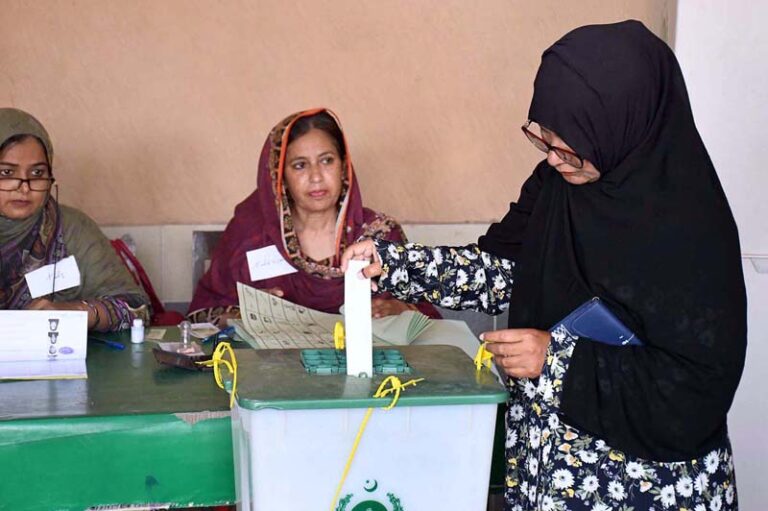
    A Look at Democracy in Pakistan

    Generals and judges may not be the richest people in the country but powerful they are. So there emerges a nexus among the powerful and the rich who co-opt newcomers who nurse fancy dreams.

    Naazir Mahmood

    The National Institute of Pakistan Studies (NIPS) at the Quaid-i-Azam University Islamabad, as I discovered, is a rare centre of debate and discussion where one can speak freely. When Prof Saeed Rid and Dr Manzoor Veesrio invited me to speak there about the crisis of democracy in Pakistan, I was a bit reluctant. The hesitation evaporated when they assured me that NIPS was unlike many other public-sector institutes where one can only spout an official version of history. Among the audience were students, research scholars and some faculty members. There was a lively discussion followed by an animated question and answer session that made the exercise worthwhile. Here is a brief recap of what we discussed.

    I began by suggesting that one could inspect the crisis of democracy in any country using various lenses. One is of course the academic lens that political scientists, researchers, students, and teachers may use. A good academic lens prevents us from making tall claims about democracy – or, for that matter, about any other political system. It makes us careful about our claims and leaves us sceptical about concepts such as democracy. Looking through an academic lens we realize that there can be various interpretations of the same concept including democracy.

    Other democracies

    For the sake of conceptual clarity, we need to read more and continue educating ourselves. We may call this an education in democracy that clarifies the differences and similarities between the norms and values that a society practices and holds dear. Academically speaking, it is possible that a society professes a certain set of values but practises an entirely different sets of norms. The US prides itself in being one of the earliest modern democracies, if not the first democracy in the past three centuries. Academically that may be true, but when one examines it with some other lenses, it falls short of being a democracy on other accounts.

    The same academic lens can also be applied to China which is a peoples’ republic, or India which claims to be the world’s largest democracy. Be it America, China, or India, all will disagree with an academic challenge to how democratic they are. An academic lens also helps us look at democracy as it has evolved historically in various countries. A historical approach to democracy through an academic lens helps us understand what has gone before and how democracy has developed or not developed in certain countries over the past decades and centuries.

    Aristotle’s Pakistan?

    To bring about a positive change in anything, we firstly need to grasp its intricacies. Plato wrote his famous treatise ‘The Republic’ but detested democracy. He preferred philosophy over doxa – doctrine or dogma. He also explained the need to differentiate between knowledge and opinion. Yet, he used democracy in a pejorative sense as ‘mob rule’.

    An academic lens shows that Aristotle in his book ‘Politics’ differed with his teacher Plato and thought that democracy was necessary but not sufficient. Aristotle warned that aristocracy – if not checked – may degenerate into oligarchy (rule of the powerful) and plutocracy (rule of the rich).

    Applying that lens to understand the crisis of democracy in Pakistan only goes to emphasise how correct Aristotle was. The word ‘aristocracy’ is derived from arête, meaning excellence. In the Roman Senate of yore, aristocracy was supposed to be the rule of excellent leaders. But first it was overturned by tyrants such as Julius Caesar and then turned into oligarchy and plutocracy. In fact, it was always so. What we call democracy in Pakistan is to a great extent the rule of the powerful and wealthy elite. Oligarchy and plutocracy are not the same, though they complement each other.

    In Pakistan, generals and judges may not be the richest people in the country but powerful they are. So there emerges a nexus among the powerful and the rich who co-opt newcomers who nurse fancy dreams. Some may project themselves as ‘thorough professionals’ for a while. But the system then sucks them in and as they become part of the powerful and rich elite, they have little left in common with their own humble background. They are soon weaned away from their innocence and ideals.

    …or Machiavelli’s Pakistan?

    Then there was Cicero, a contemporary of Brutus and Julius Caesar, who proposed that the ideal government is a blend of aristocracy, democracy, and monarchy. In his ‘mixed state’, a monarch was supposed to be the best man in society that the aristocracy elected in the senate. The monarch and the senate had the support of the common people who should also have a role and voice in democracy. In today’s bicameral model, a lot comes from the mixed government ideal of Cicero.

    Discussing all this, we realize that an academic lens gives us hope and ability to overcome our fears about the future of democracy in Pakistan, as also in the rest of the world. The academic lens helps us simplify things without distortion. While trying to understand the crisis of democracy, an academically inclined person or observer is able to disentangle complex ideas and relate them to the world today.

    Essentially, democracy emerges as a system where it becomes a duty of all citizens to actively participate in public life and state affairs. Democracy finds itself in crisis whenever and wherever all citizens are not allowed to actively participate in public life.

    Pakistan today is an exposition of just how many people are entitled to participate in public life – the system excludes most and includes very few. The same applies to state affairs which become a no-go area for most citizens, resulting in a crisis of sorts not only in Pakistan but in many other countries that claim to be democracies of a certain type – Machiavelli discussed these issues threadbare in ‘Discourses’ in 1517 (published in 1530).

    Atrocities of modern democracies

    An academic lens gives us an orientation of all this. We learn how American, British, and French experiences with democracy have gone through revolutions and wars and in that process fought against oppression and royalty. In the England of the 1640s, there was a civil war that toppled and beheaded the king but then Oliver Cromwell who led the war against royalty himself became a tyrant and called himself Lord Protector. The French Revolution that began in 1789 went through a reign of terror.

    The American Revolution that aimed at terminating the British royal domination succeeded in achieving independence and establishing a democracy of sorts. Yet, a look at the atrocities that ‘democratic’ America committed against slaves makes one ponder over its democratic credentials. The same applies to the present-day US which violates international laws, invades other countries, kills millions around the world, and then calls itself a champion of democracy. Academically speaking, the US may be a democracy, but looked at through other lenses, it is deficient in democracy in many a way.

    The Soviet Union came into being as a Soviet democracy but ended up as a highly centralized ‘dictatorship of the proletariat’ that morphed into a personal fief of Stalin and then of the Communist Party. So the point is not to be dejected and depressed about the crisis of democracy in Pakistan; it is a work in progress like in all other countries. It may not be an ideal system but the alternatives in history have been much worse.

    To be continued

    The writer holds a PhD from the University of Birmingham, UK. He tweets

    @NaazirMahmood and can be reached at  [email protected]


    Pets Help AIDS Survivors Through Two Pandemics

    A study examining the role of pets during both, the COVID-19 and the HIV/AIDS pandemics has thrown up interesting observations and could reignite the dog-versus-cat debate among animal lovers.

    By Amy Quinton

    During the early days of the COVID-19 pandemic, many people turned to their pets to help them feel less lonely and isolated. Researchers at the University of California, Davis, wanted to learn what role pets played in helping those who had already survived one pandemic, the HIV/AIDS pandemic, and were now dealing with another. Respondents were recruited from networks serving long-term HIV/AIDS survivors.

    “The underlying question in our minds has always been: What role do pets play for people who are so isolated and suffering so much stigma?” said Professor Lynette Hart with the UC Davis School of Veterinary Medicine. She led a study that examined whether long-term HIV/AIDS survivors fared better during the AIDS or COVID pandemic and if pets helped reduce their feelings of isolation, sadness and stigma.

    Dog owners felt less alone, isolated

    The study, published in the journal Animals this week, found that HIV/AIDS survivors felt far more grief, isolation and stigma during the AIDS pandemic than during COVID. It also found that older men, despite experiencing adversity during the AIDS pandemic, were able to cope better during COVID. This was especially the case if they had a dog.

    “I don’t think dogs are magically making them better, but dogs are making a difference,” said Hart. “The older HIV/AIDS survivors may also have more coping strategies, and dogs are part of that. They take their dogs on walks and meet people in their neighbourhood and remain more socially connected.”

    Hart said while dog owners felt less alone and isolated during both pandemics, cat owners felt especially alone, isolated and unsupported even though they were universal in saying their cat comforted them.

    She said supportive pet care service organizations that keep people with special needs and their companion animals together could focus particularly on providing cat owners greater support.

    Many HIV/AIDS survivors lack family support

    The researchers conducted a national survey of mostly older male HIV/AIDS survivors. These long-term survivors are defined as people who developed HIV before 1996. More than 1.2 million people live with AIDS in the U.S., and 300,000 of them became infected before 1996. HIV/AIDS survivors are also 30 per cent more likely to become infected with COVID than the general population.

    Long-term survivors reported that they felt their experiences living through the AIDS pandemic were more challenging than their experiences during COVID; the AIDS pandemic had major impacts for decades, and the COVID pandemic for only one to two years. Very few of these HIV/AIDS survivors received family support in either pandemic; however, these respondents were connected online with other long-term survivors. Hart said that may partially explain these somewhat surprising results, with older men, especially those with dogs, doing so well.

    “I think it’s important to know that long-term survivors of AIDS are resilient and to get to that point, they had to be. A lot of them would say that animals were a big part of that,” said study co-author Ken Gorczyca, founding veterinarian for Pets Are Wonderful Support, or PAWS. “Having an animal companion gave many a sense of purpose in life, to take care of them, especially at a time in the 1980s and ’90s when AIDS was so bad and there was virtually no support from government or many times from your family.”

    Gorczyca added that experiencing a second pandemic brought many long-term survivors “PTSD feelings,” but the power of animal companionship was now well documented. He said many social and animal support agencies and the government stepped up immediately to keep providing support services.


    Image: Hippopx, licensed to use under Creative Commons Zero – CC0

    Taliban: The Return of Misogynistic Gynophobes in Afghanistan

    The Taliban’s priority is not saving the economy and the country from these disasters. Instead, it didn’t take too long for the fundamentalist group to focus and display its misogynistic gynophobia towards the women and girls in the country, under the cloak of religion.

    By Sania Farooqui

    Gynophobia is defined as an intense and irrational fear of women or hatred for women. It may be characterized as a form of specific phobias, which involves a fear centred on a specific trigger or situation, which in the case of gynophobia, is women.

    After 20 years of war in Afghanistan, in August 2021, the Taliban completed their shockingly rapid and forced advance across Afghanistan by capturing Kabul on 15 August. What followed this takeover has since then been a series of human rights violations, humanitarian catastrophe, roll back on women’s rights and media freedom – the foremost achievements of the post-2001 reconstruction effort. The country has also been enduring a deadly humanitarian crisis, with malnutrition spiking across the country with 95 per cent of households experiencing insufficient food consumption and food insecurity, according to the rights group, Human Rights Watch. The number of malnourished children in Afghanistan has more than doubled since August with some dying before they can reach hospitals.

    According to another report, nine million people are close to being afflicted by famine in Afghanistan and millions have gone months without a steady income. Afghanistan’s economic crisis has loomed for years; the result of poverty, conflict and drought. This, combined with a sudden drop in international aid, has made it more tough for Afghans to survive. Added to this list is illicit opium trade and the worrying drug addiction, an ongoing challenge for the country.

    Series of bans

    However, the priority for the Taliban was not saving the economy and the country from these disasters. Instead, it didn’t take too long for the fundamentalist group to focus and display its misogynistic gynophobia towards women and girls in the country under the cloak of religion, as was expected. What Taliban fears, yet again, is the sight of Afghan girls attending school beyond the sixth grade, a decision directly affecting 1.1 million secondary school girls, depriving them of a future.

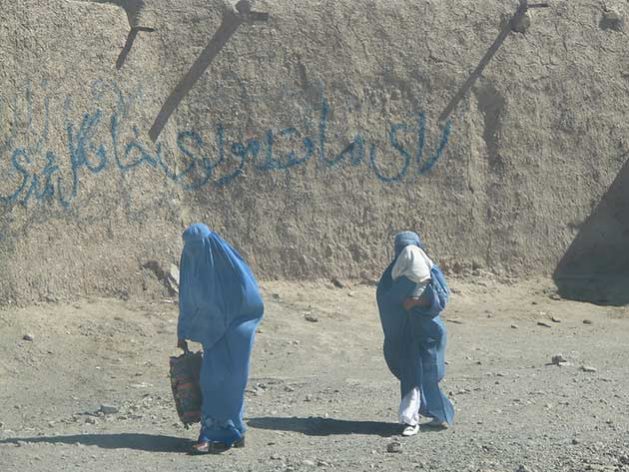
    Taliban officials have also announced women and girls would be expected to stay home and if they were to venture out, they would have to cover in all-encompassing loose clothing that only reveals their eyes, making it one of the harshest controls on women’s lives in Afghanistan since it seized power in August last year. They fear women journalists and have ordered all female newscasters to cover their faces while on air.

    The international rights groups, Human Rights Watch, says the list of Taliban violations of the rights of women and girls is long and growing. Amongst many that have been listed, include appointment of an all-male cabinet, abolition of the ministry of Women’s Affairs and replacing it with the Ministry of Vice and Virtue. They have also imposed a series of bans, banning girls from pursuing secondary education, banning women from all jobs, blocking women from traveling long distances or leaving the country alone. “They issued new rules for how women must dress and behave. They enforce these rules through violence,” it stated in this report.

    Women in Afghanistan since last August have been fighting back, through protests demanding the right to work and to go to school.

    Do Also Read: Strongmen Versus Strong Women – How Differently Did They Handled COVID-19?

    Mere condemnation won’t do

    “We don’t need any more condemnation”, says Sara Wahedi, CEO and Founder of Ehtesab, Afghanistan’s first civic technology set up. “It is infuriating because most Afghan women knew this would happen, and we told the international stakeholders if they wanted to deliberate with them (the Taliban) then to have very specific points that would keep the Taliban accountable. That never happened, and now there are these flood gates where they are doing what they want to do, they are repeating everything from 1996.”

    “We know what is happening is terrifying, it’s unjust. It’s inhumane. What is the international community going to do to facilitate accountability measures now?” Wahedi asks.

    In 2021, Wahedi was named one of the Next Generation leaders by TIME Magazine, her mobile app, Ehtesab, crowd-sources verified reports of bombings, shootings, roadblocks and city-service issues, helping residents of Kabul to stay safe. As a young tech entrepreneur, Wahedi says she is amongst the few who got her education and the freedom to do what she wanted, as the times were different

    “I feel incredibly guilty, I think most Afghan women who are out of Afghanistan, who were able to pursue education to the highest level feel a crippling sense of anxiety and guilt. Education is ingrained in our psyche right from the time we are born from our parents, but for our country it was also different because we have seen war, we have seen instability, it is even more pertinent to get out of this life, all Afghan girls, they know this and to have it taken away from them so violently, it’s obviously affected their mental health, and I feel an inexplicable level of guilt to be in this position,” Wahedi says.

    Naughty women

    Women and girls have continued to bear the brunt of restrictions under the Taliban and their imposed doctrine, as seen in the past. The United Nations Human Rights Office of the High Commissioner (UNHCR) in this report said, “What we are witnessing today in Afghanistan is the institutionalized, systematic oppression of women.”

    In an interview given to CNN, Sirajuddin Haqqani, Afghanistan’s acting Interior Minister and Taliban’s co-deputy leader since 2016 said, “We keep naughty women at home.” After being pressed to clarify his comments, he said: “By saying naughty women, it was a joke referring to those naughty women who are controlled by some other side to bring the current government into question.”

    With the Taliban coming into power, there is no doubt that the women in Afghanistan will continue to face an uncertain future and in order to avert the irreversible damage being done to the female population, international communities and organizations must not just condemn the Taliban, but also hold them accountable and speak up on behalf of Afghan women, before they are all forced into invisibility. Whatever little progress was made by women in Afghanistan, the Taliban have through their rules and policies reversed them, pushing women towards invisibility and exacerbated inequalities against women. What they fear – women being educated, being seen, having an identity, agency, work, job, rights, freedom and their ability to hold them accountable. The realities of life under the Taliban control, whatever the timeline may be, remains the same.


    Sania Farooqui is a New Delhi based journalist, filmmaker and host of ‘The Sania Farooqui Show’ where she regularly speaks to women who have made significant contributions to bring about socio economic changes globally.


    This piece has been sourced from Inter Press Service

    Death Sentences in Myanmar

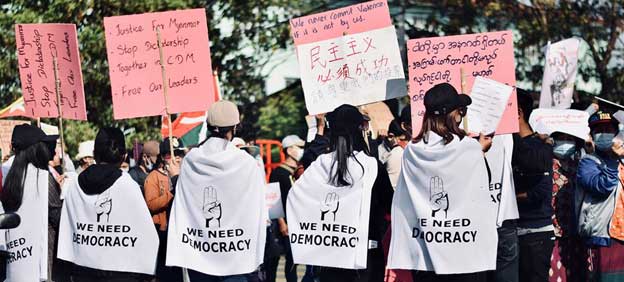
    Governments and civil society from across the world have called for dropping plans for the executions urged on the international community to step up intervention efforts.

    By Jan Servaes

    “The illegal military junta provides further evidence to the international community of its disregard for human rights as it prepares to hang pro-democracy activists,” said Thomas Andrews and Morris Tidball-Binz, UN special rapporteurs in Myanmar for human rights and extrajudicial arbitrary executions, respectively on June 10, 2022.

    “These death sentences, handed down by an illegal court of an illegal junta, are a vicious attempt to instill fear in the people of Myanmar.”

    While at least 114 people have been sentenced to death (including two minors) since the coup of February 1, 2021, only 73 are actually in custody. The others are on the run or in hiding. The military junta announced last week that it will continue with four executions.

    The four individuals were tried and convicted in military tribunals and reportedly had no access to legal assistance during their rejected appeals, in violation of international human rights law.

    These are 53-year-old Ko Jimmy, also known as Kyaw Min Yu, the leader of the 88 Generation Student Group that stood up against the regime of former dictator Ne Win, and the ousted 40-year-old NLD MP Phyo Zayar Thaw. Phyo Zayar Thaw, a legislator for the National League for Democracy from 2012 to 2020, made a name for himself as a member of Acid, Myanmar’s first hip-hop band. Acid paved the way for other Myanmar hip-hop artists.

    They were sentenced to death in January by a military tribunal along with two other anti-coup opponents on charges of treason and terrorism. The other two men are Hla Myo Aung and Aung Thura Zaw, who were convicted in April 2021 of killing a junta informant in Hlaing Tharyar municipality.

    Disturbing, says UN

    According to the Assistance Association for Political Prisoners, the military junta will not say where they have been holding Phyo Zayar Thaw and Ko Jimmy since their arrest. Their family fears that they have been severely tortured. If the lynchings continue, they will be Myanmar’s first judicial executions since 1988.

    In a June 9 press release in the junta daily Global New Light of Myanmar, the junta defended its decision by stating that it “has every right to exercise all powers and authorities granted by the state constitution”.

    Junta spokesman Major General Zaw Min Tun stated in two separate interviews with RFA Burmese that appeals against the death sentences have been completed and dismissed. So there is no more chance for leniency and “the execution will be carried out”.

    Many foreign governments and organizations have condemned the decision. The spokesman for the UN Secretary-General, Stéphane Dujarric, said he was “deeply disturbed” by the decision and, referring to an article in the Universal Declaration of Human Rights, called it a “blatant violation of the law on the life, liberty and security of the person”.

    “The Secretary-General reiterates his call for respect for people’s rights to freedom of opinion and expression and also to drop all charges against those arrested on charges related to the exercise of their fundamental freedoms and rights,” Dujarric added.

    Instilling fear

    The embassies of France and the United States condemned the announcement, as did the government of national unity NUG. Even Cambodian Prime Minister Hun Sen, who is this year’s deputy ASEAN chairman, has urged Myanmar’s military government not to carry out the planned executions of the four political prisoners, suggesting the move may further isolate the junta and raise further obstacles to restore peace.

    Also Amnesty International called the news about the resumption of executions ‘shocking’. They called on authorities to “immediately” drop the plan and called on the international community to step up intervention efforts.

    “The death sentence has become one of many horrific ways in which the Myanmar military is trying to instil fear among those who oppose its rule and would contribute to grave human rights violations, including deadly violence against peaceful protesters and other civilians,” the organisation stated.

    The UN also stressed that the imposition of the death penalty took place alongside the military’s extrajudicial killings of civilians, now estimated at nearly 2,000.


    Jan Servaes was UNESCO-Chair in Communication for Sustainable Social Change at the University of Massachusetts, Amherst. He is editor of the 2020 Handbook on Communication for Development and Social Change.


    This piece has been sourced from Inter Press Service
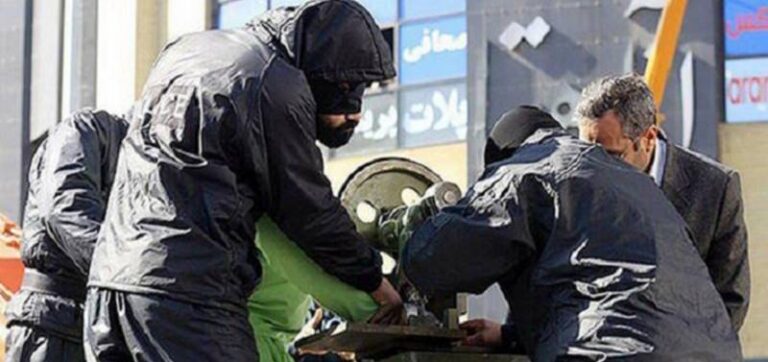
    Image: Unsplash  /  Pyae Sone Htun


    Dirty Air ‘Cuts South Asia Life Expectancy by Five Years’

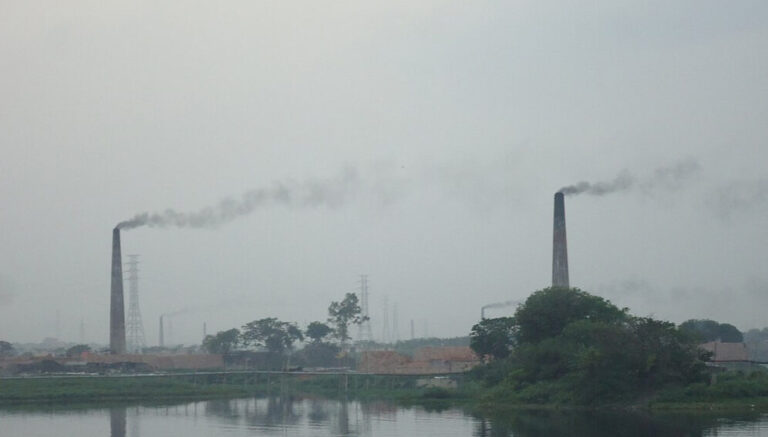
    Bangladesh emerges as the world’s most polluted country according to the Air Quality Life Index (AQLI) released by the University of Chicago’s Energy Policy Institute. Residents of Delhi may lose 10 years of life expectancy to air pollution.

    By Ranjit Devraj

    People living in South Asia could lose about five years of their lives on average unless air quality improves to WHO-prescribed levels, according to a new assessment.

    Released Tuesday by the University of Chicago’s Energy Policy Institute, the Air Quality Life Index (AQLI) report for 2022 says that air pollution is the biggest threat to human life globally. The Index finds that particulate air pollution takes 2.2 years off global average life expectancy comparable to that of smoking, and far exceeding that of alcohol use, unsafe water, HIV/AIDS and terrorism.

    Despite ambitious schemes to control aerial pollutants, some 510 million residents of the Indo-Gangetic plains of northern India stand to lose as much as 7.6 years of life expectancy, if the current high levels of pollution persist, according to a media release on the report.

    The title of the world’s most polluted country now falls to Bangladesh where air pollution shortens average life expectancy by 6.7 years with the most polluted districts showing lives shortened by 8.1 years. All of Bangladesh’s 161 million people live in areas where the annual average particulate pollution level exceeds the WHO ideal as well as the country’s own national standard.

    While the air over Bangladesh is 15 times worse than the WHO standard, two other countries along the Indo-Gangetic plains, Nepal and Pakistan, have air quality that is nine times worse than the WHO-prescribed safe limit of five micrograms per cubic metre.

    Time for inconvenient solutions

    Air quality scientists like Bhupendra Das, director of  Nepal Energy and Environment Development Services, Kathmandu, lays the blame on the increase in all kinds of combustion in the region as part of development.

    “The rapid increase in combustion technology [such as in transport], open burning sources [such as agricultural fields and forests] … and trans-boundary air pollution, are all contributing to the rise in air pollution in South Asia,” says Das.

    Residents of India’s Delhi stand to gain 10 years of life expectancy if levels of PM 2.5 (particulate matter smaller than 2.5 microns) are brought down to the five micrograms per cubic metre target.

    “The latest Air Quality Life Index sends out an important policy message that if we, in the Indo-Gangetic plains, including northern India and the adjacent countries, clean up the air we will live longer and improve overall wellbeing and productivity,” said Anumita Roy Chowdhury, executive director of research and advocacy at the Centre for Science and Environment, New Delhi.

    In 2019, the Indian government launched the ambitious National Clean Air Programme, to improve air quality in over 100 cities across the country, but three years down the line the situation in Delhi and most other cities appears to have only worsened. Since 2013, according to the AQLI, about 44 per cent of the world’s increase in pollution has come from India.

    “Delhi shut down coal-fired power plants, banned dirty fuels, scaled-up use of natural gas for industry and for public transport but the ever-worsening situation shows that the time has come for even more difficult and inconvenient solutions,” explained Roy Chowdhury.

    China – improved, yet unsafe

    Michael Greenstone, creator of the Air Quality Life Index and director of the Energy Policy Institute, said strong policies, “supported by an equally strong willingness for change”, had successfully reduced air pollution in many countries, such as the US.

    According to the report, despite the pandemic lockdowns, there was barely any improvement in pollution levels during the first year of the COVID-19 pandemic, underscoring the long-term persistent health threats.

    Almost all of South-East Asia is now considered to have unsafe levels of pollution. Residents living in the most polluted parts and in the surrounding cities of Mandalay, Hanoi and Jakarta are expected to lose three to four years of life expectancy on average.

    Similarly, almost all of Central and West Africa are considered unsafe, with those living in the most polluted areas expected to see their lives shorten by an average of five years.

    China, among the top five most polluted countries for the last two decades, has reduced its PM 2.5 pollution by 28 per cent so that its people can expect to live 1.4 years longer, according to the AQLI. The Beijing-Tianjin-Hebei area saw a 33 per cent reduction in pollution, translating into a gain of 2.6 years of life expectancy for some 109 million residents.

    Despite the significant improvements, China still ranks as the world’s tenth most polluted country assessed by AQLI.


    This piece has been sourced from SciDev.Net.

    Image: Mirza Khalid  /  Dhaka, Bangladesh


    Strongmen Versus Strong Women – How Differently Did They Handled COVID-19?

    A new research study offers an analysis of the pandemic response of 91 nations between January and December 2020 and has determined that certain country characteristics shaped COVID-19 outcomes.

    Remember the COVID-19 fiascos across the globe? Whether it is Donald Trump’s anti-vaccine tirade; or the runaway infections in Xi’s China or Recep Erdogan’s Turkey; or the handling of COVID-19 by the Narendra Modi administration or Boris Johnson’s disregard for COVID rules – the world seems in a hurry to forget how strongmen handled COVID-19.

    Likewise, the world also seems to be in a hurry to forget how strong women leaders handled the COVID-19 pandemic.

    But now, a research published on Thursday as an open access journal on Nature Portfolio’s Scientific Reports says that countries with female leaders recorded 40 per cent fewer COVID-19 deaths than nations governed by men

    According to this paper published by researchers at the University of Queensland, the difference was stark – strong women leaders outperformed strongmen by miles.

    Associate Professor Kelvin Tan from University of Queensland’s Business School says the statistic is a key finding of a study into the impacts different country characteristics, such as leadership, have had on COVID-19 infection and death rates.

    “Countries where women were at the head of government outperformed countries with male leadership, with an average 39.9 per cent fewer confirmed COVID-19 deaths,” Dr Tan said.

    “This figure can be attributed to female leaders taking quick and decisive action, a broader view of the wider impact on society and being more receptive to innovative thinking.

    “We found female leaders tend to act promptly and decisively and are more risk-averse towards the loss of human life, which play an essential role in pandemic prevention and outcomes,” he said.

    Importance of prevention

    The study analysed the pandemic response of 91 nations between January and December 2020 and determined that certain country characteristics shaped COVID-19 outcomes.

    Dr Tan said many countries adopted similar approaches to contain the spread of COVID-19, but there were drastic differences in morbidity and mortality, even among those with similar socio-economic conditions and political backgrounds like Australia and New Zealand.

    “As of 31 December 2020, although the population of Australia was only 5 times that of NZ, Australia had reported around 13 times more infections and 36 times the number of deaths than the numbers reported by New Zealand,” he said.

    The study found gender ratio, population density, urbanisation and political corruption all intensified the severity of a country’s pandemic experience.

    Conversely, female leadership, education, religious diversity and public trust in government were found to reduce rates of infection and death.

    “We’ve identified a set of predetermined, country-specific characteristics that have significantly influenced the outcomes of the pandemic and we hope policymakers use them to manage risk during future health emergencies,” Dr Tan said.

    “Our findings highlight the importance of prevention, rather than treatment, in reducing COVID-19 morbidity and mortality.”

    The work of Jacinda Ardern or Angela Merkel or Finland’s Sanna Marin is rarely spoken of.

    $33 Billion Funding Gap for Climate ‘Loss And Damage’

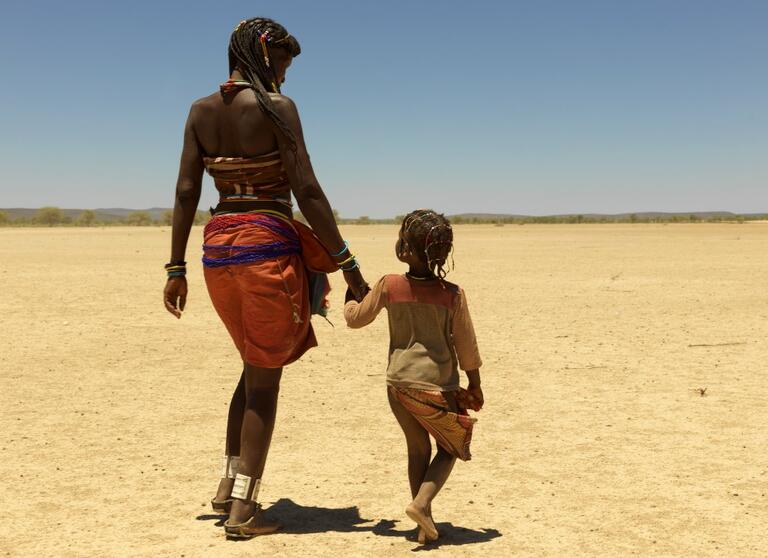
    As costs of extreme weather events are rise rapidly and as campaigners urge for a loss and damage finance facility ahead of COP27, an Oxfam report points to half of all UN climate disaster appeals since 2017 remaining unfulfilled.

    By Mohammed El-Said

    Funding needed for UN humanitarian appeals linked to extreme weather has increased eight-fold over the past two decades, with donor countries falling desperately short of meeting the demand, according to a new analysis.

    Reports by the Intergovernmental Panel on Climate Change (IPCC) have made clear that climate change impacts are already widespread and intensifying, and that developing countries are paying the highest price.

    But since 2017, about half (54 per cent) of all UN appeals for climate disaster requirements such as droughts and floods have gone unmet, according to the Footing the bill report released by the charity Oxfam. For every US$2 a country responding to extreme weather asked for, they received only around $1 — a shortfall of up to $33 billion, the report says.

    Oxfam and other campaigners are urging governments at UN climate talks in Bonn, Germany to pledge funding for loss and damage in addition to existing climate finance and aid commitments. The 6-16 June talks are seen as a precursor to the COP27 climate summit in Egypt in November.

    The three-day Glasgow Dialogue on Loss and Damage during the Bonn meeting highlighted the gaps between the experiences of people on the frontlines, and the current structures in place (or lack of them) to respond to these climate impacts.

    Can’t delay any further

    Lyndsay Walsh, Oxfam climate policy adviser and co-author of the report, said the Bonn negotiations “must pave the way for a finance facility for loss and damage to be established at COP27”.

    “There have been over 30 years of discussions on loss and damage finance. The need is clear — we can’t delay any further,” she told SciDev.Net.

    At COP26 in Glasgow last November, rich nations pledged to double the amount of funding provided to developing countries for climate change adaptation, but the issue of compensating for loss and damage was left unresolved.

    Climate activists have accused rich nations of trying to block loss and damage from the main agenda in Bonn.

    According to Oxfam’s report, estimated loss and damage costs could increase to between $290 billion and $580 billion a year by 2030, rising to the trillions by 2050. Much of this will be shouldered by developing countries, which are most vulnerable to the effects of climate change.

    Annual extreme weather-related funding appeals amounted to at least $1.6 billion for 2000-2002 and increased by 819 per cent to reach $15.5 billion in 2019-2021, the report says.

    The cost of extreme weather-related events in 2021 alone is estimated at $329 billion globally, the third-highest year on record behind 2017 and 2005, the report says. This is nearly double the total aid given by rich nations to developing countries that year.

    Ethiopia, Kenya, Somalia and South Sudan are currently facing extreme hunger, fuelled by climate change, and yet are responsible for only 0.1 per cent of global emissions, the authors note. The entire continent of Africa accounts for less than 4 per cent of emissions.

    Polluters pay

    Meanwhile, wealthy countries are responsible for 37 per cent of current emissions and some estimates say they are responsible for 92 per cent of excess historical emissions.

    “Going by the ‘polluters pay’ principle and climate justice tenets, historical emitters and corporations should be responsible to pay up for climate damages,” says Harjeet Singh, strategic advisor on global partnerships to the Fossil Fuel Non-Proliferation Treaty Initiative.

    Singh told SciDev.Net that there were several other potential sources of finance for loss and damage such as a pollution tax, air passenger levy and public finance.

    Finance facility

    Oxfam proposes establishing a finance facility under the UN Framework Convention on Climate Change (UNFCCC) to coordinate an effective and equitable global response to climate-induced loss and damage.

    Only Scotland and the Wallonia region in Belgium have explicitly committed finance to address loss and damage so far. Some humanitarian and development aid, and insurance, may relate to loss and damage, but there are no estimates of what this adds up to.

    Most developed countries have steadfastly blocked progress on support measures to address loss and damage, says Singh.

    “While loss and damage was recognised as a ‘third pillar’ of the Paris Agreement, developed countries led by the United States refused to acknowledge any responsibility due to the fear of unlimited liability and compensation towards addressing loss and damage,” he said.

    Walsh explained: “They are afraid that if they do commit money to loss and damage, it will imply they are liable for the loss and damage and this could lead to legal challenges — which they are very afraid of.”

    No enforcement mechanism

    Developed countries —  in the absence of a clear, multilaterally agreed definition on climate finance —  have interpreted a wide range of financing activity, such as that channeled to export credit entities or for use of “cleaner” fossil fuels, as climate finance, according to Liane Schalatek, associate director of the Heinrich Böll Stiftung in the US.

    “Unfortunately, while the provision of finance for developing countries by developed countries under the UNFCCC is an obligation, the UNFCCC lacks any enforcement mechanism,” Schalatek told SciDev.Net.

    Both Singh and Schalatek believe that the Egyptian presidency has a critical role in ensuring that COP27 results in a commitment on a loss and damage finance facility.

    “The incoming presidency can help by placing the issue of loss and damage high on its own political agenda for COP27 priorities,” said Schalatek. “For an African COP, the focus should be on adaptation, and what is needed to address losses and damages, and the added, adequate and sustained financial support that both climate areas deserve.”


    This piece has been sourced from SciDev.Net

    Image: Angola Red Cross

    Sri Lanka’s Struggle to Bring Down The Rajapaksas

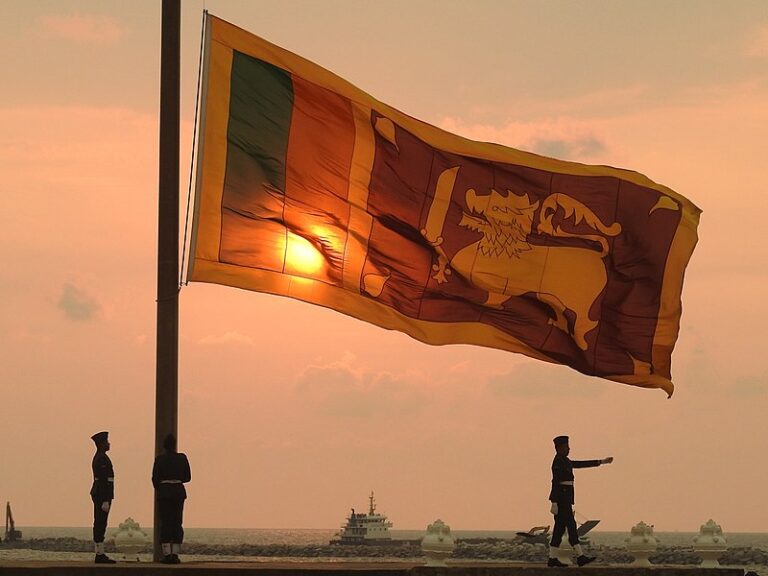
    The complete ouster of Rajapaksa rule will not transform Sri Lanka unless the country embraces the rule of law and pluralism. The current intercommunal bonhomie among protestors masks the Sinhalese Buddhist nationalism that helped the Rajapaksas come to power.

    By Neil DeVotta

    When Sri Lankan President Gotabaya Rajapaksa banned chemical fertiliser, insecticides and herbicides in May 2021, protesters blamed the government rather than the President or his brother, former prime minister Mahinda Rajapaksa. But this time, spurred by the island’s worst ever economic crisis, protests have turned against Rajapaksa rule.

    The original fertiliser ban was dictated by a balance of payments crisis. This crisis was caused by a bloated government service, inefficient state enterprises, a massive security force that was not demobilised after the civil war ended in 2009, loss of crucial revenue from a reduction of various taxes in 2019  and COVID-19’s disruption of remittances and tourism. Non-concessionary Chinese-funded white elephant infrastructure projects have also fuelled this balance of payments crisis and China’s aversion to renegotiating loans may make tackling the crisis harder.

    The debts owed total around US$51 billion, with US$7 billion due this year and around US$31 billion due over the next five years. As expected, in early April 2022 the government announced its loans could not be serviced. Soon afterwards, the new Prime Minister claimed the government struggled to locate even US$1 million for essential imports. The country is bankrupt.

    Violence. Mayhem

    Sri Lankans have been forced to queue for petrol, cooking gas, kerosene, sugar, milk powder and medicines, on top of enduring long power cuts. While farmers and unions have expressed outcry for a year, anti-government sentiment took a significant turn when the middle-class began protesting. In March, women from the main opposition party protested outside the President’s residence. The next month, people gathered across the Presidential Secretariat to demand the President leave office. Those who camped there branded the location GotaGoGama and soon after, a smaller group gathered outside former prime minister Mahinda Rajapaksa’s residence and branded it MynaGoGama.

    On 9 May, Mahinda Rajapaksa and his associates bussed in SLPP (Sri Lanka Podujana Peramuna) supporters who attacked the peaceful protestors, including clergy members, outside the residence and at the nearby GotaGoGama while police merely looked on. Some hours later, protestors and their sympathisers counterattacked Rajapaksa supporters, targeting homes and businesses belonging to pro-Rajapaksa politicians. The Rajapaksa ancestral home was burnt down, and a museum honouring their parents was also destroyed. The mayhem killed nine, including a member of parliament, and the military was ordered to shoot rioters.

    Mahinda Rajapaksa stepped down as Prime Minister the same day his supporters ran amok. Three days later, a magistrate prohibited Mahinda and some loyalists from leaving the country. By then, Mahinda’s two other siblings and a nephew had also resigned as ministers. President Gotabaya Rajapaksa held on despite the protests and a few days later made the United National Party’s (UNP) Ranil Wickremasinghe prime minister.

    Impeachment improbable

    This would be Wickremasinghe’s sixth stint as prime minister, although he has never completed a full five-year term. While knowledgeable and experienced, he exudes arrogance and omniscience. His superiority complex undermined his relationship with president Chandrika Kumaratunga and Maithripala Sirisena — both removing him as prime minister during their presidential terms. One of Sri Lanka’s biggest ever financial scandals took place under his watch in 2015, which partly led to the UNP’s loss of all 106 seats it held.

    Today, Wickremasinghe is the only UNP member in Sri Lanka’s parliament thanks to the National List where parties are awarded seats based on their island-wide vote share. He is especially good friends with Mahinda Rajapaksa, and it was Wickremasinghe who quietly protected the Rajapaksas between 2015 and 2019. Many wonder if his present appointment is part of a deal to once more shield the Rajapaksas from corruption charges. Ultimately, the country’s sorry situation is encapsulated by a President people desperately want gone appointing a Prime Minister who is his party’s sole parliamentary representative.

    The political dilemma facing the island is that Gotabaya Rajapaksa can remain President until November 2024, unless parliament impeaches him with a two-thirds majority. Most SLPP parliamentarians, numbering 145 in a house seating 225, will not support impeachment. Parliament can vote to dissolve itself, but the vast majority know they will not be re-elected so legislators have no incentive to take that route. The associated economic dilemma is that creditors will not agree to further loans and debt restructuring without political stability, and political stability is unlikely until the protests cease or the President leaves.

    Rule of law

    The protestors have achieved much, forcing cabinet members to resign and Mahinda Rajapaksa to leave. In the process, they acquired support from religious, cultural, educational and business elites. Wickremasinghe’s appointment, coupled with the need for political stability, could help the President stay on. If Gotabaya Rajapaksa departs, this is most likely the end of the Rajapaksa dynasty.

    But the complete ouster of Rajapaksa rule will not transform Sri Lanka unless the country embraces the rule of law and pluralism. The current intercommunal bonhomie among protestors masks the Sinhalese Buddhist nationalism that helped the Rajapaksas to power. Getting rid of them and their ilk is a necessary but insufficient step towards achieving the widespread systemic change that protestors desire. Real change will only come once the island sheds its majoritarian and ethnocentric ethos. Sadly, the country’s post-independence history suggests this is unlikely.


    Neil DeVotta is Professor of Politics and International Affairs at Wake Forest University.

    Agnipath Training Credits for Graduation, Says Education Ministry

    The ministry of education announced on Wednesday a special three-year skill based bachelor degree programme for serving Agniveers that will enhance the future career prospects of the soldiers and equip them for various job roles in the civilian sector.

    Unfazed by a slew of objections and protests in response to its Agniveer programme, the government today announced that the in-service training received by Agniveers under the agnipath recruitment scheme to be considered as credits for graduation.

    This, the government said, will help enhance the future career prospects of ‘Agniveers’. The specially-designed degree programme designed by Indira Gandhi National Open University (IGNOU) will consider 50 per cent of the credits required for a graduate degree from the skill training (both technical and non-technical) received by the Agniveer, and the rest from a basket of courses.

    “50 per cent of the credits required for a graduate degree will come from the skill training – both technical and non-technical – received by the Agniveer, and the remaining 50 per cent will come from a basket of courses that cover a wide variety of subjects like languages, Economics, History, Political Science, Public Administration, Sociology, Mathematics, Education, Commerce, Tourism, Vocational Studies, Agriculture and Jyotish, as also Ability Enhancement Courses on Environmental Studies and Communication Skills in English,” a statement from Education Ministry stated.

    At the end of the four-year tenure, a detailed ‘Skill-Set Certificate’ will be provided to the Agniveers which will showcase the comprehensive skills and level of competency acquired by them during their engagement period.

    The way forward for Agniveers

    The Ministry of Education will launch the special three-year skill based bachelor degree programme for serving defence personnel (Agniveers) that will enhance the future career prospects of the soldiers and equip them for various job roles in the civilian sector.

    The programme is aligned with University Grants Commission (UGC) norms and with the National Credit Framework and the National Skill Qualification Framework (NSQF) as mandated under the National Education Policy (NEP) 2020.

    Further, the programme also has provision for multiple exit points as Undergraduate Certificate will be provided on successful completion of the first year courses, Undergraduate Diploma after completion of the first and second year courses, and Degree on completion of all the courses within a three-year time frame.

    The framework of the programme has been duly recognized by All India Council for Technical Education (AICTE) and National Council for Vocational Education and Training (NCVET) and UGC.

    The Degree will be awarded by IGNOU as per UGC nomenclature (BA; B. Com.; BA (vocational); BA (Tourism Management), and will be recognized both in India and abroad for employment and education. The army, navy and the air force will sign Memoranda of Understanding (MoU) with IGNOU for implementation of the scheme.

    The Union Cabinet on 14 June 2022 approved ‘Agnipath’ recruitment scheme for selecting Agniveers. The scheme will be open to aspirants between 17.5 and 21 years of age. Once selected, aspirants will go through training for six months and will then be deployed in the services for three and a half years.

    In a parallel development, the union home minister Amit Shah tweeted that the ‘Agniveers’ would get preference in CAPF jobs post four years of service.

    Paving way for the future of ‘Agniveers’ after their four-year service in the armed forces, the union home minister announced that the ministry of home affairs will give priority to them in getting recruitment to the central armed police forces (CAPFs) and the Assam Rifles.


    Image: Wikimedia