More

    Government Considers AI a Kinetic Enabler for Growth, Says Minister

    The Government considers Artificial Intelligence (AI) to be kinetic enabler for the growth of the country’s digital economy, investments and jobs. The government has taken various initiatives to expand AI ecosystem and connect the AI opportunities to the youth of the country, the minister told the Lok Sabha.

    The data on Employment and Unemployment is collected through Periodic Labour Force Survey (PLFS) which is conducted by the Ministry of Statistics and Programme Implementation (MoSPI) since 2017-18. The survey period is July to June every year.

    As per the latest available Annual Periodic Labour Force Survey (PLFS) reports, the estimated Worker Population Ratio (WPR) on usual status for persons of age 15 years and above during the year 2022-23 was 56 per cent. It was 52.6 per cent and 52.9 per cent in the years 2020-21 and 2021-22, the Union Minister of State for Labour and Employment, Rameshwar Teli told the Lok Sabha in a written reply on Monday.

    The minister said that the data indicates that the worker population ratio, indicating employment, has seen an increasing trend over the years.

    As per the fourth round of Quarterly Employment Survey (QES: January-March, 2022), the estimated total employment in the nine selected sectors was 3.18 crore as compared to 2.37 crore in the sixth Economic Census (2013-14).

    The Quarterly Employment Survey (QES) is conducted by Labour Bureau which aims to assess the employment situation in respect of selected nine sectors of non-farm economy of India over successive quarters covering nine selected sectors, viz. manufacturing, construction, trade, transport, education, health, accommodation and restaurants, information technology (IT)/ business process outsourcing (BPO) and financial services.

    As per the fourth round of QES (January-March, 2022), the estimated employment in the Information Technology (IT)/ Business Process Outsourcing (BPO) sector has increased to 38.31 lakhs as compared to 20.71 lakh during first round of QES (April-June, 2021), which indicates the increase in employment in IT/BPO sector.

    The Government considers Artificial Intelligence (AI) to be kinetic enabler for the growth of the country’s digital economy, investments and jobs. The government has taken various initiatives to expand AI ecosystem and connect the AI opportunities to the youth of the country, the minister said.

    The Visvesvaraya PhD Scheme aims to enhance the number of PhDs in Electronics System Design & Manufacturing (ESDM) and IT/IT Enabled Services (IT/ITES) sectors including AI and Emerging Technologies.

    The minister said that the NITI Aayog had released the ‘National Strategy for Artificial Intelligence’ (NSAI). NITI Aayog has decided to focus on five sectors that are envisioned to benefit the most from AI in solving societal needs: a) Healthcare: increased access and affordability of quality healthcare, b) Agriculture: enhanced farmers’ income, increased farm productivity and reduction of wastage, c) Education: improved access and quality of education, d) Smart Cities and Infrastructure: efficient and connectivity for the burgeoning urban population, and e) Smart Mobility and Transportation: smarter and safer modes of transportation and better traffic and congestion problems.

    Road to COP29: Highest Climate Ambitions Needed to Decarbonize World

    Limiting global warming to 1.5°C will require a 43 percent decline in greenhouse gas emissions by 2030, per estimates by the Intergovernmental Panel on Climate Change. Burning fossil fuels for electricity, transport, and heat accounts for the great majority of harmful emissions, at approximately 73.2 percent.

    By Joyce Chimbi

    The road to COP29 has begun in earnest in the backdrop of a global climate report indicating that not only was 2023 the warmest year in a 174-year climate record, it was the warmest by far. Record-breaking temperatures, combined with El Niño, pushed vulnerable and poor nations in the Global South to the frontlines of extreme and severe weather events.

    It was a climatic carnage in Africa with fatal floods in the Democratic Republic of the Congo, Kenya, and Libya’s storms and floods that wiped out a quarter of a city. Deadly cyclones in countries such as Malawi, severe drought in Kenya, and a months-long winter heatwave in Southern African countries.

    Against this backdrop, the Executive Secretary of UN Climate Change, Simon Stiell, delivered a major speech on February 2, 2024, from Baku, Azerbaijan, the host city of the COP29 UN Climate Conference in November 2024. The speech previewed the key issues and actions needed in the crucial periods ahead, building on progress at COP28 in Dubai.

    “The time has passed for business-as-usual in all aspects of the world’s climate fight. So today, I will take a different approach to this lecture. I want us to start in 2050, imagining what the world will look like if we do succeed in both limiting global warming to 1.5°C and protecting all people from climate change impacts,” he said.

    “Of course, it will be no utopia, and there is a potential extinction to contend with, but I will come back to that. In this vision of success, global energy systems are at net-zero emissions. Countries—or at least regions—will largely be energy self-sufficient.”

    The speech touched on all key issues at the heart of the global journey towards decarbonizing the world by 2050, in line with the Paris Agreement.  At the UN’s COP21 in Paris in 2015, world leaders came to an historic agreement that offers a solid framework for the achievement of crucial climate goals and the preservation of the environment, people, and all life on Earth.

    “Countries are indeed making noteworthy progress to reach set goals, such as significantly reducing global greenhouse gas emissions. However, pledges and commitments from governments are not ambitious enough and will not get us to net zero—cutting greenhouse gas emissions to as close to zero as possible by 2050. As we countdown to COP29, we must also track what has been achieved in terms of commitments made during the inaugural 2023 Africa Climate Summit in Nairobi, Kenya,” Amos Kaggwa, a Ugandan-based climate activist, tells IPS.

    On renewable energy, Stiell says, “Renewables have made energy accessible, affordable, and predictable for all. That means we avoid the shocks and inequalities that have shaped economic trends and conflicts in the past. The global financial system has prioritised human wellbeing over servicing only the bottom line.”

    Stressing that “the trillions previously spent on fossil fuel subsidies are available for better purposes: health care, education, and safety nets for those who fall behind. Our resilient societies have moved from an extractive to a regenerative relationship with nature. It is no longer medically hazardous to go outside in major cities due to air pollution. Millions of lives are saved each year as a consequence.”

    PR spin won’t cut it

    Kenya has already launched its Long-Term Low-Emission Development Strategy (LT-LEDS), aimed at steering this East African nation towards a net-zero emissions future by 2050. Only eight other African countries have submitted their LT-LEDS. There are 68 countries in the world that have submitted their LT-LEDS overall, and the majority of them are high- or middle-income nations.

    Limiting global warming to 1.5°C will require a 43 percent decline in greenhouse gas emissions by 2030, per estimates by the Intergovernmental Panel on Climate Change. Burning fossil fuels for electricity, transport, and heat accounts for the great majority of harmful emissions, at approximately 73.2 percent.

    In this context, decarbonizing leaders are those with the greatest investments in renewable energy to transition away from fossil fuels. They include China with a USD 758 billion global investment in renewable energy capacity from 2010 to 2019, the United States with USD 356 billion, Japan’s USD 202 billion, Germany with USD 179 billion, and the UK’s USD 122 billion.

    “The United States, China, Russia, Brazil, Indonesia, Germany, India, the United Kingdom, Japan, Canada, France, Australia, Argentina, Mexico, South Africa, Italy, South Korea, Saudi Arabia, the European Union, and Türkiye as the G20—together responsible for 80 percent of the world’s emissions in 2025—have seriously re-engineered their targets on this basis,” Stiell says.

    “Because they know that PR spin, re-branding, or tinkering around the edges won’t cut it to meet their climate responsibilities, and that it would also leave them badly behind the innovation curve, not at the cutting edge. These national climate plans aren’t just pieces of paper; they must be backed by robust policy instruments, costed out, and translatable into shovel-ready investment opportunities.”

    An estimated 3.8 percent of global greenhouse gas emissions are emitted by Africa, but only two percent of the proportion of renewable energy investment went to Africa in 2023. Kaggwa says Africa has many competing, pressing challenges and that powerful, developed nations must ensure that the Loss and Damage and other climate finance funds work to lift the continent out of the climate catastrophe.

    “Africa is severely affected by climate change, but it receives only three percent of global climate finance. Africa needs about USD 579.2 billion in adaptation finance from 2020 to 2030. The COP26 commitments included doubling climate adaptation finance by 2025. Current adaptation flows to the African continent are five to 10 times below what is needed,” Kaggwa emphasizes.

    Stiell says it is time to get on with the job of saving the planet, people, and all life on Earth, urging citizens around the world to demand bolder climate action now. Promising that at the UN Climate Change Conference, there will be no rest in pushing for the highest climate ambitions in accordance with the science—working side-by-side with all governments, businesses, and community leaders.

    This piece has been sourced from Inter Press Service – IPS

    Image: An estimated 3.8 percent of global greenhouse gas emissions are emitted by Africa, but only two percent of the proportion of renewable energy investment went to Africa in 2023. Credit: Joyce Chimbi/IPS

    Unlocking India’s Potential with AI

    We have the ability to solve a lot of problems for our population, but the hard part has always been in the distribution, not the solution. In India, we believe that AI can help bridge this access gap.

    By Nandan Nilekani and Tanuj Bhojwani

    India is on the brink of a transformation that could change its economic and social future.

    Before the end of this decade, more Indians will use AI every day than in any other country in the world. What’s more, people in advanced economies will be surprised by the ways the country will use AI.

    India is on the cusp of a technological revolution that could alter the trajectory of its social and economic future, and in this revolution. there are lessons for the rest of the world.

    Our prediction hinges on three facts: India needs it, India is ready for it, and India will do it.

    India needs it

    The concept of “China plus one” has been gaining traction, with its admonition that global companies should not depend inordinately on China for their manufacturing and software needs.

    India, with its growing infrastructure investments, favorable policies, and young working population, is the most likely beneficiary of this shift. It is perhaps the only country poised to match the scale of China.

    With 1.4 billion people, India is closer to a continent than a country. Its population is almost twice that of Europe. But the average age in India is 28, compared with Europe’s 44, which means a higher share of the population is of working age. This is the starting point: India is a very large country of very young people.

    This demographic dividend, favorable global trends, and the unlocking of decades of suppressed potential are starting to show returns. Even as the macroeconomic projections for most of the world seem modest or bleak, India remains a bright spot. These young Indians are aspirational and motivated to use every opportunity to better their lives.

    What really sets India apart from the West are its unique challenges and needs. India’s diverse population and complex socioeconomic concerns mean that AI there is not just about developing cutting-edge technology. It’s about finding innovative solutions to address pressing problems in health care, education, agriculture, and sustainability.

    Though our population is just double the size of Europe’s, we are much more diverse. Indians, like Europeans, are often bi- or multilingual. India recognizes 19,500 dialects spoken by at least 10,000 people. Based on data from the Indian census, two Indians selected at random have only a 36 percent chance of speaking a common language.

    This language barrier is complicated by the fact that the official literacy rate in the country hovers near 77 percent, varying vastly between states. This means that roughly 1 in 4 people can’t read or write. Even though the government tries to provide welfare assistance for its most vulnerable, it’s hard to spread awareness about the service and reach the last mile.

    Filling out a simple form to access welfare can be daunting for someone who is illiterate. Determining eligibility for assistance means depending on someone who can read, write, and navigate the bureaucracy.

    Actually. receiving services means assistance seekers must have an agent helping them who is not misinformed—or worse, corrupt. These barriers disproportionately affect those who need government assistance the most.

    We have the ability to solve a lot of problems for our population, but the hard part has always been in the distribution, not the solution. In India, we believe that AI can help bridge this access gap.

    AI enables people to access services directly with their voice using natural language, empowering them to help themselves. As Canadian writer William Gibson aptly said, “The future is already here—it’s just not evenly distributed.” Nowhere is this more glaringly evident than in India.

    The rest of the world has been eyeing AI with curiosity, waiting for real-use cases. In India, we see potential today. While this may be true of many other developing economies, the other important factor is that.

    The rest of the world has been eyeing AI with curiosity, waiting for real-use cases. In India, we see potential today.

    India is ready for it

    India’s population isn’t just young, it is connected. According to the country’s telecommunications sector regulator, India has more than 790 million mobile broadband users. Internet penetration continues to increase, and with the availability of affordable data plans, more and more people are online. This has created a massive user base for AI applications and services.

    But where India has surpassed all others is in its digital public infrastructure. Today, nearly every Indian has a digital identity under the Aadhaar system. The Aadhaar is a 12-digit unique identity number with an option for users to authenticate themselves digitally—that is, to prove they are who they claim to be.

    Further, India set up a low-cost, real-time, interoperable payment system. This means that any user of any bank can pay any other person or merchant using any other bank instantly and at no cost.

    This system—the Unified Payments Interface—handles more than 10 billion transactions a month. It is the largest real-time payment system in the world and handles about 60 percent of real-time payment transactions worldwide.

    With the success of these models, India is embracing innovation in open networks as digital public infrastructure. Take the example of Namma Yatri, a ride-hailing network built in collaboration with the union of auto-rickshaw drivers in Bangalore and launched in November 2022.

    These drivers have their own app, with a flat fee to use it, no percentage commission and no middleman. The app has facilitated close to 90,000 rides a day, almost as many as ride-hailing companies in the city.

    Unlike Western countries, which have legacy systems to overhaul, India’s tabula rasa means that AI-first systems can be built from the ground up. The quick adoption of digital public infrastructure is the bedrock for these technologies.

    Such infrastructure generates enormous amounts of data, and thanks to India’s Account Aggregator framework, the data remain under the citizens’ control, further encouraging public trust and utilization. With this solid footing, India is well positioned to lead the charge in AI adoption.

    India will do it

    In September 2023, the Indian government, in collaboration with the EkStep foundation, launched the PM-Kisan chatbot. This AI chatbot works with PM-Kisan, India’s direct benefit transfer program for farmers, initiated in 2019 to extend financial help to farmers who own their own land.

    Access to the program, getting relevant information, and resolving grievances was always a problem for the farmers. The new chatbot gives farmers the ability to know their eligibility and the status of their application and payments using just their voice. On launch day more than 500,000 users chatted with the bot, and features are being released slowly to ensure a safe and risk-managed rollout.

    These steps are part of an encouraging trend of early adoption of new technology by the Indian government. But the trend extends beyond the government. India’s vibrant tech ecosystem has taken off as well, a direct offshoot of its booming IT exports—currently at nearly $250 billion a year.

    Next to those from the US, the largest number of developers on GitHub, a cloud-based service for software development, are from India. This sector not only innovates but also widely adopts digital public infrastructure.

    The effect is cyclical: start-ups feed the growing tech culture and, in turn, leverage the data to build more precise and beneficial AI tools. India’s dynamic start-up ecosystem, moreover, is actively working on AI solutions to address various challenges.

    AI can be a game changer in education as well, helping close the literacy gap. AI technologies are uniquely positioned to help students learn in their native languages, as well as learn English. AI’s applications are useful not only for students; they extend to teachers, who are often overwhelmed by administrative tasks that detract from teaching.

    As AI takes over routine tasks in government and start-ups, the roles of teachers and students evolve, and they form dynamic partnerships focused on deep learning and meaningful human interaction.

    What India needs is a strategic plan to chase down the most important opportunities for AI to help. The trick is not to look too hard at the technology but to look at the problems people face that existing technology has been unable to solve.

    And organizations such as EkStep have stepped up with a mission called People+AI. Instead of putting AI first, they focus on the problems of people. This has led to surprising new uses unique to India.

    India’s emerging status as a technological powerhouse, combined with its unique socioeconomic landscape, puts it in a favourable position to be the world’s most extensive user of AI by the end of this decade.

    From streamlining education to aiding in social protection programs, AI has the potential to deeply penetrate Indian society, effecting broad and meaningful change.

    Nandan Nilekani is the chairman and cofounder of Infosys and founding chairman of UIDAI (Aadhaar); Tanuj Bhojwani is head of People+AI

    This piece has been sourced from IMF Finance & Development

    Opinions expressed in articles and other materials are those of the authors; they do not necessarily reflect IMF policy.

    Image: Unsplash/Steve Johnson

    Inclusive and Sustainable Businesses Set New Pathways for Sri Lanka

    With ambitious reforms taking centre-stage towards rebuilding Sri Lanka into a resilient and sustainable economy, the Government of Sri Lanka is exploring opportunities to harness the potential of the private sector in fostering inclusive and sustainable growth.

    By Marta Perez Cuso and Yihan Zhao

    Selyn, a women-led handloom business, offers flexible employment and valuable income opportunities to about 1,000 women artisans and persons from marginalized groups in rural Sri Lanka. Selyn develops and exports high-value craft products in global markets.

    The bigger revenue margins of quality products translate into better incomes for women artisans. Thanks to its pioneering use of blockchain in the supply chain – consumers can track how their purchases translate into earnings for women in the informal economy.

    The Small Organic Farmers Association (SOFA) of Sri Lanka, produces and exports organic food while creating a sustainable and equitable environment for smallholder farmers. It facilitates fair trade certification for smallholders and links more than 3,600 organic farmers to export markets.

    WindForce, the largest renewable energy developer in Sri Lanka, owns, develops and operates renewable energy power plants that provide clean energy access to businesses, communities and industries. WindForce allocates a portion of the profits into community development projects to support the welfare of local communities including livelihood support, education and childhood development, environmental conservation and health care.

    These are a few examples of inclusive and sustainable businesses that go beyond the usual “profit-first” market approach to provide affordable goods, services and livelihoods to low-income people and to support environmental sustainability in Sri Lanka.

    With ambitious reforms taking centre-stage towards rebuilding Sri Lanka into a resilient and sustainable economy, the Government of Sri Lanka is exploring opportunities to harness the potential of the private sector in fostering inclusive and sustainable growth.

    On 31 January, a groundbreaking Strategy to Promote Inclusive and Sustainable Businesses to Achieve the Sustainable Development Goals was officially launched by the Government of Sri Lanka. Designed by the Sustainable Development Council of Sri Lanka in collaboration with the UN Economic and Social Commission for Asia and the Pacific (ESCAP) and United Nations Sri Lanka, this strategic roadmap envisions a strong and dynamic ecosystem where inclusive and sustainable businesses like Selyn, SOFA and WindForce can not only emerge but thrive.

    Inclusive and sustainable businesses are purpose-driven enterprises that deliberately seek positive change in communities and the environment. These impact businesses can play a crucial role to achieve national social development and environment sustainability goals. Inclusive and sustainable businesses use market-based approaches to achieve positive social and environmental impacts, while ensuring their own commercial sustainability.

    The Strategy seeks to put in place regulations that encourage and recognise inclusive and sustainable businesses, provide training and services that help businesses pivot towards more inclusive and sustainable practices, and improve access to finance for businesses.

    It builds on and brings together for the first time the collaborative and cross-sectoral efforts of government agencies, private sector organizations and development partners, to shape an inclusive, sustainable and resilient economy.

    Actions will cover five core areas:

    1) Setting the direction for Sri Lanka to become an inclusive and sustainable export and investment hub;
    2) Raising awareness on the economic and social value that impact businesses bring and recognizing local success stories, through award and formal accreditation;
    3) Building the capacities of businesses and governments to develop and to promote inclusive and sustainable businesses;
    4) Supporting impact measuring and reporting; and
    5) Enhancing access to finance for impact businesses.

    Sri Lanka’s commitment to this Strategy is a testament to its aspiration for a sustainable and inclusive future where businesses are not just economic entities but forces for positive change.

    Marta Perez Cuso is Economic Affairs Officer, UN Economic and Social Commission for Asia and the Pacific (ESCAP); Yihan Zhao is Associate Economic Affairs Officer, ESCAP.

    This piece has been sourced from Inter Press Service – IPS

    Image: UNDP, Sri Lanka

    Power Struggles and Scandals in Nepal’s Political Sphere

    Nepal experienced political instability in 2023. Macroeconomic indicators improved and independent politicians gained traction ahead of the 2027 elections. Despite a series of major scams and ongoing issues such as increasing natural disasters, soaring emigration for education and work and growing religious conflict, there were positive developments including the registration of the country’s first same-sex marriage and a rebound in both international and domestic travel.

    In the aftermath of the November 2022 elections, Nepali Prime Minister Pushpa Kamal Dahal secured 268 out of 270 votes in the parliament, backed by the Communist Party of Nepal (Unified Marxist–Leninist) (CPN-UML) in January 2023. But cracks in the coalition soon emerged, compelling Dahal to seek another vote of confidence with the Nepali Congress’s support in March. 

    By the end of 2023, Dahal seemed intent on protecting his position, making deals with everyone who mattered. The parliament passed only one piece of legislation in 2023, leaving the many pieces of law which have been waiting parliamentary discussions and approval since July 2019.

    Despite Dahal’s Communist Party of Nepal (Maoist Centre) holding a mere 32 seats, he navigated political waters alongside coalition partners, including Nepali Congress President Sher Bahadur Deuba and fair-weather friend Khadga Prasad Sharma Oli of the CPN-UML. Dahal, Deuba and Oli make up the trio of septuagenarian leaders at the helm of a country in which 50 per cent of its population is under 25 and 70 per cent under 40.

    This ‘big three’ handle all serious matters, sporadically divulging proceedings through ‘sources’. This practice has sparked criticism for protecting corrupt people, promoting nepotism, favouritism and ‘bhagbanda’ (distribution of power and perks amongst the group).

    Large-scale scams

    Political instability has been the only constant for Nepal and 2024 will not see anything different. Independent parties and candidates wait for the 2027 elections, as Nepalis recognise the impact of independent mayors like Balendra Shah of Kathmandu and Harka Sampang of Dharan. Internationally educated parliamentarians like Sumana Shrestha from the Rastriya Swatantra Party are developing a huge following by asking unprecedented questions in the parliament. These parliamentarians are contributing through initiatives like developing a parliamentary calendar, engaging the Nepali diaspora and hosting a ‘Bill Hackathon’ that solicited public participation in designing legislation.

    Nepal witnessed large-scale scams in 2023, with their legal outcomes dependent on whether they were under the protection of the ‘Big 3’. In a fake Bhutanese refugee scam, former home minister and Deuba’s confidant, Bal Krishna Khand, was among many convicted for swindling millions from Nepalis under the false promise of settling them in the United States as Bhutanese refugees. The Lalita Niwas scam, which involved the sale of government-owned land resulted in two former prime ministers — Madhav Kumar Nepal and Baburam Bhattarai — being indicted.

    Multiple gold smuggling scams were exposed when pre-arranged deals cracked. The Ncell scam involved 80 per cent of the shares of Ncell Axiata — the largest private telecom operator — being transferred to a Nepali owner based in the United Kingdom. Axiata, in its exit memo, had scathing remarks about Nepal’s business and political environment.

    Migration

    Compared to 2022, macroeconomic indicators continued to look positive in 2023. Real GDP grew by 1.86 per cent, inflation remained stable at 7.74 per cent, foreign exchange reserves increased by 27.4 per cent to 1345 billion Nepali rupees (NRs 1345 billion, or US$10.12 million). Balance of payments turned from a deficit to a surplus of NRs 290 billion (US$2.1 billion) and there was a large increase of 21.2 per cent in remittances to NRs 1220 billion (US$9.1 billion).

    The Nepali rupee, starting at NRs 132.45 on 1 January 2023 ended at NRs 133.10 against the dollar due to a strong Indian rupee. The Nepali rupee has been pegged to the Indian rupee at NRs 1.60 for 1 Indian rupee since 1994.

    Nepal also welcomed one million tourists in 2023, marking a post-COVID-19 record. International travel rose by 41 per cent, while domestic travel increased by 38 per cent.

    Nepalis continued to migrate for education and jobs in 2023. During the fiscal year 2022–23, 110,217 students obtained No Objection Certificates from the Government of Nepal that allowed them to study abroad. Over 800,000 people secured labour permits in 2022, with an additional 300,000 permits issued in the first five months of the 2023–24 fiscal year. Remittances soared to US$9.33 billion according to the Nepal Rastra Bank with an equal amount of informal remittances.

    Navigating geopolitical challenges

    On 29 November 2023, following an interim Supreme Court ruling, Nepal became the second Asian country to register its first same-sex marriage. Yet Nepal grappled with its secular identity after tensions escalated over issues associated with the slaughter of cows and the Muslim-Hindu conflict, in places like Dharan and Nepalgunj.

    On 3 November 2023, an earthquake killed 153 people and destroyed hundreds of buildings. While landslides and other natural calamities continue to impact Nepal, the plight of the earthquake-affected locals in Bajura, who are struggling to face the cold in makeshift tents, raises concerns about the country’s preparedness.

    Nepal attracted increased geopolitical attention with the Millenium Challenge Corporation compact work in full swing, along with increased support from the United States. Dahal visited India, the United States and China in 2023.

    A pilot project to export 40 MW of power to Bangladesh through India will open up a corridor for energy exports to multiple countries. The Pokhara International Airport — built with Chinese financing — was opened on 1 January 2023 but has not seen its capacity utilised due to India not opening routes to the Pokhara and Bhairawa airports.

    Nepal must adeptly navigate its geopolitical challenges — especially with China, India and the United States — in order to sell its hydropower to regional markets, welcome more tourists and ensure job creation to stem migration.

    Sujeev Shakya is founding CEO of Kathmandu-based consulting firm Beed Management, Senior Advisor for Nepal and Bhutan at BowerGroupAsia and Chair of the Nepal Economic Forum.

    This piece has been sourced from the East Asia Forum of the Australian National University. This article is part of an EAF special feature series on 2023 in review and the year ahead.

    Pakistan Winter Pneumonia: Thousands of Children Affected; Hundreds Dead

    Islamabad has long grappled with the challenge of increasing vaccine uptake in a nation where misinformation is rife and some fringe clerics declare it un-Islamic.

    Pneumonia has claimed the lives of 303 children in the Punjab Province of Pakistan in the month of January, according to sources in the provincial health department.

    According to the Punjab Health Department, a total of 764 new cases of pneumonia were reported on Friday itself – while the provincial capital logged 178 fresh cases of pneumonia. While Punjab has reported 303 pneumonia-related deaths, over 18,000 cases have been reported in the province this year.

    Rain usually brings respite, soaking up pollution particles, but Pakistan has endured an unusually dry and cold winter – making children vulnerable to respiratory infection, Arab News quoted doctors as saying while according to UNICEF, around half of childhood pneumonia deaths are associated with air pollution.

    On Thursday, the provincial government extended school holidays, clipped classroom hours and mandated face masks in a bid to shield children.

    Anadolu News quoted Jamal Nasir, a senior health official as saying that the disease affects people in the province every year.

    “Every year 55,000 to 60,000 children die in Pakistan because of pneumonia and this is not the first time,” Nasir said, urging parents to vaccinate their children.

    “We are providing free vaccination across the province and parents should vaccinate their children,” he said.

    Pakistan offers free jabs for respiratory disease at six, 10 and 14 weeks of age. But Islamabad has long grappled with the challenge of increasing vaccine uptake in a nation where misinformation is rife and some fringe clerics declare it un-Islamic.

    Premature births and stunting caused by malnutrition are also prevalent, weakening children who are then easy prey for pneumonia.

    The news finds no space in the national media that is obsessed with the upcoming elections and the on-going political fest.

    Sri Lanka Launches Fortified Rice Lunch Programme to Address Malnutrition Among School Children

    The Ministry of Agriculture and Plantation Industries, the Ministry of Education, the World Food Programme, the National Food Promotion Board and the Bill & Melinda Gates Foundation (BMGF) have collaborated on the project, the government said in its statement.

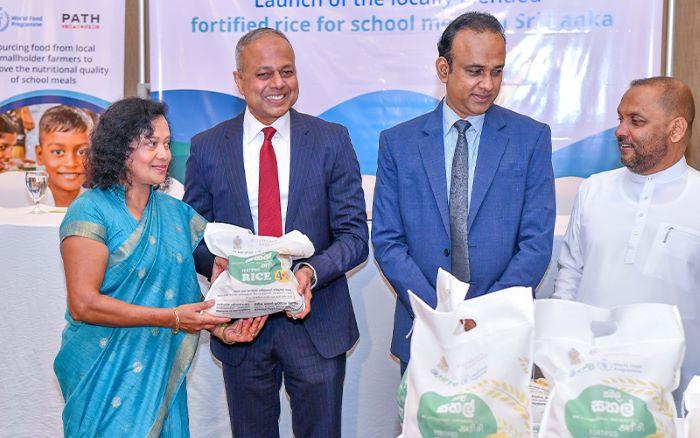
    Sri Lanka has launched a fortified rice lunch distribution programme aiming to benefit some half a million school children in the country.

    The programme, meant to last eight months in the first phase, comes a year after a shipment of fortified rice reached Sri Lanka as the country was recovering from a unprecedented financial and food crisis. That shipment was part of a larger food assistance initiative by USAID and WFP that includes 3,950 metric tons of fortified rice to provide school meals and nutritional supplements for 1.7 million children as well as 300,000 pregnant and lactating mothers.

    The present programme “seeks to enhance the nutritional status of school children, addressing issues such as anaemia, memory impairment and stunted growth. Approximately five hundred thousand school children are expected to benefit from fortified rice lunches over an eight-month period,” a statement released by the president’s office said at the launch of the programme in Colombo last Thursday.

    The Ministry of Agriculture and Plantation Industries, the Ministry of Education, the World Food Programme, the National Food Promotion Board and the Bill & Melinda Gates Foundation (BMGF) have collaborated on the project, the government said in its statement.

    Speaking at the event, Senior Adviser to the President on National Security and the Chief of Presidential Staff Sagala Ratnayaka said nurturing a healthy future generation was essential. Nutrition is a critical factor in shaping the country’s destiny beyond merely satisfying hunger.

    He expressed satisfaction with the expansion and strengthening of a program initiated to aid war-affected areas in the Northern and Eastern provinces. Originating in four districts, the program broadened its scope to six districts following the tsunami in 2004. Supported by various ministries and organizations, the initiative has evolved to encompass a wider geographical area, reflecting its continued impact and success.

    Following the unprecedented economic crisis exacerbated by the COVID-19 pandemic, poverty levels in Sri Lanka experienced a significant surge. In response, a stabilization program was initiated, spearheaded by President Ranil Wickremesinghe, with a primary focus on addressing poverty, said Mr. Ratnayaka.

    The nutrition programme’s roots date back to 2003 with the intervention of the World Food Programme. The ongoing efforts align with President Wickremesinghe’s vision for a poverty-free and healthier Sri Lanka, said Ratnayake.

    The expansion and strengthening of a programme initiated to aid war-affected areas in the Northern and Eastern provinces was satisfactory, the official had noted, according to the statement.

    “Originating in four districts, the programme broadened its scope to six districts following the tsunami in 2004. Supported by various ministries and organisations, the initiative has evolved to encompass a wider geographical area, reflecting its continued impact and success.

    “Following the unprecedented economic crisis exacerbated by the COVID-19 pandemic, poverty levels in Sri Lanka experienced a significant surge. In response, a stabilisation programme was initiated, spearheaded by President Ranil Wickremesinghe, with a primary focus on addressing poverty,” he said.

    Tribal Communities Pay at the Intersections of FRA and PESA

    The failure of the Forest Rights Act’s implementation, compounded by conflicts with other legislations like PESA, underscores the need for a comprehensive and coordinated approach to address the multifaceted issues faced by tribal communities.

    By Aditya

    The Forest Rights Act (FRA) of 2006 was envisioned as a transformative legislation aimed at recognizing and securing the rights of forest-dwelling communities over their ancestral lands and resources. It aimed to rectify historical injustices and provide a legal framework for the protection of traditional forest dwellers’ rights. However, the implementation of the FRA has often been marred by challenges and conflicts, particularly in cases where other legislations intersect or where bureaucratic inefficiencies impede its proper execution.

    The case of the Kolam tribe in Yavatmal’s Shiratoki village serves as a poignant example of the complexities and shortcomings associated with the implementation of the FRA.  

    Shiratoki, nestled in the heart of Yavatmal District, Maharashtra, holds a unique position both geographically and culturally. The Kolam tribe, a Particularly Vulnerable Tribal Group (PVTG), calls Shiratoki home, navigating the challenges of geographical isolation, limited resource access, and historical marginalization. Their rich cultural heritage and traditional forest-based livelihoods are central to the tapestry of indigenous heritage in the region.

    The journey of the Shiratoki people from a state of relative isolation to becoming beneficiaries of the FRA’s provisions highlights both the potential and the pitfalls of this legislation. Despite being granted forest area under the Collective Forest Rights Act in 2016, the subsequent events underscore the difficulties faced by these marginalized communities in fully realizing their rights. One of the major conflicts arises between the FRA and the Panchayats (Extension to Scheduled Areas) Act (PESA) of 1996 (Act No. 40 Of 1996). PESA is designed to safeguard the traditional rights and customs of scheduled tribes, ensuring that local self-governance institutions have a say in the decision-making processes affecting their communities. Conflicts emerge due to conflicting mandates and unclear delineation of authority in cases where the territories of forest-dwelling communities overlap with areas governed by PESA.

    The Shiratoki village in Maharashtra’s Yavatmal District, falls within the ambit of PESA, which complicates the implementation of both legislations. Forest officers and other stakeholders, often guided by their own agendas, have played a role in steering the course of the community’s trajectory. The transition from forest-based activities, such as the collection of tendu leaves (used for making bidis), to collective agriculture, represents a pivotal point in this journey. The intervention of forest officers and intermediaries like the contractor who purchased the tendu leaves, disrupted the community’s traditional means of sustenance and forced them to adapt to an unfamiliar mode of livelihood. This shift reflects not only the vulnerabilities of these communities but also the power dynamics that underpin such transitions.

    The involvement of non-governmental organizations (NGOs) and developmental agencies like the Gramin Samasya Mukti Trust and Mission Sumriddhi has been instrumental in assisting the community in adopting collective natural farming. While these initiatives have provided alternative avenues for sustenance, they also underscore the limitations of state support.

    The government’s failure to provide adequate resources, infrastructure, and training for sustainable agricultural practices has left these communities dependent on external aid. As evidenced in Shiratoki, a plethora of challenges continue to obstruct the path to self-sufficiency. These challenges span across various domains, from basic infrastructure to economic empowerment. The lack of government support in terms of access to electricity and water resources hampers the community’s ability to implement modern agricultural practices effectively. The absence of suitable marketing mechanisms, coupled with the undifferentiated pricing of their produce, reflects the larger systemic issue of market access and equitable pricing for indigenous products. Education emerges as a critical concern for such communities. While efforts are being made to educate their younger generation, illiteracy among adults remains a challenge. The aspiration to educate their children and secure a better future is undermined by a lack of government employment opportunities. Allegations of bribery and corruption in securing government jobs not only reinforce the marginalization of these communities but also erode their faith in the democratic institutions meant to serve them.

    Despite these adversities, the tribal people exhibit remarkable resilience, determination, and democratic awareness. Their desire to create a prosperous future for their children and protect their cultural heritage underscores their agency and aspirations. However, the absence of substantial government assistance threatens their ability to thrive in their ancestral lands. The spectre of migration looms large, as these communities may be compelled to seek employment in neighbouring areas due to the lack of viable opportunities in their own habitat.

    The case of the Kolam tribe in Shiratoki village is emblematic of the broader challenges faced by forest-dwelling communities in asserting their rights and achieving sustainable development. The failure of the Forest Rights Act’s implementation, compounded by conflicts with other legislations like PESA, underscores the need for a comprehensive and coordinated approach to address the multifaceted issues faced by these communities. The struggle for forest rights is not only about legal provisions but also about empowerment, equitable development, and the preservation of cultural identities. The story of Shiratoki village serves as a clarion call to rectify these systemic shortcomings and create an enabling environment where marginalized communities can flourish on their own terms.

    Aditya studies at the Himachal Pradesh National Law University, Shimla. This piece has been extracted from his research report following his stint as an Abhijit Sen Research Intern with the National Foundation for India.

    Pakistan’s Political Meltdown

    An anti-Imran Khan coalition government of doubtful legitimacy faces allegations of violating the constitutional order in suppressing the opposition. As the government moves towards stage-managed elections, Pakistan faces a tough 2024 and beyond.

    Pakistan remains on edge since Imran Khan was ousted as prime minister in 2022, following defections within his coalition and a vote of no-confidence in the parliament.

    The successor Pakistan Democratic Movement (PDM) government — a motley group of 13 parties — flouted every Supreme Court order to which it was subject, leaving the Court crippled and helpless. The rump parliament swiftly passed laws favouring their agenda at the expense of the constitution. Pakistan’s constitutional order has broken down.

    The federal and provincial governments are illegal, as they failed to hold constitutionally mandated elections within 90 days of the dissolution of assemblies.

    Khan’s residence in Lahore — where he was holed up with his supporters — was raided and damaged in a police operation. Khan faces a media blackout with over 150 criminal cases, mostly frivolous, registered against him.

    The protests in response to Khan’s arrest inside the Islamabad High Court on 9 May led to a massive crackdown and the apprehension of Khan’s Pakistan Tehreek-e-Insaf (PTI) party’s rank and file. Within days following their arrests, visibly haggard PTI leaders held separate choreographed press conferences with identical backdrops. With scripted statements the leaders apologised for the 9 May incidents and announced their decision to quit politics.

    Many PTI leaders went underground or mysteriously disappeared, only to resurface later, renouncing politics or joining a pro-government PTI spinoff party. Some PTI members released on bail in one case found themselves immediately picked up in another.

    Complicated civil–military relations

    In a blatant attempt to stymie the chances of PTI’s electoral success, the party was denied its recognisable election symbol — a cricket bat. After two temporary and contradictory injunctions from single benches, a division bench of the Peshawar High Court has allowed the party symbol back to the PTI. The Election Commission of Pakistan might possibly appeal for adjudication at the Supreme Court. 

    The Courts remain powerless and silent. Heavy-handedness in complete defiance of the law is meant to instil fear among the general populace, in which the administration has succeeded.

    Of the thousands arrested, over 102 are set for military trials, which the PDM-controlled rump parliament authorised. Military trials have always been a contentious point between civil society and the authorities. The Supreme Court, after declaring civilians’ trial by military courts illegal, has allowed them to go ahead and only restrained judgements until the Court’s final decision.

    The crisis is a result of Pakistan’s complicated civil–military relations and the military’s influence over Pakistani politics. But it is the weak-kneed, selfish politicians who instead of engaging among themselves kowtow to the military to gain power.

    Political engineering

    Against this backdrop of political upheaval, Pakistan is in a severe economic crisis due to depleting foreign exchange reserves, a low tax-to-GDP ratio and a high debt burden, putting the country at constant risk of default. There is also a heightened risk of terrorist violence. The Pakistani Taliban movement has increased its insurgency within Pakistan from its safe haven in Taliban-controlled Afghanistan.

    Amid this turmoil, the fugitive former prime minister Nawaz Sharif is back in the country after four years of medical parole that was supposed to last four weeks. Sharif’s departure was engineered by former chief of army staff General Qamar Javed Bajwa, and his return seems similarly bargained. Instead of going to jail, his sentence was suspended. The judicial theatre has ended in Sharif being exonerated in order to facilitate his political coronation. Sharif, a person who faces serious credibility allegations due to unaccountable overseas wealth, is once again the darling of the establishment as a much-needed alternative to the disruptive populism of Khan.

    This political engineering is from the template used in Pakistan for every so-called political transition since General Zia ul-Haq, the infamous general who struck at the very roots of Pakistan’s political culture, making it subservient to the military. The results of the impending elections, as with previous ones, are therefore predictably known.

    ‘Sick man’ of South Asia

    Pakistan is now the ‘sick man’ of South Asia, not just grappling with a collapsing economy but also facing challenges on wider social and governance indicators. It ranks 161 out of 192 on the human development index, placing it in the low human development category. On the 2019 Global Competitive Index Pakistan is positioned at 110 out of 140 countries. In the global Rule of Law Index, Pakistan ranks at a lowly 130 out of 142, just a notch higher than Afghanistan.

    The country remains gripped in political and economic uncertainty, leading to record inflation and 40 per cent of the population falling below the poverty line. The lack of a stable and predictable environment is a huge hurdle in solving the country’s daunting problems, which are either left to fester or met with imprudent short-term policy responses.

    Politics in Pakistan is not about public service, it operates like a business. It is about power, perks, privileges and their unbridled misuse. The system is not designed to pursue social justice. Pakistan’s parties in power use the state apparatus to amass wealth and dismantle political opponents.

    Pakistan cannot be sustained under the current political and economic system. These methods have been tried and have failed before. Amid grave challenges, disputed elections could inflict irreparable damage to the country. Pakistan faces very difficult years ahead.

    Sajjad Ashraf served as adjunct professor at the Lee Kuan Yew School of Public Policy, National University of Singapore from 2009 to 2017. He was a member of Pakistan Foreign Service from 1973 to 2008 and served as ambassador to several countries.

    This piece has been sourced from the East Asia Forum of the Australian National University. This article is part of an EAF special feature series on 2023 in review and the year ahead.

    ADB Commits Record $10 Billion for Climate Finance

    Adaptation financing is critical in Asia and the Pacific which is experiencing more extreme heat, droughts, and heavy rains, but where investments in adaptation remain a fraction of what is required.

    The Asian Development Bank (ADB) has committed a record amount of climate finance in 2023 to help its developing member countries (DMCs) in Asia and the Pacific cut greenhouse gas emissions and adapt to the impacts of a warming planet, the ADB said in a press release.

    ADB committed $9.8 billion in climate finance from its own resources last year — $5.5 billion for mitigation and $4.3 billion for adaptation — an increase of more than 46 per cent on its 2022 climate financing commitments.

    The bank’s climate adaptation finance commitments in 2023 mean that ADB has provided more than $10.4 billion in cumulative adaptation financing from 2019 to 2023 — surpassing its target of $9 billion in 2019–2024 a year early. Adaptation financing is critical in Asia and the Pacific which is experiencing more extreme heat, droughts, and heavy rains, but where investments in adaptation remain a fraction of what is required.

    “Climate change threatens the future of all development. 2023 was the hottest year on record and saw a swath of extreme, deadly climate impacts in our region,” said ADB President Masatsugu Asakawa. “This crisis threatens energy and food security and creates fiscal challenges. As the climate bank for Asia and the Pacific, ADB is deeply committed to helping our developing members de-fossilize their economies, progress along their climate transition pathways, and achieve their net-zero goals. We must act together, with urgency and at scale.”

    Asia and the Pacific originates more than half of global carbon dioxide emissions while also being acutely vulnerable to the impacts of climate change. The region needs to invest an estimated $3.1 trillion per year in energy and transport assets alone to meet net zero by 2050 — around 50 per cent more than current levels.

    ADB aims to provide $100 billion in climate financing from its own resources from 2019 to 2030. In 2022, ADB committed $6.7 billion of climate finance from its own resources, including $4 billion for mitigation and $2.7 billion for adaptation. ADB’s flagship climate projects in 2023 include a $400 million policy-based loan to help Bangladesh implement its national adaptation plan and pursue climate-focused development; a $1 billion loan to help deploy the Philippines’ first large-scale electric bus system in Davao City; and an $18 million grant from the Asian Development Fund (ADF) to improve the resilience, inclusiveness, and sustainability of water supply and sanitation services in the Federated States of Micronesia. The ADF provides grants to ADB’s lower-income DMCs to promote poverty reduction and improvements in the quality of life.